Iceland in October: Plan Aurora Nights and Winter Tours
October in Iceland brings eight to eleven hours of daylight, dark aurora-ready nights and the first ice cave tours. Here is how the month actually works.
On this page
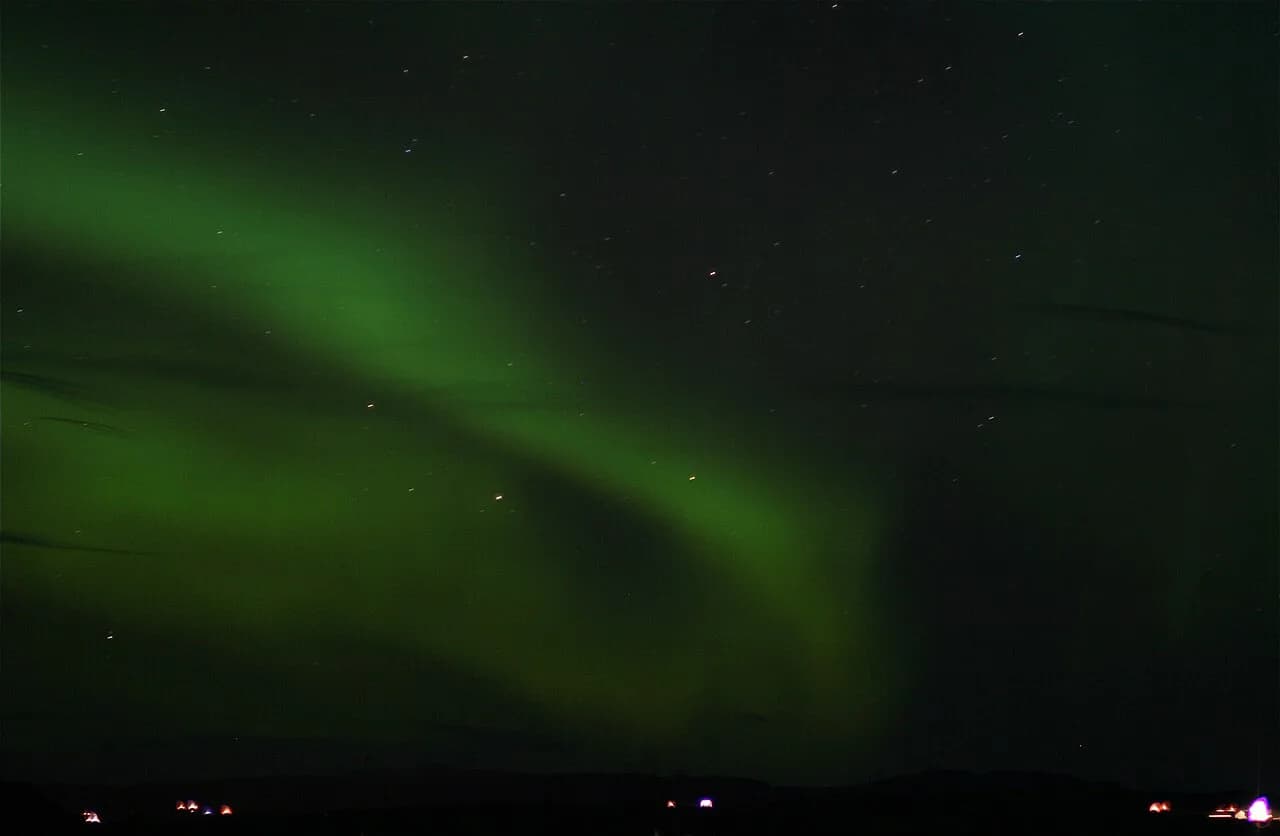
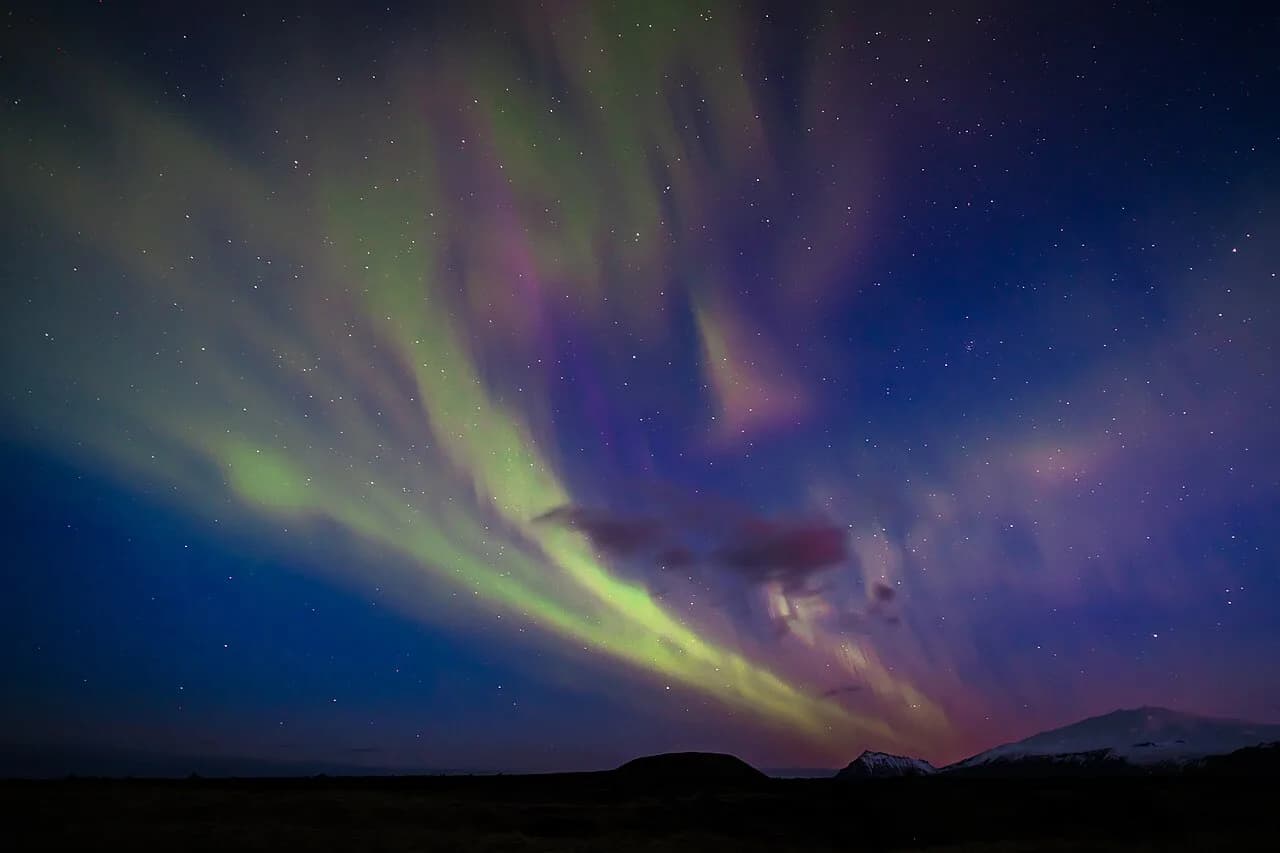
October hands you both halves of an Iceland trip at once. There is still enough daylight to drive the south coast or reach a glacier, and there is finally enough darkness for the northern lights in Iceland to become a realistic evening plan. It suits travellers who want aurora nights without committing to the deep cold and short days of midwinter.
The trade-off is weather. October is one of the wettest and windiest months, with roughly 5°C average in Reykjavik, so a flexible itinerary and a clear-sky plan matter more than a fixed booking list. Base yourself where you can move, and treat every clear night as the one to use. If you want a smaller northern base with the same October trade-off, Akureyri in October gives a darker, quieter alternative to Reykjavik.
Why October suits an aurora-focused trip
October sits at the hinge of the Icelandic year. Many summer activities keep running until snow closes roads, usually in November or December, while winter tours that need darkness start up in September and gather pace through October. That means you can pair a daytime glacier walk or whale-watching boat with an aurora hunt the same evening.
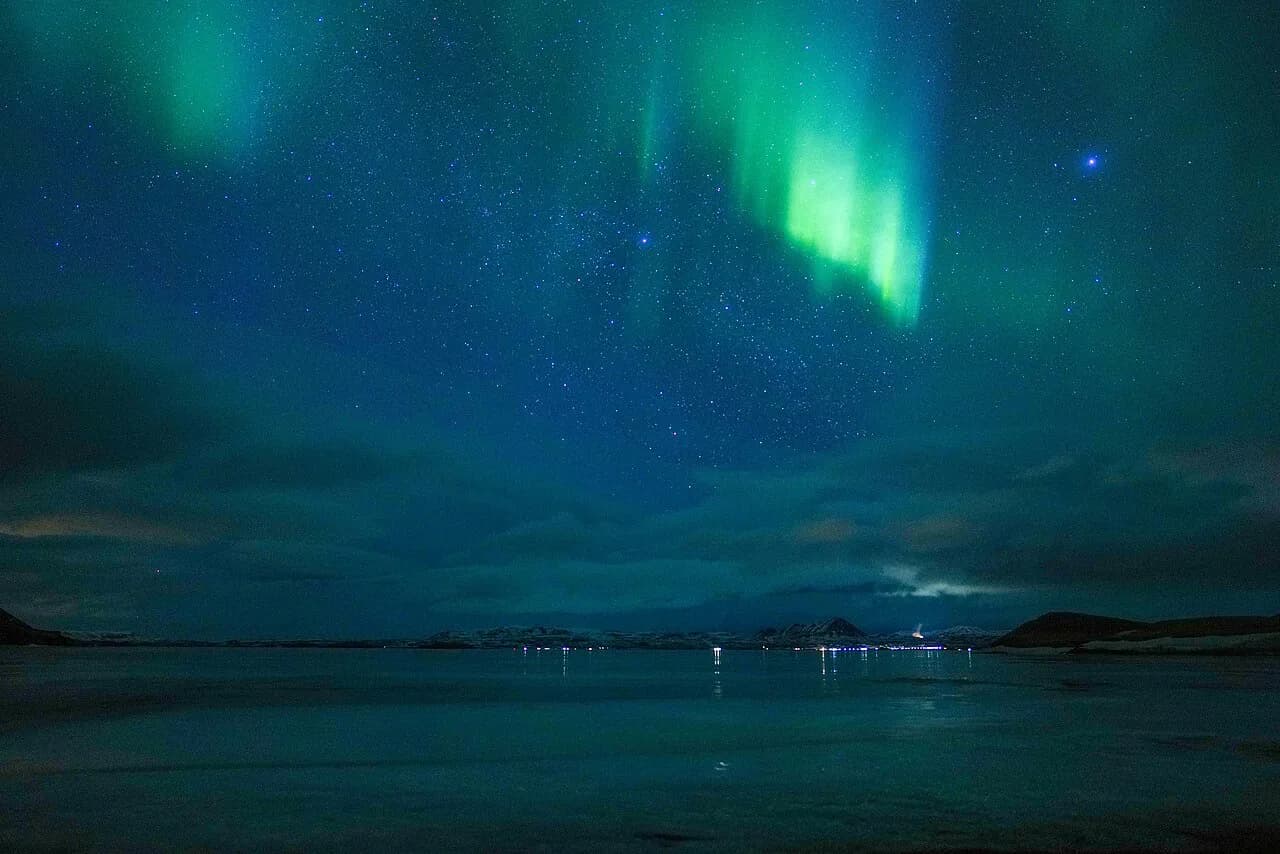
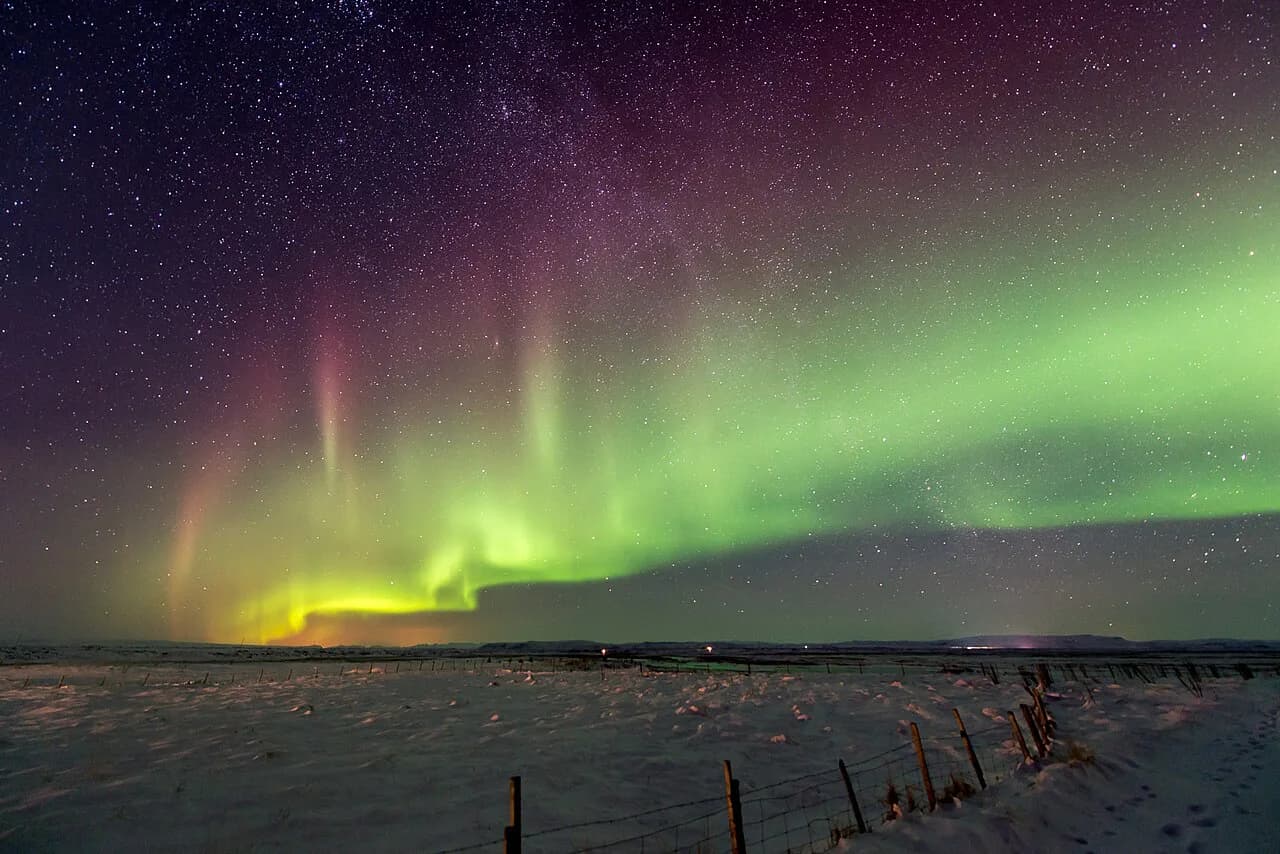
The nights are the point. Aurora needs real darkness, and by October the bright summer nights are gone, so the window between sunset and sunrise is usable again. Activity often holds through November before easing around midwinter, which makes October one of the more productive months to plan around.
Book the aurora side of the trip as an evening slot, not a fixed date. Operators run when skies allow, so keeping two or three nights free in the same area gives you room to move with the forecast rather than gambling everything on a single outing.
How dark the nights get and how the aurora season works
Darkness returns quickly through October, and that is what makes the month work for aurora. Around 1 October, sunrise in Reykjavik comes just before 7:40 and sunset just before 19:00; by 31 October, sunrise is about 9:07 and sunset about 5:15, dropping from roughly 11¼ hours of daylight to just over eight. The shortening days are an advantage at night.
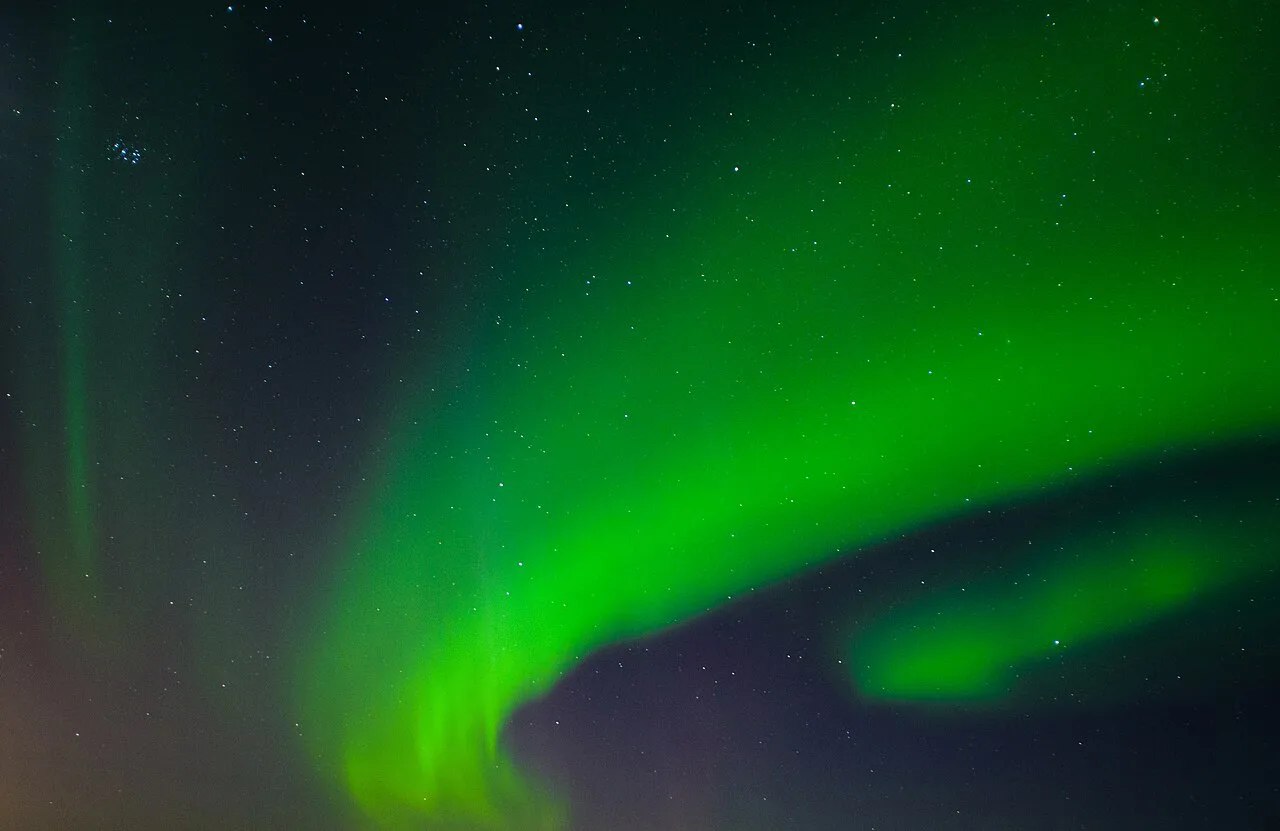
Aurora visibility depends on solar activity and clear skies, not on the calendar alone. Kp values are guidance only; a high number under thick cloud shows you nothing, while a modest reading through an open sky can deliver the night. Use the Icelandic Met Office aurora and cloud forecasts together and pick a location where all three cloud layers are forecast to be clear.
October is also one of the cloudier months of the aurora season, so where you stand matters as much as when. The southeast often gives the best odds: the corridor from Kirkjubæjarklaustur through Jökulsárlón and Höfn to Djúpivogur tends to hold the clearest sky. A break can open anywhere, though, and one good night is enough.
Where to watch near Reykjavik
You do not have to leave the capital to see the lights, but you should leave the city centre. Ambient light works against aurora intensity, so even a display visible from your hotel window will look stronger outside town. The Grótta lighthouse area and city parks such as Klambratún and Laugardalur give darker horizons than a downtown street.
Staying put has a cost. A few stray clouds can block a single viewpoint while the rest of the region stays clear, which is exactly why guided chases move. If you are self-driving, check the cloud forecast in the afternoon and be willing to drive an hour or two for an opening.
For a full picture of how the aurora season works across the country, from September openings to April close, see the northern lights in iceland guide. It explains what drives activity and how to read a forecast before you commit a night to one spot.
If you would rather have someone else make the call on the night, Iceland northern lights tours run from Reykjavik in several formats and usually decide the destination based on conditions. Compare what each includes, such as transport and photos, before booking.
The clear-sky corridor from Kirkjubæjarklaustur to Djúpivogur
Treat the southeast as a routing decision, not a slogan. If aurora is a priority, spend at least a night or two along the south coast east of Vík, where the landscape opens up and the sky is less interrupted by settlement. Kirkjubæjarklaustur, Jökulsárlón, Höfn and Djúpivogur string together as a line you can follow as the cloud picture changes.
This is also where October's winter activities cluster. Ice cave tours start operating in October as colder temperatures stabilise the ice, with the best caves found in Vatnajökull near Jökulsárlón. That lets you spend daylight underground in blue ice and the evening watching the sky from the same base.
Expect to pay for the convenience of a fixed base. A crystal ice cave tour departing from Jökulsárlón is listed from 181 USD, and a Skaftafell blue ice cave and glacier hike from 182 USD; both are weather-dependent and prices change, so confirm at booking.
Self-drive chasing versus bus, super jeep and boat tours
Each way of chasing has a clear trade-off. Bus tours from Reykjavik are the affordable option; super jeeps cost more but reach places buses cannot, over rivers and rough tracks, with less light pollution; a boat cruise into Faxaflói Bay puts you in near-total darkness offshore. Self-driving gives the most freedom but puts the forecast reading and the driving on you.
If you drive yourself, the routine is straightforward: watch the cloud layers and the aurora forecast through the afternoon and head for the clearest patch rather than a famous viewpoint. Staying slightly outside city limits at an aurora-friendly hotel or cottage removes the first twenty minutes of every chase.
Aurora tours are typically priced per person and vary by format and season; the Reykjavik bus version is listed from 124 USD. Treat that as a starting figure that shifts with dates and availability, and read what each tour includes before comparing.
For a sense of how the odds shift across the wider season, the best time to see the northern lights in iceland lays out month-by-month darkness and activity. It is a useful cross-check when you are deciding whether to move your trip earlier or later.
Daylight hours through the month and how to shape days around them
Plan the daytime around a shrinking clock. Early October still gives about 11 hours of light, enough for long drives and multiple stops, while the last days of the month leave just over eight, so a single far-flung attraction is a better fit than a packed loop. Put the aurora in the evening and the driving in the middle of the day.
Iceland does not observe Daylight Saving Time, so clocks do not change at the end of October. That removes one source of confusion for flight connections and tour pickups, but sunset still arrives earlier every day, so check the day's light before you commit to a late-afternoon hike or a glacier walk.
A practical rhythm for October: one major daylight activity per day, a late lunch, then a forecast check before dark. That leaves room for a hot pool or a lagoon in the afternoon and still has you free for an aurora run if the sky opens.
October weather: temperature, rain, wind and where snow is likelier
Expect changeable conditions rather than a stable autumn. Reykjavik averages around 5°C in October, with frequent rain and strong winds, and the month is one of the wettest of the year in the north and east. Wind funnels between mountain passes and buildings, making it feel colder than the number suggests.
Average precipitation in Reykjavik is about 87 mm for the month, and outside the capital it gets colder, particularly in the Highlands and the Westfjords. Heavy snow is uncommon in Reykjavik and the south in October, but the north can see snow and ice, so conditions change with where you are.
The Highlands are generally out of reach for private vehicles in October and are visited only on specialised tours when conditions allow. Build your route along the Ring Road and the south coast rather than planning a Highland crossing.
Driving the Ring Road in October and the case for a 4x4
Most main roads, including the Ring Road, stay drivable in October, and the route is usually cleared of snow and ice fairly regularly. That said, a 4x4 is recommended, especially in the north, where conditions can shift quickly even on the main road. If poor-weather driving makes you uneasy, staying south lowers the chance of difficult patches.
Check road and weather conditions before each leg, and never drive past a cordoned-off road. Floods and avalanches are not unusual in October. A flexible route, with a night or two you can move, is worth more than a tightly booked schedule when a pass closes.
If you would rather not drive at all, guided multi-day tours cover the same ground with someone else reading the forecast. A five-day Snæfellsnes and South Iceland tour is listed from 1,616 USD, while a three-day Golden Circle and South Coast trip starts from 1,072 USD; both are indicative and vary by date.
Ice caves and glacier hikes: what starts operating and where
October marks the start of many ice cave operations as colder temperatures make the ice more stable. Every winter creates new caves as meltwater runs through the glacier in summer, so the formations you visit are that season's. The standout caves sit in Vatnajökull, close to Jökulsárlón.
Glacier hikes are the other reliable daytime option. Sólheimajökull is one of the most popular for guided walks, and Vatnajökull offers ascents on Europe's largest glacier, with Svinafellsjökull inside the Skaftafell reserve. Go with a certified guide: crevasses and icefalls make independent travel on a glacier unsafe.
Be realistic about early-season timing. October is only the beginning of the winter season, so some caves may not yet be open to tours, and availability depends on conditions that season. Book with an operator who can tell you which caves are running during your dates.
A 12-hour south coast tour from Reykjavik combines glacier hiking on Sólheimajökull with Skógafoss and Seljalandsfoss, which is an efficient way to pair a hike with the waterfalls on one long day. Check the meeting time against the daylight you will have.
Snowmobiling on Langjökull and Vatnajökull
Snowmobiling puts you on the ice without a long approach hike. From Reykjavik, Langjökull is the closer option and can be combined with the glacier's carved ice tunnels, while Vatnajökull suits travellers already in the southeast. A valid driver's licence is required to drive a snowmobile, and passengers can join from age six.
Tours vary in length by departure point: a Langjökull snowmobile and ice cave combination is listed at roughly four to five hours from the Geysir area and eight to ten hours from Reykjavik. Departure points and durations change, so check the exact pickup when you book.
Wildlife in October: whale watching and the last puffins
October is the tail end of the wildlife season rather than its peak. Humpback and minke whales, white-beaked dolphins and harbour porpoises are still regularly seen well into the month, and orcas turn up occasionally, especially in the west and north. Blue whales are possible but rare this late.
Tours run from Reykjavik into Faxaflói Bay and from Akureyri into Eyjafjörður, with the northern option the better bet for humpbacks. Puffins are another last-chance species: October is the final month to see them before they head offshore for winter, so book early in the month if birds are the goal.
Hot springs and pools as the day's close
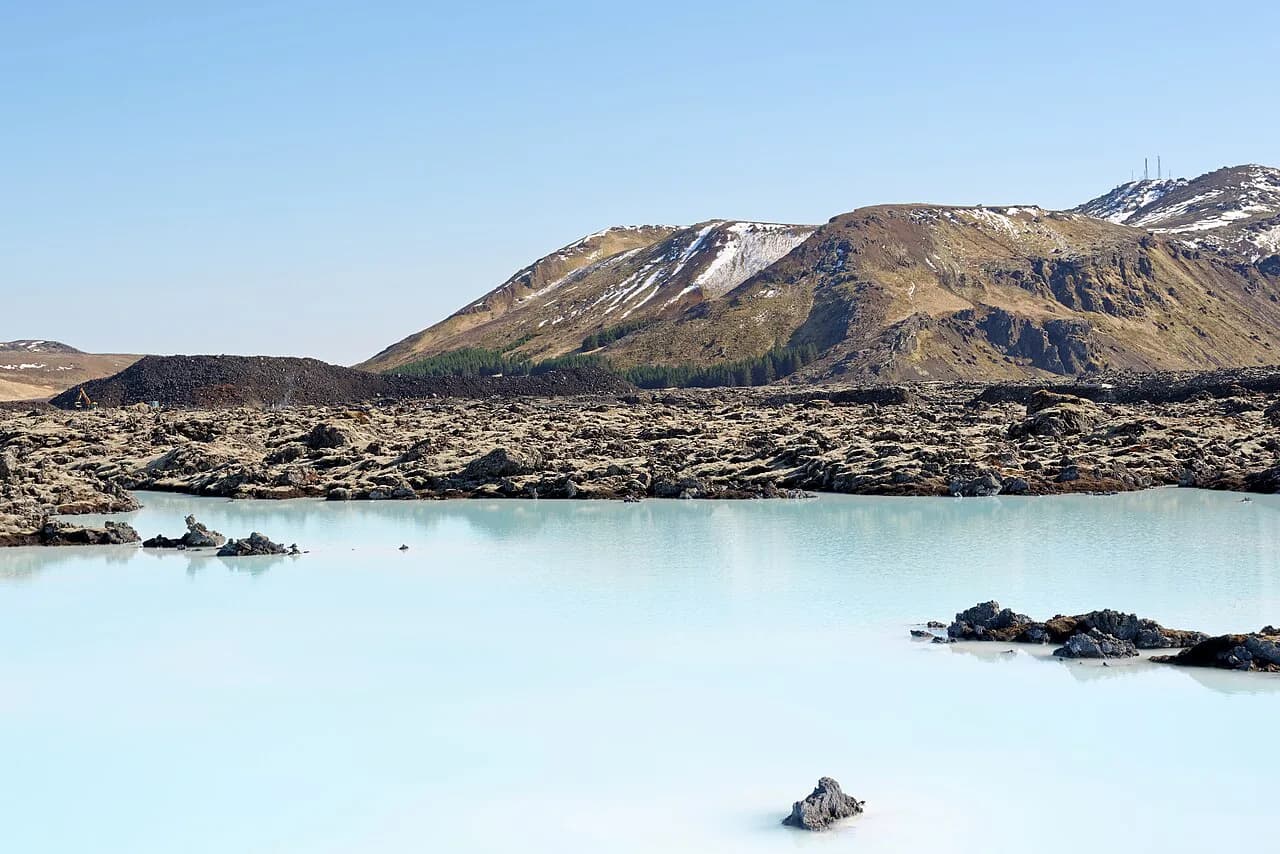
Ending the day in warm water is the natural October rhythm: you come off a wet, windy afternoon into a geothermal pool, then eat before the aurora window opens. The Blue Lagoon and the public pools around Reykjavik are the obvious choices, and the Secret Lagoon in Flúðir fits neatly into a Golden Circle day.
Near Reykjavik, the sky lagoon offers a North Atlantic setting with a colder, more open horizon than a city pool, which makes it a reasonable dusk stop before a chase. Check opening hours and slot booking for your dates, since both change by season and demand.
Do not overlook the ordinary municipal pools. They are cheaper than the big attractions, usually have hot pots and steam rooms, and are scattered through Reykjavik and the towns along the Ring Road, making them an easy evening stop wherever you end up.
Where to base yourself: Reykjavik, Hella, Vík and the southeast
Reykjavik is the easiest base for a short trip: tours leave from the city, and the Grótta and city-park viewpoints are minutes away. The cost is light pollution and a longer drive to genuinely dark sky, which is why many aurora-focused travellers move east after a night or two.
Hella and Vík work as staging points along the south coast. Hella puts you within reach of the waterfalls and the Sólheimajökull glacier hikes, while Vík sits closer to the open landscapes east of the mountains. From there, push on to Kirkjubæjarklaustur, Jökulsárlón or Höfn if aurora is the priority.
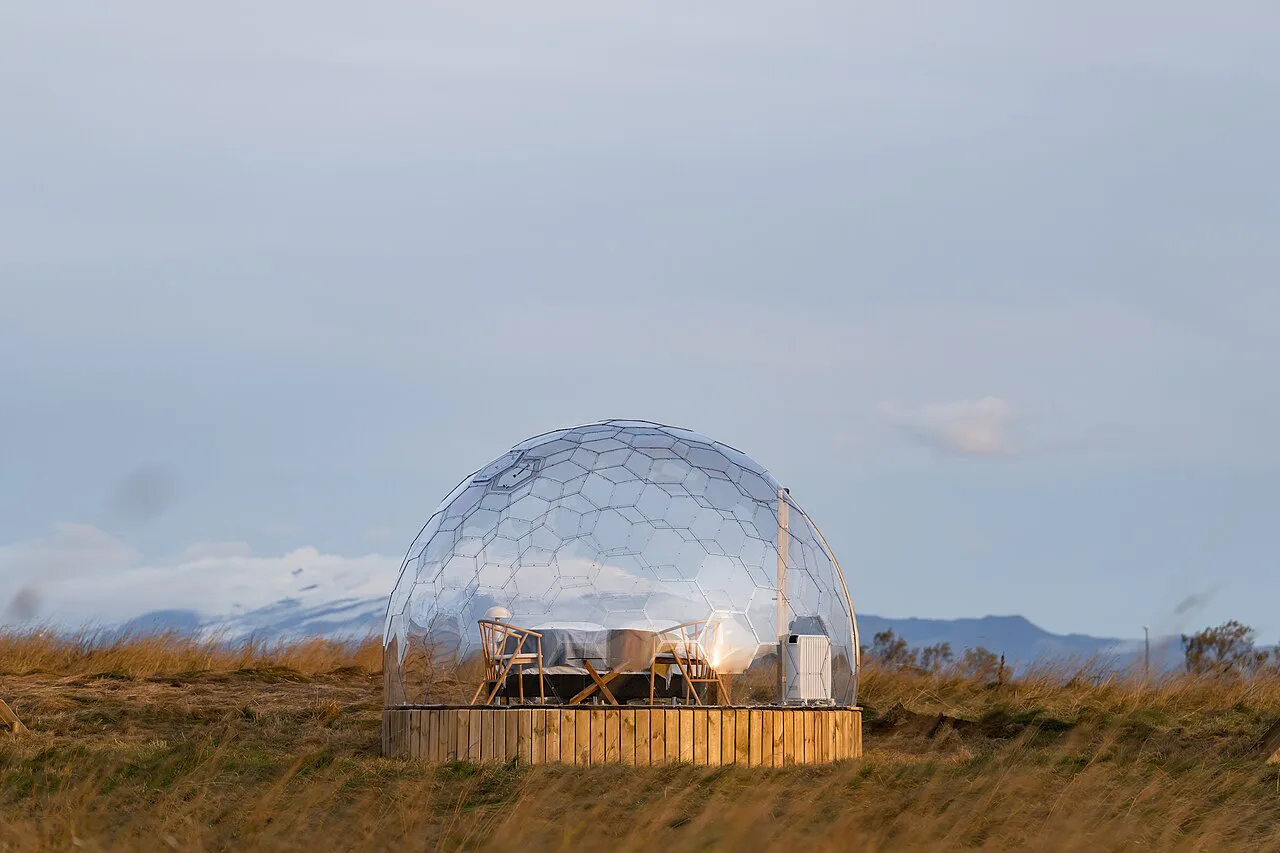
Staying slightly outside a town at a hotel or cottage with dark surroundings gives you the option of watching from the property instead of driving. Many aurora-friendly hotels along the south coast are built around exactly that, with hot tubs and open horizons.
October events: the Imagine Peace Tower and the Reykjavik International Film Festival
Two cultural fixtures land in October. The Imagine Peace Tower on Viðey Island is lit every year on 9 October, John Lennon's birthday, and runs until 9 December; the light beam rises into the night sky and looks different in every weather. It is a short ferry ride from Reykjavik and worth timing a city night around.
The Reykjavik International Film Festival starts in September and runs into October, with screenings in conventional cinemas and less conventional venues such as swimming pool halls and hot baths. The festival hands out its Golden Puffin award, and the programme is published ahead of each edition, so check dates before you build an evening around a screening.
How many nights to allow for a fair chance of clear skies
Three nights in one aurora-friendly location is a sensible minimum. Cloud is the limiting factor in October, and a run of clear nights is never guaranteed, so a single night leaves you exposed to one bad forecast. Each extra night improves your odds without promising anything, and a week gives you room to move between regions.
If aurora is the main reason for the trip, weight the nights toward the southeast and keep the Reykjavik nights for the start or end. That way a cloudy spell in the capital does not consume your whole budget of dark hours, and you can follow the clearing sky east.
Costs and crowds compared with summer
October is one of the quietest months, with far fewer visitors than summer, which shows in hotel availability and on the main attractions. Self-drive trips are practical at this time, and a seven-day October trip averages around 2,671 USD per person, based on booking data; self-drive costs sit at a median of 25,539 ISK per person per day.
The savings come with weather risk. Cheaper rooms and quieter roads are the upside; cancelled tours, closed roads and rain-bound days are the downside. Build a buffer into the budget for a rearranged night or an extra lagoon visit, and treat any quoted price as a starting point rather than a fixed cost.
Plan Your Visit
October rewards travellers who treat aurora as a flexible evening plan and daylight as the day's structure. Book a base with dark surroundings, keep several nights free, and use the cloud forecast to decide where to sleep rather than where to eat.
Add one or two winter experiences that suit the season, such as a glacier hike or an ice cave tour, and leave room for a hot pool at the end of the day. A visit Reykjavík film screening or the Imagine Peace Tower gives city nights their own purpose when the sky stays closed.
Confirm tour departures and road conditions with the relevant tour company or the official road and weather pages as your dates approach. Everything else, from your base to your night count, is a choice you can make now, and a good one is worth more than a lucky one.
Frequently Asked Questions
Can you see the northern lights in Iceland in October?
Yes, October nights are dark enough for aurora, and many consider it one of the better months of the season. Visibility still depends on solar activity and clear skies, so leave several nights free and follow the aurora and cloud forecasts. October is one of the cloudier aurora months, which is why the southeast clear-sky corridor is worth routing toward.
How many hours of daylight does Iceland get in October?
Daylight falls from roughly 11¼ hours at the start of the month to just over eight by 31 October. In Reykjavik, sunrise moves from just before 7:40 to about 9:07, and sunset from just before 19:00 to about 5:15. Iceland does not observe Daylight Saving Time, so clocks do not change.
Is it better to visit Iceland in September or October?
September has longer days and usually better weather, while October has more dark hours per night for aurora and the start of the ice cave season. If you want both daylight sightseeing and aurora evenings, early to mid-October balances the two. Choose September if you prefer milder conditions and longer hikes.
Does it snow in Iceland in October?
Heavy snow is uncommon in Reykjavik and the south in October, but it is possible, and the north can see snow and ice. The Highlands are generally out of reach for private vehicles and are visited only on specialised tours when conditions allow. Roads can close for wind, flooding or avalanches, so check conditions before each leg.
How cold is Iceland in October?
Reykjavik averages around 5°C in October, with frequent rain and strong wind that make it feel colder. Average precipitation in the capital is about 87 mm for the month, and areas such as the Highlands and Westfjords run colder. Plan flexible days rather than fixed outdoor schedules.
Is October a good time for ice caves in Iceland?
October is when many ice cave tours begin operating, as colder temperatures make the ice more stable, and the best caves are in Vatnajökull near Jökulsárlón. Because the season is just starting, availability depends on conditions that year. Book with an operator who can confirm which caves are running on your dates.
Do you need a 4x4 to drive Iceland's Ring Road in October?
Most main roads, including the Ring Road, stay drivable and are usually cleared fairly regularly, but a 4x4 is recommended, especially in the north. If driving in poor conditions makes you uneasy, stay in the south, where difficult patches are less likely. Never drive on a cordoned-off road.
How many nights should I allow to see the aurora in October?
Aim for at least three nights in one aurora-friendly location, and more if aurora is the main purpose of the trip. Cloud is the limiting factor in October, so extra nights let you move with the forecast instead of relying on a single evening. No operator can guarantee a sighting at any time of year.
Sources
Notes for your Arctic winter trip
Optional updates to our northern lights guides.
You might also like
Continue reading
More guides you'll find useful