Kirkjufell Northern Lights: Where to Watch on Snæfellsnes
Kirkjufell on Iceland's Snæfellsnes Peninsula is a winter aurora photography landmark. Learn when the season runs and where to stand on a dark night.
On this page
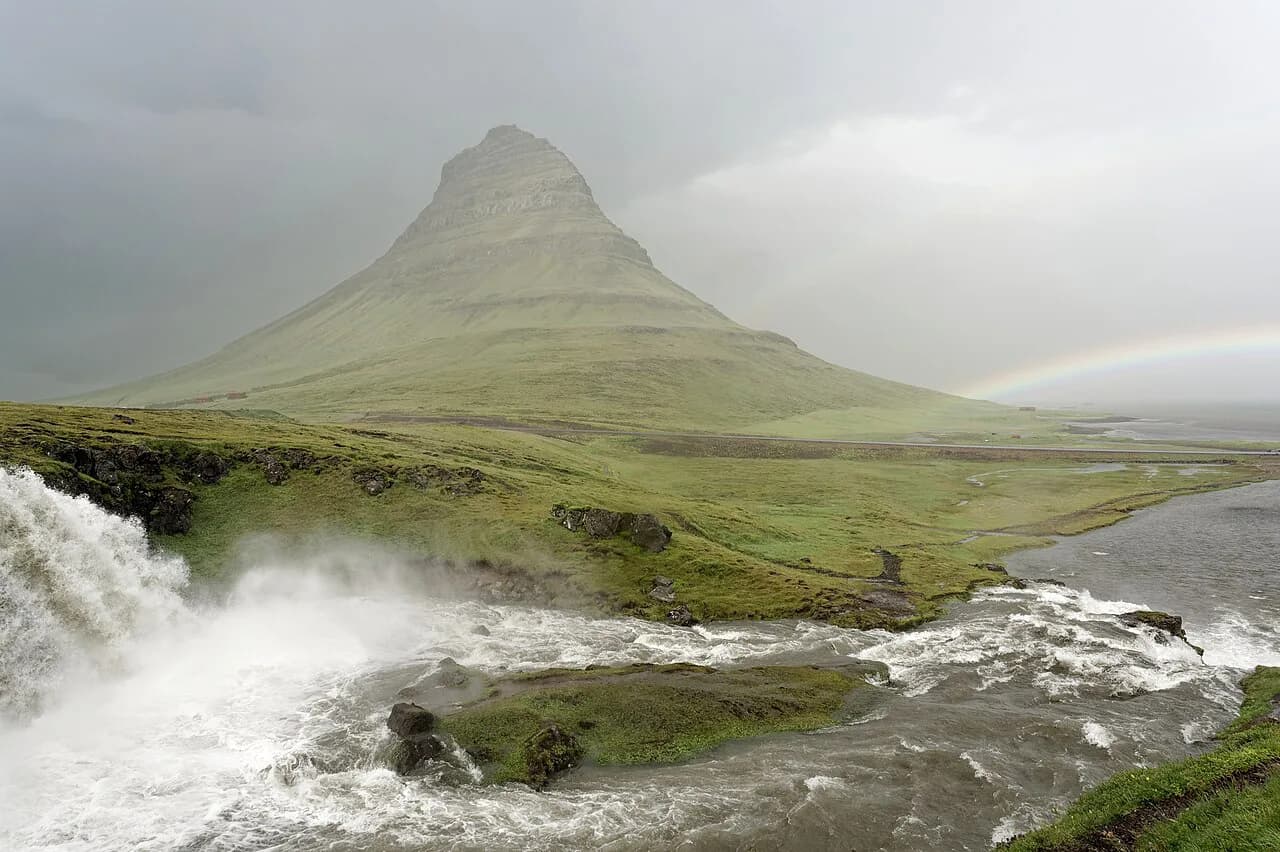
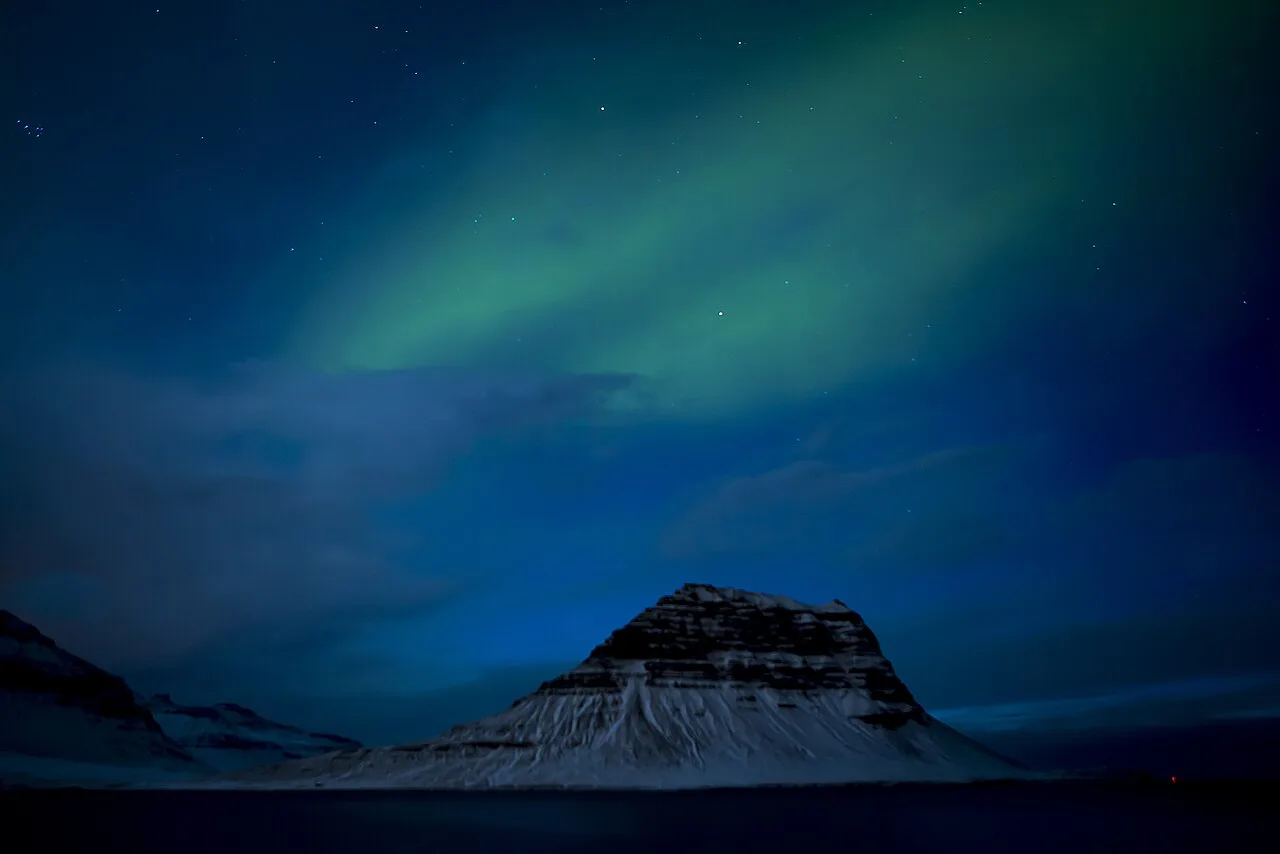
Kirkjufell is the arrow-shaped mountain that rises straight out of the coast on the northern side of the Snæfellsnes Peninsula in West Iceland, with the small waterfall Kirkjufellsfoss at its foot. In winter the pairing of dark water, white-framed falls and a solitary peak makes it one of the country's most photographed aurora scenes, and it rewards travelers who plan a whole night on the peninsula rather than a single stop.
You do not need a tour to stand at the mountain, and you do not need mountaineering gear either: the approach is simple and the composition is close to the road. What you do need is patience with cloud, wind and moonlight, because the aurora itself depends on solar activity and clear sky. The mountain has become a fixture of Iceland's aurora photography, appearing repeatedly in image collections of the northern lights over Kirkjufell and its reflection.
Why Kirkjufell works as an aurora location
The mountain stands 463 metres above the Snæfellsnes coast near the fishing village of Grundarfjörður, a distinct cone of rock that has served sailors as a navigation landmark for centuries. Its shape gives a photograph a clear silhouette even when the aurora is faint, and the river and falls at its base give you a second element to work with. The site is reached by paved road and sits at roughly 64.94 degrees north, -23.31 degrees west.
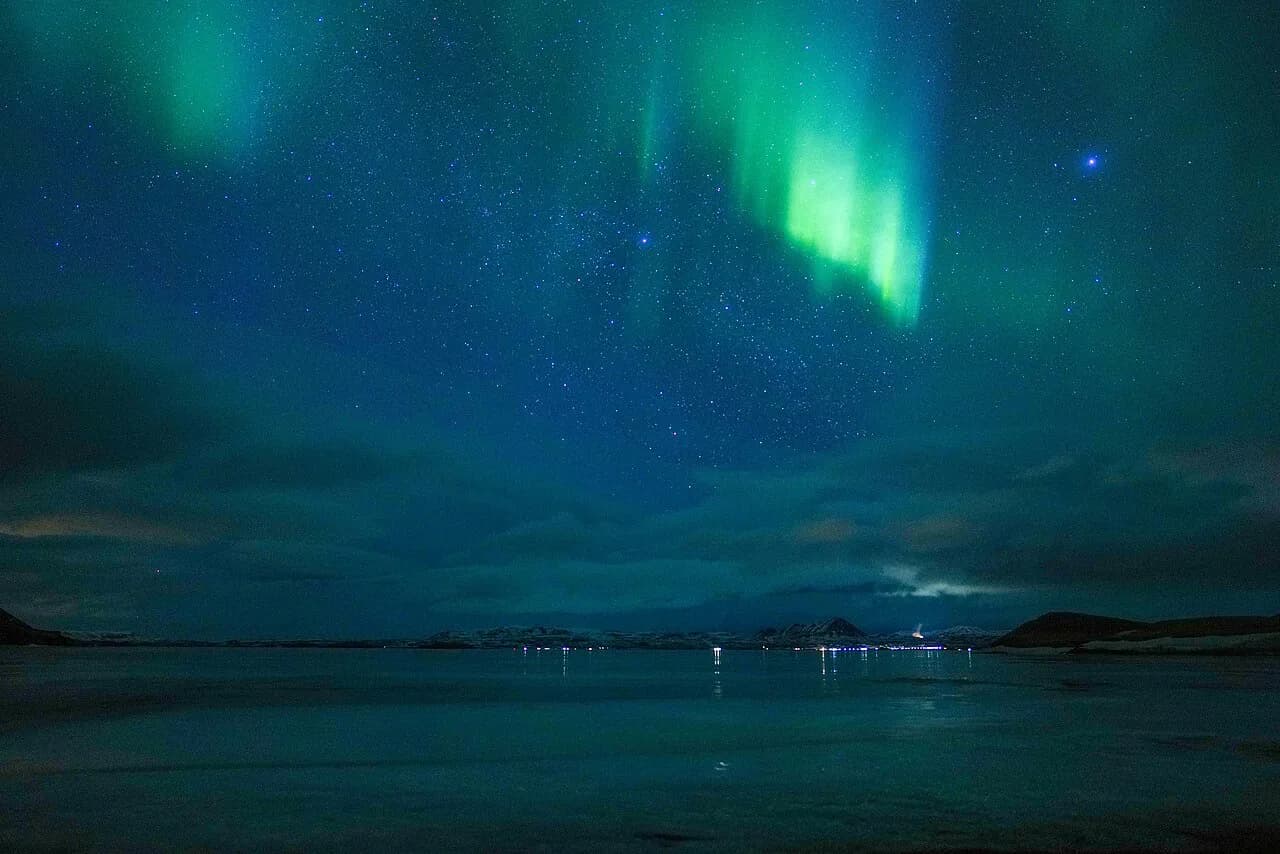
Iceland sits under the auroral oval, so displays are possible whenever the sky is dark and clear, and the Kirkjufell gallery shows the mountain under green arcs reflected in the water beside it. A calm night matters as much as an active one: the reflection shot depends on still water, and wind ripples the surface until the mirror disappears. Treat the Kp index as background guidance and read the sky, the cloud forecast and the wind instead.
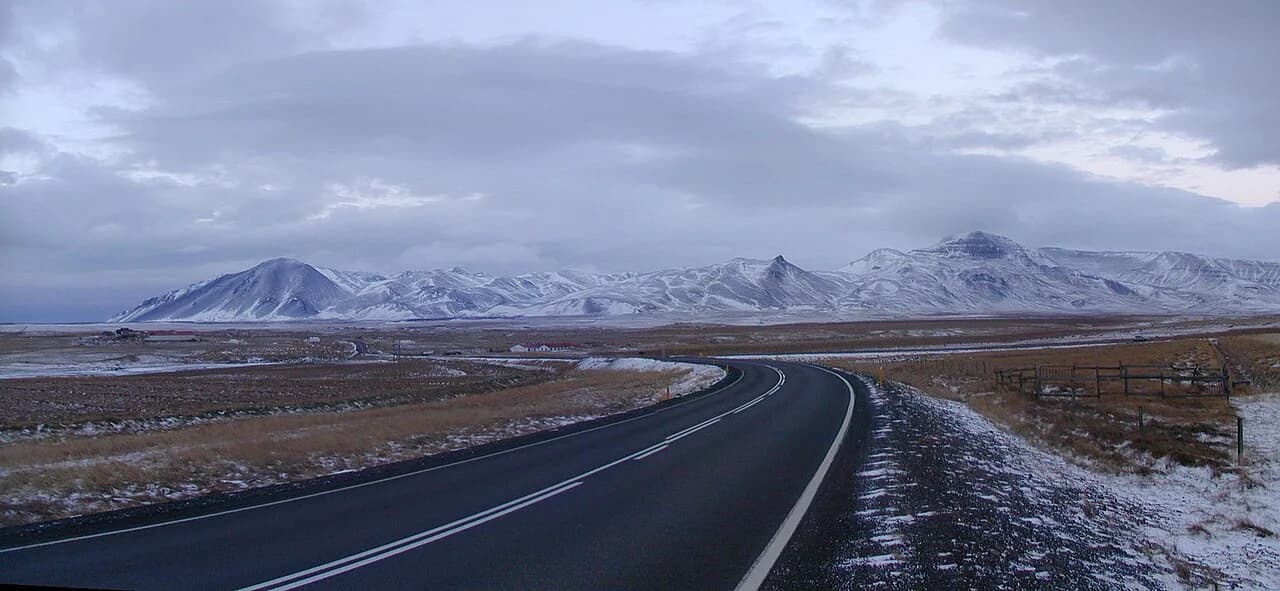
The mountain is also a daytime stop, so winter travelers often combine it with the rest of the peninsula in one loop and return after dark. If you are deciding how the region behaves across the cold months, Snæfellsnes in Winter explains the daylight, road and weather patterns that shape a night out here.
When the aurora season runs
The northern lights can be seen in Iceland from around September to April, when the night sky is dark enough for them to show. Outside that window the nights never get sufficiently dark, however active the sun is. Within the season, the deepest darkness falls around the winter solstice, and the hours of usable night stretch noticeably by late March.
Winter days on the peninsula are short, which is an advantage for aurora hunters: you can drive the scenic loop in daylight and still have a long evening at the mountain. Late autumn and early spring give you more daylight for touring and a shorter but still dark night. If you are aiming at March, Snaefellsnes in March sets out what the longer days and lingering snow mean for a photography trip.
Kirkjufell and Kirkjufellsfoss: the classic composition
The standard viewpoint puts the waterfall in the foreground and the mountain behind it, which is why the location needs little walking and suits travelers with limited time. Most visitors spend one to two hours at the site, and in winter the same spot doubles as a night location once the last daylight goes. The mountain and falls are treated as a winter aurora photography location in their own right, not merely a daytime photo stop.
There is no need to climb anything to get the classic shot: the composition works from ground level beside the water. Hiking on the mountain itself is a separate undertaking with its own conditions, and the winter night is not the time for it. Plan the viewpoint as a short, fixed station and put your driving and waiting time elsewhere.
Because the frame is tight, a small patch of open sky to the north is enough. That makes Kirkjufell a good fallback when the forecast is mixed and you want a reliable foreground rather than a wide-open horizon.
Where to stand for reflections and clean frames
Water is the difference between a record shot and a memorable one, so position yourself where the river runs still and the mountain's cone sits inside the frame above it. On a breezy night, accept the falls as the foreground and forget the mirror; on a calm one, wait for the gap between gusts. The Kirkjufell gallery shows both the reflected version and views of the mountain without it, which is a fair picture of what a given night delivers.
Other photographers' head torches are the main nuisance at a popular roadside stop. Work the edges of the bank rather than the centre of the path, shield your own lamp when you move, and give long exposures room by standing behind rather than in front of other tripods. Arriving early enough to pick a spot before the sky brightens saves you from moving mid-exposure.
Moonlight is a trade-off rather than a problem: a bright moon flattens the aurora but lights the mountain and waterfall for a balanced frame, while a new moon gives darker skies and stronger colour. Either can work, so check the moon phase when you choose your nights and set expectations accordingly.
Grundarfjörður as the base
Grundarfjörður sits close to the mountain and has long used Kirkjufell as its symbol, which makes the village the natural place to sleep if the aurora is your priority. Staying here means a short drive to the viewpoint after dark instead of a long return trip, and you can retreat to warmth when cloud closes in. The GoIceTravel listing places guesthouses and apartments within a few kilometres of the site, including Hellnafell Guesthouse and Olga Apartments and María Apartments.
Village lighting is modest, but it still matters: face away from the street lamps when you shoot and let your eyes adapt for several minutes before judging the sky. Sleeping in Grundarfjörður also lets you split a night in two, checking the cloud forecast at dinner and heading out only when a gap is coming.
Other dark-sky stops on Snæfellsnes
Kirkjufell is one frame, not the whole night. The black church at Búðir on the peninsula's southern side and the cliffs at Arnarstapi under Snæfellsjökull give you alternative foregrounds when cloud sits over the north coast, and the aurora gallery includes Búðakirkja under a green sky. Moving between coasts is how you hedge against a single bank of cloud.
The same gallery shows aurora over Reynisdrangar near Vík, Skógafoss and Jökulsárlón, all south-coast locations well beyond the peninsula. Treat those as a reminder that Iceland offers many dark-sky foregrounds: if you are based on Snæfellsnes for a few nights, spend them on the peninsula rather than driving east for one famous shot. A wider look at the region's options is in our guide to the northern lights snaefellsnes.
Self-driving versus guided Snæfellsnes tours
Self-driving gives you the most control over timing, which matters because aurora viewing is a waiting game. You can check the cloud, drive to a different coast and stay at Kirkjufell until the sky clears. The cost is winter road conditions on the peninsula, which change quickly and demand a proper vehicle and a conservative pace after dark.
Guided day tours from Reykjavík cover the peninsula's main sights in a single long outing, with listed durations of around ten to eleven hours for the Snæfellsnes routes. They suit travelers who would rather not drive winter roads at night or who have only one day for the region. What a given tour includes, from pickup to stops after dark, is set by the company running it.
For dedicated aurora hunting, a night tour is a different product from a sightseeing loop, and our Snæfellsnes Northern Lights Tours guide compares the formats. A day tour is a way to see the peninsula; it is not a guarantee of dark-sky time at the mountain.
Snæfellsnes tour options and prices
Operator listings for Snæfellsnes day tours quote starting prices of about 165,000 to 225,000 ISK per booking, across itineraries of roughly ten to eleven hours. The cheapest of the listed private options is the ten-hour Pickmeup tour, while group-style departures sit at the upper end of that band. Treat these as operator-listed starting figures that change with season and group size, not fixed rates.
Before booking, read what the price actually covers: transport, guiding and stops are standard, while extras vary by operator. Tours tagged for Kirkjufell are collected on one page, which is the quickest way to compare what is on offer for this specific viewpoint.
Winter driving and road access
Kirkjufell is reached by paved road, so access is straightforward in normal winter conditions. The risk is not the final approach but the longer drive across the peninsula, where exposed stretches collect snow and ice and wind can close roads at short notice. Build slack into any plan that depends on arriving at a specific hour.
Parking at the site is a simple roadside affair for a short aurora stop. Keep the car pointed in the direction you plan to leave, and use it as a warming shelter between viewing spells rather than running the engine for hours. Conditions on the wider peninsula are covered in our Snaefellsnes Peninsula winter guide.
How many nights to allow on Snæfellsnes
No one can schedule a display, and no operator can promise one: aurora viewing depends on solar activity and on cloud cover that changes hour by hour. What you can do is buy yourself more rolls of the dice. Two nights on the peninsula give you a spare evening if the first is overcast; three let you absorb a lost night to wind or road closures without scrapping the trip.
Plan around the darkest hours rather than the whole evening, and keep daytime sightseeing flexible so you are not exhausted by the time the sky clears. Travelers who treat the aurora as one item on a packed itinerary usually see less of it than those who leave a couple of open nights.
Cloud, wind and aurora forecasts
Read two forecasts, not one: the aurora activity level and the cloud cover over the peninsula. Clear sky with low activity beats a strong index under thick cloud every time, and on the coast the wind that clears the clouds also ripples the water you wanted for a reflection. Before a long drive, check road conditions alongside the weather.
Grundarfjörður and the north coast can sit under cloud while the south side of the peninsula is open, so a short repositioning drive is often more useful than waiting. Use the mountain as your anchor and the rest of Snæfellsnes as your backup set.
Where to sleep near Kirkjufell
Accommodation in the Grundarfjörður area ranges from guesthouses to self-catering apartments, with Hellnafell Guesthouse, Olga Apartments and María Apartments all listed within roughly two kilometres of the mountain. Self-catering suits aurora chasers, who tend to eat late and head out again after midnight.
Ask about a north-facing window or a spot away from exterior lighting when you book, and confirm the check-in hours for a winter arrival. Guesthouses and apartments around Grundarfjörður are limited, so reserve the nights you care most about first and build the rest of the route around them.
Who Snæfellsnes suits and when to choose another base
Snæfellsnes suits photographers who want a strong foreground with minimal walking, and travelers who prefer a quiet village base to a city one. It rewards a flexible schedule and a tolerance for coastal weather. It is less suitable if you have a single night and want the greatest possible choice of operators, which Reykjavík provides; travelers weighing a northern base can compare it with the northern lights in Akureyri.
If your dates are fixed and you want to roam widely, bases on the south coast give access to Skógafoss, Reynisdrangar and Jökulsárlón, all of which appear in Iceland's aurora galleries. If you would rather stay put and work one composition properly, the peninsula is the better choice.
Plan Your Visit
Build a Snæfellsnes trip around nights rather than days: sleep in or near Grundarfjörður, keep the mountain as your primary station and treat Búðir and Arnarstapi as alternates when cloud shifts. Check the aurora and cloud forecasts each afternoon, and leave at least one spare night in the plan.
Whether you drive yourself or join a ten- to eleven-hour guided loop, the mountain rewards those who arrive with time and patience. Confirm pickup, inclusions and the current price when you book, and go out expecting weather rather than a guarantee.
Frequently Asked Questions
Can you see the northern lights at Kirkjufell?
Yes, when the sky is dark and clear. The mountain and the waterfall at its base form one of Iceland's best-known aurora compositions, and the site appears repeatedly in Icelandic aurora photography. A display still depends on solar activity and on cloud breaking over the peninsula, so no night is certain.
When is the best time to see the northern lights at Kirkjufell?
The aurora is visible in Iceland from around September to April, when the night sky is dark. Within that window, choose nights with clear forecasts rather than fixed dates, and remember that a calm night gives you the reflection shot while wind ripples the water.
How far is Kirkjufell from Reykjavík?
Kirkjufell stands on the northern coast of the Snæfellsnes Peninsula in West Iceland, near the village of Grundarfjörður. The mountain is one stop on a full peninsula loop, and guided day tours from Reykjavík run around ten to eleven hours, so most travelers sleep in the Grundarfjörður area rather than returning the same night.
Do you need a tour to see the northern lights at Kirkjufell?
No. The site is reached by paved road and there is no entry fee, so self-drivers can come and go as the sky changes. A guided tour helps if you would rather not drive winter roads after dark or have only one day for the peninsula.
How long should you spend at Kirkjufell?
Most visitors spend one to two hours at the mountain and waterfall. For aurora viewing, treat that as the minimum and plan to wait: the reflection depends on still water and a gap in the cloud, which can take most of an evening.
Where should you stay near Kirkjufell for aurora viewing?
Grundarfjörður is the practical base, with guesthouses and apartments within a few kilometres of the mountain, including Hellnafell Guesthouse and Olga Apartments and María Apartments. Staying close shortens the night drive and lets you retreat indoors when cloud closes in.
Sources
Notes for your Arctic winter trip
Optional updates to our northern lights guides.
You might also like
Continue reading
More guides you'll find useful