Snæfellsnes Northern Lights Tours: Which Option to Choose
Compare Snæfellsnes northern lights tours: an 11-hour small-group day trip, two-day caving and aurora itineraries, and self-drive routes from Reykjavík.
On this page
Snæfellsnes gives aurora hunters something unusual in Iceland: a compact peninsula where glacier, black beaches, lava fields and fishing villages sit within a two-hour drive of Reykjavík, and where the coastline turns genuinely dark after sunset. For travelers who want a sightseeing day with a real aurora option attached, or a self-drive base with room to move when cloud rolls in, it works well. The trade-off is that the peninsula's headline day tour is a daytime product, so the night element has to come from a separate tour or your own car.
This comparison separates the three shapes of trip on offer: a roughly 11-hour small-group sightseeing loop out of Reykjavík, a two-day itinerary that adds lava caving and an evening out after dark, and multi-day bundles that fold the peninsula into the South Coast or the full Ring Road. Knowing which shape you are booking matters more than the price, because only some of them put you under a dark sky at the right hour.
Why Snæfellsnes works for aurora nights
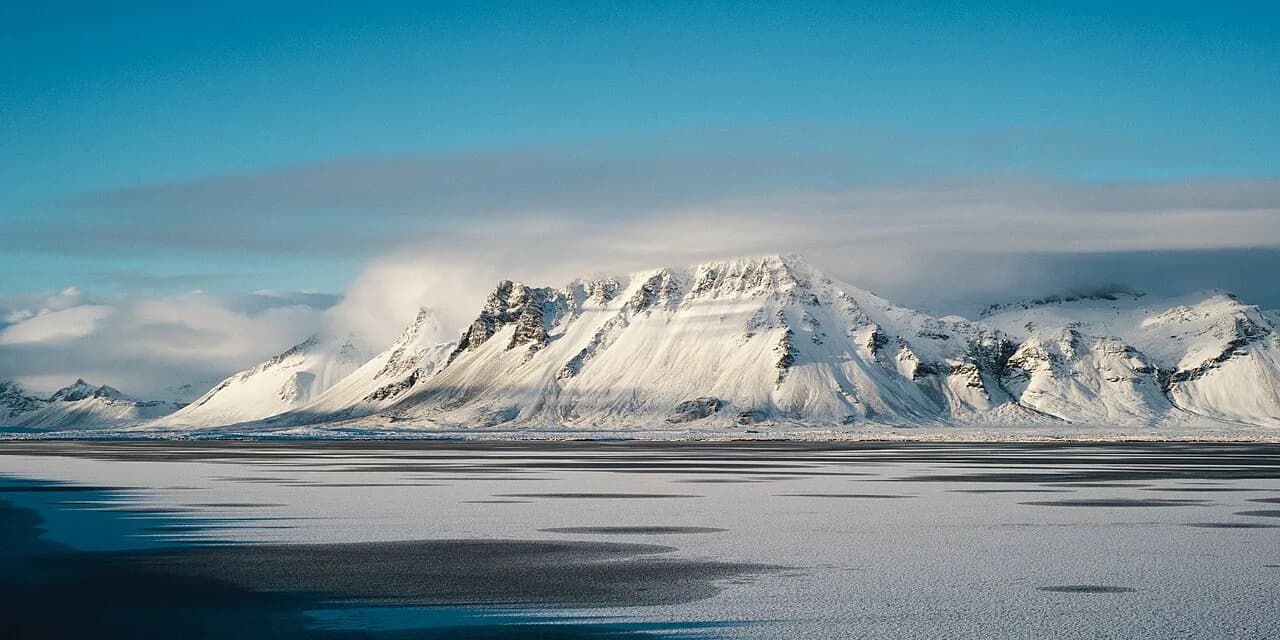
The peninsula pushes west into the Atlantic, so its tip and north shore have long, unobstructed horizons over water and lava fields, with the Snæfellsjökull glacier and its national park closing the western end. Iceland's aurora season runs from September to April, and winter is when the peninsula's snow-covered Kirkjufell and dark coastal roads draw aurora hunters.
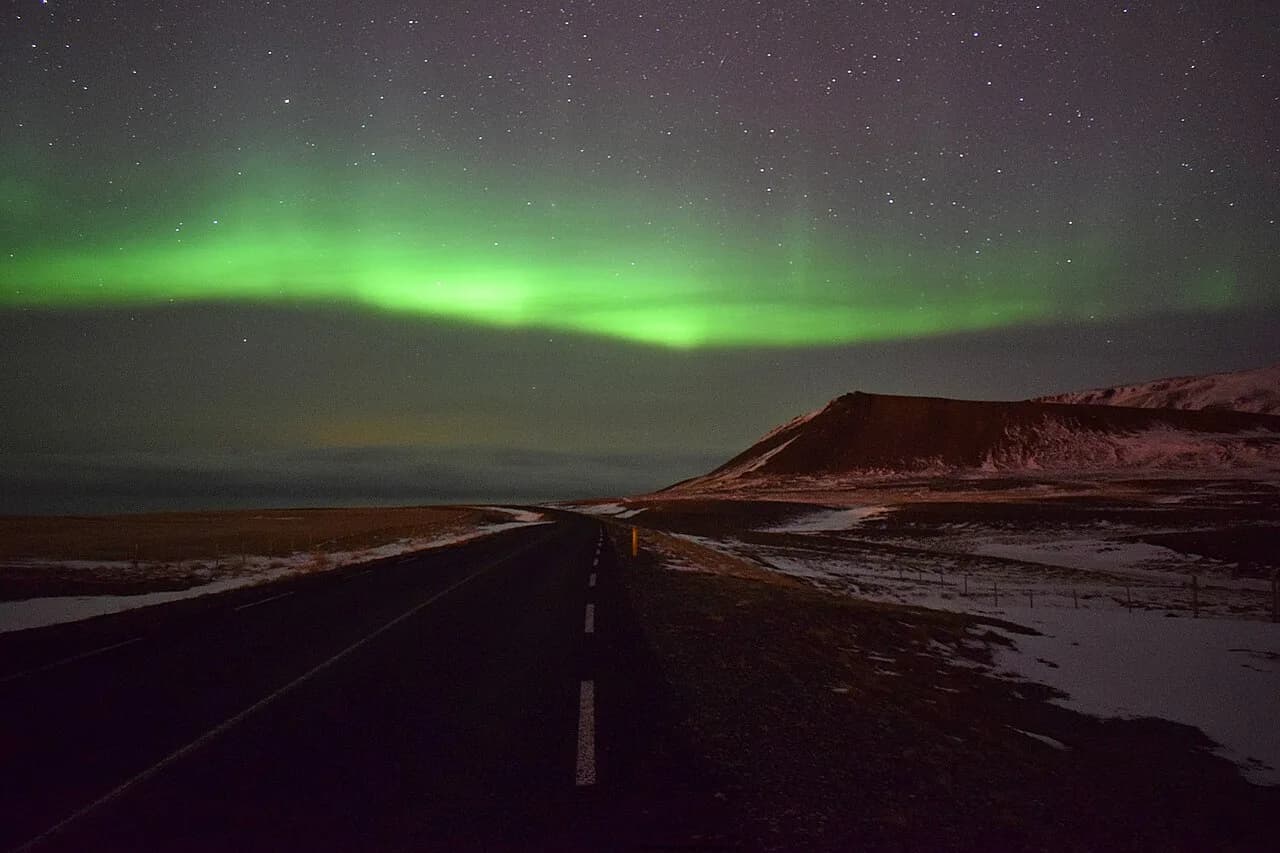
Being on the coast helps in one specific way: when cloud sits over the interior, a drive along Road 54 to a different stretch of shore can put you under a gap. The same logic applies everywhere in Iceland, but on Snæfellsnes the loop is short enough that repositioning costs an hour, not a night. For a fuller picture of conditions month by month, see the guide to Northern Lights at Snæfellsnes.
When the aurora season runs and which tours operate outside winter
Iceland's northern lights season runs from September to April, and Snæfellsnes is promoted as a winter aurora destination within that window. The peninsula's flagship small-group tour and its two- and five-day bundles are listed as running all year, which matters for autumn and spring travelers: you can visit in September or March when nights are dark but roads and daylight are easier. For the same season-and-spot decision elsewhere in the country, see this Iceland northern lights guide.
Autumn and spring trips are not a compromise on darkness — late September and mid-March both give long nights — but they change what you can do by day. Snow-dependent activities such as the Vatnshellir lava caving stop are year-round, while the glacier setting looks entirely different without snow cover. If your dates sit near the edges of winter, Snæfellsnes in March is a useful month-by-month reference.
How the peninsula is laid out
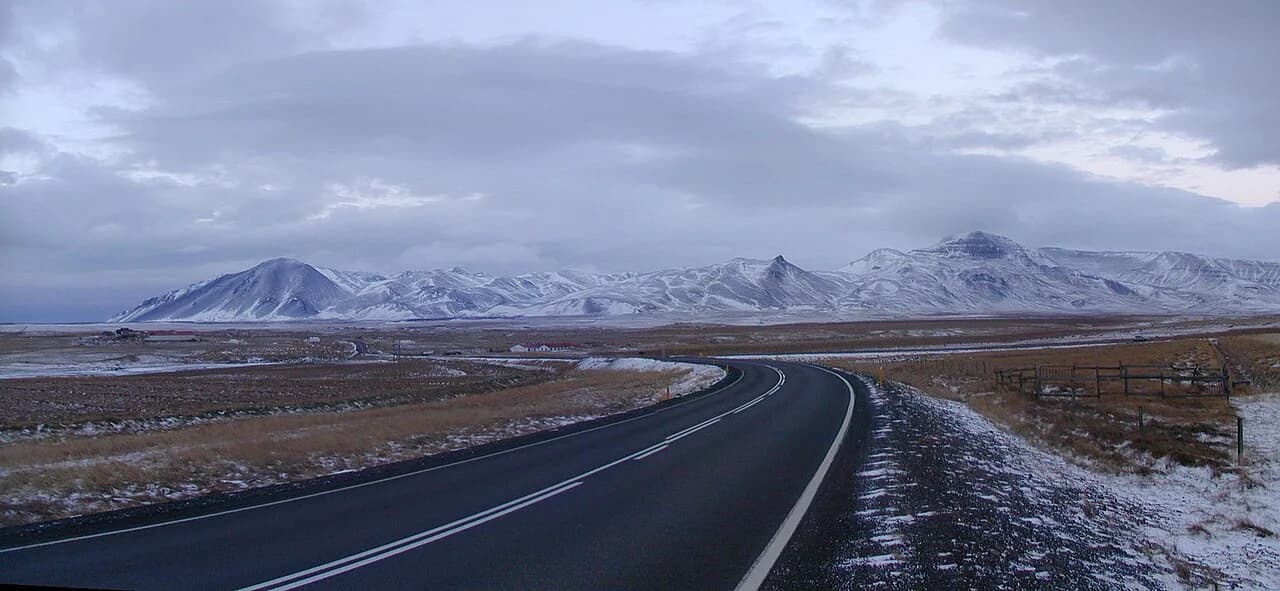
Road 54 circles the cape and Road 56 cuts across part of the region, so you can drive the full loop or shortcut the middle depending on time and weather. The western tip holds the Snæfellsjökull glacier and national park, while the main north-shore towns are Grundarfjörður and Stykkishólmur and the key fishing villages are Hellnar and Arnarstapi.
From Reykjavík the peninsula is roughly 97 miles, or 156 km, northwest of the capital, a straightforward two-hour drive — useful when you are deciding whether a night on the peninsula is worth it versus returning to town. Staying out west removes the late-night return drive, which is the single biggest practical argument for booking a night in Grundarfjörður or Stykkishólmur rather than day-tripping.
The small-group day tour format
The standard day product is a Snaefellsnes and Kirkjufell small-group sightseeing tour listed at about 11 hours, from 157 USD, departing Reykjavík with hotel or nearby meeting-point pickup and return transfer. It is a daytime sightseeing loop covering the peninsula's highlights, not an aurora chase, so treat any night sky as a bonus rather than the point of the booking.
Small-group sizing at this operator is generally 6–19 people per tour, which keeps stops quick and the vehicle maneuverable on winter roads. If your priority is photographing Kirkjufell under aurora, a day tour will not deliver it: you would need to be on the peninsula after dark, which means a night's accommodation or a dedicated evening departure.
Two-day tours that add caving and a night out
The two-day Snæfellsnes and West Iceland minibus format splits the trip: one day circumnavigating the peninsula and hitting the highlights, the other spent on West Iceland sights including lava caving. Arctic Adventures' two-day Snæfellsnes and Borgarfjörður Fjord tour, which takes in Kirkjufell, Hraunfossar, Reykholt and the Deildartunguhver hot spring with accommodation included, is listed from 466 USD.
The value here is the overnight: you are already on the peninsula when darkness falls, so an evening out after the lights costs you a short drive rather than a two-hour return to Reykjavík. Vatnshellir, the 8,000-year-old lava tube, is the caving stop most associated with the area. Check the specific listing for whether the night segment is guided, self-driven or optional.
Multi-day combinations: South Coast, ice cave and Ring Road
If Snæfellsnes is one stop on a longer Iceland trip, the five-day Snæfellsnes and South Iceland tour combines the peninsula with the South Coast and an ice cave, listed from 1,616 USD. The seven-day Ring Road tour, listed from 2,300 USD, adds the full circuit; both run all year and include the peninsula among their stops.
These bundles suit travelers who want one booking and a guide handling winter roads, but they spread your nights across many locations, so no single place gets more than one or two chances at a clear sky. If aurora is the main goal rather than one highlight among many, a shorter peninsula-focused stay with several nights in the same base usually beats a fast-moving multi-day circuit.
Independent travelers can build the same route themselves; specialist operators list self-drive and small-group northern lights itineraries across Iceland, Finland and Sweden with set seasons and durations, which is useful for comparing what a package includes against driving it yourself.
Self-drive options and chasing cloud
Self-guided trips that include the peninsula drive are a popular format, and Arctic Adventures offers a seven-day South Coast, Snæfellsnes and Golden Circle self-drive tour and a ten-day Complete Iceland itinerary. Driving yourself is the format that gives you the most control at night: you can leave dinner, drive 20 minutes to a darker stretch of Road 54 and wait.
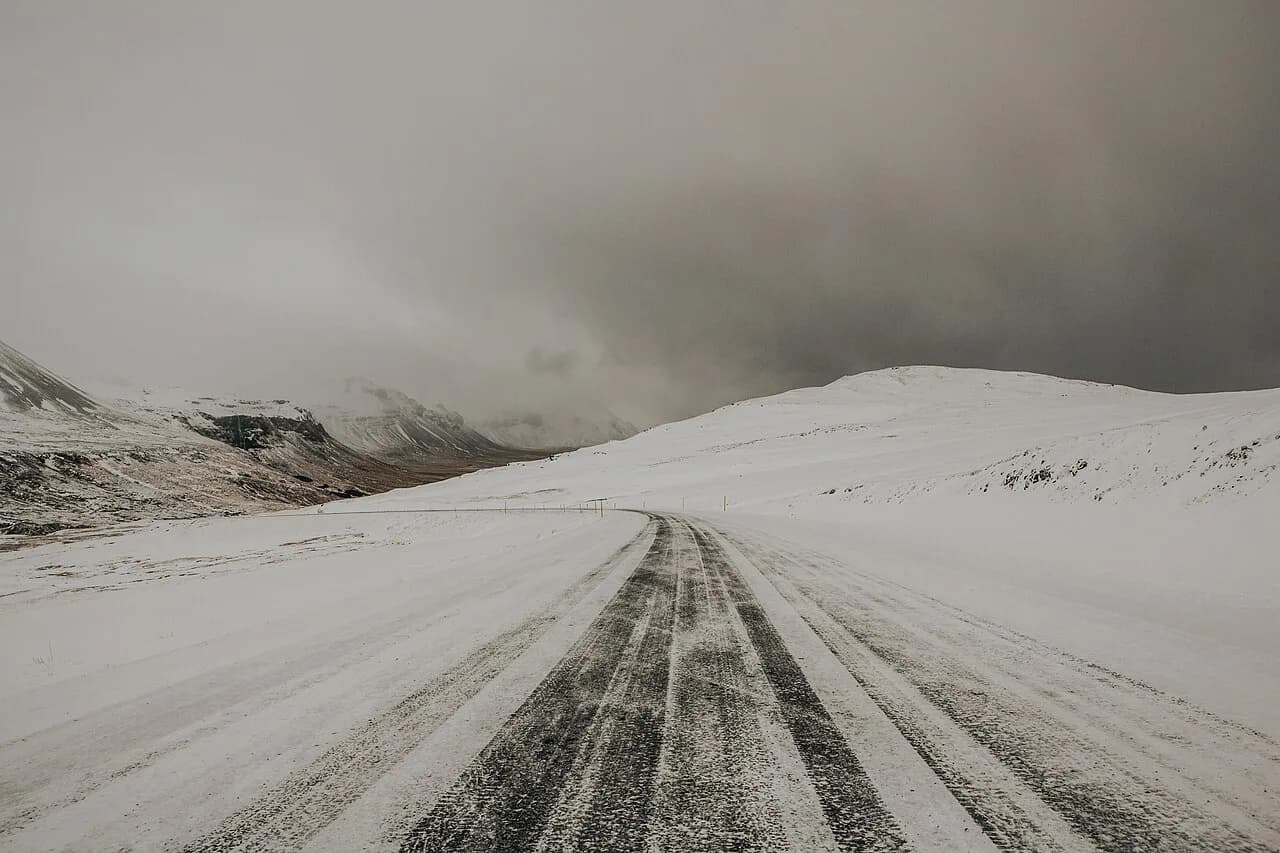
The trade-off is winter driving on exposed coastal roads and the need to judge conditions yourself; a guided evening departure removes that burden but fixes your location. Snæfellsnes in winter covers what the roads and light are like in the darker months if you are leaning toward driving.
Basing yourself on the peninsula
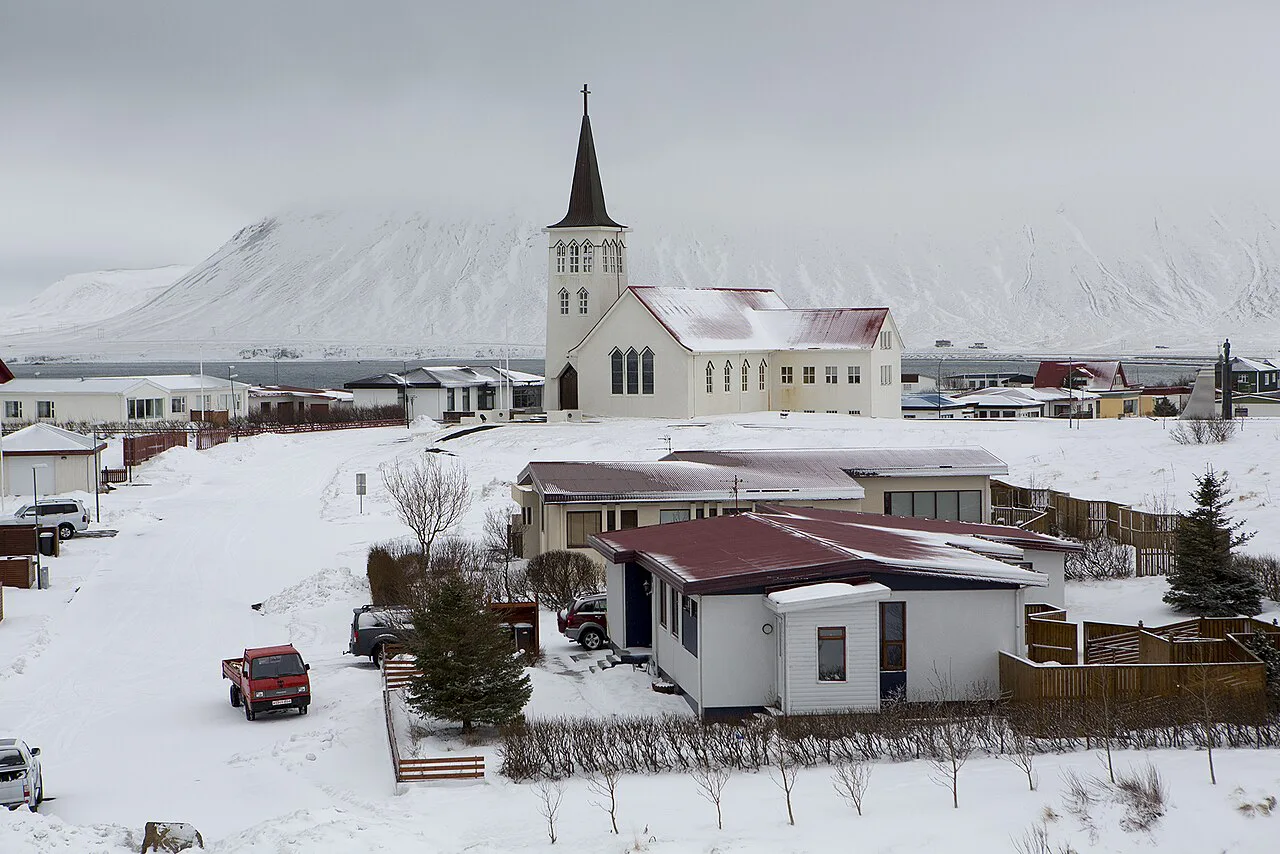
Grundarfjörður sits beneath Kirkjufell on the north shore and is the most practical base for night photography of the mountain; Stykkishólmur is the larger town, with more services and a harbor setting. On the south coast of the peninsula, Arnarstapi and Hellnar are small fishing villages with dramatic cliffs and easy access to the national park at the western tip.
Two nights split between the north and south shores lets you pick the clearer side on the night, since cloud can differ noticeably across the cape. A single night in Grundarfjörður is the classic choice for Kirkjufell, but it gives you one shot at a gap in the cloud.
Where to watch after dark
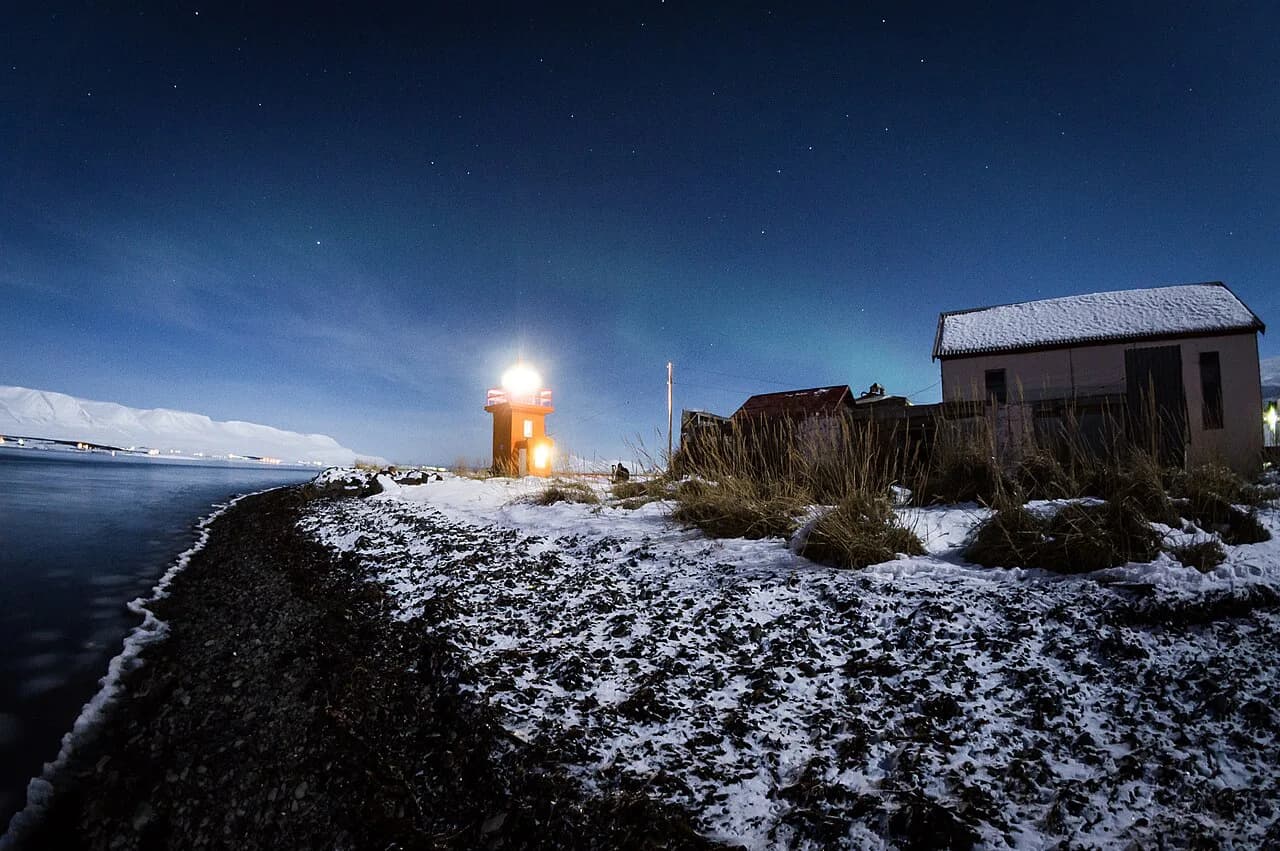
The strongest dark-sky options cluster at the western end: the Snæfellsjökull National Park tip, the black pebble beach at Djúpalónssandur with its shipwreck remains, and the basalt formations at Lóndrangar. All sit away from town lighting, and the national park landscape gives you a glacier and volcanic silhouette in the frame rather than just sky.
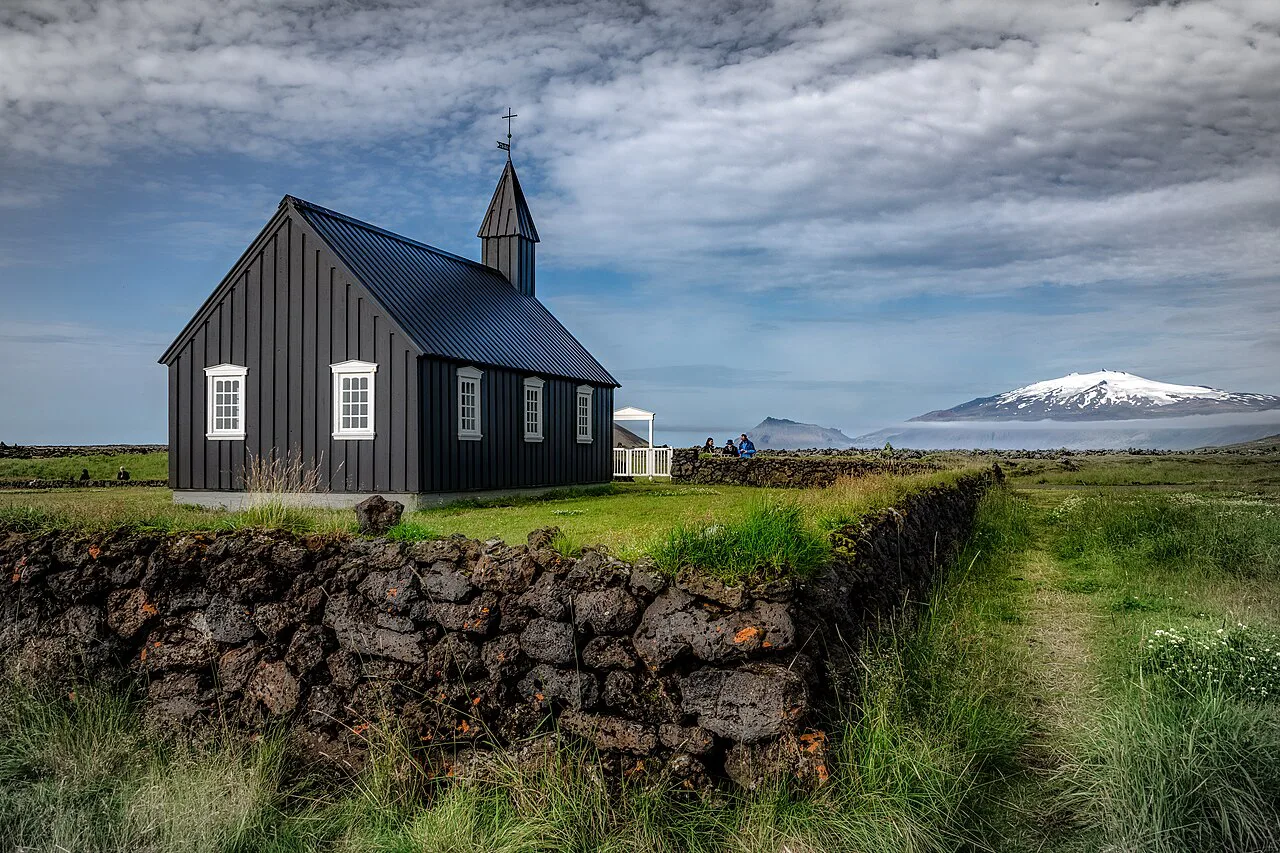
Near Grundarfjörður, the shoreline either side of town gives clear northern and western horizons with Kirkjufell in view; Búðir's black church in the lava fields is another recognizable foreground. Park well off the road, keep lights low and expect other photographers at the obvious Kirkjufell viewpoints on a forecast-clear night.
Kirkjufell at night
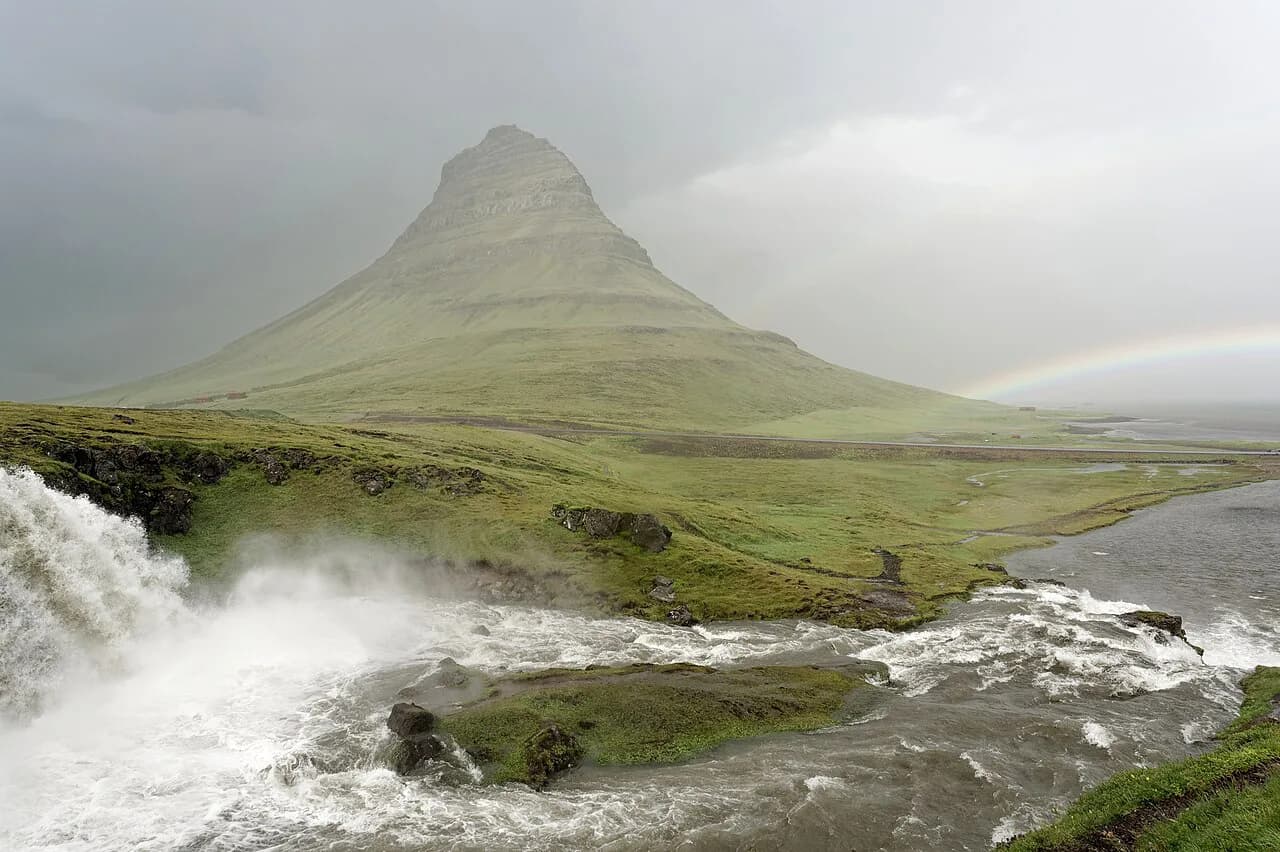
Kirkjufell's shape — a steep, church-like peak beside the waterfall and fjord — is what makes it Iceland's most photographed mountain, and it works at night because the silhouette reads even in low light. The practical problem is nearby light: the town of Grundarfjörður and roadside lighting sit close enough to affect long exposures, so the classic shot depends on where you stand and how you shade the lens.
Tours that frame the shot typically position you at the waterfall side with the mountain across the water, but the aurora has to be active and the sky clear for the image to exist at all. Kp forecasts are guidance only; cloud cover and true darkness decide the night.
Guided chase versus staying put
A driver-guide with local weather knowledge can move you between the north and south shores when cloud builds, which is the main argument for booking a guided evening rather than waiting at one viewpoint. Against that, guided departures run to a schedule and a group, so you trade flexibility over where you stand for someone else making the call.
Staying put works when you have your own car and several nights: you can check the cloud picture each afternoon and choose the shore with the best gap. The sensible compromise for a short trip is one guided evening to learn the terrain and one self-drive night to use it.
What the listings actually include
The day and multi-day tours from Reykjavík include pickup and return transfer from your hotel or a nearby meeting point, and the two-day format includes accommodation. What the main Snæfellsnes listings do not spell out is thermal clothing, hot drinks or photo packages, so ask the tour company directly whether a suit is provided.
Comparing like with like across operators is simpler if you check three things on each listing: whether the night segment is guided, whether food and drink are included, and whether the cancellation terms cover a cloudy night. Specialist operators publish season windows and durations per trip, which helps you see how many nights a package actually places you under dark skies.
How many nights to plan
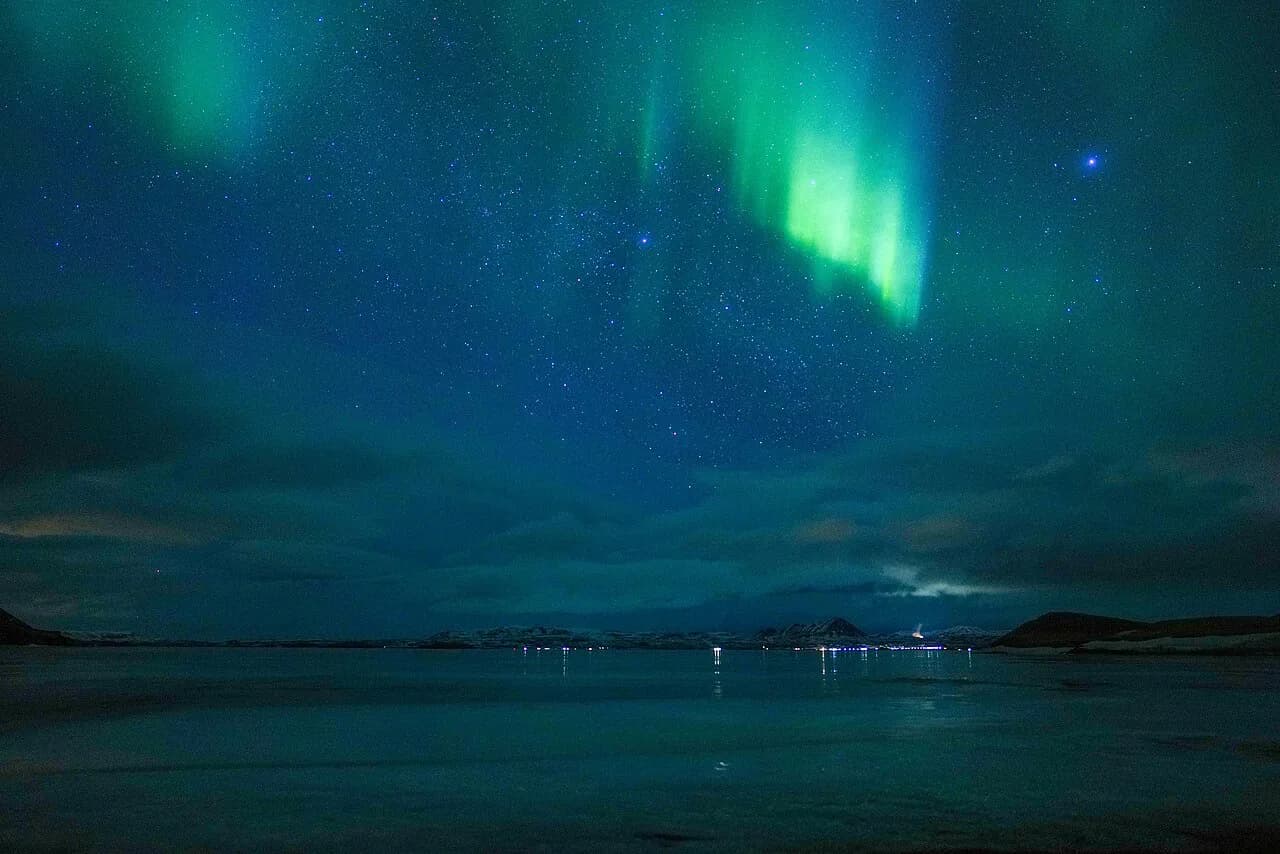
Aurora visibility depends on solar activity and clear skies together, and neither is guaranteed on any given night, so the honest approach is to buy more nights than you think you need. Three nights on the peninsula gives a fair chance of at least one clear evening; a single night is a gamble whatever the forecast says.
Multi-day packages spread your nights across different regions, which improves your odds of finding clear sky somewhere but reduces your chances at any one spot. If Snæfellsnes itself is the goal, base there for two or three nights and treat any longer tour as a separate part of the trip.
Making the call
Choose the 11-hour small-group day tour if you want the peninsula's landscapes with pickup and no driving, and accept that the night sky is not part of the product. Choose the two-day or a self-drive stay if aurora is the reason you are going, and give yourself at least two or three nights on the peninsula to use a clear gap.
Whichever format you pick, check with the tour company whether clothing, hot drinks and photographs are included and how a cloudy night is handled before you pay, since those details vary by listing.
Frequently Asked Questions
Is Snæfellsnes good for seeing the northern lights?
Yes, it can be. The peninsula reaches west into the Atlantic with long, dark coastlines, the Snæfellsjökull glacier and national park at the tip, and a short loop of road that lets you move between shores when cloud builds. Iceland's aurora season runs from September to April, and winter is when the peninsula's snow-covered Kirkjufell draws aurora hunters. Sightings still depend on solar activity and clear skies, so no format can promise one.
Can you see the northern lights on a Snæfellsnes day tour from Reykjavík?
Not as the point of the trip. The standard small-group day tour is a roughly 11-hour daytime sightseeing loop from Reykjavík with pickup and return transfer, so you are back in the capital rather than on the peninsula after dark. To be under a dark sky on Snæfellsnes you need a night's accommodation there, a two-day itinerary that includes an evening out, or your own car.
How far is Snæfellsnes from Reykjavík?
The peninsula is roughly 97 miles, or 156 km, northwest of Reykjavík, a straightforward drive of about two hours. That makes a day trip feasible, but it also means a late-night return if you try to combine sightseeing with aurora watching in one day. Staying on the peninsula for a night or two removes that return drive.
Can you visit Snæfellsnes in winter?
Yes. The peninsula is accessible in winter and is described as well suited to small-group excursions from Reykjavík, with snow-covered Kirkjufell a highlight. Winter brings the dark nights aurora hunters want, alongside shorter daylight and winter driving conditions on exposed coastal roads.
Should you do Snæfellsnes or the South Coast?
They offer different things: Snæfellsnes packs glacier, lava fields, fishing villages and Kirkjufell into a compact loop, while the South Coast is known for waterfalls and black sand beaches. If you have the time, a five-day tour combines both with an ice cave, which is a sensible way to see each without choosing.
Is there a self-drive Snæfellsnes option?
Yes. Self-guided trips including the peninsula drive are offered, including a seven-day South Coast, Snæfellsnes and Golden Circle itinerary and a ten-day Complete Iceland route. Driving yourself gives you the most freedom to reposition after dark when cloud shifts, at the cost of judging winter road conditions yourself.
Sources
Notes for your Arctic winter trip
Optional updates to our northern lights guides.
You might also like
Continue reading
More guides you'll find useful