Northern Lights Snæfellsnes: Season, Spots & Stays
Plan an aurora trip to the Snæfellsnes Peninsula: when winter nights are dark enough, the best dark-sky viewpoints, road conditions and where to base yourself.
On this page
Snæfellsnes gives you an Arctic winter trip with an aurora habit built in: a glacier-capped volcano, black and golden beaches, basalt sea stacks and a handful of small fishing villages spread along a 90-kilometre peninsula in West Iceland. Because the settlements are small and the coastline is open, you can spend the day on Kirkjufell or Djúpalónssandur and then drive a short way to a dark horizon after dinner. It suits travellers who want to self-drive, keep their own hours and treat the aurora as one part of a wider winter landscape rather than a single organised night out.
The peninsula sits about 145 kilometres, or roughly two to three hours by car, from Reykjavik via Route 54. That distance is what makes it a genuine base rather than a day-trip add-on: staying one or two nights lets you sightsee in the short daylight and keep the evening free for sky watching.
Why Snæfellsnes works for aurora watching
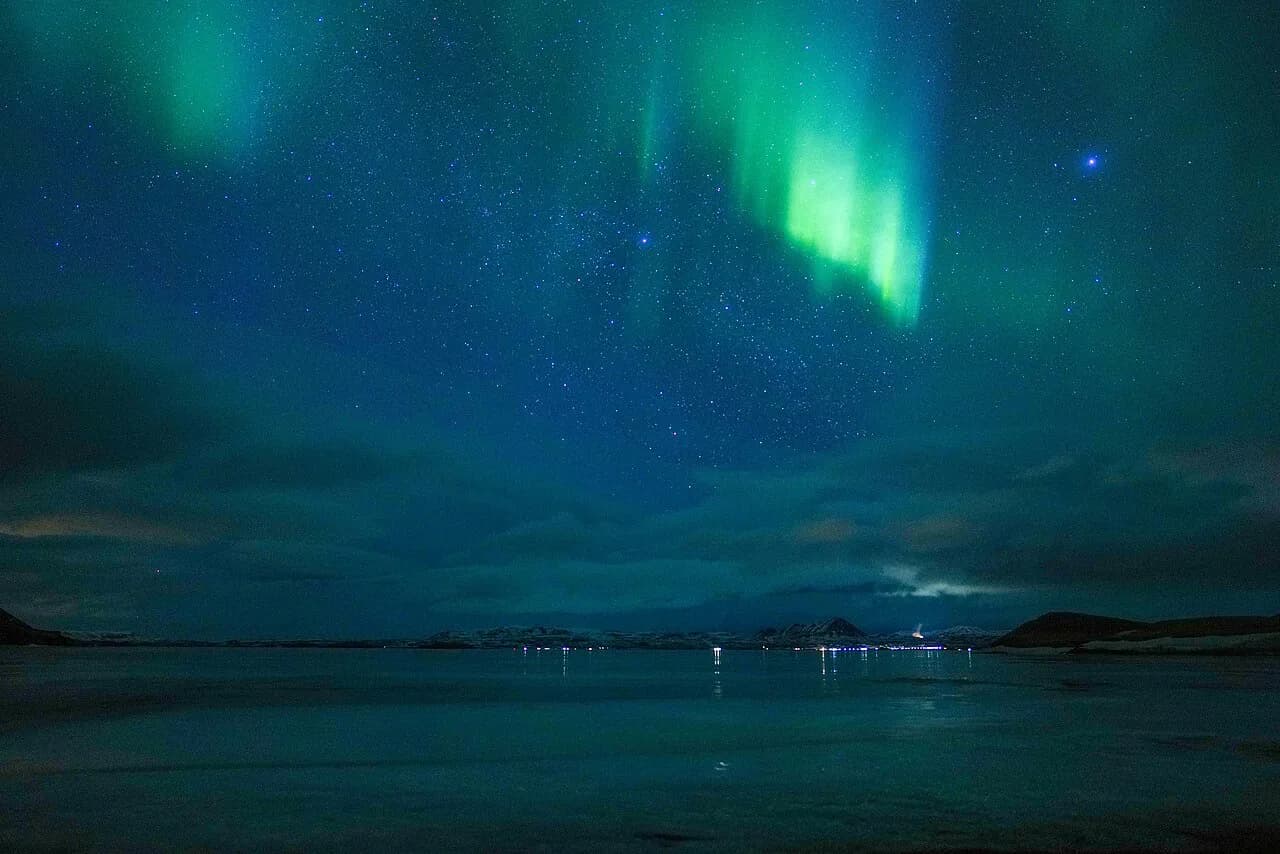
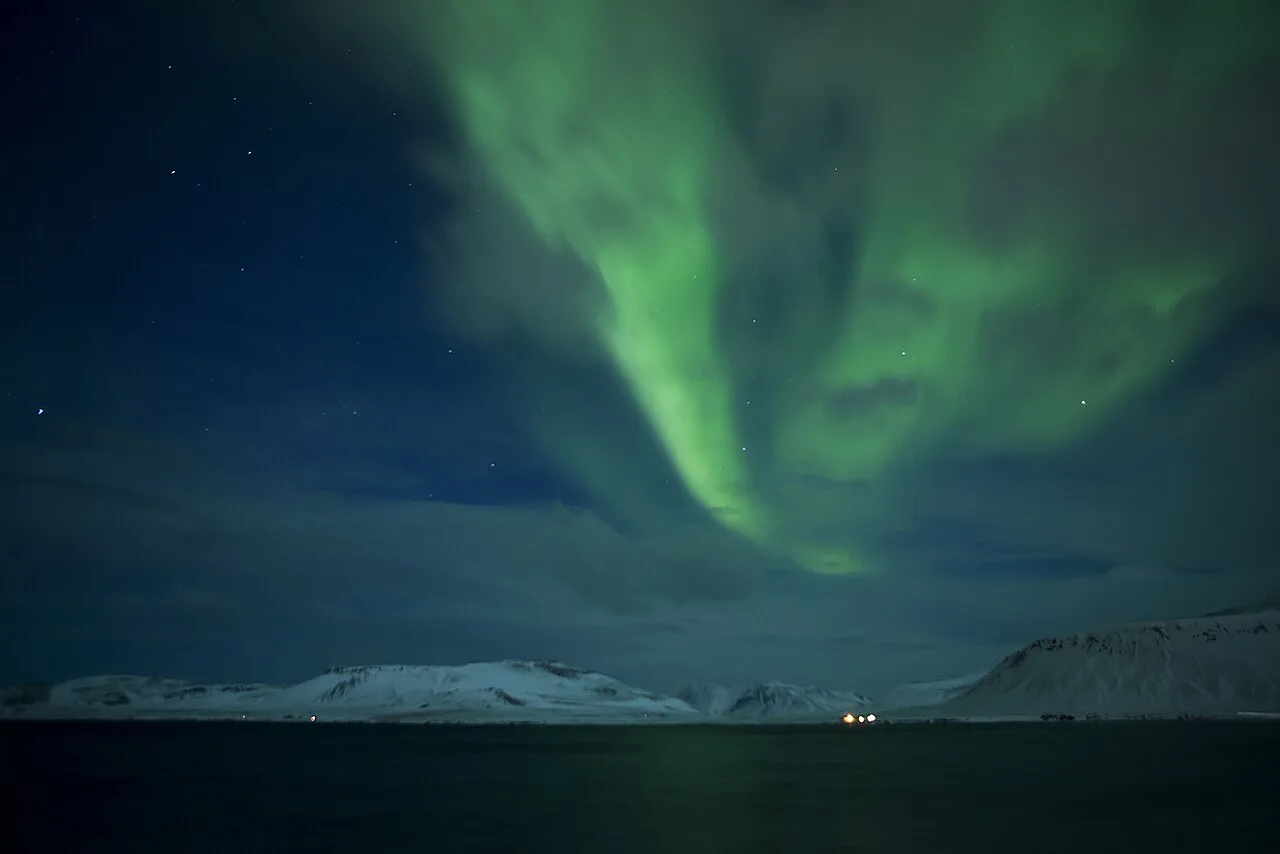
Aurora appears here for the same reason it appears across Iceland: the peninsula lies under the auroral oval, so geomagnetic activity that is strong enough can put light overhead on any dark, clear night. What Snæfellsnes adds is a low population and a long, unlit coastline, with towns of a few hundred to a couple of thousand people rather than a capital's glow. In practice that means you can be standing under an open sky within minutes of your guesthouse.
The terrain helps too. The peninsula combines lava fields, a glacier, mountains and beaches in one compact region, and the varied geography means a cloudy patch in one spot often gives way to clearer sky a few kilometres away. That microclimate is the single most useful thing to understand about chasing here: you are not locked into one viewpoint for the night, and a short repositioning drive is often more effective than waiting.
One caution about the season: the aurora is present year-round but visible only when the sky is dark, and from May to July Iceland has far too much daylight. Your window is the darker half of the year, not the calendar year.
When the aurora season runs and how much darkness you get
The practical season runs from mid-August to late April, with September through March giving the strongest mix of long nights and workable viewing hours. Perlan's month-by-month breakdown puts the start of useful darkness around mid-August, when nights darken quickly toward the end of the month. If you are weighing a larger Icelandic trip around these months, this northern lights in Iceland guide sets out the national season alongside it.
Daylight figures show why the edges of the season behave so differently. In early September the sun sets around 20:36 in Reykjavik, in early November around 16:58, and by early December around 15:44, so the usable dark window stretches from a few late hours in autumn to almost the whole afternoon and evening in midwinter.
Travellers weighing a March trip should read the darkness as well as the weather: nights are shortening but remain long enough for viewing, and the equinox period is often discussed as a time of livelier geomagnetic conditions. Kp forecasts are guidance only, so treat any predicted number as a hint about activity, never a promise of a display over your head.
Weather, cloud and road conditions from September to April
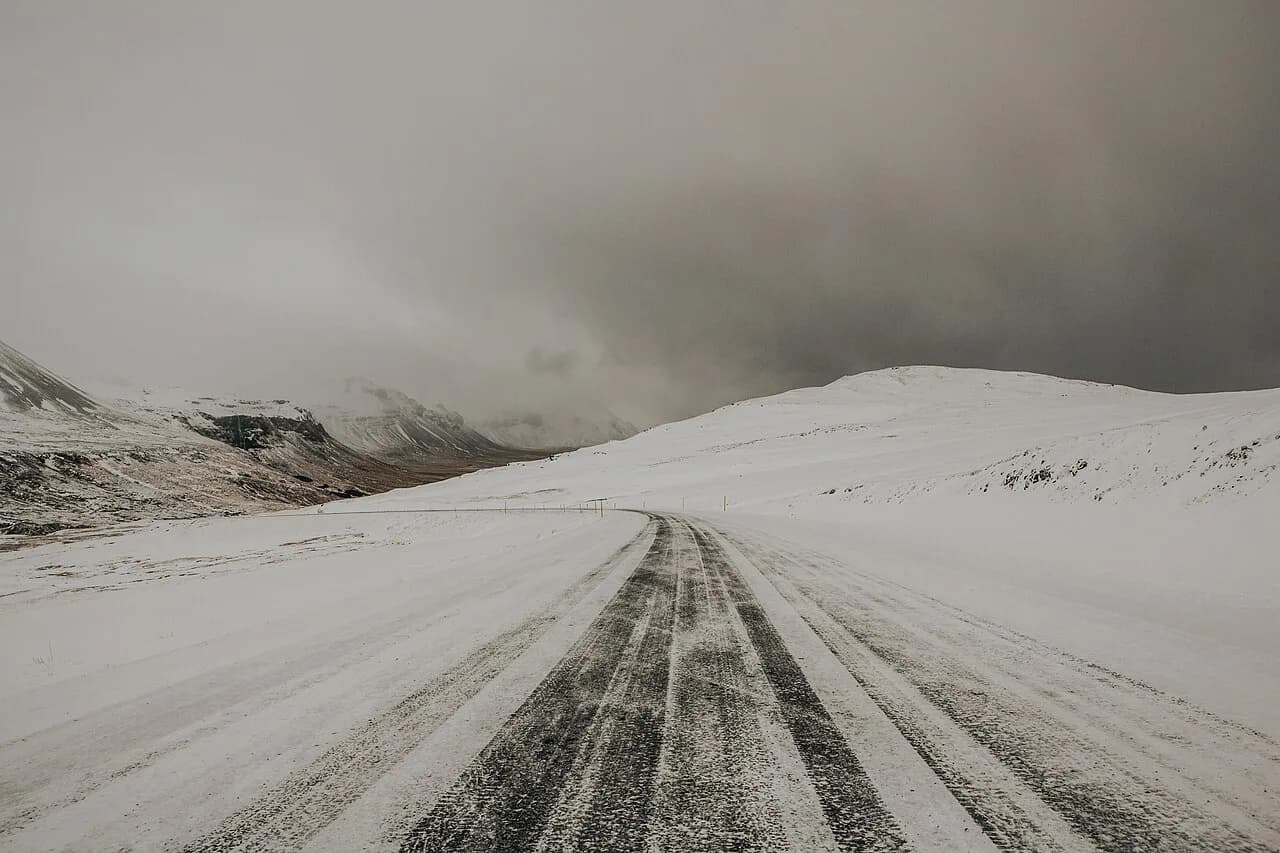
Snæfellsnes sits between ocean currents and prevailing winds, so conditions shift quickly across the peninsula. September and October generally bring manageable roads with increasing darkness, November to February are the least predictable months for driving but the deepest for night hours, and March and April improve as daylight returns.
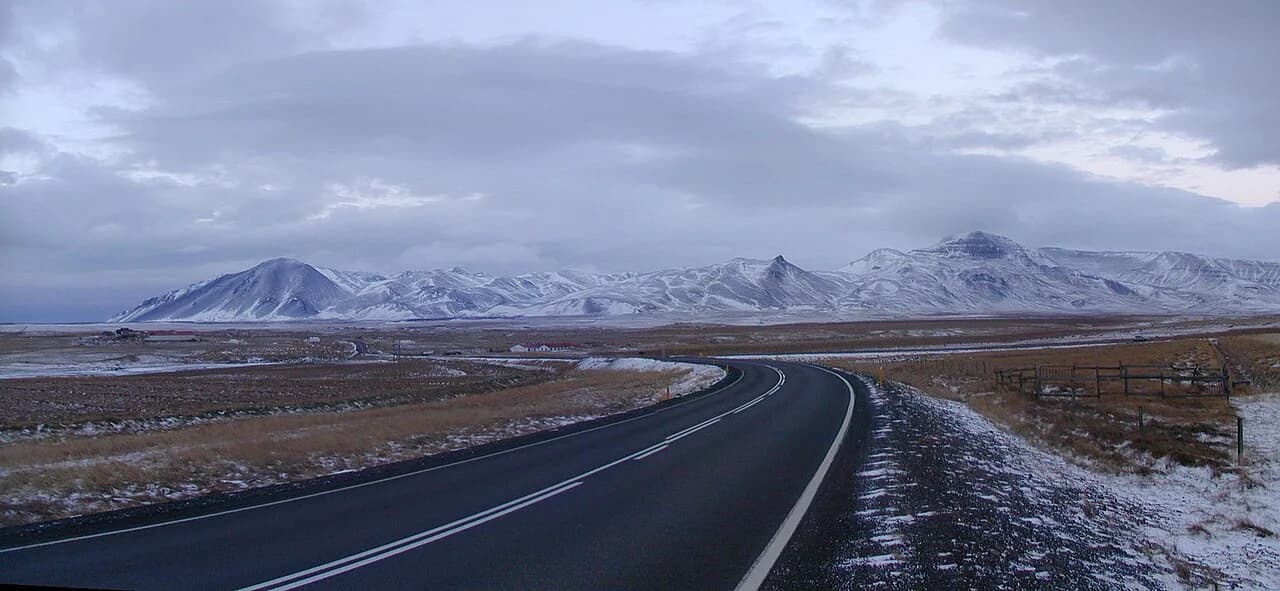
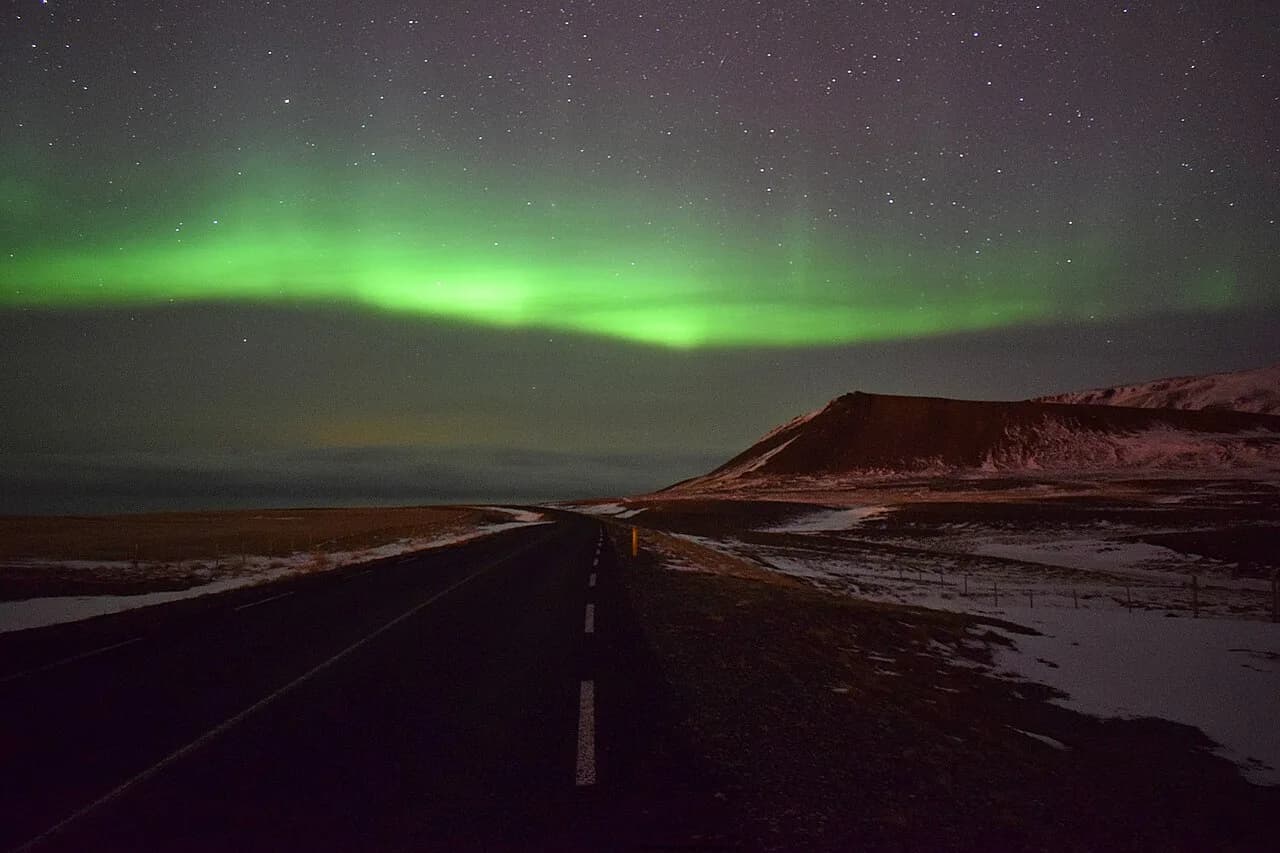
Route 54, the loop around the peninsula, stays generally open through winter, but the mountain roads that cut across the interior typically close from October through May because of snow and avalanche risk. That shapes your evening plan: you will be driving the coast, not taking shortcuts, so allow more time between a daytime sight and your after-dark viewpoint.
Winter driving here rewards a 4WD and a flexible schedule rather than a fixed itinerary. Build in an alternative viewing spot for every night, and treat a snow shower as a reason to move a few kilometres rather than to give up.
Kirkjufell and Kirkjufellsfoss: the classic foreground
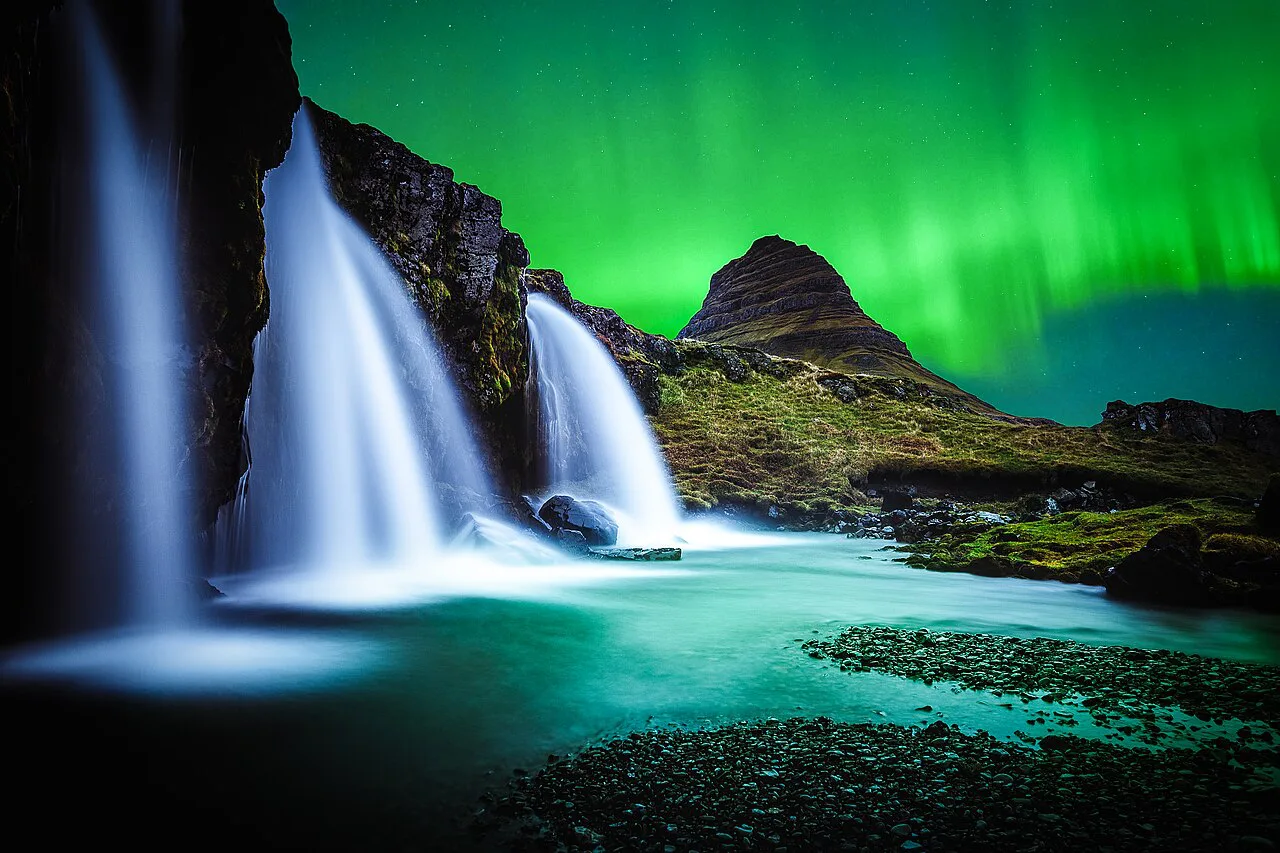
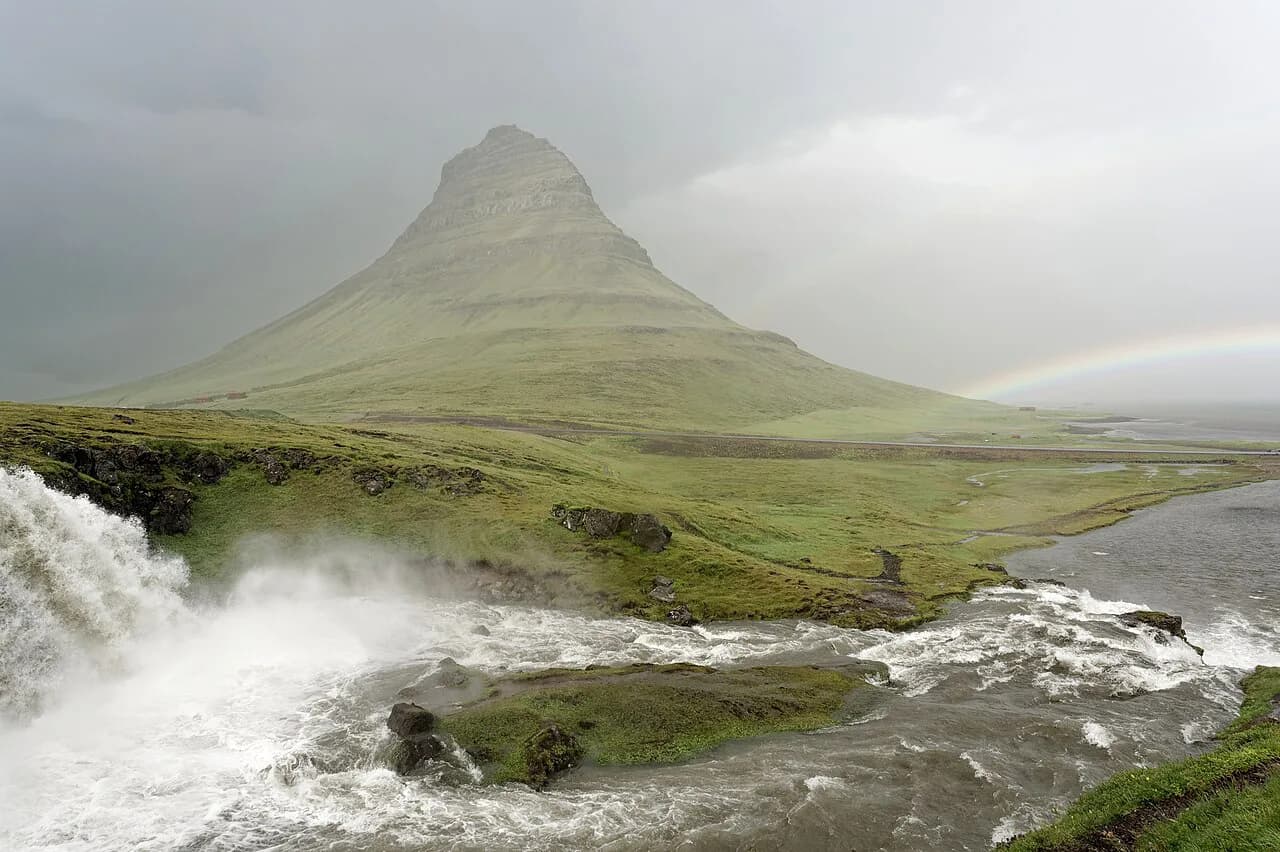
Kirkjufell, the arrowhead-shaped mountain above Grundarfjörður, is the peninsula's signature aurora frame, with Kirkjufellsfoss waterfall in the foreground and multiple angles along the nearby road. It is easy to reach from a car park, which makes it the obvious first stop on a strong forecast night. The trade-off is company: on nights when activity is predicted, photographers gather here in numbers, and the most popular angles fill first.
If you want the classic shot without the crowd, come later in the evening or pick a weekday, and use the daylight hours to scout your composition so you are not fumbling in the dark. Then keep a second location in reserve: Saxhóll crater, Lóndrangar or a quiet stretch of the south coast gives you the same open sky with far fewer people.
Snæfellsjökull National Park: lighthouses, craters and pull-outs
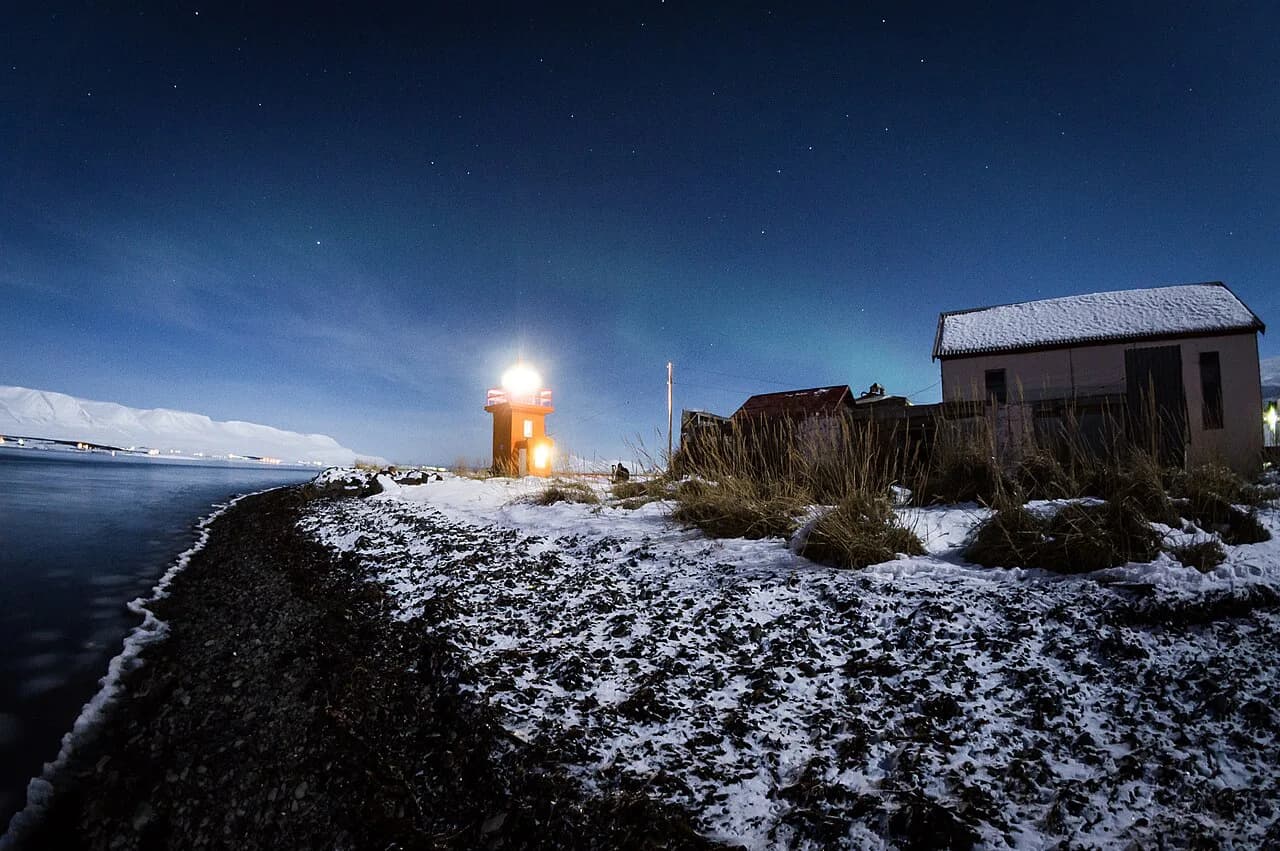
The national park around Snæfellsjökull glacier is the darkest, quietest part of the peninsula, and several parking areas give safe access to viewing spots without a long hike in the dark. The coastal area near Malarrif lighthouse pairs seascapes with aurora reflections, while elevated viewpoints open up panoramic views across the lava fields.
Saxhóll crater is the easiest elevated option, with a metal staircase to the rim and a 360-degree view across the surrounding lava. A five-minute climb puts you above the immediate foreground clutter, which helps when the aurora is moving across a wide arc of sky.
Hellissandur, the village closest to the park, makes a sensible base if the park is your priority after dark: you are minutes from the park boundary and well away from the brighter harbour towns. Its guesthouses and apartments, including the Freezer Hostel and Freezer Apartments, put you close to the trailheads.
South-coast stretches and beaches for solitude
The southern shoreline holds long stretches of undeveloped coast where black sand meets open Atlantic, and these are the places to go when you want a horizon with nothing on it. Djúpalónssandur, with its black pebble beach and lifting stones, and the basalt pillars at Lóndrangar are both dark-sky stops with dramatic shapes to anchor a photo.
These spots demand more care after dark: paths are uneven, surf is loud and close, and there is no lighting. Arrive in daylight once to learn the access, then return on a clear night with a headtorch and a fixed meeting point. The reward is often the solitude the famous viewpoints lack.
Self-drive chasing versus a guided aurora tour
Self-driving gives you the flexibility that matters most on this peninsula: the freedom to change location when cloud moves in and to stay out as long as the sky is active. Route 54 is straightforward in good conditions, and basing yourself on the peninsula removes the late-night return to Reykjavik that undermines a day-trip approach.
Guided tours suit travellers who would rather not drive icy roads in the dark or read forecasts themselves. Operators watch cloud and activity forecasts and adjust routes in real time, and the minibus and superjeep formats reach darker routes than a coach. Compare options by group size and whether transport and guidance are included rather than by headline promises.
Where to base yourself on the peninsula
Stykkisholmur is the largest town and the most practical base, with restaurants, grocery stores, fuel and a harbour framed by Sugandisey island. It suits travellers who want services and a choice of accommodation, including the historic Hotel Egilsen, and who accept a longer drive to the western park.
Grundarfjörður sits at the foot of Kirkjufell, which is visible from almost every angle in town, making it the photographer's base if the mountain is your main subject. Ólafsvík, a working fishing town near the park, suits travellers combining aurora with whale-watching and glacier tours, while Arnarstapi and Hellnar offer a coastal walking trail of basalt cliffs and seabird colonies.
Búðir, with its black church and lava fields, is a quieter choice and home to Hotel Búdir, a scenic stay in the heart of the dramatic landscape. Book ahead for winter, when some smaller properties close and availability tightens around strong forecasts.
Getting there from Reykjavik in winter
From Reykjavik, follow Route 1 north to Borgarnes, then take Route 54 onto the peninsula; the drive is roughly two to three hours depending on conditions and where you stop. In winter, check road conditions before setting out and allow daylight for the approach rather than arriving after dark on an unfamiliar road.
Public transport is limited: there is a bus from Reykjavik to Stykkisholmur, but no public transport within the region, and bikes cannot be carried on that bus. Without a rental car or a tour, moving between villages and viewpoints after dark is impractical, which is worth knowing before you book a bus ticket.
How many nights to allow for clear skies
Two nights on the peninsula is the minimum that makes the trip worthwhile, and three gives you a fair chance of a clear window across a typical winter stay. The reasoning is simple: cloud cover is the main obstacle, so the more nights you have, the more chances you get to find a hole in it. A single night, especially tacked onto a Reykjavik day trip, leaves little room if the sky closes in.
Build in a buffer at the edges of the season. August and April change quickly hour by hour, while December and January give you the longest nights but the harshest driving. Wherever you land, plan at least one flexible evening and keep your accommodation booking changeable.
A simple dark-hours rhythm for your stay
Use the short daylight for the long drives and the sights: Kirkjufell and its waterfall, the national park trails, Djúpalónssandur and the coastal villages. Then eat early, rest, and head out after sunset, when the likeliest aurora window tends to fall between about 9 pm and 2 am.
Pick two or three viewpoints within a short drive of your bed for the night, ranked by how easy they are to reach in the dark. Check the cloud and aurora forecast before you leave, drive the coast rather than the closed interior roads, and give yourself permission to move when the sky above one valley is better than another.
Plan Your Aurora Nights on Snæfellsnes
Snæfellsnes rewards travellers who treat it as a two- or three-night base rather than a stop on a Ring Road checklist. Stay near the national park or in Grundarfjörður for dark skies, keep Stykkisholmur for services, and plan each evening around a short drive to an open horizon.
No one can promise a display, but darkness, clear skies and patience are the variables you control. Check the Icelandic Met Office cloud forecast and an aurora forecast before you drive out, keep your plans flexible, and let the peninsula's empty coastline do the rest.
Explore more Snæfellsnes northern lights guides
Frequently Asked Questions
Can you see the northern lights on the Snæfellsnes Peninsula?
Yes, when the sky is dark and clear and geomagnetic activity is strong enough. The peninsula has low light pollution and long unlit stretches of coast, so it is one of Iceland's better aurora bases. Sightings still depend on solar activity and cloud cover, so no one can guarantee a display on a given night.
What is the best month for aurora on Snæfellsnes?
September through March give the strongest combination of long nights and workable viewing hours, with mid-August to late April marking the wider season. December and January offer the most darkness but the most difficult driving. March balances longer days with nights that are still dark enough for viewing.
Is Snæfellsnes good for northern lights without a tour?
Yes, if you are comfortable driving in winter conditions. Route 54 stays generally open, and the national park and south-coast beaches offer dark viewpoints within a short drive of the villages. The interior mountain roads typically close from October through May, so you will be driving the coast.
How long does it take to drive to Snæfellsnes from Reykjavik in winter?
Plan on roughly two to three hours via Route 1 to Borgarnes and then Route 54, depending on conditions and stops. Winter weather can slow the drive, so check road conditions before setting out and allow daylight for the approach rather than arriving after dark on an unfamiliar road.
Where should you stay on Snæfellsnes for aurora viewing?
Hellissandur is closest to the national park's dark skies, while Grundarfjörður puts Kirkjufell on your doorstep. Stykkisholmur offers the most restaurants, fuel and accommodation choice but sits further from the western viewpoints. Búðir and the Arnarstapi and Hellnar area suit travellers who want a quieter coastal setting.
Is Kirkjufell crowded when the aurora forecast is strong?
Yes, photographers gather at Kirkjufell and Kirkjufellsfoss on nights when activity is predicted, and the most popular angles fill first. Arriving later in the evening or visiting on a weekday helps. Keep Saxhóll crater or a south-coast beach as a backup with the same open sky and far fewer people.
Sources
Notes for your Arctic winter trip
Optional updates to our northern lights guides.
You might also like
Continue reading
More guides you'll find useful