Lake Mývatn Winter Guide: Northern Lights & Nature Baths
Lake Mývatn is North Iceland's northern lights base, with geothermal baths, lava fields and dark skies. Here's when to go, where to watch and how long to stay.
On this page
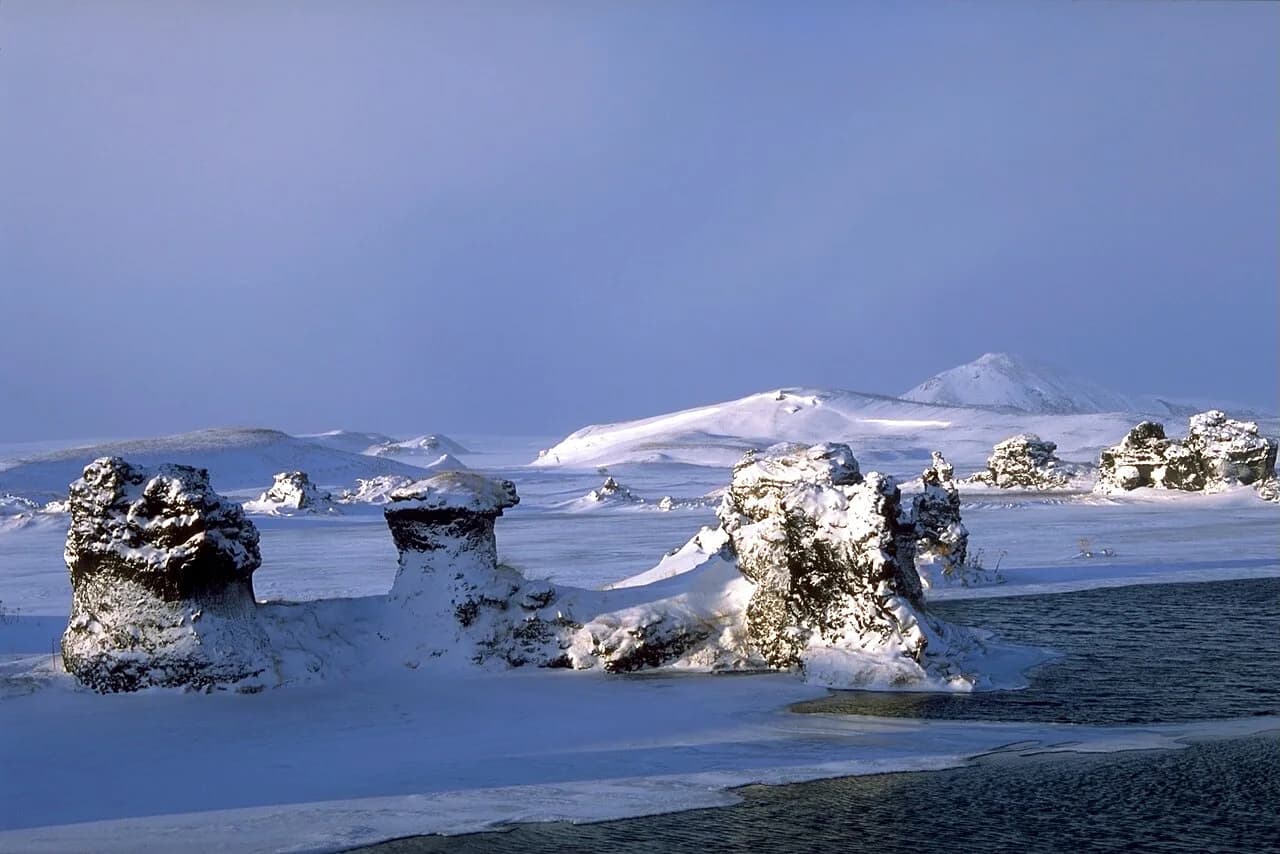
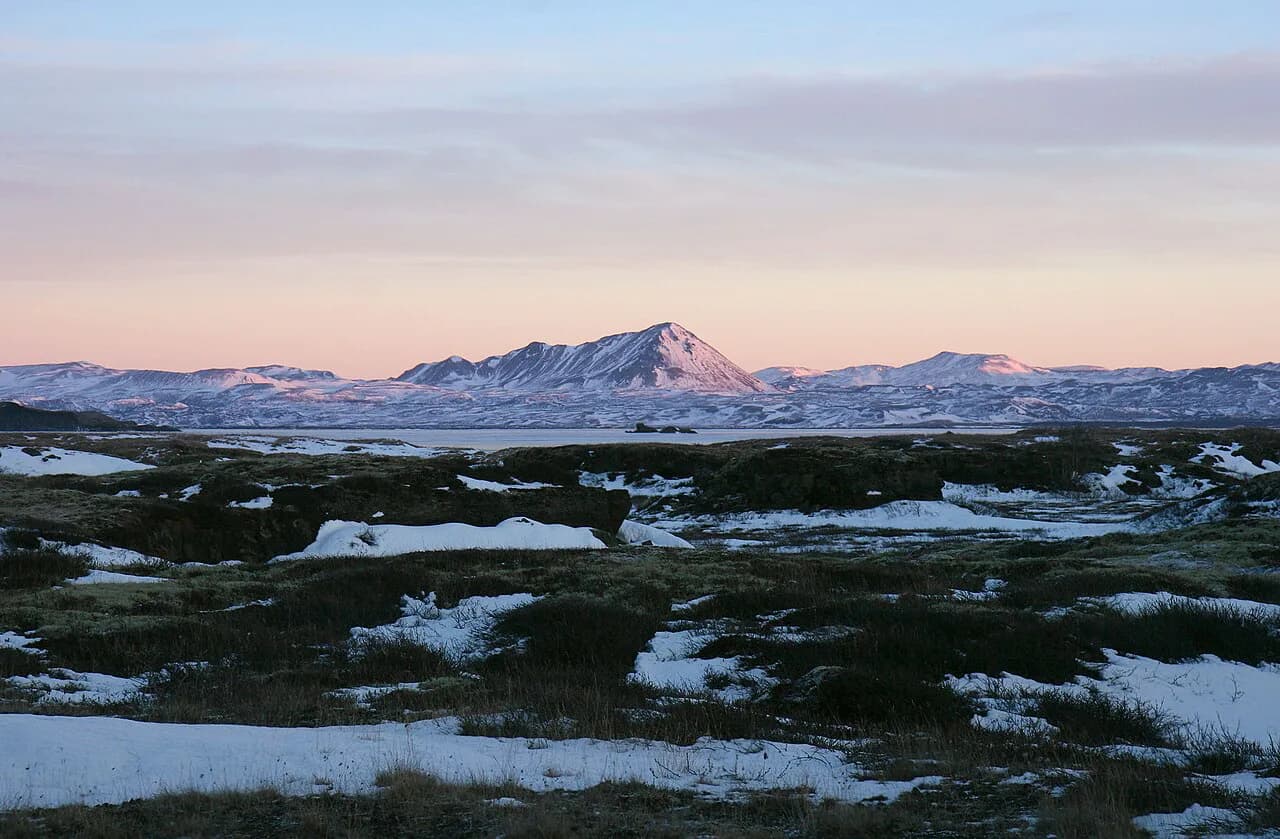
Lake Mývatn sits in Northeast Iceland, roughly 100 km east of Akureyri on the Ring Road, surrounded by steaming lava fields, explosion craters and a milky-blue geothermal lagoon. Winter strips the crowds away and leaves long dark nights over shallow water and open lava plains, which is exactly why the area has become one of North Iceland's most practical aurora bases. It suits travelers who want volcanic scenery by day and dark skies by night without committing to the highlands or a remote fjord.
The setup is simple: most visitors sleep in Reykjahlíð on the northern shore, drive a compact loop of sights during the short daylight, and keep the evening free for aurora watching or a geothermal soak. Skútustaðir and the lakeshore add quieter alternatives. Distances between stops are short, but you need your own wheels to link them after dark.
Why Lake Mývatn works as a northern lights base
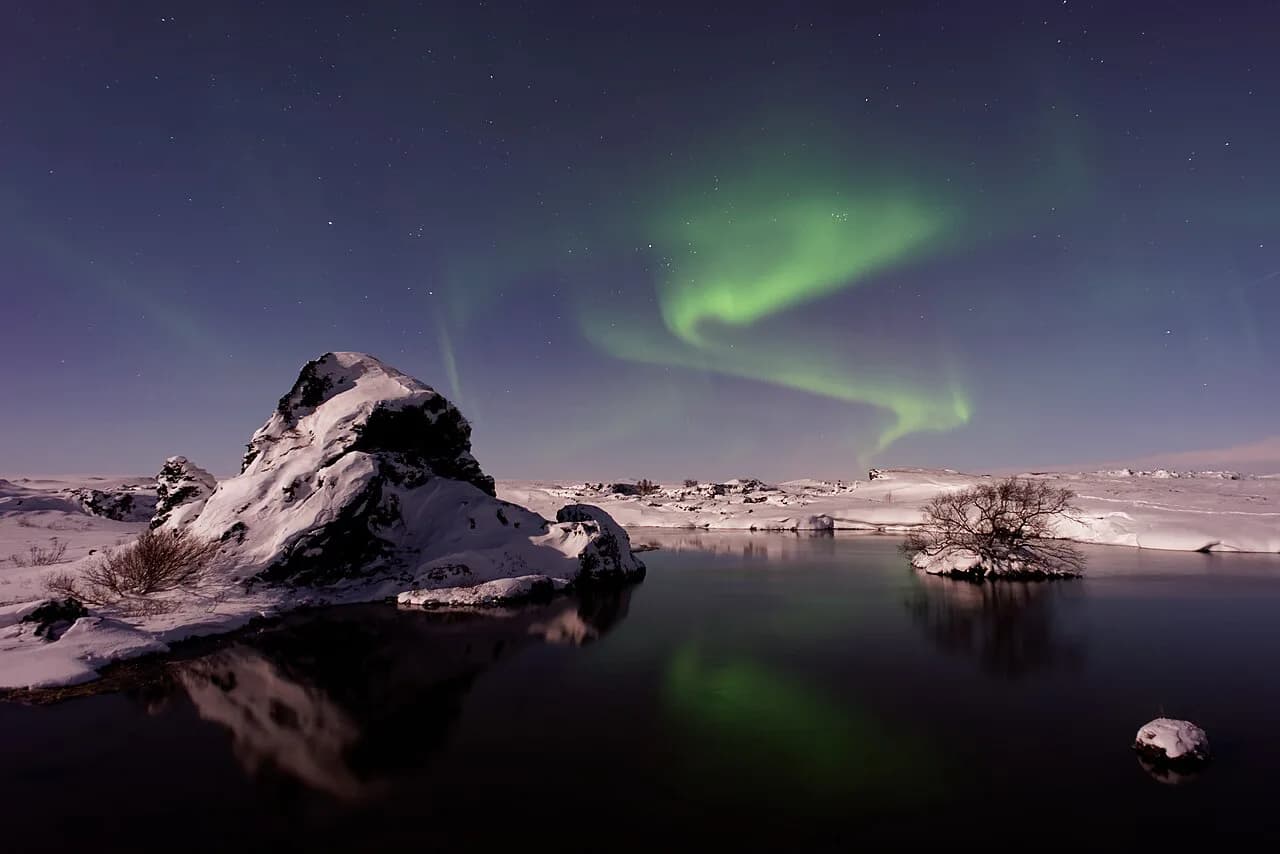
Mývatn lies in North Iceland, close enough to the Arctic Circle that aurora displays reach this latitude on many active nights, and the surrounding landscape is thinly populated, so light pollution drops quickly once you leave Reykjahlíð. The lake sits on the Ring Road with services, fuel and accommodation in one small area, which makes it easy to combine a daytime sightseeing loop with an evening watching window. Compared with the coast at Húsavík, the inland plateau is drier and often colder in winter, a trade-off that can mean clearer skies but also snowier roads.
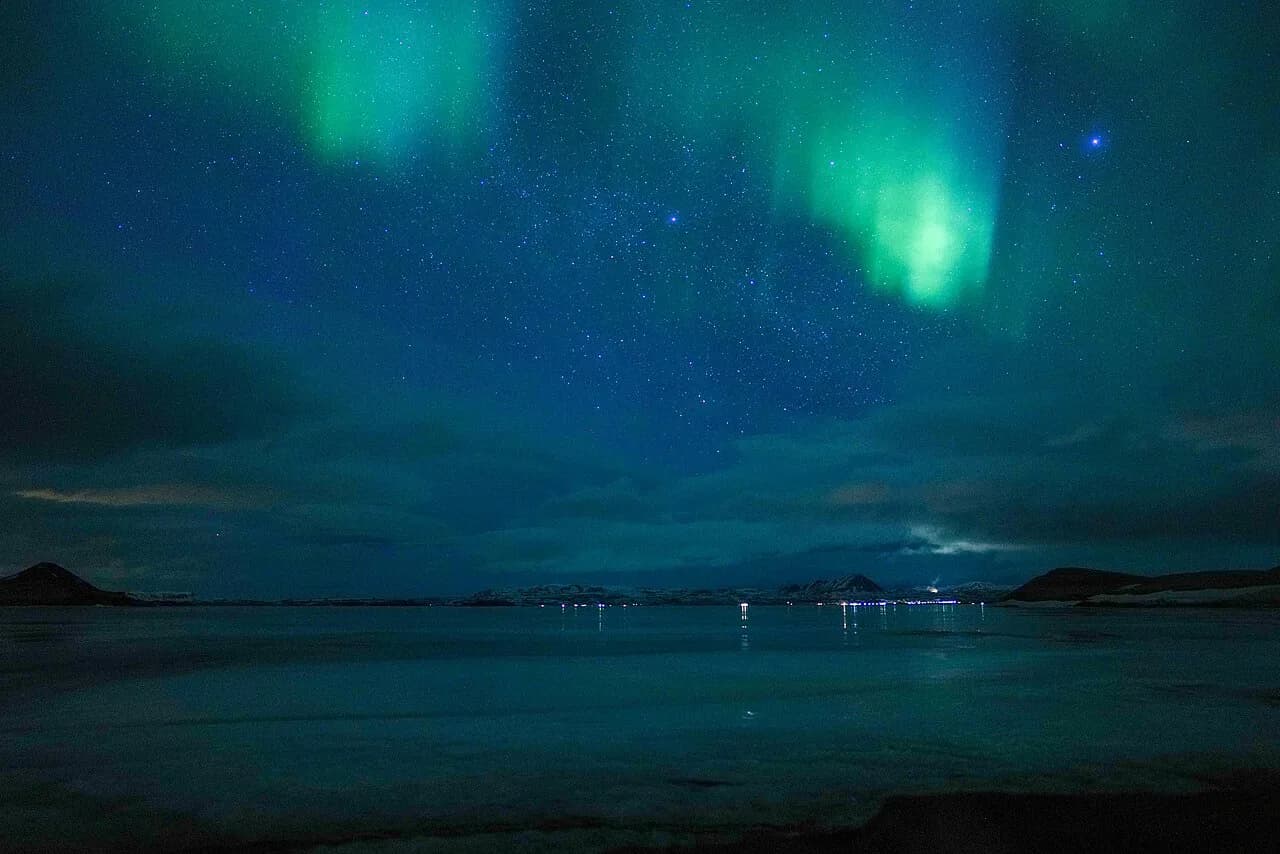
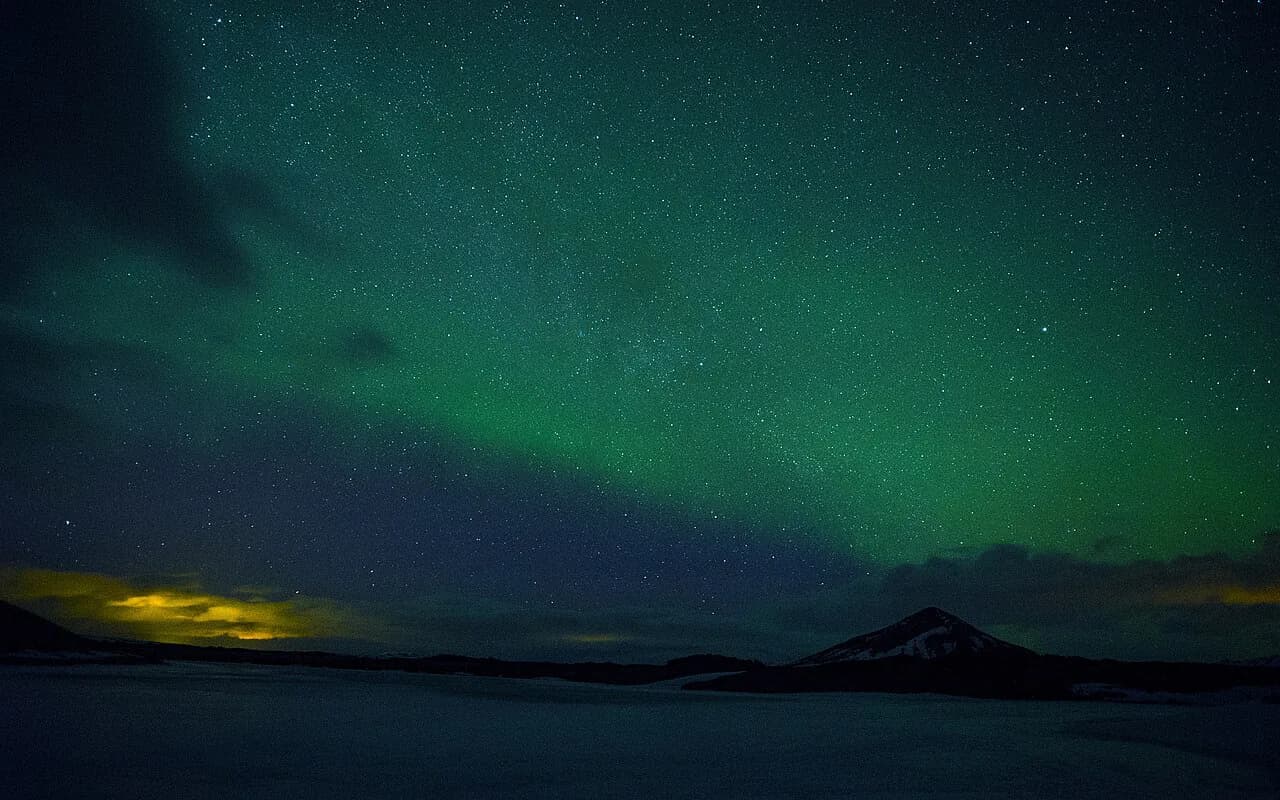
Aurora visibility depends on solar activity and clear skies, so treat any visit as a chance rather than a certainty; Kp forecasts are guidance only. What you can control is how many nights you give yourself and how far you are willing to drive from town lights. The overview of Mývatn northern lights covers viewing spots and how the season behaves in more depth.
When the aurora season runs and how dark the nights get
Aurora-watching conditions build from late August and September, when nights lengthen quickly, and last into early April before the return of bright twilight. Midwinter brings the longest dark window, with daylight compressed into a few hours around midday, so you can sleep after a late chase and still see the sights. The northeast is typically drier and sunnier than southern Iceland, and winter here is colder and snowier, which shapes both road conditions and sky clarity.
Cloud is the deciding factor on any given night, and Mývatn's inland position means weather can differ sharply from the coast within an hour's drive. Build flexibility into your plan: a night that looks hopeless in Reykjahlíð may open up toward Húsavík or the highland fringe. Check road and weather forecasts each afternoon and keep one evening spare.
Winter conditions around the lake: snow, temperatures and daylight
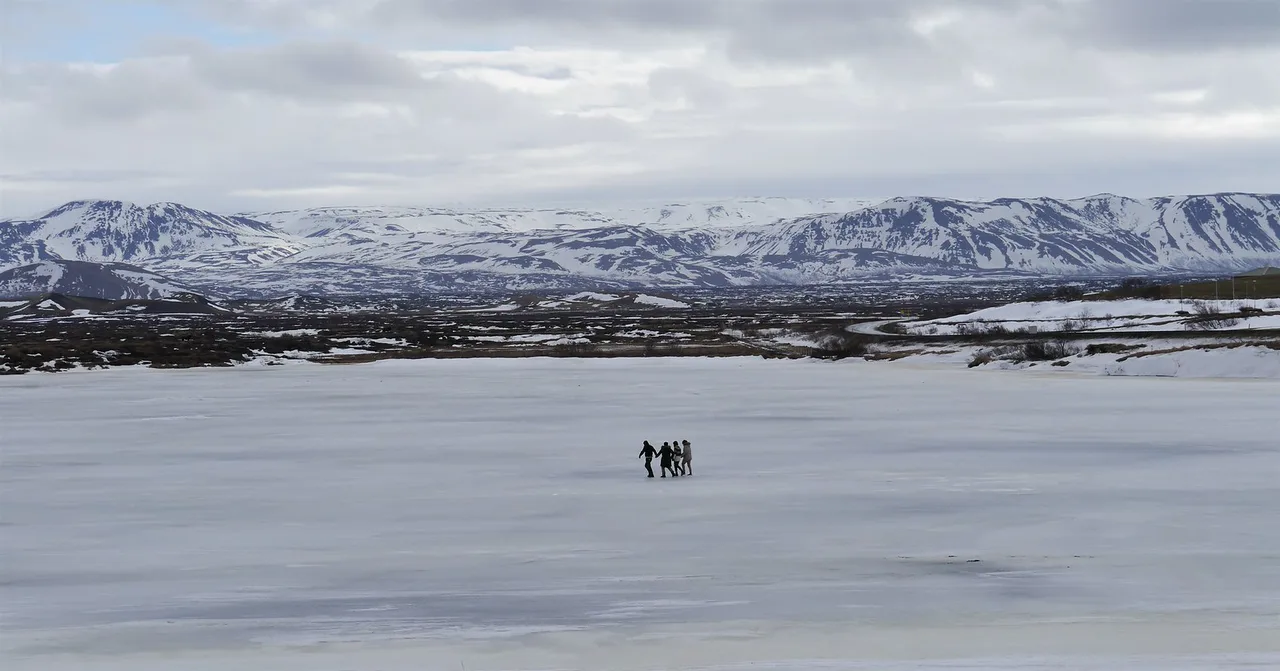
Expect snow cover, icy side roads and temperatures that regularly sit below freezing through January and February, with the lake and surrounding wetlands locked under ice. Daylight is short from December into early January, so sightseeing works best when you group nearby stops into a single loop rather than aiming for distant waterfalls. Two full days is usually enough to cover the main sights around the lake in normal conditions.
Winter also narrows what is reachable. Gravel roads into the highlands and the canyon country close, and some gravel surfaces become impassable, so a Mývatn base is best paired with the Ring Road sights rather than ambitious detours. Keep daytime driving to short hops and reserve the darkest hours for aurora watching near town.
Where to watch near Reykjahlíð and the lakeshore
The easiest dark-sky spots lie a short drive from Reykjahlíð. The loop road around the lake runs about 35 km, with pull-offs toward Höfði, the Skútustaðir pseudo-craters and the open lava country east of the lake, all of which get you away from village lights within minutes. Höfði is a rocky promontory reaching into the lake, a good birdwatching viewpoint by day and a wide northern horizon at night.
An 8 km marked trail links Reykjahlíð with Grjótagjá, Hverfjall and Dimmuborgir, giving walkers a dark route out of town without a car, though the path is snowy and uneven in winter. If you drive, park well off the road, keep hazard lights in mind and avoid stopping on blind bends. The lakeshore between Reykjahlíð and Skútustaðir gives repeated open views to the north with minimal light.
Self-guided chasing versus a guided night tour
Self-driving gives you the most freedom: you can chase breaks in the cloud, wait out a shower and return to Reykjahlíð when the sky closes. The catch is winter driving on snow and ice, with the risk of getting stuck on an unlit side road at night. If you plan to drive, keep to the Ring Road and maintained tracks, check road conditions before leaving and never head into the highlands after dark.
Guided night tours from the Mývatn area remove the driving and often include transport and thermal suits, and larger outfitters can move between locations as conditions shift. Tours typically run in the evening and return after midnight, which couples well with a slow next morning. Ask where a tour goes and how long it stays out before booking, and treat cloud dodging as the guide's job rather than a promised sighting of the aurora. Prices and departure times are worth checking before you book.
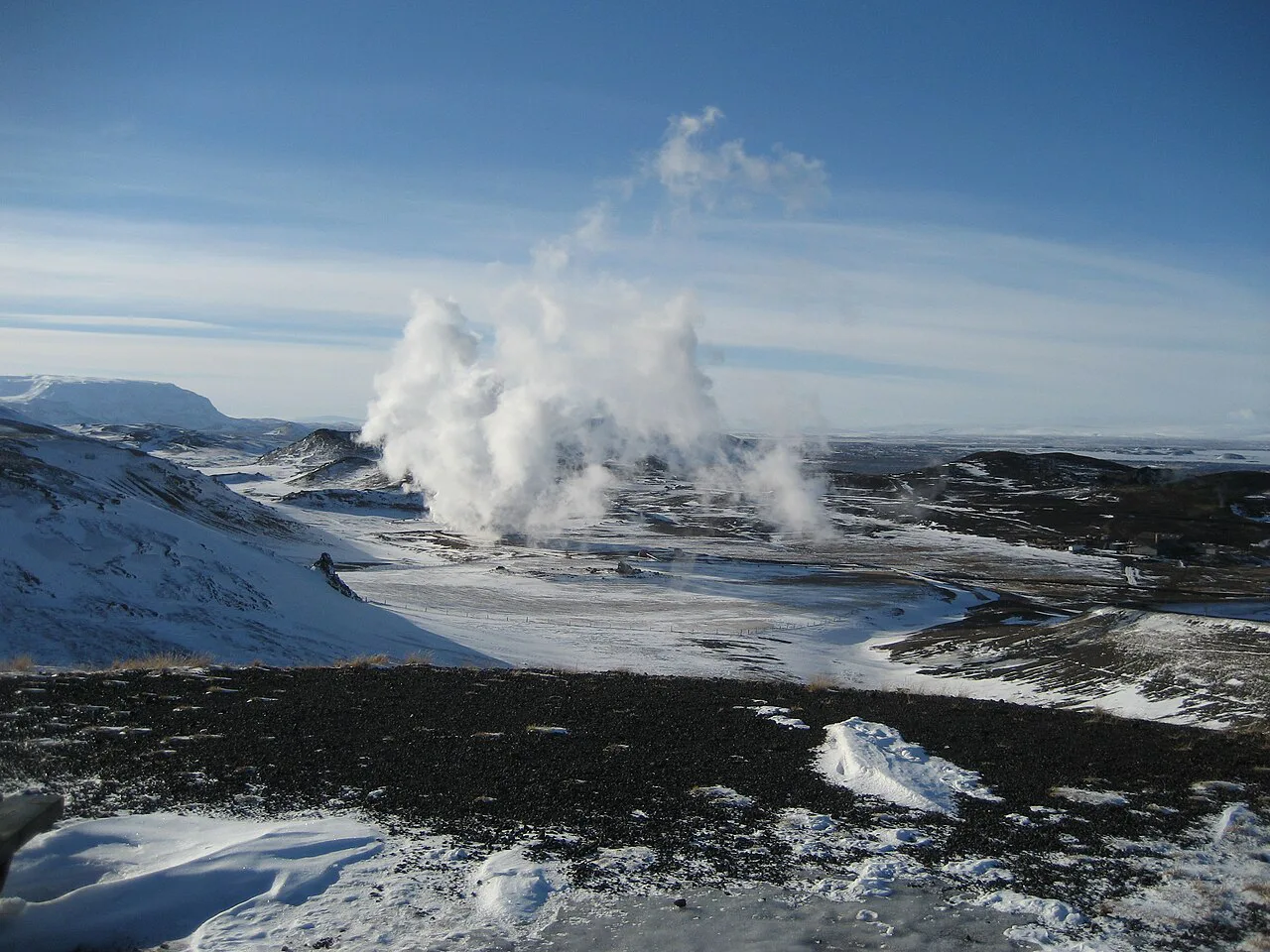
Jarðböðin Nature Baths: what the geothermal pool offers in winter
Jarðböðin Nature Baths sit about 4 km from Reykjahlíð, on the lower slopes at Bjarnarflag, with milky-blue water heated to 38–40°C and a poolside view over the lake. Besides the main pool there is a café, a hot pot and a couple of steam saunas, so it works as a half-day soak, not just a quick dip. Remove silver and copper jewellery before entering; the sulphur in the water can discolour metal.
In winter the appeal is obvious: a warm soak after a cold afternoon outdoors, with steam rising into the dark. Book ahead if you are visiting over a holiday, and pair the visit with a nearby geothermal walk so you are not making a special trip for one pool. The separate Mývatn Nature Baths in Winter guide has the seasonal detail.
Dimmuborgir, Hverfjall and the lava formations under snow
Dimmuborgir's huge lava pillars and cliffs are the region's strangest landscape, formed where lava pooled over water and steam vented through the crust. The rock is brittle and fragile, so there is no climbing; stay on marked paths even though they are snow-covered and slippery in winter. The formations lie east of the lake, a short drive from Reykjahlíð and easy to combine with Hverfjall.
Hverfjall is a near-symmetrical explosion crater about 1,000 metres across and roughly 140 metres deep, one of the largest of its kind. The rim walk is exposed, and in winter the climb is best done earlier in the day when light is available. Grjótagjá cave nearby draws visitors for its clear water, but bathing has not been possible since geological activity between 1975 and 1984 heated the pool.
Hverir, Krafla and Leirhnjúkur: geothermal stops on a winter day
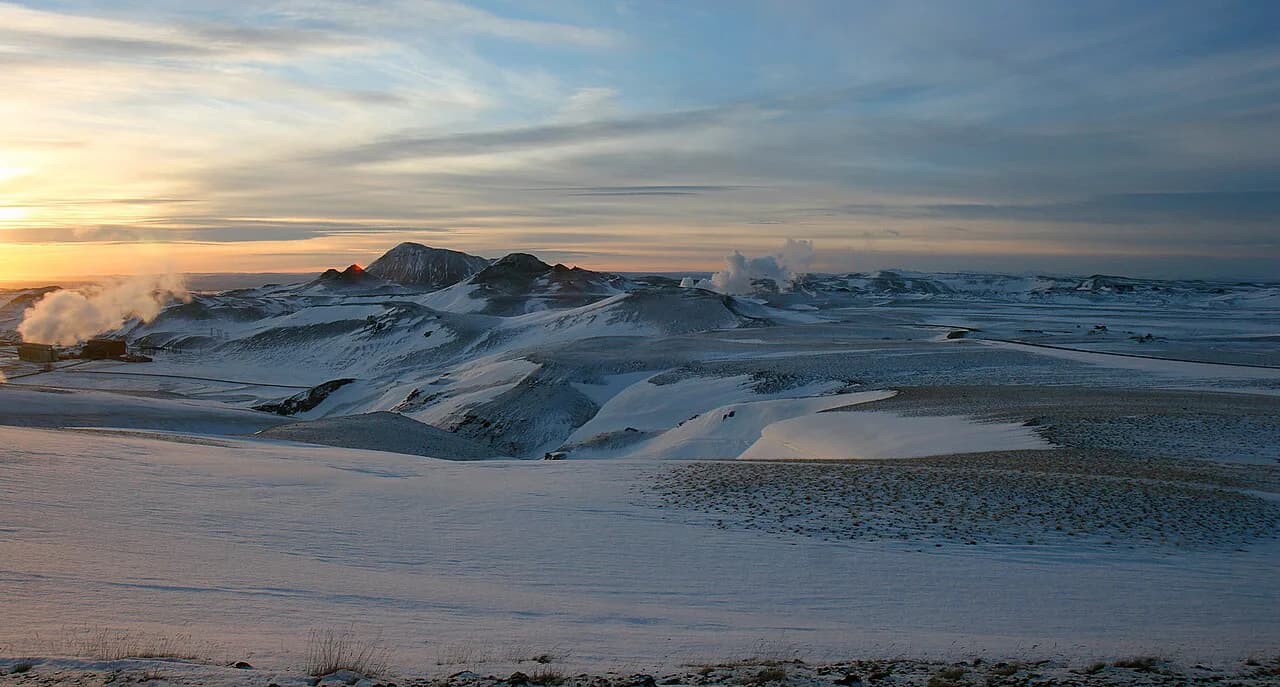
Hverir, tucked behind Námaskarð on the road east of the lake, is a high-temperature field where fumaroles and mud pots push past 200°C. Steam can obscure the view and paths can be icy, so keep back from vents and stay on the marked tracks; this is a hazardous area, not a place for wandering off. It is one of the most striking stops in Iceland and makes an easy detour on the Ring Road.
Krafla's caldera, the Víti crater with its teal lake, and the Leirhnjúkur lava fields sit up a sealed track off the Ring Road. Leirhnjúkur is still warm in places and crossed by marked trails, with the ground in some spots too hot to touch; keep to the pegged paths. In winter, combine Hverir, Krafla and Leirhnjúkur in one daylight loop and keep the drive short.
Goðafoss and the Jökulsárgljúfur falls: what stays reachable in winter
Goðafoss sits right beside the Ring Road about halfway between Mývatn and Akureyri, where the Skjálfandafljót drops 12 metres over a 30-metre width. In winter the viewpoint is usually reachable, but the paths can be icy and the spray coats the rocks. The falls carry the name 'waterfall of the gods', recalling the statues of Norse gods thrown in when Christianity became Iceland's official religion in the year 1000.
The bigger canyon sights are a different matter. Routes 862 and 864 into Jökulsárgljúfur, toward Dettifoss and Ásbyrgi, close through winter, so a Dettifoss day trip from Mývatn only works in the warmer months. Plan winter days around the Ring Road corridor and the lake loop instead, and treat Dettifoss as a reason to return.
Getting there and getting around
Mývatn is about 100 km east of Akureyri along the Ring Road, an hour or so in good conditions and longer when the road is snowy. The lake loop runs some 35 km with side tracks to the main sights, but no tour circuits the lake itself. To see it all you really need your own vehicle, and bicycles can be rented in Reykjahlíð for short excursions in milder conditions.
From Akureyri, check road conditions before setting out and allow extra time for snow and ice. Fuel and supplies are concentrated around Reykjahlíð, so fill up before evening drives. Distances to the next services outside the lake area are longer than they look on the map.
Where to stay around the lake
Most travelers base themselves in Reykjahlíð on the northern shore, which puts restaurants, fuel and the loop road within a few minutes. Skútustaðir and scattered lakeshore guesthouses offer quieter nights and darker immediate surroundings, at the cost of a longer drive to services. A stay at Fosshotel Mývatn puts you close to the main sights with the lake loop on your doorstep.
Whichever base you pick, ask about an aurora wake-up call and whether the property keeps a lights-out policy on clear nights. Rooms facing away from the car park and village lights give you a better chance of spotting activity from the window. In aurora season, a short walk to the lake edge is often the whole excursion.
How many nights to plan for a fair chance of clear skies
Cloud, not solar activity, is usually what spoils a night, and the northeast's drier climate improves the odds but cannot remove them. Give yourself at least three nights at Mývatn if aurora is the priority, and add a buffer for a night lost to weather or a delayed drive from Akureyri. Two nights is enough for the sights but leaves little room to wait out a cloudy spell.
If you are chasing conditions across the north, compare Mývatn with a coastal base at Húsavík or a larger town base at Akureyri. Mývatn offers dark skies close to accommodation; Húsavík adds whale-watching and coast; Akureyri adds city services and an airport. Many travelers split a few nights between them.
Who Mývatn suits, and when Húsavík or Akureyri fits better
Mývatn suits travelers who want compact volcanic scenery, a geothermal soak and easy access to dark skies without a long drive into the interior. It rewards those with a car, a tolerance for cold and snow, and a taste for short daylight days built around a handful of nearby stops. It is less suited to those wanting lots of evening restaurants or a big-town base.
Húsavík makes sense if you want whale-watching in summer and a coastal feel, and Akureyri if you want an airport, more services and a base for day trips around the north. Mývatn beats both for dark skies and lava-field walking, and is the better choice for a short winter stay focused on the aurora. If city services tip the balance, our Akureyri northern lights guide covers the alternative base in detail.
Plan Your Visit
Treat Mývatn as a short, focused winter base: sleep in Reykjahlíð, keep a car for the loop road and the Ring Road corridor, and let the geothermal sights fill the daylight. Give yourself three nights or more so clear skies have a chance to line up with aurora activity, and use the nature baths and lava fields as the daytime anchor.
Frequently Asked Questions
Is Lake Mývatn worth visiting in winter?
Yes, if you want dark skies, short drives and a compact set of volcanic sights. Winter strips away the crowds and the lake loop works well for short daylight days, though you need to accept snow, ice and a smaller choice of services.
Can you see the northern lights at Lake Mývatn?
Mývatn's northern latitude and thin population give it good dark skies, so aurora displays can be visible when activity and cloud cover allow. Sightings are never guaranteed; more nights and flexibility improve your chances.
How do you pronounce Mývatn?
Roughly 'MEE-vatn', with the Icelandic 'ý' sounding close to an English 'ee' and the final syllable clipped short. Icelanders often say it quickly, so do not worry about perfecting the accent.
How many days do you need at Lake Mývatn?
Two full days covers the main sights around the lake, and a third gives you room for a cold-weather day or an evening aurora hunt. If the northern lights are the focus, plan three nights or more to allow for cloud.
Do you need a car to get around Lake Mývatn?
A car makes the lake loop and the geothermal stops far easier, since no tour circuits the lake. Bicycles can be rented in Reykjahlíð for short trips, and walking trails link some sights, but winter conditions make driving the practical choice.
Are the Mývatn Nature Baths open in winter?
Jarðböðin Nature Baths operate through the winter season in most years, with the pool heated to 38–40°C. Check the operator's page for the current timetable.
How far is Lake Mývatn from Akureyri?
Mývatn is about 100 km east of Akureyri on the Ring Road, an hour or so in good conditions and longer when the road is snowy. Allow extra time in winter.
Sources
Notes for your Arctic winter trip
Optional updates to our northern lights guides.
You might also like
Continue reading
More guides you'll find useful