Mývatn Nature Baths: Iceland's Geothermal Soak Guide
Plan a winter soak at Mývatn Nature Baths in North Iceland: water temperatures, entry prices, crowds, dark-sky spots and how it fits an aurora trip.
On this page
Mývatn Nature Baths, known locally as Jarðböðin, offers a geothermal soak in the volcanic terrain just east of Lake Mývatn in North Iceland. In winter the appeal is twofold: warm silica-rich water at roughly 36 to 40°C and a location far from the tour-bus traffic of the south coast. It suits travelers who want a quieter, more affordable geothermal stop woven into a northern lights trip rather than a standalone spa day.
The baths sit about 65 miles south of the Arctic Circle, so winter nights are long and dark. That is the raw material for aurora watching, not a guarantee of it. Clear skies and active solar conditions do the rest, and travelers should plan a stay of several nights rather than a single evening.
What the Mývatn Nature Baths are and who they suit
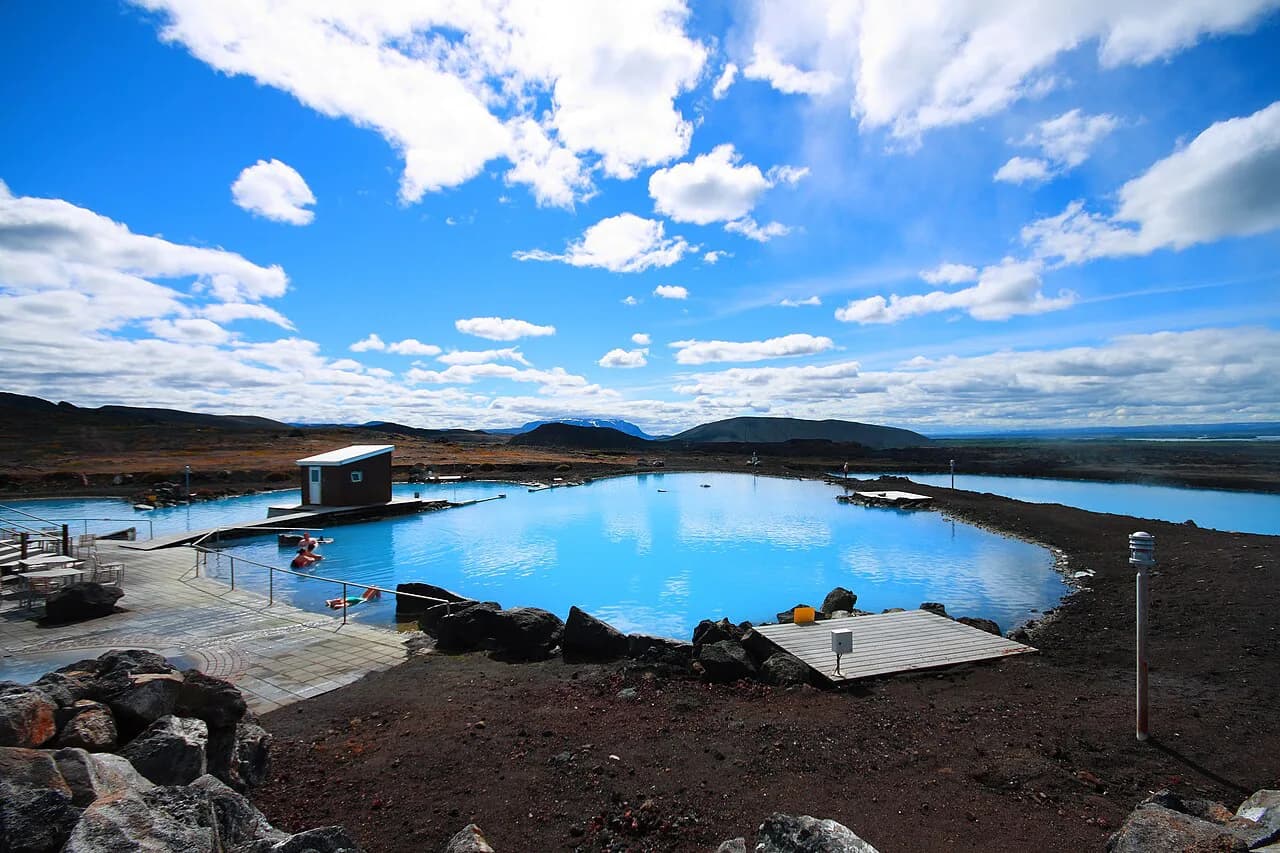
The baths are a silica-rich geothermal pool complex in North Iceland, fed by water from a borehole at roughly 130°C that is cooled before it reaches the pool. The main pool and two smaller hot pots hold temperatures of about 36 to 40°C. This is a soak rather than a full spa treatment: there are no mud masks, though the water itself is rich in silica.
They suit travelers already touring the north, especially anyone basing themselves around Lake Mývatn for aurora nights. They are a poor fit only for travelers expecting the polished, restaurant-and-robe experience of the Blue Lagoon in the southwest. For a North Iceland trip, the baths work as a relaxed half-day anchor between volcano visits.
Where the baths sit
The pools lie just east of Lake Mývatn, roughly 100 km southeast of Akureyri and about 450 to 500 km from Reykjavík via Route 1. That puts Akureyri within an hour's drive and makes the baths a natural stop on a Ring Road itinerary or a shorter North Iceland loop. Travelers flying into Akureyri can reach the baths without driving the full Ring Road.
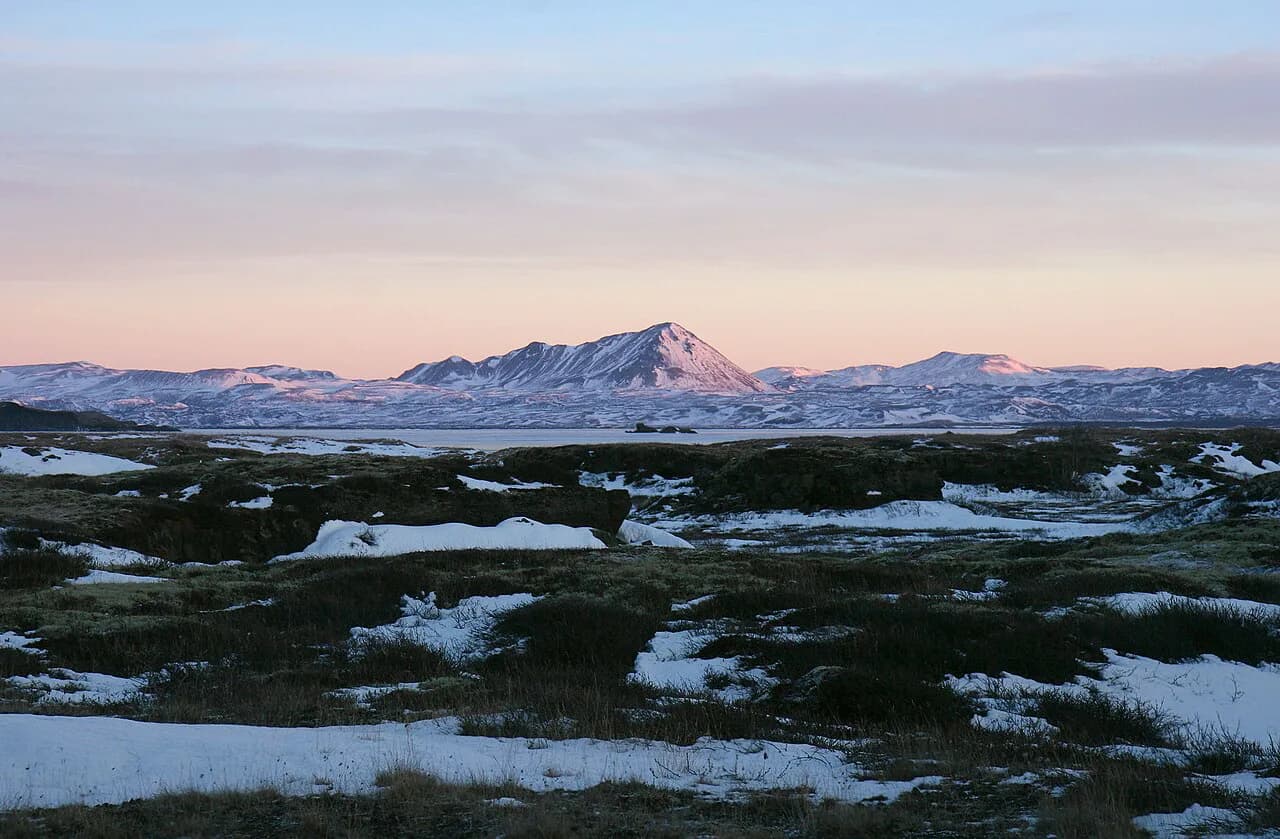
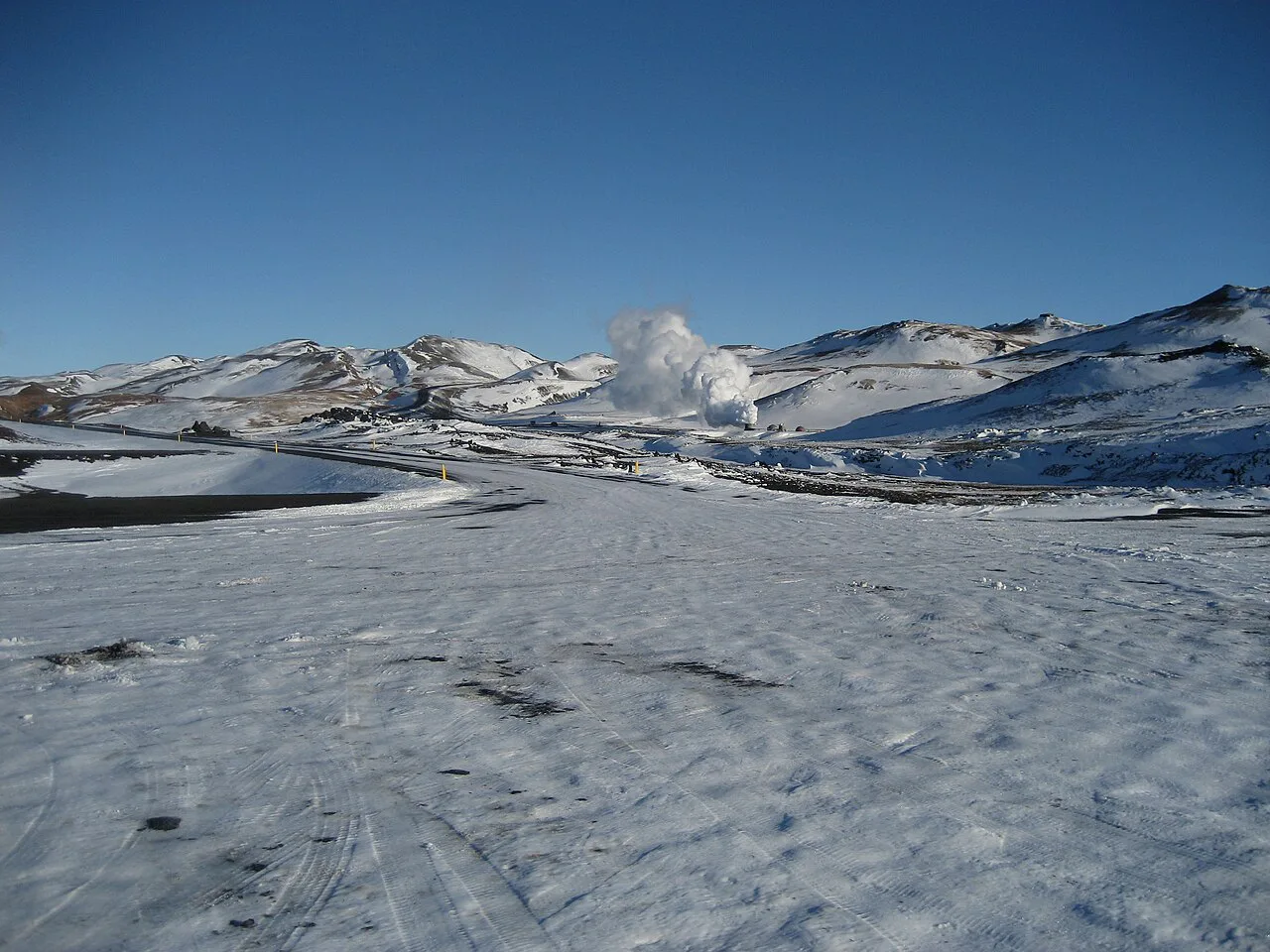
The site lies about 65 miles south of the Arctic Circle, in a landscape of active volcanism, pseudocraters and lava fields. In winter this means long nights and low sun angles, which is exactly why the area attracts aurora travelers. Plan distances in daylight terms: a drive that is easy in June is a different proposition in December.
The water and the winter soak
The main pool is fed by geothermal borehole water cooled to roughly 36 to 40°C, with two smaller hot pots that tend to run slightly warmer. A wall divides hot and cold sides, so you can step into the contrasting cold water and return to the heat. The cold side is a real part of the experience here, not an afterthought.
In sub-zero air the contrast is sharper: steam rises off the surface, and the short walk between changing rooms and pool is the coldest part of the visit. The water temperature itself stays in the comfortable range year-round. Travelers sensitive to heat should start in the main pool before trying the hot pots.
Entry prices and what the base ticket includes
As of 2026, standard adult entry at Mývatn Nature Baths is around ISK 6,500, against roughly ISK 9,990 for the Blue Lagoon's Comfort package, a difference of about ISK 3,500 per person. The Mývatn ticket covers the lagoon and hot pots, with towel rental separate. The Blue Lagoon Comfort package includes a towel, robe, silica mask and a drink, so the gap narrows if you value those extras.
Rates shift by season and are worth re-reading on the Mývatn Nature Baths booking page before you commit. For a couple, the base-level saving is roughly ISK 7,000, which matters if the soak is one stop on a longer winter trip rather than the centrepiece.
How busy it gets and when to soak
Mývatn Nature Baths are significantly less crowded than the Blue Lagoon. The remote location limits visitor numbers, and on a summer weekday it is possible to have large sections of the pool to yourself. In winter, demand is lower still outside holiday periods. The Blue Lagoon, by contrast, manages capacity through timed entry and still feels busy in mid-morning summer slots.
Book online for summer visits, when advance booking is recommended for July and August. Walk-ins are more likely to succeed here than at the Blue Lagoon, but do not rely on that in peak season. In winter, arriving for a late-afternoon or evening slot aligns the soak with dark skies on the drive back.
Steam baths, hot pots, café and changing rooms
The facility has a main pool, two smaller hot pots, changing rooms with lockers, a café serving snacks and drinks, and a gift shop. Towels can be hired if you do not bring your own. It is comfortable rather than luxurious, which is part of the appeal for travelers who want the landscape to be the main event.
Steam rooms are also available on site, giving a reason to arrive earlier rather than treating the baths as a quick dip. The café makes it easy to warm up before the drive back to Akureyri or around the lake. Because the site is compact, a visit of two to three hours is realistic.
Soaking after dark and aurora odds
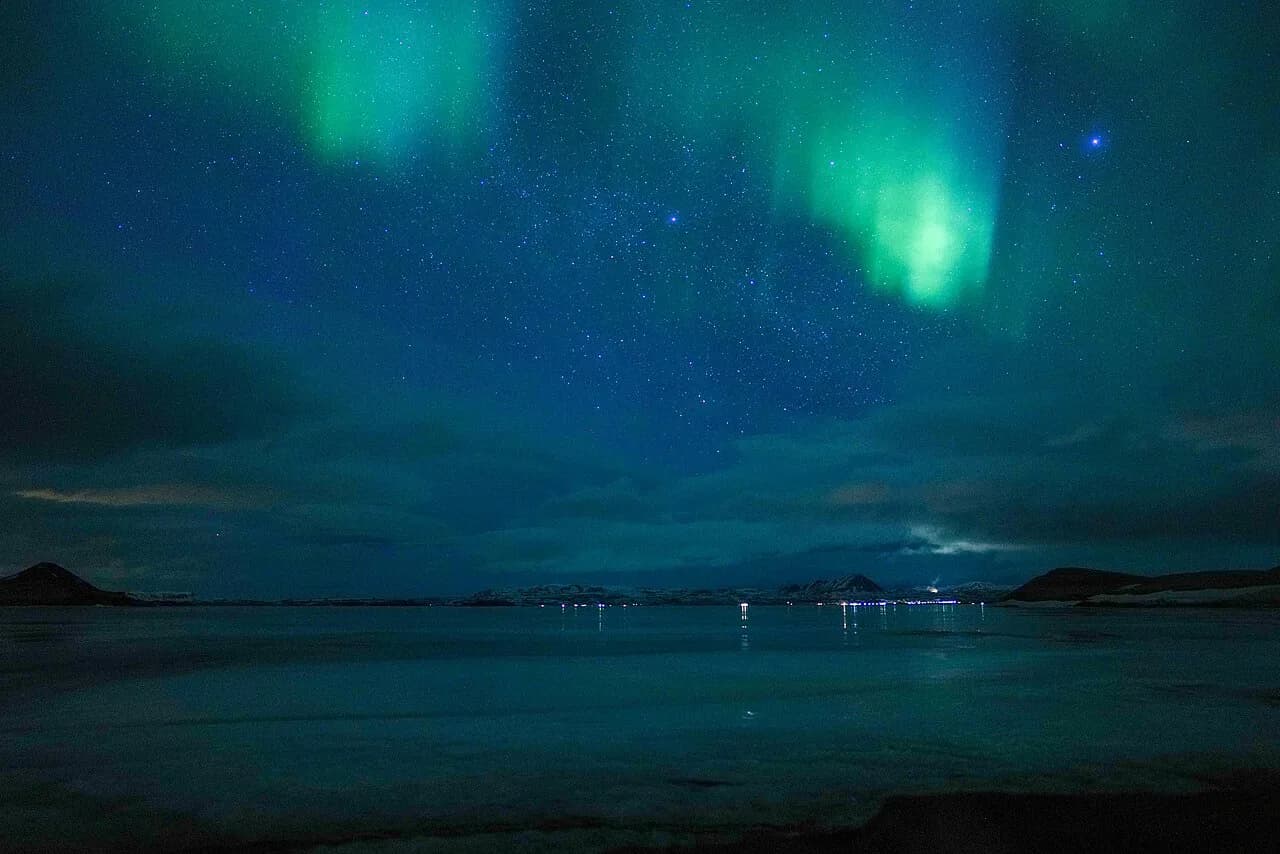
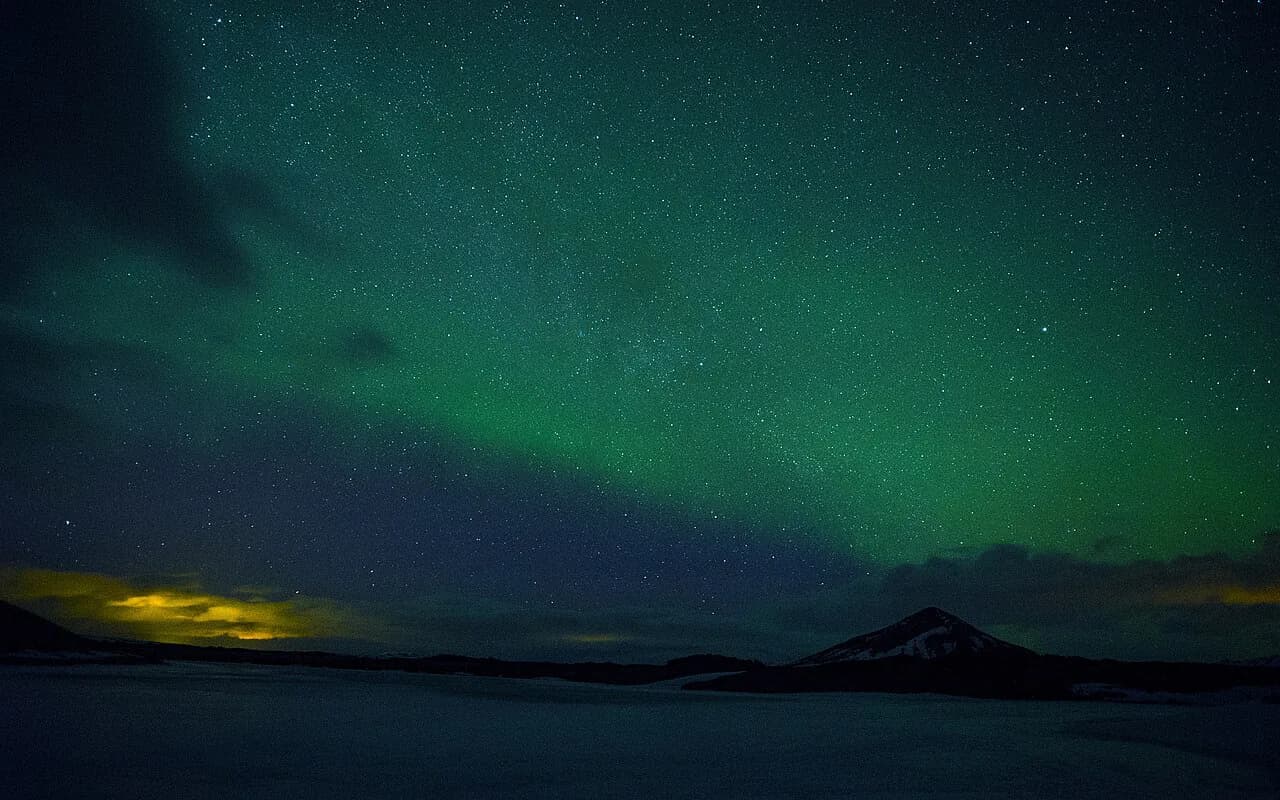
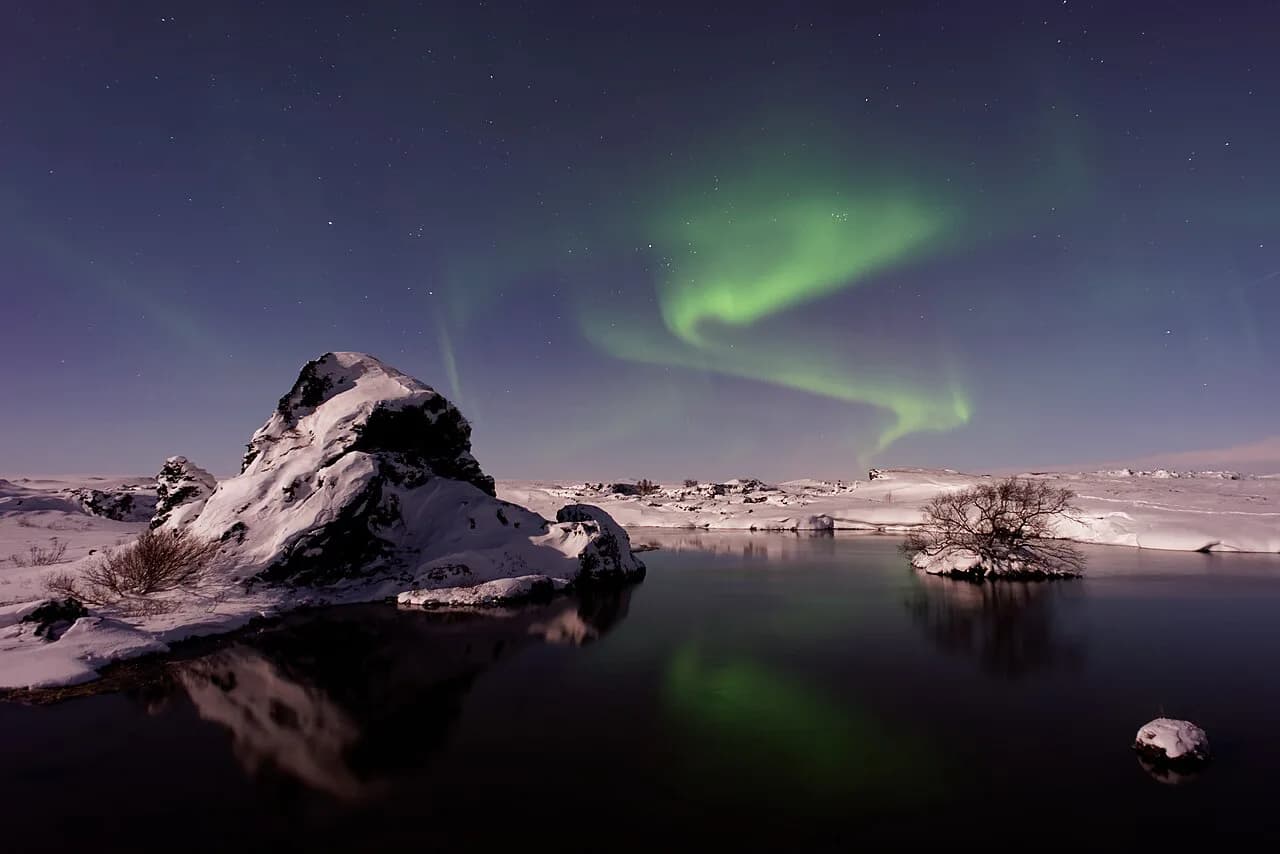
Soaking while the aurora is active above the Mývatn area is one of the reasons travelers choose this site over the south. The surrounding countryside has dark skies away from village lights. That improves the odds of seeing aurora, but sightings still depend on solar activity and cloud cover.
Treat Kp values as guidance rather than a forecast for any specific night. A clear, dark sky near the lake matters more than a high Kp number read in advance. Plan several nights here rather than pinning hopes on one.
Nearby volcanic sights within about 15 km
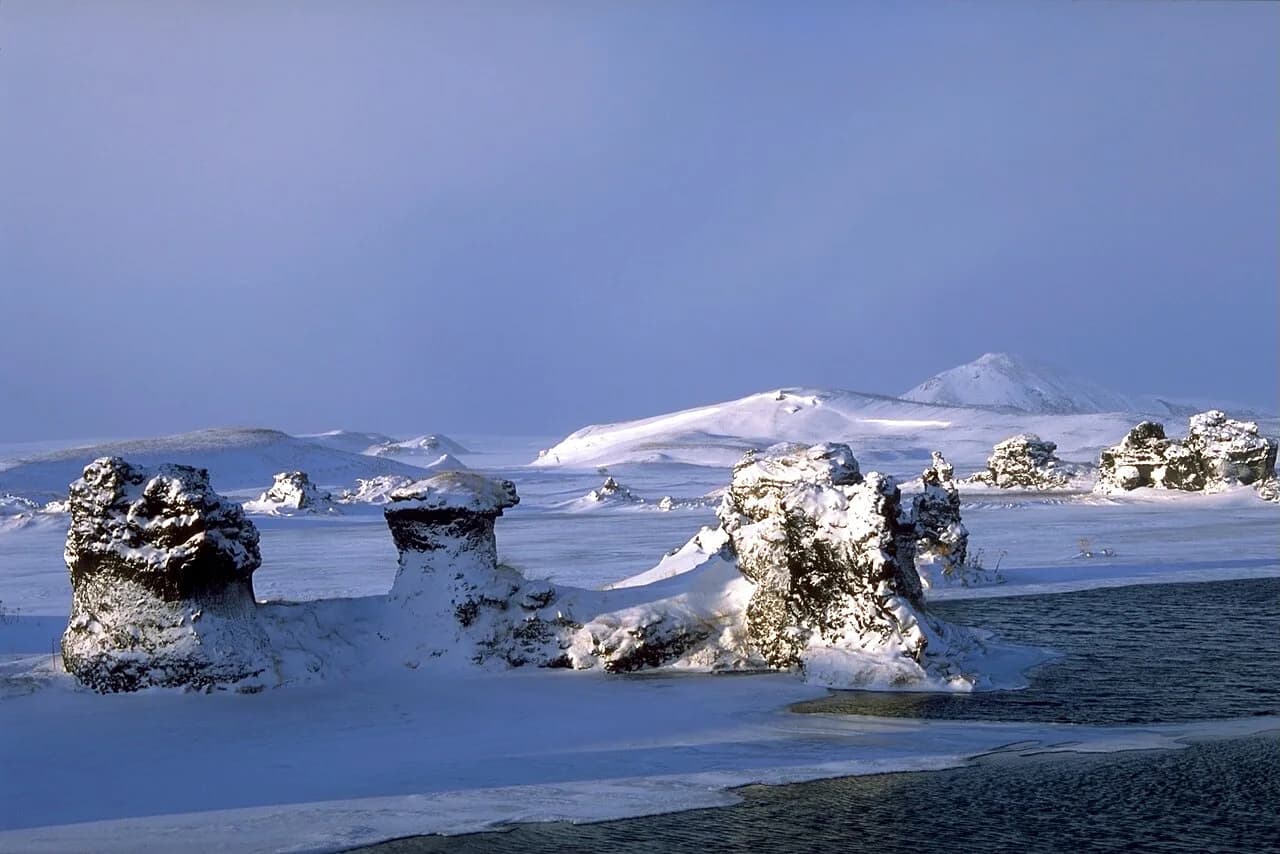
The pseudocraters at Skútustaðagígar, the Dimmuborgir lava formations, the Hverir mud pots and the Krafla caldera all lie within about 15 km of the baths. That makes a half-day circuit easy to combine with a soak. Hverir in particular offers steaming vents and vivid mineral colours that photograph well in low winter light.
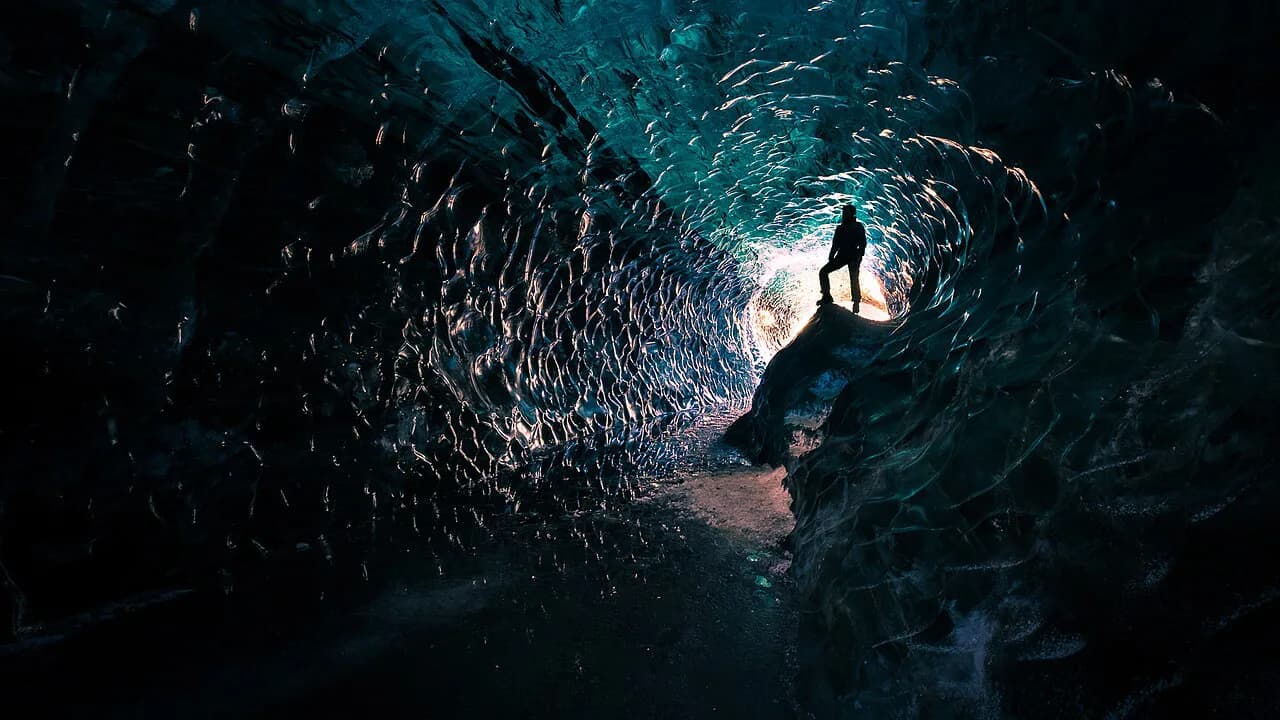
Dimmuborgir's dark rock pillars and Skútustaðagígar's crater rings are short walks from parking areas, which suits the compressed daylight of December and January. Pair the circuit with the baths for a day that mixes landscape and warmth. Travelers staying longer can build in a Mývatn Husky Safari or an ice cave visit on separate days.
Getting there and using Akureyri as a base
From Akureyri the baths are about 100 km southeast, roughly an hour's drive on Route 1 in good conditions. From Reykjavík the drive is 450 to 500 km, a full day on the Ring Road. Travelers short on time can fly into Akureyri and loop the lake rather than committing to the full Ring Road. If you base yourself in that northern town, our Akureyri northern lights guide covers where to watch and when to go.
Winter daylight is short, so drive the longer legs in the morning and keep afternoons free for the baths and nearby sights. The Lake Mývatn in Winter guide covers how the area works across the season. Many travelers base themselves near the lake for several nights rather than day-tripping from Akureyri.
Booking tickets and planning enough nights
Book Mývatn Nature Baths through the baths' own site, especially for July and August when advance booking is recommended. Winter visits are less pressured, but booking ahead secures a late slot that fits an aurora-focused evening. Allow at least three nights around the lake for a fair chance of clear skies.
Aurora viewing depends on solar activity and cloud cover, and no single night can be guaranteed. Spreading nights across the area gives more windows for a clear sky. Travelers can compare lodging around the lake, including the Fosshotel Mývatn, to keep drives short after dark.
Who should pick Mývatn over the Blue Lagoon
Choose Mývatn Nature Baths if you are driving the Ring Road, based in North Iceland, or prioritizing fewer crowds and a wilder volcanic setting. Choose the Blue Lagoon if you are arriving or departing through Keflavík, want a full spa with restaurants and premium packages, or have the Blue Lagoon on your must-do list. The two are about 450 km apart, so most travelers pick whichever fits their route.
Doing both makes sense on a week-long Ring Road trip: the Blue Lagoon near the airport at the start, the Mývatn baths mid-trip in the north. Travelers flying in and out of Akureyri can skip the southwest entirely. Either way, the Mývatn soak pairs naturally with the area's aurora nights and volcanic sights.
Plan Your Winter Soak
Mývatn Nature Baths give North Iceland travelers a geothermal soak that is quieter and more landscape-driven than the Blue Lagoon. The water stays at roughly 36 to 40°C year-round, the hot and cold sides offer a real contrast in winter air, and the surrounding volcanic sights fill out a half-day. It fits best into a trip based around Lake Mývatn for several nights.
Book online, especially for summer, and re-read the entry rates on the Mývatn Nature Baths page before you go, as they shift by season. Give yourself enough nights around the lake for a fair chance of clear skies rather than pinning everything on one evening. The baths reward travelers who treat them as part of a wider winter itinerary rather than a single stop.
Frequently Asked Questions
Are the Mývatn Nature Baths cheaper than the Blue Lagoon?
Yes. Standard adult entry at the Mývatn Nature Baths is the lower of the two at base level, and the gap is a few thousand Icelandic krónur per person. The Blue Lagoon Comfort package bundles a towel, robe, silica mask and a drink, so the difference narrows if you value those extras. Check current rates on each operator's booking page before you go.
Can you see the northern lights from the Mývatn Nature Baths?
The Mývatn area has dark skies away from village lights, and soaking after dark is one reason travelers choose the baths. Sightings still depend on solar activity and clear skies, and no sighting can be guaranteed. Plan several nights around the lake to improve your odds.
How far are the Mývatn Nature Baths from Akureyri and Reykjavík?
The baths lie about 100 km southeast of Akureyri, roughly an hour's drive on Route 1 in good conditions. From Reykjavík the drive is 450 to 500 km, a full day on the Ring Road. Many travelers fly into Akureyri and loop the lake rather than driving from Reykjavík.
What is the water temperature at the Mývatn Nature Baths?
The main pool and two smaller hot pots hold temperatures of about 36 to 40°C, with the hot pots tending to run slightly warmer. The water comes from a geothermal borehole at roughly 130°C and is cooled before it enters the pool. A wall divides hot and cold sides for contrast bathing.
Do you need to book Mývatn Nature Baths tickets in advance?
Advance booking is recommended for July and August. Walk-ins are more likely to succeed here than at the Blue Lagoon but should not be relied on in peak season. Winter visits are less pressured, though booking ahead secures a late slot that fits an aurora-focused evening. Book through the operator's own site.
Are the Mývatn Nature Baths worth it in winter?
Yes, for travelers already in North Iceland. The water stays at roughly 36 to 40°C, the steam rising into sub-zero air is memorable, and the surrounding volcanic sights are within about 15 km. Shorter daylight means planning drives for the morning and keeping afternoons free for the baths.
Sources
Notes for your Arctic winter trip
Optional updates to our northern lights guides.
You might also like
Continue reading
More guides you'll find useful