Mývatn Aurora Forecast: How to Read Kp, Bz and Cloud Cover
Read Kp, Bz, solar wind and cloud data for Mývatn, find live Iceland aurora tools, and judge which nights are worth driving into the dark.
On this page
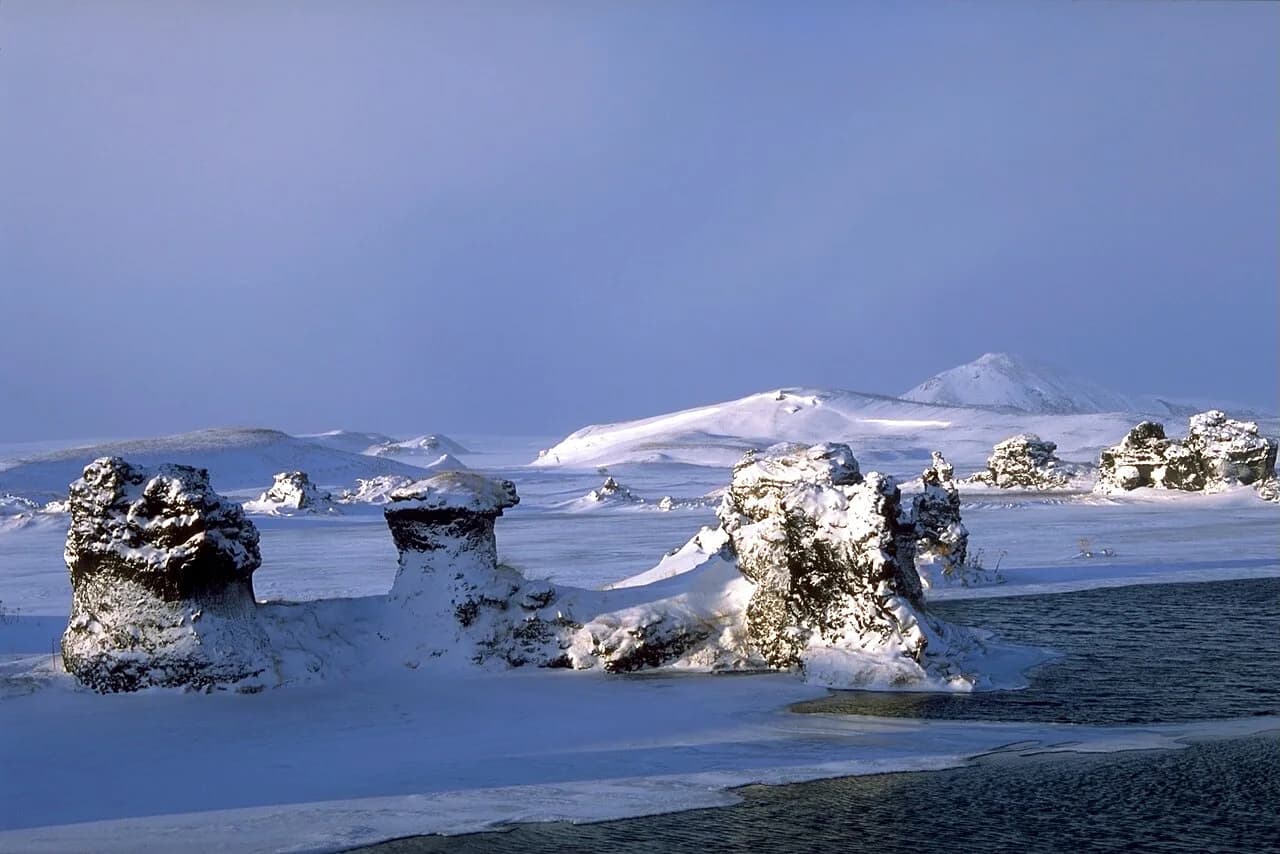
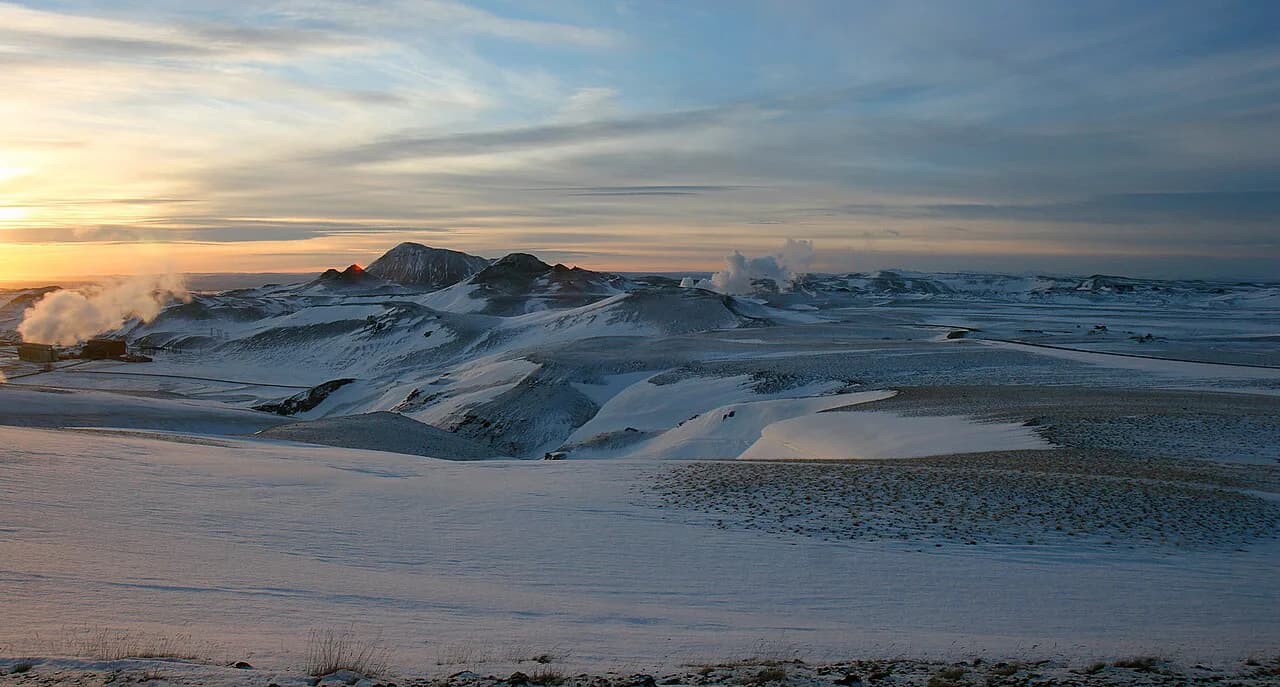
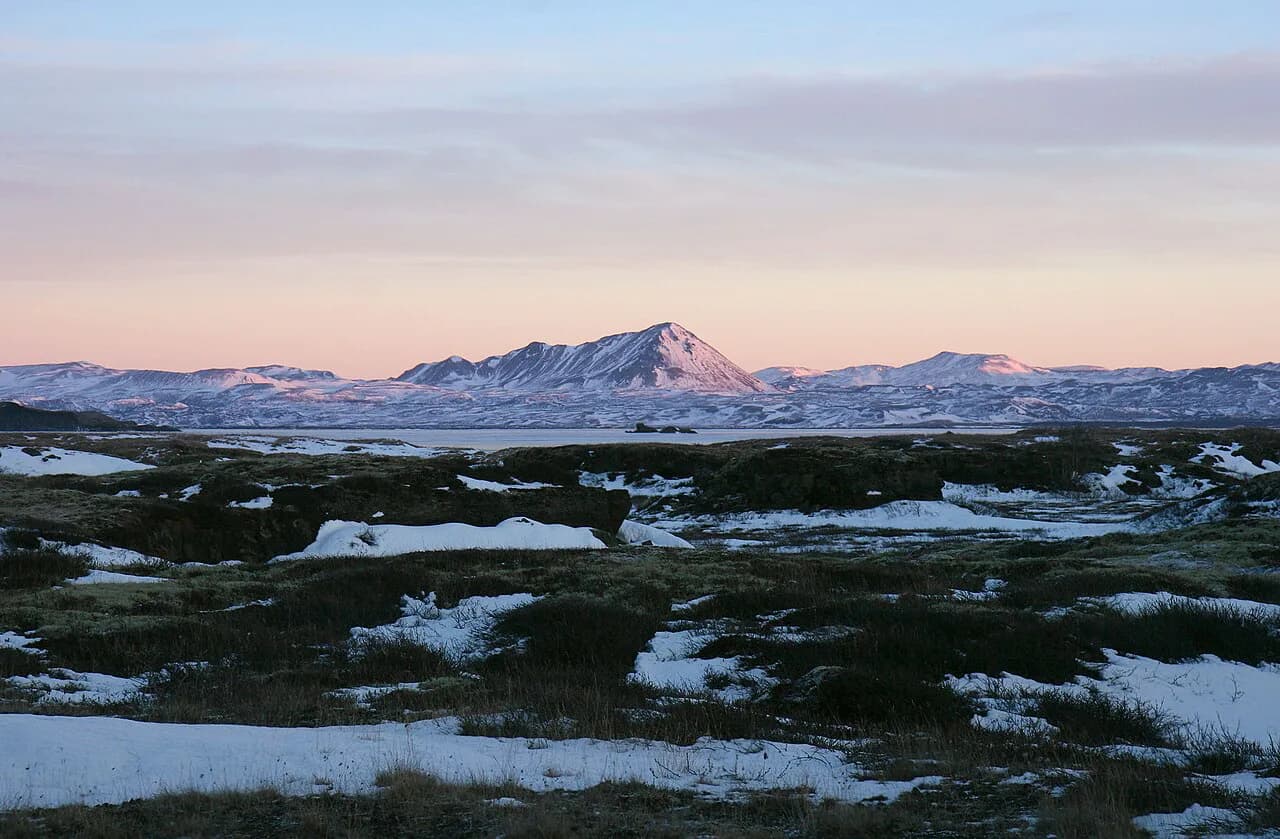
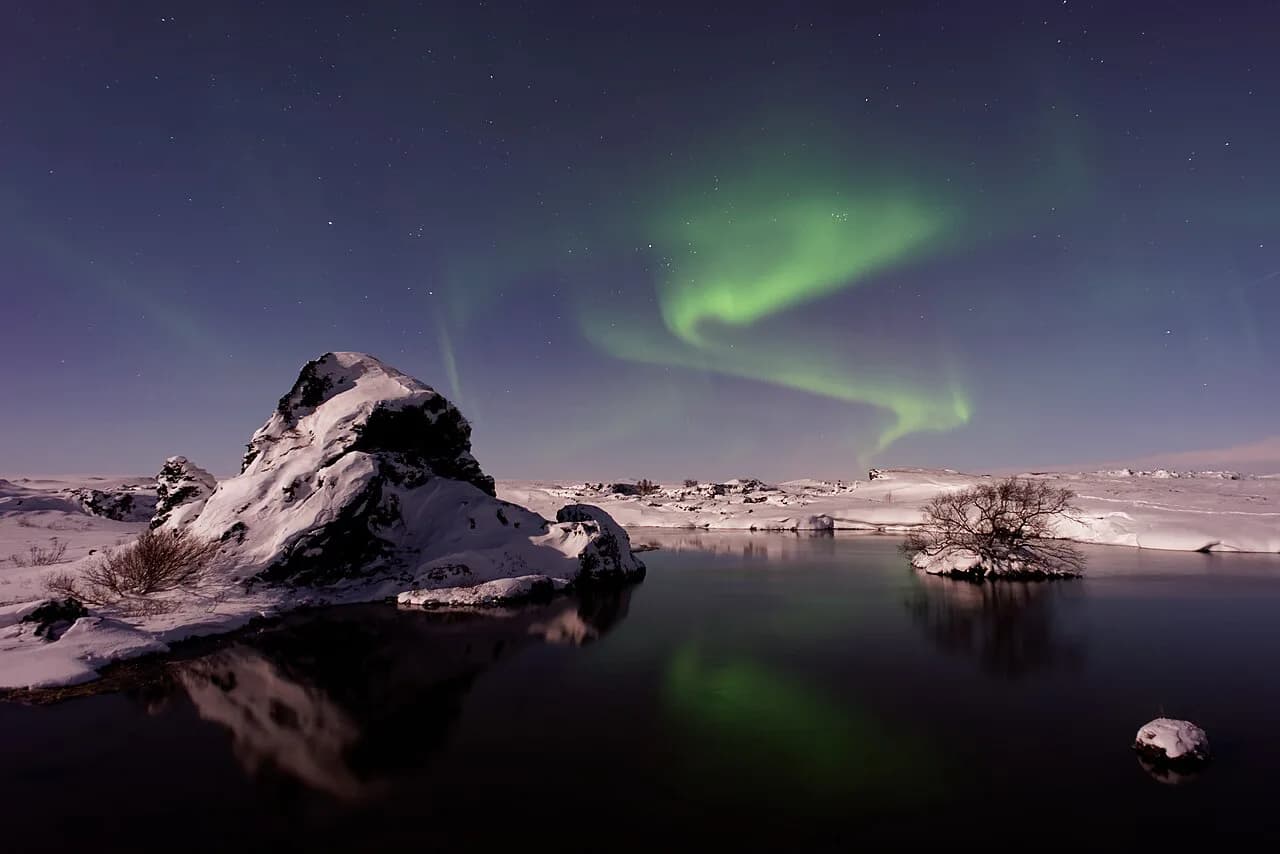
Mývatn in winter offers something most aurora bases cannot: open lava terrain around a frozen lake, scattered farms instead of a lit town, and a place to sleep within minutes of genuinely dark sky. If you want to watch the aurora from a hot tub or a lakeside road rather than a bus window, this corner of north Iceland suits you. The work is in judging the forecast before you commit an evening to it.
The forecast is three questions stacked in order. Does the solar wind open Earth's magnetic field, how strong is the disturbance, and will the sky be clear over you? Aurora Reykjavík's guide puts the north–south Bz direction first for exactly this reason, then Kp, then speed, density and cloud.
Why Mývatn sits inside the auroral oval
North Iceland lies under the auroral oval, the ring around the magnetic pole where aurora is most frequent. Aurora Reykjavík notes that Iceland sits inside the Arctic band shown on NOAA's aurora probability map, and that the lights can appear over Reykjavík even at Kp 1–2 when the sky is dark and clear. Mývatn is farther north than Reykjavík, so the same low-activity nights that produce a faint band on the southern horizon generally put the oval closer overhead here.
That does not make a weak night dramatic. At low Kp the aurora typically reads as a pale glow that can be mistaken for cloud, so position yourself with a wide, unobstructed northern view rather than expecting lights overhead. On stronger nights the display can spread across the whole sky, which is where the open lava fields around the lake earn their keep.
Plan the trip around the place as well as the sky. The broader myvatn northern lights guide covers where to sleep and what else fills a winter day, so the forecast work below is the part you repeat each evening.
When the aurora season runs around Mývatn
Iceland's aurora season is set by darkness, not temperature. Aurora Reykjavík puts usable darkness from late August to around mid-April, and notes that May, June and most of July are too bright because of the midnight sun. The darkest months, October through March, give the longest viewing hours, and the season opens again once usable darkness returns in late August.
Within that window, the equinoxes matter. Aurora Reykjavík describes the Russell–McPherron effect, in which Earth's magnetic field is aligned around spring and autumn in a way that lets solar wind in more easily, making March and September consistently strong months for activity. A late-winter or early-spring trip to Mývatn therefore sits in a favourable stretch of the calendar.
Daylight shapes how you spend the hours around the chase. On a winter stay near the lake, short days push sightseeing into a narrow band and leave long evenings free for the sky; lake myvatn covers how the light and the roads behave month by month.
Kp index: what number is usually enough this far north
Kp runs from 0 to 9 and describes how disturbed Earth's magnetic field is overall. Aurora Reykjavík treats Kp 2 or higher as usually meaning visible lights somewhere in Iceland, Kp 3 and up as brighter displays visible from the edges of a city, and Kp 5 and above as aurora that can spread across the whole sky. Read those as guidance for an Iceland-wide picture, not a switch that turns the aurora on over Mývatn.
Kp stops helping once it becomes the only number you watch. It is averaged over three-hour periods, so conditions can change within a single evening while the index sits still. Aurora Reykjavík advises combining it with real-time solar data, cloud cover and local magnetic disturbance, which is why the sections below start with Bz rather than Kp.
Bz, solar wind speed, density and Bt: reading the numbers in the right order
Bz is the north–south direction of the magnetic field carried by the solar wind. Southward Bz opens a door in Earth's field and lets particles in; northward Bz keeps it mostly shut even when every other number looks promising. Aurora Reykjavík's working threshold is Bz at –2 nT or lower, ideally –3 nT or below, and its advice is to check Bz before anything else.
With the door open, speed and strength tell you how much energy is arriving. Aurora Reykjavík flags solar wind above 400 km/s and a total field strength (Bt) of 6 nT or higher combined with southward Bz as good signs, while density works as fuel rather than a trigger. A fast, dense stream behind a southward Bz is the combination that produces bright, fast-moving aurora.
For a Mývatn evening, that translates into a short routine: glance at Bz, then Kp for the scale of the storm, then speed and density for punch. If Bz is northward, an early night costs you nothing and protects the next day's driving. Iceland at Night follows the same logic, noting that southward Bz is key and that on one forecast night the best viewing window ran from around 21:00 to 03:00.
Cloud cover is the deciding factor: using the Icelandic Met Office cloud map
A perfect solar wind means nothing under overcast. Aurora Reykjavík builds its forecast around a live cloud map sourced from the Icelandic Met Office, with darker, denser colour meaning more cloud and lighter, whiter areas marking clearer sky; its own outlook for the greater Reykjavík area talks in terms of possible gaps in cloud over specific peninsulas. For Mývatn, the same map lets you see whether the clear patch sits over the lake, the coast to the north, or the high ground inland.
Use the time slider rather than the current frame. Aurora Reykjavík's forecasters describe cloud shifting across Iceland by the hour, and their tour guides reroute as gaps open, which is the same judgement you make from a hotel near the lake: pick a direction, drive twenty or thirty minutes, and reassess. The Met Office page is also the reference LAVA Centre names for daily aurora activity and cloud cover.
Cloud is also where forecasts most often change. Aurora Reykjavík's written outlook is updated daily and separates cloud, solar activity and viewing window, so one read in the morning and one after dinner covers most of what you need to decide whether to set an alarm.
Live tools worth bookmarking before your Mývatn nights
Save the tools while you have reliable connection and daylight. Aurora Reykjavík's forecast page combines NOAA's 30-minute aurora probability map, NASA and NOAA solar imagery, real-time solar wind measured by NOAA's SOLAR-1 spacecraft, the Kp index and a live cloud layer in one place, which makes it the single page to open first from a farmhouse near the lake.
Add a local magnetic reading. Aurora Reykjavík points to the Leirvogur Magnetic Observatory, where increased movement in the graphs means solar wind is shaking Earth's field and aurora outbursts often follow. It is a useful second opinion when the global numbers look marginal.
If you are still choosing dates from home, the iceland aurora forecast overview explains how the national picture and the 27-day outlook fit together before you commit to a week near Mývatn.
Alerts and apps: how to set them without staring at a screen all night
The sensible setup is one alert, not five. Aurora Reykjavík recommends apps including My Aurora Forecast, Aurora Alerts and Hello Aurora for real-time Kp and cloud maps, with alerts that fire when activity rises. Set a threshold you actually care about, then put the phone away and let your eyes adapt.
Give your eyes fifteen to twenty minutes away from screens and bright lights before you judge the sky; Aurora Reykjavík gives that figure and notes the aurora often sits as a band above the northern horizon. That is the main argument for watching from your accommodation near the lake rather than refreshing a page in a lit lobby.
Grótta, Kleifarvatn and Þingvellir: the Reykjavík-area comparison
Many itineraries land at Keflavík and sleep in Reykjavík before heading north, so it helps to know how the capital-area options work. Aurora Reykjavík rates Grótta Lighthouse on Seltjarnarnes as one of the darkest spots inside the capital area, facing north over the sea, with Kleifarvatn on the Reykjanes peninsula about 30 minutes' drive away and Þingvellir National Park about an hour. Strong displays can be seen from the city centre, but street lighting costs you the faint ones.
Treat a Reykjavík night as a bonus rather than the main event. The same source notes that the aurora typically appears above the northern horizon, so an open sea view to the north is worth more than a short drive in an unfamiliar direction. If your route continues north, the serious odds come once you are based near Mývatn.
Live aurora webcams and what they actually show you
Webcams tell you what the sky is doing right now, not what it will do in two hours. Aurora Reykjavík runs live cameras from Reykjavík and from Þingvellir National Park year-round, which is useful for spotting cloud and a brightening band while you are still indoors deciding whether to drive.
South Iceland has its own view. The LAVA Centre in Hvolsvöllur, in collaboration with Midgard Adventure, hosts a dedicated aurora webcam that lets you watch the sky over the south coast in real time before stepping outside.
Cameras are most valuable as a cloud check when you already have a dark site in mind. If the cam shows clear sky over the south coast while Mývatn sits under a low layer, that is a signal to look at the cloud map rather than to drive four hours.
Mývatn's dark-sky geography: lake shore, lava fields and low light pollution
Around Mývatn the appeal is what is missing: no large town, few lit roads, and a shoreline that opens to the north. Aurora Reykjavík's core point is that escaping artificial light makes faint aurora much easier to see, and its south-coast counterpart recommends staying somewhere with low light pollution rather than spending the night travelling. Near the lake you can do both.
Lava fields give you height and openness in the same place, and the flat ground around the lake keeps your horizon low. Choose a pull-off you have already scouted in daylight, away from farmyard lights, and keep your headlights off once you stop. Mývatn Northern Lights covers specific settings and accommodation tactics.
A warm base within a short drive makes waiting tolerable. Mývatn Nature Baths is a geothermal soak that pairs naturally with an evening of watching, and the Fosshotel Mývatn is a lakeside base if you want to be back indoors quickly when cloud wins.
Self-guided chasing from Mývatn versus joining a tour from the north
Self-guided chasing works here if you have a car, winter driving confidence and a plan for the ice. Aurora Reykjavík's stated trade-off is honest: driving unfamiliar roads in the dark, often on ice, then pulling over in unlit places, versus letting a guide reroute in real time and handle the roads. Around Mývatn the distances are short, so a driver with a scouted route can respond to a cloud gap faster than a group departure.
Tours carry a practical safety net in Iceland. Aurora Reykjavík's minibus product includes a free retry if the lights do not show, and its superjeep tour includes hot chocolate, free photos and entry to the aurora museum, with the minibus starting at 150 € and the superjeep at 205 €. Those are Reykjavík departures, so they matter if your trip starts in the capital rather than near the lake.
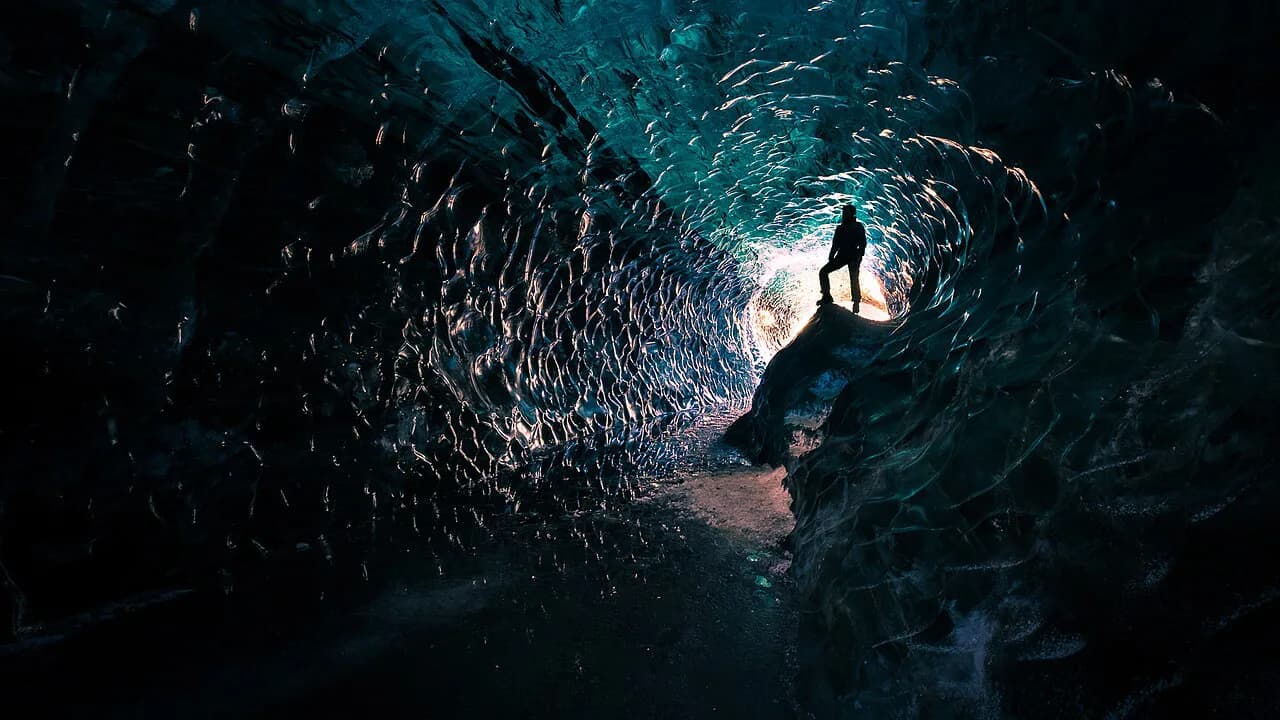
From the Mývatn area, look for day-tour and winter-excursion operators based near the lake rather than in the south. Ask any operator directly whether they offer a free retry and whether transport is included; those are the two terms that change the value of a cloudy night. The myvatn ice caves day-tour operators based near the lake are a good place to start your search.
How many nights to allow for a fair chance of clear skies
No source can promise a sighting, and none of these forecasts should be read as one. Aurora Reykjavík's own FAQ says the lights cannot be guaranteed and that clear skies and darkness matter more than the Kp number. What you can control is how many rolls of the dice you take.
Three to four nights based near Mývatn is the working minimum for a winter trip built around the aurora, and five or more is better if the sky is your main reason for coming. Cloud in north Iceland moves in multi-day patterns, so a single night has a real chance of being a write-off while a longer stay lets you absorb one or two bad evenings.
Build in a buffer at the end. If your best night is the one before your flight, a cloudy sky turns into stress; if it falls early, you still have options. Keep one flexible evening for a longer drive toward clear sky if the cloud map shows a gap elsewhere.
Timing within the night: the 22:00–01:00 window and moon phase
Aurora can appear any time it is dark enough, but Aurora Reykjavík identifies roughly 22:00 to 01:00 as the typical peak, with activity possible from late evening until shortly before dawn. Set your window around that core and treat anything earlier or later as a bonus; the page's sufficient-darkness time shows the earliest usable hour for the night.
The moon is a genuine trade-off. A bright full moon washes out faint aurora, but it also lights the lava and the lake for photographs, so a moonlit night can be the better one for landscapes and the worse one for a quiet display. Aurora Reykjavík builds a moon-illumination line into its calendar for that reason, and hours when the moon is down or low are best for faint activity.
For trip planning weeks ahead, Aurora Reykjavík describes the 27-day outlook as a rough pattern rather than a prediction: the Sun rotates roughly every 27 days, so active regions tend to return and produce similar geomagnetic activity about a month later. Use it to pick a favourable stretch, then plan nights night by night once you are there.
Plan Your Mývatn Nights
The forecast routine is short: Bz first, then Kp, then speed and density, then the cloud map with its time slider. Choose a base near the lake, scout a dark pull-off by day, and decide after dinner whether to set an alarm or sleep.
Keep the Icelandic Met Office cloud layer and your chosen operator's own trip page open when a night matters, since both can change through the evening. A clear evening near Mývatn gives you open lava fields, a low horizon and dark sky within minutes of your bed, which is exactly why the forecast is worth reading properly.
Frequently Asked Questions
What Kp index do I need to see the aurora near Mývatn?
Lower than most people assume. Aurora Reykjavík notes that the lights can appear over Iceland at Kp 1–2 when the sky is dark and clear, though at low Kp they are usually faint and low on the northern horizon. From Kp 3 upward displays get brighter, and at Kp 5 and above the aurora can spread across the whole sky. Clear skies and darkness matter more than the number, and Kp is guidance only.
What time of night is best for aurora in Iceland?
Aurora Reykjavík identifies roughly 22:00 to 01:00 as the typical peak, but the lights can appear any time it is dark enough, from late evening until shortly before dawn. Its forecast page shows a sufficient-darkness time for each night, and hours when the moon is down or low favour faint displays.
Can I see the northern lights in Iceland in summer?
Not meaningfully, because May, June and most of July are too bright under the midnight sun. Usable darkness gradually returns during August, and the aurora season typically begins again in late August and runs until around mid-April, with October through March giving the longest viewing hours.
How far in advance can I plan an aurora trip to Iceland?
For a rough pattern rather than a prediction, use the 27-day outlook: the Sun rotates about every 27 days, so active regions tend to return and produce similar activity roughly a month later. Aurora Reykjavík also points to the spring and autumn equinoxes, when Earth's magnetic field alignment makes March and September consistently active. Night-by-night decisions still depend on Bz and cloud.
Do I need a tour to see the aurora in north Iceland?
No, provided you have a car, winter driving confidence and tolerance for ice and dark roads. A guide brings real-time rerouting, safer driving in poor conditions and, on some tours, a free retry if the lights do not show. Ask any operator directly whether transport and a retry are included.
Why do aurora forecasts change so quickly?
Solar activity shifts constantly, and cloud cover over Iceland changes by the hour, so both halves of the forecast move through the evening. Kp is averaged over three-hour periods and can lag what you see overhead. Reading Bz, solar wind and the cloud map together gives a better picture than refreshing one index.
Sources
Notes for your Arctic winter trip
Optional updates to our northern lights guides.
You might also like
Continue reading
More guides you'll find useful