Mývatn in Winter: Geothermal Sights, Ice Caves & Aurora
Plan a winter trip to Mývatn: geothermal sights, ice caves, snowmobiling, dark-sky aurora viewing and how many nights to allow in North Iceland.
On this page
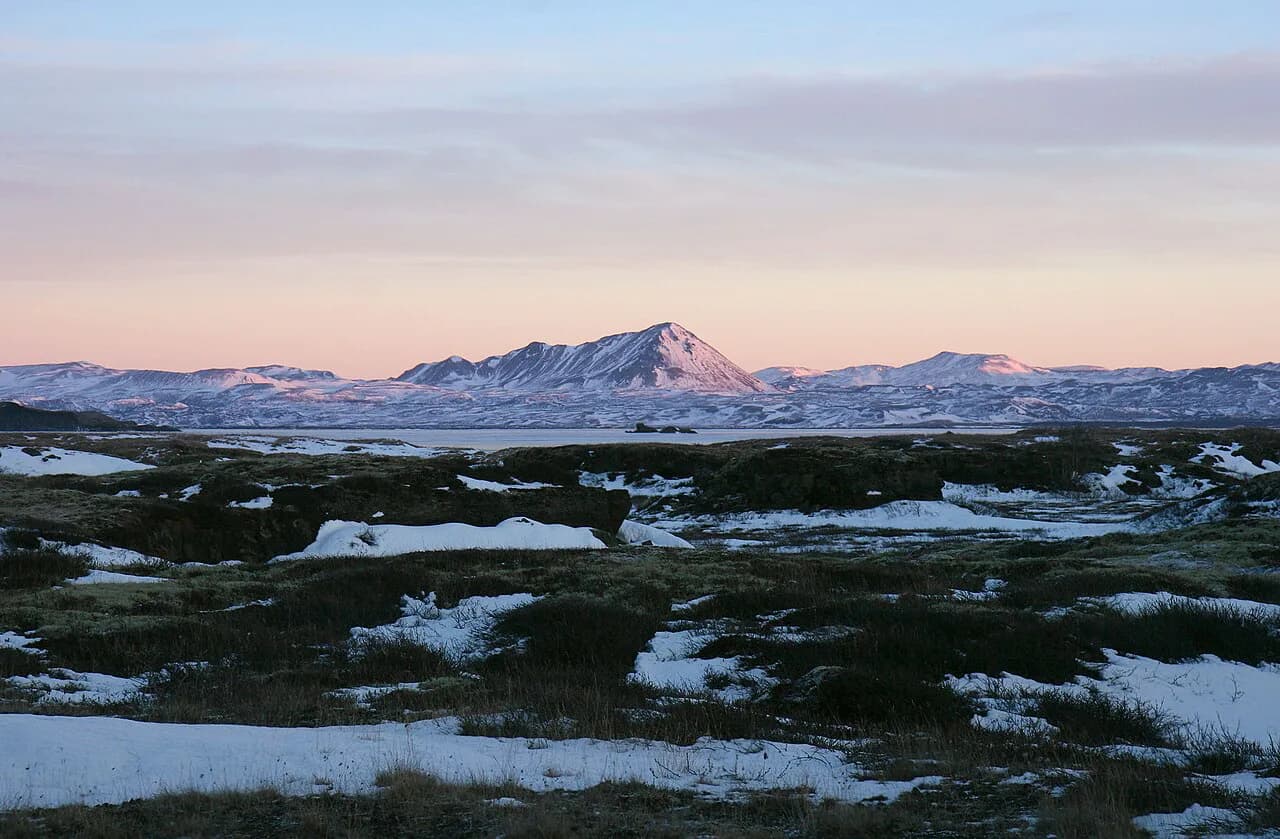
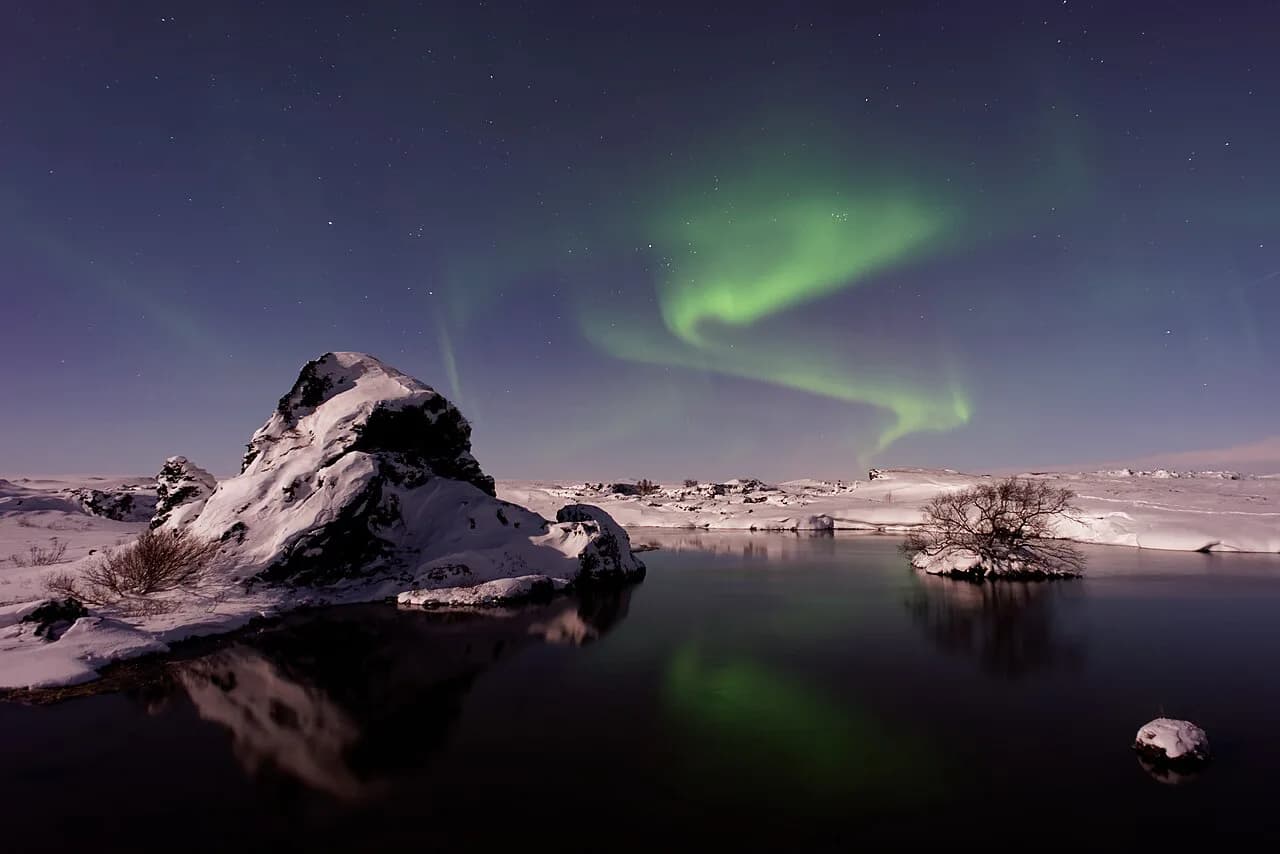
Mývatn in winter gives you two landscapes in one: snow-covered lava fields and craters on one side, steaming fumaroles and mud pools on the other. The lake sits in North Iceland on the Ring Road, so you can drive to viewpoints, bathe in geothermal water and be back at your hotel before the aurora hours begin. It suits travelers with a few nights to spare who want a self-drive base rather than a single guided departure from Reykjavík.
The area is built for short outings. Reykjahlíð, the village on the lake's northern shore, holds the supermarket, tourist information and several hotels, while the main sights sit within a short drive of each other. That compact layout matters in winter, when daylight is limited and road conditions can change quickly. Keep it open for local weather and road updates as you plan each day.
Why Mývatn works as a winter base in North Iceland
A winter base earns its keep when there is something to do on a cloudy day. Around Mývatn you have geothermal areas that stay visible under snow, a geothermal bathing lagoon, lava formations with marked paths and a crater you can climb when conditions allow. When the sky does clear, you are already in a dark, sparsely lit area rather than driving hours back from a day tour.
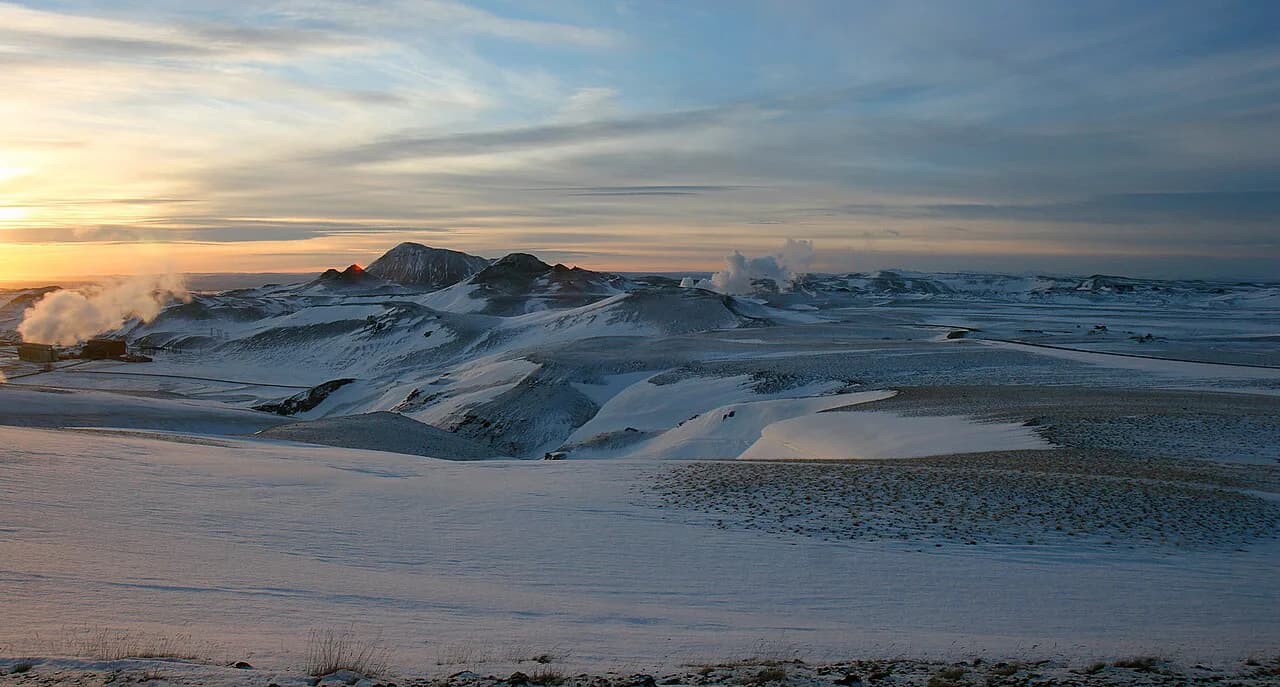
The trade-off is temperature and exposure. Geothermal ground keeps some patches at Námaskarð snow-free even on cold winter days, but that same warmth means thin crust around the springs, and going past marked lines is strictly forbidden.
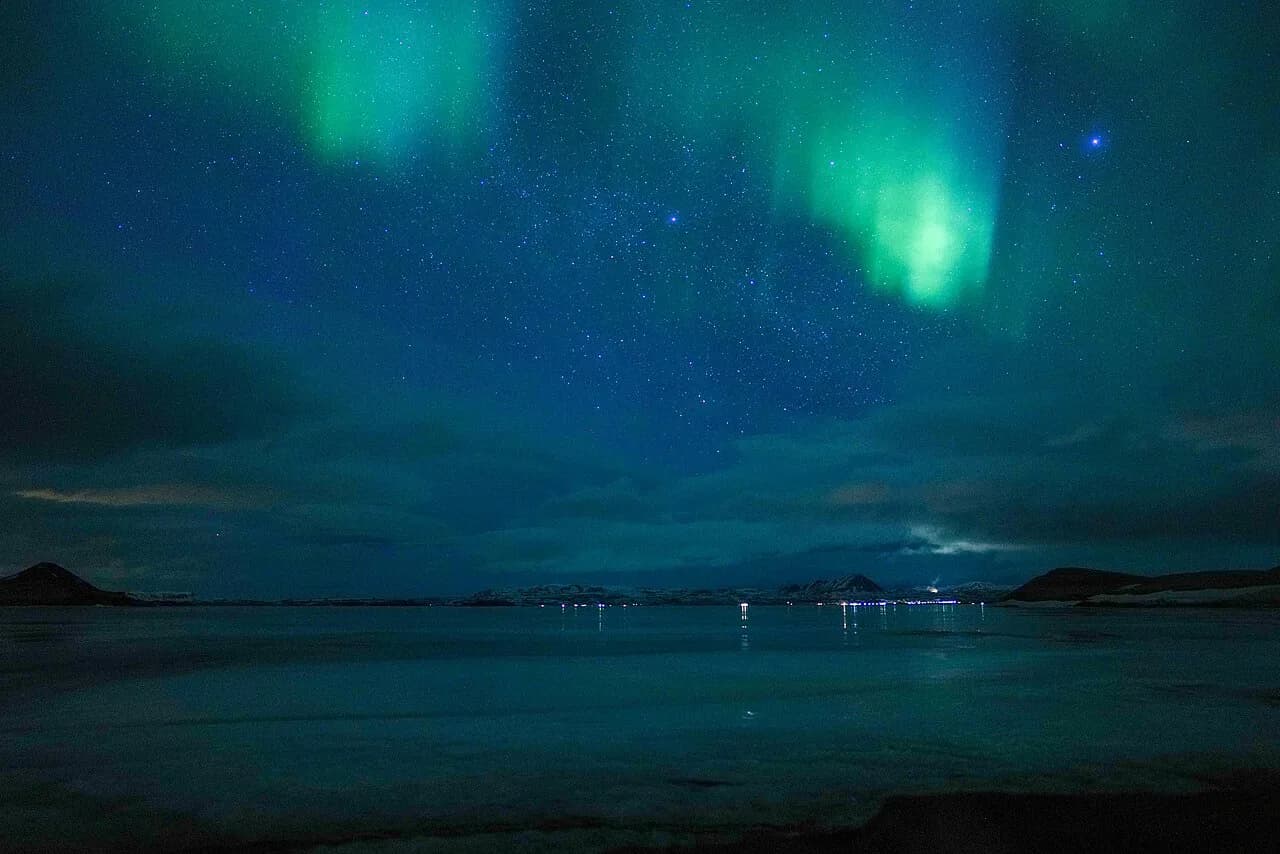
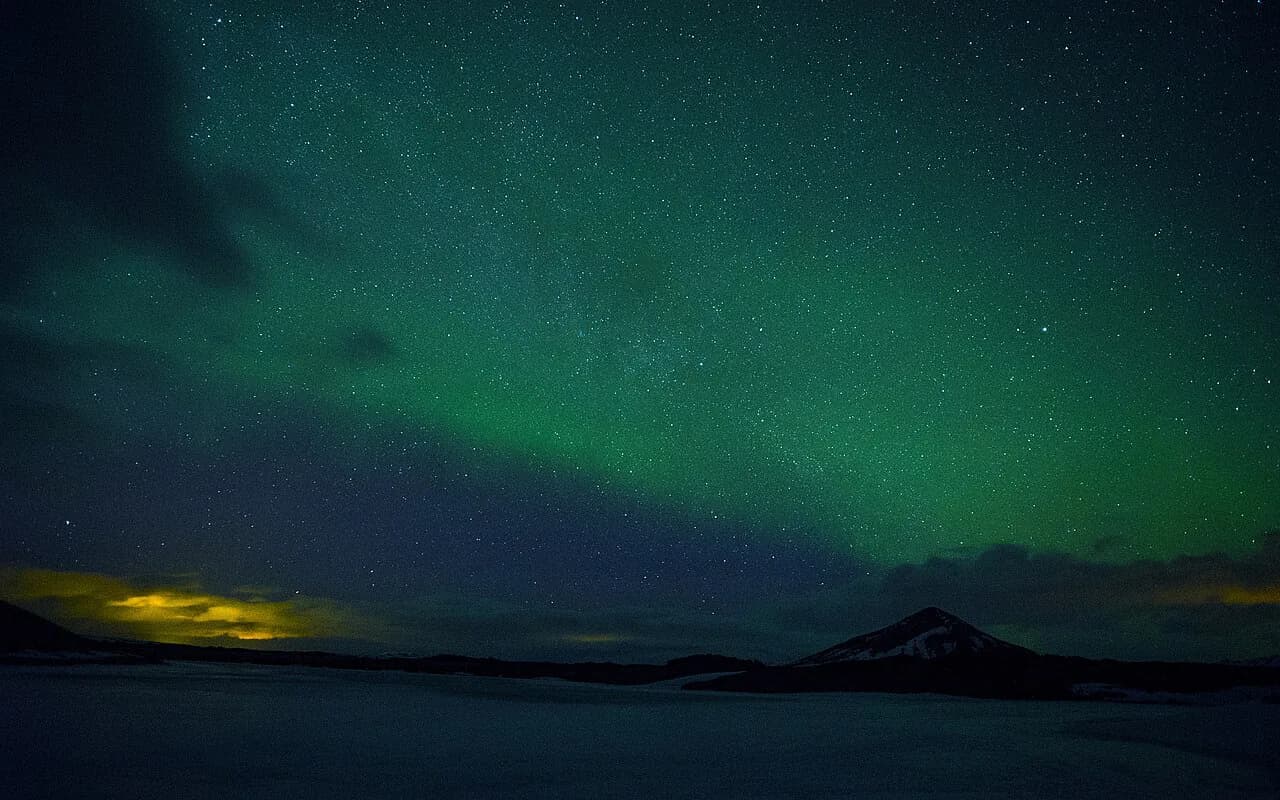
Plan your days around a short daylight window and keep evenings free for the aurora. If you want the detailed case for the lake as an aurora destination, our guide to the Northern Lights at Lake Mývatn covers forecasting and viewing strategy in depth.
Where Mývatn sits and how far north it is
Lake Mývatn lies in North Iceland at roughly 65.6 degrees north, about 90 km from Akureyri and 175 km from Egilsstaðir. The lake itself is shallow and broad, roughly 39 sq km with a maximum depth of only about 4 metres. Sitting near the Arctic Circle, the area gets long winter nights, which is what gives the aurora its stage.
The lake sits right off Route 1, the Ring Road, which is why it fits neatly into a north Iceland loop. The surrounding landscape is volcanic: the lake formed after a basaltic fissure eruption about 2,300 years ago, and the pseudo-craters around Skútustaðagígar are part of that same system. Expect black lava, coloured rhyolite and steam rather than forests or glaciers.
When the aurora season runs and how dark the nights get
Aurora season in North Iceland runs roughly from late August into early April, when nights are dark enough for the northern lights to show. Midsummer is out: the sky never gets properly dark. Around the equinoxes in September and March you get a workable balance of dark nights and manageable driving, while midwinter offers the longest darkness but the shortest days for sightseeing.
Darkness alone does not produce a display. You need clear sky and solar activity, and neither can be promised for a given night. Kp values are a rough guide to how far south the aurora may reach, not a forecast for your patch of sky. Use them alongside a cloud forecast and treat every clear night as a chance rather than a certainty.
Mývatn's advantage is low light pollution once you leave Reykjahlíð and the hotel cluster. The village itself is small, so stepping away from buildings and car parks quickly improves your view of the sky. If you want a wider look at season timing across the country, our Iceland in winter guide sets out the national picture.
Winter daylight, snow and driving conditions by month
December and early January bring the shortest days, with only a few hours of usable light either side of midday. By late February and March, daylight stretches enough to fit in several sights in one day and still leave the evening free. Snow cover builds through midwinter and can persist into April on higher ground, while the Ring Road and main routes around the lake are the priority for clearing.
Do not rely on a fixed itinerary. Road conditions change fast, and the official road authority page is the place to check before setting out each morning. The Arctic Adventures guide to the area points travelers to road.is for road conditions and vedur.is for weather when planning winter days around the lake.
Three-digit roads are a different matter. Routes to spots like Hvitserkur and Kolugljúfur are less maintained and more snow-covered than the Ring Road, so a 4wd is recommended in winter and you should check conditions before committing.
Where to watch the aurora around the lake
Start close to Reykjahlíð. The northern shore gives you open views over the lake and lava field, and you can be back indoors within minutes if cloud rolls in. The Hlíð camping ground sits by the village with a view over the lake and lava field and stays open all year, which makes it a useful reference point for the area's layout even if you sleep in a hotel.
For a darker, quieter setting, Dimmuborgir's lava field and the Skútustaðagígar crater area both sit a short drive from the village. Dimmuborgir has several easy trails and makes for a short winter walk, while the Skútustaðagígar loop takes under an hour and gives open views across the lake. Both are worth scouting in daylight so you know the ground before you return after dark.
Avoid standing on ice unless locals confirm it is safe, and park well off the road with hazard lights on if you stop. Headlights from other aurora hunters can spoil a view, so pick a spot where cars are not funneled past you. If you are working through the area's dark-sky options in more detail, the dedicated myvatn northern lights guide covers viewing spots and timing.
Self-driving versus a guided northern lights tour
Self-driving gives you the freedom to move when a gap in the cloud appears, but it puts the winter driving, navigation in the dark and late-night fatigue on you. A guided tour takes those decisions away and usually comes with a driver who knows the local roads. The catch is fixed departure times and group pacing, which can mean less flexibility on a marginal night.
Mývatn is far enough from Reykjavík that a same-day northern lights tour from the capital is not the sensible approach. Base yourself near the lake instead, and add a guide for the nights when you would rather not drive. Bring a headlamp and keep your own car fueled and clear of snow, since fuel stops thin out quickly in this part of the north.
Mývatn Nature Baths in winter
The Mývatn Nature Baths are the area's main geothermal soak, with a lagoon fed from a borehole in Bjarnarflag. The water is alkaline and mineral-rich, with no chlorine needed, and two steam baths are built directly over a geothermal area where steam rises through vents in the floor at around 50 C. Changing rooms accommodate up to 300 guests at a time, lockers come with your entrance ticket, and the car park is free.
In winter, the appeal is the contrast: hot water, cold air and, on a clear night, a chance of aurora overhead. There is a restaurant with panoramic views if you want to eat on site. Hours and admission change through the season, so check the current timetable on the Mývatn Nature Baths website before you drive over. Our Mývatn Nature Baths in Winter guide covers what to expect in more detail.
Geothermal ground at Námaskarð and Hverir
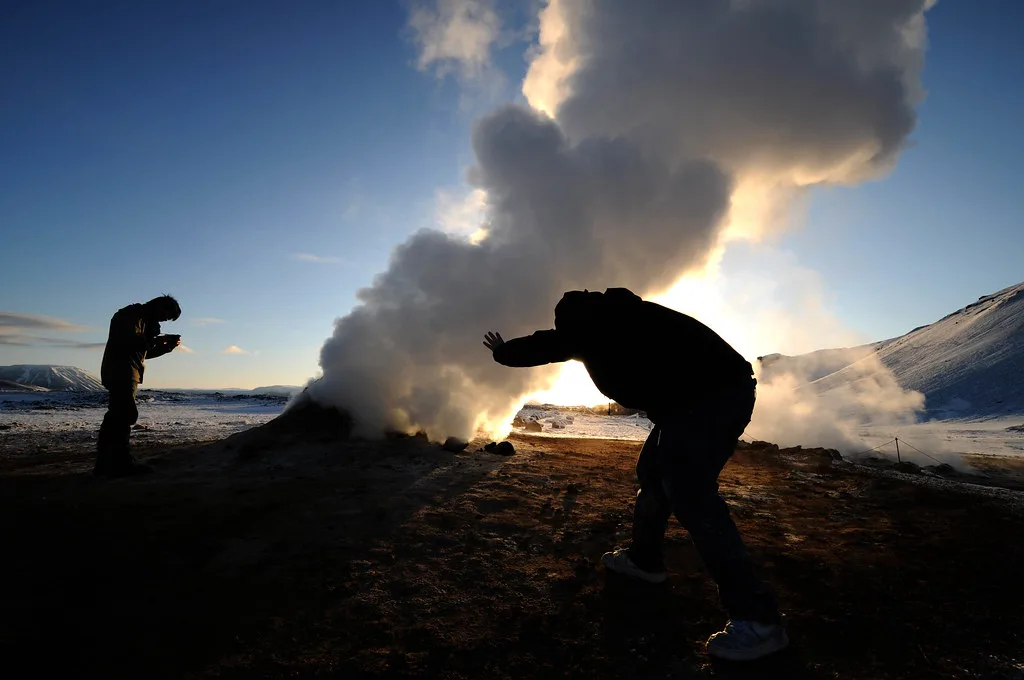
Námaskarð, also called Hverir, is the area's most concentrated geothermal field: fumaroles, mud pots and steam vents spread across bare, coloured ground. Parts of the ground stay snow-free even on cold days because of the heat below, which is why it looks so different from the surrounding white landscape. It is also a stop for tour buses through the day, so early or late visits are calmer.
You cannot bathe here; the springs are far too hot and too small. Stay behind the marked lines, because the crust can be thin with boiling ground underneath. Keep the visit short and treat it as a viewpoint rather than a hike.
Nearby, Krafla caldera and the Víti crater add more volcanic ground to the same day, and the drive from Egilsstaðir passes Námafjall and the Hverir area before reaching the lake. If you are building a Diamond Circle loop, this is where the geothermal half of the day sits.
Dimmuborgir lava field and Skútustaðagígar craters
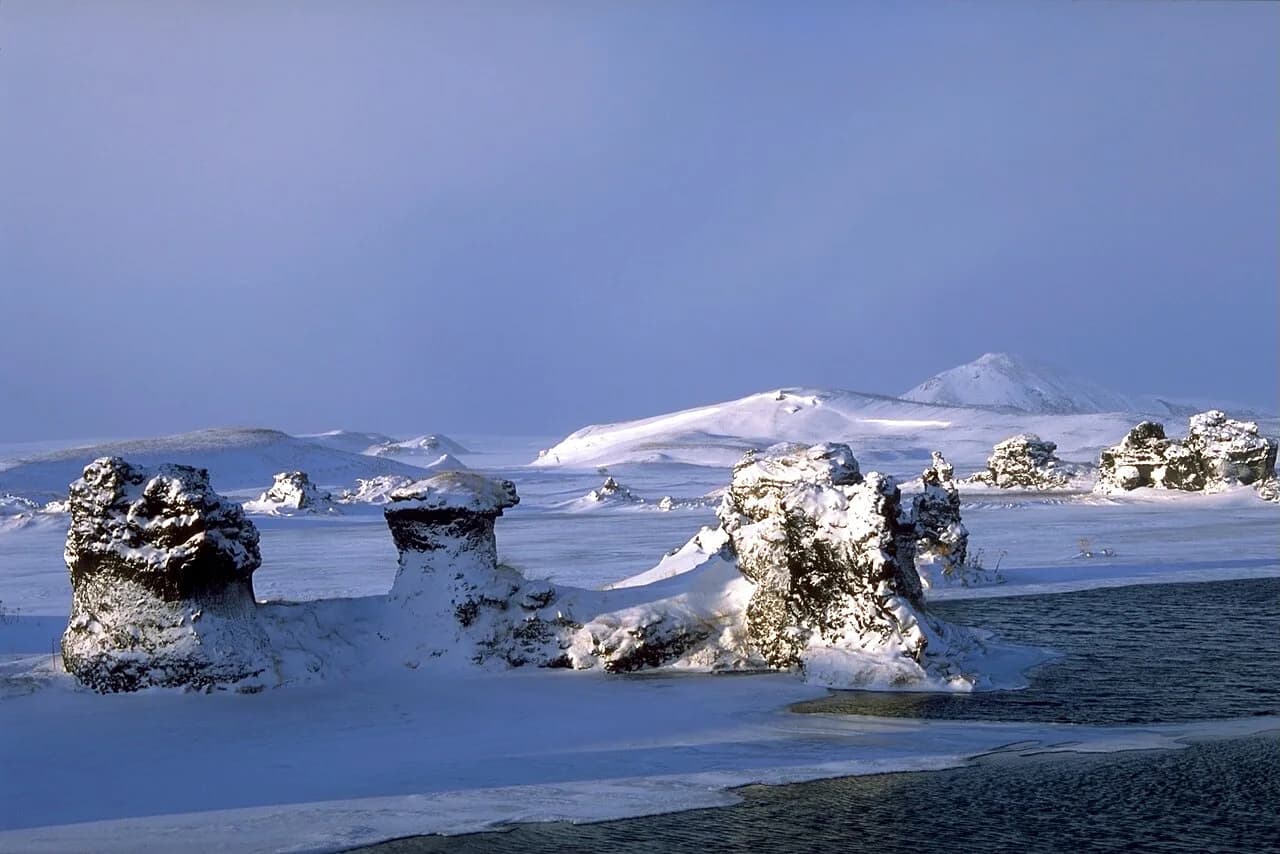
Dimmuborgir is a circular lava formation roughly 2 km across with man-made paths threading between rock pillars, arches and a small birch wood. It is busy in summer but far quieter in winter, and the easy trails make it a sensible short outing when daylight is limited. The formations were created in the same eruption that formed the lake bed.
Skútustaðagígar, the pseudo-crater field beside the lake, is easy to walk in winter and the full loop takes under an hour with views over the water. The surrounding land is part of a protected nature reserve, so keep to paths and give birds and vegetation space. Both sites work well as a combined half-day when the weather is settled.
Hverfjall crater in winter conditions
Hverfjall is a large tephra crater about 150 metres high and roughly 1,040 sq metres around its rim, formed in an eruption about 2,500 years ago. In summer the climb from the car park takes 10 to 15 minutes and a circuit of the rim about an hour. In winter the same trail turns icy and slippery, so spikes help and strong wind or a weather alert should send you elsewhere.
Choose a calm, clear day for the climb and turn back if the surface is glazed or the wind picks up on the exposed rim. The view over the lake and lava fields is the reward, and the winter version is quite different from summer. Treat it as an optional add-on rather than the centrepiece of a short winter day.
Lofthellir ice cave tours
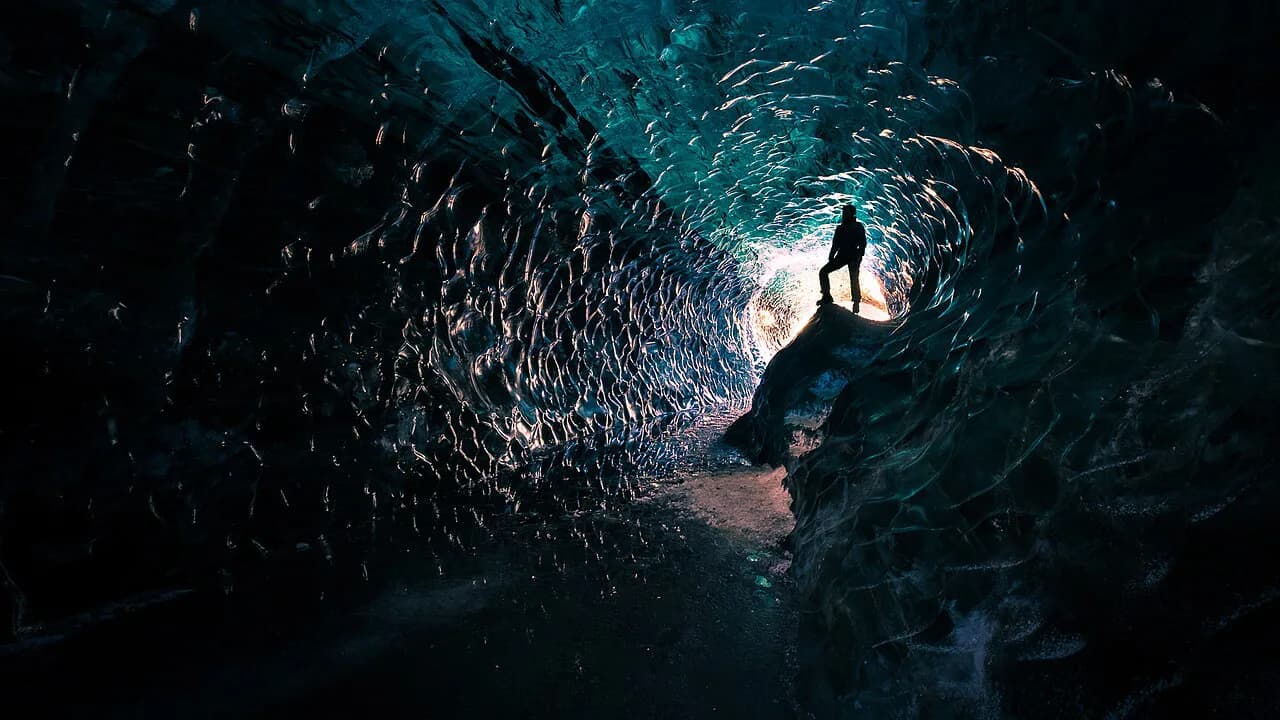
The Lofthellir lava cave holds ice formations that you visit on a guided tour from the Mývatn area, with safety gear included. The tour runs 4 to 5 hours and is rated moderate, with departures listed from January to October.
This is a caving trip rather than a sightseeing stop, so expect to crawl and squeeze through passages in cold, wet conditions. Minimum ages, group sizes and current pricing are set by the Lofthellir tour companies, so check them when booking. Our guide to the Ice Caves at Mývatn sets out what the tour involves and how it fits into a winter itinerary.
Snowmobile tours from Grímstaðir
Snowmobile tours run from Grímstaðir farm near Reykjahlíð, with rides listed at 2 to 2.5 hours. The operator runs them from November to May and rates the tour easy.
This is a good option when cloud rules out the aurora and you want an active day on snow. Check what is included, whether a licence is required and the minimum age when you book, since those details vary by tour. Book ahead in high season, as winter departures are limited by daylight.
Goðafoss and the Diamond Circle in winter
Goðafoss, on the road between Akureyri and the lake, keeps flowing through winter and stays easy to reach, which makes it a reliable stop rather than a gamble on conditions. The car park is close to the falls, so you can see it without a long walk. Check the path for ice, as spray freezes on the ground beside the viewpoints.
Beyond the lake, the Diamond Circle links Húsavík, Ásbyrgi and Dettifoss with the Mývatn area. Geosea in Húsavík, a geothermal spa with two pools at different temperatures and a pool bar, is a comfortable stop at the end of a winter day, with views over the fjord on a clear afternoon.
Allow more time than the map suggests for any loop that leaves Route 1. Shorter daylight, snow and slow traffic on mountain passes all eat into the schedule. If conditions worsen, cut the loop and stay near the lake rather than pressing on to the next stop.
Where to sleep around the lake
Most winter beds are in and around Reykjahlíð, on the lake's northern shore. The Arctic Adventures area guide lists Laxá Hotel, Hotel Mývatn, Vogafjós Farm Resort, Icelandair Hotel Mývatn, Hotel Reykjahlíð and Fosshotel Mývatn among hotels, along with Hlíð Hostel and a spread of guesthouses and cabins including Skútustaðir Farmers Guesthouse, Dimmuborgir, Vogar Farm Guesthouse and Eldá Guesthouse.
For camping, Hlíð camping ground by Reykjahlíð is open all year, five minutes' walk from the tourist information centre, supermarket and café, with showers, electricity and laundry. Bjarg camping ground runs from 1 May to 20 September, so it is a summer option. Overnight parking or camping outside designated campsites is forbidden.
Staying near the lake matters most for aurora chances: a short drive to a dark spot beats a two-hour return trip from Akureyri. If you want a hotel with easy access to the water and a restaurant on site, our fosshotel myvatn guide covers what the property offers.
How many nights to plan for clear skies
Three nights around the lake is a fair starting point, and four or five is better if the aurora is your main reason for coming. Cloud cover is the limiting factor, not darkness, and North Iceland can sit under overcast for days at a time. Spreading your stay across a week improves your odds without any guarantee.
Use the days productively rather than saving everything for the night. Geothermal sights, the Nature Baths, an ice cave and a snowmobile ride all work under cloud, and a clear evening then becomes a bonus rather than the whole trip. Read the Lake Mývatn in Winter guide for a fuller picture of how the season behaves.
Getting to Mývatn in winter
Driving from Akureyri takes about 1 hour 15 minutes on a scenic route past Eyjafjörður and Lake Ljósavatn, while Egilsstaðir to the lake takes a little over 2 hours. From Reykjavík the drive is roughly 6 hours, which the area guide advises against doing in one day.
Public buses reach Reykjahlíð, and flights into Akureyri or Húsavík shorten the journey from the capital. In winter, build in slack for road closures and check conditions before each leg. Fuel up in Akureyri or another larger town before heading east.
If you are connecting onward around the island, plan Mývatn as a two-night stop within a longer winter route rather than a day trip. That keeps driving hours reasonable and leaves evenings free for the sky.
Plan Your Winter Nights at Mývatn
Mývatn rewards travelers who treat it as a base rather than a checklist stop. Give yourself at least three nights, keep the days flexible for geothermal sights and ice caves, and hold the evenings for dark-sky viewing around Reykjahlíð, Dimmuborgir and Skútustaðagígar.
Book accommodation and any guided tours ahead, watch road and weather conditions daily, and accept that clear skies are a matter of luck rather than planning. When they come, the combination of steam, snow and aurora over the lake is hard to match anywhere else in Iceland.
Frequently Asked Questions
Is Mývatn worth visiting in winter?
Yes, if you want a compact base where cloudy days still have plenty to fill them. Námaskarð and Hverir, Dimmuborgir, the Skútustaðagígar craters and the Mývatn Nature Baths all work in winter conditions, and the Lofthellir cave and snowmobile tours run through the season on set schedules. The lake sits on the Ring Road, so you are not committing to a long detour to stay here.
Can you see the northern lights at Mývatn?
Mývatn is a strong location for aurora watching because the village is small and dark skies begin just outside it. Sightings still depend on solar activity and clear cloud-free sky, so no night can be promised. Plan several nights, keep evenings free and use cloud forecasts rather than relying on Kp values alone.
How many nights should you spend at Mývatn in winter?
Three nights is a fair minimum and four or five gives you a better cushion against overcast weather. Days fill easily with geothermal sights, a soak at the Nature Baths, an ice cave tour and a snowmobile ride, so extra nights rarely feel wasted even if the sky stays grey.
Is Hverfjall climbable in winter?
Usually yes, but the trail becomes icy and slippery and the climb is far harder than the short summer walk to the rim. Spikes help, and strong wind, rain or a weather alert should keep you off the exposed rim. Pick a calm, clear day and turn back if the surface is glazed.
Do you need a 4wd to drive around Mývatn in winter?
For the Ring Road and the main roads around the lake, a normal winter-ready car is usually enough. Routes to outlying spots such as Hvitserkur and Kolugljúfur use less-maintained three-digit roads where a 4wd is recommended in winter. Check road conditions before each leg and adjust your plans accordingly.
What can you do at Mývatn in winter besides aurora hunting?
Soak at the Mývatn Nature Baths, walk the geothermal field at Námaskarð and Hverir, explore the Dimmuborgir lava formations and the Skútustaðagígar craters, and stop at Goðafoss. The Lofthellir ice cave tour and snowmobile rides from Grímstaðir add guided activity, and Geosea in Húsavík makes a comfortable end to a Diamond Circle day.
Sources
Notes for your Arctic winter trip
Optional updates to our northern lights guides.
You might also like
Continue reading
More guides you'll find useful