Mývatn Northern Lights: Season, Dark Spots and Tours
Plan northern lights nights at Lake Mývatn: the late-August-to-April season, dark-sky spots around the lake, small-group tours and how many nights to allow.
On this page
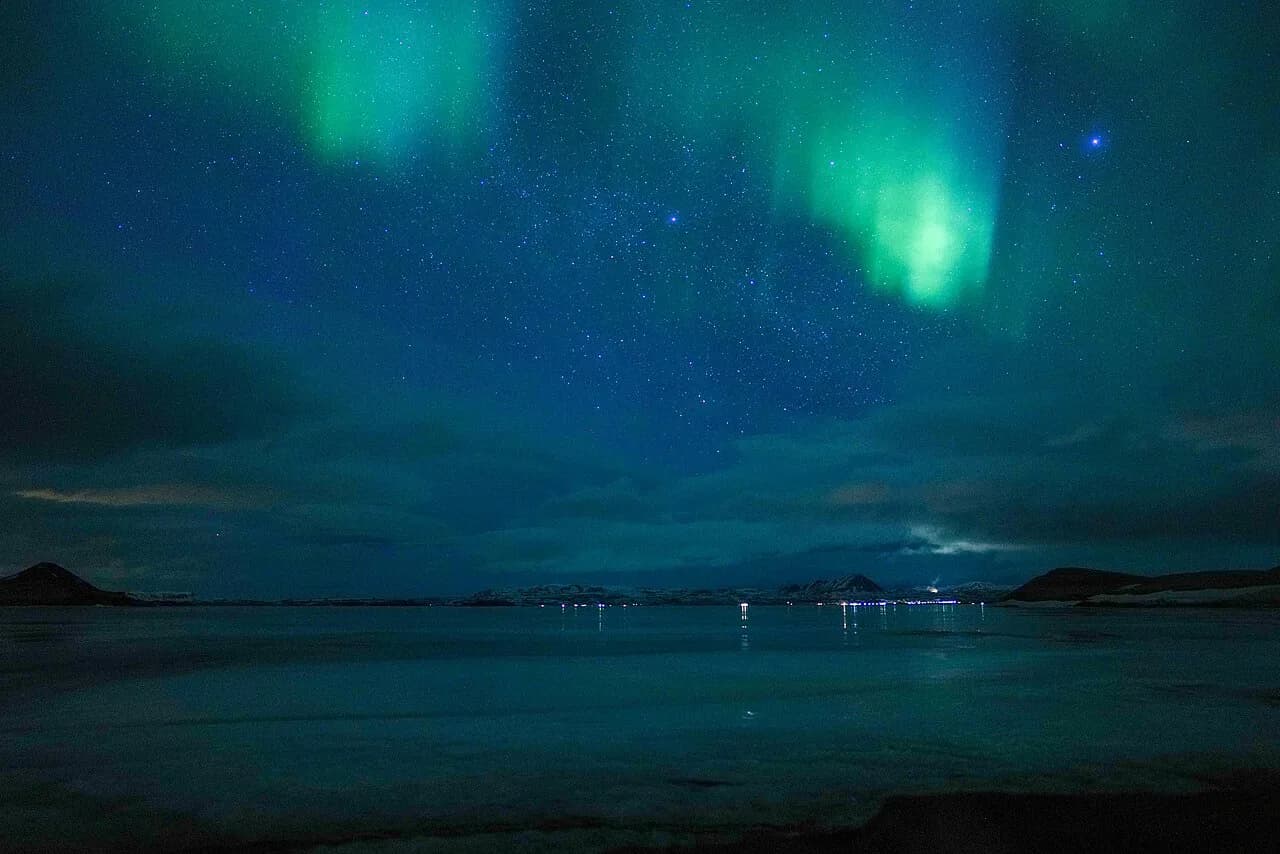
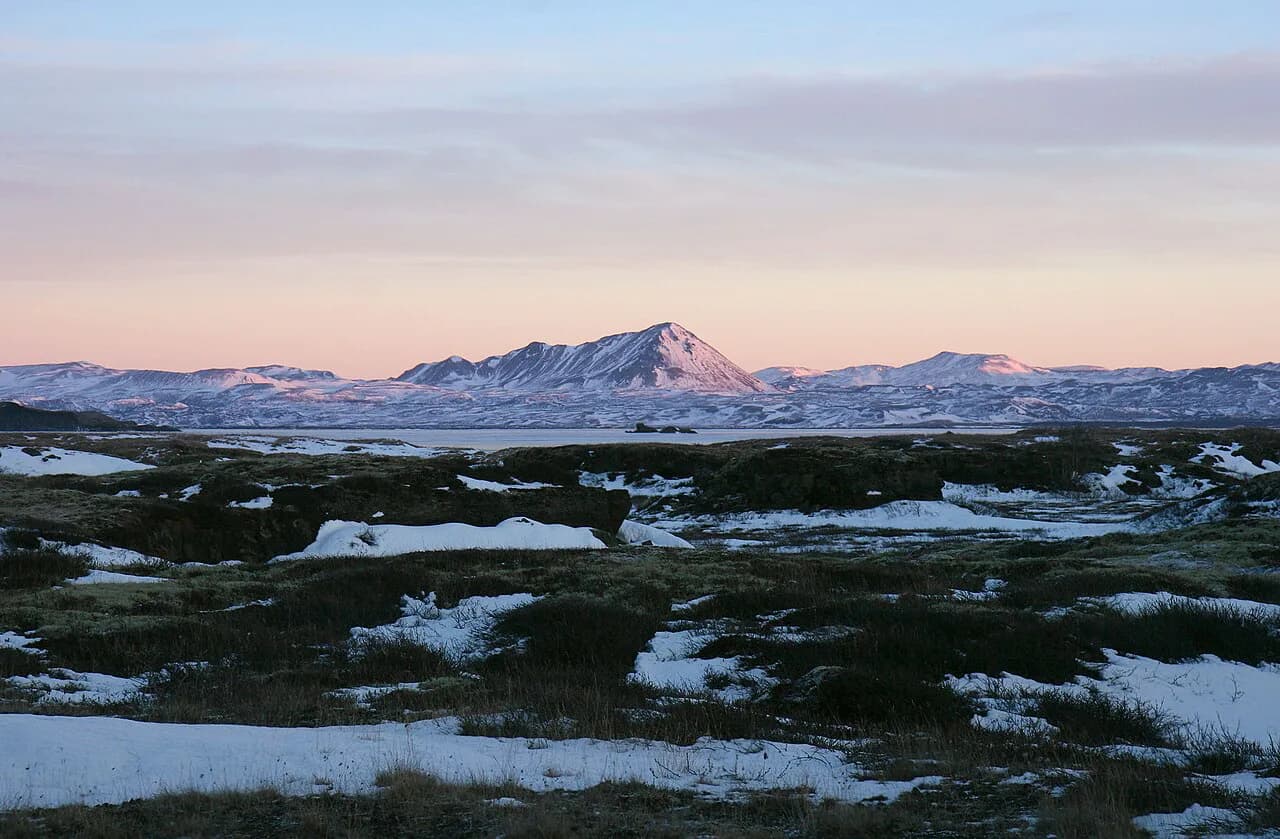
Lake Mývatn gives you something a Reykjavík-only trip cannot: a dark, quiet lakeshore with lava fields and mountains as foreground, and a village small enough that the aurora can appear above your hotel. The season here is long, the northern coastline is dry by Icelandic standards, and tours run from the Mývatn area itself rather than driving up from the capital. It suits travelers who want aurora nights woven into a few days of winter scenery rather than a single make-or-break excursion.
This is a place where the northern lights are a bonus on top of a genuinely interesting winter landscape, not a guarantee. Book the nights, watch the forecasts, and let the clear hours decide the rest.
Why Lake Mývatn sits in a strong aurora zone
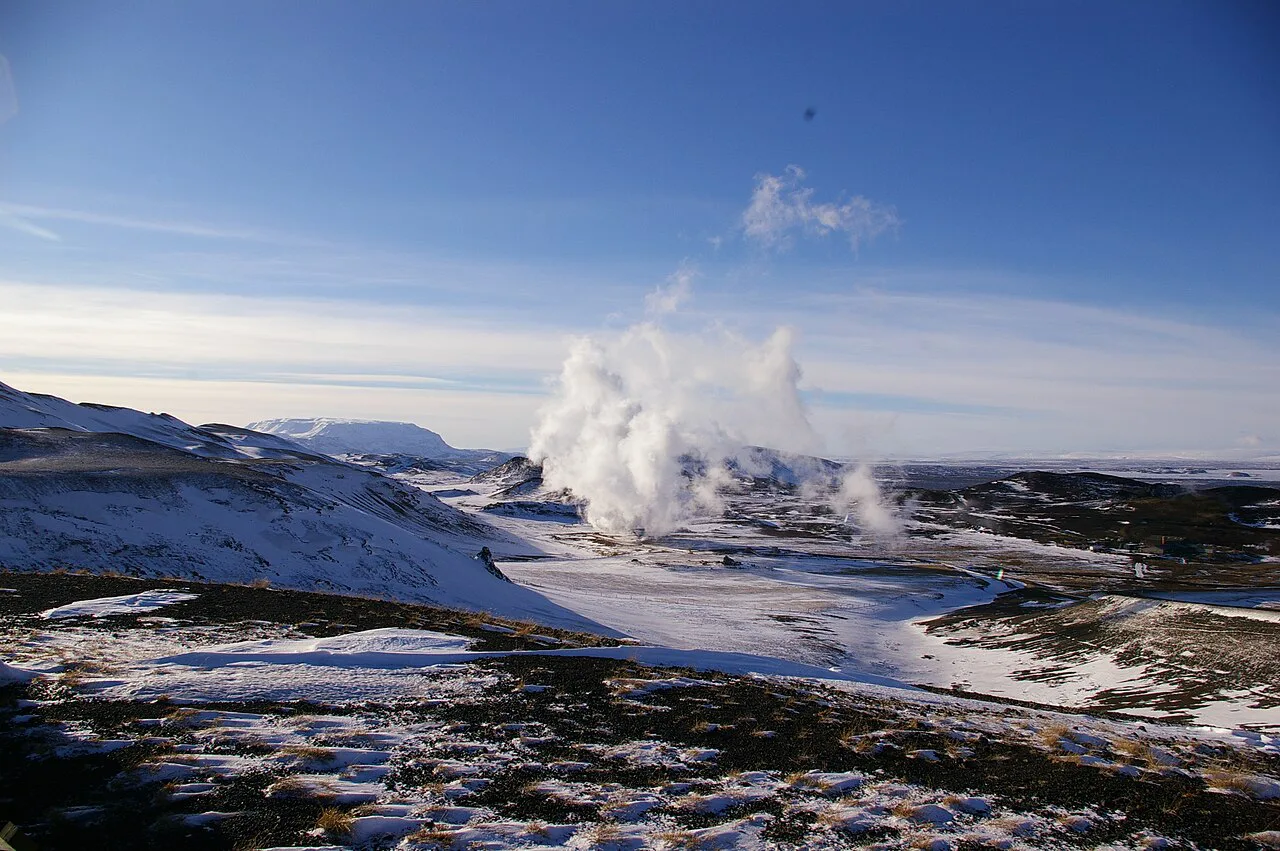
Mývatn lies in North Iceland, inside the band of latitudes where the aurora most often appears overhead, and the wider region combines three advantages that matter on any given night. It is far enough north for auroral activity to be common, it has long dark nights from autumn to spring, and it is thinly populated, so light pollution is limited compared with the capital area. Visit Mývatn describes North Iceland as receiving less precipitation and less average cloud cover than other parts of the country, with larger unpopulated areas and less light from towns and villages.
The practical consequence is that a clear forecast at Mývatn is unusually usable. You are not fighting city glow for a view of the horizon, and on many nights you can step outside the village and be under a dark sky within minutes. The trade-off is that the north can still be cloudy, and cloud is the factor that most often decides a night, not the strength of the solar wind.
Treat any Kp number you see as guidance rather than a verdict. Aurora forecasts estimate geomagnetic activity and cloud, and a modest Kp value on a clear Mývatn night can produce a better show than a higher value under overcast skies. Iceland's own aurora forecast pages are the ones to follow once you are in the country.
When the aurora season runs at Mývatn
Aurora tours from Mývatn run from late summer into spring. Geo Travel operates its northern lights tour from 1 September to 30 April, and Saga Travel lists availability from 15 August to 30 April, with the latter noting that the lights are visible in Iceland from September through April subject to activity and cloud. For planning purposes, treat late August to late April as the window when nights are dark enough for a realistic attempt.
The shoulder months are underrated. In September and early October you still get usable daylight for hiking and sightseeing, and the nights are already long, while late March and April bring longer days and softer temperatures alongside dark evenings. Midwinter delivers the most darkness but also the shortest working days, so build the aurora attempt around the night rather than expecting a full day of sightseeing on either side.
Snow and road conditions shift through the season, and a winter trip here is easier if you keep two or three nights in reserve. That flexibility matters more than any single date you pick in advance.
Cloud cover, snow and winter temperatures around the lake
Mývatn is a cold, snowy place in midwinter, and the lake area can sit below freezing for long stretches. Geo Travel gives winter temperatures in the range of +5°C down to -25°C, which is a useful bracket for understanding how a night out can feel when the wind picks up. The same operator notes that it does not provide winter clothing, so a proper jacket, boots, hat and gloves are part of the booking decision, not an afterthought.
The regional cloud advantage does not mean clear skies every night. North Iceland is drier on average, but weather systems still move through, and a night that starts overcast can clear, or the reverse. This is why operators watch cloud forecasts through the day and pick a direction close to departure rather than sticking to a fixed viewpoint.
For the rest of your days, ice and snow shape what is reachable. Winter conditions favor shorter excursions and locally guided trips over long self-drive loops, and the roads around the lake can be affected by snow, wind and ice. Keep the daytime plan loose enough that a clear night does not leave you exhausted the next morning.
Where to watch near the lake
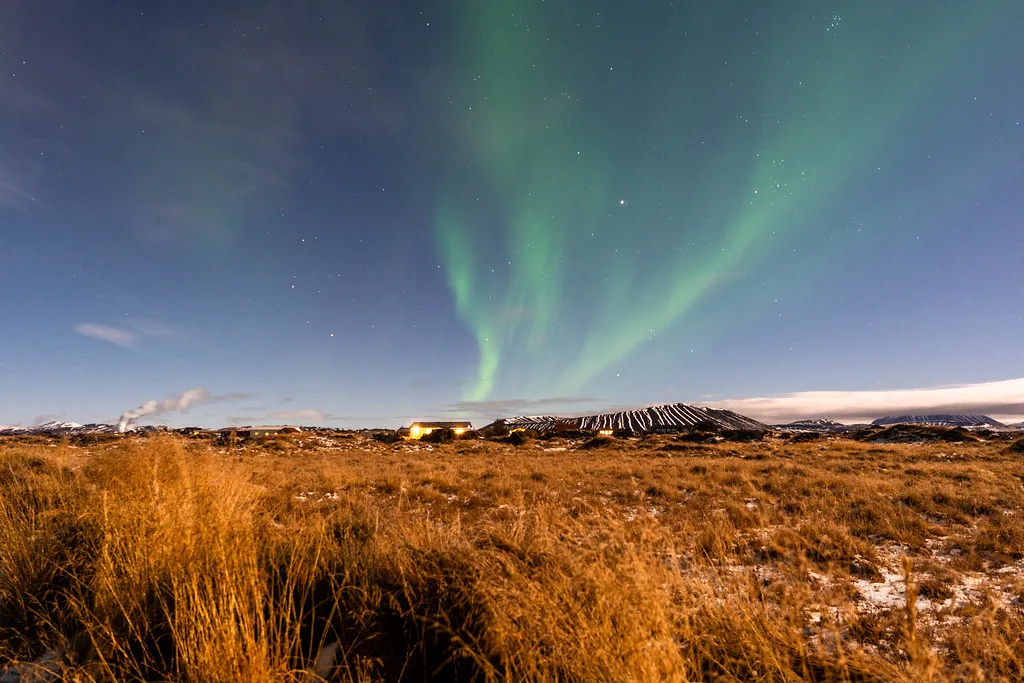
The lake shore itself is the simplest dark-sky base. Mývatn has minimal light pollution, and both operators note that aurora can sometimes be seen from hotels in the area, so a guesthouse with a view away from village lighting is a real asset on a cold night. The advantage of staying close to the water is that you can step out, look up and be back inside within minutes if the sky stays quiet.
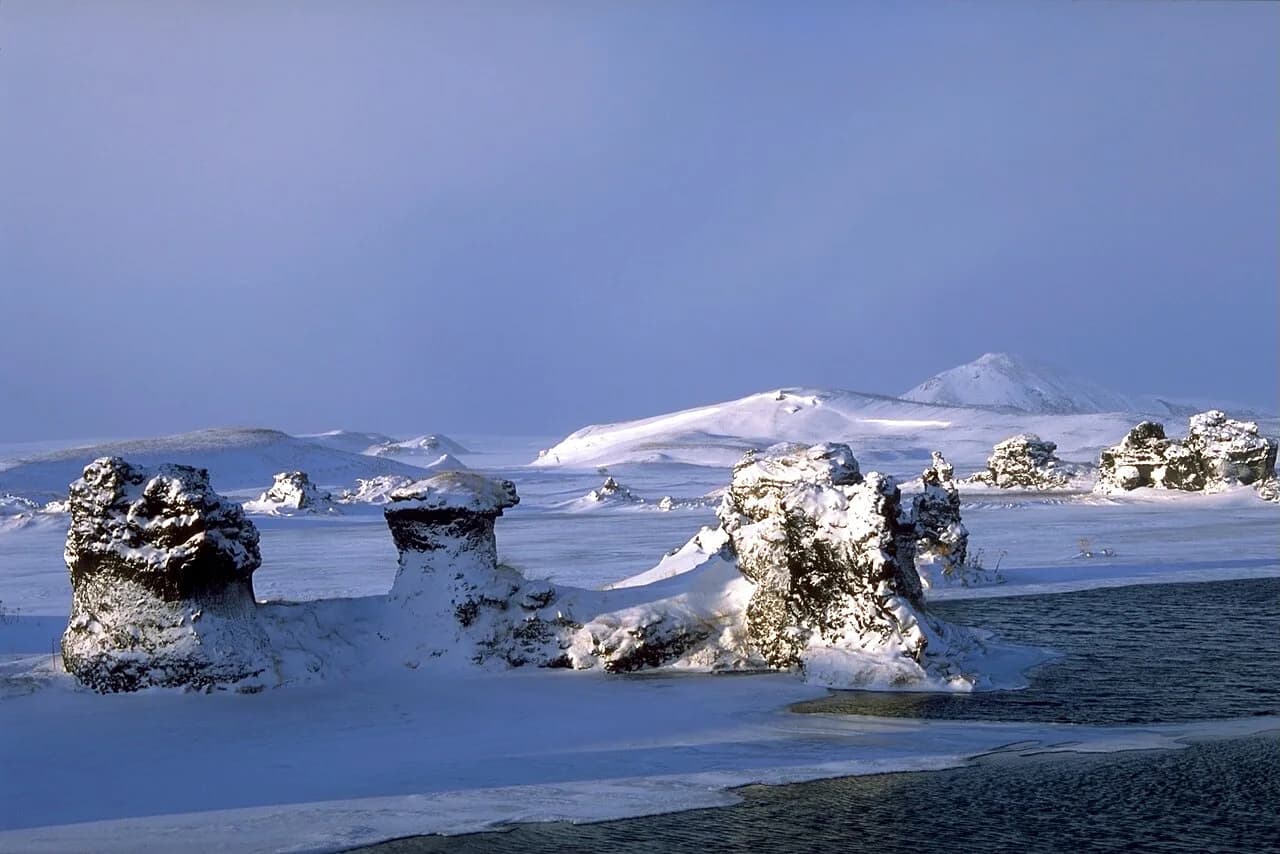
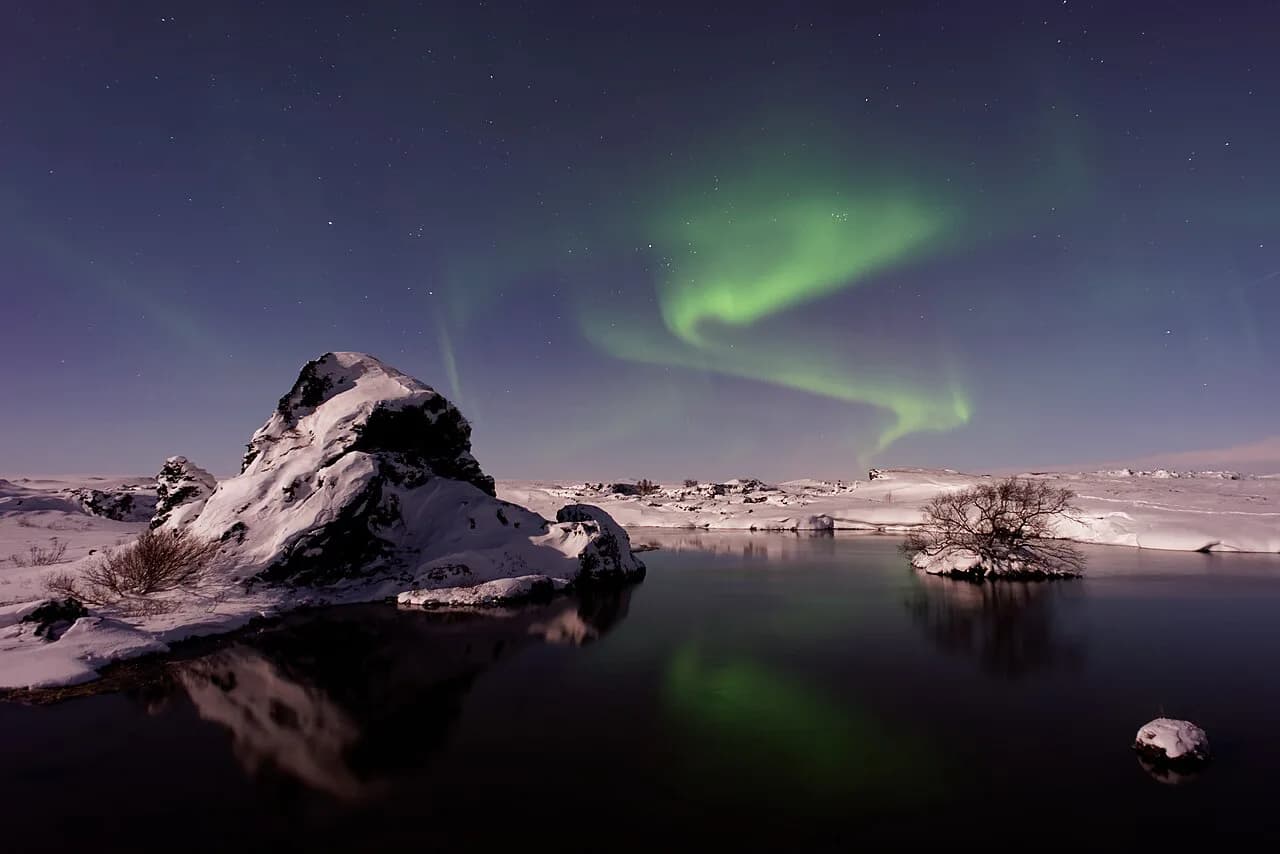
Geo Travel describes taking guests to selected locations with zero or low light pollution and dramatic foregrounds such as waterfalls, lava fields and mountains, which is the difference between seeing a green glow and coming home with a photograph. If you plan to chase on your own, aim for pull-offs away from buildings and headlights, with an open view to the north and a solid surface to stand on. Lava formations and shoreline give you the foreground that a plain field lacks.
Distances and exact viewpoints shift with conditions, so the practical approach is to scout one or two dark access points in daylight and keep them as fallbacks. A short drive from the village toward the surrounding lava and shore is usually enough to escape the worst of the light.
Self-guided aurora chasing versus booking a night tour
Going it alone at Mývatn is realistic in a way it is not in many aurora destinations. The area is small, the roads are manageable, and the darkest spots are close to where you sleep. If you have a car, a clear forecast and patience, you can watch from the lakeshore or a quiet pull-off and treat the night as a slow vigil rather than a scheduled event.
A tour buys you decisions made for you. Geo Travel runs small groups capped at 16 guests, with guides who live in the area and monitor forecasts until departure, changing route mid-tour to chase clear skies. The tours include transport in a heated vehicle, hotel pickup around Lake Mývatn and photography assistance, and departures fall between 20:00 and 23:00 depending on the season, with pickup 15 minutes before departure.
Saga Travel takes a more private approach, describing tours built around getting to the best photographic spot with your own guide and vehicle, departing daily at 21:00 and lasting 2 to 3 hours. The comfort and flexibility of a private vehicle come at the cost of a higher per-person price if you are traveling alone, while a small group spreads the same logistics across more people.
Small-group aurora tours from Mývatn: prices, durations and group sizes
Both main operators price the standard night tour at 24,900 ISK per person. Geo Travel runs 2 to 3 hours with a minimum of two adults, and Saga Travel runs 2 to 3 hours with transport and a fully guided tour included. Geo Travel requires a minimum of two adults, while Saga Travel does not publish a group cap, so check which format suits a solo traveler before booking.
Group size is the clearest differentiator. Geo Travel's 16-guest cap keeps the vehicle and the viewing spot manageable, while Saga Travel's private-vehicle style is aimed at travelers who want their own guide and itinerary. For photographers, the smaller group and Geo Travel's offer to help set up cameras is worth weighing against a private departure. Prices and departure times can change, so check current details when you book.
Both tours leave in the evening and return around midnight or later, which shapes how you plan the following day. Geo Travel notes that tours return around 00:00 and suggests considering whether children can handle late nights and cold weather before booking.
What a Mývatn aurora night actually involves
The night usually starts long before departure. Guides study the aurora and cloud forecasts during the day, then choose a direction, and they may change the route mid-tour if conditions improve elsewhere. That pattern is what you are paying for on a tour: not a fixed location, but a decision made with local knowledge on the night.
Cancellations are part of the system rather than a failure. Geo Travel states that it may cancel even on short notice if viewing odds look too low, offering a full refund or reschedule, and Saga Travel notes that weather or road conditions can force itinerary changes or cancellation. Build a spare night into the trip so a cancelled tour can be rebooked rather than lost.
Anyone who tells you the lights are guaranteed is selling you something else. Both operators state plainly that sightings depend on solar activity and weather, and Geo Travel frames its October-to-March figure of roughly 80% as a success rate in favorable conditions, not a promise. Read it as one operator's seasonal record, and treat your own odds as something you improve with nights rather than something you buy.
Photographing the aurora around the lake
Mývatn's foregrounds are the reason photographers like this area. Lava fields, mountains and shoreline give the green a sense of scale, and both operators lean on photography in their offer. Geo Travel includes photography guidance and describes guides helping guests set up cameras, while Saga Travel builds its tour around reaching the best spot to photograph and enjoy the lights.
You still need your own camera, a tripod and spare batteries, since cold drains them quickly, and operators do not supply camera equipment. A manual-exposure camera and a red-light headlamp make the night easier without disturbing other guests. If you are working with a phone, ask the guide for settings before the aurora appears rather than fiddling in the dark.
The other half of the equation is patience. Saga Travel describes patience as the key element and makes a point of giving guests the time they need for the shot, which is worth remembering when the first ten minutes look quiet.
Where to stay around Mývatn for aurora nights
Accommodation around the lake ranges from hotels with aurora-facing windows to guesthouses and cabins, and your choice affects how easily you can step out at midnight. A place on the quieter shore reduces light and traffic, while a village hotel puts restaurants and the nature baths within walking distance.
For an aurora-focused stay, prioritize a room with a view away from the car park and ask whether the property offers a wake-up call if the lights appear. A short walk to open ground matters more than a luxury room when the aurora shows at 2am.
Hotel-based sightings are a real possibility here. Visit Mývatn notes that guests in the Mývatn area can sometimes see the lights from hotel windows, and Geo Travel makes the same point, which is why a well-placed guesthouse can substitute for a tour on a clear, cold night.
Getting to Mývatn in winter and staying flexible
The usual winter approach is to fly into Akureyri or Keflavík and continue by road, with Akureyri as the northern hub for the lake. Road conditions vary through the season, so plan the drive for daylight and keep a buffer day on each end if you can. Travelers comparing bases often weigh the lake's dark skies against Akureyri's larger-town services, so it is worth checking the Akureyri northern lights options before choosing where to sleep.
Weather can close roads or make them slow, and operators adjust pickups and routes accordingly. The point is not to treat the drive as a fixed timetable but to give yourself room to wait out a bad day. If you are only in Iceland for a short break, pairing two nights at Mývatn with two in the north gives you more chances than a single overnight.
How many nights to allow at Mývatn
One night is a gamble. Visit Mývatn reports that a study by Sel Hotel by Lake Mývatn found the likelihood of spotting the lights rose from 41% for one night in the area to 71% for three nights, and the same write-up cites a figure of 90 to 95% for a five-night stay. Those numbers come from one hotel's research and should be read as a rough guide to how nights improve your odds, not a guarantee.
For most travelers, three nights at Mývatn is the sensible minimum: enough for a cloudy first night without writing off the trip. Add a spare night if aurora is the main reason you came, and book a tour for the first clear forecast rather than saving it for the last night.
If your schedule allows only one night, treat it as a bonus and choose accommodation with a view, so you can watch from indoors if it is too cold to stand outside. The lake rewards travelers who give it time, but even a short stay can produce a memorable night.
Combining aurora nights with Mývatn's winter days
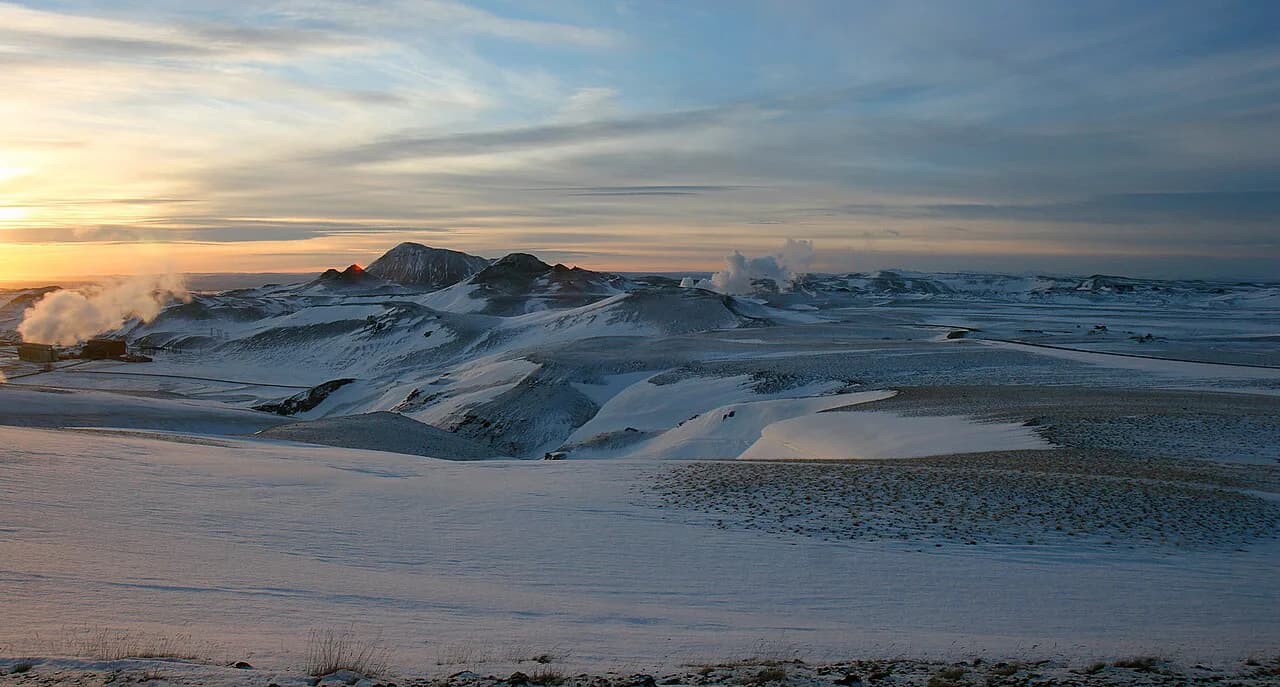
Winter days at Mývatn are not filler between aurora attempts. The lava fields, the lake shoreline and the surrounding craters give you short, atmospheric walks, and the Mývatn Nature Baths offer a warm soak after a cold night. Geothermal water and steam against a snowy landscape are a genuine reason to stay another day.
Dog sledding is another daytime option that pairs well with aurora nights, and it gives you a way to be outside in the landscape without committing to a long drive.
The natural rhythm is a slower day, an early dinner, then an evening tour or a vigil by the shore. Building the daytime plan around short excursions means you are not too tired to go out when the sky clears.
Plan Your Mývatn Aurora Nights
Mývatn rewards travelers who give it three or four nights, choose a dark, quiet place to stay and book a small-group tour for the first promising forecast. The lake's dry, sparsely populated setting gives you better odds than a capital-only itinerary, but the sky still decides. Read the forecasts, keep a spare night, and let the winter landscape carry the days when the aurora does not appear.
Explore more Mývatn northern lights guides
Frequently Asked Questions
Is Lake Mývatn worth it for the northern lights?
Yes, for travelers who want dark skies and a winter landscape rather than a city base. Mývatn sits in North Iceland, an area with less average cloud cover and less light pollution than the south, and tours run from the lake area itself. It suits a stay of several nights rather than a single overnight.
What is the best month to see the northern lights at Mývatn?
Any month from late August to late April can work, because the key is dark nights, clear skies and auroral activity rather than a single best month. September and March offer a good balance of usable daylight and long nights, while midwinter gives the most darkness but the shortest days.
Can you see the northern lights from Mývatn without a tour?
Yes. The area has minimal light pollution, and both operators note that the lights can sometimes be seen from hotels around the lake. A car and a scouted dark pull-off away from village lighting are enough for a self-guided attempt.
How many nights should you stay at Mývatn to see the aurora?
Three nights is a sensible minimum. A study reported by Visit Mývatn found the likelihood of spotting the lights rose from 41% for one night in the area to 71% for three nights, and the same write-up cites 90 to 95% for five nights. Treat those figures as a guide to how nights improve your odds, not a guarantee.
How much does a northern lights tour from Mývatn cost?
Both Geo Travel and Saga Travel list their standard Mývatn northern lights tour at 24,900 ISK per person, running 2 to 3 hours. Private departures and custom itineraries are priced separately, so compare what each tour includes before booking.
What happens if the aurora forecast is poor on the night of your tour?
Operators may cancel, even on short notice, if viewing odds look too low. Geo Travel offers a full refund or reschedule in that case, and Saga Travel notes that weather or road conditions can force changes or cancellation. A spare night in your itinerary lets you rebook rather than lose the attempt.
How cold is Mývatn on a winter aurora night?
Geo Travel gives winter temperatures in the range of +5°C down to -25°C, so a night out can be severely cold when the wind blows. Winter clothing is not provided, so a proper jacket, boots, hat and gloves are essential for standing outside for 2 to 3 hours.
Sources
Notes for your Arctic winter trip
Optional updates to our northern lights guides.
You might also like
Continue reading
More guides you'll find useful