Iceland Aurora Forecast: How to Read Kp and Cloud Maps
Read Iceland's aurora forecast like a local: pair the Met Office cloud map with the Kp index, pick dark-sky spots near Reykjavík, and plan enough nights.
On this page
Iceland sits directly under the auroral oval, the ring of magnetic activity that circles the pole, so the northern lights can appear here even when the planetary Kp index is modest. For a winter traveler this changes the strategy: the practical skill is not waiting for a big number but matching a dark, clear sky to whatever activity the night delivers. The forecasts below are live tools, so treat any single reading as a snapshot rather than a promise.
Why Iceland sits under the auroral oval
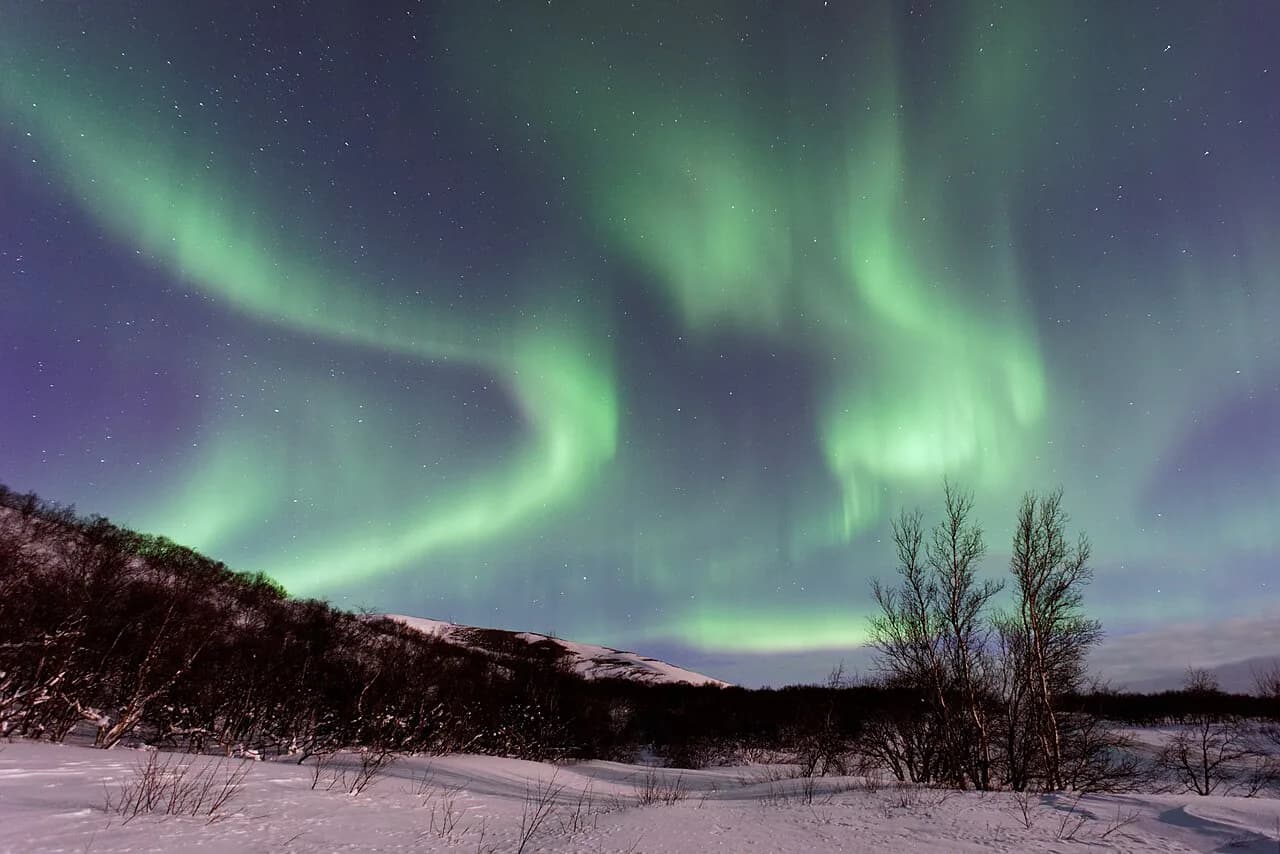
Charged particles streaming from the sun on the solar wind are funnelled toward the magnetic poles, where they collide with gases high in the atmosphere and release the light we see as the aurora. Because Iceland lies beneath the oval that rings the magnetic pole, it is well placed for displays even during ordinary geomagnetic conditions. That position is why a clear night with low activity can still be worth the drive out of town.
The aurora forms roughly 80 to 640 kilometres above the ground, so climbing a mountain gains you nothing on its own; what matters is an unobstructed horizon and a sky free of artificial light. Flat open ground or a modest rise with a clear northern view works better than a summit hemmed in by higher terrain. Use the [Arctic Circle](/iceland-northern-lights) guide to how the lights behave across the country before you fix your base.
When the aurora season runs and how dark the nights get
Aurora viewing in Iceland effectively runs from late August into mid-April, when the nights are long enough to be dark. The darkest stretch falls from September through March, giving you a long window each night rather than a brief hour. From late April to mid-August the near-midnight sun keeps the sky too bright, even when activity overhead is strong.
Darkness deepens as winter arrives: December brings around 19 to 20 hours of night, while the months on either side of the solstice offer roughly 9 to 12 hours. November and January sit near the shorter end of that range, and October and February give you about nine hours of night. If your priority is the [best time to see the northern lights in iceland](/best-time-to-see-northern-lights-in-iceland), aim for the darkest weeks and accept cold and short days as part of the deal.
How to read the Icelandic Met Office aurora forecast
The [Icelandic Met Office aurora page](/iceland-northern-lights) combines a cloud-cover map of the country with a midnight aurora activity scale running from 0 to 9. The map shades cloudy areas in green and clear skies in white, and a slider lets you move through the coming days and hours. Use the day's forecast to find where the sky is expected to open, then firm up your plan after dark.
Treat the cloud layer as your main filter and the activity scale as a secondary signal. A white patch over your chosen area with even modest activity beats a green wash over the whole country. The same page also gives sunset, sunrise and moonrise times for Reykjavík, which help you judge when true darkness arrives.
Forecasts change as weather systems move, and the Met Office cloud forecast is updated around 6 p.m. Icelandic time daily, so a reading taken days in advance is only indicative. On the ground, cloud is often local: a valley can be socked in while a coastal strip half an hour away is clear. That variability is why chasing gaps in the cloud, rather than cancelling the night, is how most good sightings happen.
Cloud cover is the deciding factor
Clear skies matter more than raw geomagnetic strength in Iceland, because cloud is the most common reason a good aurora goes unseen. A high Kp reading under thick overcast delivers nothing, while a bright white patch on the cloud map with ordinary activity often delivers a green arc. Learn to read the map's colour bands at a glance and you will plan better nights than someone chasing numbers alone.
Local gaps open and close within an hour or so, particularly along the coast where maritime weather shifts quickly. Keep a second, more distant option in reserve so a stubborn cloud bank near your base does not end the night. The forecast map's time slider is the right tool for spotting when and where that gap is expected to appear.
What Kp actually tells you at Iceland's latitude
The Kp index measures geomagnetic activity on a scale from 0 to 9, with higher values meaning a brighter, more southerly-reaching aurora. Under the auroral oval, Iceland often shows the lights at Kp 2 or 3 when the sky is clear and dark, so a low number is not a reason to stay in. The Kp value describes the strength of the display, not whether you will see one. If you are weighing where in Europe to chase the lights, this Kp Index Guide: Decide Your Europe Aurora Chase explains how the same number reads at lower latitudes.
A clear, moonless sky can matter as much as the index itself, because faint arcs are easily lost to glare. Even at Kp 0 the lights have been observed from Iceland, though the display tends to be subdued. Read the number as guidance and let the cloud map decide whether the night is worth the drive.
Reading the Kp bands in practical terms
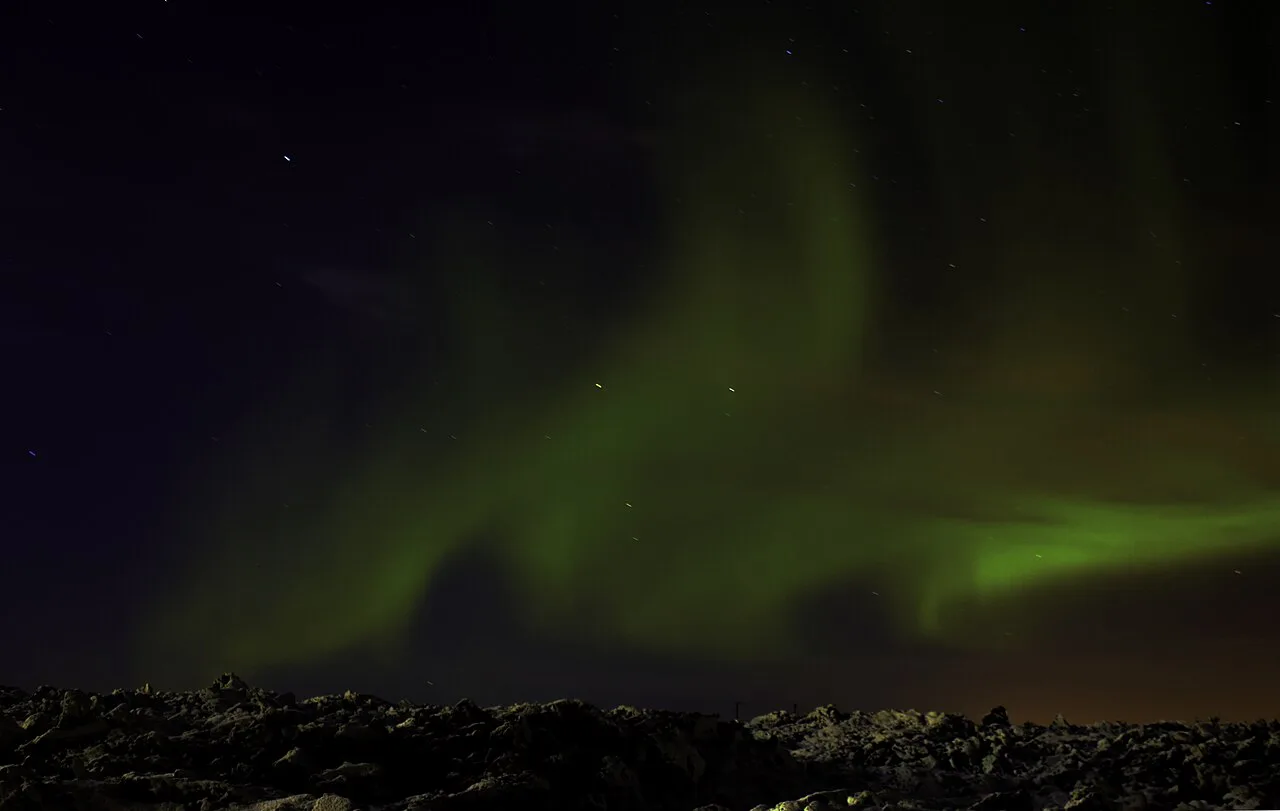
At Kp 0 to 2 activity is low and often limited to a faint glow near the northern horizon, though a dark site can still reveal structure. Kp 2 to 3 is the most common forecast in Iceland: moderate activity that regularly produces visible arcs when the sky cooperates, so it is a good night to head out. Kp 4 to 6 signals a stronger solar storm and wider, brighter displays; Kp 7 to 9 is rare and can be visible even with city light pollution nearby.
Solar wind speed and its magnetic orientation drive these bands, which is why forecasters watch the sun as well as the atmosphere. The NOAA OVATION map offers a short, roughly 30-minute nowcast of auroral extent, useful for confirming a display once you are already outside. Pair it with the Met Office cloud layer rather than substituting one for the other.
How far ahead you can plan
Forecast horizons serve different purposes. A three-night map with an hourly slider is ideal for deciding where to drive tonight; a long-term Kp chart shows broad geomagnetic trends over coming weeks but cannot tell you what the sky above you will do. Use the long-term chart to choose your travel weeks and the short-term view to choose your evenings, and revisit the Met Office page on the day rather than once for the whole trip.
Activity is unpredictable hour to hour, and displays often arrive in waves with quiet spells in between. A clear night with moderate activity rewards patience more than an early retreat to the hotel. Plan your evenings so you can stay out through at least one full spell rather than abandoning at the first lull.
Moonlight, twilight and timing
Bright moonlight washes out faint auroras much as city light does, so nights around the new moon or after moonset give the best contrast. Strong displays still show through a bright moon, which is why you should not write off a clear night purely on lunar grounds. The sun and moon panel on the forecast page shows moonrise, moonset and how full the moon will be.
In summer there is simply no darkness long enough to reveal the aurora, even when activity is high overhead. As the nights draw in toward the end of August, viewing resumes. Twilight in spring and autumn trims usable hours at each end of the season, so favour the deep-dark months if a sighting tops your list.
Dark-sky viewing spots near Reykjavík
You can sometimes catch the lights from darker corners of Reykjavík such as [Grótta lighthouse](/best-time-to-see-northern-lights-in-iceland), but the city glow washes out fainter displays. The Reykjanes Peninsula and the Golden Circle, including Þingvellir, give noticeably darker skies within about an hour's drive. Make the trade-off deliberately: a shorter drive to Grótta costs you contrast, while an hour on the road buys a genuinely dark horizon.
If you want a warm stop before or after a night out, the [Sky Lagoon in Winter](/sky-lagoon-in-winter) sits close to Reykjavík and makes an easy pairing with an evening drive south. Give yourself plenty of time off the road afterward; the viewing window often runs late.
Book tours and city stays through [Visit Reykjavík](/iceland-northern-lights-tours) listings only after you have settled on the nights you can allocate to aurora hunting, since forecast-driven plans squeeze easily into a fixed itinerary.
Other regions in the forecast summary
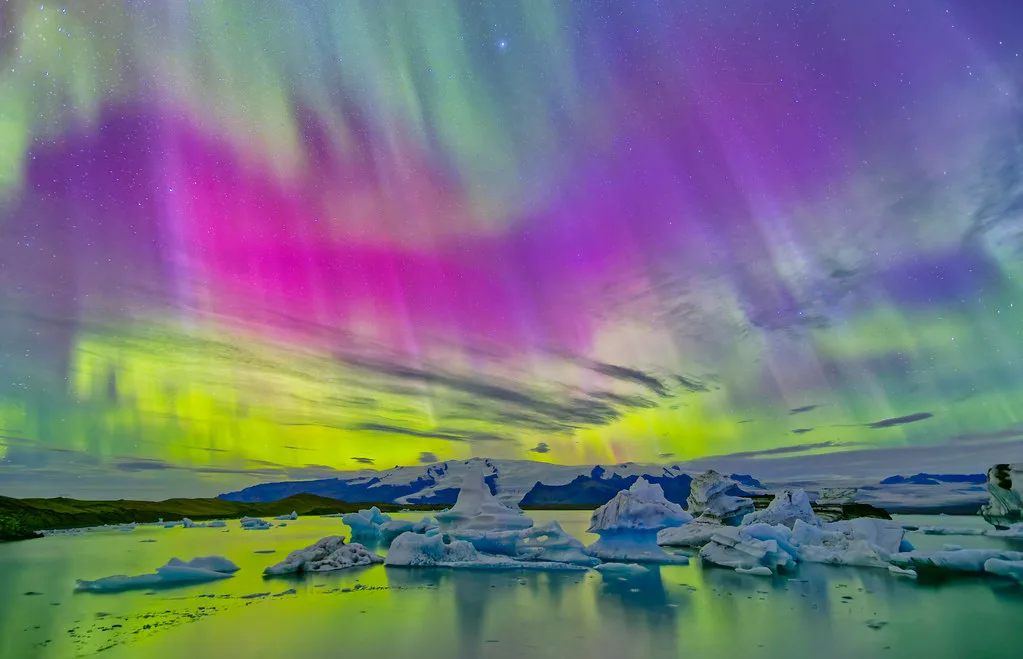
The three-night forecast map summarises each region separately, with Reykjavík, the Reykjanes Peninsula, the Golden Circle, the South Coast, Southeast Iceland, East Iceland, North Iceland, Snæfellsnes and the Westfjords scored for likely visibility. The scores factor in local light pollution as well as cloud, so a region marked good is genuinely dark enough to be worth the drive.
Snæfellsnes and the Westfjords often show a clearer profile than the capital region, while North Iceland around Akureyri is a natural base if you are traveling the ring road. If you base yourself there, learn to read the local conditions with this Akureyri aurora forecast. Check the regional scoring the morning of your outing and let it override a plan made weeks earlier. A different corner of the country can turn a write-off night into a good one.
Self-driving versus a guided aurora hunt
A guided tour removes the forecast work: local guides track weather, solar activity and cloud cover, and drive you to wherever the sky is clearest, and many rebook you free of charge if the aurora doesn't show. The offset is cost and fixed group logistics. If you want a sense of what is on offer, browse [iceland northern lights tours](/iceland-northern-lights-tours) with durations and inclusions spelled out.
Self-driving gives you the freedom to chase a clear patch at your own pace and to sit through a quiet spell without a schedule, which suits confident winter drivers. The cost is judgment: you are reading the cloud map, choosing roads and deciding when to stop, often after dark. Either way, use the forecast to pick a night with dark skies and a gap in the clouds.
Building a nightly routine
Run the same loop each afternoon: check the cloud map for white patches, check the midnight activity scale, confirm sunset and moonrise, then pick one primary and one backup location. Drive to the backup only if the first is swallowed by cloud, and give the sky at least an hour before deciding the night is done. If you want a daytime soak between late nights, the [Secret Lagoon in Flúðir](/secret-lagoon-iceland) sits within the Golden Circle loop and keeps the driving short.
Operators that lend thermal suits make standing around in the cold far more comfortable, and several tours include them along with a campfire stop. Take that into account when comparing a night out in your own layers with a guided option. What none of these can change is the sky itself, which is why routine beats improvisation.
How many nights to plan
Allow at least three or four nights in Iceland if the aurora is a priority, and more if you can. Cloud is the limiting factor, so extra nights are your best insurance against a settled overcast spell. A single clear, dark evening under the oval can deliver a memorable display even at modest Kp.
Spread those nights across at least two bases, such as Reykjavík with one night out on the Reykjanes Peninsula or the Golden Circle, so you are not pinned to one weather pattern. Keep your itinerary loose enough to swap evenings and check the Met Office page on the day. Aurora travel rewards flexibility far more than a tightly booked schedule.
Frequently Asked Questions
Is the aurora visible tonight in Iceland?
That depends on two live conditions: a dark, clear sky overhead and enough geomagnetic activity. The Icelandic Met Office publishes a cloud-cover map with a midnight activity scale, and a three-night regional summary scores places like Reykjanes, the Golden Circle and Snæfellsnes for likely visibility. Check the cloud map first, then look for a gap rather than a high Kp number.
What month is best to see the northern lights in Iceland?
September through March gives the longest dark windows, with December offering roughly 19 to 20 hours of night and the months either side around nine to twelve hours. Late August and April are workable but have less darkness and more twilight. Deep winter maximizes night hours but also brings the coldest, most variable weather.
Will the aurora be visible in Iceland in 2026?
No one can predict a specific night months ahead. Long-term Kp charts suggest broad geomagnetic trends, but cloud cover and short-term activity decide what you actually see. Plan your dates, then rely on the live forecast in the days before travel and on the evening itself.
Do I need a high Kp index to see the aurora in Iceland?
No. Iceland lies under the auroral oval, so displays often appear at Kp 2 or 3 when skies are clear, and they have been observed even at Kp 0 in subdued form. Higher Kp brings brighter, wider displays, but a dark, cloud-free sky matters at least as much as the number.
Can you see the northern lights in Iceland in summer?
Not really. From late April to mid-August the near-midnight sun keeps the sky too bright for the aurora to show, even if activity is strong overhead. Viewing resumes as nights draw in toward the end of August.
Where are the best places to see the aurora near Reykjavík?
Dark corners of the capital such as Grótta lighthouse can work, but city glow washes out fainter arcs. The Reykjanes Peninsula, Þingvellir and the wider Golden Circle offer noticeably darker skies within about an hour's drive, and the regional forecast scores factor in light pollution.
Should I join a northern lights tour or drive myself?
Guided tours track weather and activity, drive you to clearer sky and are usually easier to rebook if the night fails, at the cost of money and fixed logistics. Self-driving suits confident winter drivers who want to chase gaps at their own pace and stay out longer. Either way, the cloud forecast drives the decision.
What is the best aurora forecast tool for Iceland?
Use the Icelandic Met Office aurora page for the cloud map and activity scale, supplemented by the NOAA OVATION nowcast for a short-term view of auroral extent. A three-night regional summary helps pick which part of the country to drive toward. No single tool replaces a clear sky above you.
Sources
Notes for your Arctic winter trip
Optional updates to our northern lights guides.
You might also like

Continue reading
More guides you'll find useful