Pallas-Yllästunturi National Park in Winter: Aurora & Fell Guide
Plan a winter aurora trip to Pallas-Yllästunturi National Park, between Äkäslompolo, Ylläsjärvi and Hetta, with dark felltops and marked trails.
On this page
Pallas-Yllästunturi National Park gives winter travelers something rare in Finnish Lapland: genuinely open, treeless felltops threaded with well-marked trails and frequent open huts. That combination means the country's dark winter skies sit within reach of anyone staying in the villages at either end of the park, without a committing backcountry expedition. For a wider look at where these fells sit in the region and how the season works across the north, the northern lights in finland guide covers the bigger picture.
The park stretches across western Finnish Lapland between Ylläsjärvi and Äkäslompolo in the south and Hetta in the north, with the Pallastunturi fells and the Ylläs ridge in between. Winter here means short daylight, temperatures that can drop to around -30°C, and long nights suited to snowshoeing, skiing and aurora watching rather than daytime hiking.
Why the fells suit aurora watching
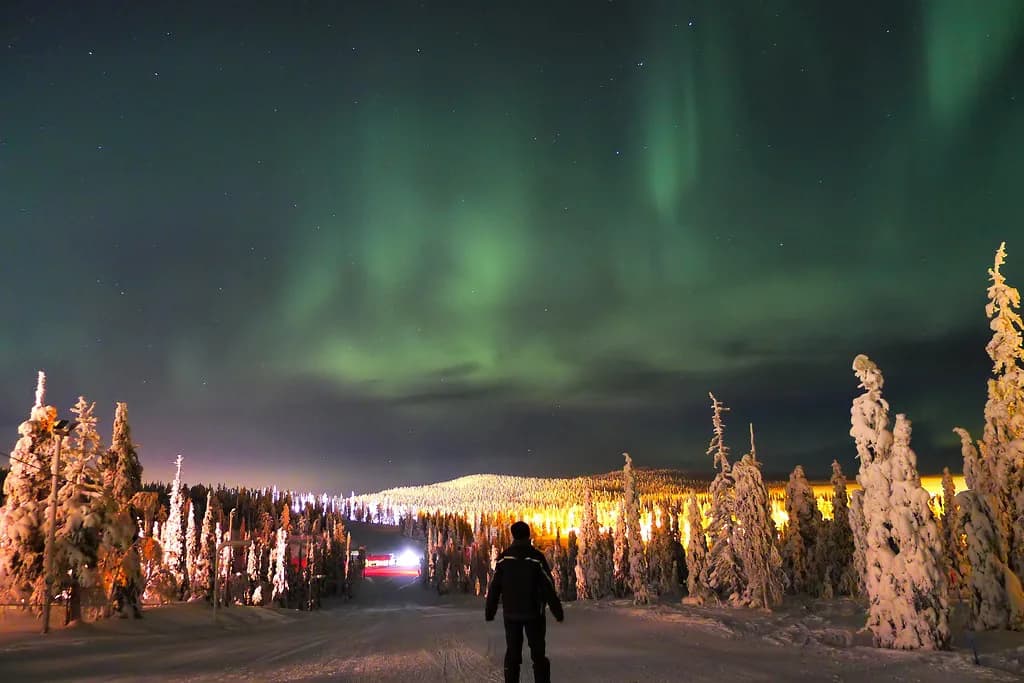
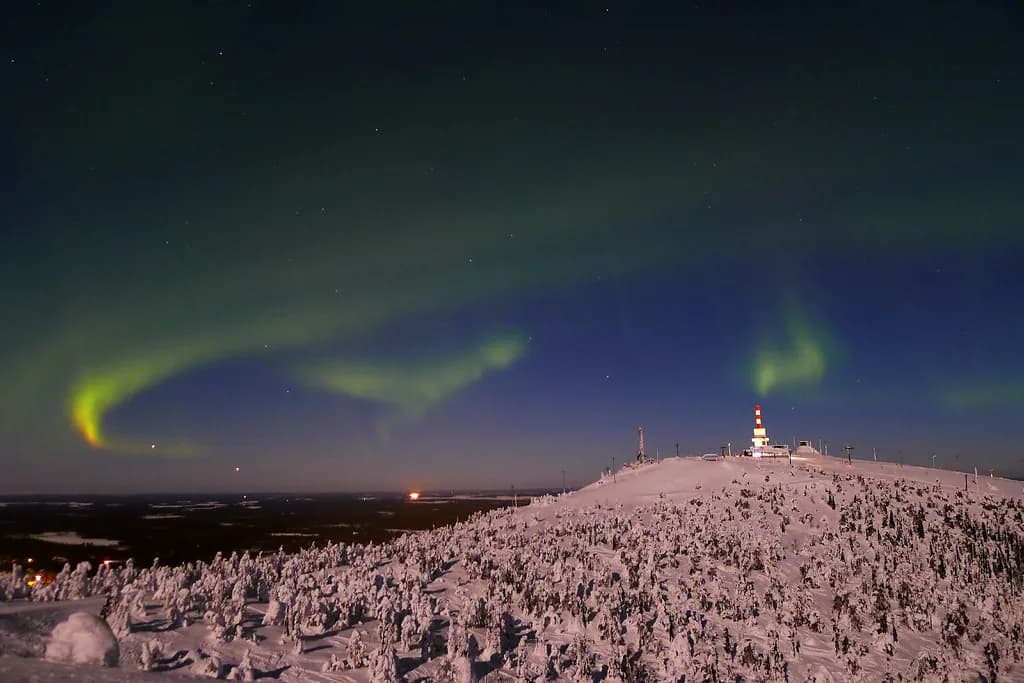
The park's fells rise as rolling, treeless hills, so once you climb above the tree line the horizon opens in every direction. That matters for aurora watching: a clear northern horizon is where the auroral oval shows first, and a treeless summit removes the forest edge that blocks the view from valley floors.
Light pollution is low away from the resort villages around Äkäslompolo and Ylläsjärvi and around Hetta, so stepping onto the fell trails after dark puts you in genuinely dark conditions. Sitting this far north inside the auroral oval means displays can appear overhead rather than low on the horizon, though cloud cover remains the deciding factor on any given night.
Where the park sits and how to reach it
The southern gateways are Äkäslompolo and Ylläsjärvi, villages on either side of the Ylläs fell massif, while Hetta at the northern end serves the Pallas fells and the Muonio side of the park. This matters for planning: the drive from Äkäslompolo to the Pallastunturi fells is long, so southern visitors usually watch from the Ylläs side, and northern visitors from around Hetta and Pallas.
The park has no entrance fee, and camping is allowed in designated areas and at lean-tos, which keeps a self-guided winter trip affordable. Access by bus is relatively easy according to the same guide, though winter services in Lapland thin out outside the main season, so build your itinerary around the village you sleep in rather than a single park-wide base.
When the aurora season runs
Aurora season in Finnish Lapland runs from late August and September, when nights darken again, through to early April, when the returning light ends the dark-sky window. The deep midwinter weeks bring the longest nights but also the shortest days, and the source notes that winter daylight shrinks to just a few hours of dim light, which pushes most activity into the dark.
The practical trade-off is that you cannot count on any single night: aurora visibility depends on solar activity and, above all, on cloud. Use the Finnish Lapland aurora forecast to compare geomagnetic activity with cloud cover before committing to a long night out, and treat Kp values as a rough guide rather than a promise.
Winter conditions month by month
Winter temperatures in the park plunge well below freezing, typically between about -10°C and -30°C, so a cold snap can reshape your plans within a day. Rather than a month-by-month table, plan around that range: expect the deepest cold in midwinter and build flexibility into your nights so you can go out when skies clear instead of on a fixed schedule.
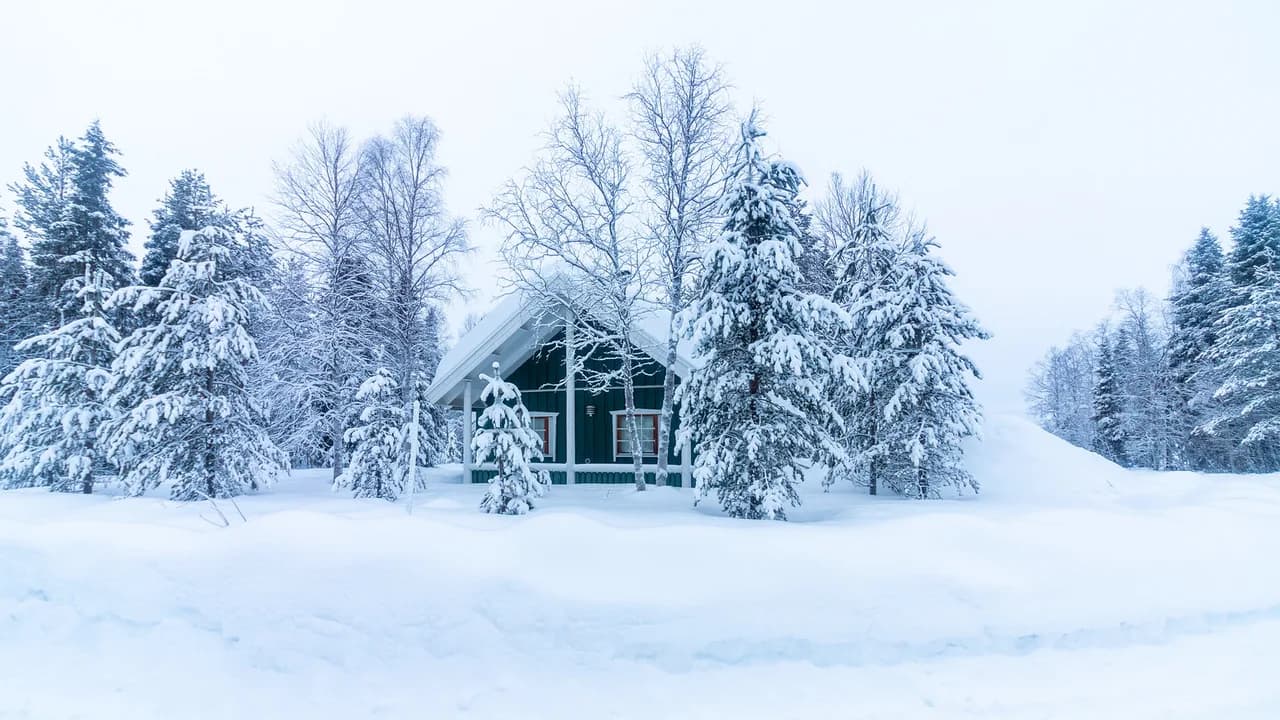
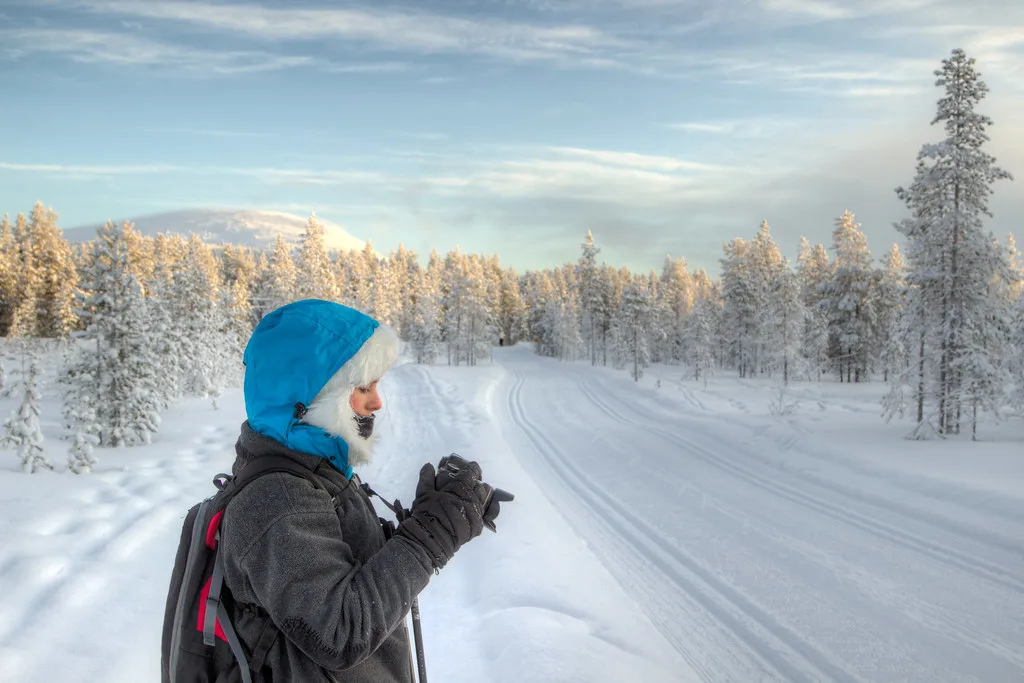
Snow transforms the park into a snowshoeing and cross-country skiing landscape, and the source warns that trails can be icy and demand experience. In practice, groomed tracks around Äkäslompolo, Ylläsjärvi and Hetta give the easiest winter movement, while open fell terrain requires more care and a headlamp for the dark hours.
Taivaskero and the Pallas fell chain
Taivaskero is the highest summit in the Pallas fell chain, a raw treeless top with panoramas that reach for dozens of kilometres on a clear day. In winter it is the classic dark-sky viewpoint on the northern side of the park, and the climb rewards those who time it for a clear night with an unobstructed sweep of sky.
The summit carries a plaque commemorating the 1952 Olympics, when Finland's Olympic flame was lit at Taivaskero under the midnight sun. That history makes the fell a natural target for a night outing, but the winter ascent is a serious walk in deep snow and cold, so assess conditions and your own experience before setting off.
Ylläs ridge and the southern fells
The Ylläs ridge is a long, accessible fell line with sweeping viewpoints, and in winter it doubles as ski slopes and snowshoe terrain depending on the season. Because it sits closer to Äkäslompolo and Ylläsjärvi, it is the southern counterpart to Taivaskero, giving travelers based in those villages a dark felltop within easy reach.
The Ylläs ridge is less remote than the Pallas side, so you trade a little solitude for shorter access and more infrastructure. For a first winter aurora trip, that trade usually favors the Ylläs side, while experienced travelers wanting the wilder Pallas fells should base themselves nearer Hetta. If you are still weighing which fell village to sleep in, the northern lights in Levi guide shows how a resort base compares with these quieter park gateways.
The Hetta–Pallas Trail in winter
The Hetta–Pallas Trail is Finland's best-known multi-day route, following the fell line from Ounastunturit to Pallastunturit and popularly walked in three to four days in summer conditions. The route was marked as early as 1934, and simple wilderness huts sit along it, which is what makes self-guided travel realistic for fit, experienced winter travelers.
In winter the trail becomes a far more demanding proposition than its summer version, with deep snow, short daylight and serious cold. Treat it as a route for those with winter backcountry experience and the right equipment, and use the huts as shelter points rather than a guarantee of comfort.
Open huts and the shelter network
The park's trail network is threaded with open huts and lean-tos, which is what makes it feel more forgiving than wilder Finnish parks for newcomers to Arctic conditions. On a winter night out, an open hut gives you a place to warm up and wait for a cloud break rather than retreating all the way to the village.
Camping is permitted in designated areas and at lean-tos, which supports multi-night self-guided trips without a hotel base. The trade-off is that huts and local guesthouses can quietly drain a budget, so decide early whether you are hut-and-tent traveling or using a village base for day and night outings.
Self-guided chasing versus a guided night
The park's well-marked trails and detailed maps make self-guided aurora watching genuinely practical, which is the main reason it suits independent travelers. If you base in Äkäslompolo, Ylläsjärvi or Hetta, you can watch the cloud forecast, drive or ski to a trailhead and walk to a dark felltop on your own schedule.
A guided night makes more sense if you want transport, local knowledge of which direction clears first, and company on a cold, dark fell. Operators running Finnish Lapland northern lights tours vary in group size, duration and inclusions, so compare what each night actually covers before booking rather than assuming a standard format.
Either way, no operator can guarantee a sighting, and a good night out is one with clear skies and a sensible plan for cold. Build a second and third night into your trip so a cloudy first attempt is not your only chance.
Snowshoeing and skiing after dark
Winter transforms the park into a snowshoeing and cross-country skiing playground, and that is how most travelers move between village and felltop. Snowshoes handle open, deep snow on the fells, while groomed cross-country tracks around the villages are faster for reaching trailheads and viewpoints.
After dark, plan your route around a headlamp, a known trail and a fallback hut, because winter days shrink to just a few hours of dim light. Icy stretches make traction and steady footing important, and the source notes that trails can demand experience in winter conditions.
Where to sleep around the park
The southern villages of Äkäslompolo and Ylläsjärvi offer the widest choice of fell-top hotels, cabins and guesthouses, with the Ylläs ridge and its slopes close by. Hetta at the northern end is the natural base for the Pallas fells and Taivaskero, giving a quieter, more remote feel with the trailheads for the Hetta–Pallas route nearby.
Camping in designated areas and lean-tos keeps costs down for self-guided travelers, while huts and local guesthouses offer more comfort at a higher price. Choose your base by which fells you want at night: the Ylläs side for shorter access from the south, or Hetta for the classic Pallas summits.
How many nights to plan
Aurora watching is a game of cloud and solar activity, so a single night in the park is a gamble. Three or four nights based in one village gives you several chances to catch a clear sky, and it lets you absorb a cloudy or very cold night without losing the whole trip.
If you are walking the Hetta–Pallas Trail, the route is popularly done in three to four days in summer conditions, so a winter version needs more time and experience. Pair a hut-based traverse with a couple of nights in a village at either end so you have a warm base before and after the crossing.
Pairing the park with other Finnish Lapland bases
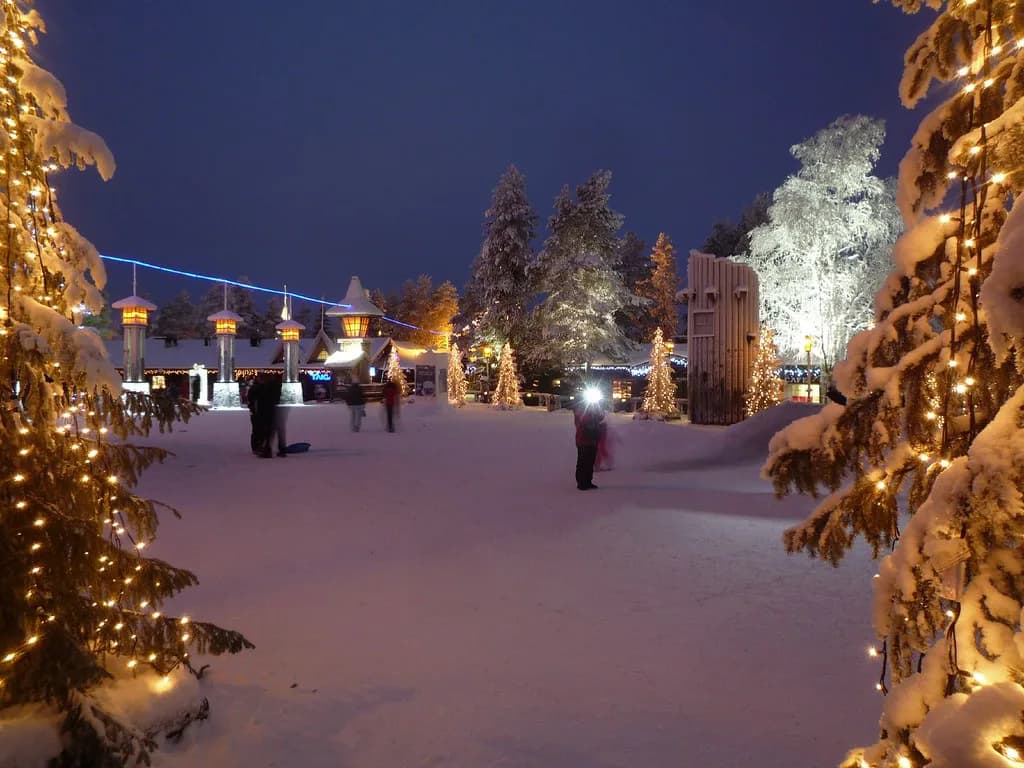
Pallas-Yllästunturi fits naturally into a wider Finnish Lapland itinerary, with Rovaniemi and its Santa Claus Village as a common arrival point before heading north. Travelers wanting a family-friendly Christmas trip often split their time between the city and a fell village, using the park for its dark skies and marked trails.
The park's fells sit in a culturally interesting border zone long inhabited by the Sámi, with place names and reindeer husbandry still shaping the landscape. If your trip extends north toward Lake Inari, add time for Sámi culture alongside the aurora nights rather than treating the park as an isolated stop.
What to expect from winter tours
Guided winter nights in Lapland typically include transport from your village, a walk or snowshoe to a dark viewpoint, and hot drinks while you wait for a cloud break. Group sizes and inclusions vary widely between tour companies, so check the itinerary for the specific night you are considering before booking.
Treat any quoted price or minimum age as specific to that operator and season, and confirm it directly when you book. The same applies to thermal clothing: if a tour includes suits, it will say so in its own listing, so read the inclusions line rather than relying on a general assumption.
Plan Your Winter Aurora Trip
Pallas-Yllästunturi National Park rewards travelers who want dark, open fells without a committing expedition: treeless summits, marked trails, open huts and no entrance fee. Base yourself at Äkäslompolo or Ylläsjärvi for the Ylläs ridge, or at Hetta for Taivaskero and the Pallas fells, and plan three or four nights to give clear skies a real chance.
Check the luontoon.fi pages for trail and hut details before a winter traverse, and compare the aurora forecast with cloud cover on the night itself. No one can promise a display, but dark felltops and a flexible schedule give you the best realistic odds.
Frequently Asked Questions
Can you see the northern lights in Pallas-Yllästunturi National Park?
Yes, in the right conditions. The park lies in western Finnish Lapland, well inside the auroral oval, and its treeless felltops have open horizons and little light pollution away from Äkäslompolo, Ylläsjärvi and Hetta. Sightings still depend on solar activity and clear skies, so no night is guaranteed.
When is the best time to visit Pallas-Yllästunturi for auroras?
Dark nights run from late August and September through to early April. Midwinter offers the longest darkness but the shortest days, with only a few hours of dim light, so many travelers favor the darker weeks around the edges of midwinter for more daytime activity as well as night watching.
Do you need a tour to watch the aurora in Pallas-Yllästunturi?
No. The park's trails are well marked, detailed maps are available and open huts give shelter, which makes self-guided watching practical from Äkäslompolo, Ylläsjärvi or Hetta. A guided night helps if you want transport, local knowledge and company on a cold fell.
How cold does it get in Pallas-Yllästunturi in winter?
Winter temperatures typically range from about -10°C to -30°C, so cold snaps are part of the trip rather than an exception. Plan flexible nights that you can move when skies clear, and treat deep cold as a reason to shorten outings rather than cancel them.
How many nights should you plan for a northern lights trip to Finnish Lapland?
Three or four nights based in one fell village gives you several chances at clear skies and absorbs a cloudy night without losing the trip. Travelers walking the Hetta–Pallas Trail should add extra days for the winter crossing.
Sources
Notes for your Arctic winter trip
Optional updates to our northern lights guides.
You might also like

Continue reading
More guides you'll find useful