Swedish Lapland vs Finnish Lapland: Which Trip Fits You?
Compare Swedish Lapland and Finnish Lapland for an aurora trip: snow reliability, dark skies, landscapes, activities and the trade-offs that suit each traveler.
On this page
Both Laplands sit above the Arctic Circle, both offer dark winter nights and both host the northern lights and a full menu of winter activities. The real difference is what surrounds you: dense snow-laden forest and a busy Santa economy on the Finnish side, open tundra and wider horizons around Kiruna and Abisko on the Swedish side. Your choice comes down to which winter you actually want to stand in.
This comparison is built around the decisions that matter on a short Arctic trip: when the nights are dark enough, how reliable the snow is by month, how you get between bases, what you sleep in, and how many nights give you a fair shot at clear skies. Neither side guarantees aurora displays; solar activity and cloud cover decide that, and both regions can be overcast for days.
Where the two Laplands sit and why the aurora shows in both
Lapland is the northernmost part of both Sweden and Finland, and the whole region lies above the Arctic Circle, which Nordic Visitor identifies as the reason winter landscapes and northern lights viewing define it. That latitude matters because the auroral oval sits overhead at high latitudes, so displays can appear high in the sky rather than only near the horizon.
The Finnish side is associated with Rovaniemi, the self-styled capital of Finnish Lapland on the Arctic Circle line, plus Saariselkä and Utsjoki further north. The Swedish side is anchored by Kiruna, the country's northernmost city, with Abisko National Park and Jukkasjärvi close enough to pair on one trip. If you are leaning Finnish, the northern lights in Finnish Lapland guide sets out the same base-by-base decisions on that side of the border.
In practice, both regions sit deep enough north that your chance of seeing the aurora depends far more on cloud cover and solar activity on your dates than on which country you book. Plan the trip around dark, clear nights, not around a border.
When the aurora season runs and how dark the nights get
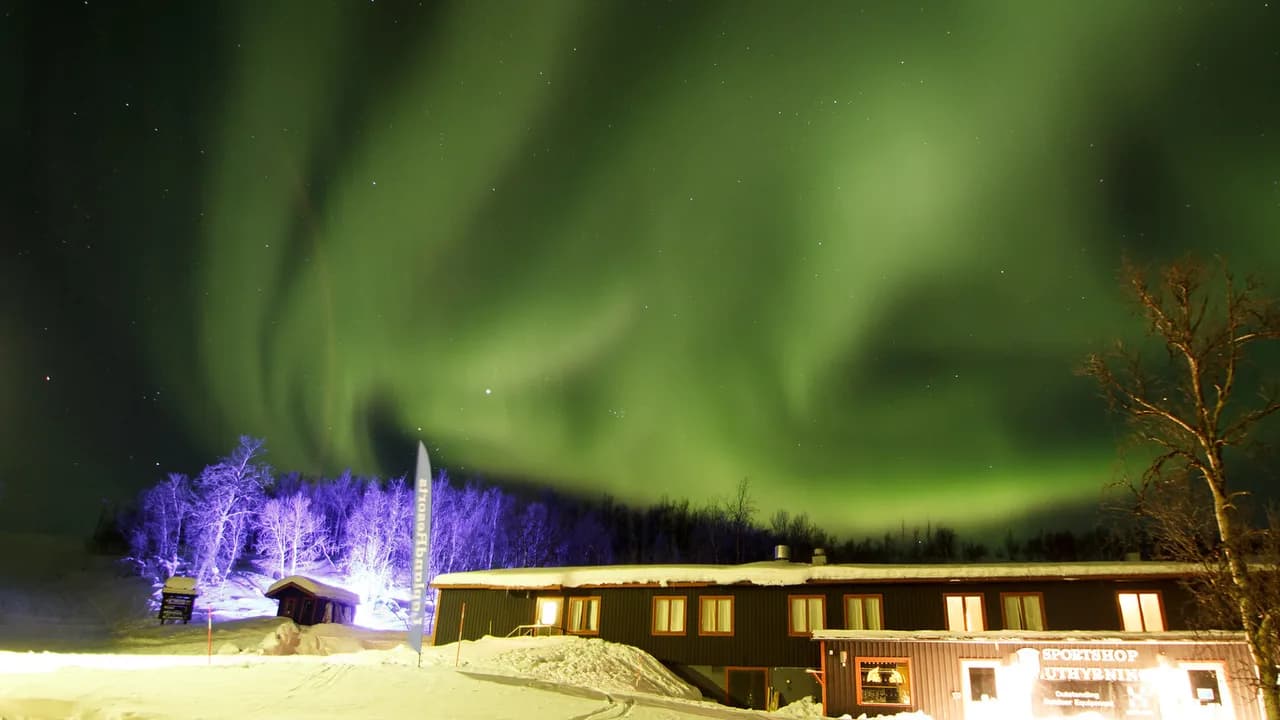
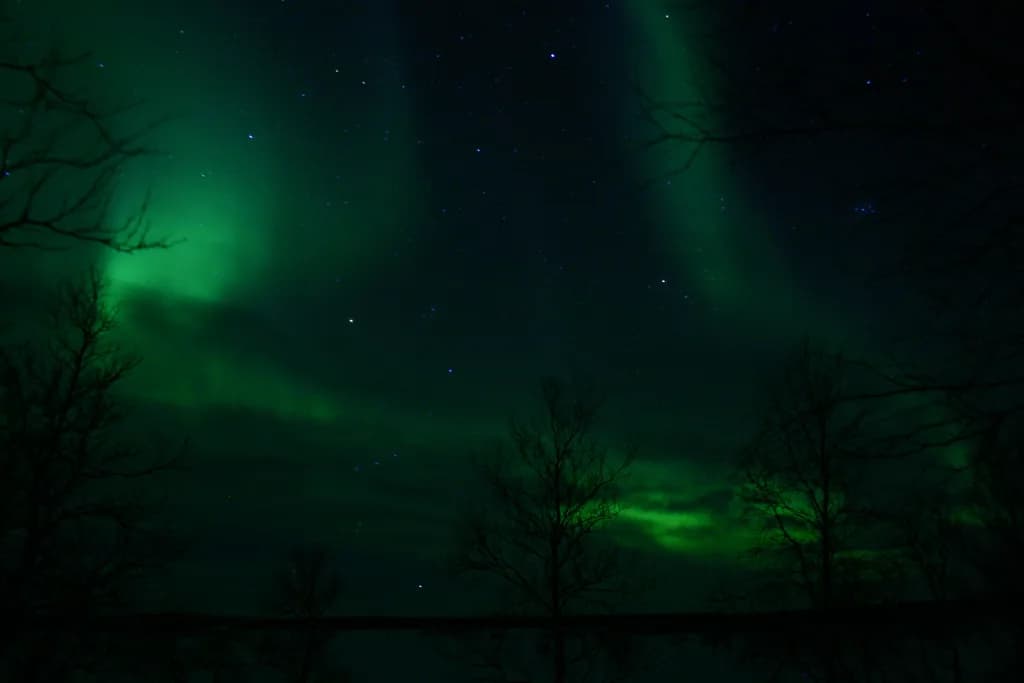
Aurora season across Lapland runs roughly from late September to late March, when nights are dark enough for displays. The strongest activity is often associated with the fall equinox, but excellent shows also occur in midwinter, and the weather is unpredictable in the Arctic at any time of year.
Darkness alone is not enough. Clear skies and solar activity complete the picture, and those three factors together matter far more than which country you choose. A cloudy week in Kiruna and a cloudy week in Rovaniemi deliver the same result, so build slack into your dates.
Late September and March let you chase auroras without deep winter cold, while midwinter gives you the longest nights. Early autumn is also when Finnish Lapland shows its ruska colours, a different trip from snow season but a rewarding one for photographers.
Snow reliability by month: inland Finland and Sweden versus the coast
Snow is most reliable from January to March across both Finnish and Swedish Lapland. November is transitional and dark with uncertain snow, early December is less predictable, and late December is usually safer for established cover in Finland and Sweden.
Inland bases around Rovaniemi and Saariselkä usually hold reliable snow from late December, and Finnish Lapland is forest-heavy, delivering the heavy tykky snow that bends trees under thick white layers. Swedish Lapland follows a similar pattern, with very reliable snow from January to April and a usually safe late December.
Coastal Swedish Lapland around Luleå is slightly milder because of the Baltic Sea, so snow conditions vary more than around Kiruna, though the frozen sea ice and archipelago scenery are a distinct draw. If snowmobiles, dog sledding and thick forest scenery anchor your trip, aim for January to March rather than early December.
Nordic Visitor notes that snow cover across the region averages roughly 175 to 225 days a year between mid-October and mid-May. Treat that as a regional average rather than a promise for your exact base and week.
Landscape and sky: forest country in Finland, open tundra around Kiruna and Abisko
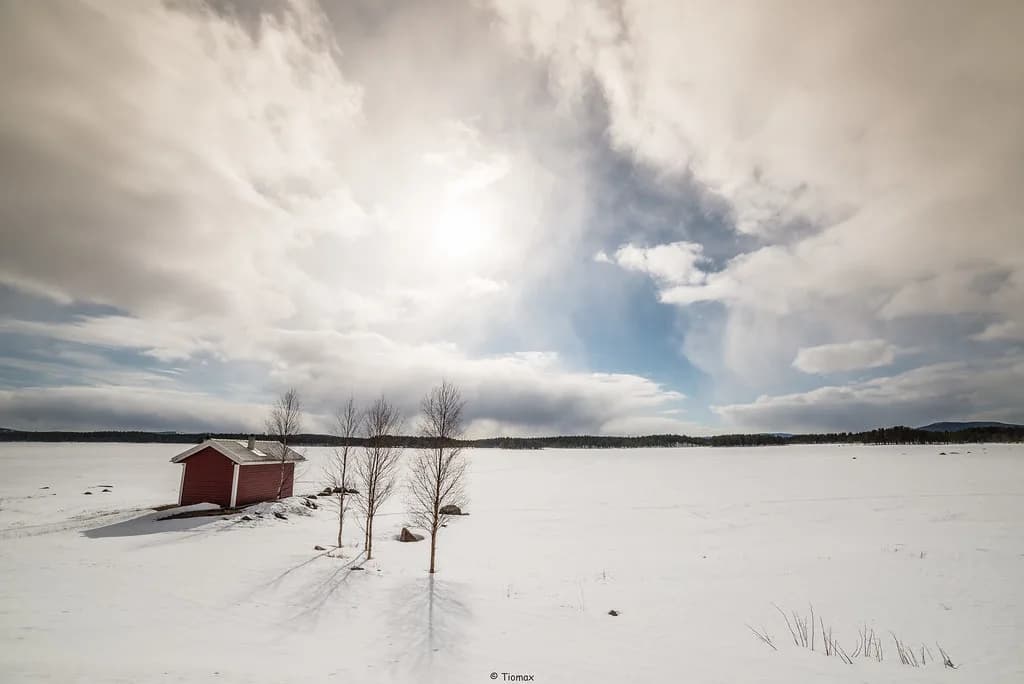
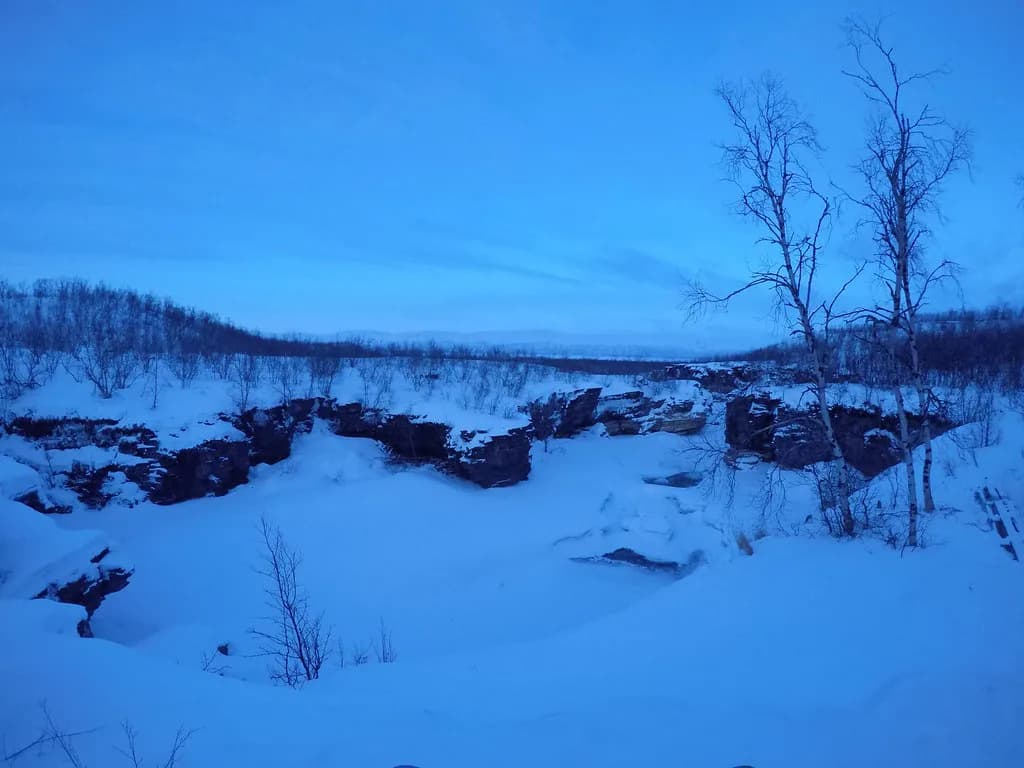
This is the most visible difference between the two. Finnish Lapland is forest-heavy, which is why it produces the postcard winter scenery and why trees can block low horizon views. Swedish Lapland around Kiruna and Abisko opens from forest into tundra, giving big skies and wider horizons with fewer trees in the way.
For aurora photography, that geometry matters. Open tundra lets you frame the whole sky and catch displays that spread overhead, while forest bases reward you most when activity is high or when you find a frozen lake or open bog. Abisko is also known for relatively clearer skies than the coast, which is why aurora hunters rate it, though clearer is a relative comparison rather than a guarantee.
Swedish Lapland also suits travelers who want snow plus vast Arctic space without Rovaniemi crowds. If you want the full picture of the Swedish side, the guide to the northern lights in sweden covers Abisko, Kiruna and the surrounding bases in more detail.
How you reach each region and how you move between bases
Most travelers reach Lapland through a capital. Fly into Helsinki for Finnish Lapland or Stockholm for Swedish Lapland, since both Helsinki-Vantaa and Stockholm-Arlanda are served by international and regional airlines, and domestic carriers often connect in a single booking. Nordic Visitor also describes land connections between Lapland destinations as generally poor, with a few well-linked pairs.
Two connections are useful: Kiruna to Abisko is linked by train, and Rovaniemi to Kemi is linked by train. Beyond those corridors, expect to rent a car or join an organised transfer, and remember that the distances on the map are longer in practice than they look.
A standard rental car handles both countries, with excellent highways in the south and narrower but well-maintained roads in Lapland; gravel roads are common and normal. The hazards are animals rather than surfaces: moose at dusk and dawn in forested areas, and reindeer on Lapland roads, which are slow to move, so slow down and wait rather than honk.
If you want a ready-made plan for the Swedish side, the guide to swedish lapland in winter sets out how the bases fit together across the season.
Where to sleep: ice hotels, forest cabins and glass-roofed rooms
Both regions cover the full range from budget cabins to design hotels. Kiruna is home to the original ICEHOTEL, and Abisko has the Aurora Sky Station, while Rovaniemi offers Santa Claus Village and Arctic TreeHouse Hotel, whose glass-walled treehouse suites sit just outside the centre.
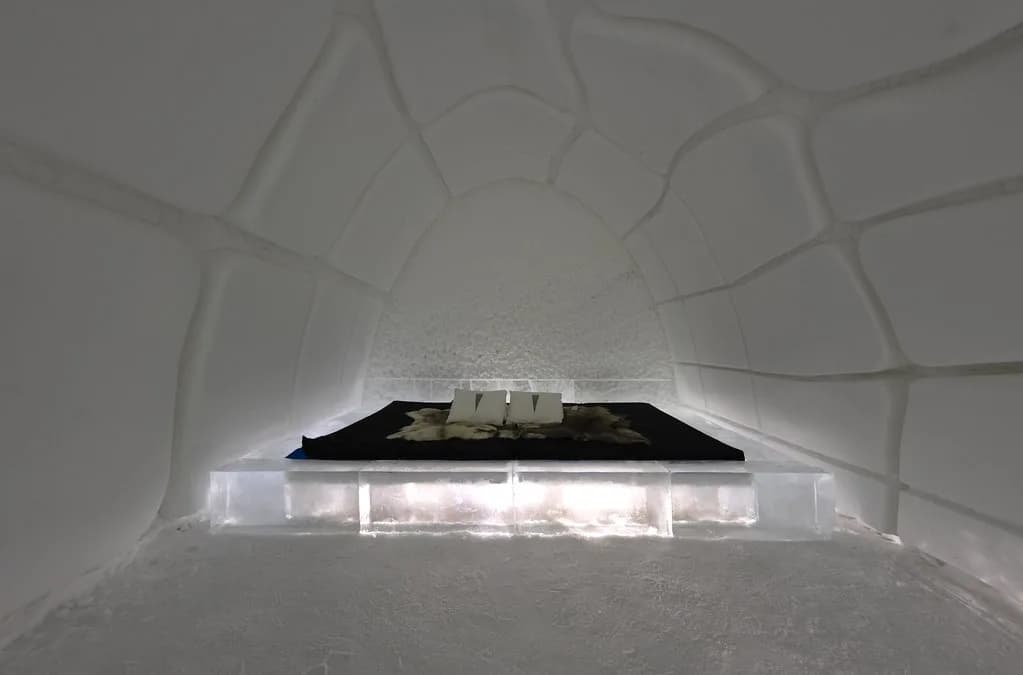
The Icehotel in Jukkasjärvi is the classic Swedish winter stay, built each season on the Torne River and paired with year-round cold rooms. The icehotel sweden guide explains what an overnight actually involves before you commit to a night in a cold room.
If you want winter ice art without the subzero sleeping bag, Icehotel 365 keeps the concept available outside the winter build. Photographers should pick a base with open sky above the room — lakeside cabins just outside Kiruna, with wood stoves and open sky over the frozen lake, are a common choice for aurora watching from the door.
Glass roofs trade privacy and darkness for a warm bed under the sky, and forest cabins trade a view for shelter from wind and light. Choose based on how much time you plan to spend watching from your room versus out on a tour.
Husky, reindeer and snowmobile tours: what a night out actually involves
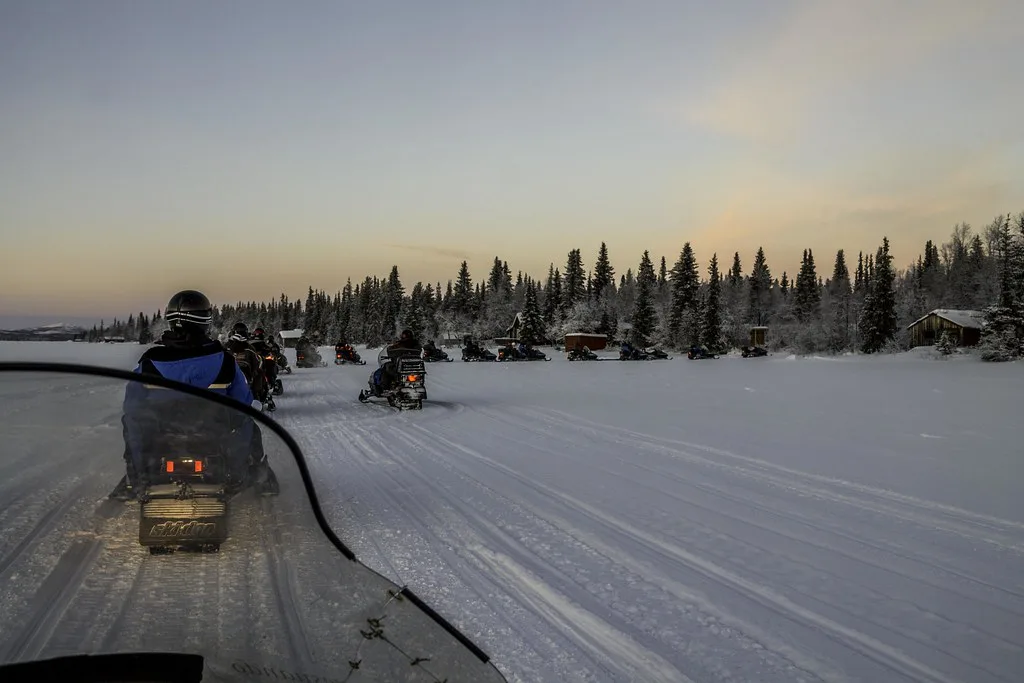
Winter activities across both Laplands cover reindeer and dog sledding, snowmobiling, ice fishing and snowshoeing, and Nordic Visitor lists visits to reindeer farms and Sámi culture among the region's highlights. Operators typically bundle transport, guidance and thermal gear into a single booking, and it is worth confirming what is included before you pay.
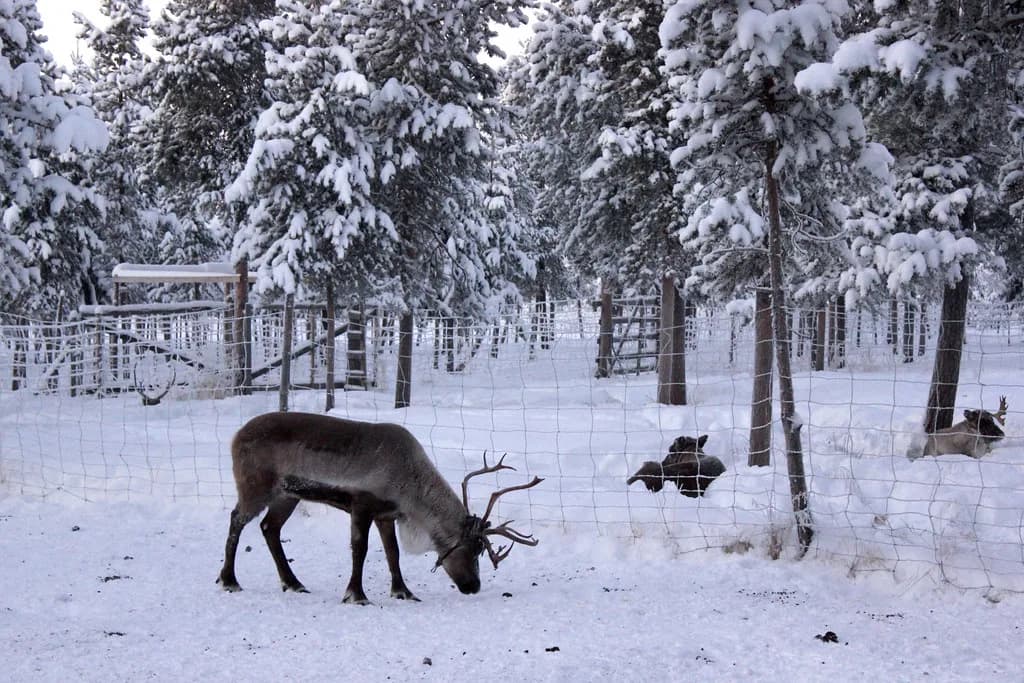
In Swedish Lapland, dog sledding near Abisko runs through the national park's snowy trails with no prior mushing experience needed. Several operators combine a reindeer farm visit and sleigh ride with a husky-sled run through the forest, a practical way to sample both in one day.
Book popular activities in advance, especially around Christmas and New Year, when Nordic Visitor notes festive demand fills Lapland and February and March become the quieter alternative. April still holds deep snow inland, but dog-sled operators may shorten or adjust routes if temperatures rise and snow cover thins, for the dogs' safety.
Self-guided chasing versus a guided aurora tour
Aurora tours take the guesswork out of cloud dodging. A guided chase from a base toward clearer skies, such as the Tromsø version across the Norwegian border, exists precisely because coastal and inland cloud differ; in Swedish and Finnish Lapland, guides do the same by driving to gaps in the cover.
Self-driving gives you flexibility to follow a clearing sky, but winter driving at night on unfamiliar roads with reindeer and moose about is a genuine constraint. If you rent a car, keep your driving radius modest and treat the car as a way to reach a dark trailhead, not a way to outrun weather for hours.
A middle route works well: book one or two guided nights early in your stay, then keep a car or use local trails for self-guided attempts from your base. That way a cloudy first night does not define the trip.
Cloud cover, light pollution and the trade-offs of each base
Cloud is the great equaliser. Abisko is known for relatively clearer skies than coastal Norway, and Finnish Lapland offers a good balance of darkness and accessibility, but neither is reliably clear on demand. Coastal Swedish Lapland around Luleå carries the Baltic's milder, more variable weather, while inland Kiruna and Abisko lean colder and clearer.
Town light pollution is the other variable. Rovaniemi, as the capital of Finnish Lapland and the hub of Santa tourism, is the busiest base and the one where you will most want to step away from street lighting. Kiruna is a working city too, so open tundra outside town is where the sky opens up.
If you are weighing specific Swedish bases, the dedicated Abisko National Park material in the northern lights in sweden guide covers dark-sky spots and how operators run a night there.
The cold: dry inland temperatures versus coastal wind
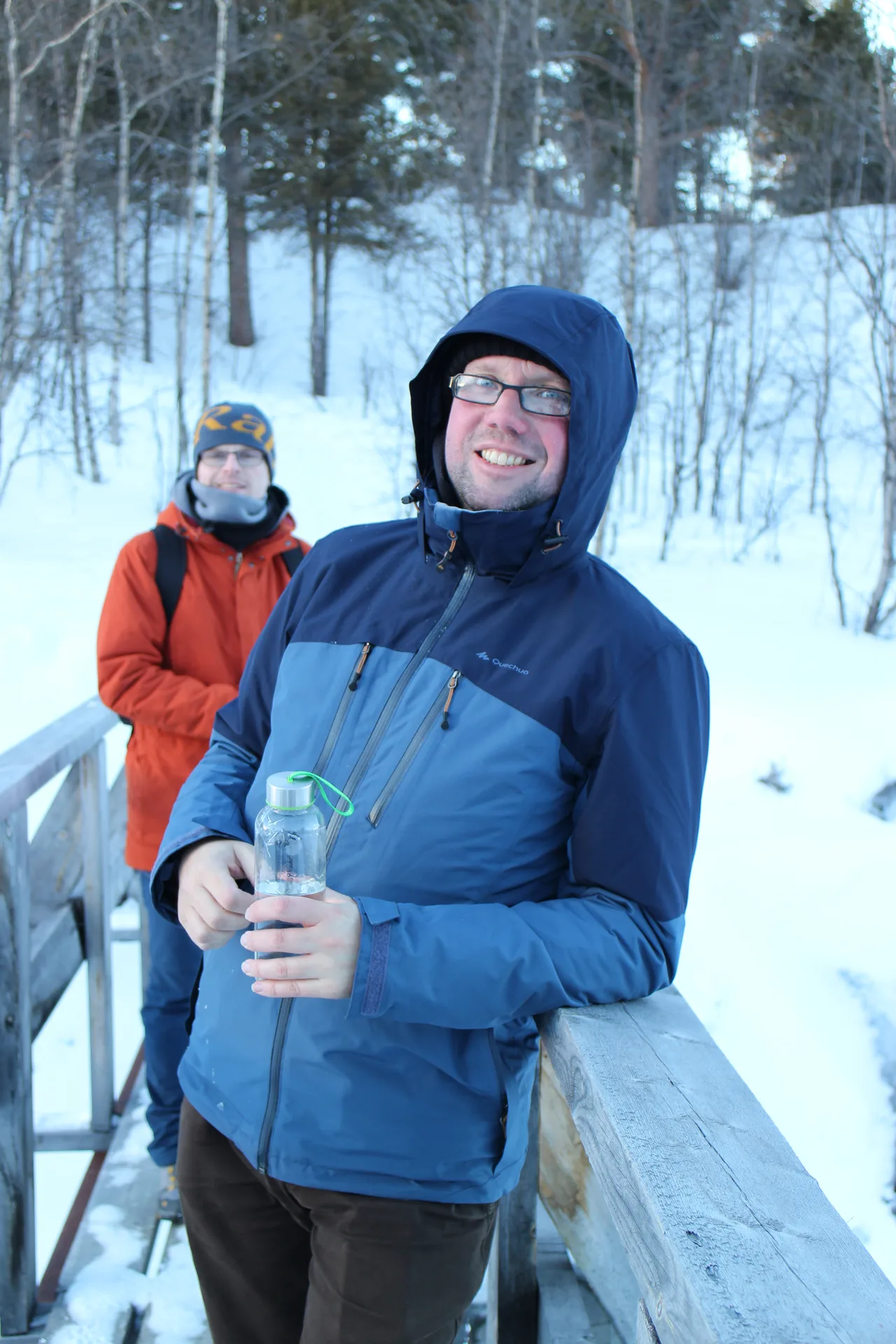
December to February temperatures in Lapland typically range from about −16 °C to 3 °C depending on location, and can fall to −30 °C or colder with wind chill, though dry, crisp air moderates the feel. Finland's cold is dry and still, while Norway's coast is windier and feels harsher at higher thermometer readings.
Inland Finnish and Swedish Lapland can drop below −20 °C with relative calm, while coastal Norway often sits around −5 °C to −10 °C but with wind that cuts through layers. For aurora watching, calm and cold beats windy and mild, so inland bases generally mean longer, more comfortable nights outside.
Operators typically lend thermal suits and boots on organised tours, which is one reason a guided night is easier in extreme cold. For self-guided evenings, plan shorter sessions and return indoors to warm up rather than pushing through a long, still night.
When to go for Christmas atmosphere versus quieter snow
Christmas and New Year fill Lapland with festive atmosphere, and Rovaniemi becomes extremely busy with Santa tourism, bringing higher prices and larger crowds. If a Santa visit is the point of the trip, December delivers it; if you want dark skies and quiet trails, it works against you.
January and February bring safer snow across both regions and far quieter conditions, which is why Nordic Visitor points to February and March for travelers seeking a calmer trip. March adds longer days and often more comfortable temperatures without losing dark nights.
If you want a cultural anchor in the Swedish winter, the jokkmokk winter market is a long-standing Sámi gathering with duodji craft and reindeer husbandry on show, and it gives a January trip a purpose beyond the sky.
Who each Lapland suits: families, couples, photographers, budget travelers
Choose Finnish Lapland if you want reliable snow, forest magic, Santa vibes and classic winter activities in one place. Rovaniemi's Santa Claus Village, glass-roofed hotels and dense tour menu make it the easiest first Arctic winter for families and anyone who wants everything arranged from one base.
Choose Swedish Lapland if you want snow plus big tundra landscapes and a reputation for clearer skies, with Kiruna and Abisko as the anchors. Photographers and couples often prefer the open horizons and the ICEHOTEL and Aurora Sky Station pairing.
Budget travelers should note that wild camping is free in both countries under Everyman's Right, though not in deep winter, and that accommodation in Finnish small towns is marginally cheaper. Fuel prices are similar in both countries, at roughly €1.65 to €1.85 per litre, with no road tolls on main routes.
Both countries are expensive by European standards. Self-catering and a modest rental car stretch a budget further than guided everything, while a single splurge night in an ice hotel or glass igloo is often the memory people keep.
How many nights to plan for a fair chance of clear skies
Give yourself at least four to five nights in one base if aurora is a priority, and more if the trip is a once-in-a-lifetime one. Cloud can persist for days, and a single clear night is what you are really buying; consecutive nights raise your odds without any guarantee.
Spread those nights across the season's stable window from January to March, when snow is most reliable and nights remain long. If you go in late September or March for milder conditions, accept that daylight is growing and plan your aurora hours around the darker part of the night.
Book one guided aurora night early in the stay so a cloudy first evening does not waste the trip, then keep the remaining nights flexible. That structure turns weather from a threat into something you work around.
Combining both Laplands in one trip
Combining the two is easier than most travelers expect. A classic route flies into Helsinki, drives north through Finland to Rovaniemi or Kilpisjärvi, crosses into Sweden at Haparanda-Tornio, and continues south through Swedish Lapland to Stockholm for the return flight. Two to three weeks gives you a genuine loop.
A shorter version uses a single Lapland base and a border hop. Base around Rovaniemi for forest snow, cross to Kiruna or Abisko for tundra skies, and let the two landscapes contrast within one trip rather than choosing between them.
The Finnish Arctic Highway from Tornio to Kilpisjärvi is staggeringly empty, with reindeer on the road and fells replacing forests, and it makes a memorable drive between the two sides. If you are planning the Swedish leg in detail, the northern lights in sweden guide is the practical companion.
Plan Your Arctic Winter Base
Pick Finnish Lapland if you want reliable inland snow, dense forest scenery, family-friendly Santa infrastructure and everything bookable from Rovaniemi. Pick Swedish Lapland if you want open tundra horizons, the ICEHOTEL and Abisko, and a base that photographers and couples tend to prefer.
Whichever you choose, go for January to March if snow and dark nights matter most, book one guided aurora night early, and keep at least four to five nights in one place. Neither country can promise a display; both reward travelers who plan for weather rather than against it.
Frequently Asked Questions
Is Swedish Lapland or Finnish Lapland better for the northern lights?
Neither is reliably better. Both sit above the Arctic Circle with a season from late September to late March, and cloud cover and solar activity on your dates matter more than the border. Abisko has a reputation for relatively clearer skies, while Finnish Lapland offers a good balance of darkness and accessibility.
When is snow guaranteed in Lapland?
Snow is most reliable from January to March across both Finnish and Swedish Lapland, with late December usually safer than early December. November is transitional and dark with uncertain snow. No month is guaranteed, so check the forecast and snow reports close to departure.
Is December a good time to visit Lapland?
December works if you want Christmas atmosphere and darkness, but early December is riskier for thick snow cover. Around Christmas, Rovaniemi becomes extremely busy with Santa tourism and prices rise. If snow and quiet matter more, January or February is safer.
Is April too late for winter activities in Lapland?
Not inland. April still holds deep snow in Finnish and Swedish Lapland, days are longer and light is soft. Dog-sled operators may shorten or adjust routes if temperatures rise and snow cover thins, so ask before booking.
Should I choose Finnish Lapland or Swedish Lapland for a first trip?
Choose Finnish Lapland around Rovaniemi for a first trip if you want everything in one place: Santa Claus Village, glass-roofed hotels and a dense tour menu. Choose Swedish Lapland if you want open tundra and the ICEHOTEL with a quieter base around Kiruna or Abisko.
Can I combine Finnish and Swedish Lapland in one trip?
Yes. Fly into Helsinki, drive north through Finland, cross into Sweden at Haparanda-Tornio, and continue through Swedish Lapland toward Stockholm, or simply pair Rovaniemi with Kiruna. Two to three weeks gives a fuller loop, while a shorter trip can manage one border hop.
Is Lapland warmer in Norway than in Finland?
Yes, coastal northern Norway is usually warmer because of the Gulf Stream, often around −5 °C to −10 °C in winter, while inland Finland and Sweden can drop below −20 °C. Wind makes Norwegian cold feel harsher despite the higher readings.
Sources
Notes for your Arctic winter trip
Optional updates to our northern lights guides.
You might also like

Continue reading
More guides you'll find useful