Swedish Lapland Husky Safari: Day Rides and Multi-Day Tours
Plan a husky safari in Swedish Lapland: drive your own team or ride as a passenger, choose day rides or multi-day cabin tours, and time aurora nights.
On this page
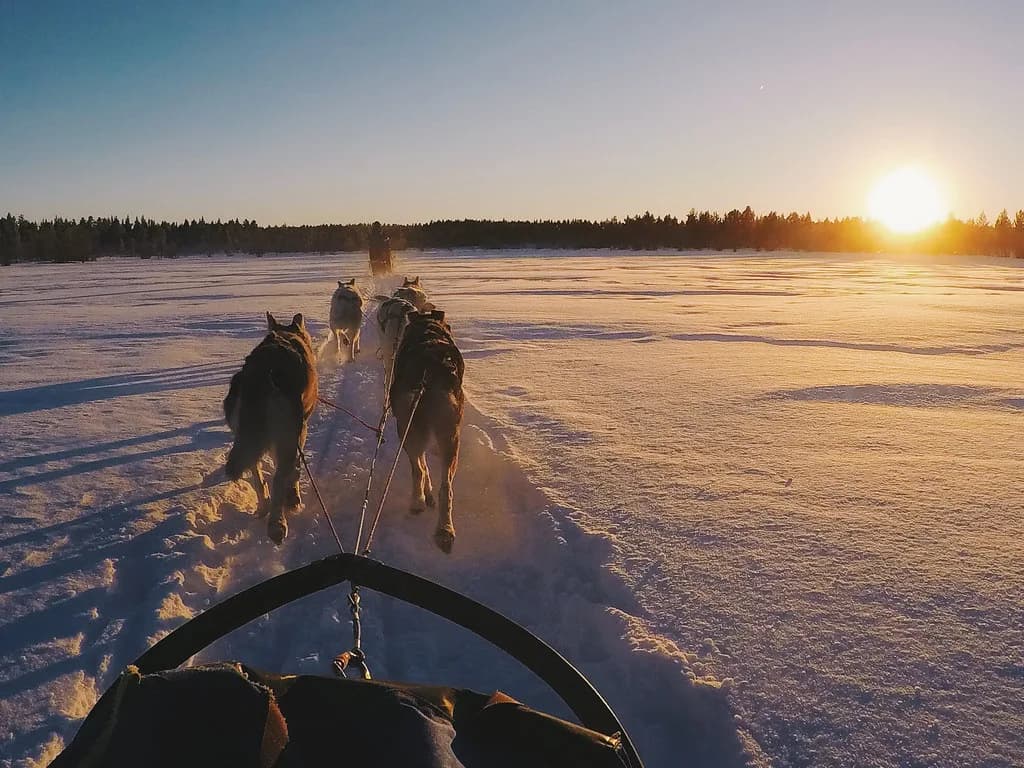
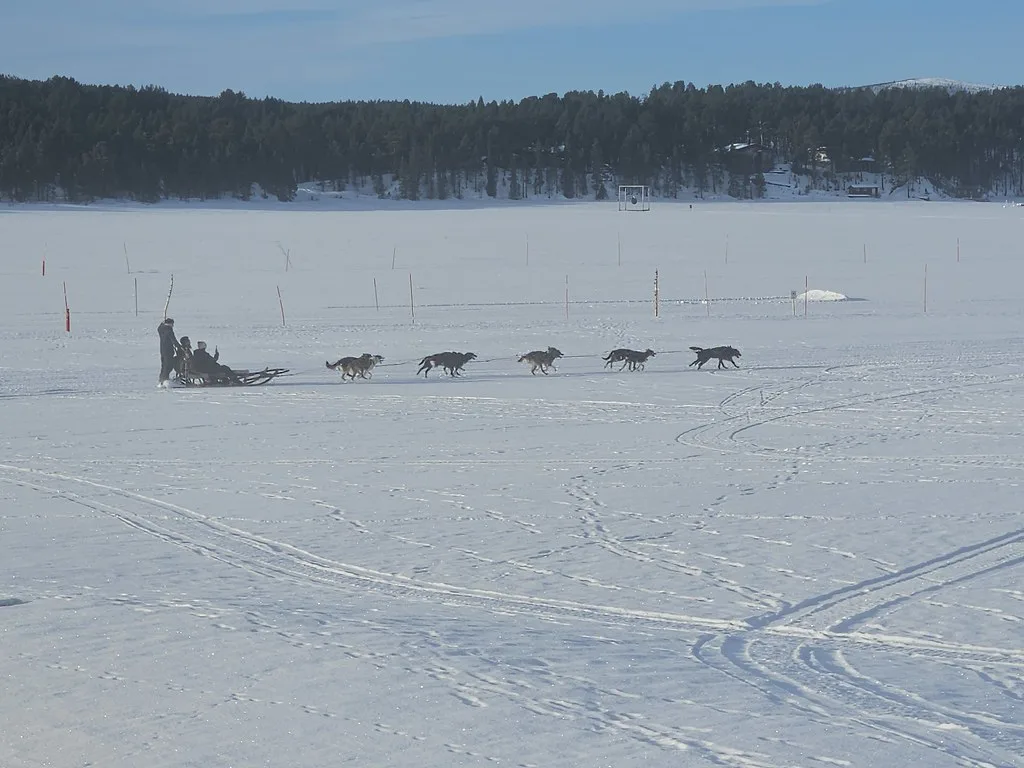
A husky safari suits travellers who want to move through Swedish Lapland's boreal forest and frozen lakes under their own steam rather than from a snowmobile seat. Teams run quietly, the pace is set by the dogs, and winter nights arrive early enough that an afternoon ride can turn into an aurora watch. Short rides fit families and first-timers; multi-day tours reward travellers with patience for cold hours and dog care. If you are weighing a kennel stay around Abisko instead, compare it in this abisko husky safari guide.
This guide covers how Swedish Lapland safaris are structured, how to choose between driving your own sled and riding as a passenger, what a day with the dogs actually involves, and how to time a trip around dark skies. For the wider region and its aurora season, see the northern lights in sweden guide.
Why Swedish Lapland suits a husky safari
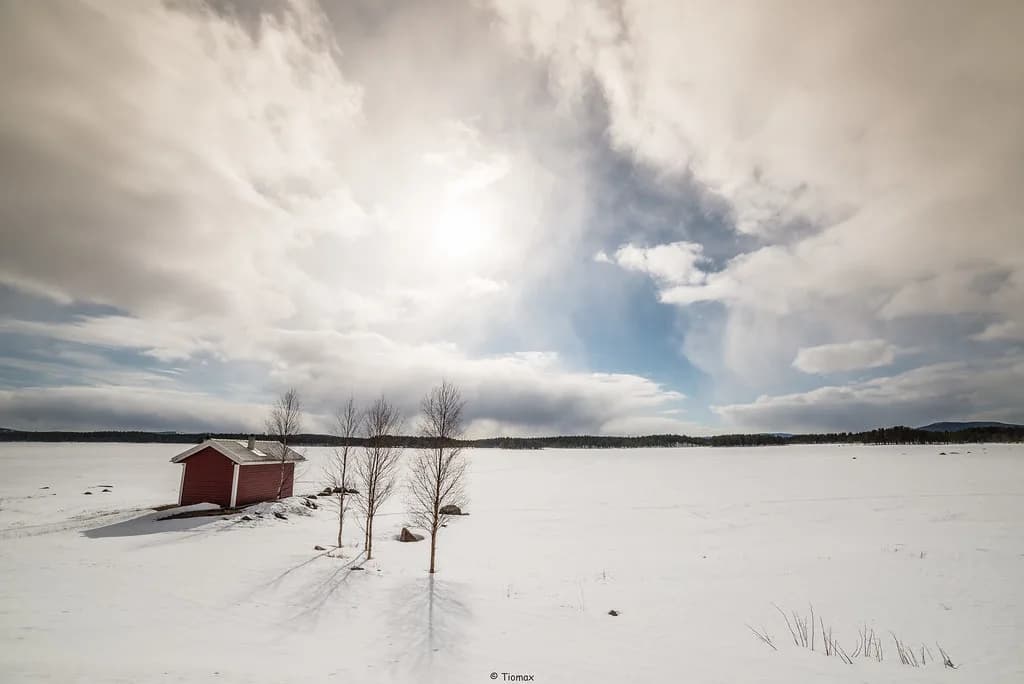
Swedish Lapland sits well north of the Arctic Circle, with long, dark winter nights and a landscape of boreal forest, bogs and frozen lakes and rivers. That combination gives sled dogs firm running surfaces and gives you open horizon views from lake ice, which is where aurora watching works best. It also means trails change character fast: shaded forest sections stay cold and sheltered, while lake crossings expose you to wind.
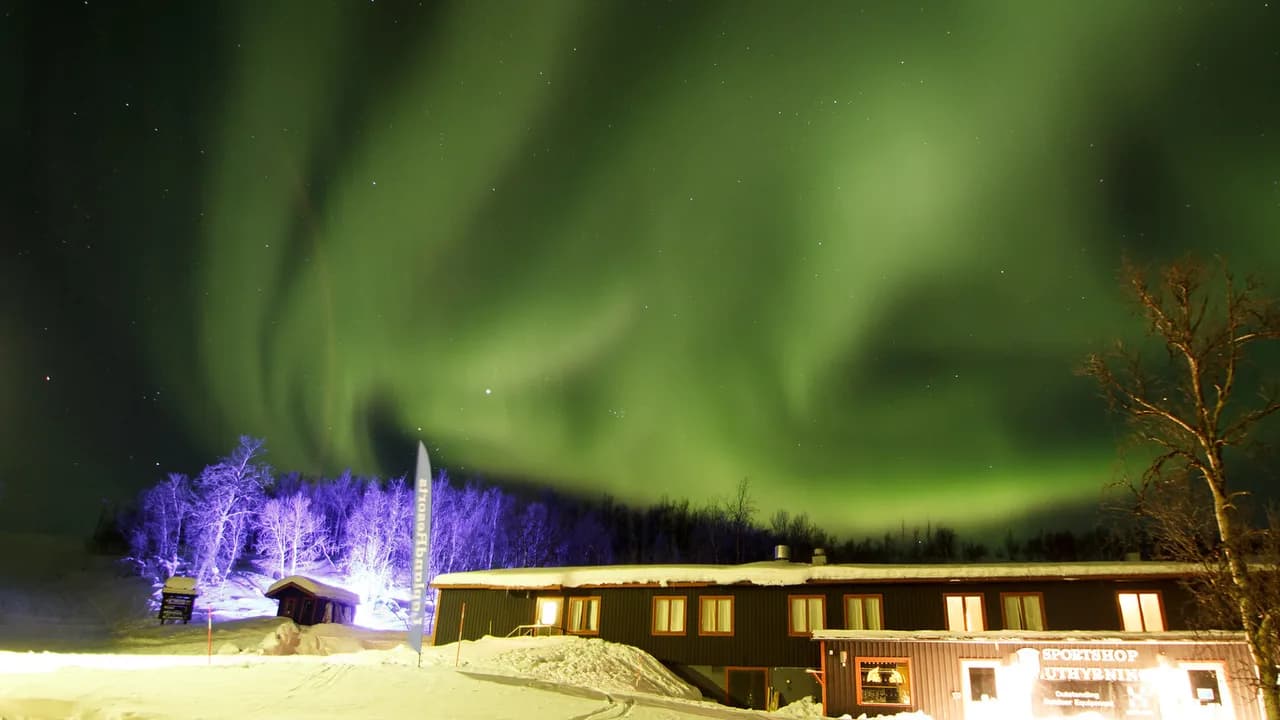
The aurora appears when solar particles excite the upper atmosphere, and northern Sweden's latitude puts the auroral oval overhead through much of the winter. Dark, clear skies are the deciding factor, and forest blocks the view; frozen lakes and open fells do not. For a fuller picture of where to base yourself, including Abisko National Park with its reputation for clear inland skies, read the regional northern lights guide.
When the sledding season runs
Husky sledding depends on snow, so the season follows local snow cover rather than a fixed calendar. Operators publish their own start and end dates each winter, and those shift with conditions. Ask your kennel which weeks they run and whether early-season trails on forest tracks are ready when you plan to travel.
The Nature Travels account of an 8-day Northern Lights Dog Sledding in Lapland tour in northern Sweden describes sledding through forest, over frozen lakes and along frozen rivers, with steep sections where mushers got off and ran behind the sled to help the dogs. Daylight is short in midwinter and lengthens quickly from February, which matters if you want long trail days rather than short ones.
Day safaris versus multi-day expeditions
A half-day or day ride gives you the essentials: meeting the dogs, a brief lesson, and an hour or more on the trail. Multi-day tours add distance and rhythm. Hetta Huskies, a kennel in Finnish Lapland that publishes a useful comparison, runs 2-day, 3-day and 5-day multi-day tours, with their flagship 5-day Wilderness Mushing Safari in late March and early April covering around 200 km and four safari nights. Use that as a benchmark for what a week of mushing looks like rather than as Swedish data.
The same comparison shows the middle ground: their 2-day tours cover around 70 km with one night out, and 3-day tours around 90 km with two nights in wilderness cabins. Shorter overnight tours leave the farm after a first day of instruction and return the following day, which suits travellers who want a taste of expedition life without committing a week.
Driving your own team or riding as a passenger
Most multi-day safaris put you on the runners of your own sled, steering a small team behind a guide. Steering means braking on descents, leaning into turns and helping uphill, and the Nature Travels trip report describes exactly that: getting off to jog behind the sled on steep climbs and slowing the dogs on downhills so they did not crowd the sled ahead. Forest trails demand more precise handling than open lake ice, where lines are wider and mistakes matter less.
Passenger sleds suit anyone who would rather watch the landscape than manage a brake. On shared tours, guides usually pair weaker or younger participants with a driver, and kennels decide case by case. If steering is the point of the trip for you, say so when booking so the kennel can place you in a driving position.
What a safari day actually contains
Trail time is only part of a safari day. The Nature Travels report describes harnessing the dogs, feeding them a mix of meat and dry kibble in water, putting coats on smaller dogs for the night, and settling the team onto straw lines after the run. That routine is the heart of the experience for many travellers and takes real time at both ends of the day.
On the trail the mood changes: once the team sets off, the noise stops and you hear paws on snow and runners on the surface. Distances vary by tour and pace, so ask your kennel how far a typical day runs. Note too that the same kennel's 5-day tour covers around 200 km, which tells you multi-day daily distances are modest and steady rather than long.
Multi-day structure: cabins, saunas and dog care
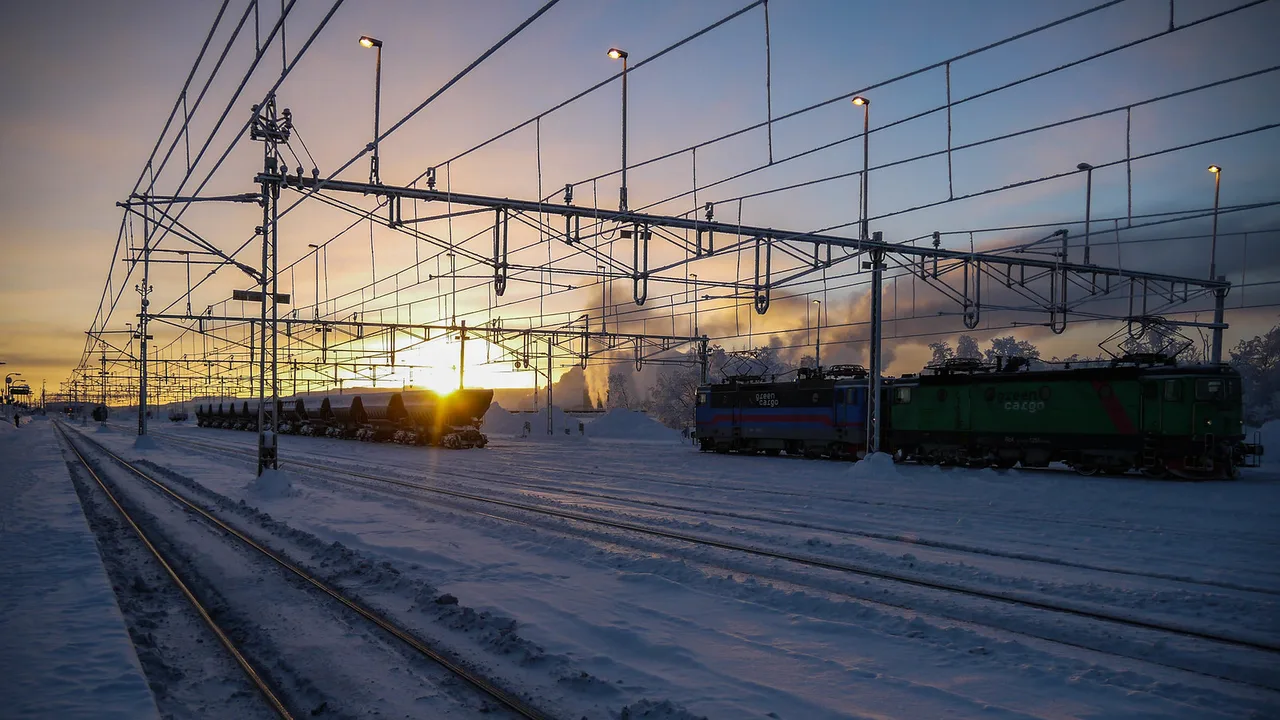
Multi-day husky tours usually alternate trail days with nights in simple wilderness cabins. The Nature Travels report describes evenings lighting fires, collecting water, chopping wood and heating a sauna, with washing done from water heated in a container on the sauna stove. Cabins on these routes are basic by design; comfort comes from the sauna and from the routine.
Hetta Huskies structures its tours in a similar way, with the first night sometimes spent at the farm in a traditional kota building arranged around a central fireplace, and other tours spending both nights in wilderness cabins. Their 2-day Polar Night Safari stays at the kennel itself, which maximises hands-on time with the dogs, while the 2-day Wilderness Tour covers similar distance but sleeps away from the farm.
If you want to extend the trip beyond the sled, the icehotel sweden experience near Jukkasjärvi pairs naturally with a kennel stay in the Kiruna area. For a broader mix of winter days, see the swedish lapland in winter guide.
Safari lengths in practice
Safari lengths divide into three practical bands. Short rides of an hour or two suit families with young children and travellers with limited time. Overnight tours of one or two nights give you a first taste of driving your own team and sleeping away from the kennel. Longer expeditions of four nights or more are for travellers who want distance, winter camping comfort and time to learn the dogs.
Hetta Huskies publishes ground-only and package prices for its tours, with the 2-day Polar Night Tour at €700 ground-only, the 2-day Wilderness Tour at €830, the 3-day Taiga Tour at €1250, and the 5-day Arctic Mushing Safari at €1875; packages with accommodation and meals before and after cost more. Prices and availability are listed on the Hetta Huskies booking pages.
Some years a kennel runs very few mid-length tours because its focus is on longer expeditions, so shorter options can appear sporadically or on request. If a specific tour length is non-negotiable for your dates, ask early and be flexible about which kennel you use.
Children and group fit
Child places on husky tours are usually seated in a guide's sled rather than driving. Hetta Huskies lists child prices only for its shortest overnight tours, from €360 for the Northern Lights Night, €475 for the 2-day Wilderness Tour and €560 for the 2-day Polar Night Tour, and notes that children driving their own sled are charged as adults.
The same operator says it has had children as young as nine driving within a family group on longer tours, that April suits children best because days are longer and warmer, and that it is unlikely to place a child under about 12 in a standard mixed-age adult group. Family groups can ask to be scheduled alongside other families with children, which improves the experience for everyone.
What is typically included and what costs extra
Day rides commonly bundle the sled, dogs, a guide, a driving lesson and brief kennel time. Rovaniemi's tourism office lists examples including a 4 km Korvala ride with driving lesson, kennel tour, winter clothing, warm drinks and cookies, limited to four sleds per departure, and an 8 km version limited to three sleds. Those are Finnish Lapland products but show the pattern Swedish operators follow.
On multi-day tours, expect guiding, dogs and sleds, meals and cabin nights to sit inside the package price, while ground-only bookings leave you to arrange rooms and food around the trail. Thermal suits and boots are often lent by operators; the Rovaniemi listings explicitly include winter clothing on the Korvala rides, so ask before you pack your own.
Aurora nights and husky tours
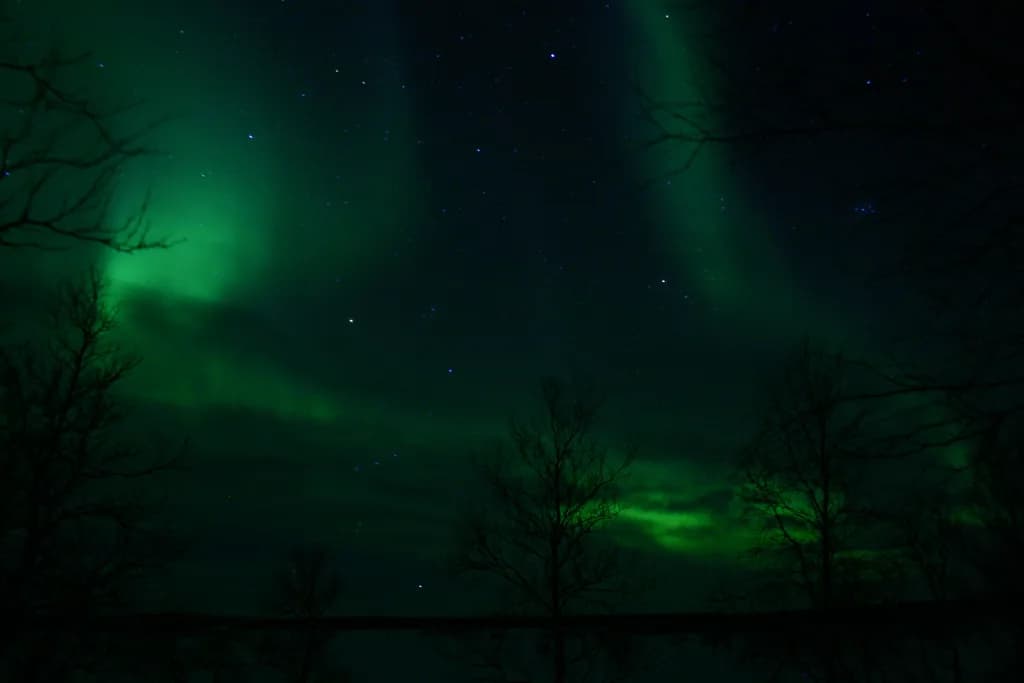
Running dogs after dark is a straightforward way to combine an aurora watch with activity, because the sled takes you away from village lights and onto open ground. Whether you see the aurora depends on solar activity and cloud, and no operator can promise a display. Kp values are guidance only; local cloud is usually the bigger constraint.
Some kennels build aurora chasing into their winter programme. Hetta Huskies offers a Northern Lights Night overnight tied to bus arrival times, starting around 4 pm and heading out with the dogs to look for the aurora on the first evening. If a dedicated aurora ride matters to you, ask whether the kennel runs one and whether it is offered on request only.
The Nature Travels trip report describes seeing the aurora on two evenings during a period of high solar activity, dancing across the sky. Treat that as one group's luck rather than a forecast, and plan your trip around enough dark, clear nights that a cloudy evening is not your only chance.
Kennel welfare questions worth asking
Ask how many dogs the kennel runs, how many kilometres each dog works per season, and what rest days look like. Hetta Huskies publishes a detailed welfare section and runs its own ethical dog care programme, which is a useful benchmark for the questions to put to any operator. A kennel that answers them specifically is a better bet than one that deflects.
Group size matters for dog welfare and for your experience. The Korvala rides cap departures at three or four sleds, and smaller groups mean less waiting and quieter trails. Ask also whether the kennel breeds its own dogs and whether retired dogs stay on the farm, since both shape how a kennel treats its team.
Combining a safari with the rest of a Swedish Lapland trip
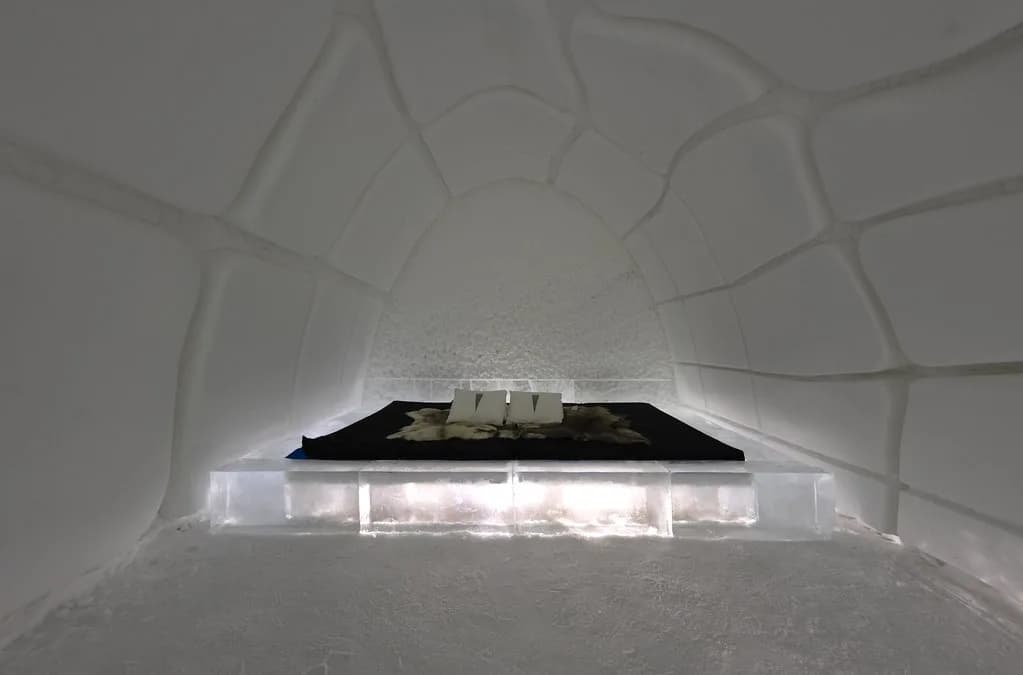
A safari pairs well with a few nights elsewhere in the region. Kiruna is the usual gateway for the Jukkasjärvi area, where you can see the Icehotel Jukkasjärvi and its art suites, and for cabins along the Torne River. If you are curious about the icehotel 365, it stays open year-round and offers a cold-sleep option outside the winter season.
Culture fits around the sledding too. The jokkmokk winter market in early February draws Sámi Duodji makers and reindeer herders, and is worth building into a wider itinerary. Most travellers then return north for dark evenings, since market days are short on daylight but long on activity.
How many nights to plan
Give yourself at least three or four nights in Swedish Lapland for a fair chance of one clear evening, and more if the aurora is the main reason for the trip. Cloud is the dominant variable, and the aurora can be active on any clear night. A single overnight safari is a wonderful experience but not a reliable aurora strategy.
If your priority is aurora rather than distance, book a shorter safari and spend the extra nights at a dark-sky base with open horizon views, such as a lakeside cabin or a fell station. Then you can chase clear skies on foot or by car on the evenings you are not on the trail, and let the sledding be the daytime highlight.
Booking your Swedish Lapland husky safari
Decide first whether you want to steer your own team or ride as a passenger, then choose a tour length that matches your tolerance for cold hours and cabin nights. Day rides suit families and first-timers; overnight tours give you the kennel routine without a full expedition; longer safaris reward travellers who want distance.
Book directly with the kennel where you can, ask about group size, child places and welfare practices, and leave room in the itinerary for flexible aurora evenings. Confirm current tour dates, prices and inclusions with the kennel before paying a deposit, since snow conditions shift the season each year.
Frequently Asked Questions
How long do husky safaris in Swedish Lapland last?
Safaris range from an hour or two on a day ride to multi-day expeditions with wilderness cabin nights. Hetta Huskies in Finnish Lapland, a useful benchmark, runs 2-day tours of around 70 km, 3-day tours of around 90 km and a 5-day flagship covering around 200 km. Swedish kennels publish their own tour lengths, which typically fall into the same bands.
Can you drive your own dog sled on a Swedish Lapland safari?
Yes, most multi-day and many day safaris put you on the runners of your own small team behind a guide. You will get a lesson, and the guide will help with technique on forest trails and lake ice. Travellers who would rather not steer can usually ride as a passenger in a guide's sled.
What age can children join a husky safari?
Younger children usually ride as passengers in a guide's sled, while teenagers may drive their own team. Hetta Huskies says it has had children as young as nine driving within a family group, that April suits children best because of longer, warmer days, and that it is unlikely to place a child under about 12 in a standard mixed-age adult group.
Do you sleep in a cabin on a multi-day husky tour?
Many multi-day tours include nights in simple wilderness cabins, often with a sauna, wood stove and water collected on site. Some shorter overnight tours sleep at the kennel itself, in a kota building around a central fireplace. Cabin nights are basic by design, so ask what facilities your tour includes.
Can you see the northern lights on a husky safari?
You can, if the sky is clear and solar activity is high enough, since sledding takes you away from village lights and onto open ground. No operator can guarantee a display. Plan several nights in the region so cloud on one evening does not end your chances.
What is included in a husky safari price?
Day rides typically include the sled, dogs, guide, a driving lesson and brief kennel time, and often winter clothing and hot drinks. Multi-day package prices usually include guiding, dogs, meals and cabin nights. Ask your operator for the full inclusion list before booking, since ground-only options exclude rooms and food.
Sources
Notes for your Arctic winter trip
Optional updates to our northern lights guides.
You might also like

Continue reading
More guides you'll find useful