Akureyri in Winter: What to Book for Snow and Lights
Plan a winter trip to Akureyri, Iceland: dark-sky aurora nights, short daylight hours, geothermal lagoons, skiing and day trips to Lake Mývatn and Goðafoss.
On this page
Akureyri sits at the head of Eyjafjörður, Iceland's longest fjord, and gives you a compact winter base where snowy streets, geothermal pools and dark skies sit within a few minutes of each other. It suits travelers who want aurora nights without committing to a remote lodge, and who also want daylight hours filled with skiing, soaking and day trips to Lake Mývatn and Goðafoss.
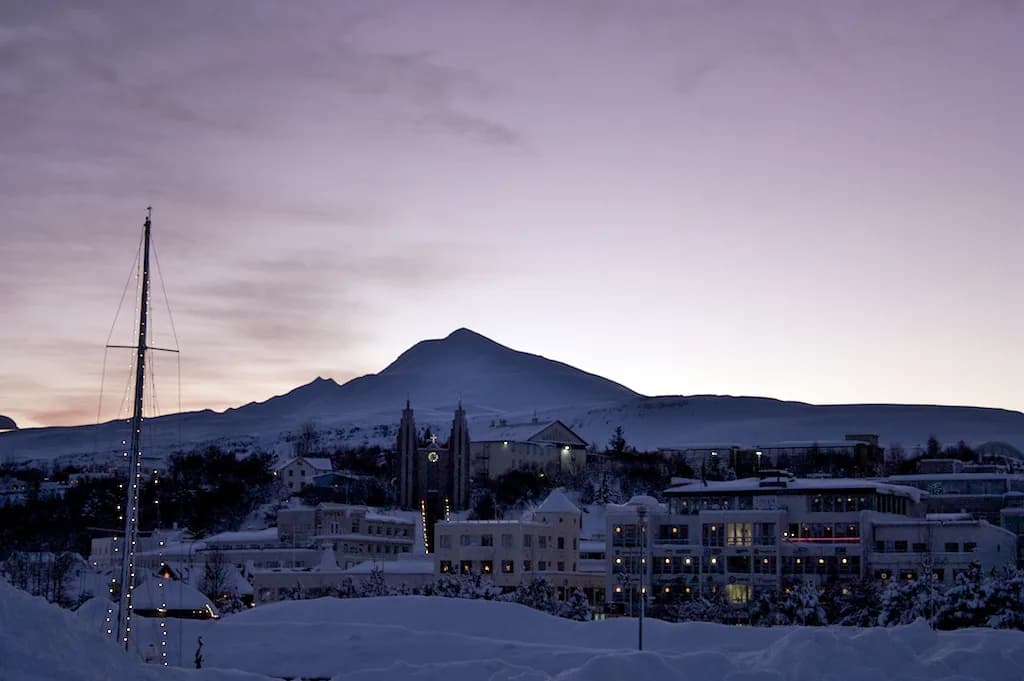
The town is small enough to walk in an afternoon, with around 18,000 residents and a colorful old quarter spread over a slope above the water. That layout matters in winter: you can ski or snowshoe above town in the morning, sit in a hot pool in the afternoon and drive out to darker roads after dinner without a long transfer.
Why Akureyri works as an aurora base
Akureyri lies roughly 60 miles south of the Arctic Circle, which puts it deep enough into the aurora oval that dark winter nights often bring activity overhead. The fjord setting helps: once you leave the lit streets, the shoreline and the valleys branching off Eyjafjörður drop into real darkness quickly, so a short drive can replace a long expedition.
A sighting still depends on solar activity and a clear sky, and no tour can promise one. What Akureyri gives you is repetition: several dark nights in a row, with the option to drive in a different direction each evening if cloud sits over one part of the fjord.
When the aurora season runs
The aurora is visible from Akureyri and its surroundings from September to April, with nights long enough at both ends of that window to catch a display. Peak viewing is usually placed between November and February, when darkness dominates the clock rather than arriving late at night.
Darkness alone is not enough, so weigh cloud patterns as much as calendar. Early and late season trips give you milder roads and more daylight for sightseeing, while midwinter gives you maximum night hours but shorter days and a higher chance of snow affecting mountain passes.
What winter is like month by month
December to February is the coldest stretch, with temperatures averaging around -5°C and occasional days near -20°C. Daylight is squeezed into roughly four to five hours, with the sun rising around 11am and setting around 4pm, so plan outdoor sights for the middle of the day and keep the evenings free for pools and aurora drives.
Snow is normal rather than exceptional in these months, and locals treat the season as ski and sledding weather rather than something to endure. February brings school winter breaks, when families fill the slopes, the geothermal pool and the sledding hills, so accommodation and activities tighten around those weeks.
Where to watch near town
The easiest dark-sky spot is the shoreline and the quiet roads just outside the built-up area, where street lighting falls away fast. Drive a short way along Eyjafjörður, away from the town center, and find a lay-by with open sky to the north; the fjord itself gives you a wide horizon and a reflection when the aurora is strong.
A guided small-group minibus does the work for you: the driver watches the forecast and cloud cover, keeps moving to find quiet spots away from city lights, and helps with phone and camera settings once a display appears. Guides help you get the best from your camera and phone on a dark night, which matters when you are standing still for an hour or more.
Nearer the center, the walk up to Akureyrarkirkja lifts you above the lit streets and gives a view over the fjord, though town glow remains. Treat it as a convenient first attempt on a clear evening rather than a dark-sky site, and head further out if the forecast looks promising.
Guided aurora tours
Small minibus tours run from Akureyri with hotel pickup and drive out of town to chase clear sky, so you are not fixed to one location if cloud rolls in. Group sizes stay small enough for the guide to help each guest with cameras and phones, and the operating window runs through the aurora season rather than year-round.
Ask the tour company directly about pickup points, departure times and what happens if the weather stops the tour, since those details change with conditions and the season. Book a night early in your stay so you still have spare evenings to try again if the first attempt runs into cloud.
Winter daylight activities
Mt. Hlíðarfjall, the ski area above town, is where locals go for downhill skiing and snowboarding, with rental, lessons and opening information published by the ski area itself. Cross-country skiers and walkers head instead to Kjarnaskógur forest and Hamrar, where prepared trails run through birch woods and parking sits close to the tracks.
Sledding slopes are part of the town's winter routine, with lit hills in the Lundarhverfi and Giljahverfi neighborhoods and a larger slope in Kjarnaskógur. Snowshoes can be rented in town for independent hikes, which is a good way to use the short daylight window without committing to a full-day tour.
Geothermal pools and lagoons
The Forest Lagoon sits about 3 km from Akureyri among birch and pine, with warm pools, a cold pool, a Finnish sauna and a bistro, making it the most convenient soak outside the center. Go early in the day for calm water and space, and use the colder end of the main pool when the water near the hot inflow feels too warm. For the practical details, see the forest lagoon akureyri.
In town, the Akureyri geothermal pool offers hot tubs, a sauna and water slides at a lower cost, which makes it the practical choice for families or a quick warm-up after a cold walk. On a full-day Mývatn trip, the Mývatn Nature Baths add a geothermal stop to the volcanic circuit.
If you drive east toward Húsavík, GeoSea in Húsavík pairs seawater with a view over Skjálfandi bay, a different experience from the forest setting above Eyjafjörður. Choose it when you are already heading that way rather than as a detour from Akureyri.
Town highlights in snow
Hafnarstræti, the main shopping street, carries boutiques, cafés and outdoor gear shops, while Kaupvangsstræti, known as Art Street, holds galleries, studios and the art museum beside the church. Both are short walks, so a cold-weather morning can cover the church, the art street and a coffee stop without a car.
The heart-shaped red traffic light near Hof Cultural and Conference Centre is set away from moving traffic, so you can photograph it safely. The Old Town's painted wooden houses, including Laxdalshús from 1795, and the Botanical Garden under snow fill another hour or two, and the garden is free to walk through.
Ten kilometers out of town, the Christmas House stays open year-round and makes an easy short excursion when the weather closes in on the mountains. It works well as a bad-weather backup rather than a headline stop.
Food and drink in the cold
Múlaberg Bistro & Bar at Hotel Kea and North Restaurant at Hotel Akureyri both serve multi-course Icelandic tasting menus built around seafood, lamb and game, with the North menu served as a single set sequence. Both are splurge evenings, best booked ahead and paired with an early aurora attempt afterward.
For cheaper meals, Akureyri Backpackers Café on the main street serves burgers and hearty plates in a relaxed room, and the old town's ice cream shop Brynja is a local institution despite the temperature. Lamb soup and café stops along Hafnarstræti fill the gap between a long day out and a late aurora drive.
Day trips from Akureyri
Goðafoss waterfall lies about 35 km from town via the tunnel, and Lake Mývatn about 83 km, putting both within a day's drive in good conditions. A full Mývatn tour typically adds Goðafoss, the Skútustaðagígar craters, Dimmuborgir, Grjótagjá, Hverir and the nature baths, with crampons available for icy paths.
Húsavík is about 75 km away via the tunnel, Hrísey island is a short drive and ferry from town, and Dettifoss and Ásbyrgi sit further east at roughly 135 km and 138 km. In winter, treat the longer drives as full-day commitments and check road conditions before setting out.
Whale watching and husky visits
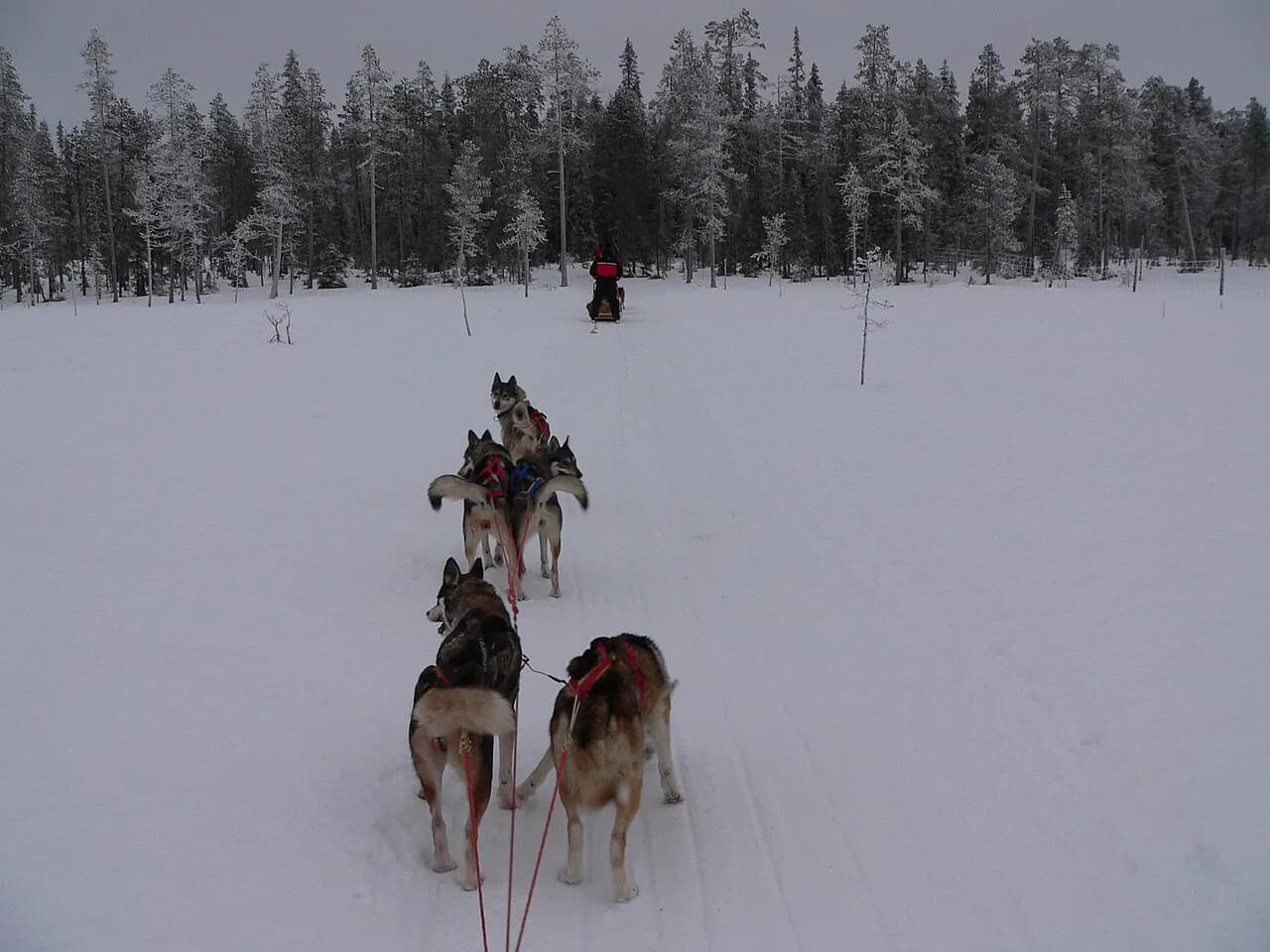
Whale watching boats leave from the harbor below the town center, with tours normally around three hours, and the fjord holds whales through the year. Husky kennels sit a short drive from Akureyri, and horse rentals operate in the surrounding valleys, giving you land-based options when sea conditions turn rough.
How many nights to plan
Three nights gives you two aurora attempts plus one full day for skiing or a Mývatn tour, which is the minimum worth flying north for. Four or five nights lets you add a geothermal afternoon, a whale watching morning and a spare aurora night without squeezing the daylight hours, and it matches the pace of a midwinter stay when the sun sets around 4pm.
Build the itinerary around mornings and early afternoons for outdoor sights, and keep evenings flexible for aurora drives, since a clear night cannot be booked in advance. If aurora is the priority, favor a longer stay over a single expensive night out. The same logic applies if you are weighing Iceland in winter more broadly, where the number of nights you allow often matters more than the base you pick.
Getting there and around in winter
Akureyri has its own airport with domestic flights, and the drive from Reykjavík is about 388 km, usually around five hours in good conditions. That route crosses high heaths such as Öxnadalsheiði, which the road administration can close in bad weather, so check conditions before you leave and allow for a slower alternative.
In town, most sights sit within walking distance, and the local bus and taxis cover the rest. For day trips, compare a guided minibus with a rental car honestly: a car gives flexibility but puts winter driving decisions on you, while a tour handles the roads and the guide knows where the cloud is thinner.
Plan Your Visit
Akureyri works because it stacks the pieces of an Arctic winter close together: dark fjord roads for aurora nights, ski slopes and forest trails for the short daylight, and geothermal water for the hours in between. Book a small-group aurora tour for your first clear night, keep the rest of the evenings free, and let the weather decide the order.
Check current opening times and tour departures with Visit Akureyri before you finalize a winter itinerary, and leave at least one spare night for a second aurora attempt.
Frequently Asked Questions
Is Akureyri colder than Reykjavik?
Akureyri sits in the north of Iceland at the head of Eyjafjörður, and winter there typically brings temperatures averaging around -5°C with colder nights that can reach about -20°C. Reykjavik's coastal position moderates it somewhat, but both cities see snow, wind and short daylight in midwinter, so plan for genuine cold wherever you base yourself.
How many hours of daylight does Akureyri get in December and January?
Midwinter daylight in Akureyri runs to roughly four to five hours, with sunrise around 11am and sunset around 4pm. That leaves a narrow window for skiing, walking or day trips, so schedule outdoor sights for late morning and early afternoon and keep evenings for pools or aurora drives.
Can you see the northern lights in Akureyri without a tour?
Yes, if the sky is clear and solar activity cooperates. Drive a short way out of town along Eyjafjörður to escape street lighting, find a safe lay-by with an open northern horizon, and give it time. A guided minibus helps on cloudy nights because the driver can move to clearer areas.
How close is Akureyri to the Arctic Circle?
Akureyri lies about 60 miles south of the Arctic Circle, which places it inside the aurora zone for much of the winter. That latitude gives long dark nights from September to April, though a sighting still depends on clear skies and solar activity rather than the latitude alone.
How many nights should you stay in Akureyri in winter?
Three nights gives you two aurora attempts and one full day for skiing or a Lake Mývatn tour. Four or five nights is better if aurora is the main goal, because cloud can block several evenings in a row and extra nights raise your chances of a clear one without promising a display.
What can you do in Akureyri in winter when the weather is bad?
Head to the Forest Lagoon or the town geothermal pool for hot water and a sauna, walk the shops and cafés along Hafnarstræti, or visit the art museum and church. The Christmas House about 10 km from town stays open year-round and makes an easy short outing when mountain roads look doubtful.
Sources
Notes for your Arctic winter trip
Optional updates to our northern lights guides.
You might also like
Continue reading
More guides you'll find useful