Akureyri in October: Daylight, Weather and Northern Lights
Akureyri in October brings around ten hours of daylight, mild coastal temperatures and full northern lights season. Here is what to plan around.
On this page
Akureyri, the main town on Eyjafjörður in North Iceland, suits travelers who want a compact base for both autumn hiking and evening aurora watching. In October the town sits at the crossover point where summer tours are winding down and winter aurora and ice-cave tours are ramping up, so a single week can hold a whale-watching boat, a mountain hike and a dark-sky drive. It is a good month for people who value flexibility and smaller crowds over guaranteed snow.
Why October works for an aurora trip to Akureyri
October delivers the ingredient an aurora trip needs most: long, dark nights. Across Iceland the aurora is effectively impossible to catch from May to August because of the bright summer nights, and by October the balance has shifted toward darkness, with activity staying high through November before dropping around midwinter. Akureyri sits under the auroral oval, so a clear sky on an active night can put the lights overhead.
Because the aurora depends on solar activity and clear skies, no month can promise a sighting. What October does provide is more usable dark hours per night than the months on either side of midwinter, which gives you more evenings to try. If your trip is built around the aurora, treat October as a strong opening month rather than a sure thing.
How far north Akureyri sits and what that means for the aurora
Akureyri sits just below the Arctic Circle at the head of Eyjafjörður, roughly 100 kilometers south of the circle itself. That latitude puts the town within the band where aurora displays are common on active nights, and the long fjord gives you open northern horizons a short drive from the center. Travelers often pair the town with the wider aurora picture in this Akureyri northern lights guide, which explains how the season and the fjord geometry shape viewing.
Daylight hours through October
Daylight shrinks quickly across the month. Visit North Iceland lists about ten hours of daylight for October as a whole, which means early October still leaves long afternoons for driving and hikes while late October pushes sunset much earlier. Plan the outdoor sightseeing you care most about for the first half of the month if your dates are flexible, and keep the second half for aurora evenings and indoor stops like the town's pools and museums.
October temperatures, wind and snow
North Iceland's own October figures show an average temperature of about 3°C, an average high of 6°C and an average low of -1°C, with 11 snow days and an average of 58 millimeters of precipitation per day. Those numbers describe a coastal, maritime autumn rather than deep winter, so expect a mix of rain, sleet and occasional snow rather than a solid snowpack in town.
Akureyri's daily highs slide from around 45°F at the start of October to about 38°F by the end, with lows dropping from roughly 35°F to the low 30s. Wind funnels down Eyjafjörður and makes exposed spots feel colder than the thermometer suggests, so build slack into any day that involves a boat or a mountain. Travelers heading north should keep an eye on the forecast, because conditions here can change rapidly within a single day.
Autumn hiking and the season's color
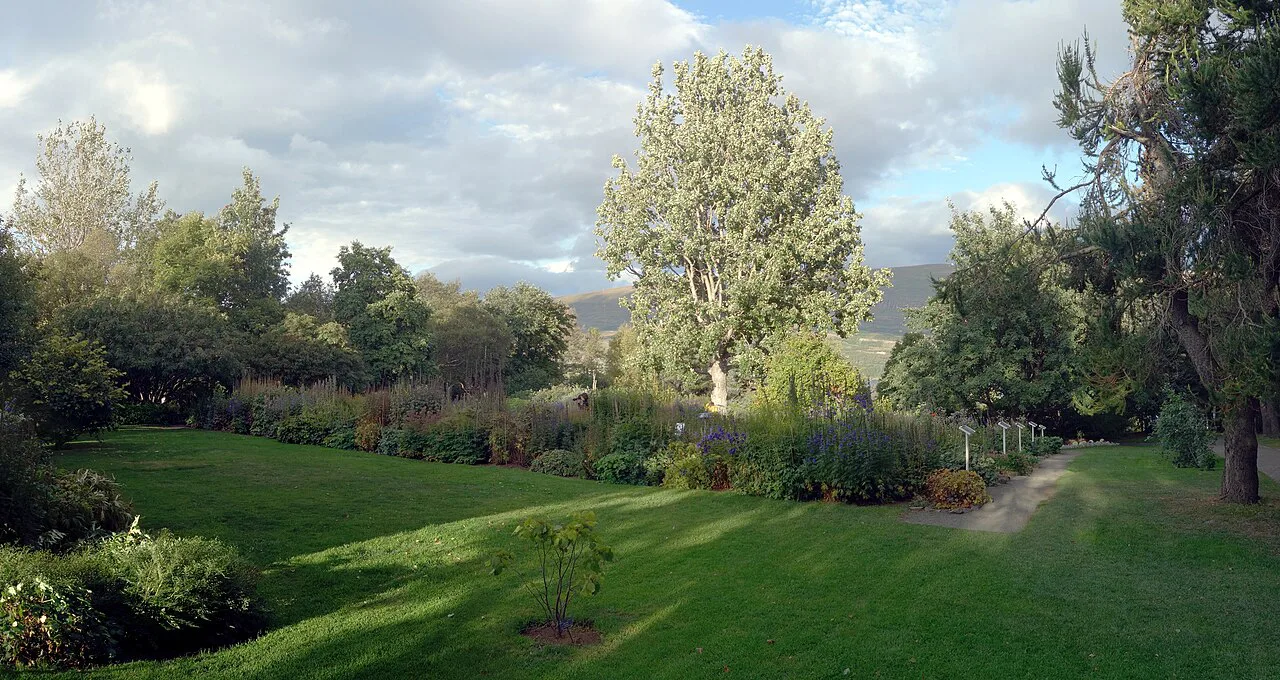
October keeps hiking on the table while the birch and low scrub on the slopes above town turn gold and rust. Lower trails around Akureyri and along the fjord are the realistic target this month, since higher ground can hold early snow and ice. Visit North Iceland still lists hiking in autumn colors as an October option alongside whale watching and aurora tours, so a short walk plus an afternoon soak is a sensible way to use the daylight.
Northern lights season in North Iceland
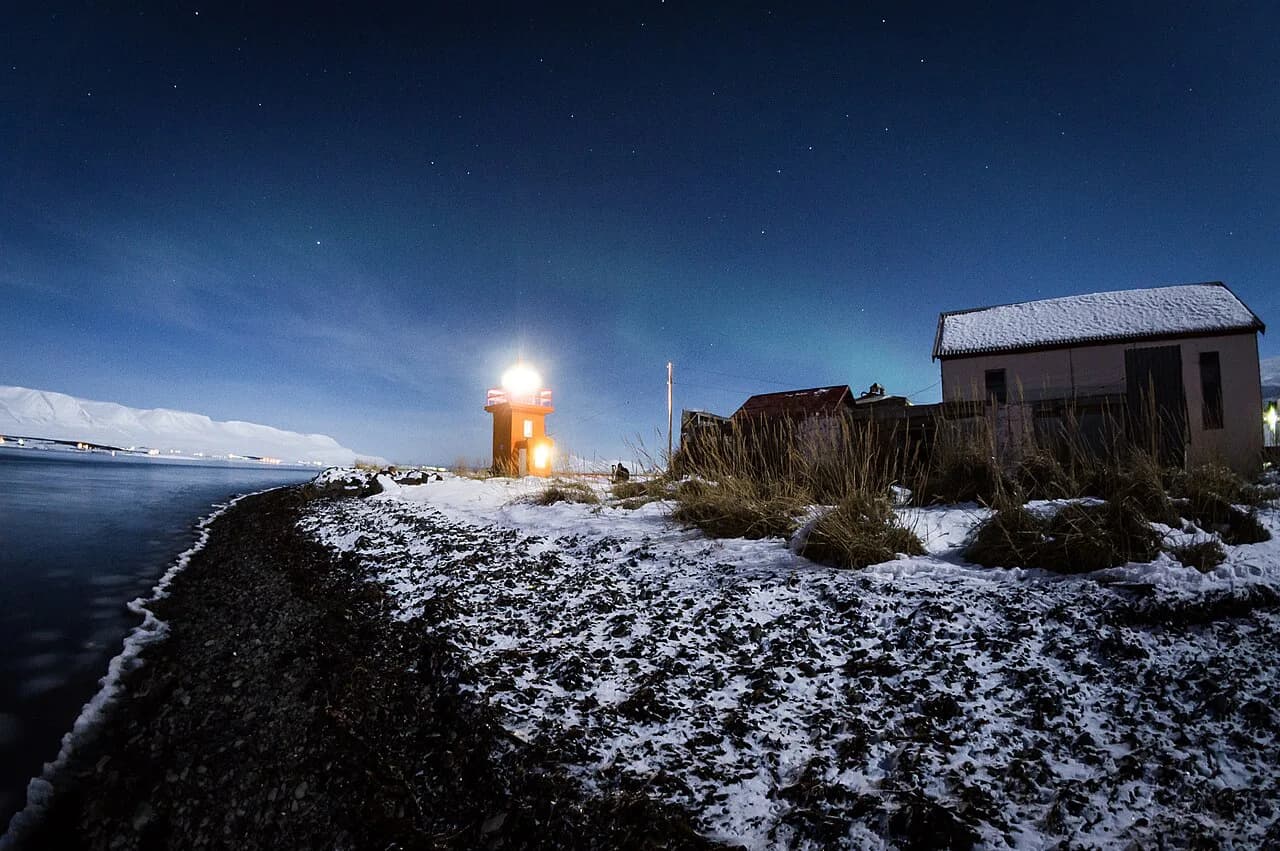
By October the northern lights season is in full swing across North Iceland, and operators based in and around Akureyri run evening departures through the dark months. Cloud is the usual spoiler, so the practical approach is to book a tour with a flexible weather policy or plan several evenings at your base. A guide who reads the cloud forecast can drive to a clearer valley or coast when Eyjafjörður itself is socked in.
If you want the broader context on when and how the lights appear over the town, the dedicated northern lights page for Akureyri explains the season, the role of the Kp index as guidance only, and how local operators typically run a night. Use it to decide whether to join a bus tour or a smaller jeep-style chase rather than to lock in a single date.
Where to watch near Akureyri
Akureyri's compact center glows enough to wash out faint aurora, so a short drive across the fjord or up a side valley pays off. The far shore of Eyjafjörður and the quieter roads toward the surrounding valleys give you dark northern horizons with the town lights behind you. Travelers with a car often scout a spot in daylight so they aren't hunting for a pull-off in the dark.
Self-driving gives you the freedom to follow the Icelandic Met Office cloud layers and move when a gap opens, and the same logic applies if you build in an evening that stays flexible. A rental car plus a clear forecast is the cheapest route; a guided tour is the safer one if you don't want to drive unfamiliar roads in the dark.
Northern lights tours from Akureyri
Tours from Akureyri come in two main shapes: a bus that carries a larger group to a chosen dark site, and a smaller vehicle that can range farther to find a clear patch of sky. The trade-off is comfort and reach against cost and group size, and neither format can promise a sighting. Many companies running northern lights tours from Akureyri offer a re-try policy on cloudy nights, so ask when you book. Most tours are marketed as evening departures, so keep the next morning light.
Whale watching in October
Whale watching remains strong in North Iceland in October, with departures from nearby Húsavík and from Akureyri's own harbor. Humpbacks are the most common large species in these fjords, and minke whales and dolphins turn up too. Sea conditions can be rough in autumn, so a morning slot often beats an afternoon one. Bring layers and expect a colder, wetter ride than in summer.
Horseback riding and geothermal bathing
Horseback riding on the Icelandic horse keeps running into autumn, and it is a good way to see the fjord countryside at a slow pace. After a cold ride, the geothermal pools are the natural next stop, and Visit North Iceland lists both geothermal baths and swimming pools among the month's activities. For the town's own bathing options, see the Akureyri swimming pool guide.
If you want a hot soak beyond town, GeoSea in Húsavík sits on the coast with a view over Skjálfandi Bay. It makes a natural pairing with a whale-watching morning or a drive along the Diamond Circle. A stop there also breaks up the trip if you are headed toward Mývatn.
Closer to Akureyri, the Forest Lagoon offers a wooded geothermal soak just outside town, which fits neatly into an afternoon after a morning hike. It is a short drive from the center, making it an easy add-on when the weather turns. Check the Forest Lagoon's page for current hours and booking.
What October events shape the calendar
North Iceland's October calendar carries a mix of culture and season markers. Visit North Iceland lists Eyrarrokk Music Festival, a knitting retreat in Húsavík, the Boreal Screendance Festival and the First Day of Winter, alongside an Oktoberfest at Mývatn. Dates shift from year to year, so confirm specifics with the organizer before you anchor a trip around one.
How many nights to plan for a fair chance of clear skies
Cloud is the variable you can't control, so give yourself more than one night. A stay of three to four nights in Akureyri gives you several chances to catch a clear evening and absorbs a lost night to weather or a cancelled boat trip. If the aurora is the main reason for the trip, lean toward four or five nights and keep one or two evenings unbooked so you can chase a forecast.
If you want to compare what the town is like deeper into winter, the Akureyri in winter guide covers the colder months when snow and shorter days change the rhythm. October sits at the front end of that arc, so it is a useful reference if your dates can move. You can read it alongside this month's planning.
Akureyri versus Reykjavik for an October trip
Reykjavik in October gets around 11¼ hours of daylight at the start of the month, dropping to just over eight by the end, and an average temperature near 5°C with about 87 millimeters of rain for the month. The north is colder and snowier, but Akureyri's smaller size and fjord setting mean less light pollution close to town and faster access to dark countryside. Reykjavik wins on flights, tour volume and city amenities; Akureyri wins on quiet and the short hop to open sky.
If your trip is mostly about the aurora, Akureyri's dark edges and fjord horizons make it the stronger base, though Reykjavik's operators run their own chases out of the city. For a country-wide view of the month, the Iceland in October guide covers what is open and what to expect elsewhere. Pair it with this page when you weigh the two bases.
Plan Your October Trip
October suits travelers who want autumn color and dark nights without committing to deep winter. Akureyri gives you a compact base with fjord views, whale watching nearby and aurora tours on the doorstep. Build in extra nights for cloud and keep your evening plans flexible.
Book your aurora tour with a re-try policy, reserve a geothermal soak for a bad-weather afternoon, and watch the forecast in the days before you go. None of it guarantees a sighting, but the odds improve with time on the ground and the freedom to move.
Frequently Asked Questions
Can you see the northern lights from Akureyri in October?
Yes, October is part of the aurora season in North Iceland, and the long dark nights give you a real chance if the sky is clear. Sightings still depend on solar activity and cloud, so plan several evenings and keep your plans flexible. Kp values are guidance only.
How many hours of daylight does Akureyri get in October?
Visit North Iceland lists about ten hours of daylight for the month as a whole. The figure falls quickly from early to late October, so late-month visitors should plan sightseeing for the middle of the day.
What is the weather like in Akureyri in October?
North Iceland's averages put the month near 3°C, with highs around 6°C and lows near -1°C, plus around 11 snow days and 58 millimeters of precipitation. Expect wind, rain and occasional snow rather than deep winter conditions, and check the forecast as your trip approaches.
Is Akureyri or Reykjavik better in October?
Reykjavik is milder, wetter and better connected, while Akureyri is colder and snowier but quieter and closer to dark countryside. If the aurora is the priority, Akureyri's fjord setting and lower light pollution give it the edge.
Is October a good month for whale watching in North Iceland?
Yes, whale watching remains strong in North Iceland in October, with humpbacks the most common large species. Sea conditions can be rougher than in summer, so a morning departure and a flexible schedule help.
How many nights should you stay in Akureyri for the northern lights?
Three to four nights gives you several chances at a clear evening and absorbs a lost night to cloud or a cancelled tour. If the aurora is the main goal, four to five nights with a couple of unbooked evenings is a safer bet.
Sources
Notes for your Arctic winter trip
Optional updates to our northern lights guides.
You might also like
Continue reading
More guides you'll find useful