Iceland in Winter: How Many Days to Plan Your Trip
Iceland in winter brings short daylight, snow on high ground and long dark nights for the aurora. Plan your days, activities and nights around the season.
On this page
Iceland in winter suits travelers who want the aurora more than they want long hiking days. The capital sits close to the Arctic Circle, so winter nights are long, the sun stays low, and the dark hours give you repeated chances to watch the sky. Between those nights you get ice caves, glaciers, geothermal pools and a compact city of museums and cafés.
The season rewards planning around light rather than around a checklist. Decide how many nights you can give to the aurora, whether you will self-drive or join tours, and which single glacier day is worth the drive. Everything else — the Golden Circle, the South Coast, the pools — fits around those decisions.
Why winter works for the aurora in Iceland
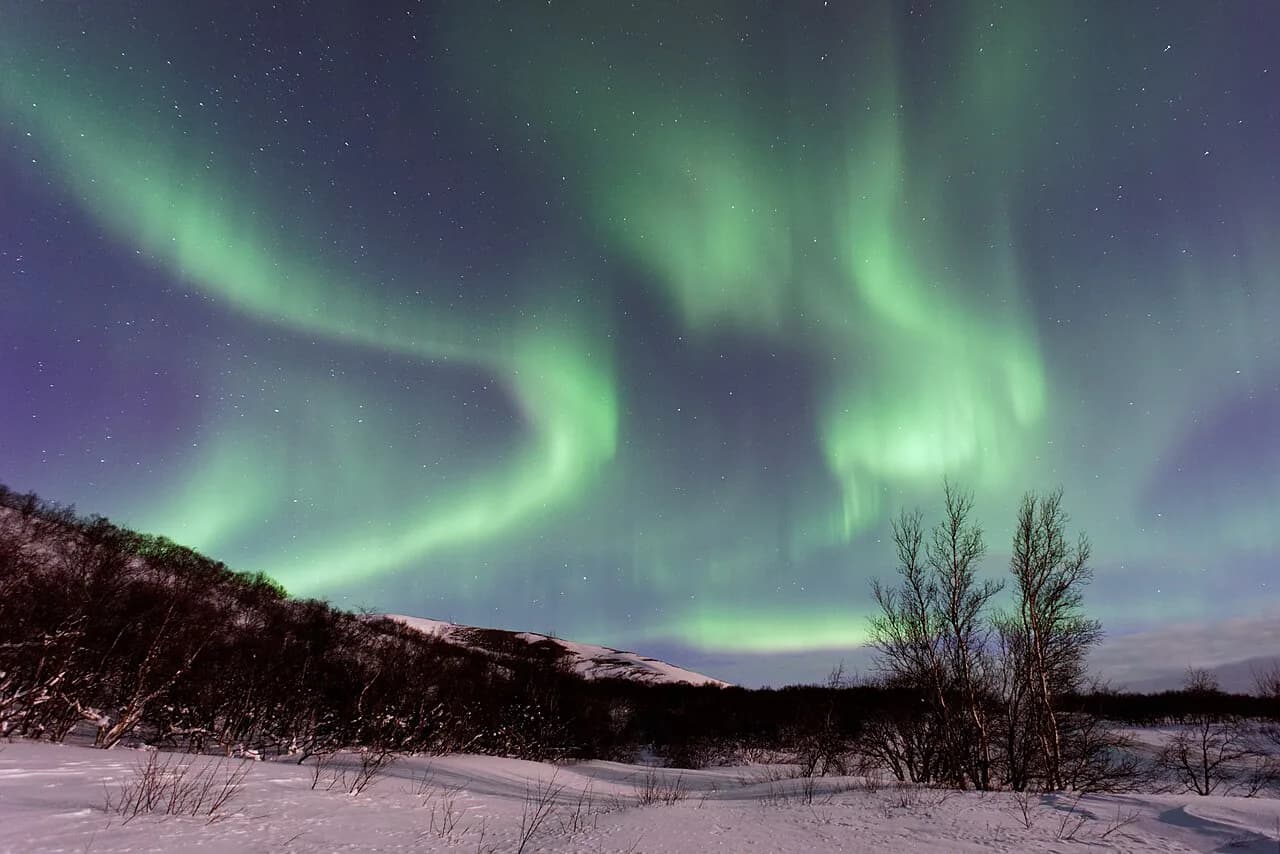
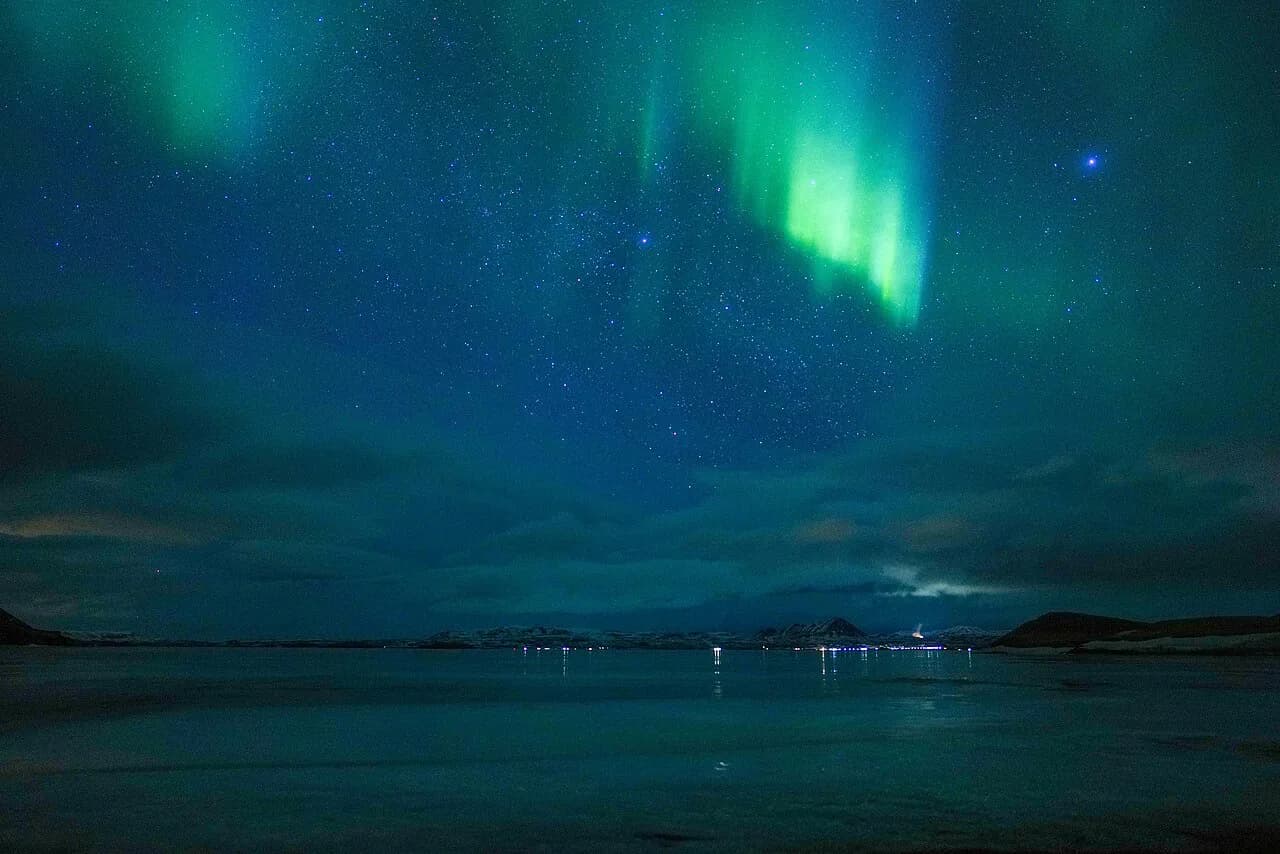
Iceland sits under the auroral oval, the band where charged particles from the sun most often reach the upper atmosphere. Winter adds the second ingredient: genuine darkness. In December the sun crawls above the horizon for only about four hours, which leaves a long window in which the sky is dark enough for a display.
Clear skies matter as much as solar activity, and Iceland's weather changes fast. Sunshine, wind and a passing shower can all arrive on the same day, so a night that looks hopeful at dinner can cloud over by the time you drive out. Treat each clear evening as the night to use, not the night to rest.
A sighting is never guaranteed, whatever the forecast says. Kp values and aurora forecasts are guidance only; they describe activity, not whether your particular sky will be clear. What raises your odds is simple: more nights, a car or a tour that can move away from cloud, and a viewing spot away from town lights.
When the aurora season runs and how dark the nights get
Aurora season returns as nights lengthen in autumn and runs through the dark winter months. September marks the return of the northern lights after the bright summer, and darker evenings build from there. The deep winter weeks around the solstice give the longest usable dark window of the year.
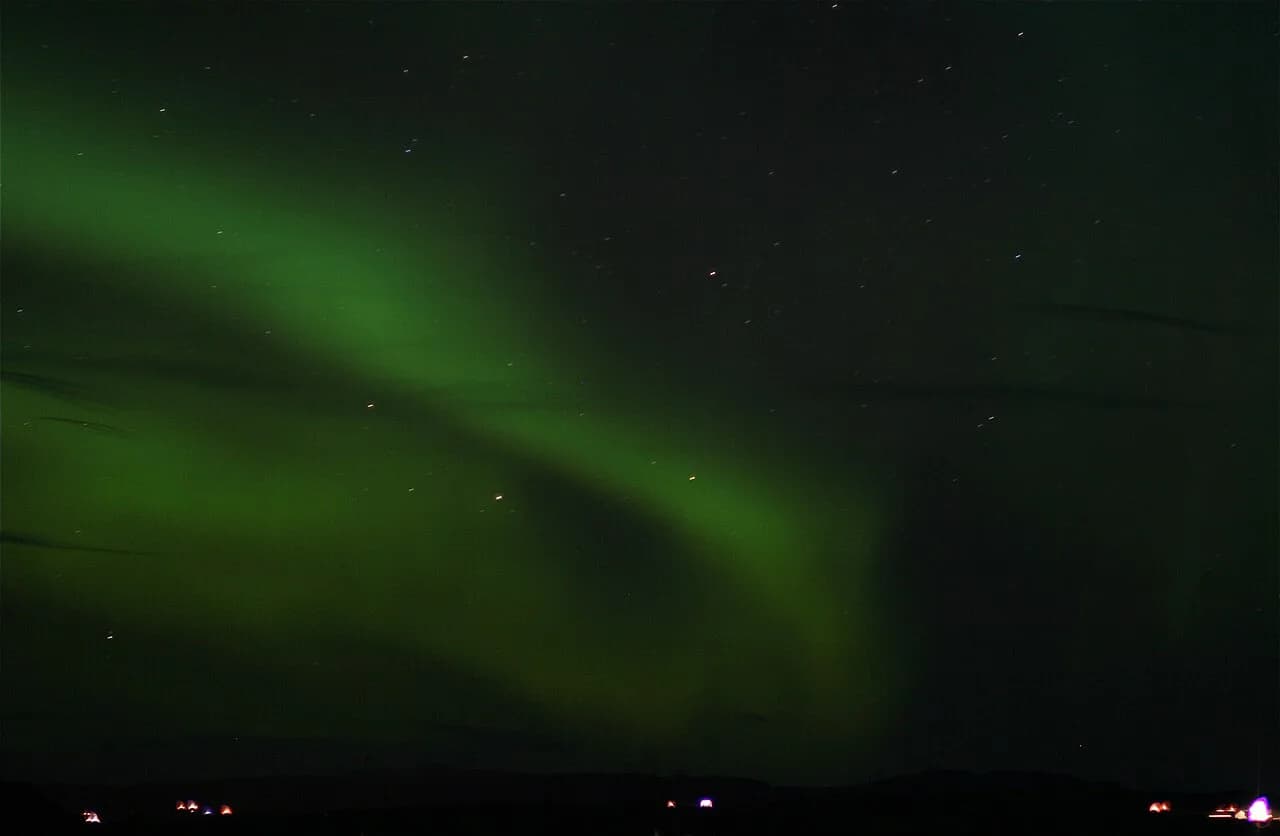
Darkness alone does not guarantee activity, and the aurora is often subtle rather than a vivid ribbon. Guides and forecasters watch cloud cover and solar activity together, which is why a mobile plan beats a fixed one. If you have three or more dark nights in the same region, you can absorb a cloudy one without losing the trip.
Daylight and temperatures from November to March
November is the transition month. Temperatures in Reykjavík typically sit between 0 °C and 5 °C, and daylight falls from around eight hours at the start of the month to about five by the end. Expect a mix of rain, sleet, snow and strong wind, with snow more common later in the month.
December and January are the darkest and shortest months, with the sun barely clearing the horizon around the solstice. That is hard on sightseeing but generous to aurora hunters, who get long evenings without waiting for late night. February and March stretch the days again while keeping nights dark enough for displays.
Plan outdoor sights for the middle of the day and keep afternoons flexible. A waterfall stop, a short coastal walk or a glacier visit fits into the light; the evening then belongs to the aurora or to a pool. Build in one indoor day so a storm does not wipe out the itinerary.
Reykjavík in winter: museums, pools and dark-sky spots nearby
Reykjavík is a practical winter base because everything is close. Museums, cafés and pools sit within walking distance of downtown, and the city card covers galleries, swimming pools and public transport over 48 hours. Perlan, on Öskjuhlíð hill, combines a northern lights planetarium show, a man-made ice cave and a 360-degree observation deck.
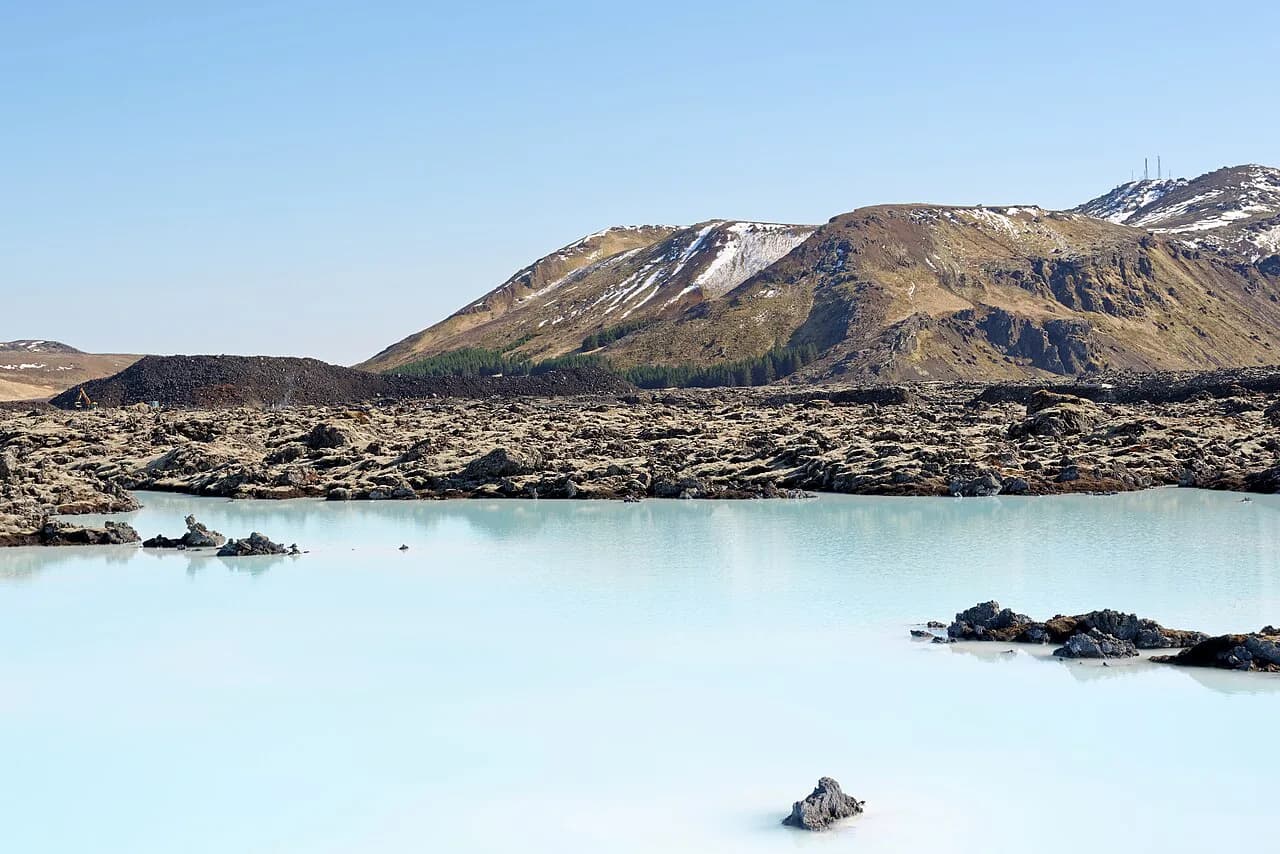
Geothermal pools are the classic winter evening. Sky Lagoon offers an oceanside infinity pool with sauna and cold plunge, Laugardalslaug is the city's largest public pool with hot tubs, and Nauthólsvík mixes hot water with the chilly North Atlantic on a golden-sand beach. The Blue Lagoon near the airport stays open year-round.
The city itself is not a dark-sky site; street lighting washes out faint displays. You need only a short drive, though, and the best spots are on the edges of the capital area. Save the museums for cloudy evenings and keep clear nights for the road.
Where to watch the aurora near Reykjavík
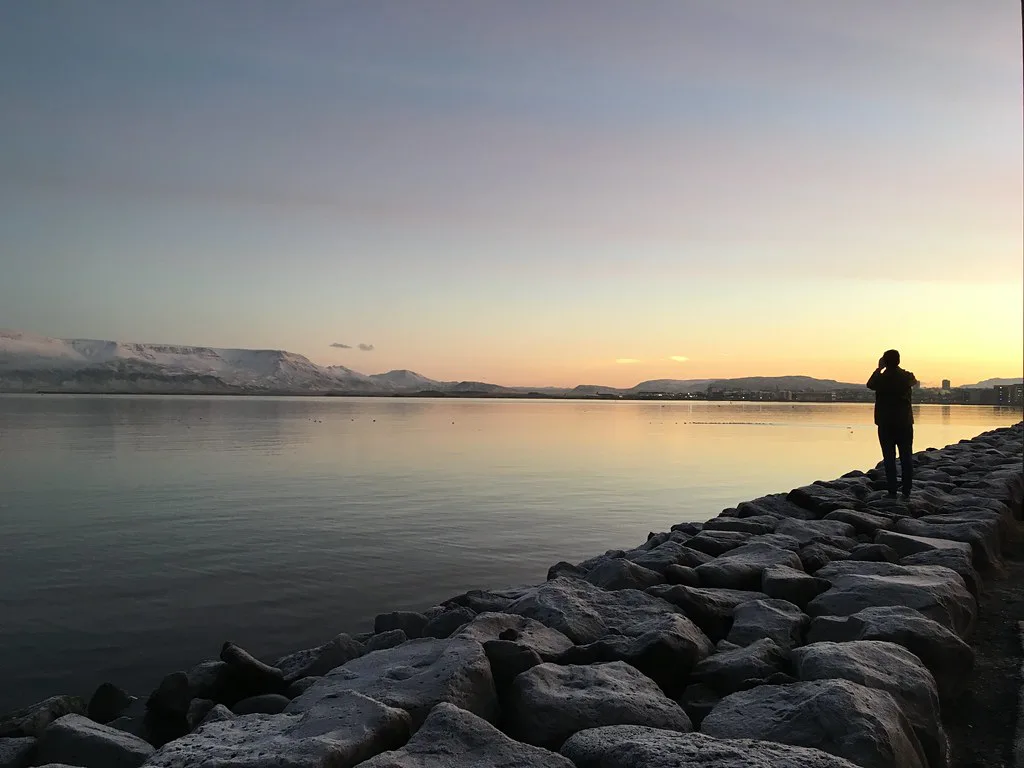
Öskjuhlíð hill, Grótta Lighthouse, Heiðmörk Nature Reserve and the Esja mountain foothills are the standard dark-sky options near the capital. Grótta is a short drive or bus ride from downtown and looks out over open water; Heiðmörk is larger, wooded and darker; the Esja foothills put the city glow behind you.
Arrive before full dark, park where it is safe and legal, and give the sky at least half an hour. Coastal spots like Grótta catch wind and sea spray, so a car with warm seats is an advantage on a cold night. If cloud rolls in, drive inland or along the coast rather than waiting it out in one place.
Aurora Basecamp and the observatory experience
Aurora Basecamp in Hafnarfjörður, reachable from downtown Reykjavík on a short bus ride, is built as a northern lights observatory. It uses two geodesic domes designed to withstand Icelandic winter weather, with low-light heated viewing platforms where you watch the sky with cocoa or tea in hand.
Think of it as a comfortable base rather than a guarantee. The domes protect you from wind and cold, but cloud still decides what you see, and a heated platform does not clear the sky. It suits travelers without a car, families, and anyone who wants a warm place to wait out a display.
Guided northern lights tours versus self-driving
A guided tour removes the two hardest parts of aurora chasing: reading the cloud forecast and driving in winter conditions. Operators track weather and solar activity and can relocate during the evening to find clearer sky, which is a real advantage when cloud sits over one region. Iceland Northern Lights Tours lists options from Reykjavík with those trade-offs in mind.
Self-driving gives you freedom and a lower cost per night, but it puts the forecast and the road conditions on you. Checking the aurora forecast before heading out is basic practice, and so is checking road and weather conditions at road.is and vedur.is. A guided tour is usually the better first-night choice; drive yourself once you know the terrain and the weather pattern.
Ice caves and glacier walks
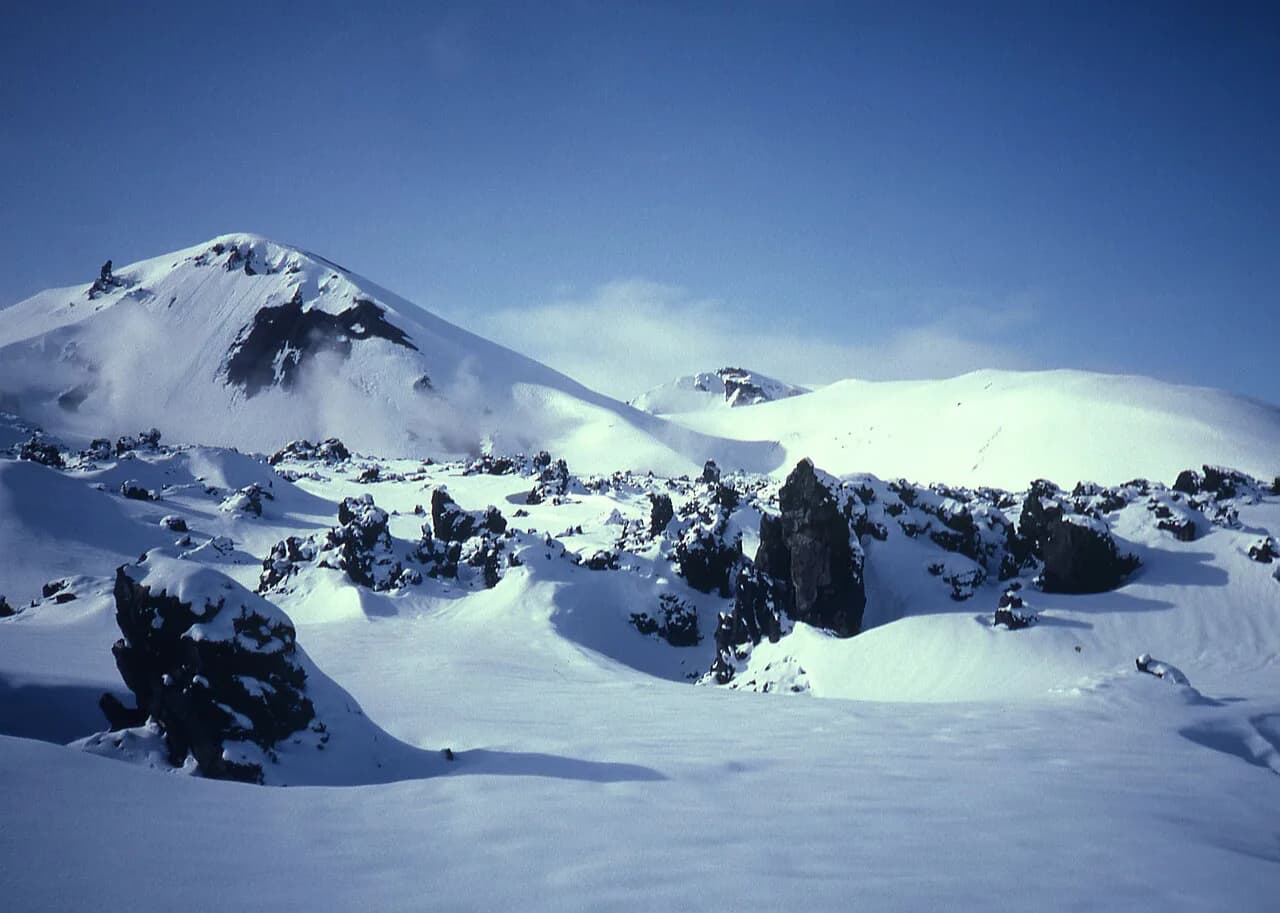
Ice cave season in Iceland begins in November, when certified guides lead visitors into blue chambers inside glaciers such as Langjökull. These are not walk-in caves; you go with a guide, on a tour, with the equipment the tour company supplies. Availability depends on conditions, so the exact caves operating change through the winter, and it is worth checking current prices and dates with the tour company before you book.
Glacier hikes continue through the colder months, and the cooling weather makes conditions on the ice favorable. Guided hikes run on Sólheimajökull and Falljökull and in Skaftafell within Vatnajökull National Park. For a water-level view of the ice, guided kayak tours operate at Jökulsárlón and Fjallsárlón.
Snowmobiling and glacier adventures
As winter settles in, the glaciers become terrain for snowmobiling tours rather than just scenery. Tours run on the ice with guides, and the appeal is covering ground you could never reach on foot in a short winter day. Book these alongside an ice cave or glacier walk rather than stacking two glacier days back to back.
Whale watching also continues in winter from Reykjavík and, in the north, from Húsavík and Akureyri. Sea conditions decide whether a boat goes out, and the short daylight means morning departures give you the best light. If a marine day matters to you, keep it flexible enough to swap with an aurora night. Travelers basing themselves in the north can plan whale watching alongside the aurora with our guide to Akureyri in winter.
Golden Circle and South Coast day trips in winter
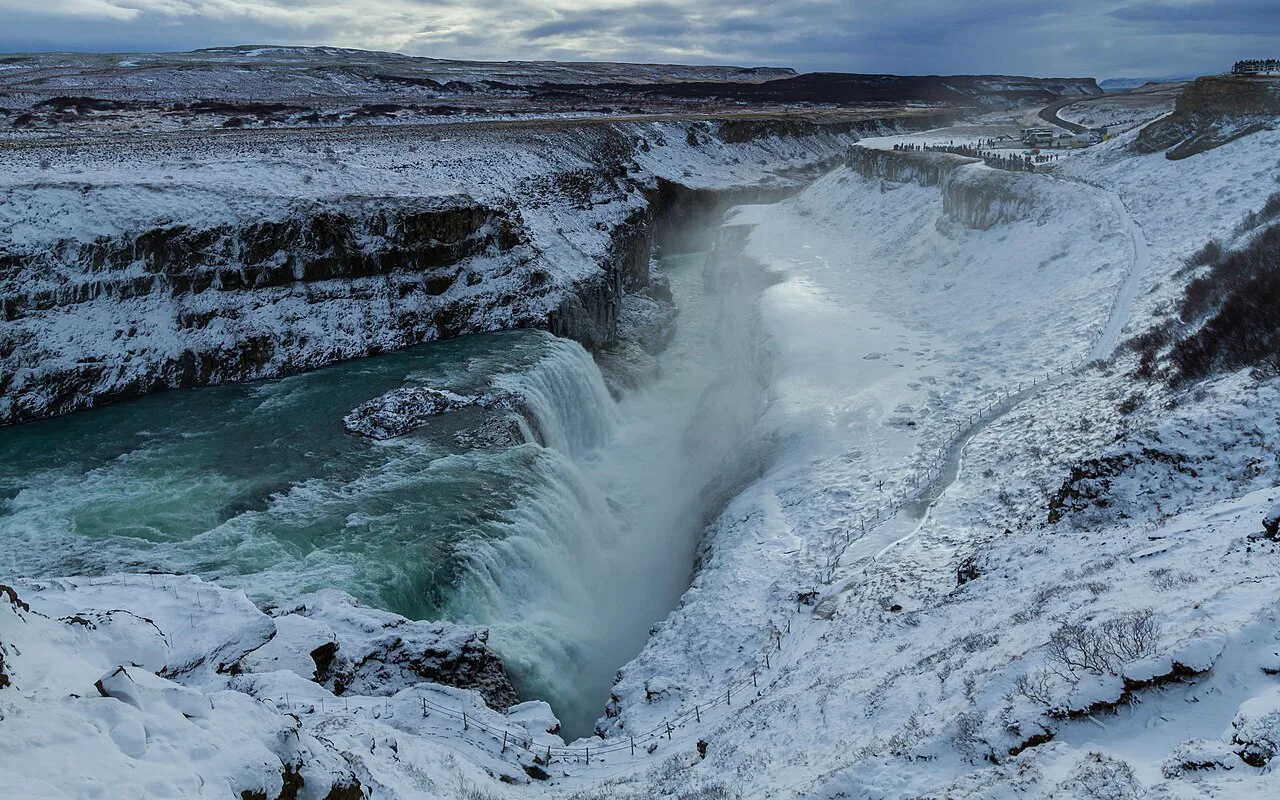
The Golden Circle — Þingvellir National Park, the Geysir geothermal area with Strokkur, and Gullfoss waterfall — remains a manageable winter day from Reykjavík. Some paths, such as those at Gullfoss, can close when ice builds up, so plan to see the falls from the accessible viewpoints rather than counting on a full loop.
The classic South Coast day links Seljalandsfoss and Skógafoss waterfalls, Reynisfjara black sand beach, and the Jökulsárlón glacier lagoon with Diamond Beach. The full run to the glacier lagoon is long for a short winter day, so many travelers split it across two days or overnight near Vatnajökull National Park.
Snæfellsnes Peninsula, often called Iceland in miniature, adds Kirkjufell mountain, Arnarstapi cliffs and fishing villages on a separate loop west of the capital. Choose one long day trip and one short one rather than cramming three regions into a week.
Geothermal pools and lagoons
A geothermal soak works best in winter, when cold air meets warm water and the contrast does the work. Beyond the Blue Lagoon and Sky Lagoon, the Secret Lagoon in Flúðir suits travelers driving the Golden Circle and wanting a simpler, smaller pool stop. Pair it with a geothermal area such as Seltún in Krýsuvík for a full day of steam and hot water.
Natural hot springs such as Hrunalaug and the pools at Laugarnes in Birkimel offer a rawer setting, while Hvammsvík combines geothermal pools with a dip in the Atlantic. Check access and conditions locally, since natural springs have no staff or facilities. A pool evening fits neatly before an aurora drive, since you are already warm and awake.
Winter festivals and Christmas traditions
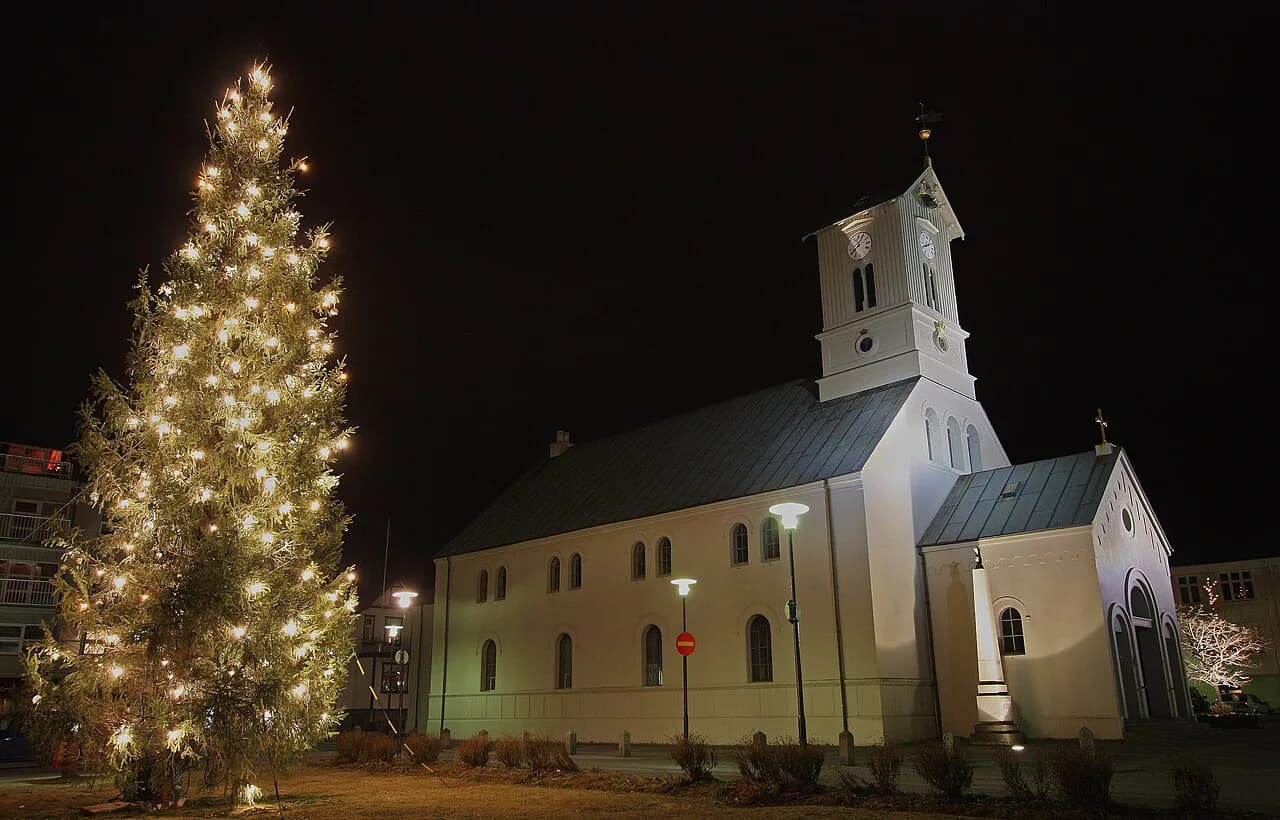
Christmas is Iceland's biggest holiday, and the month-long festivities are a deliberate answer to the dark. The thirteen Yule Lads, their troll mother Grýla and the Yule Cat fill the folklore, and children leave shoes in the window over the thirteen days before Christmas. Downtown Reykjavík is decorated with lights, and book-giving peaks in the annual Christmas book flood.
Restaurants in Reykjavík generally stay open through winter but hours vary around the holidays, and booking ahead is advised for 24, 25, 26 and 31 December and the first days of January. Grocery stores typically close at noon on 24 December and stay shut on the 25th, with similar patterns around New Year. Fireworks over the capital on New Year's Eve are visible from hills and high points such as Hallgrímskirkja.
In November the city fills with culture instead: Iceland Airwaves brings live music to downtown venues, alongside the Reykjavik Dance Festival and the RAFLOST electronic arts festival. Hafnarfjörður, a short bus ride away, holds a Christmas village during Advent with crafts, hot drinks and visits from the Yule Lads.
How many nights to allow for a fair chance of clear skies
Give the aurora at least three nights in one region, and five if the aurora is the main reason for the trip. Cloud is the limiting factor in Iceland far more often than solar activity, and a single night leaves you exposed to one bad forecast. Nights in the same base also save you from repacking and re-driving between regions.
A workable winter week looks like this: three or four nights in Reykjavík for city days, a Golden Circle day and aurora attempts; two nights on the South Coast for waterfalls, the beach and a glacier or ice cave day; and a final night near the airport. If you have ten days, add the glacier lagoon and Skaftafell, or a Snæfellsnes loop.
Keep one night unbooked in spirit even if the hotel is fixed. If the forecast is poor where you are and clear two hours away, a tour or a drive can rescue the evening, and a rigid plan cannot. The best winter itineraries leave room for that decision.
Driving, roads and weather in winter
Main roads such as the Ring Road are usually in good condition in early winter, and a two-wheel-drive car is generally enough for the Golden Circle and South Coast. Highland F-roads need a proper four-wheel drive, and early September is often the last window before seasonal closures, so highland detours are not a winter option.
Check the forecast at vedur.is and road conditions at road.is before setting out, and leave extra time for weather delays and short daylight. Winter weather can shift from sun to wind and snow within a day, and the highlands change fastest. A flexible itinerary is not a luxury in Iceland; it is the plan.
Operators who run glacier, ice cave and snowmobile tours lend thermal suits and boots where needed, which saves luggage space but does not replace your own warm layers. Confirm meeting points and pickup times when you book, since winter departures often start before full daylight.
Who winter in Iceland suits, and who it does not
Winter suits travelers who value the aurora, ice caves and hot pools over long hikes and full-day road trips. It rewards people who can stay flexible, book a few nights in one place and treat a cloudy evening as an excuse for a museum or a lagoon. Photographers get low sun, blue ice and long exposures after dark.
It suits less well anyone who needs long daylight, predictable driving and guaranteed outdoor plans. Highland hiking, interior F-roads and many long-distance drives are off the table, and a storm can cancel a tour. If your priority is the Ring Road in easy conditions, plan for summer instead.
Plan Your Winter Trip
Build the trip around dark nights rather than daylight hours: three to five aurora nights in one base, one glacier day, one Golden Circle or South Coast day, and a pool evening to break up the cold. Book the fixed pieces early, especially around Christmas and New Year, and leave the aurora nights movable.
Watch the aurora and weather forecasts through your stay and take the clear night when it comes. No forecast can promise a display, but more nights, a car or a guided tour, and a spot away from city lights give you the best chance Iceland's winter can offer.
Frequently Asked Questions
Can you see the northern lights in Iceland in winter?
Yes, winter is the main aurora season because the nights are long and dark. Sightings still depend on solar activity and clear skies, so plan several nights and stay flexible about where you drive or which tour you join.
How many hours of daylight does Reykjavík get in winter?
Daylight falls from around eight hours at the start of November to about five by the end of the month, and shortens further toward the December solstice, when the sun is above the horizon for only around four hours. February and March lengthen the days again.
What is the weather like in Reykjavík in November?
Temperatures typically range from 0 °C to 5 °C, with rain, sleet, snow and strong wind, and the weather can change quickly within a single day. Snow becomes more common later in the month.
How cold is Iceland in winter?
Coastal areas including Reykjavík stay relatively mild for the latitude, typically around freezing to a few degrees above, while wind makes it feel colder. The highlands and glaciers are significantly colder and snow-covered.
Can you drive the Golden Circle in winter?
Yes, the Golden Circle is a manageable winter day from Reykjavík, and a two-wheel-drive car is usually enough on main roads. Some paths, such as at Gullfoss, can close when ice builds up, so check road and weather conditions before you set out.
How many days do you need in Iceland in winter?
Aim for at least five days, with three or more nights given to the aurora in one base, and a week if you want the South Coast and a glacier day as well. More nights improve your odds of catching a clear sky.
Can you visit the Blue Lagoon in winter?
Yes, the Blue Lagoon is open year-round, and the cold air makes the warm water more inviting. Book ahead, especially around the holidays; check current hours and conditions before you go.
Is winter a good time to visit Iceland?
Winter is excellent for the aurora, ice caves, glacier walks and geothermal pools, and it is quieter than summer. It is less suited to long hikes and highland drives, so choose it if dark nights and winter activities appeal more than long daylight.
Sources
Notes for your Arctic winter trip
Optional updates to our northern lights guides.
You might also like

Continue reading
More guides you'll find useful