Driving in Iceland in Winter: Routes and Road Conditions
Plan a winter self-drive in Iceland: which roads stay open, when a 4x4 helps, how short December days get, and how to stay flexible when storms close routes.
On this page
A winter self-drive in Iceland hands you the one thing aurora travel rewards most: the freedom to move when the sky clears. Instead of a fixed coach timetable, you decide at breakfast whether to head east along the south coast or stay near Reykjavík and try again tomorrow. It suits travelers who are confident behind the wheel, comfortable changing plans and happy to treat weather as the real itinerary.
The trade-off is that winter puts the planning in your hands. Snow, ice and ferocious wind can rewrite a route between one forecast and the next, and the days around midwinter are short enough that every stop eats daylight. Read on for how the regions, the car choice, the light and the road reports fit together into a trip that gives you the best realistic shot at the northern lights in iceland.
Why a winter self-drive suits Iceland
Iceland sits just south of the Arctic Circle, which is why its winter nights are long and dark enough for aurora displays from roughly September through March. Driving yourself means you can leave a lit town in the evening, wait out a cloudy patch and try a different valley the next night rather than accepting a single fixed departure. That flexibility is the real argument for a rental car in aurora season, more than any single sight.
Weather stays the planner, though. Conditions can flip from blue sky to a storm that cuts visibility within minutes, so a good car and a willingness to turn back matter more than a long wish list of stops. A self-drive trip works best when you pick a compact loop and accept that one or two days may be spent waiting out a front rather than ticking off waterfalls.
When the aurora season runs
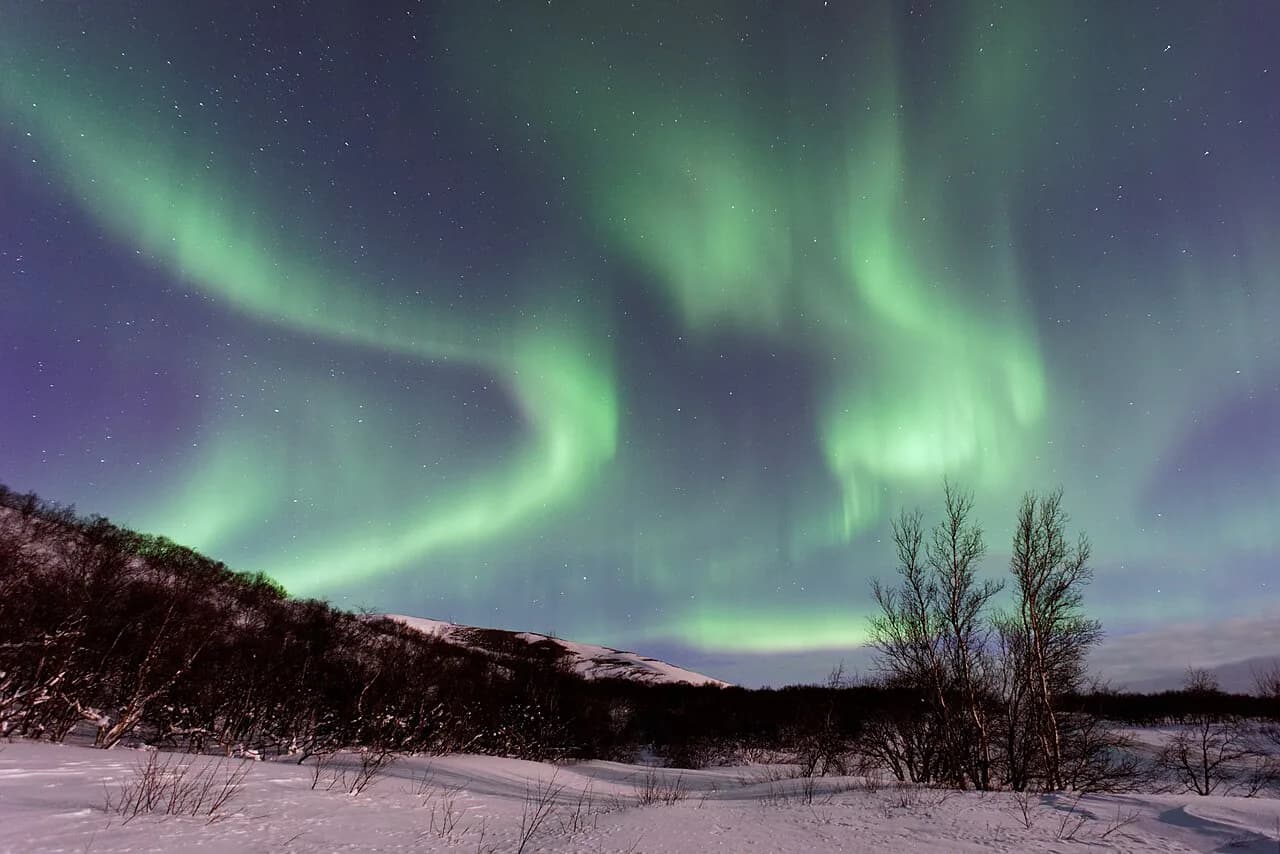
Aurora viewing depends on dark nights, clear skies and solar activity, and Iceland's winter delivers the darkness generously. The best time to see the northern lights in iceland falls in the deep-winter months when nights are longest, though any clear evening from autumn into early spring can produce a display if activity picks up. Plan to give yourself several nights rather than betting the trip on one, since cloud cover more than anything else decides whether you see anything.
Kp forecasts are a rough guide to how far south activity may reach, not a promise for a given night. On a clear night away from town lights you may see a faint arc even at low activity, while a high Kp number under thick cloud shows nothing at all. Use the forecast to choose which nights to drive out and which to save for a lagoon soak.
Which regions to drive in winter: Reykjavík, the Golden Circle and the South Coast
For a first winter trip, the safest and most rewarding triangle is Reykjavík, the Golden Circle and the South Coast as far as Jökulsárlón Glacier Lagoon. A car-hire company advised that these are the easiest roads to drive in winter, and even so a driver can meet long icy stretches on the way east. Jökulsárlón sits roughly a five-hour drive from Reykjavík in reasonable conditions, which makes it a sensible eastern limit rather than a day-return.
Þingvellir National Park and the rest of the Golden Circle are close enough to Reykjavík for a day trip, and the South Coast stacks Seljalandsfoss, Skógafoss, Reynisfjara and Vík along one road. The Snaefellsnes Peninsula and the area around Akureyri stay accessible in winter too, offering dark, open skies away from the capital. Spreading yourself across the whole country in a short winter trip usually means more driving than sightseeing.
Roads that close or turn unreliable
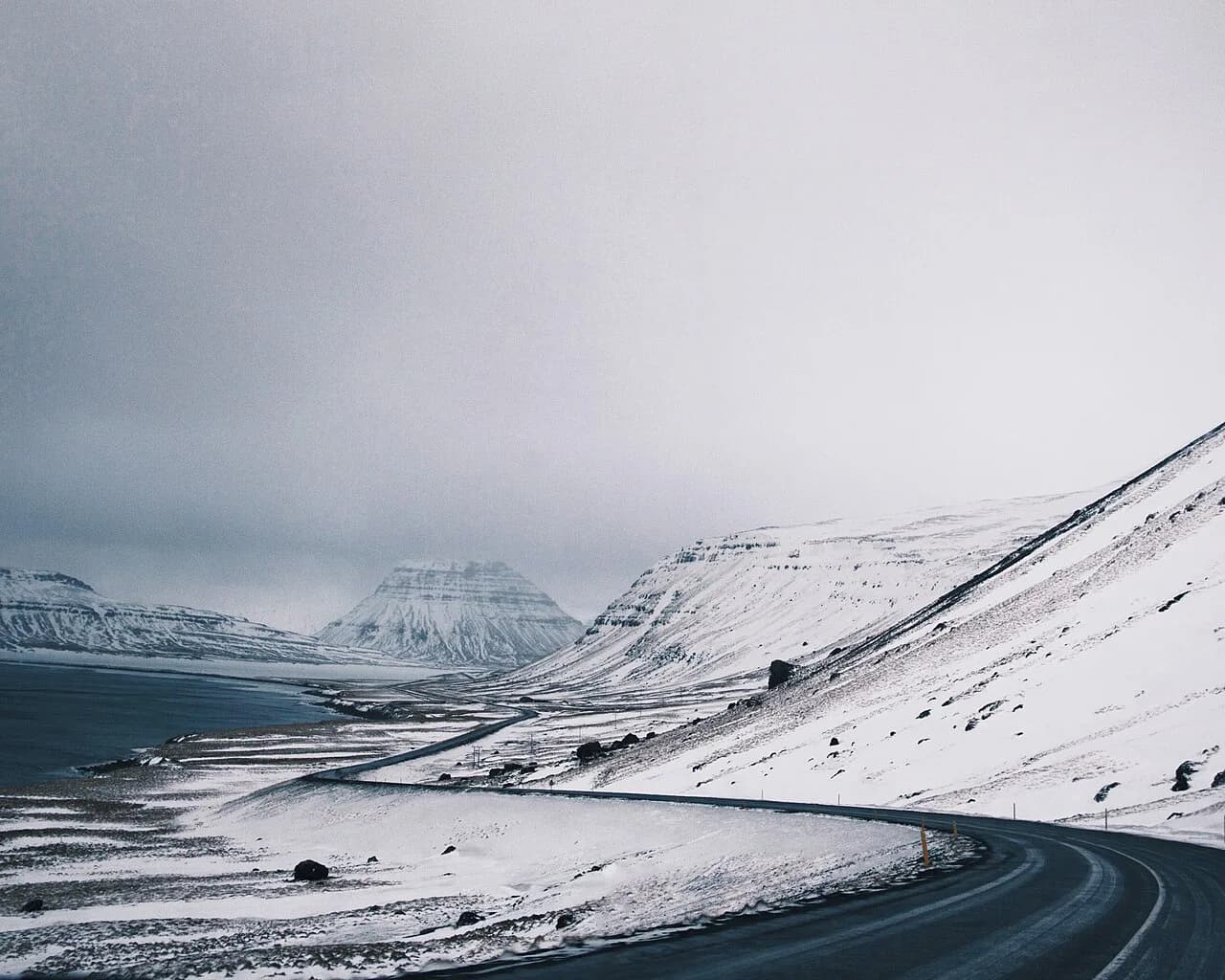
All highland F-roads are closed from late autumn until summer, so the interior is off the table for a winter self-drive. The Westfjords and Eastfjords also see frequent temporary closures from snowdrifts and avalanche risk, and mountain passes and heaths on Route 1 can shut in bad weather. Even when the Ring Road stays open, secondary and gravel roads may be impassable after a storm or a freeze-thaw cycle.
If this is your one trip to Iceland and you have a long list of remote sights, winter will force hard choices: the famous highland and fjord detours simply are not part of the season's road network. Build your route around the paved south and west, where plows keep the main roads passable, and treat anything beyond as a bonus if conditions allow. That constraint is also why winter suits a short, focused loop rather than a full circumnavigation.
Choosing a car: 4x4 versus compact, winter and studded tyres
If you stay in Reykjavík and the Golden Circle with a few days to pick a good weather window, a compact car with winter tyres is enough. Once you head out along the South Coast, a larger 4x4 is the more comfortable choice: it is buffeted less by crosswinds, sits higher on icy roads and feels sturdier in blowing snow. Winter or studded tyres are mandatory on rentals from November to April, and studded tyres were all one winter road trip needed, with no snow chains required.
Rental costs in winter can be surprisingly modest: one driver paid just under US $31 a day for a 4x4. Budget separately for insurance, because the collision damage waiver usually carries a high excess and the policy sold at the counter can cost more than the car itself. Third-party insurance is a legal requirement, so check that it is included in the quoted price before you book, and consider a standalone excess policy bought in advance.
December daylight and how it shapes each driving day
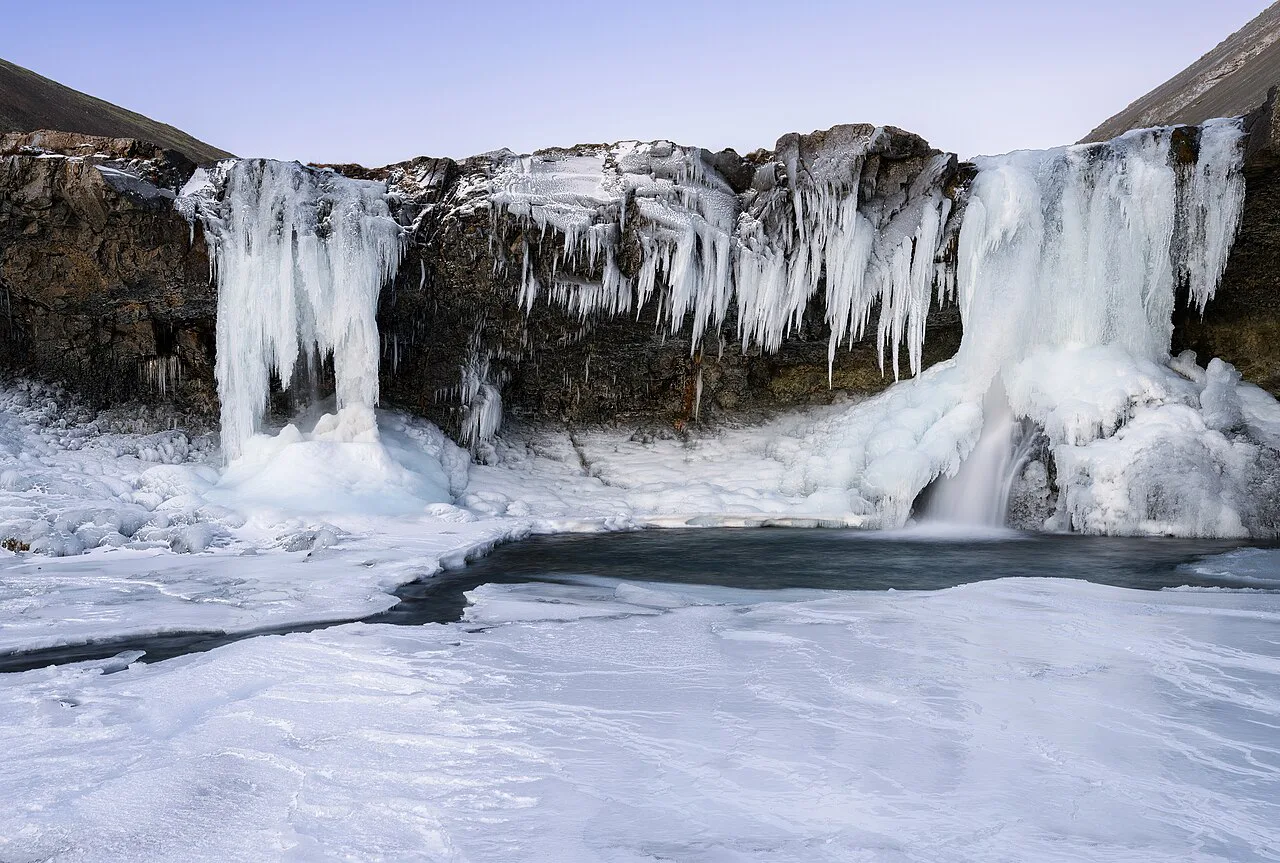
Around the winter solstice, daylight in Iceland collapses to roughly four to five hours, with sunrise near 11:00 and sunset near 15:30; some drivers report only three to four hours of usable light. That turns the short day into a routing constraint: you cannot count on a leisurely breakfast and still cover a long leg in daylight. Plan the driving for the brightest hours, keep optional stops to one or two and save the dark hours for hot springs or aurora watching.
The upside of a short day is a long night, and the low sun sits near the horizon for hours, giving a permanent golden light over snow-covered lava fields and frozen waterfalls. That soft light is one of the reasons a December self-drive looks so good in photographs. Just budget more time than the map suggests for each leg, since icy roads can add an hour or more to a drive that looks straightforward.
Driving in wind, ice and blowing snow
Speed limits are modest to begin with: around 30–40 km/h in towns, 80 km/h on gravel roads and 90 km/h on paved rural highways, and winter conditions mean driving well below those. Headlights must be on at all times, even in daylight, and you should use gentle steering and braking so the tyres keep their grip on packed snow. Never stop on the roadside except in an emergency, and pull into a marked lay-by if you want to take photos.
Wind is the hazard drivers underestimate. On a clear, sunny day it can still push a car sideways on exposed bridges, open plains and coastal stretches, and a rental company reported cars whose doors had been torn off in gusts. Hold the wheel firmly, slow down and keep a hand on the door whenever you get out. Allowing extra time and keeping your distance from the car ahead costs nothing and buys you margin.
If ice or blowing snow makes you uneasy, remember that all the roads you use in winter are paved and patrolled by snowplows, though snow can pile up again before the plow returns. Keeping a steady, unhurried pace and planning fuel stops around the limited stations outside the main towns keeps a winter day manageable.
Reading the road and weather picture before each leg
Make checking conditions a morning habit rather than a one-off. The Icelandic Meteorological Office at vedur.is gives region-by-region forecasts, wind and temperature maps and storm alerts, while the Icelandic Road and Coastal Administration at umferdin.is shows live road conditions, webcams and closures. SafeTravel adds travel alerts and lets you register a travel plan so rescue teams know if you fail to arrive.
The road map shows conditions along the whole route, which matters when the weather looks fine at both your start and your destination but is poor in between. The site also warns ahead of time when a road is due to close for forecast bad weather. Keep the 112 Iceland app on your phone, note that 112 is the emergency number, and download offline maps so a dead signal does not leave you navigating by guesswork.
Your GPS is not a substitute for judgment: phone maps often pick the shortest route and can send you toward a closed mountain pass. Cross-check directions against a paper map and the official road view before setting out, and treat any forecast of high wind or heavy snow as a reason to shorten the day.
Building flexibility into hotels and tours when a route closes
Storms can close a road for a day or more, and the smart move is to see it coming rather than fight it. One couple spotted that the road to Vík would be shut for almost 24 hours and rescheduled both an ice-cave tour and their accommodation; hotels moved the booking by a day at no extra cost and offered a late checkout when the reopening slipped. The following day they passed abandoned cars and vehicles that had slid off the road.
Book accommodation with free cancellation where you can, keep one buffer night on a long south-coast run and choose tours that allow rescheduling. If winter driving sounds daunting, self-drive packages with local support and guided multi-day tours move the weather decisions to someone else. Either way, leave slack in the itinerary, because a closed road is a postponement, not a disaster.
Where to stop for dark skies between Reykjavík and Jökulsárlón
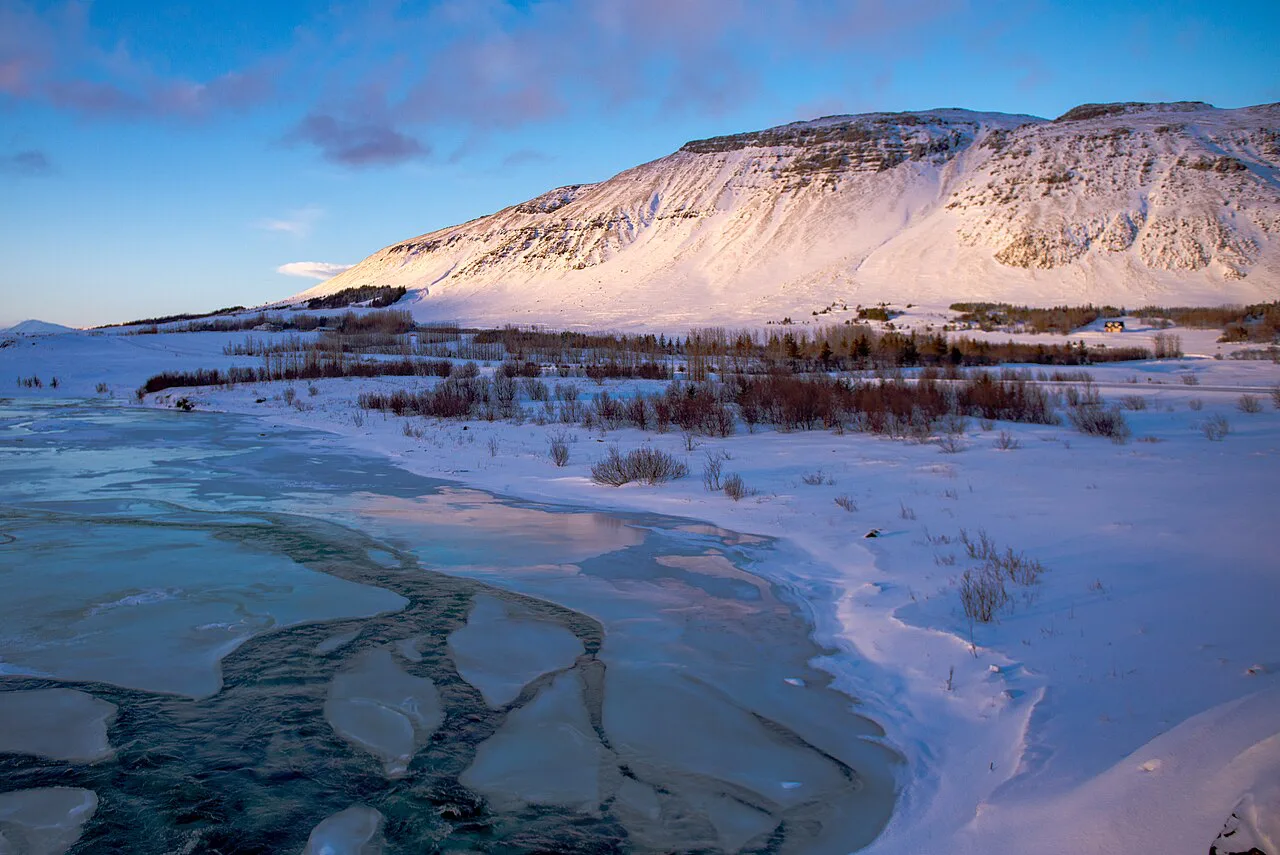
Away from Reykjavík's glow, the south coast offers plenty of dark-sky pauses. Þingvellir National Park, the Snaefellsnes Peninsula and the country around Akureyri all have open skies and stay reachable in December. On the south coast, the black-sand stretch at Reynisfjara near Vík and the open farmland between Skógafoss and Jökulsárlón give you room to pull into a lay-by and look up without town lights in the frame. For spotting tips and timing once you are based there, see this guide to the northern lights in Vík.
Grótta lighthouse, on the edge of Reykjavík, is a handy fallback when you want a short hop from the city and a clear view over the North Atlantic. Nearer the Golden Circle, the Secret Lagoon in Flúðir and the Sky Lagoon south of Reykjavík give you a warm pause while you wait for cloud to break later in the evening. None of these spots guarantees a display, but each takes you away from the worst of the light pollution.
How many nights to allow for a fair chance of clear skies
Aurora sightings depend on solar activity and clear skies, so the only reliable strategy is more nights. One Iceland guide estimates that three nights give you a 58% to 83% chance and five nights raise that to 76% to 95%, and its survey of trip lengths suggests five nights if the lights are the main reason for coming. Treat those figures as planning guidance rather than a promise, because an overcast week can still produce nothing.
A practical winter minimum for an Iceland trip is around four days, but if you plan to chase along the south coast, five nights or more lets you absorb a storm day and still have clear nights left. The December median cost for self-drive tours was quoted at 26,367 ISK per person per day, which helps frame how much flexibility you can afford. More nights near two or three different bases improves your odds of finding a gap in the cloud.
When a guided tour beats self-driving
Self-driving is not for everyone, and a guided northern lights tour shifts the road decisions to a driver who knows the local weather patterns and can reroute at short notice. Many Iceland northern lights tours include transport and often lend thermal suits, so you can stand outside comfortably without hauling extra kit. If you are nervous about ice, or only have two or three nights, a tour concentrates your chances without the stress of driving in a storm.
A good compromise is to self-drive the scenic south coast by day but book at least one guided evening tour, so a local can make the call on where the sky is clearest. Visit Reykjavík anchors most tour departures, which keeps the city an easy base for a short trip. Whichever you choose, keep at least one spare evening free in case the first attempt meets cloud.
Plan Your Trip Around the Weather
A winter self-drive in Iceland rewards the traveler who plans a short, flexible loop around the south and west rather than trying to see everything. Choose a 4x4 if you are heading past the Golden Circle, build days around four to five hours of December light, and budget extra time for ice and wind so the driving never becomes the day's only story.
Above all, keep a couple of nights unplanned and watch the road and forecast picture each morning. The aurora is never guaranteed, but a flexible trip with dark-sky stops between Reykjavík and Jökulsárlón gives you the best realistic chance of being in the right place when the cloud breaks.
Frequently Asked Questions
Is it difficult to drive in Iceland in winter?
The main south and west routes are paved, plowed and signed, so a confident driver who keeps speeds down can handle them. The challenge is ice, crosswinds and fast weather changes, which is why a sturdy car, winter tyres and an unhurried daily plan matter more than raw driving experience. The Icelandic Road and Coastal Administration publishes live conditions for each leg before you set out.
Do you need a 4x4 to drive in Iceland in winter?
Not for Reykjavík and the Golden Circle, where a compact car with winter tyres is enough if you have room to pick a decent weather window. For the South Coast toward Vík or Jökulsárlón, a larger 4x4 is steadier in crosswinds and more comfortable on icy roads. Winter tyres are fitted on rentals through the cold months regardless of the vehicle class.
How many hours of daylight are there in Iceland in December?
Around the winter solstice you get roughly four to five hours of daylight, with sunrise near 11:00 and sunset near 15:30. Some accounts put usable light closer to three to four hours. Plan each driving leg for the brightest part of the day and keep optional stops short so you are not navigating unfamiliar roads in the dark.
Can you see the northern lights while self-driving in Iceland?
Yes, and a car is an advantage because you can move away from town lights and try a different valley when cloud sets in. Sightings still depend on solar activity and clear skies, so plan several nights and treat the aurora forecast as guidance rather than a schedule. Dark, open stretches such as Þingvellir, the Snaefellsnes Peninsula and the south-coast farmland give you room to pull over safely.
What happens if a road closes during an Iceland winter trip?
Road closures are usually flagged a day ahead on the road authority's map, which gives you time to rebook accommodation and shift tours to the next day. Hotels along the main routes are used to winter disruption and can often move a booking at no extra cost. Keep one buffer night on long south-coast drives and choose cancellable rooms so a closure becomes a delay rather than a lost day.
Sources
Notes for your Arctic winter trip
Optional updates to our northern lights guides.
You might also like

Continue reading
More guides you'll find useful