Finnish Lapland Winter Itinerary: 3, 5 and 7 Days
Build a Finnish Lapland winter itinerary around Rovaniemi, with aurora nights, husky safaris, snowmobiling and Santa Claus Village, plus how long to stay.
On this page
Finnish Lapland gives you a compact Arctic winter trip: a town base with flights, trains and activities on the doorstep, and dark forests and fells within easy reach for aurora nights. Most first trips centre on Rovaniemi, which sits right on the Arctic Circle, and work outward from there. It suits travelers who want a few nights rather than a week, and who would rather pair an aurora watch with a dog-sled run than commit to a full expedition.
The smart approach is to plan around dark-sky chances first and slot daytime safaris into the gaps, rather than the other way round. Every extra night at a northern latitude is another roll of the weather dice, so 3, 5 and 7 days are really three different numbers of aurora attempts. The structure below shows what each length buys you and where the trade-offs sit.
Why Finnish Lapland suits a short winter itinerary
Lapland as a region covers the northernmost parts of both Finland and Sweden, and its location above the Arctic Circle is what makes winter aurora viewing and snowy landscapes its signature. Rovaniemi, the Finnish regional capital, sits beside the Arctic Circle line and is best known as the home of Santa Claus at Santa Claus Village. That combination of a functioning town with air links and wilderness minutes away is what makes a short trip work.
Between excursions you can choose from reindeer sledding, snowmobiling, ice fishing and snowshoeing, so a short stay never feels thin on things to do. The Sami culture of the region adds another layer for travelers who want more than adrenaline. The practical payoff is that you do not need to string together several bases to fill three or four days.
How far north you are and what that means for aurora nights
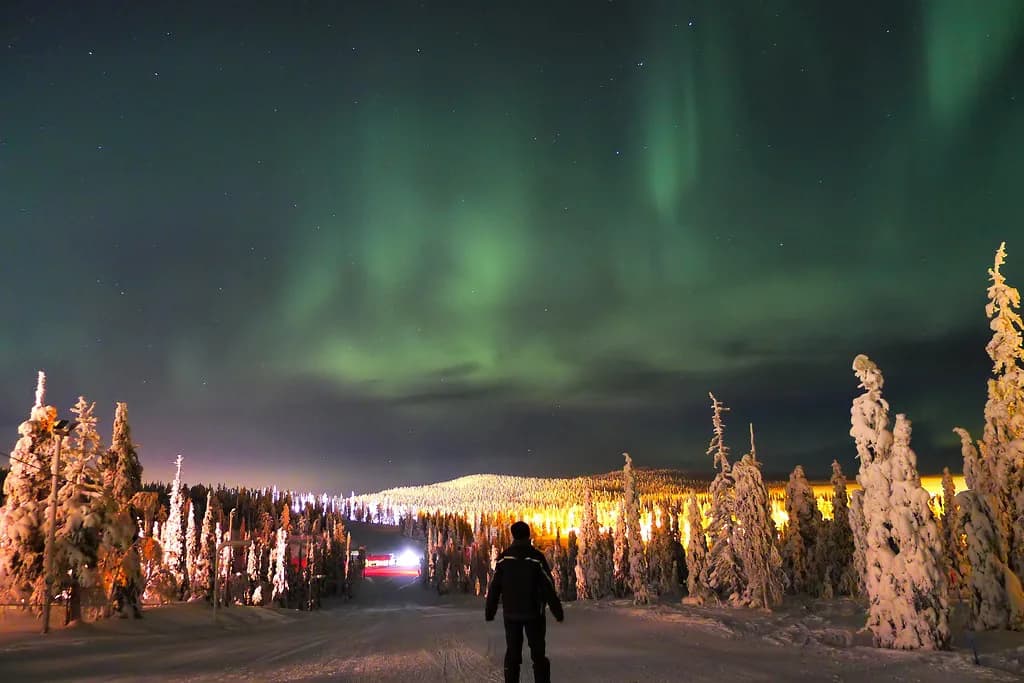
Rovaniemi sits on the Arctic Circle, and Finnish Lapland runs considerably further north toward the fell country, so a trip based here is already in the latitude band where aurora nights make sense through the dark season. The display itself depends on solar activity and on clear skies; no itinerary can schedule one. Think in terms of chances rather than a guaranteed hit, and judge any plan by how many dark, cloud-free hours it puts you under. Kp readings are useful as guidance only.
In practice that means keeping several nights flexible and being willing to travel a short way for clearer sky. Tour operators track conditions and routinely drive out of town to find gaps in the cloud. A forecast check in the afternoon tells you whether to hold your reserve night for a chase or spend it on a sauna, so leave that decision open.
When to go: season, daylight, snow and temperatures
December to March is the classic window for a Lapland winter holiday, when snow cover and aurora displays are at their best, and it is also when the ice and snow hotels welcome guests. Across the peak season of December to February, expect an average temperature range of roughly minus 16 to 3 Celsius depending on location, with occasional drops to minus 30 or colder once wind chill is counted in. The dry air softens the feel of those lows. Snow cover typically lasts around 175 to 225 days a year, roughly from mid-October to mid-May.
Christmas and New Year are the busiest, most festive and most expensive weeks, while February and March tend to be quieter and suit travelers who would rather avoid the crowds around the holidays. Nordic Visitor's shorter northern lights packages also run earlier in the season, from September to November, when nights are long and dark but the snow cover is thinner. If your priority is the aurora rather than a white Christmas, aim for February or March and give yourself more than one night.
Getting there and the Rovaniemi–Kemi rail link
There are few direct flights from most overseas airports into Lapland, so plan to connect through Helsinki for Finnish Lapland or Stockholm for Swedish Lapland; both capitals are served by a range of international and regional airlines, and the domestic feeder routes are often sold as part of one booking. From Helsinki-Vantaa the connection to Rovaniemi is straightforward and lets you land in the Arctic early in the day.
Once inside the region, rail links between some towns are good: Rovaniemi and Kemi are connected by train through VR, and on the Swedish side Kiruna and Abisko are connected through SJ. English works comfortably in the popular destinations, so language is not a planning constraint. The key point for a short itinerary is that you can use the train to add a second base without hiring a car.
A 3-day itinerary: aurora night plus one daytime safari
Three days gives you two nights and one full daytime block, so use the first evening for an aurora chase and the second for a husky or snowmobile safari, or swap them depending on the forecast. Day one is arrival and settling in, with a short walk to a dark edge of town after dinner if the sky is clear. Day two is the safari in daylight and the guided chase after dinner. Day three is a slow morning at Santa Claus Village before you fly out. Nordic Visitor's 4-day, 3-night Rovaniemi packages in the September to November window start from 1,072 EUR per person and typically include accommodation, activities, transfers and breakfasts.
The trade-off is clear: two nights is one bad-weather system away from no aurora at all, so treat three days as a taster rather than a serious chase. If you can, shift the arrival to mid-morning so day one still leaves room for something active. A guided chase is worth the money on a short trip because the guide does the driving and knows the local road network.
A 5-day itinerary: two aurora chances and a snow hotel night
Five days, four nights, is the sweet spot for most first trips: it gives you three real aurora chances and room for two daytime activities without rushing. Day one is arrival and a self-guided dark-sky walk. Day two is a husky safari and an evening chase. Day three is the Sampo icebreaker or a snowmobile route, with a night in a snow hotel or a warm cabin depending on your appetite for cold. Day four is Santa Claus Village and a sauna. Day five is departure. If you would rather lock down the day-by-day order before booking anything, this Rovaniemi winter itinerary shows how a shorter three-to-five-day version fits together. Nordic Visitor's Best of Lapland Classic - Rovaniemi package runs five days and four nights in December to March from 2,116 EUR per person, with accommodation, activities, transfers and breakfasts included.
Five days is enough to absorb one lost night without wrecking the trip, which is the real reason to choose it over three. If a snow hotel night is on your list, take it on the middle night and keep a warm cabin for the others so you are rested for the late chase. The Arctic SnowHotel features in Nordic Visitor's four-day, three-night Rovaniemi package from 2,657 EUR per person, which is a useful benchmark for how much the ice-and-snow element adds.
A 7-day itinerary: adding Kiruna and Abisko by rail
A week lets you add a second base in Swedish Lapland without losing the aurora thread: Kiruna is Sweden's northernmost city, and nearby Abisko National Park is home to the Aurora Sky Station. The train between Kiruna and Abisko makes a rail-based extension realistic. You spend the middle of the week in a cabin near Kiruna, ride out to Abisko for an aurora night, and come back south with time to spare. Nordic Visitor's Kiruna Cabin Getaway & Northern Lights runs four days and three nights in December to March, which gives a sense of the cost of a cabin-based Swedish leg.
The trade-off is weather: adding a base does not multiply clear skies, but it does give you different cloud regimes and a mountain backdrop that town-based watching cannot match. The ICEHOTEL is the other obvious draw in Kiruna, and Nordic Visitor's Classic Lapland Adventure & ICEHOTEL runs five days and four nights from December to March. Book the rail legs early because the winter services fill in the holiday weeks.
Choosing activities: husky, snowmobile, reindeer and ice fishing
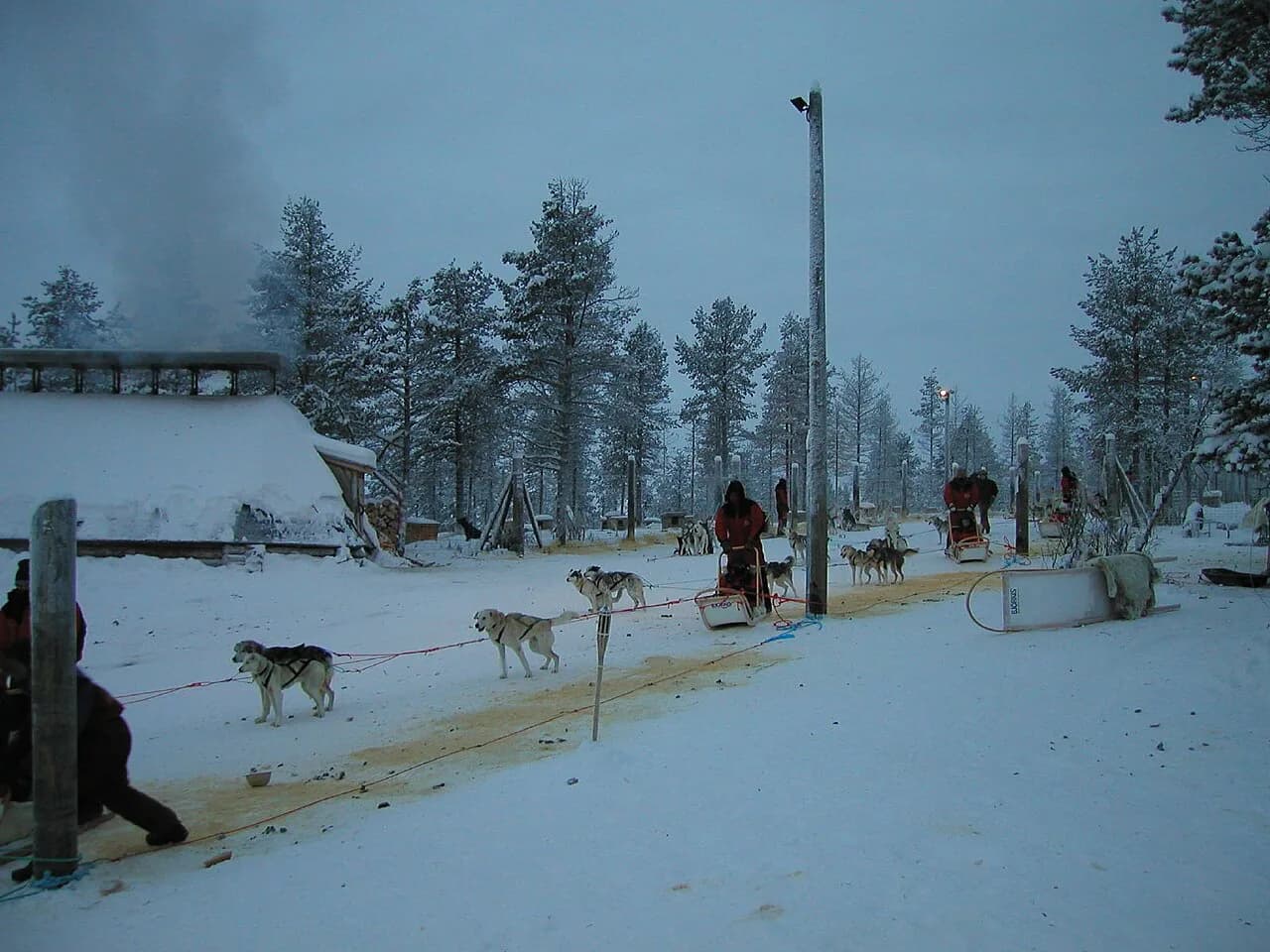
Husky sledding and snowmobiling are the two headline safaris, with reindeer sleigh rides and ice fishing as slower alternatives; all of them are winter daytime activities, so they never compete with a clear night. On a five-day trip, pick one fast safari and one slow one rather than filling every slot. Book the safaris you care about in advance, because availability on the popular ones tightens in the peak weeks.
For local color, a reindeer farm visit introduces the daily life and traditions of the Sami, and food lovers can seek out slow-cooked dishes such as souvas and locally caught Arctic char. These sit well alongside a northern lights chase, because they finish before the late-evening departure.
Santa Claus Village and Christmas and New Year timing
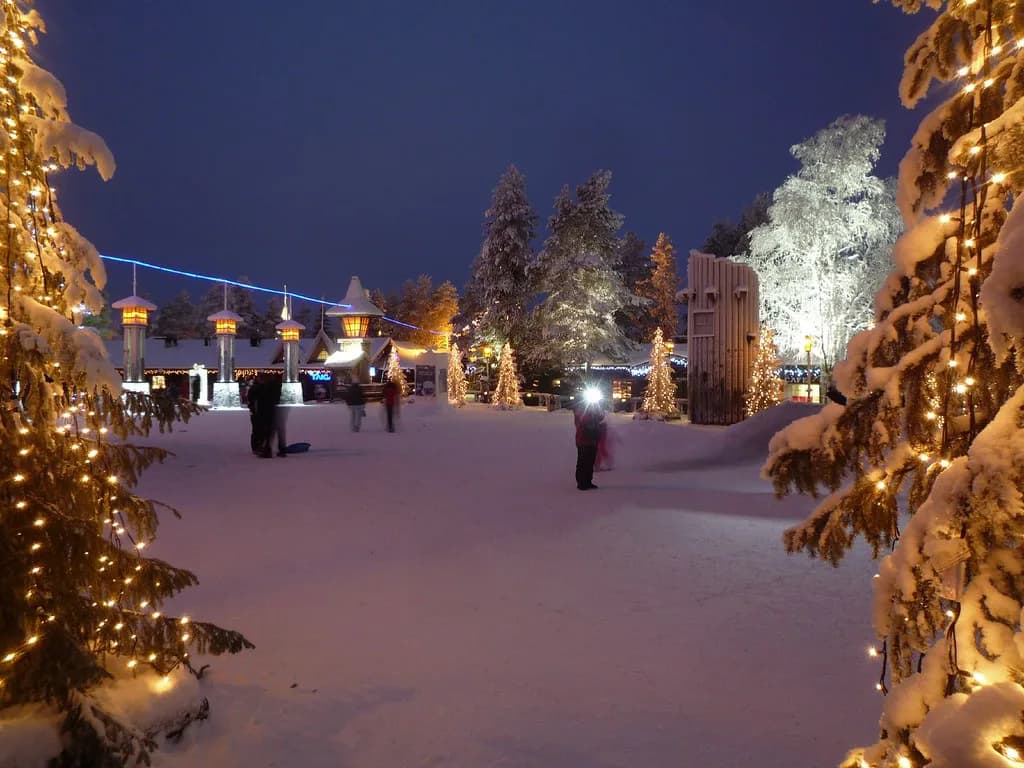
Santa Claus Village is the one sight your family will not let you skip: you can meet Santa there at any time of year, and it sits right beside the Arctic Circle line, which makes it easy to pair with a half-day of shopping or lunch. It is a daytime stop, so it does not cost you an aurora night. Nordic Visitor's Christmas in Rovaniemi package runs five days and four nights in December, and its New Year's in Rovaniemi package runs the same length, with activities including huskies and the Arctic SnowHotel.
Christmas and New Year weeks are the most expensive because they combine the shortest useful days with the highest demand. If you want the festive atmosphere without the premium, consider the first week of December or the week after New Year, when the celebrations cool off but the snow holds. Whatever your dates, keep the Santa visit as a fixed daytime anchor and build the aurora chases around it.
Where to sleep: ice and snow hotels, cabins and glass igloos
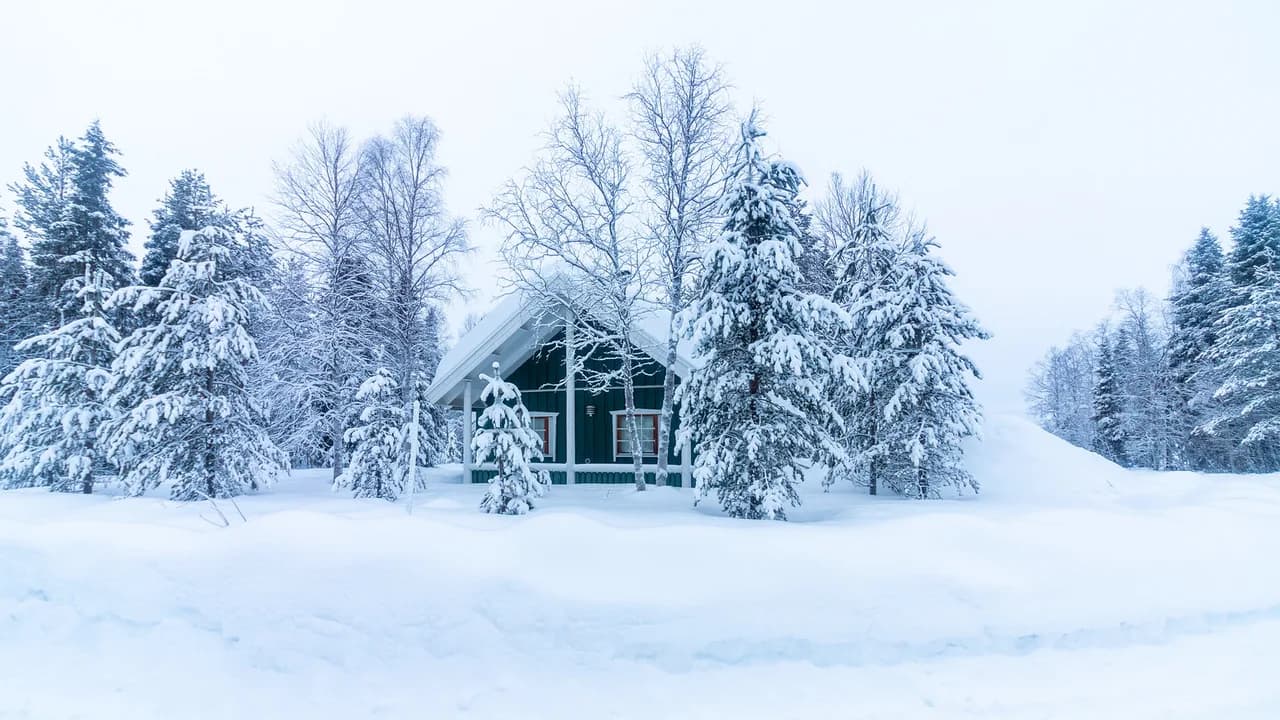
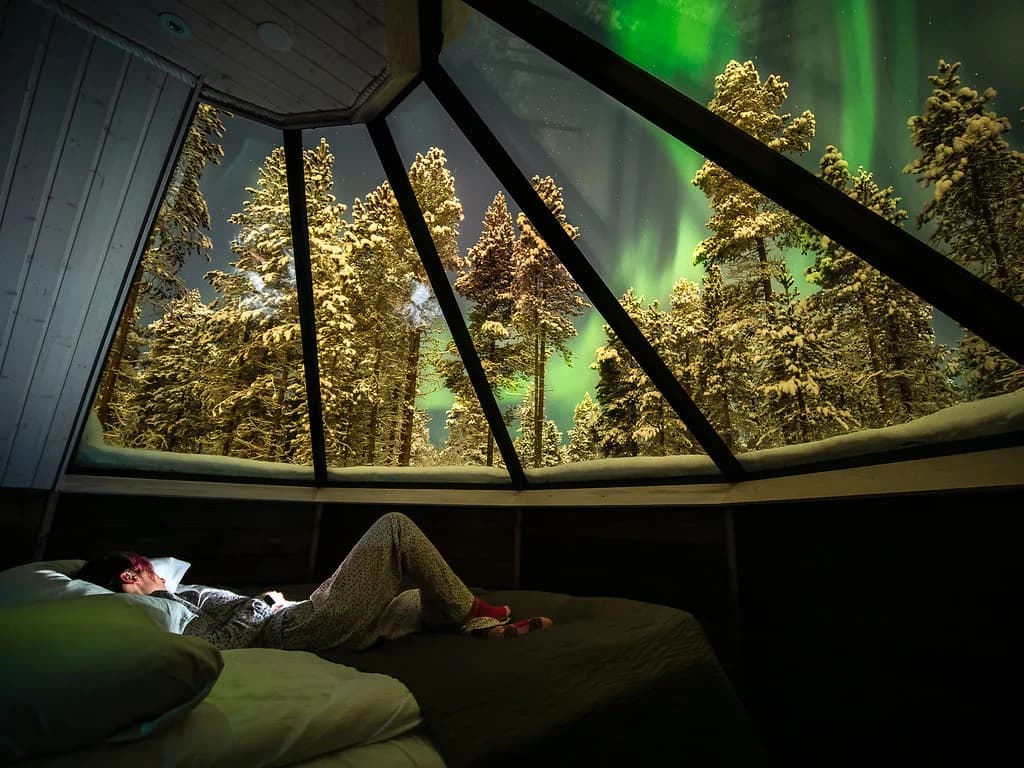
Finnish Lapland's sleep options split neatly into warm bases and cold experiences. Cabins and hotels in and around Rovaniemi give you a warm room and a short walk to a dark edge, while the Arctic SnowHotel and its Swedish counterpart the ICEHOTEL offer a night in a room built from ice. Nordic Visitor's Winter Adventure at the Arctic Snowhotel wraps a snow hotel night into a three-night Rovaniemi stay, which is a sensible way to sample one without committing a whole trip to it.
The trade-off with a cold room is sleep and glare: ice rooms are cold by design, and glass-roofed cabins can leak light from your own lamp into the sky view. If your priority is a good night before a late chase, take a warm cabin and watch the sky from a dark viewpoint instead. If the room is the experience, plan the cold night for the middle of the trip so you can recover the next day.
Self-guided aurora nights versus a guided chase
If you have a car, you can chase the aurora yourself: drive 20 to 30 minutes out of town, away from street lights, and watch the sky between hot drinks. This is the cheapest option and gives you total control of timing, but it means navigating winter roads and knowing the local dark spots. A guided chase costs more but handles the driving and the cloud-hunting, which matters on a short trip when every night counts.
A hybrid works well: take a guided chase on your first night to learn the local patterns and dark spots, then go self-guided on later nights if the forecast looks promising. Operators usually lend thermal suits for their own tours, so you do not need to buy expedition gear for a single chase. Book the guided night for the middle of your stay, when you have some forecast history.
How many nights to allow for clear skies
No night is guaranteed, so the only real lever is quantity: three nights gives you a fair chance, five gives you a good one, and seven is the point where you can absorb a lost night and still feel relaxed. On a short trip, book the guided chase for night two, keep night three as a buffer, and treat any extra clear night as a bonus. Kp values are a rough guide only; cloud cover usually matters more than a slight bump in solar activity.
Late February and March are the strongest bets because the days lengthen, the snow holds and the crowds fall away. If you are locked into Christmas week, allow at least four nights to offset the higher chance of overcast weather. Whatever length you choose, keep one night unbooked as a weather buffer.
Bad-weather alternatives and how operators adjust plans
If the sky is flat, operators typically swap the chase for an activity or move it to another night, which is why booking through an operator with local guides helps on a short trip. Saunas, the Santa Claus Village visit, reindeer farm tours, ice fishing and the Sampo icebreaker are all good cloud-day options. A day spent indoors on a reindeer farm is not wasted time if the next night is clear.
On the Swedish side, the Aurora Sky Station in Abisko gives you a mountain setting with a chairlift ride up, which is a good fallback when town weather is marginal. Keep that in reserve for the back half of a seven-day trip. Confirm current schedules with the Aurora Sky Station when you book.
Sample tour pricing and what packages include
Package prices give a useful anchor for budgeting, even if you build your own trip. Nordic Visitor's Best of Lapland Classic - Rovaniemi runs five days and four nights from December to March, while the 5-Day Northern Lights Lapland Adventure runs in the September to November window, with the 4-day version running three nights. Each includes accommodation, activities, transfers and breakfasts, along with a 24/7 helpline and access to a dedicated travel consultant.
DIY planning usually costs less but shifts the work of finding dark skies and juggling bookings onto you. The trade-off is flexibility versus convenience: packages remove the logistics, while self-drive gives you the freedom to move with the forecast. Compare the package inclusions against your own list before you decide.
Plan Your Visit
Start with the number of nights, not the number of sights: five nights gives you a fair chance of clear skies and room for a snow hotel night, while three is a taster and seven is the relaxed version with a Swedish extension. Base yourself in Rovaniemi, use the train for a second stop, and keep one guided chase in reserve for the middle of the trip.
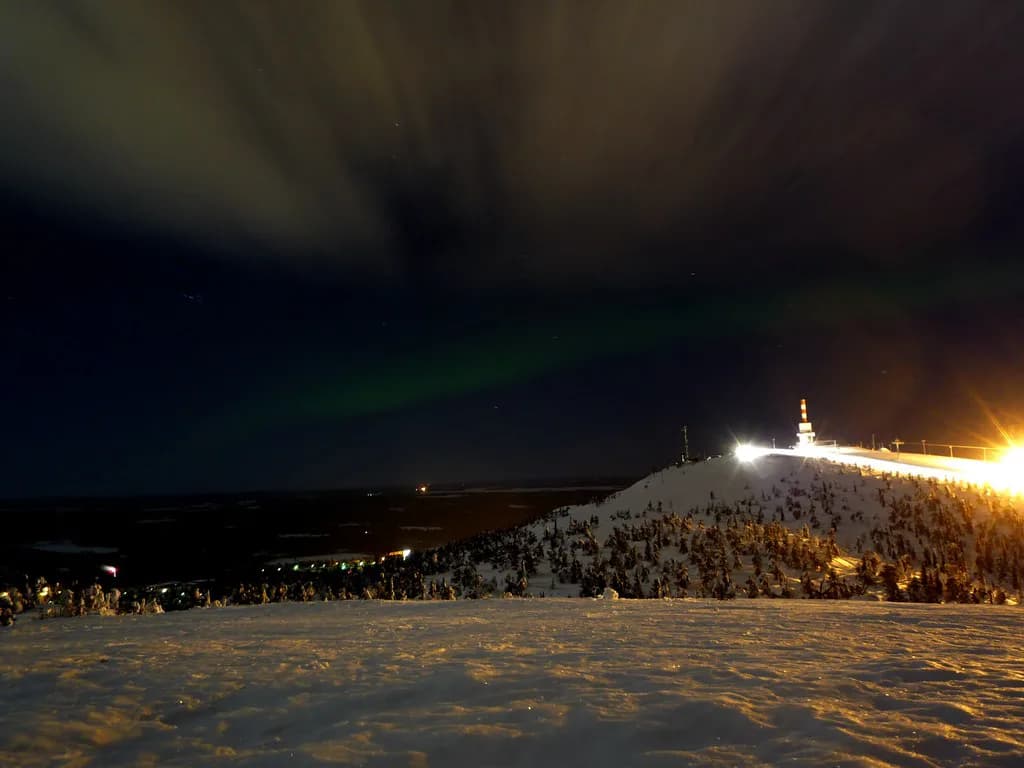
Whatever dates you choose, watch the forecast and be ready to move: a modest drive away from town can turn an overcast evening into a clear one. The Finnish Lapland northern lights guide covers the viewing spots and the practical detail behind those decisions. If you are weighing a different base or a shorter trip in the same fell country, this Ruka northern lights guide sets out the season, viewing spots and tours there too.
Frequently Asked Questions
When is the best time to visit Finnish Lapland for the northern lights?
December to March is the classic window, when snow cover and aurora displays are at their best, and February and March are quieter than the Christmas weeks. The September to November shoulder season also has long dark nights, though snow cover is thinner. In all cases the display depends on solar activity and clear skies, so allow more than one night.
How many days do you need in Finnish Lapland in winter?
Five days and four nights is the sweet spot for a first trip, giving you three aurora chances and room for two daytime safaris without rushing. Three days is a taster with two nights, and seven days lets you add Kiruna and Abisko by rail. More nights mean more rolls of the weather dice.
Is 5 days in Lapland enough?
Yes, for most first trips. Five days covers a husky or snowmobile safari, Santa Claus Village, a snow hotel night if you want one, and several aurora chases. The main reason to choose five over three is the buffer it gives you when one night is cloudy.
Do I need a tour to see the northern lights in Rovaniemi?
No, but a guided chase helps on a short trip. Self-driving 20 to 30 minutes out of town works if you have a car and know the dark spots, while a guided tour handles the driving and cloud-hunting. Many travelers take one guided night first and then go self-guided.
How do I get to Finnish Lapland?
Most international travelers connect through Helsinki-Vantaa, where domestic feeders reach Rovaniemi on one booking. Once in the region, trains link Rovaniemi and Kemi, and English works comfortably in the popular destinations. Book the winter rail legs early because the holiday services fill.
Sources
Notes for your Arctic winter trip
Optional updates to our northern lights guides.
You might also like

Continue reading
More guides you'll find useful