How Cold Is Lapland in Winter: Finnish Lapland Guide
December in Finnish Lapland averages about -5°C by day and -13°C at night, with colder inland spells. Here is what that means for aurora nights.
On this page
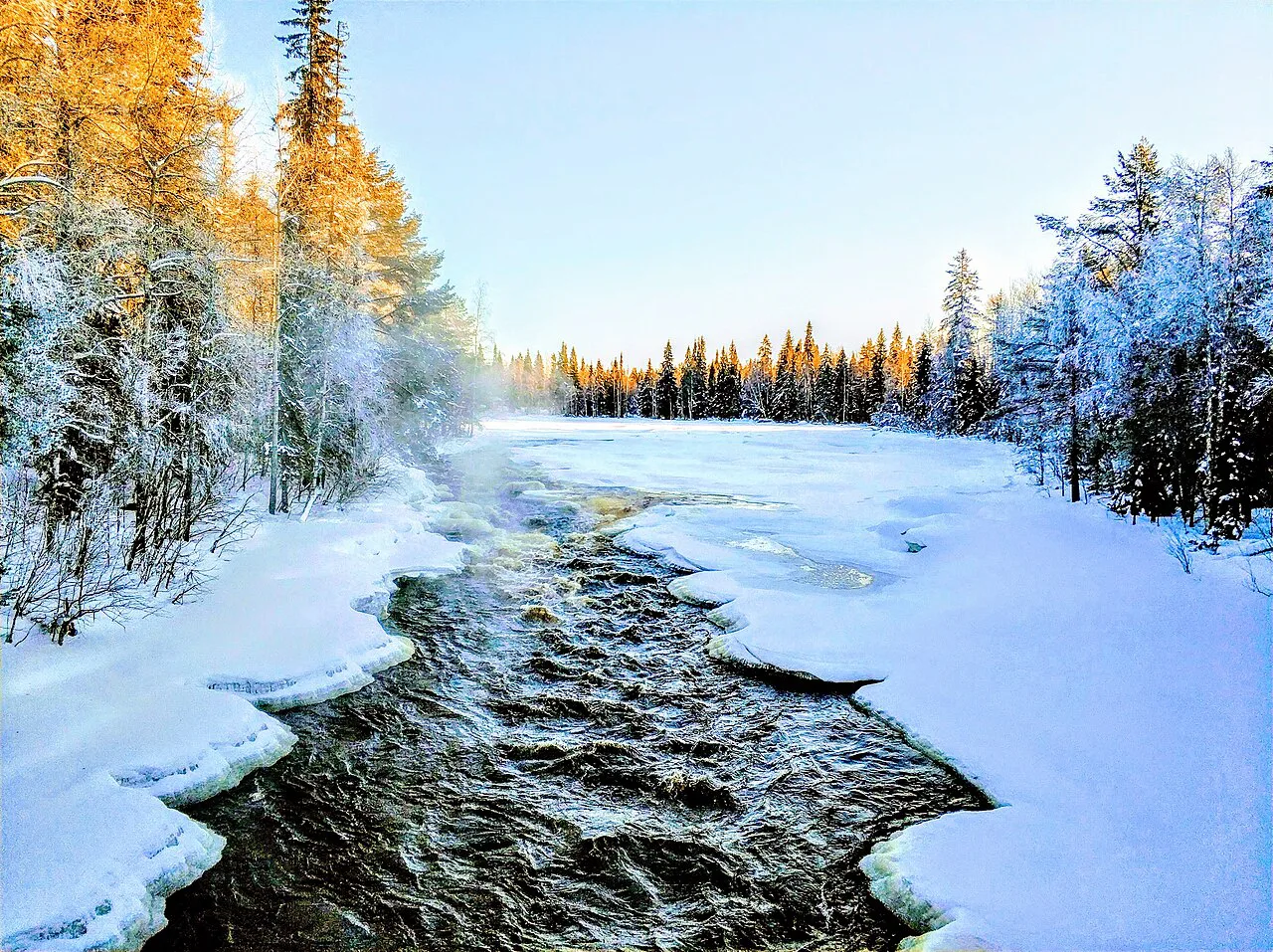
Finnish Lapland in December is the Arctic at its most photogenic: snow-laden forests, frozen lakes and only a few hours of pale daylight before the long dark settles in. It suits travelers who want a real winter landscape and are prepared to trade comfort for atmosphere, and it is the classic month for combining daytime snow activities with evening aurora watching.
The cold is the headline, but the more useful question is how it splits between day and night. Rovaniemi's December averages sit near minus five in the afternoon and minus thirteen overnight, while inland and northern spots run colder still, so the difference between a comfortable day out and a serious cold snap is mostly about where you are and what time it is.
What December feels like across Finnish Lapland
December is a full winter month here, not a shoulder season. Around Rovaniemi, the average December high is -5°C and the average low is -13°C, with individual days swinging well either side of those figures. That means a midday walk can feel brisk rather than brutal, while the evening aurora window is reliably below freezing.
Across Lapland more broadly, December averages about -6°C, with daytime highs near -3°C and nights around -9°C, and roughly four hours of sun per day. Snow falls on close to three-quarters of December days, so plan for fresh snow on roads and tracks rather than crisp, dry cold.
The regional spread is wide: coastal and southern Lapland is milder, while inland fell and fell-side villages such as Luosto, Sodankylä and the Kittilä area around Levi run colder. If you feel the cold, base yourself nearer Rovaniemi; if you want deep snow and the classic inland winter, head north and inland.
December temperatures: Rovaniemi averages and regional spread
Use Rovaniemi as your benchmark because it is the transport hub most trips pass through. December there averages -5°C by day and -13°C at night, which is cold enough that exposed skin stings on a windy evening but manageable with the thermal suits many night-tour operators lend out.
Inland and northern Lapland typically knocks several degrees off those figures. Across the winter, December temperatures commonly sit between about -7°C and -20°C, so a night in a wilderness cabin east of Rovaniemi or near Luosto can be noticeably harsher than the same night in town.
Treat any single forecast as provisional. Air can be ten degrees colder on a clear, still night than under cloud, which matters because clear nights are exactly when you want to be outside looking up.
In practice, this decides your itinerary: keep a flexible day for the coldest, clearest night and a shorter, sheltered outing for the milder, cloudier one. Town-based hotels make that easy; remote cabins reward you with darker skies but leave less room to retreat.
How cold nights run from early to late December
Early December is dark but often not yet at its coldest, and the ground may still be building its snow cover. By mid-month, average overnight lows around Rovaniemi drop toward -13°C, and the second half of the month is when clear, still nights most often turn genuinely severe.
The pattern to expect is a mild, snowy spell around -5°C to -10°C followed by a clear cold snap that can push past -20°C and occasionally below -30°C. Winter averages across Lapland range from about -5°C to -30°C, with extremes below -40°C recorded, so a December trip should assume at least one properly cold night.
For aurora planning, cold snaps are a gift and a hazard at once: they usually come with clear skies, but they shorten how long you can comfortably stand outside. Shorter sessions near a warm base, or a heated vehicle tour, beat a long vigil on the coldest nights.
Snow cover, cloud and daylight hours in December
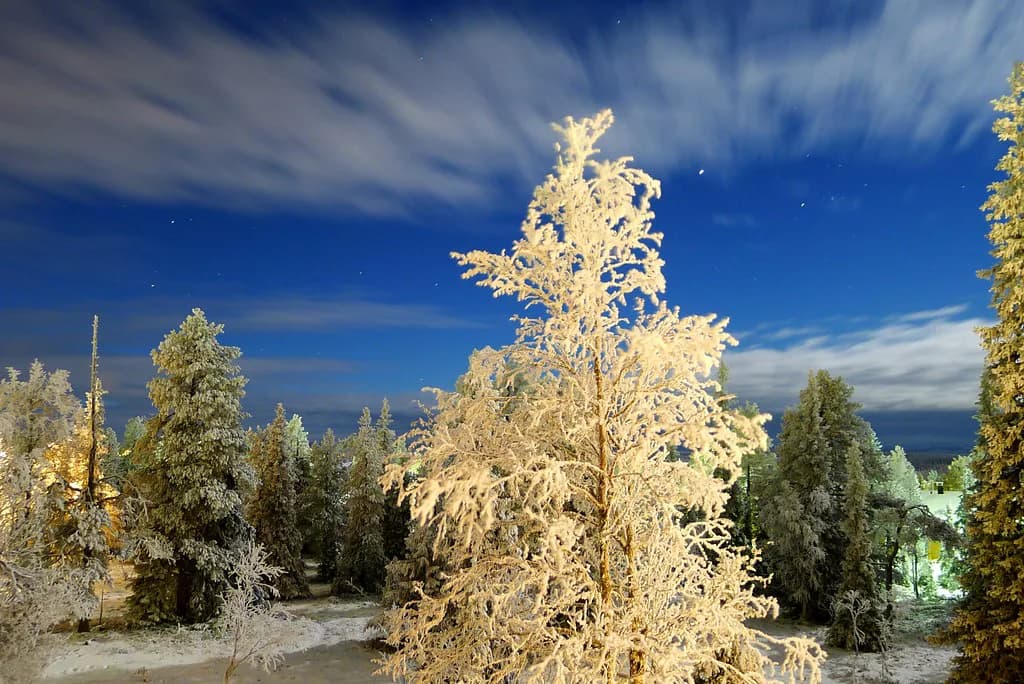
Daylight is scarce, which is exactly what aurora watchers want. Expect only a few hours of usable light around midday, with the sun skimming the horizon and the sky often washing pink and blue. That short window is for snowshoeing, husky rides and photographs; the long dark is for chasing the lights.
Cloud is the main enemy, and Lapland's December cloud cover is variable rather than reliably clear. December brings around 64 mm of precipitation across the month, with snow on most days, so you should expect some overcast nights and build in slack. Inland, clearer and colder air often wins out; nearer the coast, milder and cloudier conditions are more common.
Snow depth is usually solid by late December across the region, which keeps snowmobile and husky trails running and makes the landscape properly white rather than patchy. Book snow-dependent activities for the second half of the month if your dates are flexible.
Why the aurora shows in December: latitude and dark nights
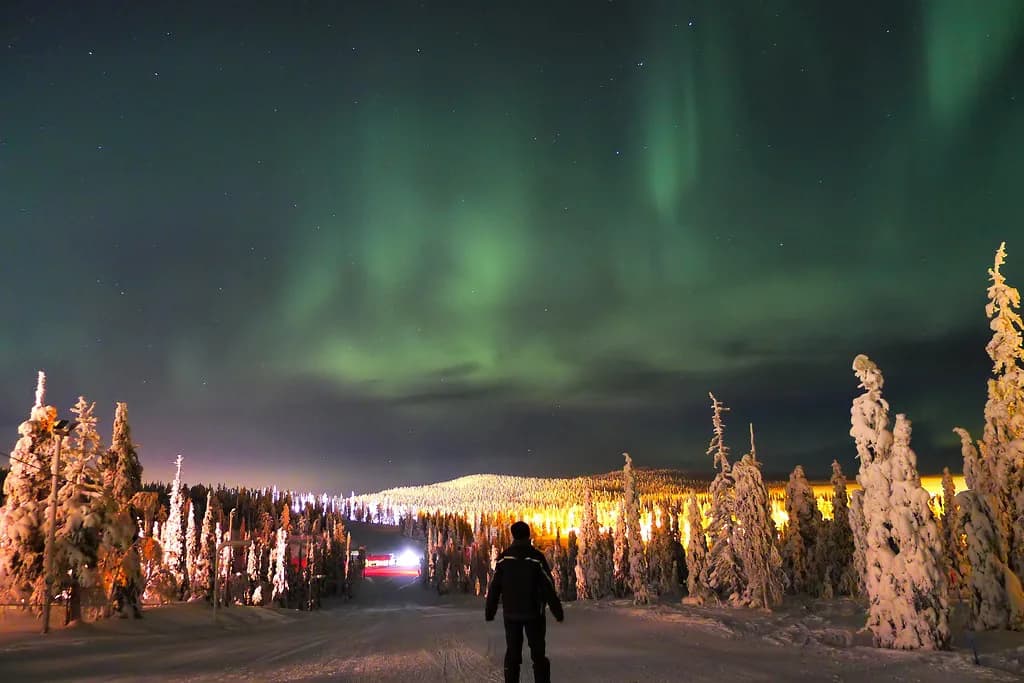
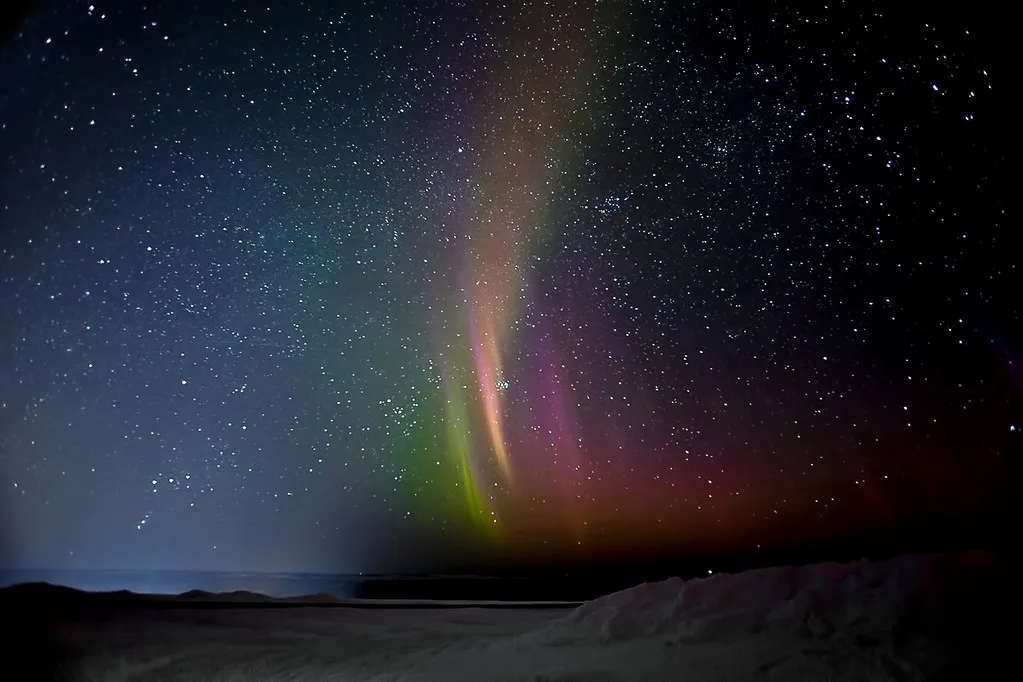
Finnish Lapland sits under the auroral oval, the ring around the magnetic pole where charged particles from the sun most often light up the upper atmosphere. Rovaniemi lies almost exactly on the Arctic Circle, and villages further north such as Sodankylä and Luosto sit deeper under the oval, so displays can appear overhead rather than low on the northern horizon.
December gives you very long dark windows, which removes the main obstacle that limits aurora viewing at other times of year: the midnight sun and bright summer nights. The season around the northern lights in Finland runs from roughly late August through early April, and midwinter offers the most hours of darkness per day.
Darkness is necessary but not sufficient. Displays depend on solar activity and clear skies, and a quiet night under a clear sky can out-perform a busy geomagnetic forecast buried in cloud. Kp values are a rough guide to how far south the aurora may reach, not a promise for any one spot.
Where to watch near Rovaniemi: dark spots away from town light
Rovaniemi's street lighting washes out faint aurora, so the first step is simply to get away from the built-up centre. The Ounasvaara hill area on the edge of town gives elevated views and quick access back to a warm hotel, and it is the easiest option if you are staying in the city.
Further out, the roads toward the Arctic Circle and Santa Claus Village open up darker stretches of forest and frozen bog within a short drive of town. Pull-offs away from lit junctions, with an open northern horizon, are the classic self-drive options; bring a headtorch, keep the engine warm and never wander far from the car in deep snow.
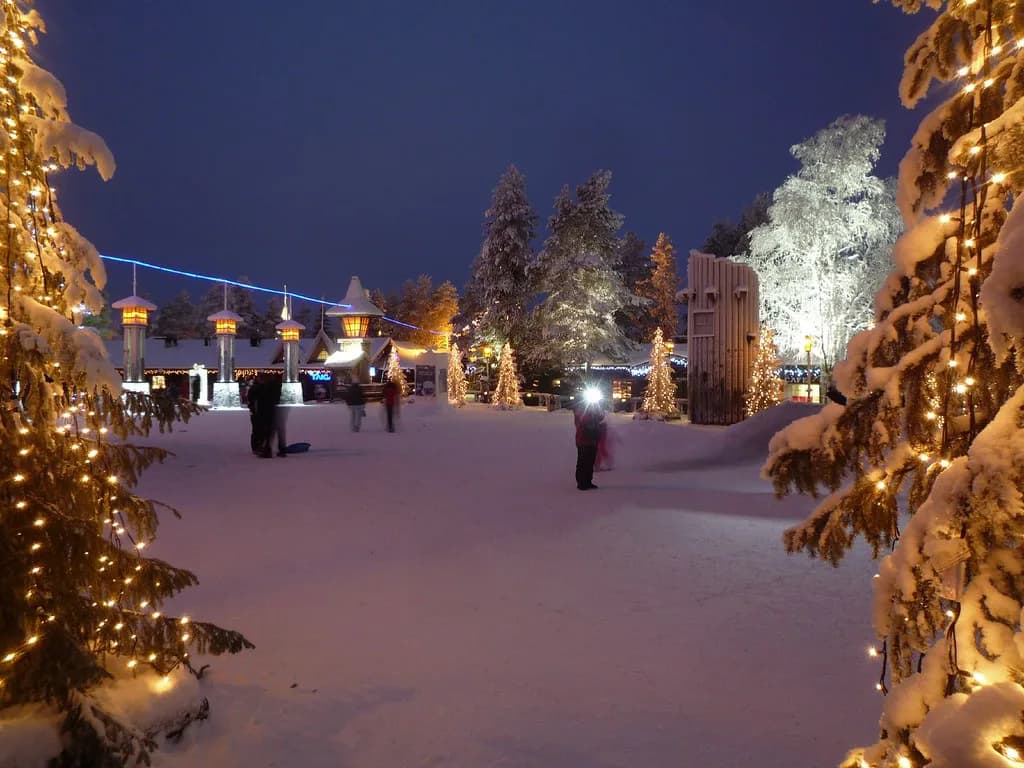
If your December trip leans into the festive side, the Santa Claus Village area is a natural daytime stop and a reasonable evening base for a short chase. Pairing it with a visit works well, and there is more on timing and crowds in the guide to christmas in finnish lapland.
Self-guided chasing versus a booked aurora tour
Driving yourself gives you the freedom to move when a gap in the cloud appears, but it demands winter-driving confidence on snow-packed roads in the dark. If you are comfortable with that, a rental car and a clear plan of two or three dark-sky pull-offs along the roads north and east of Rovaniemi is the most flexible approach.
A booked tour removes the driving and the decision-making. Operators typically run small-group evening trips by minibus or snowmobile, follow the cloud forecast, lend thermal suits and boots, and include hot drinks; some offer photography help. Because the guide chooses the direction on the night, tours often reach clearer skies than a fixed self-drive plan.
Tours are not lucky charms, though. A minibus cannot drive out from under a solid overcast, so a run of cloudy nights flattens the odds for everyone. Book tours for a couple of separate nights rather than one, and keep at least one night free to chase on your own if the sky opens up.
Glass igloos and aurora cabins: heat, glare and trade-offs
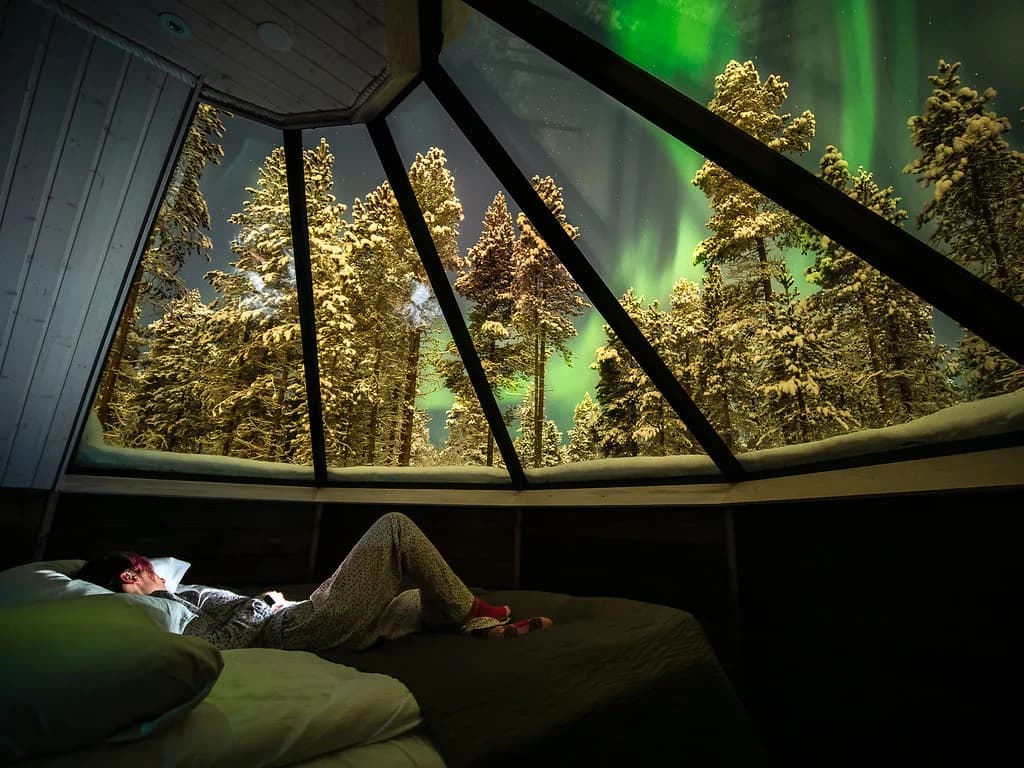
Glass-roofed igloos and aurora cabins let you watch from bed, which is a real advantage on a -20°C night. The catch is that heated glass can frost or fog, interior lights reflect in the panes, and you may find yourself looking at the roof rather than the full sky. Ask whether the glass is heated and whether lights can be dimmed.
Resorts such as Arctic SnowHotel & Glass Igloos, Santa's Igloos Arctic Circle, Arctic TreeHouse Hotel, Apukka Resort and Lapland Hotels Sky Ounasvaara all pitch themselves around aurora viewing, but they differ in seclusion. Igloos close to town or the Santa Claus Village area sit under more light pollution; wilderness resorts trade convenience for darker skies.
The other trade-off is warmth versus spectacle. A standard cabin outside town is cheaper and lets you step out into genuine darkness, but you lose the lie-in-bed viewing. Many travelers split the stay: a night or two in an igloo for the experience, and the rest in a town hotel for comfort and easy tour pickups.
Husky and snowmobile safaris running in December
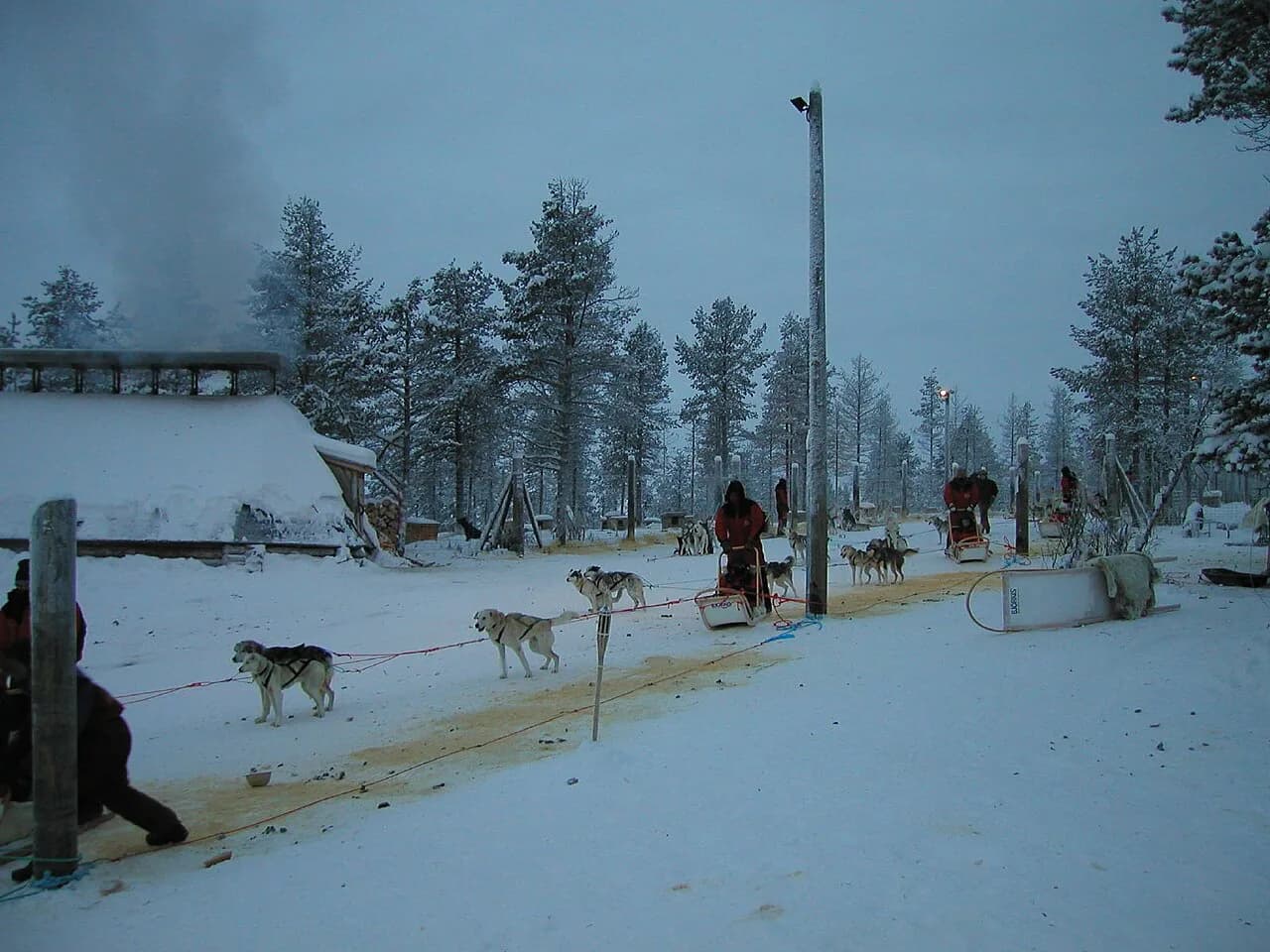
Husky safaris and snowmobile tours run through December once trails have enough snow, which is usually the case in the second half of the month inland. Husky trips typically pair two people per sled with a guide leading, last a couple of hours, and include a briefing and a hot drink; snowmobile safaris often run in convoy with a guide and require a driving licence for the driver.
Both are cold-weather activities: you sit still or hold handlebars, so operators generally supply thermal suits and boots and may specify minimum ages for children. A night snowmobile safari doubles as an aurora chase, moving you away from town lights while the guide watches the sky and the cloud forecast.
Check machine and sled availability before you commit to a specific day, and book the coldest, clearest night for snowmobiling, when the trails are firm and the sky is most likely to be open.
Cold snaps: what -20°C to -30°C means for a night out
At -20°C, exposed skin starts to hurt within minutes, camera batteries fade fast and phone screens slow down. At -30°C, breathing is sharp, metal sticks to skin and mechanical kit such as snowmobile throttles can stiffen. These are the conditions when a guided tour with a heated vehicle earns its money.
The practical response is shorter outings, more returns to warmth, and hands kept in mittens rather than working a camera. Keep spare batteries inside your jacket, and plan aurora sessions of twenty to thirty minutes rather than hours. Clear cold snaps often bring the best displays, so the goal is to stay comfortable long enough to enjoy one.
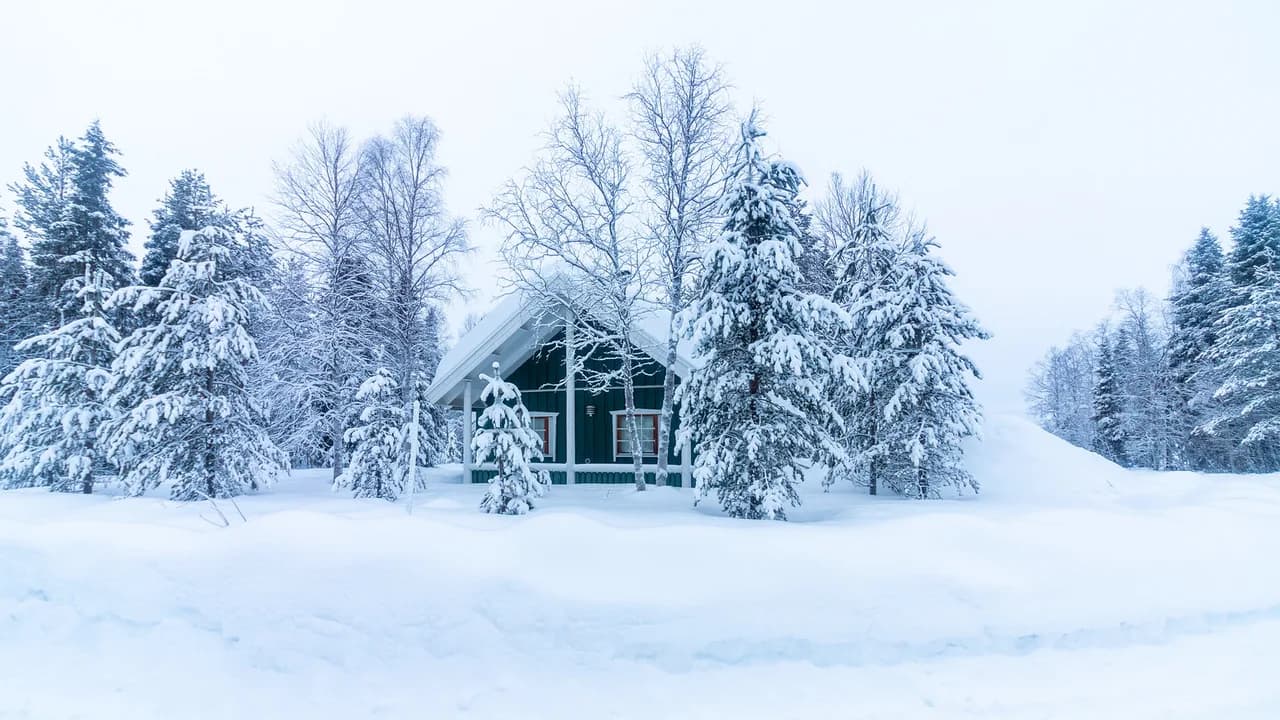
Accommodation matters here too: a cabin with a wood stove or a hotel with a drying room changes how a -25°C night feels. Confirm that your booking has somewhere to dry boots and suits, because wet gear the next morning is worse than the cold itself.
How many nights to plan for a fair chance of clear skies
No one can promise a display, so plan for probability rather than a single night. Three to four nights in Finnish Lapland in December gives you several dark windows and a reasonable chance of at least one clear one; a single night is a gamble that cloud alone can spoil.
Use the forecast to place your bets, not to book the trip. The Sodankylä Geophysical Observatory publishes geomagnetic activity data used across the region, and combining that with a cloud forecast is how guides decide where to drive on the night. Aim for a mix of one guided tour, one self-drive night and one flexible evening, and you will rarely waste a dark sky.
If your dates are fixed, add a buffer day at the end rather than the start; a delayed flight or a lost bag is easier to absorb before the main aurora nights than after them.
December versus January and March for cold and clear skies
December is the darkest month with the longest aurora windows, but it is also the cloudiest and snowiest in many years, and the days are very short. That combination suits travelers who want atmosphere and festive stops over long daylight activities, and it works well with short, focused night outings.
January typically brings the coldest air, with Lapland temperatures around -13°C to -30°C, which is excellent for clear skies but hard on long outdoor sessions. March is milder, with temperatures nearer -5°C to -15°C, longer daylight and still dark nights, and it is often the sweet spot for combining daytime activities with aurora evenings. If you are weighing a different base in the east, the northern lights in Ruka guide covers the same season and viewing decisions there.
If December is your only option, go anyway: the snow, the darkness and the festive stops are worth the cold, and clear nights do happen. Just book tours across several nights rather than pinning everything on one evening, and let the cloud forecast move your plans.
Plan Your December Aurora Trip
December in Finnish Lapland is cold in a way that shapes every decision: where you sleep, how long you stay outside and whether you drive or join a guided chase. Expect Rovaniemi days near -5°C and nights near -13°C, with inland cold snaps far lower, and plan outdoor time in short blocks with warm returns.
Book a couple of guided evening tours for the flexibility and thermal gear they provide, keep one night free for a self-drive chase to a dark spot such as Ounasvaara, and split your stay between a comfortable town base and at most a night or two in a glass igloo. Give yourself three or four nights in total for a fair chance of clear skies, and treat any display as a bonus rather than a guarantee.
Frequently Asked Questions
How cold is Lapland in December?
Around Rovaniemi, December averages about -5°C by day and -13°C overnight, with individual days warmer or colder. Across Lapland the monthly average sits near -6°C, with some inland areas commonly ranging between about -7°C and -20°C. December is the darkest month but also one of the cloudiest.
Is it worth going to Lapland in December?
If you want deep snow, short blue daylight and long dark nights, December is a strong choice, and it pairs well with festive stops such as Santa Claus Village. The trade-off is frequent cloud and short daylight, so plan several aurora nights rather than one. For longer daylight and milder cold, late winter is easier.
How cold does it get at night in Rovaniemi in December?
The average December low in Rovaniemi is -13°C. Clear, still nights often run lower, and cold snaps can push toward -20°C or colder. Night-tour operators typically lend thermal suits and boots, which makes evening outings manageable.
Can you see the northern lights in Lapland in December?
Yes, because December offers very long dark windows, and Finnish Lapland sits under the auroral oval. Displays still depend on solar activity and clear skies, so cloud is the main obstacle. Plan across several nights and use a cloud forecast alongside geomagnetic data to choose where to drive.
How many nights should you plan for aurora viewing?
Give yourself three to four nights as a sensible baseline. That allows for cloudy evenings and quiet solar nights while still leaving a good chance of at least one clear window. Combine one guided tour, one self-drive night and one flexible evening for the best spread.
Sources
Notes for your Arctic winter trip
Optional updates to our northern lights guides.
You might also like

Continue reading
More guides you'll find useful