Jökulsárlón in Winter: Where to Stay & Ice Cave Tips
Jökulsárlón in winter: how dark the days get, when ice caves open, where to watch the aurora and how many nights to allow for good odds of clear skies.
On this page
Jökulsárlón is the iceberg lagoon on Iceland's southeast coast, where ice calved from Breiðamerkurjökull drifts across still, teal water before washing out to sea. In winter the same remote setting that makes it photogenic by day also gives you one of the country's best night-sky stages: no town glow, open horizons and a long band of dark hours. It suits travelers who want a landscape-first base with aurora as the evening plan, not a resort with a guaranteed show.
This is a base for the whole southeast, not a quick roadside stop. You can pair a night on the lagoon shore with a morning in an ice cave, an afternoon at Diamond Beach and a second night at a hotel with a hot tub and aurora wake-up service. The trade-offs are real: a long drive from Reykjavík, short winter days and weather that rewrites plans.
Why Jökulsárlón works as a winter aurora base
The lagoon sits in what one Iceland guide describes as the country's clear-sky corridor, running from Kirkjubæjarklaustur through Skaftafell and Höfn to Djúpivogur. That stretch is credited with the least cloud cover anywhere in Iceland, and cloud is the factor that decides whether a geomagnetic forecast turns into anything you can actually see. Kp readings are guidance only; a clear hole in the cloud matters more at this latitude.
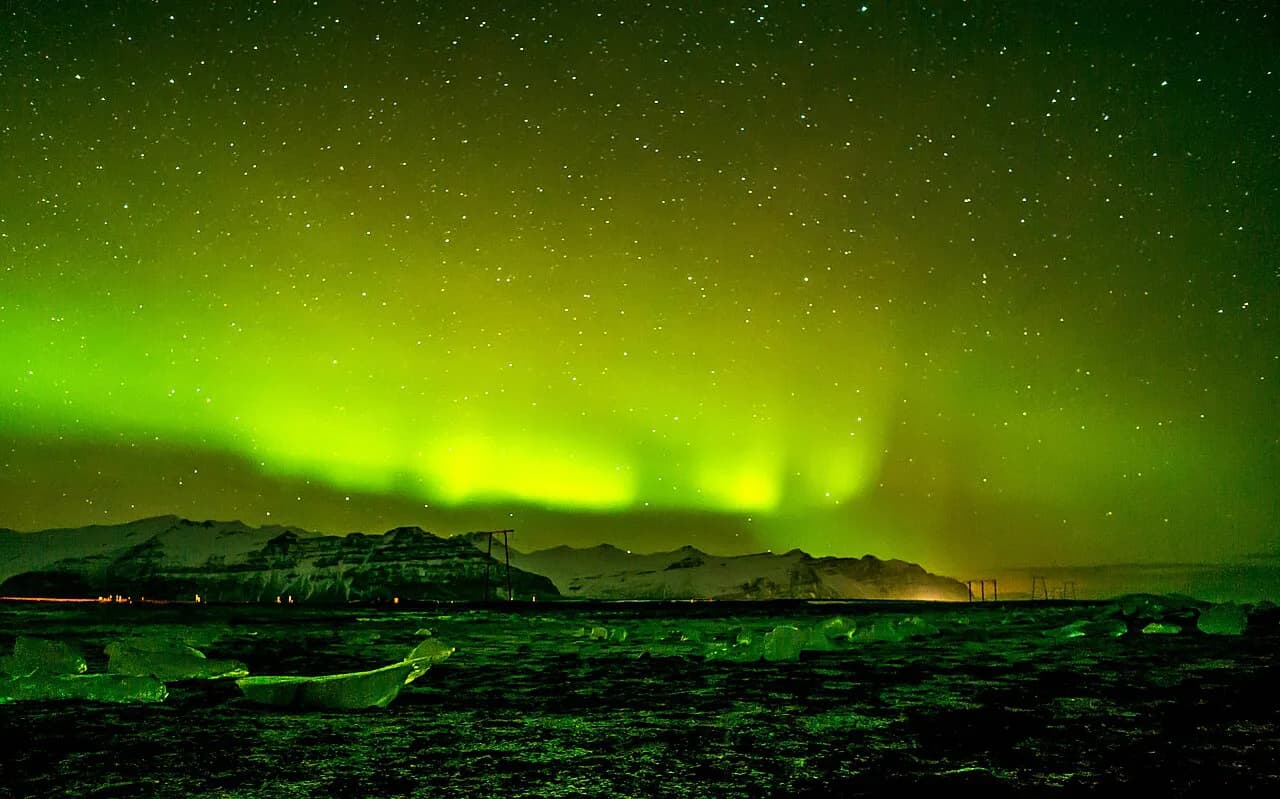
Light pollution is close to nil along the shore and on the black sand across the road, so you do not need to drive far to find darkness after leaving the hotel. The practical question is framing: icebergs, still water and a glacier backdrop give you compositions a flat field cannot match. Aim for a new moon or thin crescent, since a full moon washes out faint aurora and the reflections you came for.
Where the lagoon sits and how far it is from Reykjavík
Jökulsárlón lies in southeast Iceland, about 380 km (236 mi) from Reykjavík along Route 1, which most drivers cover in roughly five to six hours before stops. It borders Vatnajökull National Park, with Skaftafell and Europe's largest ice cap close by, and Diamond Beach sits just across the road. Treat the drive as a full day with worthwhile pauses at Seljalandsfoss, Skógafoss and Vík rather than a sprint.
Because the drive is long, most winter itineraries stay at least one night in the area instead of returning to Reykjavík the same day. That single night also buys you a second chance at a clear sky if the first evening closes in.
When the aurora season runs over the lagoon
Aurora viewing at Jökulsárlón is generally worthwhile from late September to mid-April, with October through March giving the darkest nights. Activity is most often reported between about 10pm and 1am, though the lights arrive on their own schedule and can come in waves. October to November and February to March are flagged as the stronger windows for activity.
Late February and March have a practical bonus: the lagoon usually carries plenty of floating ice then, so your night frames include bergs rather than open water alone. Early autumn gives you easier driving and longer daylight for the ice cave and beach, at the cost of a shorter dark window. Choose your month around which half of the trip matters more to you.
Daylight, snow and driving conditions in winter
Winter days here are short, and November in particular leaves little usable daylight once you have driven from Reykjavík and made a few stops. December can bring blizzards and road closures, and in one recent winter the busiest south-coast roads and the airport route were shut for days. Build slack into the itinerary rather than scheduling the lagoon on your final afternoon before a flight. If the southeast feels too exposed for a first winter trip, our guide to Iceland in winter compares how many days these short days demand elsewhere on the island.
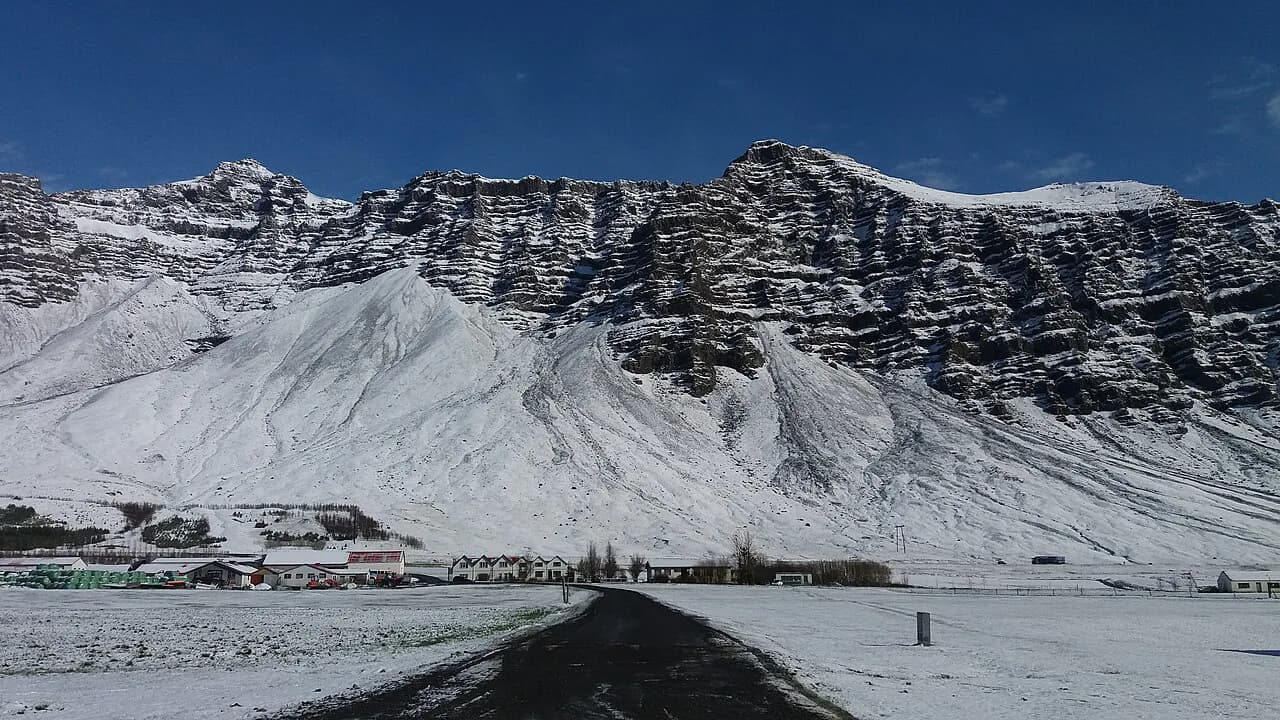
Across the southeast, snow can bury the icebergs entirely, producing a very different scene from the glossy summer photographs. That is not a loss: snowy bergs read beautifully against a dark sky and make the lagoon look otherworldly. Cold is the constant, and nights spent waiting outside are long, which is why a hotel with a hot tub or sauna earns its rate here.
What the lagoon and Diamond Beach look like in winter
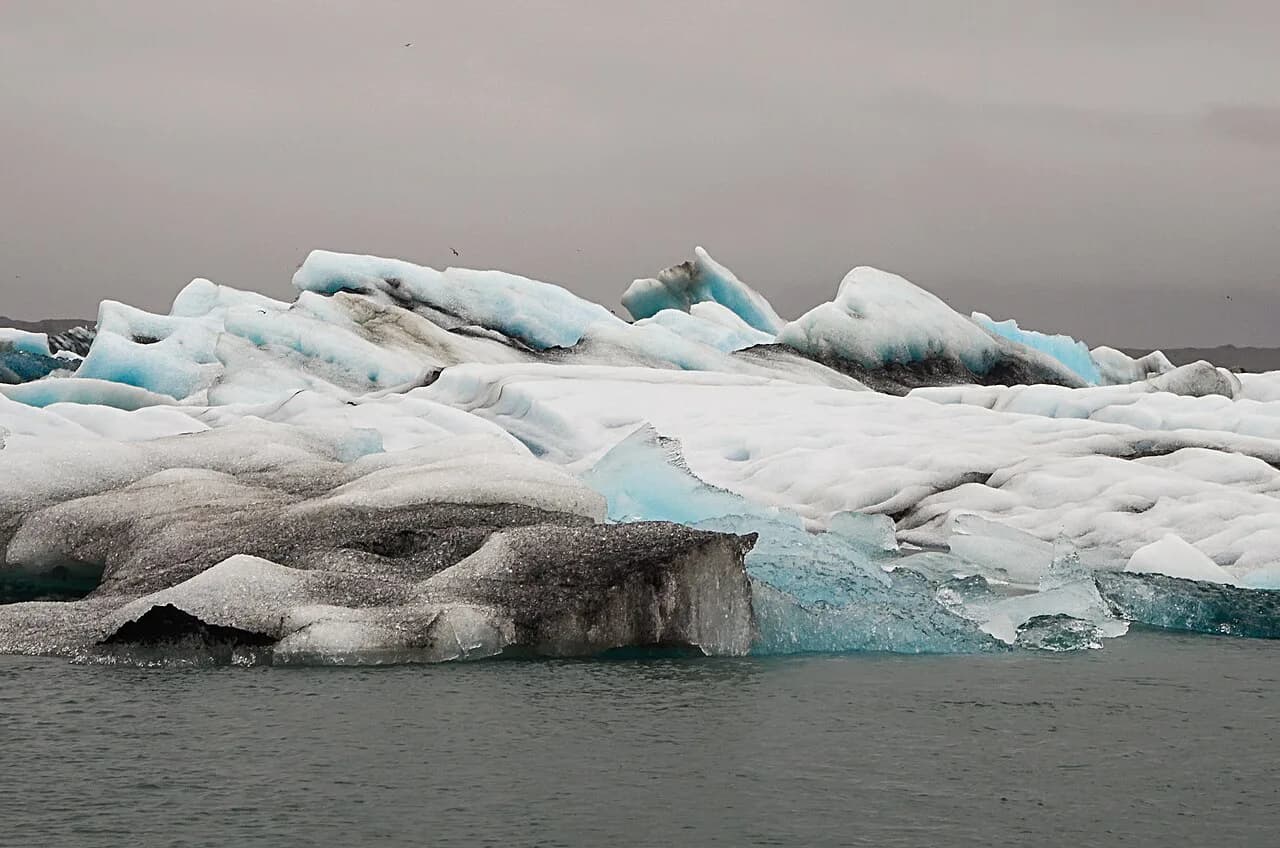
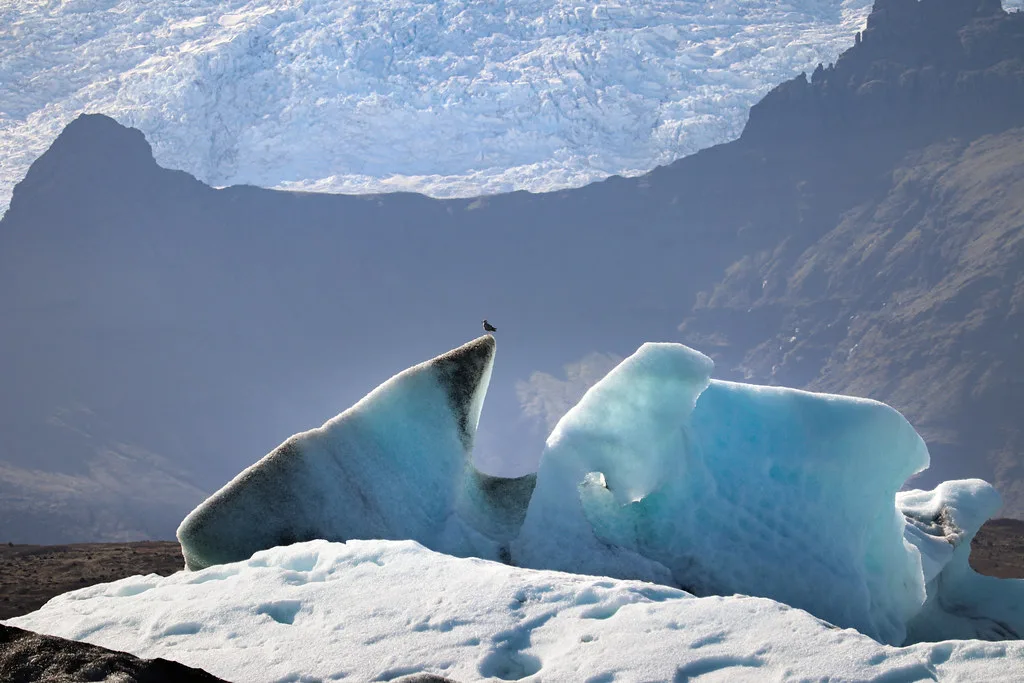
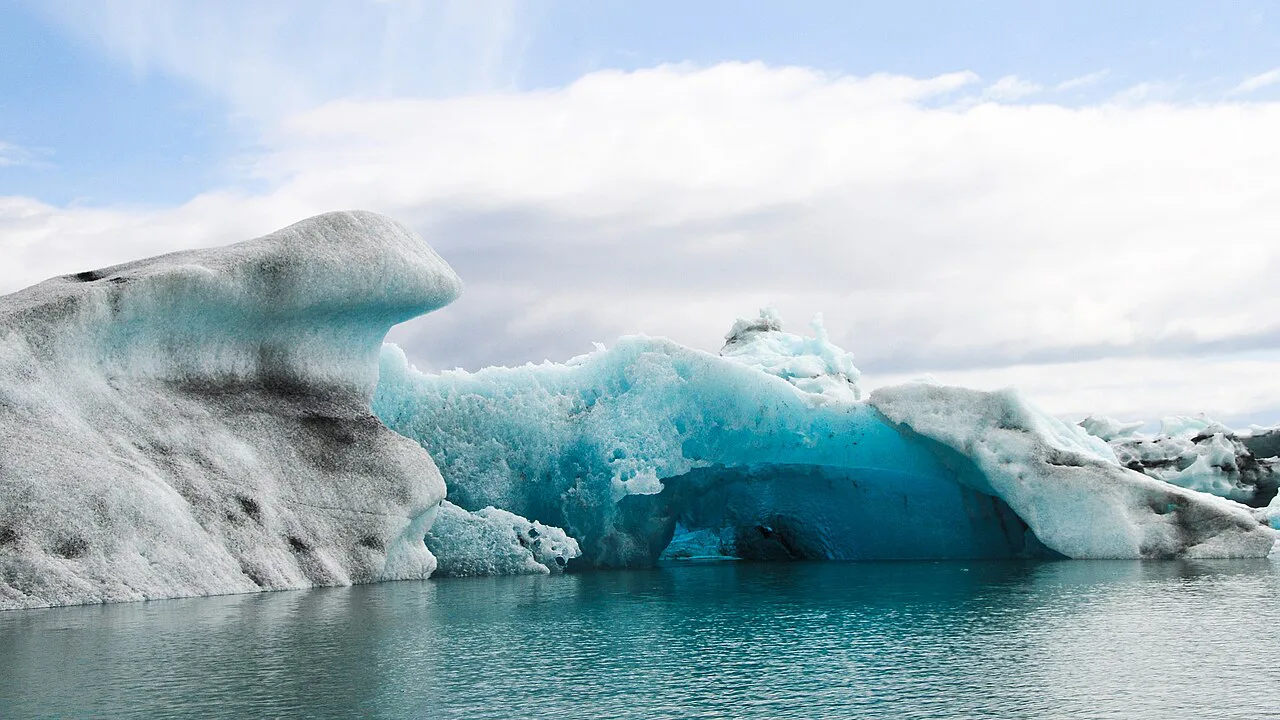
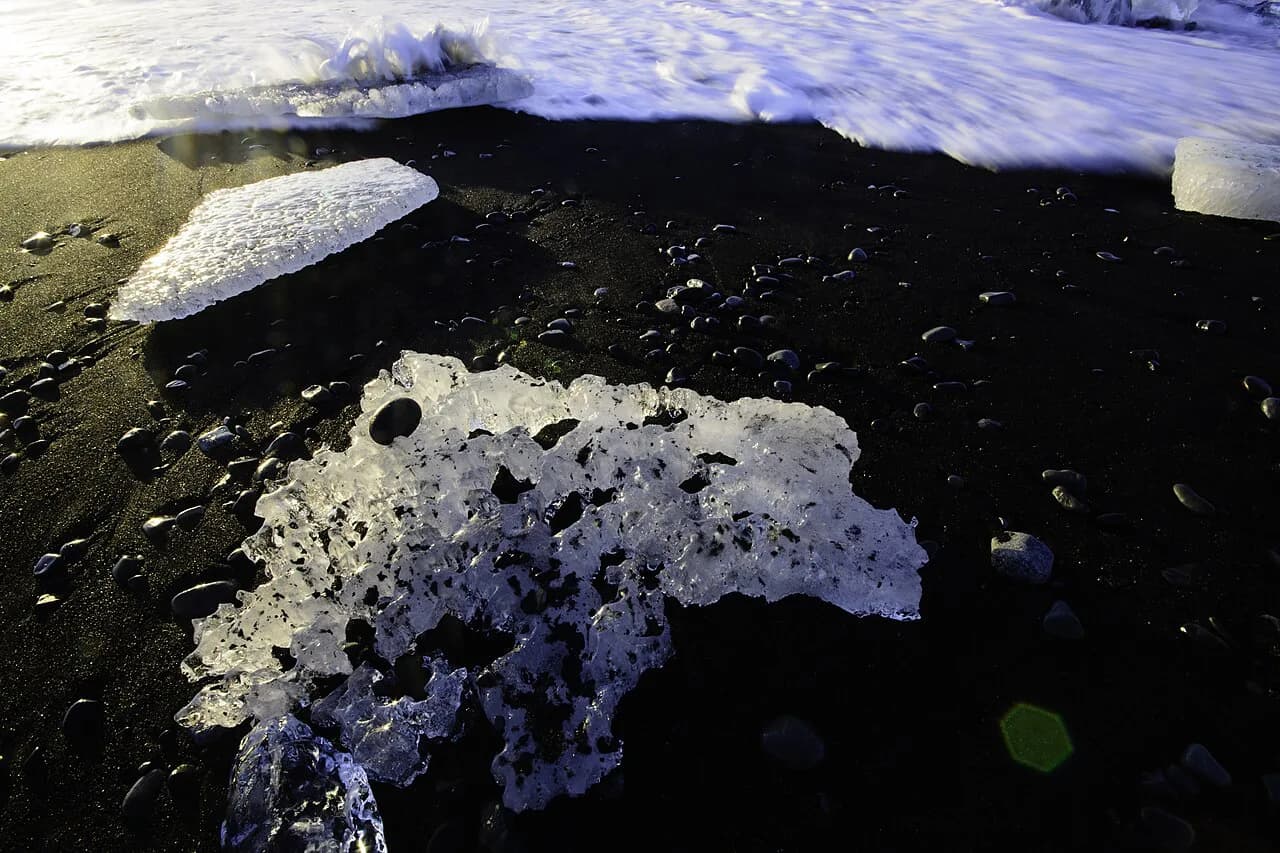
By day the lagoon is a slow parade of blue and white ice against a glacier wall, with seals often hauled out on floes near the shore. Across Route 1, Breiðamerkursandur, known to visitors as Diamond Beach, is a black-sand strand where wave-polished ice chunks glitter until the tide takes them back out. The amount of ice varies enormously from visit to visit, so no two mornings look the same.
At night the same two spots split into different viewpoints: the lagoon shore for mirrored icebergs, the Route 1 bridge for a quick swing between the lagoon and the Atlantic, and the beach for ice chunks catching aurora and moonlight. Each rewards a different lens and a different amount of walking, so pick one per evening rather than trying to cover all three.
Boat trips and kayaking: what runs and when
Boat tours run on the lagoon, including amphibious craft that let you see the shoreline as well as the ice, and these are a daytime activity rather than a night one. Kayaking operates in summer with a guide and dry suit provided, because the water stays bitterly cold even in mild weather. Neither replaces a night on shore when the forecast is good.
Swimming in the lagoon and climbing onto floating ice are unsafe in any season, since floes tip and break without warning and the water is near freezing. Keep to the shore, a boat or a kayak, and stay back from the waterline when ice is piled at the edge. That rule holds double at night, when you cannot see what you are stepping onto.
Ice caves under Breiðamerkurjökull and Vatnajökull
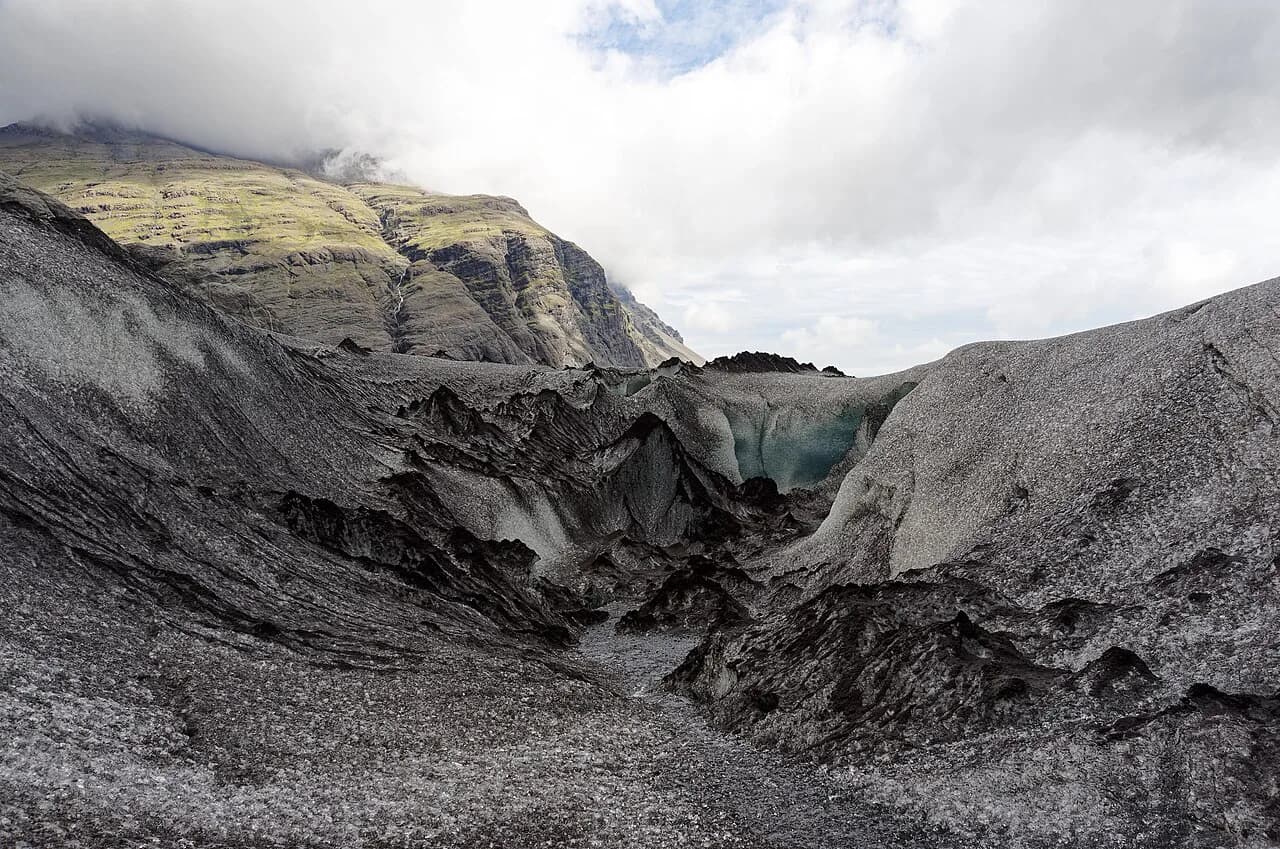
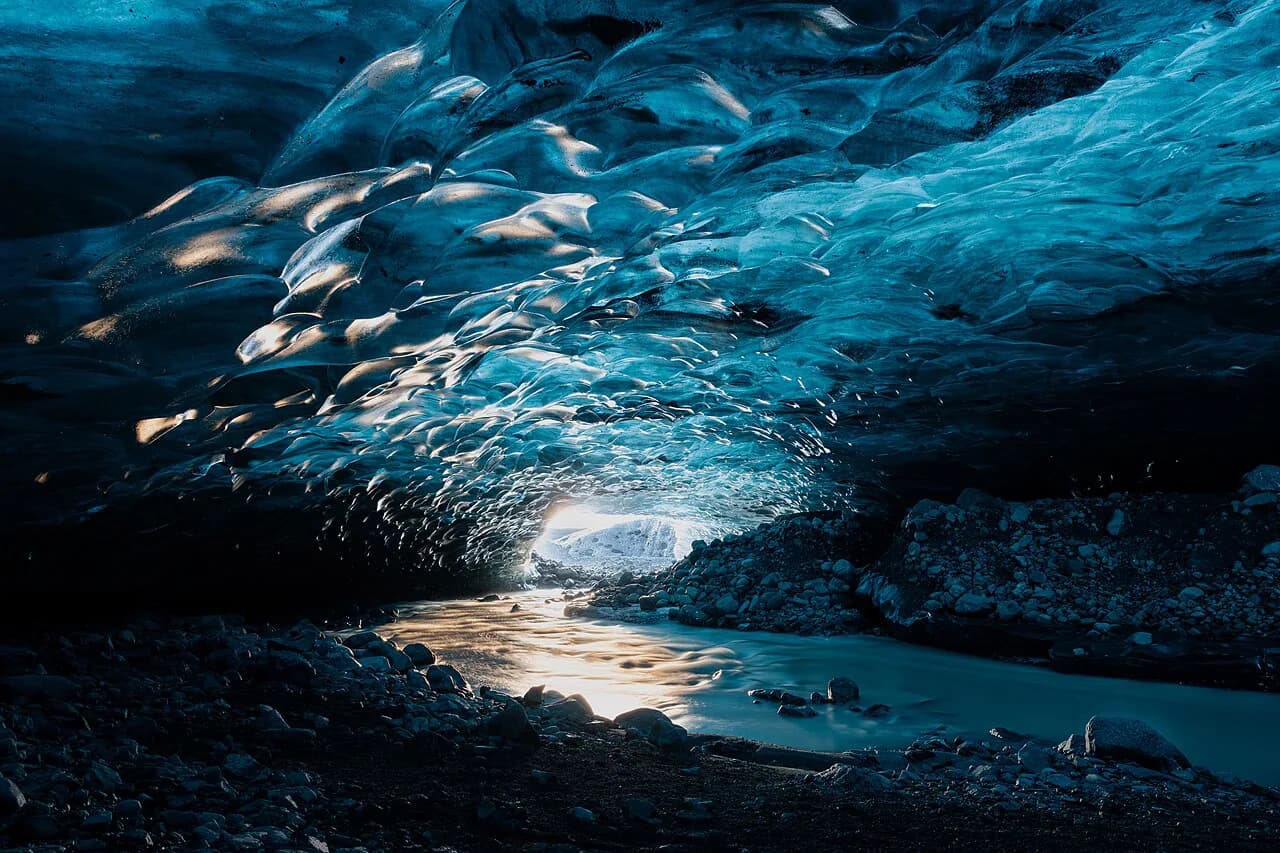
Guided ice cave tours run from roughly October to March, when cold weather stabilizes the caves, and the season always depends on conditions that year. The best-known blue cave forms in Breiðamerkurjökull, a tongue of Vatnajökull, and tends to appear in the same place each winter. Operators supply the super-jeep transport to reach it and lead you inside.
Another local account puts cave visits from November to the end of March, weather permitting, which shows how much the window shifts between seasons. Book the cave for late morning or early afternoon so you are back at the lagoon for a night session rather than driving in the dark. Never walk onto a glacier without a guide; crevasses are hidden under snow.
Where to watch the aurora around the lagoon
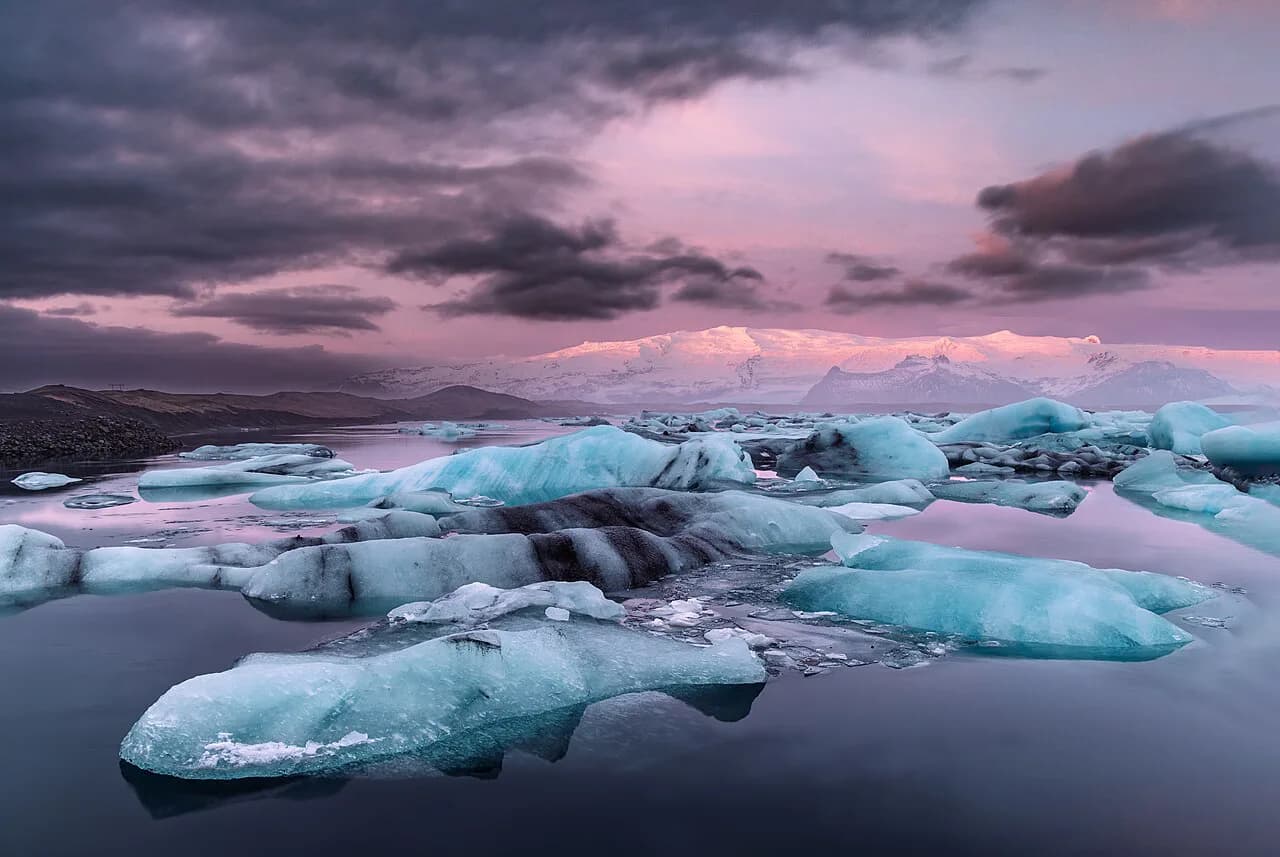
Start at the main lagoon shoreline, where on a still night the water doubles the aurora and the icebergs in one frame. The bridge over Route 1, a short walk from the main parking area, lets you pivot north toward the lagoon or south toward the ocean within seconds as the display moves. Across the road, Diamond Beach offers black sand, stranded ice and an open southern horizon.
Facilities at the lagoon are limited after dark, so arrive with your own food, water and a headlamp, and give yourself time to wait rather than treating it as a ten-minute photo stop. On icy ground near the water's edge, stay on marked paths and do not approach the ice. Patience pays more than a high Kp number when the sky is broken.
Self-drive chasing versus guided northern lights tours
Driving yourself gives you the freedom to abandon a cloudy lagoon for a clear patch an hour away, and the southeast's sparse settlement makes that feasible. Weather can change quickly on the south coast, with ice forming on a road that was clear an hour earlier, so a four-wheel-drive car with proper winter tyres is the sensible hire. Check road and weather conditions before each departure, and never speed on the one-lane bridges where the first car to arrive has priority.
Guided multi-day trips solve the driving and often include an ice cave, glacier walk and a night near the lagoon, which suits travelers who would rather not handle icy roads after dark. Day tours from Reykjavík exist but involve a very long round trip, leaving little room for a late aurora. For serious night photography, base in the southeast and let a guide handle the cave and glacier logistics.
Where to stay near Jökulsárlón
You cannot sleep at the lagoon itself, so the choice comes down to proximity versus price. Fosshotel Glacier Lagoon, between Skaftafell and the lagoon, offers mountain or ocean views, a spa, a gym and a restaurant, while Hotel Jökulsárlón sits close to the water with large windows, hot tubs and a sauna. Both cut your night drive to minutes.
Cheaper bases an hour or so out include Höfn, Hoffell with its geothermal hot tubs, and Kirkjubæjarklaustur, about an hour and a half from the lagoon. Seljavellir Guesthouse near Höfn is a simple, quiet option with private bathrooms and low light pollution around it. Ask whether your hotel offers aurora wake-up calls or real-time forecasts, since that can be the difference between a missed and a caught display.
Rooms in the area are limited and fill quickly from September to March, so book early if your dates sit in that window. Staying away from town centres and highway traffic gives you darker sky for nothing extra.
How many nights to plan
Give the lagoon two nights minimum if aurora is the point of the trip, and three if you also want an ice cave and a relaxed Diamond Beach morning. One night leaves you at the mercy of a single forecast; cloud cover, not solar activity, is the usual reason people go home empty-handed. A clear, quiet night with modest activity beats a stormy one with a high Kp reading.
If your schedule is tight, put your lagoon nights early in the trip so a weather washout can be swapped for a second attempt before you fly home. Hotels in the area will often hold a flexible booking if you ask when you reserve.
Winter driving on the Ring Road to the lagoon
The south coast road is generally maintained, but winter conditions are icy and unpredictable, and the drive from Reykjavík takes five to six hours before stops. Ask your rental company for a four-wheel-drive car with good studded tyres, and give yourself daylight for the run so you are not hunting a hotel in the dark after a long day. Watch for one-lane bridges marked einbreið brú, where the first car to arrive has right of way.
Weather on this stretch can flip within an hour, and wind has been known to push cars off the road, so treat the forecast as part of the itinerary rather than background noise. On the way, expect seasonal closures: the path behind Seljalandsfoss is often shut in winter because of falling icicles.
Winter safety at the lagoon edge and Diamond Beach
At the lagoon, keep back from the water's edge, where floes can shift suddenly, and never climb onto icebergs. At Diamond Beach, rogue waves sweep the sand without warning, so never turn your back on the sea and keep your feet on solid ground. Carry a headlamp, wear traction on icy paths, and tell someone your plan if you are driving alone.
Since it is dark for most of your waking hours in midwinter, the safety margin comes from planning the daylight window for the cave and the beach, then reserving the night purely for the sky. Operators lend thermal suits and boots where needed on cave and glacier trips, which helps on long, cold waits.
Plan Your Jökulsárlón Winter Trip
Jökulsárlón rewards travelers who treat it as a two- or three-night aurora base rather than a photo stop on the Ring Road. Book a hotel with a hot tub and ask about aurora wake-up calls, schedule the ice cave for late morning, and keep your evenings free for the lagoon shore, the bridge or Diamond Beach depending on where the sky clears.
Watch the Icelandic Met Office aurora and cloud forecast in the days before you go, and build flexibility into your booking so a washout night can become a second attempt. Sights are never promised, but dark skies, a remote coastline and a patient plan give you the best odds the southeast can offer.
Frequently Asked Questions
Is Jökulsárlón Glacier Lagoon worth visiting in winter?
Yes, if you plan for short daylight and build the trip around both ice and dark skies. Winter gives you floating icebergs, snowy Breiðamerkurjökull, the ice caves and long nights with almost no light pollution, all on one stretch of coast. The trade-off is weather: blizzards and road closures can disrupt the drive, so allow slack in the itinerary.
What is the best time to see the northern lights at Jökulsárlón?
Aurora viewing runs roughly from late September to mid-April, with October to March giving the darkest nights. October to November and February to March are the stronger windows, and February and March usually bring plenty of floating ice for photographs. Activity is most often reported between about 10pm and 1am, but a clear sky matters more than any activity number.
Where should I stay near Jökulsárlón in winter?
For proximity, Fosshotel Glacier Lagoon and Hotel Jökulsárlón sit within minutes of the water and offer hot tubs, saunas or a spa. For value, Höfn, Hoffell and Kirkjubæjarklaustur are roughly an hour to an hour and a half away. Ask whether your hotel offers aurora wake-up calls or forecast updates.
Is there an entrance fee to Jökulsárlón glacier lagoon?
No, the lagoon and Diamond Beach are open natural sites, and you pay only for tours, boats, ice caves and parking where it is charged. Book the boat or cave trip through a licensed operator, and confirm any parking charges on site.
How long does it take to drive from Reykjavík to Jökulsárlón in winter?
About 380 km and roughly five to six hours of driving along Route 1 before stops, which becomes longer in winter. Snow, ice and wind can slow you down and occasionally close roads, so plan to arrive in daylight and stay at least one night in the area.
Can you do a boat tour on Jökulsárlón in winter?
Boat tours operate on the lagoon, including amphibious craft that also show you the shoreline. Kayaking is a summer activity with a guide and dry suit provided. Neither is a night activity, so book the boat for a daytime slot and keep your evening for the shore.
When can you visit the ice caves near Jökulsárlón?
The ice caves normally run from October to March, or November to the end of March depending on the season and conditions, and always weather permitting. The blue cave in Breiðamerkurjökull tends to form in the same place each winter. Go with a licensed guide who provides transport and equipment.
Sources
Notes for your Arctic winter trip
Optional updates to our northern lights guides.
You might also like
Continue reading
More guides you'll find useful