Katla Ice Cave from Vík: Tours, Season and What to Expect
Katla ice cave lies under the Kötlujökull glacier near Vík, reached by super jeep and crampons. Here is how tours run and when the season peaks.
On this page
The Katla ice cave gives you something no lava tunnel can: a walk inside a glacier that rides on top of an active volcano, where black ash stripes alternate with clear blue ice. It is a compact, guided half-day out of Vík, which makes it the easiest serious glacier experience on Iceland's South Coast. It suits travelers with a base in Vík or along the South Coast who want volcano-and-ice scenery in a single morning, and who are happy to ride in a super jeep and walk with crampons on ice.
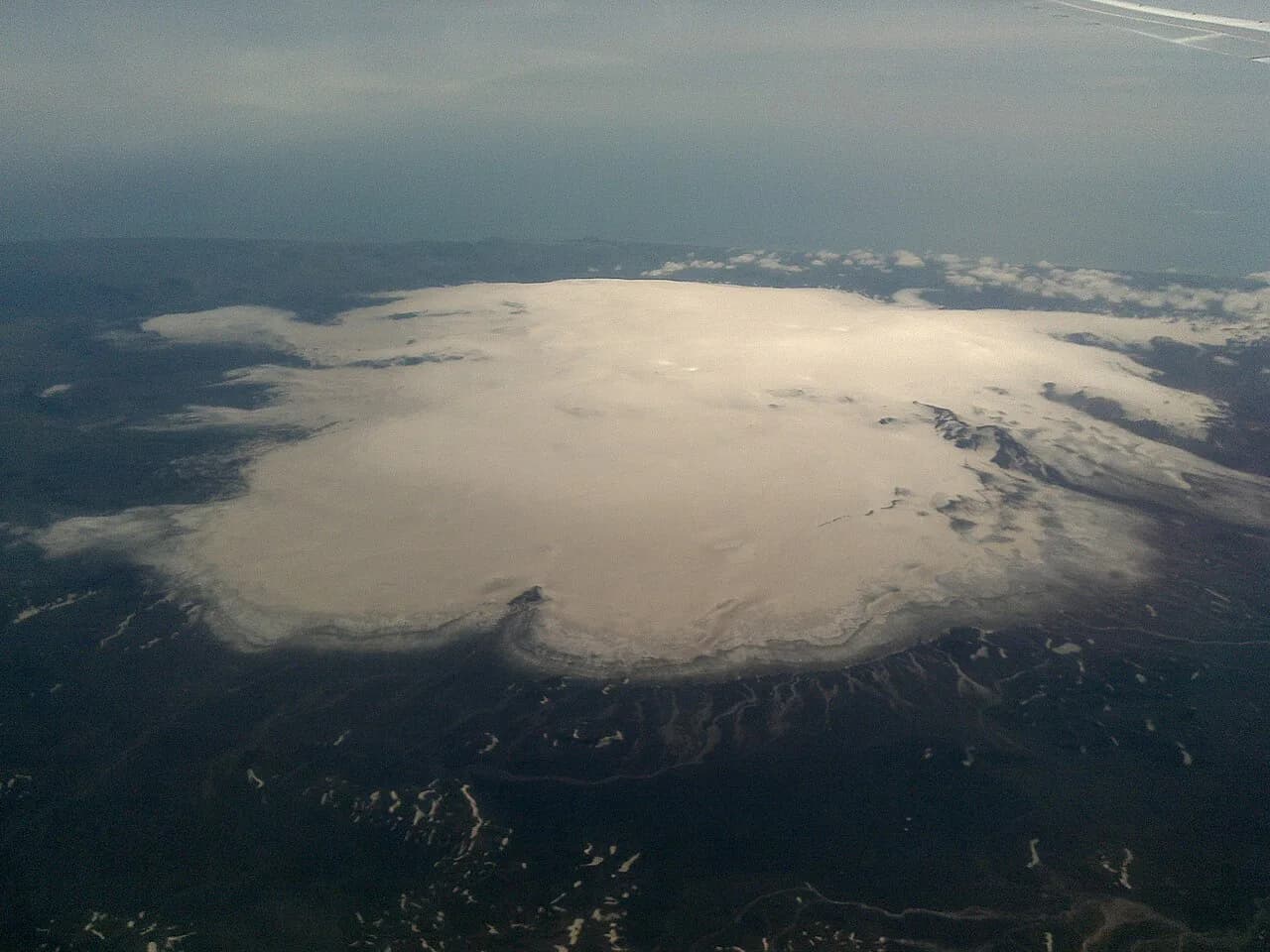
The cave is a natural formation inside the Kötlujökull outlet glacier, part of Mýrdalsjökull, Iceland's fourth-largest glacier. Because the volcano beneath it has erupted repeatedly, ash falls have been buried in the accumulating ice, giving the cave its dark banding. Tours run year-round, but the cave and its smaller neighbours are at their most accessible in the colder months.
What the Katla ice cave is
Katla is the name of the volcano under the ice; the cave itself lies in the Kötlujökull glacier that covers part of its caldera. The cave was carved by meltwater and is entirely natural, though guides cut steps into the ice to make entry safer for groups. Inside, you move from tunnels striped with black volcanic ash into older, denser blue ice where trapped air bubbles show.
The black layers are ash from past eruptions, pressed into the snow as it compacted into ice. That black-and-blue contrast is why the formations have picked up the nickname dragon glass, after the obsidian-like look of the ash-rich ice. Deeper in, the blue ice is older and clearer, and photographers tend to spend most of their time there.
The volcano is active, with the most recent eruption in 1918. That does not make a guided visit risky, but it is the reason ash is so abundant in the glacier and the reason ice conditions change from season to season.
If you are weighing the cave against other underground sights in Iceland, this one is the glacier-and-volcano option rather than the walk-in lava tube option. It requires a guide, a vehicle and crampons, and delivers an hour or so of ice rather than a long self-guided passage.
Where it is and how you reach it
The practical base is Vík, on Iceland's South Coast, about 187 km (116 mi) and roughly 2.5 hours' drive from Reykjavík. Vík is the standard meeting point for ice cave tours, and several operators run their vehicles from the village itself.
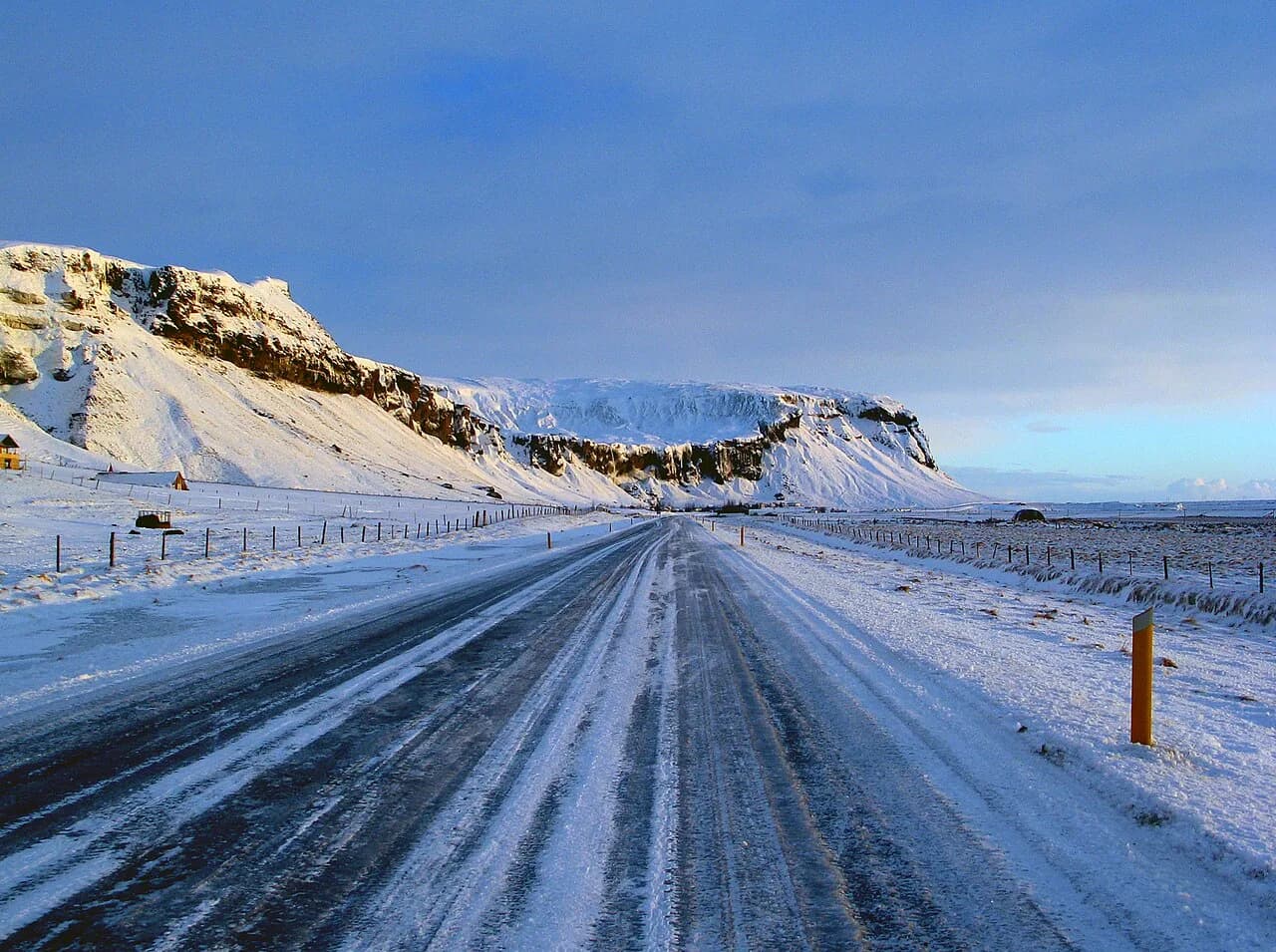
From Vík, the drive to the cave's drop-off point takes around 45 minutes in a super jeep, crossing sandy ash plains and wet, icy ground. Those vehicles are built for the terrain and are not normally available as private rentals, which is why the transfer is part of the tour.
Katlatrack is based in Vík at Austurvegur 16 and runs ice cave, super jeep, buggy and glacier hike tours from the village, so you can leave a rental car at your accommodation and join the jeep. If you are staying in Reykjavík instead, allow around 2.5 to 3 hours of driving each way before the tour even begins.
How the tour day runs
Expect to meet in Vík, board the super jeep and ride out to the glacier edge, where guides fit crampons and hand out torches. From there it is a short walk across the ice to the cave entrance, with a brief climb down onto the ice.
Once inside, guides lead you through the ash-striped tunnels and the older blue ice, and point out the formations worth photographing. Some tours finish with a taste of brennivín chilled with ice taken from the cave, which is a memorable detail rather than a reason to book on its own.
Smaller ice caves around the main one may open in the right season, and guides decide on the day whether they are safe to enter. That flexibility is part of what you are paying a local guide for.
Why you cannot drive or walk in alone
Only a super jeep with rugged tyres can handle the ash plains and icy tracks to the cave, and those vehicles are not generally offered for private hire. Even if you reached the glacier edge, the cave is hard to find and the ice shifts with weather and daylight.
Guides check the stability of the ice, temperature, weather and volcanic conditions before a group enters, which is why independent visits are not advised. Book a guided tour rather than attempting the cave on your own.
When the ice cave season runs
Ice cave tours run throughout the year, but the cave and its surroundings are most rewarding in winter. Between October and March, access is wider and extra smaller caves form in the colder weather; guides then advise which caves are at their best.
A 2020 cave directory lists the best months as November to March, which lines up with Katlatrack's winter focus. Treat both as general guidance for the season rather than a fixed calendar, since what is open in any given week depends on the ice and the weather.
Winter daylight is short on the South Coast, so an early-morning tour leaves you time to drive to the next stop before dusk. December and January have the shortest days and the most darkness for aurora hunting, while March gives you longer light for the drive back to Reykjavík.
Tours, prices and durations
Katlatrack's Katla Fast Track runs 2.5 to 3 hours and is priced from 29,900 ISK per person; its private Katla Ice Cave tour covers the same terrain in 2.5 to 3 hours and is priced from 197,500 ISK for the group. A 2020 listing for the same meeting point gives a four-hour guided format with a minimum age of 12 and groups of 2 to 12 participants.
The practical difference is format rather than route. The fast track gets you in and out inside half a day, which suits a South Coast itinerary with other stops, while the private tour gives you the cave and guide to yourselves and more control over pacing.
Prices on operator pages change with season and demand, so treat the figures as a planning baseline and confirm the current rate on Katlatrack's booking page when you reserve.
What is included and who it suits
Katlatrack describes its tours as small-group, with safety equipment and strict protocols as standard, and its super jeeps handle the terrain that normal cars cannot. Expect crampons, torches and a guided walk across the glacier; thermal suits are lent on some departures, so ask when you book.
The cave works well for families with older children, photographers and travelers staying on the South Coast who want a single high-impact glacier experience. It is a poor fit for anyone who dislikes confined spaces or walking on uneven ice.
If you would rather not book a guided trip, look at a glacier hike on Sólheimajökull or a lava tunnel instead; Katlatrack also runs glacier hikes from its Vík base. Those options are self-evident on foot and do not need a super jeep.
Pairing the cave with the South Coast and the aurora
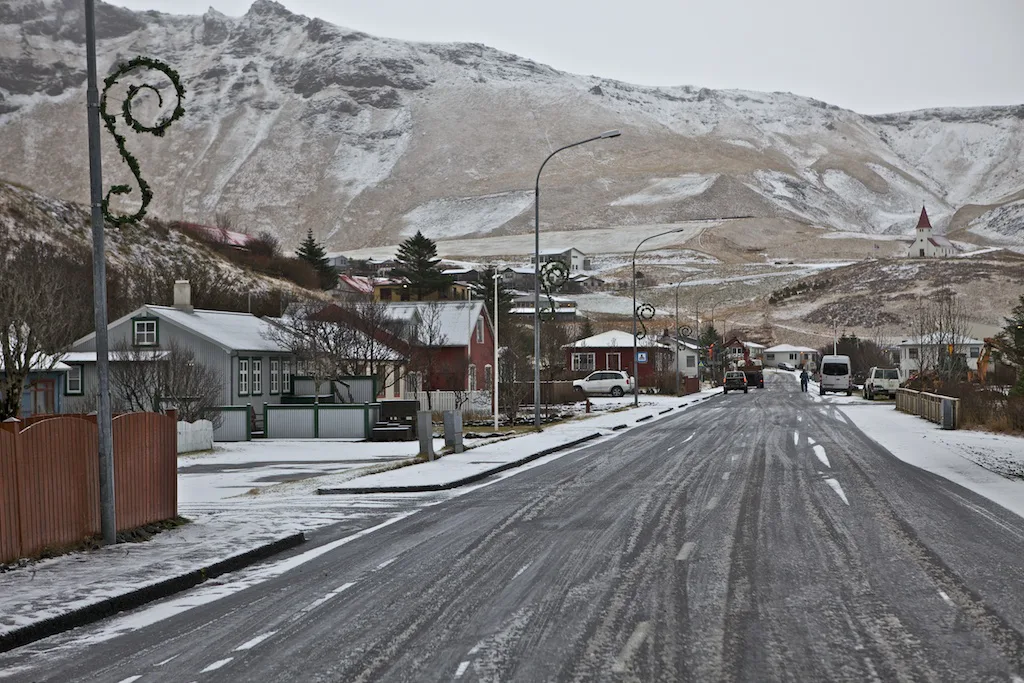
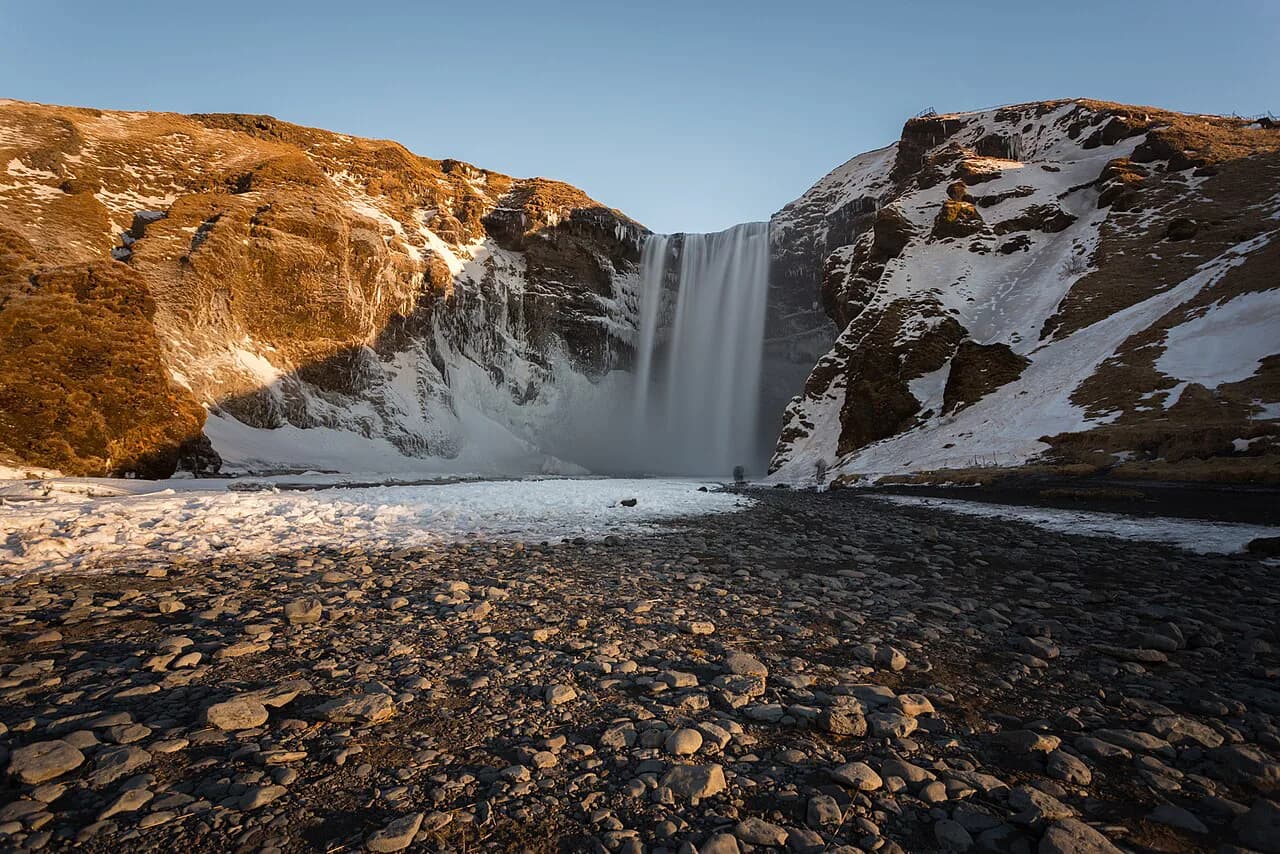
The cave slots easily into a two-day South Coast run from Vík, with Diamond Beach's black sand and icebergs as the classic add-on further east, and you can check this Jökulsárlón northern lights guide if you plan to stay overnight there. Waterfalls along the route, such as Seljalandsfoss and Skógafoss, are quick photo stops when the light allows. See what to expect at the waterfall on the Seljalandsá river before you build the drive around it.
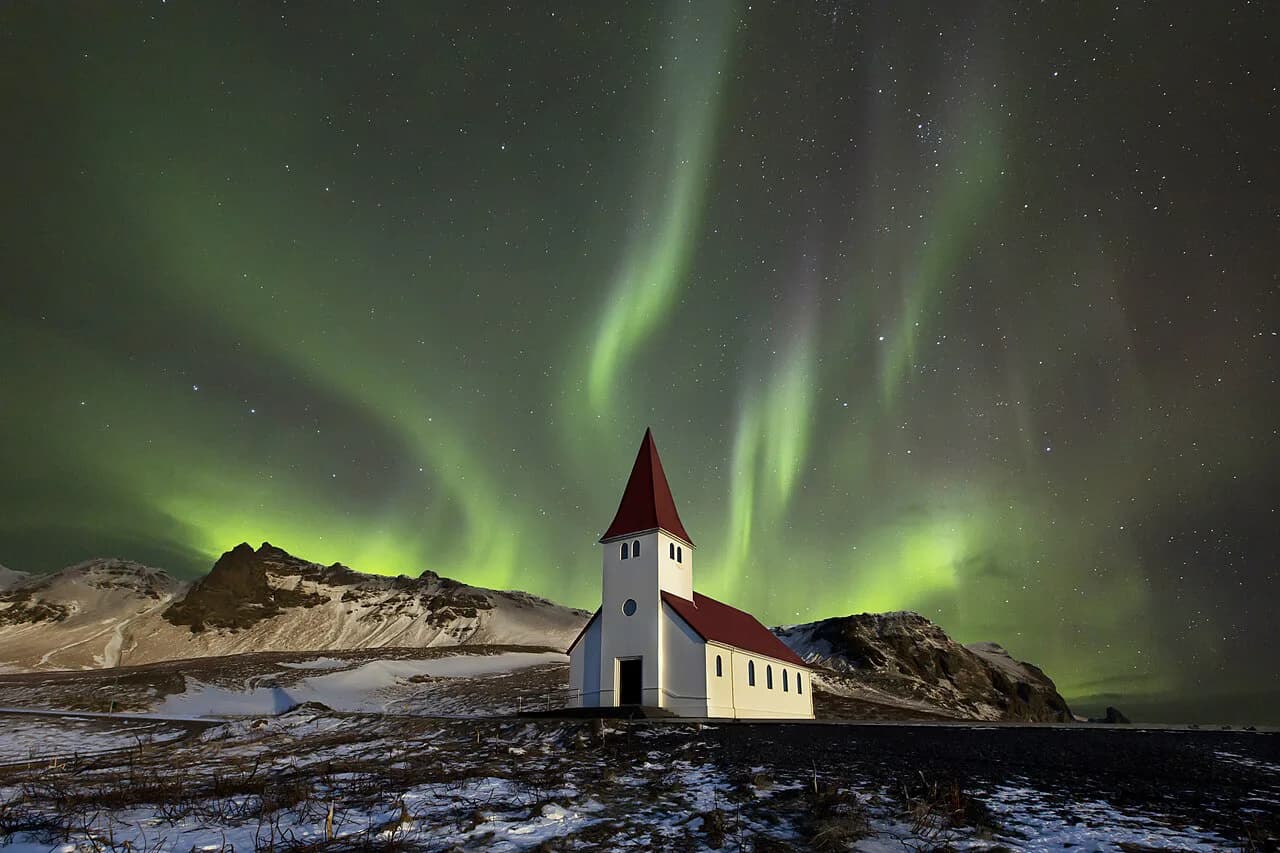
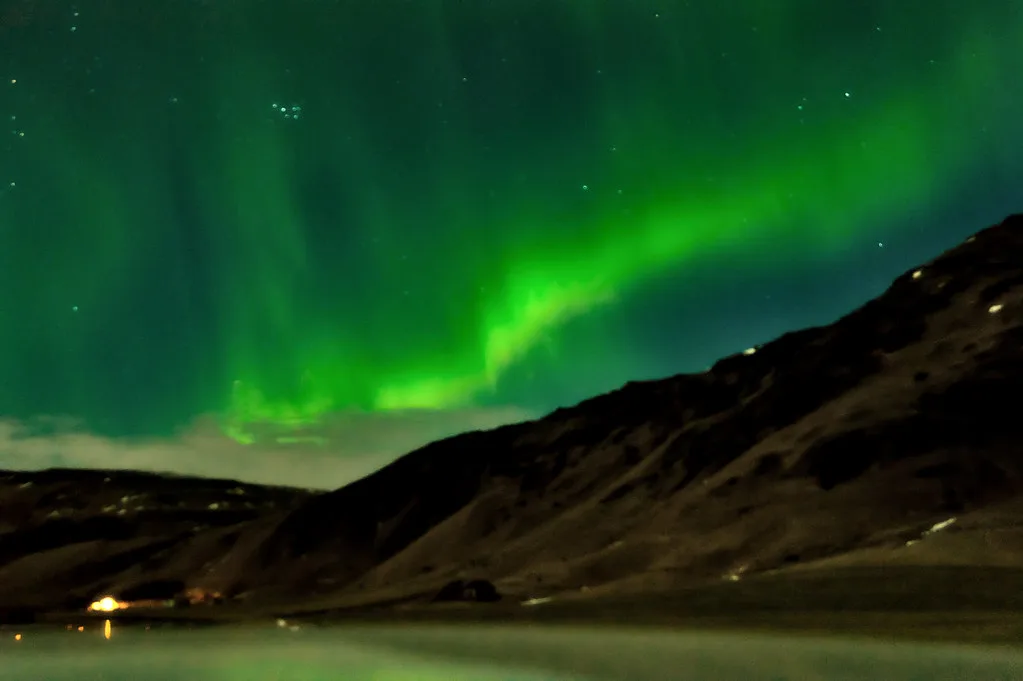
Vík is a strong aurora base in its own right: a small village on a dark stretch of coast, with open horizon toward the sea and headlands. An ice cave morning followed by an aurora-focused evening is the natural rhythm; plan the cave for the shorter daylight and use the long nights for chasing. Our guide to the northern lights in vik covers the headlands and dark-sky viewpoints in more detail.
If you would rather not drive after dark, guided aurora tours from Vík take the navigation and cloud-spotting decisions off your hands. Compare the small-group formats and slot the cave into the same stay; check current prices and departure times with the tour companies before booking.
How many nights to plan
Aurora sightings depend on solar activity and clear skies, so nothing guarantees them. The South Coast's cloud cover shifts quickly, and a coastal village like Vík trades some inland warmth for open views over the sea. Allow at least three to four nights in the area to give yourself several dark, potentially clear evenings.
Use the FMI and Icelandic Met Office forecasts to watch cloud cover, and treat Kp values as a rough guide rather than a yes-or-no signal. A modest Kp under a clear sky often beats a stronger forecast under cloud.
Plan Your Visit
Book the ice cave for the middle of your stay in Vík, so weather delays do not cost you the tour and you keep evenings free for the aurora. Pick the fast track if you want the cave inside half a day, and the private tour if you want the guide's full attention and control over pace.
Between October and March you get the widest access inside the glacier and the darkest nights outside it. Build your South Coast itinerary around Vík, leave the rental car parked during the super jeep day, and let the winter darkness do the rest.
Frequently Asked Questions
Can you visit the Katla ice cave without a tour?
No practical route exists for independent visitors. The cave sits on the Kötlujökull glacier, reached only by super jeep over ash plains and wet, icy tracks, and the ice conditions have to be assessed by a glacier guide before anyone enters. Book with an operator based in Vík such as Katlatrack.
How much does a Katla ice cave tour cost?
Katlatrack lists its Katla Fast Track from 29,900 ISK per person and its private tour from 197,500 ISK. Prices shift with season and demand, so check the current rate on Katlatrack's booking page when you reserve.
When is the best time to visit the Katla ice cave?
Winter, roughly October to March, gives the widest access and the extra smaller caves that form in colder weather. A cave directory singles out November to March as the best months. Daylight is shortest in December and January, so an early tour leaves time for other stops.
How long does the Katla ice cave tour take?
Katlatrack's Katla Fast Track runs 2.5 to 3 hours including the super jeep transfer from Vík, which takes around 45 minutes each way. Some guided formats extend to about four hours. From Reykjavík, add another 2.5 to 3 hours of driving each way.
Is the Katla ice cave natural?
Yes. The cave is carved by meltwater inside the Kötlujökull glacier and its black banding comes from volcanic ash from past eruptions. Guides cut some steps into the ice and use crampons and torches, but the formations themselves are natural.
Where do you meet for a Katla ice cave tour?
Vík, on Iceland's South Coast, is the standard meeting point, roughly 187 km and 2.5 hours' drive from Reykjavík. Katlatrack's base is at Austurvegur 16 in Vík, and ice cave, buggy and glacier hike tours leave from there.
Can you combine the Katla ice cave with the northern lights?
Yes. Vík is a small village on a dark stretch of coast, so an ice cave morning followed by an aurora-focused evening fits naturally. Sighting depends on solar activity and clear skies; plan several nights to improve your odds.
Sources
Notes for your Arctic winter trip
Optional updates to our northern lights guides.
You might also like
Continue reading
More guides you'll find useful