Skógafoss in Winter: What to Expect and Plan Your Vík Trip
Skógafoss runs year-round under snow and ice. What winter paths, daylight and the closed staircase mean, plus how to reach it from Vík and watch the aurora.
On this page
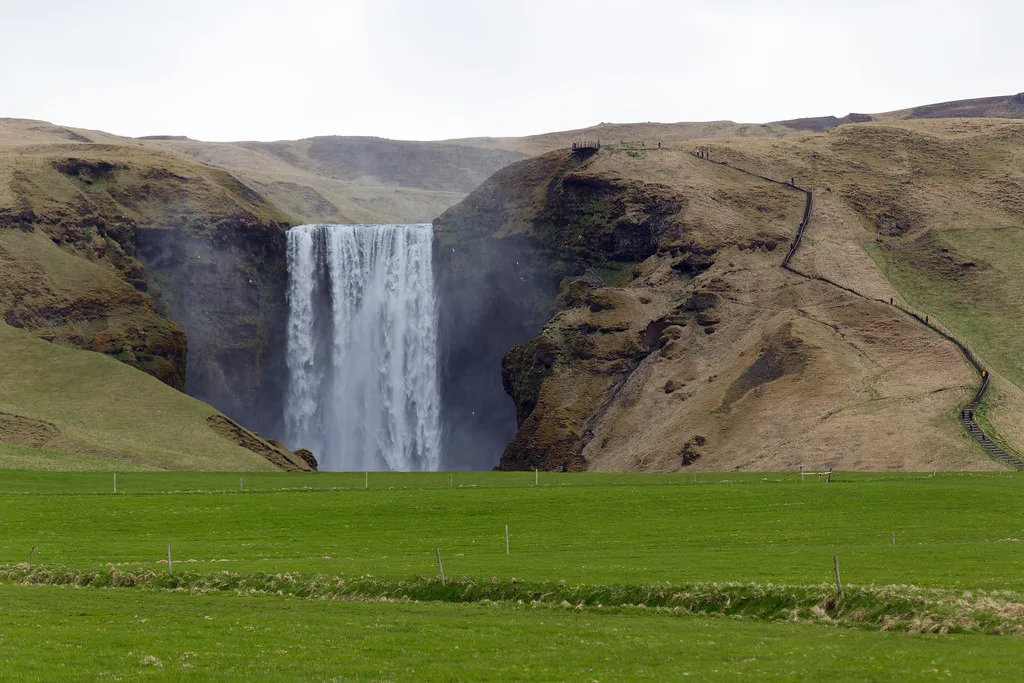
Skógafoss is the south coast waterfall you can reach without a hike: a 60-metre drop of the Skógá river that keeps flowing even when everything around it freezes, throwing enough spray to soak anyone who walks up close. In winter it comes wrapped in snow-covered cliffs and dripping icicles, and the low light pollution around the hamlet of Skógar makes it one of the few Icelandic landmarks that doubles as an aurora backdrop. It suits travelers based in Vík or along the south coast who want a short, flat walk to something spectacular, and photographers willing to work around a very short daylight window.
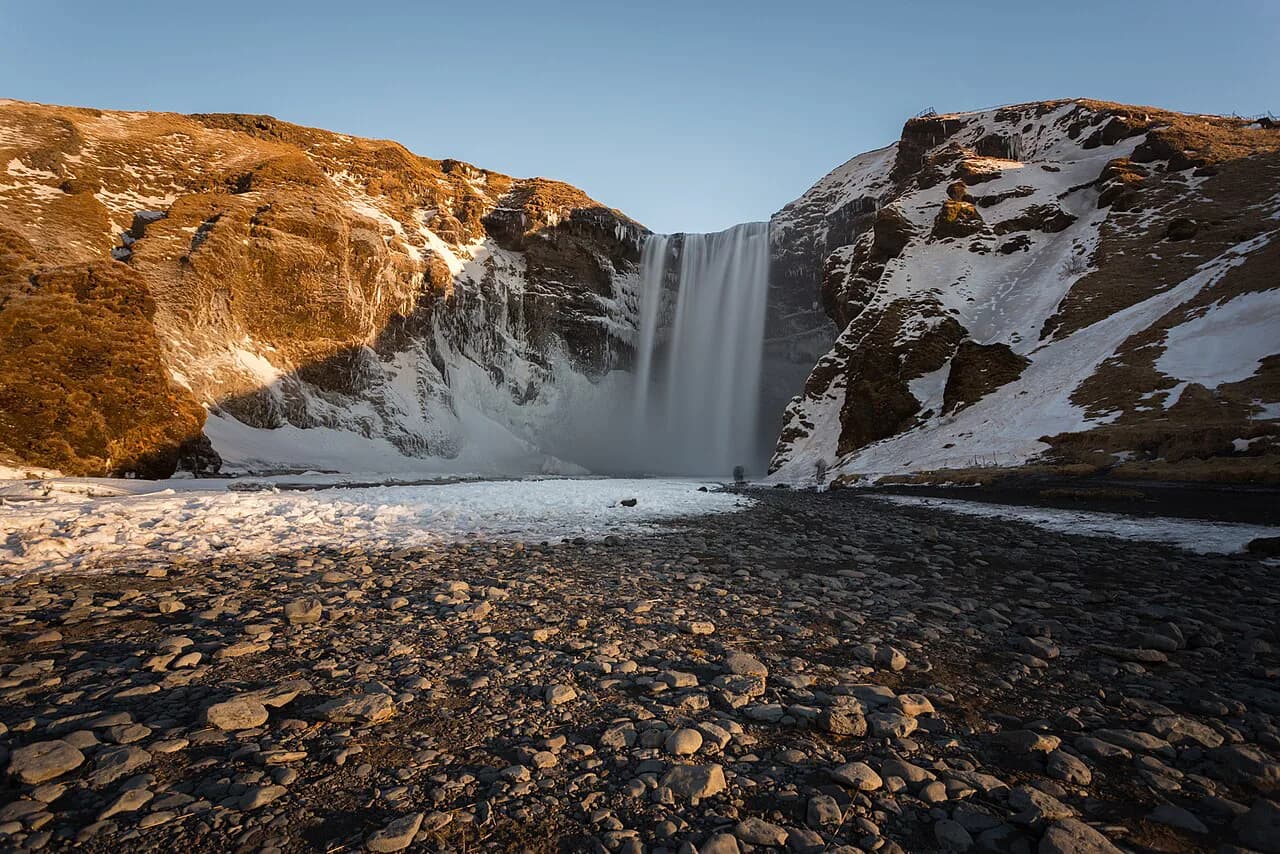
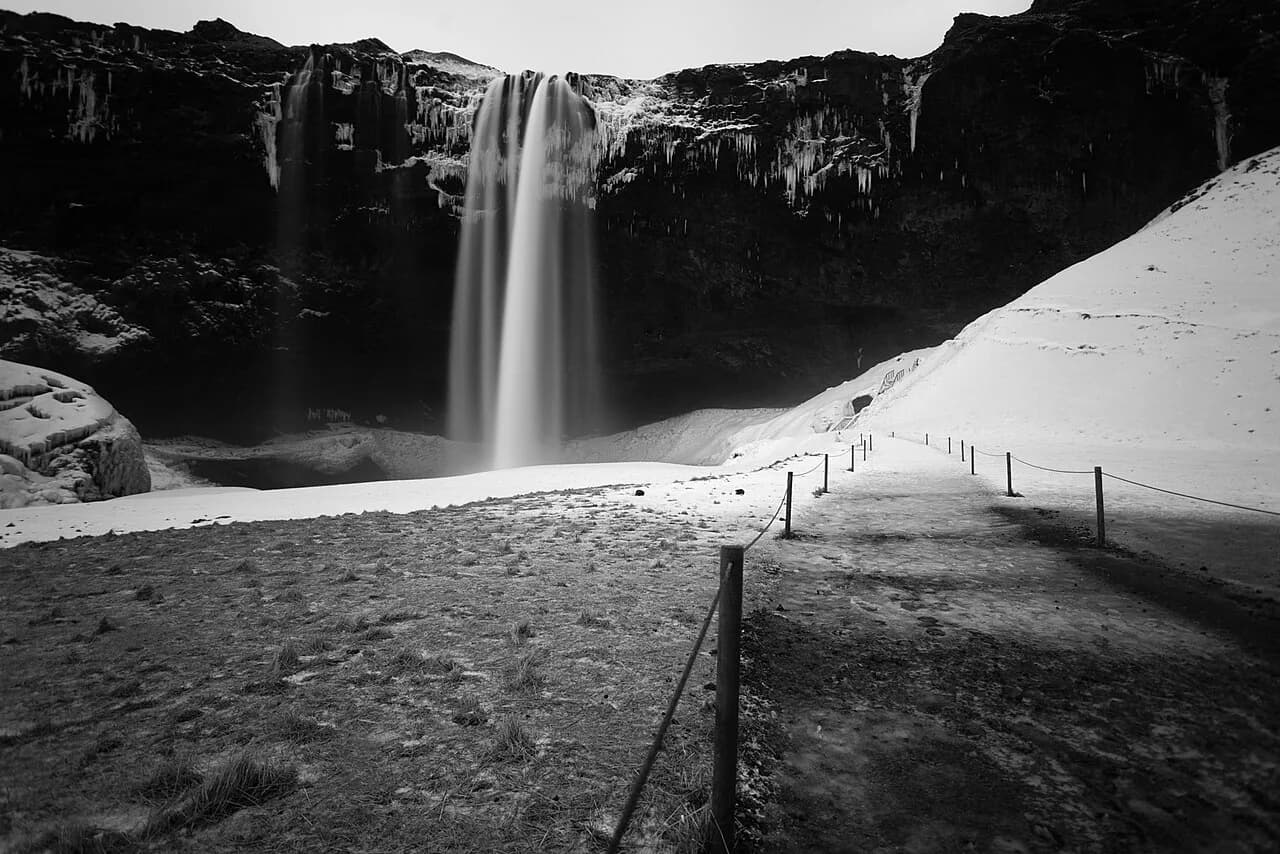
Skógafoss in winter: a 60-metre fall that keeps flowing under snow and ice
The waterfall measures about 25 metres across and drops roughly 60 metres, which is why its spray can reach the walkway even on a calm day. Because the volume of water is so large, the fall does not freeze over in winter, so you are never looking at a dead ice sculpture but at a working waterfall framed by frost. Expect blowing snow, ice underfoot and strong gusts, with average December-to-February temperatures of about -2°C to 3°C before wind chill.
The practical consequence is that Skógafoss stays worth the stop in any winter weather, but you should plan for wet, cold spray rather than a gentle view. A waterproof outer layer matters more here than at most south-coast stops, and standing back from the base gives you the whole fall without the drenching. Photographers get the best frames in the brief window when the low sun catches the spray.
Where Skógafoss sits on the south coast and how far it is from Vík and Reykjavík
Skógafoss sits right beside Route 1, the Ring Road, on the seaward side of the old cliffs that once marked Iceland's coastline. Measured along the road, it is about 149 km from Reykjavík, about 37 km from Vík, 34.5 km from Reynisfjara beach and 29.3 km from Seljalandsfoss. That geometry makes Skógar a natural overnight stop for anyone exploring the south coast rather than a detour.
If you are staying in Vík, the falls are a short drive rather than a day trip, which changes how you use them: you can visit in the morning light and return after dark for aurora without committing a whole day. Reykjavík-based travelers face a much longer round trip and usually combine Skógafoss with Seljalandsfoss and Reynisfjara in one south-coast day. For planning the Vík end of the trip, including how the town handles winter weather, see the guide to Vík in winter. For aurora odds and viewing spots across the whole country, the Iceland northern lights guide is the broader comparison.
The nearest comparable waterfall, Seljalandsfoss, is only about half an hour's drive west and has its own winter character, including a path that can be icy behind the fall. Travelers often see both in one day; the comparison of ice, spray and access is covered in the guide to Seljalandsfoss in winter.
Getting there in winter: the Ring Road drive, road conditions and tour options from Reykjavík
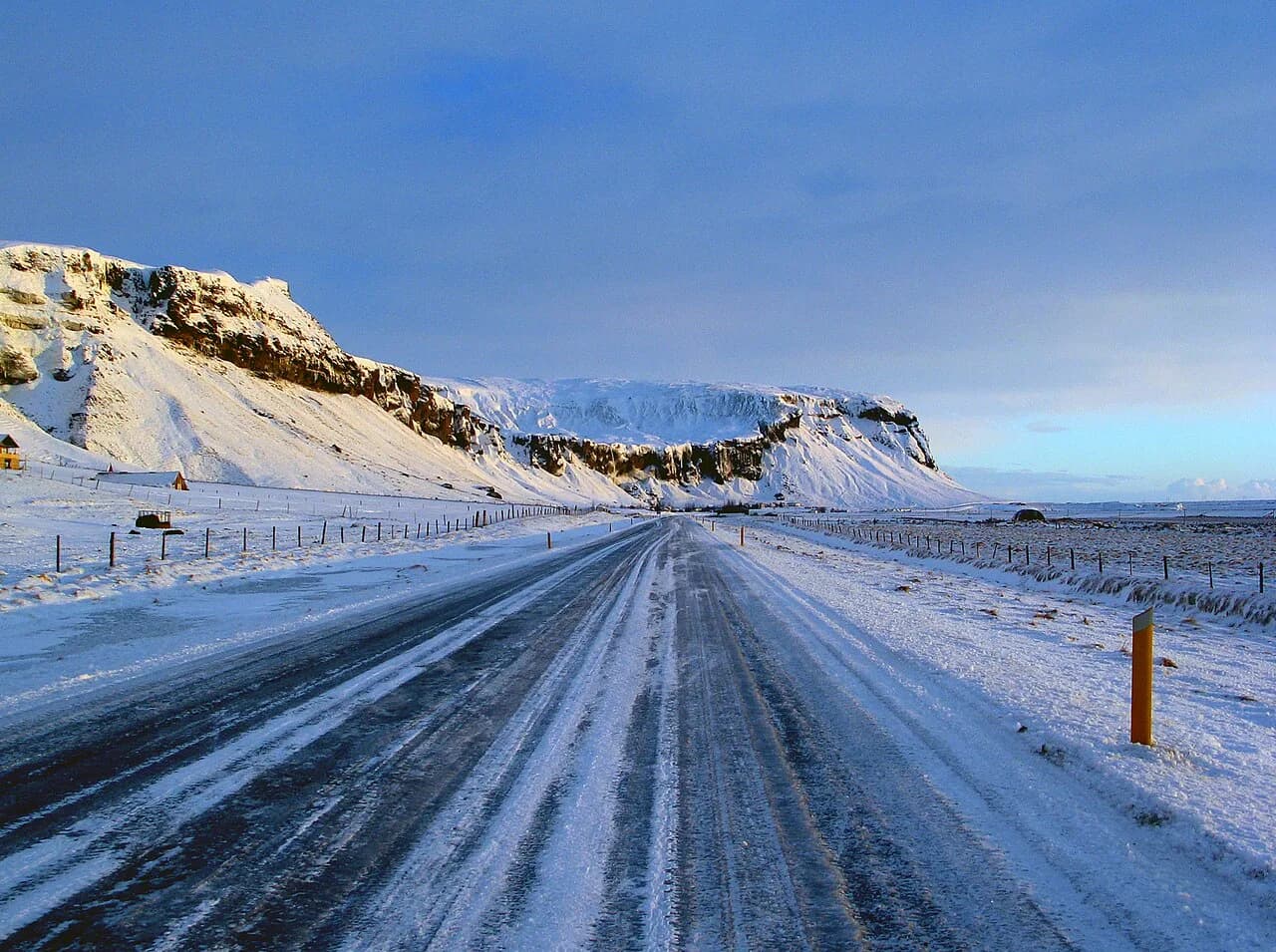
Route 1 and the short side road to the Skógafoss car park are kept cleared in winter, and the drive is paved the whole way, but storms can close roads with little warning. Treat the trip as a road-condition decision rather than a distance one: check road.is before setting out and again during the drive, and allow extra time when the surface is icy. A four-wheel-drive vehicle is the safer choice in winter conditions.
From Reykjavík, the drive takes a little over two hours in good conditions and passes through Hveragerði, Selfoss and Hella before Seljalandsfoss. The car park sits beside the falls, so even in poor weather you can see Skógafoss clearly without leaving the vehicle. The road is paved all the way and plowed regularly in winter, though it can still be icy.
If you would rather not drive Icelandic winter roads, guided south-coast tours run year-round, weather permitting, and most combine Skógafoss with Seljalandsfoss, Sólheimajökull glacier and Reynisfjara. Arctic Adventures, for example, lists a South Shore day tour of about ten hours from Reykjavík starting at 149 USD per person. Prices and departures shift with season and demand, so confirm the current rate and pickup time when you book.
What the falls and paths are like in winter: spray, ice and the roped-off staircase
The walk from the car park to the foot of Skógafoss takes under five minutes and is flat, though the ground is uneven and often icy at the end where spray freezes. With snow cover you can reach the base in ordinary boots; when the last stretch is thick ice, traction devices make the difference between a photo and a fall. Even without them, the view from the car park is unobstructed, just distant.
A metal staircase climbs to an upper viewing deck, but in winter it is often roped off because the steps turn icy and dangerous. When the entrance is closed, respect the rope rather than following footprints past it; the lower walkway still gives the classic straight-on view of the fall. If the stairs are open, cleats or crampons are the sensible footwear.
Winter does not empty the site. Fewer visitors come, but the short daylight hours squeeze everyone into the same window, and tour buses still stop because the falls are so easy to reach. Arriving just before sunrise, or using the ice to your advantage with traction devices, is the realistic way to get a frame without a crowd.
Facilities are limited: there are toilets and a large car park, and a fish-and-chips van sometimes parks nearby, while the Skógar Museum has a cafe. The museum itself is worth an hour, with its folk, open-air and technical collections, and a single adult ticket covers all three parts at 2,000 ISK. Hours vary by season, so check the museum's current opening times before you build a day around it.
Daylight and timing: why mid-morning to early afternoon is the usable window
Icelandic winter days are short, and around Skógar the useful light runs roughly from late morning to mid-afternoon, with golden hour compressed into a brief slot. Plan your arrival inside that window if you want photographs, and treat the dark hours as aurora time rather than sightseeing time. The falls are beautiful in flat grey light too, so a cloudy day is not wasted.
Because the daylight is so limited, the order of your south-coast day matters: Seljalandsfoss, Skógafoss and Reynisfjara cannot all have golden light, so decide which one deserves the best hour and slot the others around it. Skógafoss works well in the middle of the day, when the sun is high enough to reach into the gorge.
Seeing the northern lights above Skógafoss: dark-sky conditions near Skógar
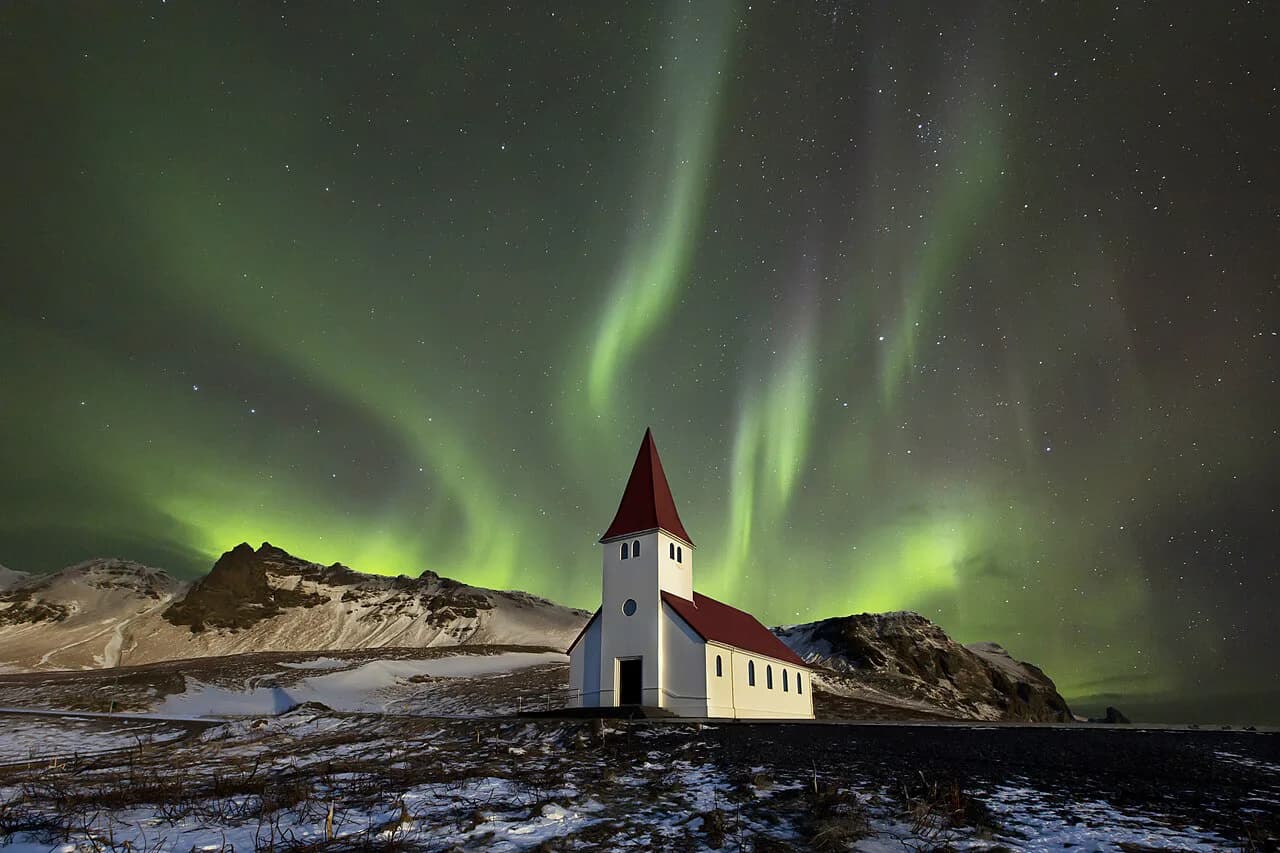
Skógar has very little light pollution, so on a clear night the area around the falls is a genuine dark-sky location where the aurora can appear directly above the water. The season for dark enough skies runs from late August to early April, with November to February the prime months. Skógafoss is a striking foreground, but the aurora only shows when solar activity and cloud cover cooperate, so treat any sighting as a bonus rather than a plan.
For aurora watching, bring a flashlight and wear cleats, because the paths that are merely slippery in daylight become treacherous in the dark. Watch the cloud forecast rather than the Kp number alone: a high Kp under thick cloud shows nothing, and a modest Kp under clear skies can still produce a display. If you want a guided chase from the nearest town, compare the options in the guide to northern lights tours from Vík.
Self-guided chasing around Skógar means driving short distances to find gaps in the cloud, which is realistic only if you are comfortable on winter roads after dark. A guided tour removes that risk and usually includes transport and a driver used to the conditions. Either way, give yourself more than one night, since a single cloudy evening proves nothing about your chances.
Where to sleep near the falls: the hotels and guesthouses in Skógar
Skógar itself has a small cluster of places to stay within a few minutes of the falls: Hotel Skógafoss, a 19-room B&B; Hotel Skógar, a 12-room hotel; and Hotel Edda Skógar, a simpler 32-room option. There is also a campground at Skógafoss, but winter camping in Iceland suits only very well-equipped and experienced campers who bring their own tent and pay a small fee for access to water and toilets.
Staying in Skógar rather than driving back to Reykjavík is what makes an aurora attempt practical: you are minutes from the falls and can retreat indoors when cloud rolls in. The trade-off is a small village with limited dining, so plan dinner around the hotel restaurants or eat before you arrive. Rooms near the falls book up in winter weekends and around northern-lights season, so reserve early.
Other south-coast sights close by: Kvernufoss, Seljalandsfoss and Reynisfjara
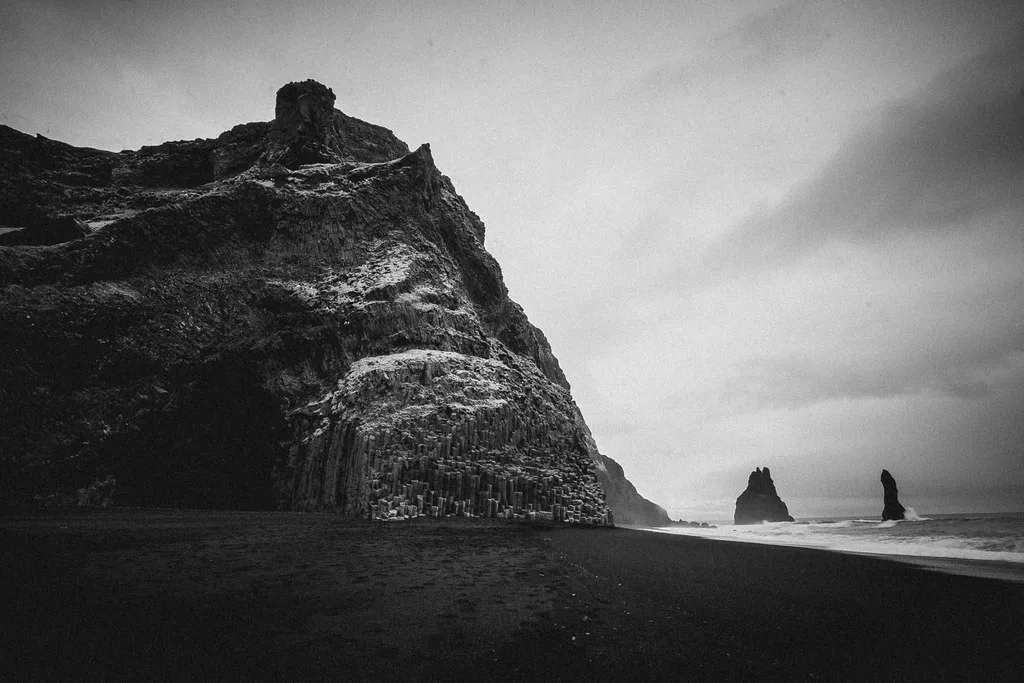
Kvernufoss sits in a gorge a short walk from the Skógar area and is often far quieter than its famous neighbor, making it a good second stop when Skógafoss is busy. Seljalandsfoss, about 29 km west, is the waterfall you can walk behind, though the path is icy in winter. Reynisfjara's black sand beach lies about 34.5 km east and deserves its own time slot.
East of Vík, the Katla Ice Cave on the Kötlujökull glacier outlet is a winter activity that pairs naturally with a Skógar overnight, since it departs from the Vík area. It is a different kind of day out: guided, weather-dependent and booked in advance. Details on access and what the tour involves are in the guide to the Katla Ice Cave from Vík.
How many nights to allow for a fair chance of clear skies
Two nights based in or near Vík gives you one full day for the waterfalls and two shots at a clear evening; three nights noticeably improves the odds without stretching the trip. Iceland's weather changes quickly, so a cloudy first night often gives way to clear skies the next, and staying put beats driving back to Reykjavík between attempts. There is no way to guarantee a sighting on any given trip.
If aurora is the main goal, build your itinerary around a base near Skógar or Vík and keep your daytime drives short so you are not exhausted by nightfall. Watching the forecasts for cloud rather than solar activity is the more useful habit. And if the aurora does not appear, the frozen falls, the ice caves and the black beaches still justify the trip.
Plan Your Visit
Skógafoss in winter rewards travelers who plan around short daylight and shifting roads: arrive within the usable light window, carry traction for the icy final stretch, and treat the staircase as open only if the rope is down. Base yourself in Skógar or Vík for at least two nights if the aurora matters to you, and keep the car pointed at clear sky rather than a fixed spot. For the wider picture of aurora odds, viewing spots and tours around the town, read the guide to the northern lights in Vík.
Check road.is before any winter drive and confirm tour departure times and prices directly with the tour company when you book, since both vary through the season. The falls, the museum and the dark skies above Skógar are there all winter; whether the aurora joins them depends on the night.
Frequently Asked Questions
Can you see the northern lights at Skógafoss?
Skógar has very little light pollution, so the area around the falls is a good dark-sky location when the sky is clear. The aurora season runs from late August to early April, with November to February the prime months. Sightings still depend on solar activity and cloud cover, so plan several nights rather than expecting a display on one particular evening.
Can you climb the stairs to the top of Skógafoss in winter?
Sometimes. The metal staircase to the upper viewing deck is often roped off in winter because the steps become icy and slippery. If the entrance is closed, respect the rope; the lower walkway still gives the classic view. When the stairs are open, use cleats or crampons and take the climb slowly.
How much time do you need at Skógafoss?
The walk from the car park to the foot of the falls takes under five minutes, so an hour covers the waterfall, the lower walkway and a look at the upper deck if it is open. Add an hour if you want to visit the Skógar Museum, whose ticket covers its folk, open-air and technical collections.
Which waterfall is better, Skógafoss or Seljalandsfoss?
They offer different things rather than one beating the other. Skógafoss is wide and powerful with a flat, short approach, while Seljalandsfoss lets you walk behind the falling water on a path that turns icy in winter. Many travelers see both in one south-coast day, since they are about 29 km apart.
Is it a good idea to go to Iceland in the winter?
Winter brings short daylight, icy roads and sudden storms, but it also brings snow-covered falls, ice caves and dark skies for the aurora. If you base yourself near the south coast and keep drives short, the season works well. Check road conditions before each leg and build in spare nights for weather.
Do you need a tour to visit Skógafoss in winter?
No. Route 1 and the side road to the car park are kept cleared, and the falls are a short flat walk from parking, so self-driving from Vík or Reykjavík is straightforward in good conditions. A guided south-coast tour is the alternative for travelers who would rather not drive Icelandic winter roads.
Sources
Notes for your Arctic winter trip
Optional updates to our northern lights guides.
You might also like
Continue reading
More guides you'll find useful