Vík in Winter: Where to Stay on Iceland's South Coast
Vík in winter brings dark aurora nights, black sand beaches and glacier day trips. See daylight, weather, where to stay and how many nights to plan.
On this page
Vík í Mýrdal sits on Iceland's southernmost mainland point, a compact village of a few hundred residents below Reynisfjall mountain, roughly 186 kilometres (110 miles) from Reykjavík by road. In winter it works as a base rather than a resort: black sand beaches, sea stacks, cliffs and glacier outlets are all within a short drive, and the village itself has restaurants and hotels within walking distance of each other. It suits travellers who want a fixed bed for several nights and day trips in every direction, rather than a different guesthouse every evening.
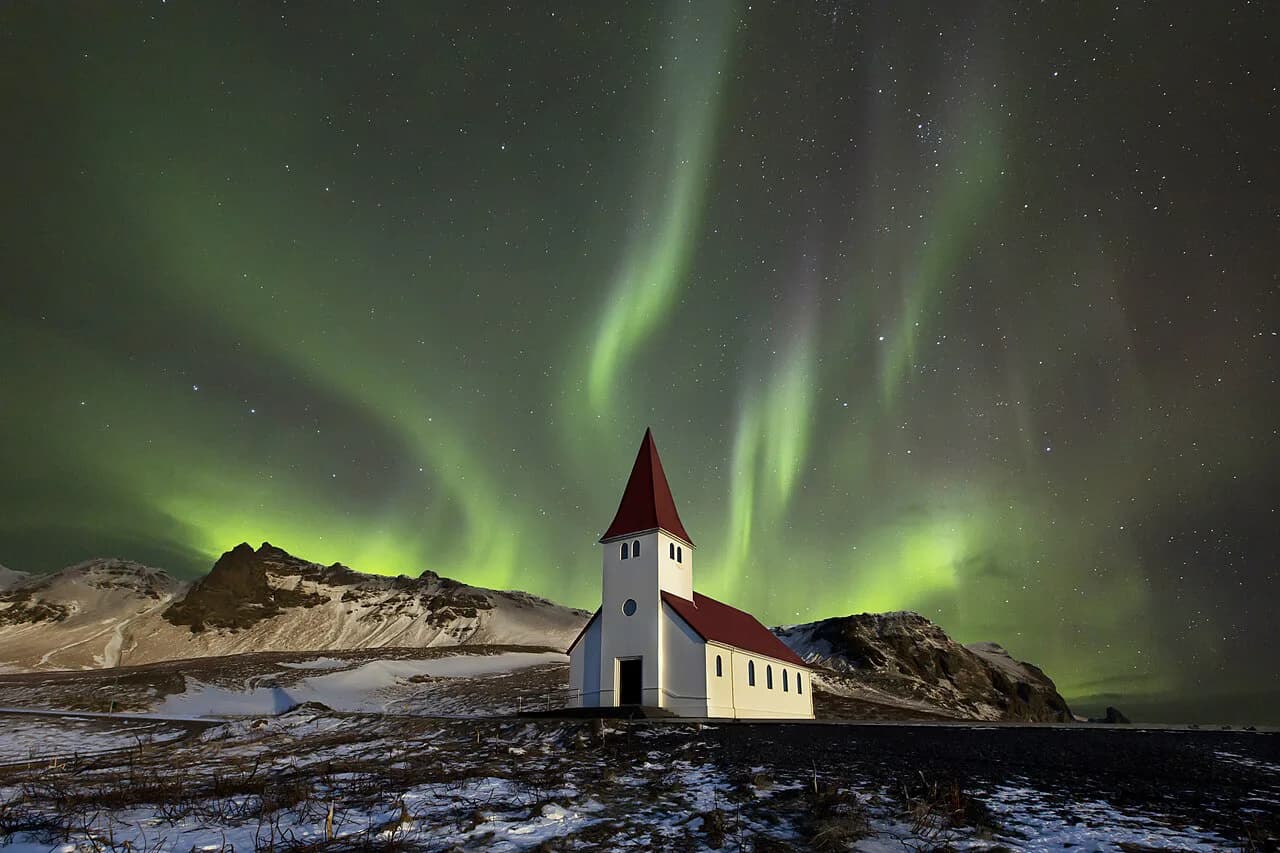
Why Vík works as a winter aurora base
The appeal is geographic. Vík faces the open Atlantic to the south, with dark countryside behind it toward the glaciers, so you can be away from village lights within minutes rather than hours. The South Coast also strings together the sights most people come for, from Skógafoss and Seljalandsfoss to Sólheimajökull and the Katla ice cave, which means a single base covers several days of activity. For a dedicated look at viewing spots and timing, see the guide to northern lights in vik.
The trade-off is exposure. Guide to Iceland describes Vík as the stormiest place in its wind study of Iceland, with winter gusts strong enough to close the roads around the village. That shapes how you plan: a fixed base is comfortable, but you should treat the day's itinerary as provisional and let road conditions decide the order of stops.
When the aurora season runs and how dark the nights get
Around Vík, the nights are dark enough for aurora watching from late August and September through to early April, the same window that applies across southern Iceland. Solar activity has to cooperate, and so does the cloud, which is the harder variable on this coast. Nothing about Vík's latitude makes a sighting certain on any given night; what a winter visit buys you is a long, dark window and repeated attempts.
Clear skies are the deciding factor, and coastal cloud can sit over the village while inland is open. Checking the cloud forecast alongside the aurora forecast each afternoon is more useful than watching a Kp number alone, because Kp is guidance about solar activity, not about what you will see above Reynisfjall. If the coast is socked in, a drive north toward the glaciers or a night with a guided operator who reads the forecast can be the better call.
Daylight hours and weather in winter
Winter days are short, and in Vík that compresses sightseeing into a tight window. In Reykjavík, daylight runs from roughly 4.5 hours at the start of January to about 7 hours by the end of the month, with sunrise around 10.10am and sunset around 5.10pm in late January, plus about an hour of usable civil twilight at each end of the day. Vík lies east of the capital, so treat those figures as a close guide rather than exact, and plan your longest drives for the middle of the day.
Temperatures are milder than most visitors expect. During a late-January trip along the South Coast, the mercury ranged from about -3°C to 4°C, with wind chill making it feel much colder and rain or snow always possible. Guide to Iceland notes that Vík has the mildest winter in its temperature study, which is why the same windproof layer works in January as in July on this coast.
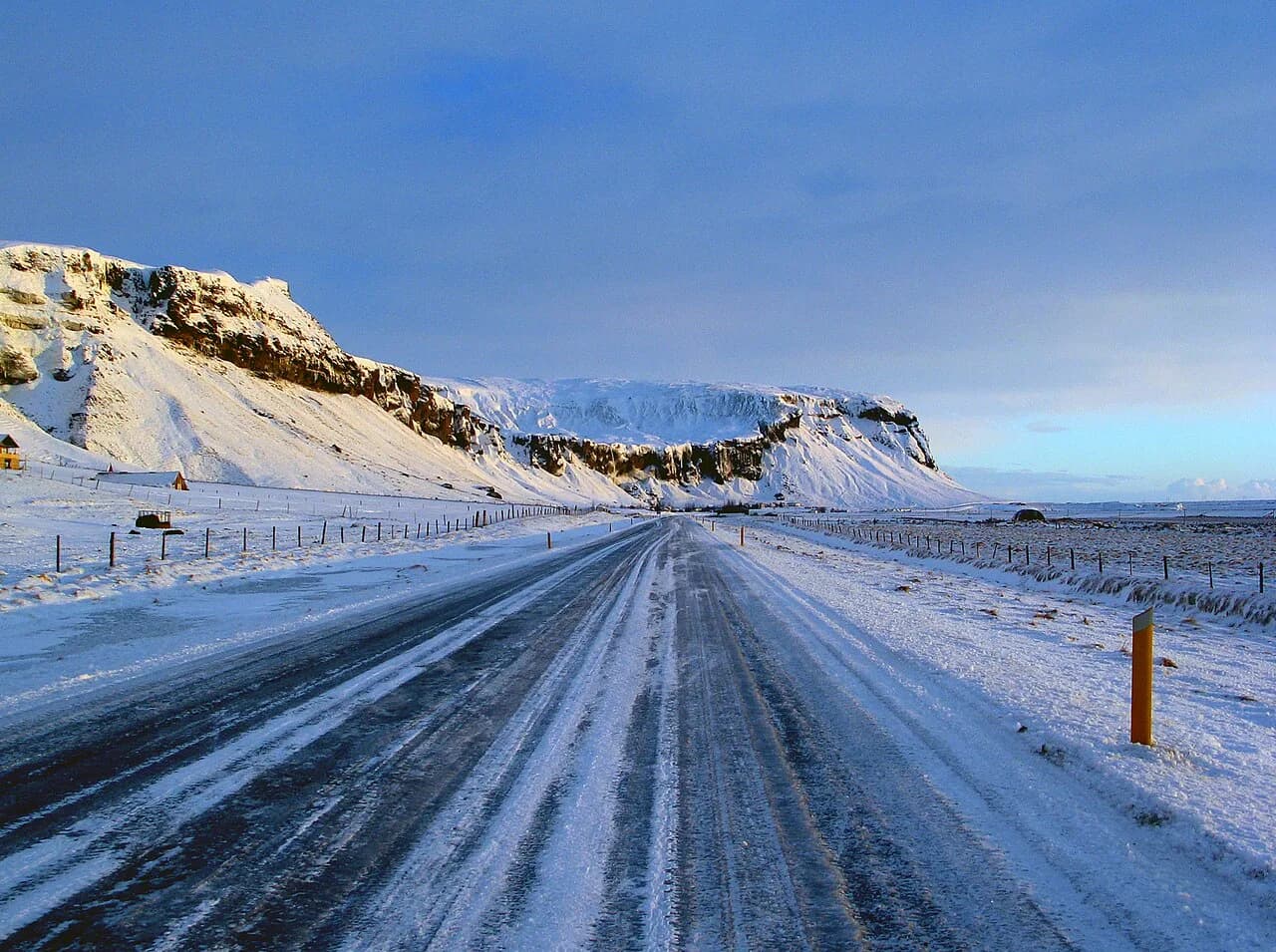
Wind and rain matter more than snow depth here. Guide to Iceland's rain study found Vík sees rain on more days of the year than any other location it examined, so a waterproof outer layer earns its place on every outing. Snow on the roads is possible but not the defining feature of a Vík winter; ice, spray and gusts are the practical concerns.
Where to watch the aurora near Vík
You do not need to go far. The beach at Víkurfjara, across the road from the village, gives you an open southern horizon with the sea stacks offshore, and it is a short walk from the hotels. The catch is village lighting behind you and the ocean in front, so keep well back from the waterline at night, when sneaker waves are impossible to see coming.
A better bet on many nights is a short drive out of the village toward the open countryside, where the road heads east under the glaciers or west toward Skógar. Guide to Iceland lists the Reynisfjall cliffs and Dyrhólaey peninsula among the region's landmarks, and pulling off at a safe lay-by away from the village lights gives you darker sky without a long drive. If you would rather not navigate icy roads after dark, guided departures handle the driving and the forecast reading; Northern Lights Tours from Vík are worth comparing before you commit to a self-drive night.
Reynisfjara, Reynisdrangar and the black sand coast
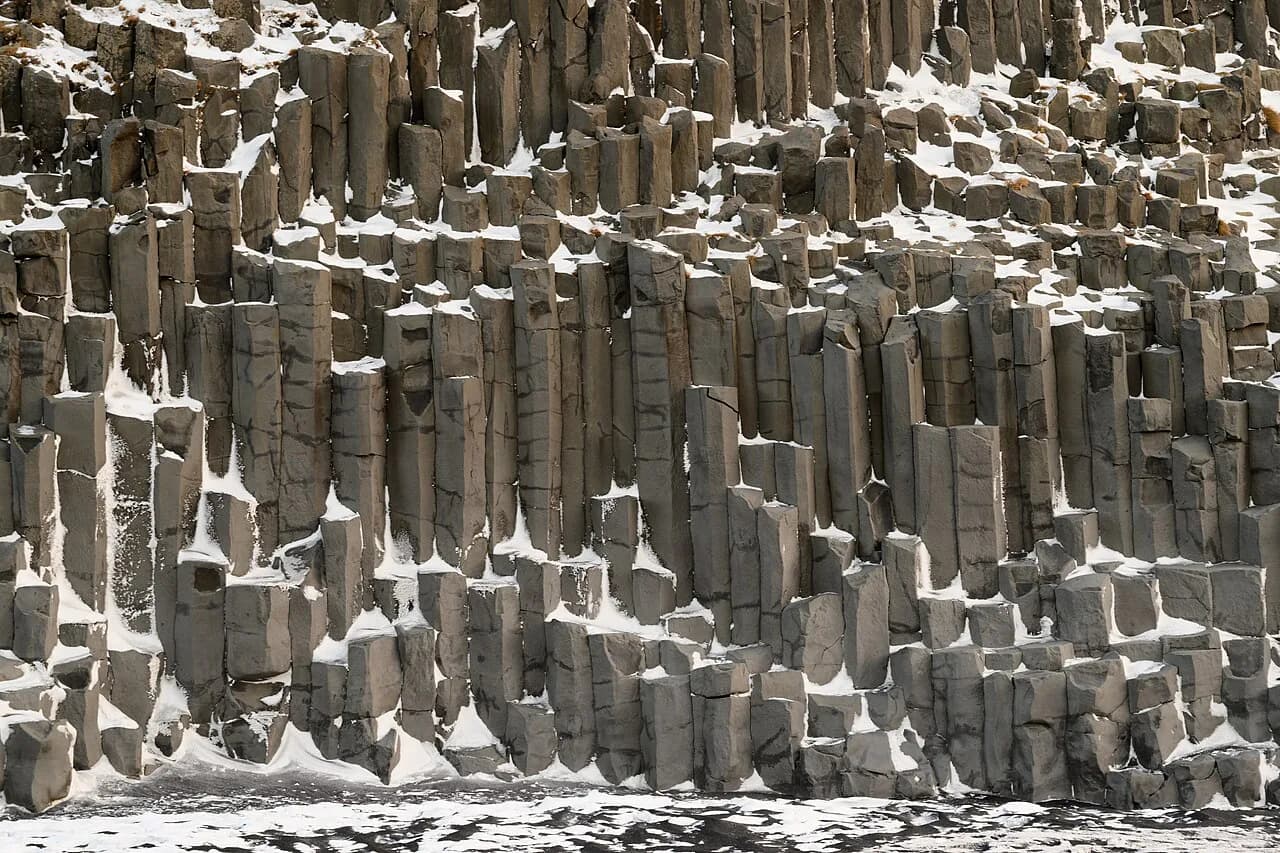
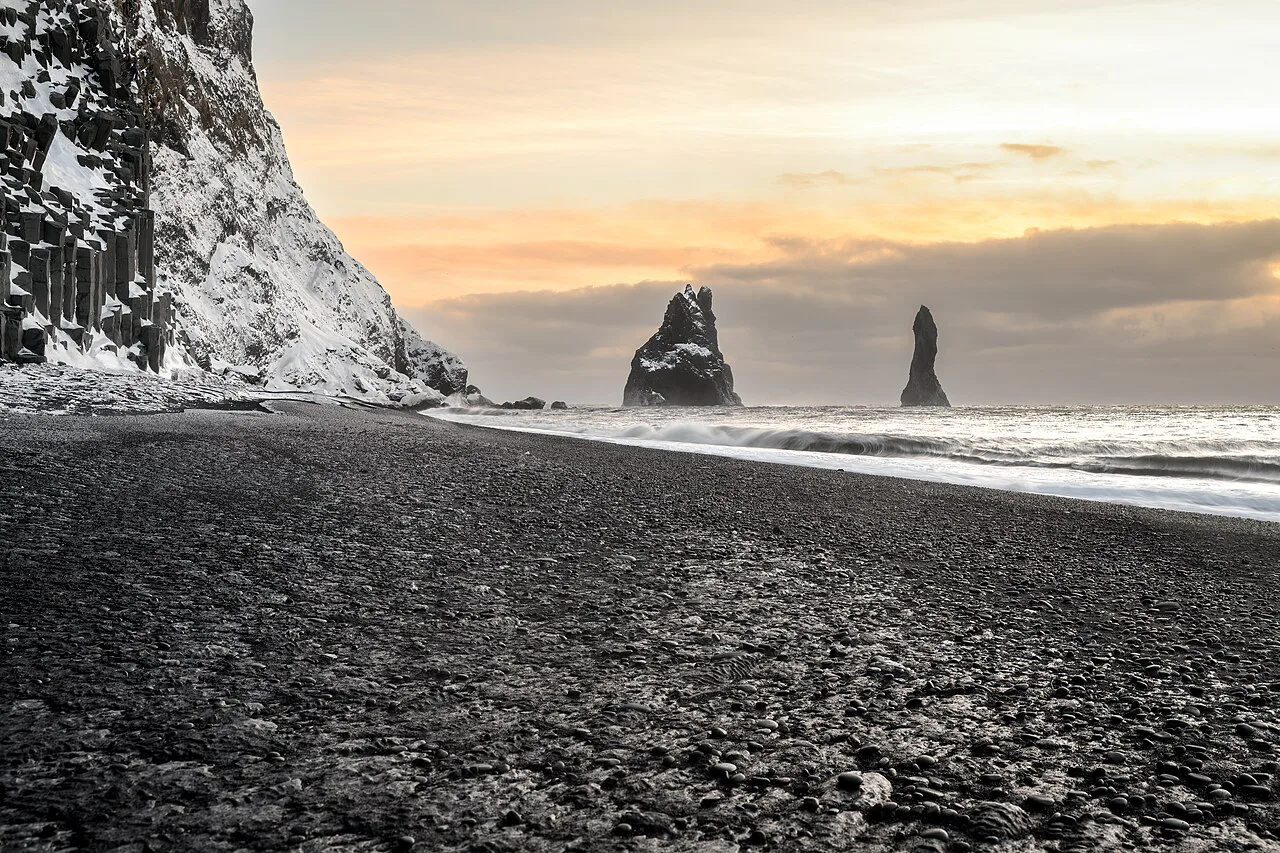
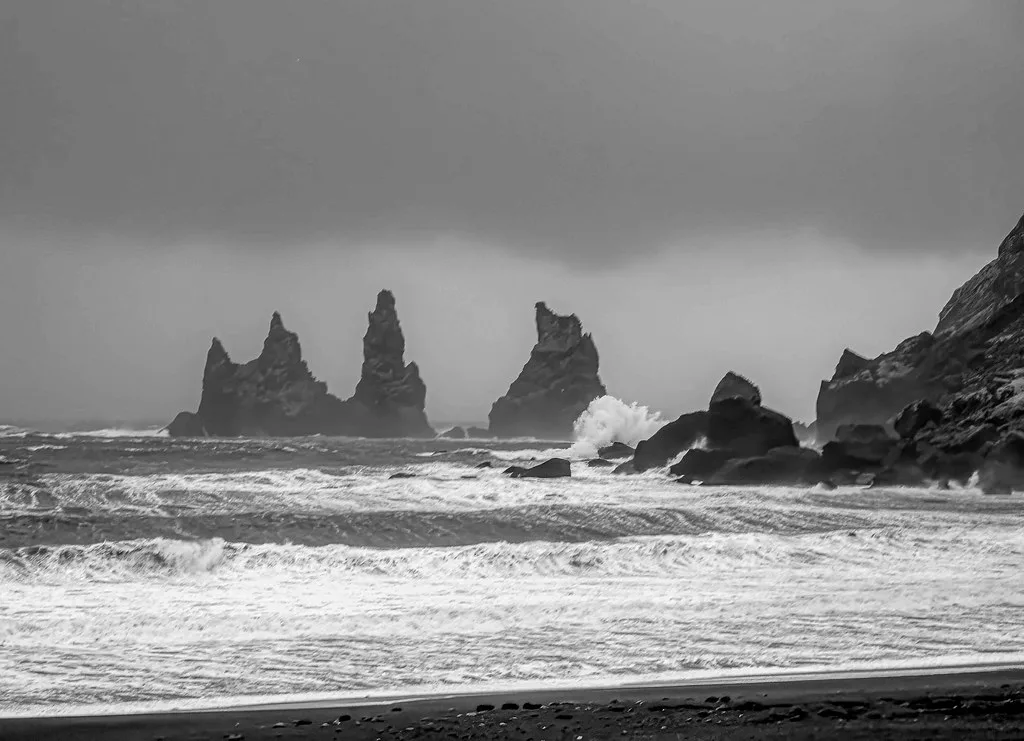
Reynisfjara, just outside the village, is the beach most travellers picture: black volcanic sand, the Reynisdrangar sea stacks offshore, and basalt columns along the cliff. Guide to Iceland is explicit that the beach can be dangerous because of sneaker waves, and that you should not swim there and should stay away from the water's edge. Treat it as a place to walk and photograph the stacks from a distance, not a place to test the surf, and never turn your back on the sea for long.
Winter light makes the contrast sharper and the beach quieter than in summer, and the short day means you may catch low golden light in the middle of the afternoon rather than at dawn. Parking and access are straightforward from the village, and the beach makes an easy first stop while you wait for the day to brighten.
Dyrhólaey and the cliffs in winter
Dyrhólaey, the promontory west of Vík, gives you sweeping views along the South Coast and, on a clear day, out toward the Westman Islands. Guide to Iceland describes the rock arch stretching into the sea and the peninsula's summer puffin colonies; in winter the birds are at sea, but the viewpoint is the reason to come.
The road up to the lighthouse and viewpoint can be icy or drifted in winter, so treat access as weather-dependent and be ready to skip it if the surface looks doubtful. The Reynisfjall cliffs nearer the village offer a comparable sense of scale with less exposure, and the whole detour can be slotted into a short morning.
Glacier and ice cave trips from Vík
Vík is the meeting point for the Katla ice cave tours, where you join a super jeep and are outfitted before a short walk to the cave on the glacier. The ice caves are a winter feature of the Myrdalsjokull outlet, and the trip runs from the village rather than from Reykjavík, which saves you a long day on the road. Read the guide to the katla ice cave for what the visit involves and how the day is structured.
Further east, Sólheimajökull offers guided glacier walks pitched at beginners, and the Skaftafell area of Vatnajökull National Park runs blue ice cave and glacier hikes from its visitor base. Guide to Iceland lists both a beginner's Sólheimajökull hike and the Katla trip among the day tours based around Vík, so you can mix a gentler glacier walk with a cave visit across two days.
Ice cave and glacier tours depend on conditions and are usually run with a guide, so book ahead for the winter window and expect the guiding company to confirm the route on the day. If you want the cave to be the centrepiece of your trip rather than one activity among several, give Vík at least two days so a cancelled departure can be rebooked.
Snowmobile, ATV and horse riding tours
Beyond the ice, Vík runs on active excursions. Guide to Iceland lists a one-hour snowmobile tour on the Mýrdalsjökull glacier, an ATV beach buggy outing on the black sand, and a paragliding tandem flight over the village, which gives you a sense of how varied the local options are. Each is a short, guided session rather than a full day, so two can fit around a single winter daylight window.
Horse riding is the quietest option and the most weather-flexible. Guide to Iceland describes a one-hour black sand beach ride that runs year-round and welcomes beginners as well as experienced riders, taking in the coast and the Reynisfjall cliffs. For a winter trip it is a good choice on a day when the high ground is closed but the beach is rideable.
Waterfalls and sights on the drive from Reykjavik
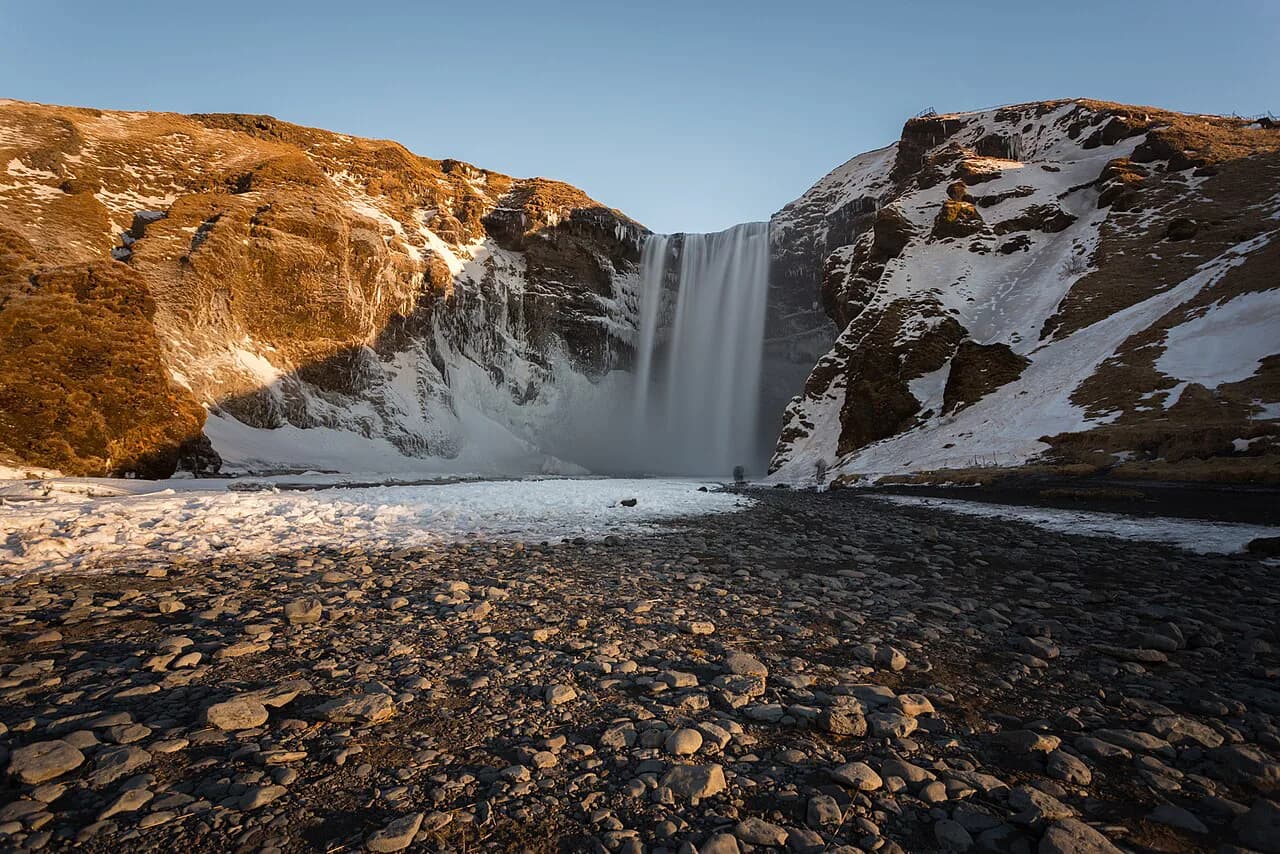
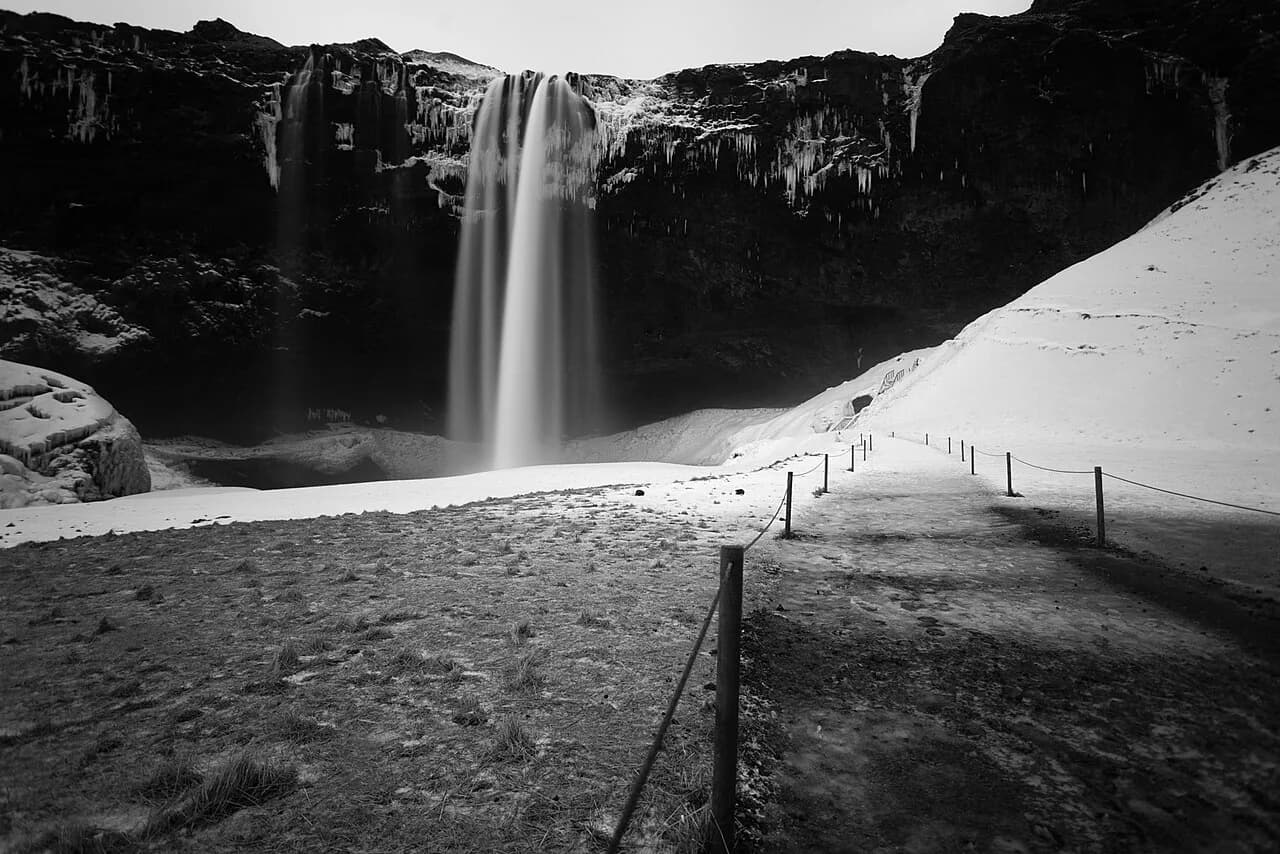
If you drive from Reykjavík, the waterfalls come before Vík, and daylight decides how many you can take in. Seljalandsfoss is the one with the walkway behind the falls, while Skógafoss spills close to 200 feet (60 metres) and is the more dramatic of the two for photographs. In winter the path behind Seljalandsfoss can close, and the area around both falls can be icy, so build in more time than the map suggests; see seljalandsfoss in winter and skogafoss in winter for the seasonal detail.
On a late-January South Coast drive, a traveller found Seljalandsfoss crowded by 11.15am, with the path behind the falls closed for winter, and reached Skógafoss half an hour further on in low golden midday light. That is the realistic rhythm: a handful of stops, a slow pace on icy paths, and driving finished before the light goes.
East of Vík, the road runs toward Skaftafell and Jökulsárlón, where icebergs drift at the edge of Vatnajökull and wash up on the black sand at Diamond Beach. Guide to Iceland places the glacier lagoon and the Skaftafell reserve within Vatnajökull National Park, a long but feasible day from Vík in winter if you start early and keep stops short.
Where to stay in and around Vík
Vík's accommodation is village hotels and self-contained suites rather than glass-roofed aurora rooms. Guide to Iceland names Hotel Kría beside the Ring Road, Hotel Vík í Mýrdal in the centre within walking distance of restaurants and shops, Hotel Katla a short drive out with mountain and glacier views, The Barn as a minimalist, eco-focused option, and Black Beach Suites as self-catering suites overlooking Reynisfjara. Which you pick depends on whether you want to walk to dinner or cook your own meals and step outside to dark sky.
Rural stays just outside the village cut light pollution and put you closer to the dark. Forum posters on the Rick Steves travel forum recommend the Volcano Hotel near Vík and mention Grund Cabin about 45 minutes south of the village for a larger group stay, both of which trade village convenience for quieter nights. If aurora watching is the priority, an out-of-village base with an open northern or southern horizon is worth the short drive.
Book early in the winter window. Travellers who stayed near the Golden Circle in late January reported booking about five months ahead to keep their options open, and a farm host said her cabins are almost always full year-round. The South Coast is no longer a quiet winter secret, so securing a self-catering suite or a village hotel room well before you travel is the sensible move.
How many nights to plan for a fair chance of clear skies
Guide to Iceland suggests most travellers stay one to two nights in Vík, enough for Reynisfjara, Dyrhólaey and the nearby South Coast highlights. That is fine for seeing the sights, but it is thin for aurora watching, because a single cloudy night uses up your entire window. Add nights if clear skies are the point of the trip.
A practical compromise is three nights in Vík, which gives you three separate evening attempts plus a spare day for an ice cave or glacier walk if one departure is cancelled. If your whole trip is a week, a late-January itinerary spent three nights near the Golden Circle and two near Skaftafell before a night at Vík, splitting time between rural bases rather than committing to one.
Wherever you base yourself, judge the trip by the number of clear nights you can attempt, not by the number of nights you sleep under a roof. Dark hours from late August to early April are long, and a few extra evenings cost less than a dedicated aurora package if you are already driving the coast.
Self-drive versus guided tours in winter
Driving yourself gives you the freedom to chase a clearing sky and to stop where you like, and a regular car is generally adequate for the main South Coast route in winter, though a compact SUV is a common choice for peace of mind. The trade-off is that road conditions change, and you are the one making the call each morning; the winter driving guidance covers rental, road checks and the app used to read conditions before setting out.
A guided tour shifts that judgement to a local driver. Guide to Iceland notes that on a guided tour the driver makes the call on the day and reshapes the route around closures, so a shut road costs you an hour rather than a destination. Given Vík's wind exposure, that flexibility is worth weighing against the cost of going it alone.
Plan Your Vík Winter Trip
Vík rewards travellers who treat it as a base for several nights rather than a one-night stop on a Ring Road dash. Give it three nights if aurora watching matters, keep your daytime plans flexible around the short light window, and let road and cloud conditions decide the order of your days.
Book the accommodation early, line up an ice cave or glacier walk as your centrepiece, and keep at least one evening free for a clear-sky drive away from the village lights. For the fuller picture of timing, spots and tours, the guide to the Northern Lights in Vík ties the pieces together.
Frequently Asked Questions
Is Vík worth visiting in winter?
Yes, if you want a compact South Coast base with black sand beaches, sea stacks, cliffs and glacier trips within a short drive. The winter days are short and the coast is windy, so it suits travellers who plan a few nights and stay flexible rather than those ticking off a long list of sights in one day.
What is winter like in Vík, Iceland?
Milder than most visitors expect, with temperatures around freezing to a few degrees above on the South Coast, strong wind and frequent rain, and snow possible on the roads. Guide to Iceland describes Vík as having the mildest winter in its temperature study and as the rainiest place in its rain study, so windproof and waterproof layers matter more than heavy insulation.
How many nights should you stay in Vík in winter?
One to two nights covers Reynisfjara, Dyrhólaey and the nearby waterfalls. Give it three nights if you want a fair chance at clear aurora skies and room to rebook an ice cave or glacier walk if a departure is cancelled.
Where can you see the northern lights near Vík?
Víkurfjara beach gives an open southern horizon close to the village, and a short drive east or west takes you away from village lights into darker countryside. Wherever you go, keep well back from the surf at night and check the cloud forecast before you set out.
Can you drive to Vík in winter?
Yes, the South Coast route is commonly driven in winter with a regular car, but conditions change and winter gusts around Vík can close nearby roads. Check road conditions each morning before leaving and be ready to change your plan or join a guided tour instead.
Can you see the northern lights from the village itself?
You can sometimes see them from the edge of the village, but street lights and the ocean limit how good the view is. Walking a few minutes to the beach or driving a short way into the countryside gives you a darker sky and a wider horizon.
What tours run from Vík in winter?
Katla ice cave tours leave from the village by super jeep, and there are snowmobile trips on Mýrdalsjökull, ATV beach buggy outings, a year-round black sand beach horse ride and guided glacier walks at Sólheimajökull and Skaftafell. Check current timings and availability when you book.
Sources
Notes for your Arctic winter trip
Optional updates to our northern lights guides.
You might also like
Continue reading
More guides you'll find useful