Vík Aurora Forecast: Read Kp, Cloud & Solar Wind Data
Learn how to read Kp, solar wind, Bz and cloud forecasts for Vík in south Iceland, which services cover the area, and when to plan your aurora nights.
On this page
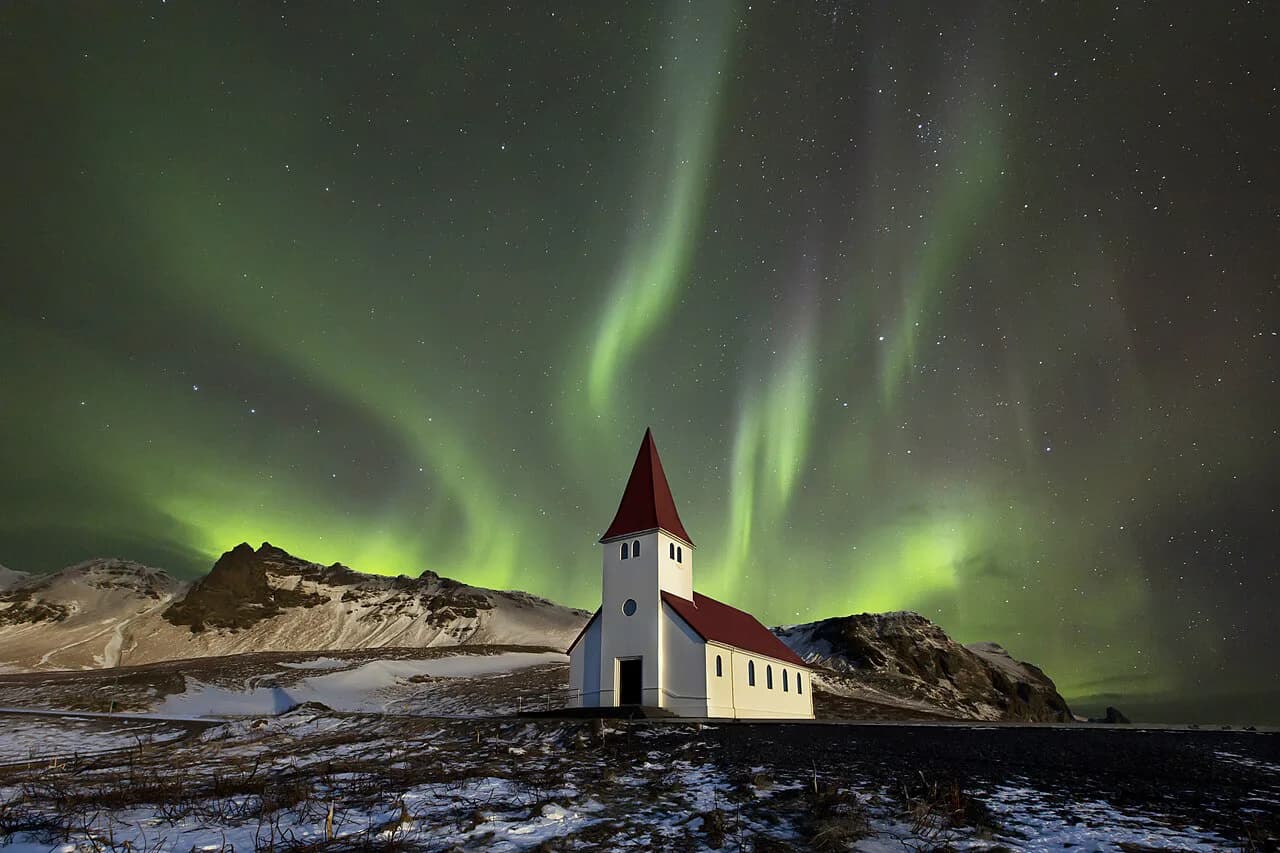
Vík sits on Iceland's south coast beneath the Mýrdalsjökull ice cap, far enough north to fall inside the auroral oval on an active night and far enough from Reykjavík to keep the sky genuinely dark. For a traveler planning winter nights here, the forecast is not one number but a set of signals that have to agree: solar activity, the direction of the interplanetary magnetic field, cloud cover and darkness. Learning to read them in the right order is what separates a productive night from a long, cold wait.
This guide walks through the signals that make up an aurora forecast, how they behave at Vík's latitude and horizon, and how to layer a short-term nowcast, a three-day outlook, a cloud forecast and a local webcam before you decide to go out. It also covers where to watch around the village and how many nights give you a fair chance of clear skies.
Why Vík sits in the auroral zone
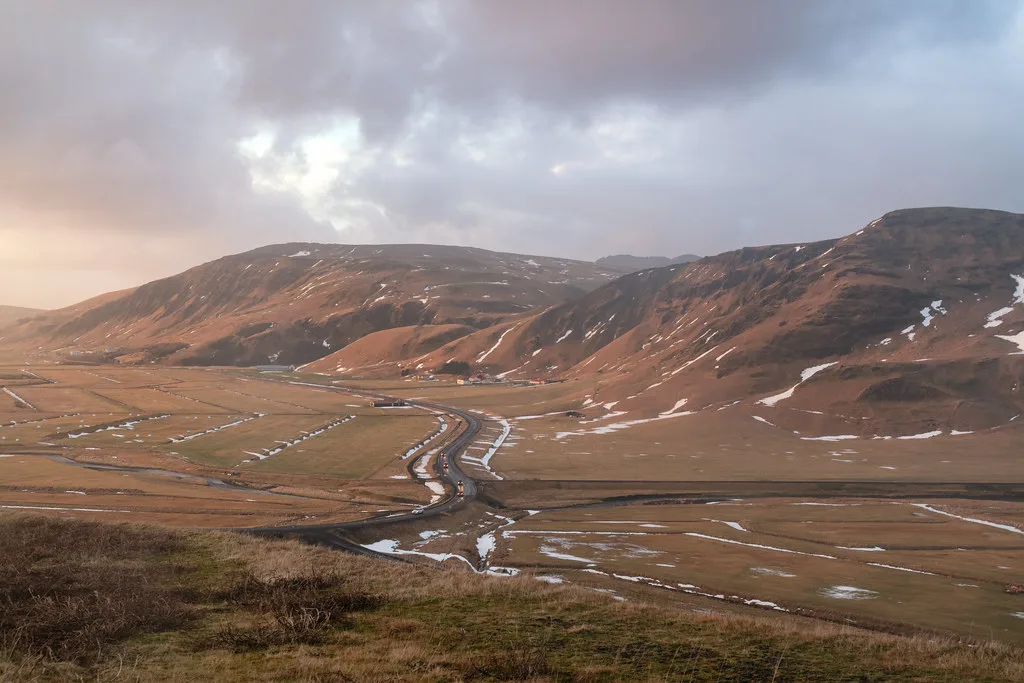
The auroral oval is a ring of enhanced particle precipitation around the magnetic pole, and Iceland lies under its typical southern reach, which is why the lights are a realistic winter prospect from the whole country rather than a rare curiosity. Vík's position on the south coast means an active oval can put aurora overhead or low to the north, and the surrounding black sand plains and glacier outwash give you open horizons in most directions.
What that geography buys you is a dark foreground and a short drive to emptiness: Vík's own lights are modest, and a few minutes west or east along the coast puts you under a genuinely rural sky. The trade-off is the weather. The south coast is exposed to Atlantic systems, so the same position that offers dark skies also brings frequent cloud, and the forecast that matters most on many nights is the cloud forecast rather than the activity level.
When the aurora season runs at Vík
Dark nights at this latitude run from roughly late August and September through to early April, and that window is when a forecast is worth watching at all. The LAVA Centre on the south coast frames the season as September to April, with late September to early April the strongest stretch, because the nights are longest and darkest.
Outside that window the sky never gets dark enough for a meaningful forecast, however active the sun is. Within it, the shoulder months give you long nights and softer temperatures, while midwinter gives you the most darkness but the shortest days for everything else you want to do around Vík.
The signals that make up an aurora forecast
A useful forecast combines several measurements. Solar wind speed and particle density describe the stream of charged particles arriving at Earth; the interplanetary magnetic field's total strength, Bt, indicates how much energy is available, and its vertical component, Bz, determines how efficiently that energy couples into the magnetosphere. Aurora Geek explains that a negative, southward Bz allows greater interaction with Earth's field and is often the key trigger for strong displays, while higher Bt raises the potential when Bz cooperates.
Aurora Geek also describes a hemispheric power index, which estimates the total energy being deposited into the upper atmosphere in gigawatts: above 20 GW the aurora can be visible to the naked eye in northern areas where it is common, and above 50 GW it becomes visible further south. For a Vík viewer that second figure is the more interesting one, since it speaks to how far south the oval is reaching.
The Kp index condenses geomagnetic disturbance onto a scale of 0 to 9 and is the number most travelers recognize. It is a global measure, not a local one, and it is guidance only: it tells you how disturbed the field is, not whether the sky above Vík will be clear or where in the sky the aurora will sit.
Why Kp alone misleads at this latitude
Because Kp describes the planet's magnetic field rather than your patch of sky, a modest Kp can still produce a fine display overhead in Iceland, while a higher Kp with heavy cloud gives you nothing. Emerald Skies illustrates the local-reach problem neatly: in one of its snapshots a Kp 1 aurora is described as covering northern Iceland and sitting close to the north-northwest horizon from Reykjavík, possibly not visible from further south than Hella. That is the kind of detail a bare Kp number hides.
For Vík, which lies south and east of Hella, the practical lesson is to read the activity level together with the expected position and reach of the oval. When activity is weak and the aurora hugs the northern horizon, your view from the south coast may be blocked by terrain or simply too far away; when the oval expands, the same village gets a much better show. Use Kp as a first filter, then check reach and horizon position before committing an evening.
Cloud cover and darkness: pairing the aurora forecast with weather
Clear sky is the condition you cannot work around, so the cloud forecast belongs beside the activity forecast every night. Around Vík that means watching the Atlantic flow: broken cloud often leaves gaps, and a mostly cloudy night can still deliver a window, whereas a solid overcast will not. Read the two forecasts together and treat cloud as the veto.
Darkness is the third ingredient. Even a strong display is washed out by a bright moon or a long summer twilight, so check moon phase and illumination alongside sunset and the end of astronomical darkness. Emerald Skies publishes illumination and moonrise and moonset times next to its aurora data, which is a useful habit to copy wherever you get your numbers.
Which forecast services cover Vík and south Iceland
For Iceland specifically, the Icelandic Meteorological Office at en.vedur.is is the standard source for aurora activity and cloud cover together, which makes it the natural first stop for a Vík night. The LAVA Centre recommends it for exactly that reason: daily aurora updates paired with cloud information you can use to plan an evening.
Global dashboards add a second layer. Emerald Skies runs a live forecast for Iceland with Kp, solar wind speed, density, Bt and Bz, a short-range nowcast and a NOAA three-day outlook, all time-stamped, so treat any figure you see as a snapshot of that moment rather than a standing condition. Aurora Geek offers a comparable live dashboard for Reykjavík with solar wind, IMF and hemispheric power values explained.
For the wider national picture, including how the south coast fits into activity across the country, the dedicated Iceland aurora forecast page is worth keeping open alongside a local cloud view. Using two or three complementary services beats relying on a single app's headline number.
Reading a three-day outlook and a short nowcast
The two forecast horizons answer different questions. A three-day outlook, such as the NOAA-based table Emerald Skies displays, shows which windows are likely to be disturbed, which is what you use to decide how to order your nights in the area. A nowcast, by contrast, tells you what is happening in the next hour or so, which is what you use to decide whether to put your boots on.
Emerald Skies presents its nowcast roughly 68 minutes ahead, along with an assessment of whether solar wind conditions are strengthening or fading. On a practical night, read the outlook in the afternoon to pick your evening, then switch to the nowcast after dark and recheck as conditions evolve, since a positive Bz can keep activity low even when the solar wind is fast.
Live webcams on the south coast
A webcam pointed at the sky is the cheapest reality check available, and the LAVA Centre at Hvolsvöllur runs one in collaboration with Midgard Adventure, letting you see conditions in the area before you drive. That matters on a night when the forecast is marginal: a camera view showing stars is worth more than a promising Kp number under cloud.
The LAVA Centre itself sits at Austurvegur 14 in Hvolsvöllur, open daily from 08:30, with winter hours to 17:00 from 1 September to 31 May and summer hours to 19:00 from 1 June to 31 August. It makes a sensible daytime stop on the road east to Vík and a place to pick up local context on the volcanoes and glaciers that shape the horizon you will be watching.
Where to watch near Vík on a forecast night
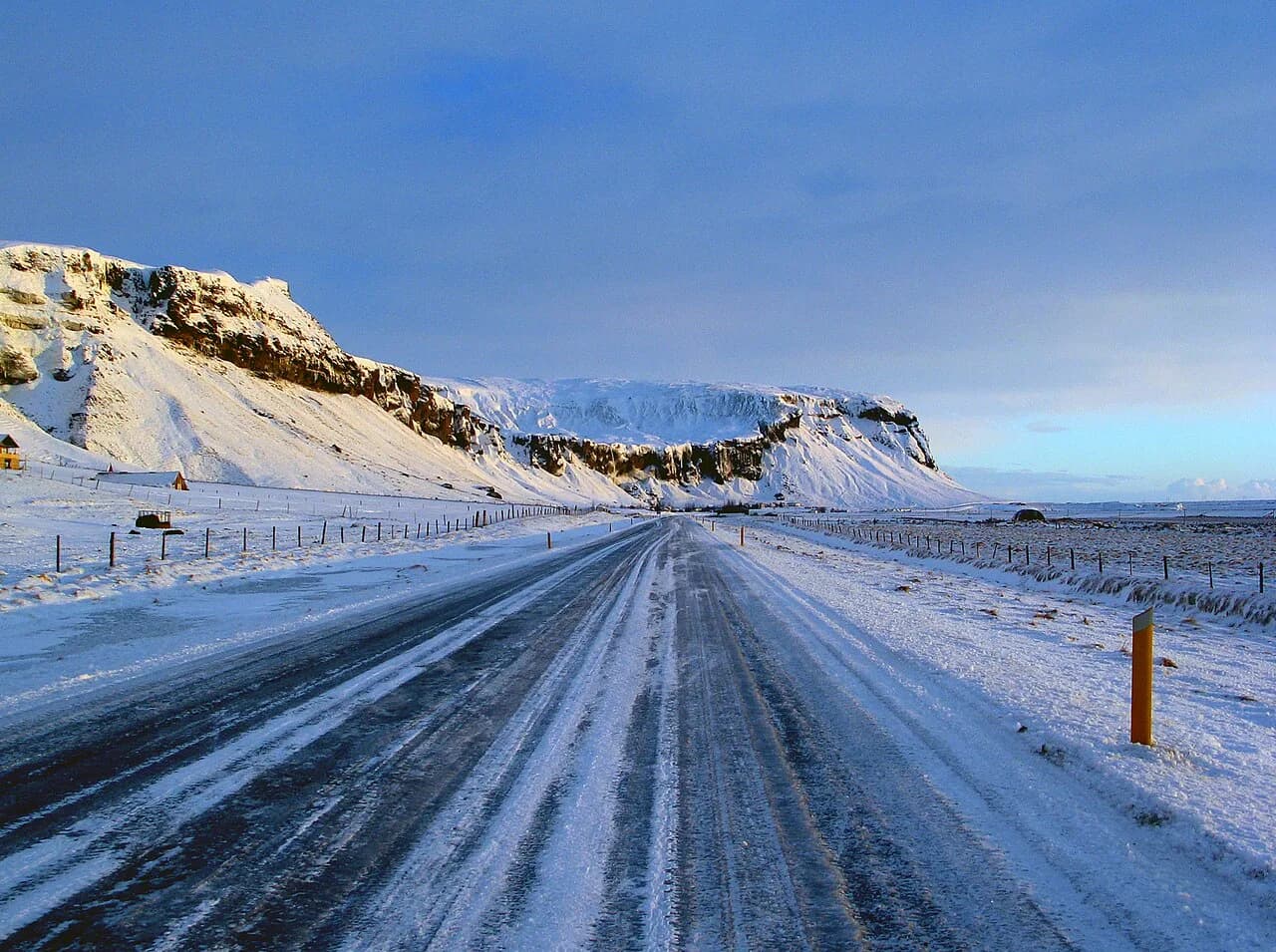
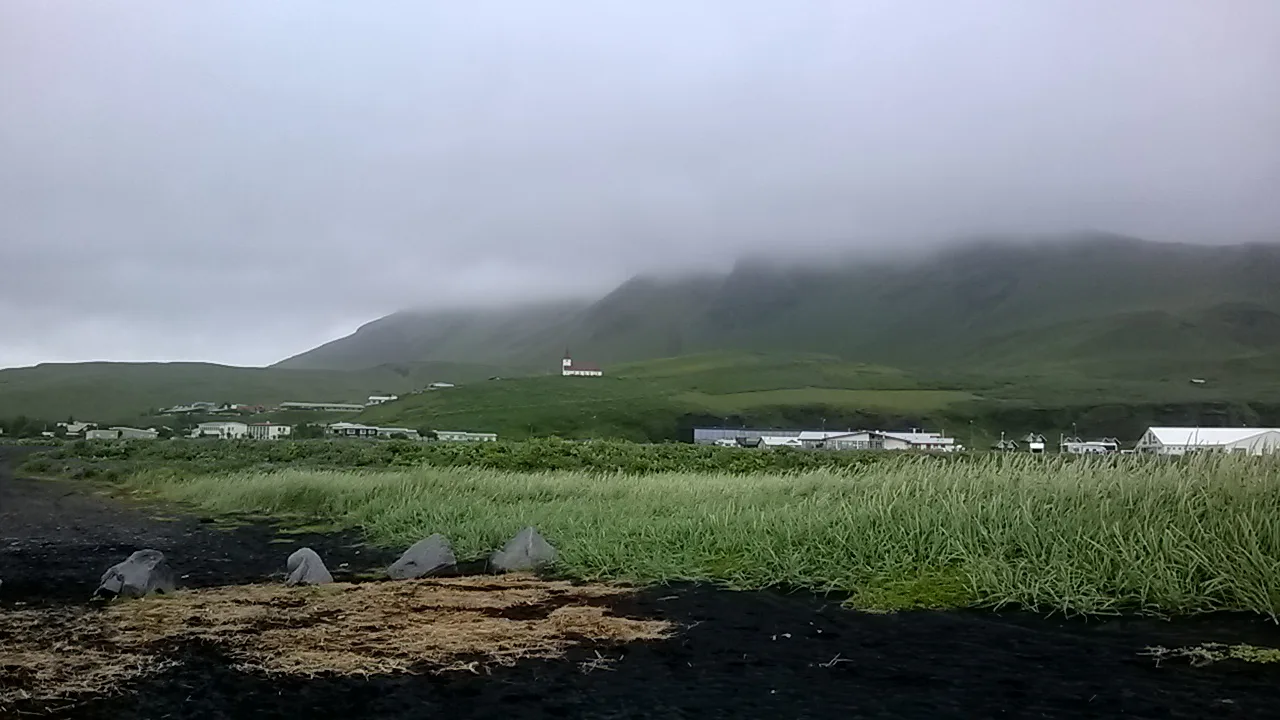
The village itself is compact and low-lit, so the first step is simply to walk away from the streetlights toward the beach side and face north over the sea and the headland. For a darker sky, drive a short way along the coast where the black sand and outwash plains open up the horizon, and keep an eye on the road surface rather than the sky while you are moving.
Inland, the Þingvellir National Park area and the Jökulsárlón glacier lagoon are named by the LAVA Centre as strong settings for the lights, though both are long drives from Vík and better treated as separate bases than as a night out. Closer to home, the coast west toward Skógar and Seljalandsfoss gives you waterfalls, open farmland and easy roadside pull-offs; if you are timing a winter stop there, the guide to Seljalandsfoss in winter covers access and conditions.
Self-guided watching versus a guided tour
Self-guided watching gives you flexibility: you can respond to a nowcast at ten at night, move a few kilometres for a gap in the cloud and stay out as long as you like. The cost is judgement, since you are the one reading Bz, cloud and road conditions, and on a marginal night that can mean a lot of driving for nothing.
A guided night out buys local decision-making instead. Around Hella and Hvolsvöllur, the LAVA Centre points to Midgard Adventure and Southcoast Adventure as operators with local knowledge of viewing spots and the science behind the aurora, and it highlights Aurora Basecamp as a dedicated observation site where you can wait in comfort rather than on a bus. Operators in this part of Iceland typically run evening excursions timed to the darkest hours.
For a Vík base, the options are worth comparing by what they include, how far they drive and whether they refund or re-run a clouded-out night. The roundup of northern lights tours from Vík sets out what each operator actually offers so you can match one to your dates.
How many nights to allow for a fair chance of clear skies
No forecast can promise a display, so the realistic strategy is to give yourself several nights and treat each as an independent draw. Cloud on the south coast is the limiting factor more often than solar activity, and three to four nights in or near Vík gives you repeated chances to catch a clear window, with daytime plans to fill the gaps.
Spreading those nights also lets you hedge geographically. The LAVA Centre makes the case for basing yourself in Hella or Hvolsvöllur rather than chasing from Reykjavík each evening, noting that many hotels there offer rooms with a view or alert guests when the lights appear, which turns a waiting night into a comfortable one.
If your dates run long enough, add a night on the ice: the Katla Ice Cave from Vík is a daytime excursion under Kötlujökull glacier that pairs well with an evening watch, giving you a reason to be in the area whatever the sky does.
Making the call on the night
Work through the signals in a fixed order so you are not swayed by one exciting number. Start with the cloud forecast for the Vík area and rule the night out if it is solid; then check darkness, including moon and twilight; then look at the activity signals, reading reach and horizon position alongside Kp. If all three line up, go out, and recheck the nowcast once you are on site.
On a weak night, remember the camera trick Emerald Skies suggests: a phone in night mode pointed at the sky can reveal faint aurora your eyes miss, which is a useful way to confirm activity before deciding whether to stay out. Where a display is marginal, that check often settles the question in a few seconds.
If you are still building the wider plan, the full guide to the Northern Lights in Vík, Iceland covers the village, the season and the viewing options in more depth. Reading it alongside this forecast routine gives you both the background and the nightly method.
Plan Your Visit
Vík rewards travelers who treat the aurora as a forecast problem rather than a fixed appointment. Check cloud first, darkness second and activity third, use a nowcast once you are out, and keep a webcam and the Icelandic Met Office open in the background. With three or four nights on the south coast and a flexible evening plan, you give yourself a fair chance of a clear sky.
Frequently Asked Questions
Can you see the Northern Lights from Vík in Iceland?
Yes, Vík lies under the auroral oval and has dark surroundings and open horizons, so it is a realistic place to watch from late August or September through early April. Whether you see anything on a given night depends on solar activity and, more often, on cloud cover, so treat every night as a chance rather than a certainty.
How do I read the Kp index for a Vík aurora forecast?
Kp is a global measure of geomagnetic disturbance on a scale from 0 to 9, and it is guidance only. Read it alongside the expected reach and horizon position of the aurora and your local cloud forecast, because a modest Kp with clear skies can beat a high Kp under overcast.
What does Bz mean in an aurora forecast?
Bz is the vertical component of the interplanetary magnetic field. When it turns negative, coupling with Earth's magnetic field improves and displays become more likely; when it stays positive, activity often remains weak even if the solar wind is fast. Aurora Geek explains the relationship between Bz, Bt and auroral strength in detail.
Which aurora forecast website is best for Iceland?
The Icelandic Meteorological Office publishes aurora and cloud information together, which makes it the natural first stop for a Vík night. Global dashboards such as Emerald Skies and Aurora Geek add solar wind, Bz and short-range nowcast data that help you refine the call closer to the hour.
How far ahead can aurora be predicted?
Three-day outlooks give a reasonable picture of which windows are likely to be disturbed, while a nowcast covers the next hour or so. Use the outlook to order your nights and the nowcast to decide whether to head out once it is dark.
Will the Northern Lights be visible in Iceland in 2026?
Aurora visibility depends on solar activity and clear skies on the night, and no forecast can promise a display months ahead. Plan your trip within the dark season and allow several nights so that cloud and activity have more than one chance to line up.
How many nights should I stay in Vík for a chance at the aurora?
Three to four nights in or near Vík gives you repeated chances to catch a clear window, since cloud is usually the deciding factor. Basing yourself in the area rather than chasing from Reykjavík each evening also lets you respond to a nowcast without a long drive.
Sources
Notes for your Arctic winter trip
Optional updates to our northern lights guides.
You might also like
Continue reading
More guides you'll find useful