Lapland Itinerary: How Many Days and Where to Base Yourself
Plan a Finnish Lapland itinerary around dark nights, not just activities. See how many days to allow, which bases to pair and where to watch the aurora.
On this page
Finnish Lapland in winter is a sequence of short daylight hours and long, very dark evenings, and the trips that work best treat the nights as the main event. Bases like Rovaniemi give you city services and airport access, while Pyhä, Luosto, Ylläs and the Inari area trade convenience for fells, quiet and open sky. The shape of your itinerary should follow that trade-off.
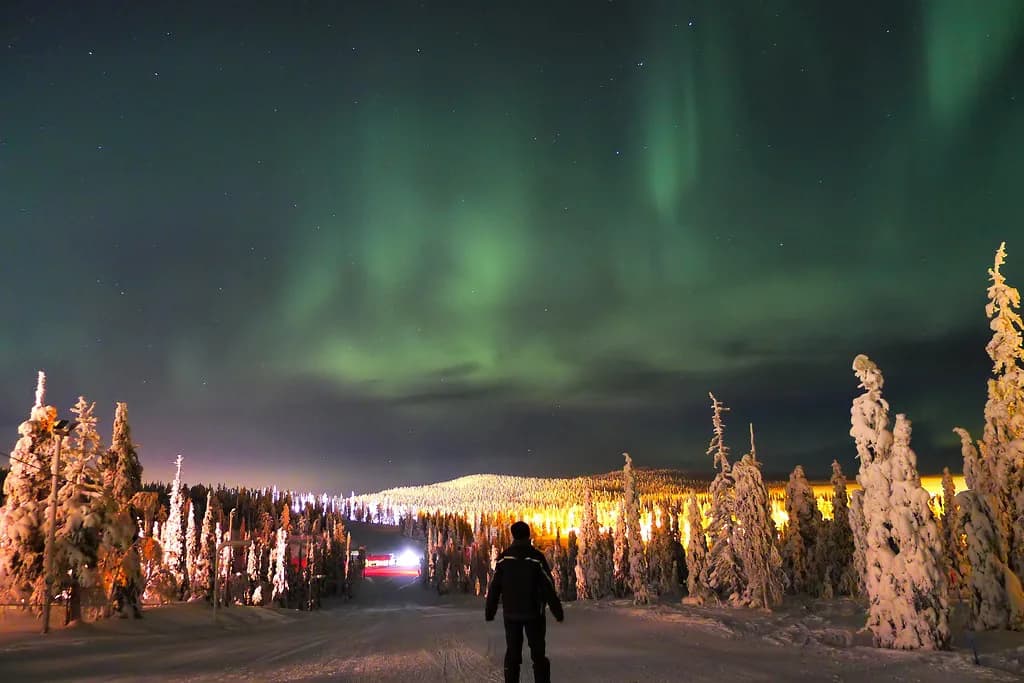
Aurora sightings depend on solar activity and clear skies, so no itinerary can promise a display. What a good plan does is put you somewhere dark and open on several nights in a row, with a backup view a short drive away if cloud settles over your base. Read this alongside the wider guide to the northern lights in finland before you fix dates.
Why a Lapland itinerary is built around nights, not days
Winter daylight above the Arctic Circle is brief, so daytime hours are scarce and worth guarding for one activity, not three. The productive part of an aurora night usually starts late and can run past midnight, which is why travelers who sleep early and set an alarm often see more than those who stay out from dusk. Plan fewer daytime commitments after a tour night and you will enjoy both halves of the trip more.
Cloud is the variable you plan around. Lapland skies can be overcast for days and then clear suddenly, so a base that lets you drive 20 minutes to a different sky is worth more than a fancier cabin under permanent cloud. Flexible nights beat a fixed, packed schedule.
How far north you are and why the aurora shows here
Most Finnish Lapland bases sit at or above the Arctic Circle, which puts them under the auroral oval, the ring of sky where displays are most frequent. Rovaniemi straddles the circle itself, while Pyhä, Luosto, Ivalo, Inari, Ylläs and Levi all lie north of it. That latitude is the reason a short trip here can pay off in a way a southern city break cannot.
Being far north does not override weather. Clear skies matter as much as latitude, and inland fells often hold clearer air than the larger towns, where lights and buildings brighten the lower sky. Push a few kilometres from any town centre before you judge the night.
When the aurora season runs and how daylight shifts
Aurora season in Finnish Lapland broadly follows the dark nights, running from late August or September through to early April, when twilight returns to the evening sky. Deep midwinter gives the longest nights but also the shortest days, with only a few hours of low light around midday. Early and late season balance usable daylight with genuinely dark evenings, which is why many travelers target the shoulder months.
The spring and autumn equinoxes are popular because travelers report a good mix of daylight for activities and darkness for the aurora, and spring discounts are common as some operators wind down their season. The trade-off is that late-season activities such as reindeer sleigh rides and husky sledding can close early when snow melts, so book those dates first if you are travelling in April. Check the finnish lapland aurora forecast for activity and the FMI for cloud in the days before you travel.
How many days in Lapland is enough
Three days gives you one full day of winter activity and two or three chances at a clear night, which suits travelers adding Lapland to a longer Nordic trip. Five days lets you stay two nights in one place and two in another, giving a second sky if cloud parks over your first base. Two weeks, as in a Helsinki-and-Lapland winter holiday, is enough to work south to north through several bases with rest days built in.
As a rule, add nights rather than activities. A third night in one base costs less than relocating and raises the number of opportunities for clear sky, and it leaves room to sleep after a late aurora chase. Relocation days eat daylight and evening both.
Choosing your bases: Rovaniemi, Pyhä, Luosto, Ivalo and Inari, Ylläs and Levi
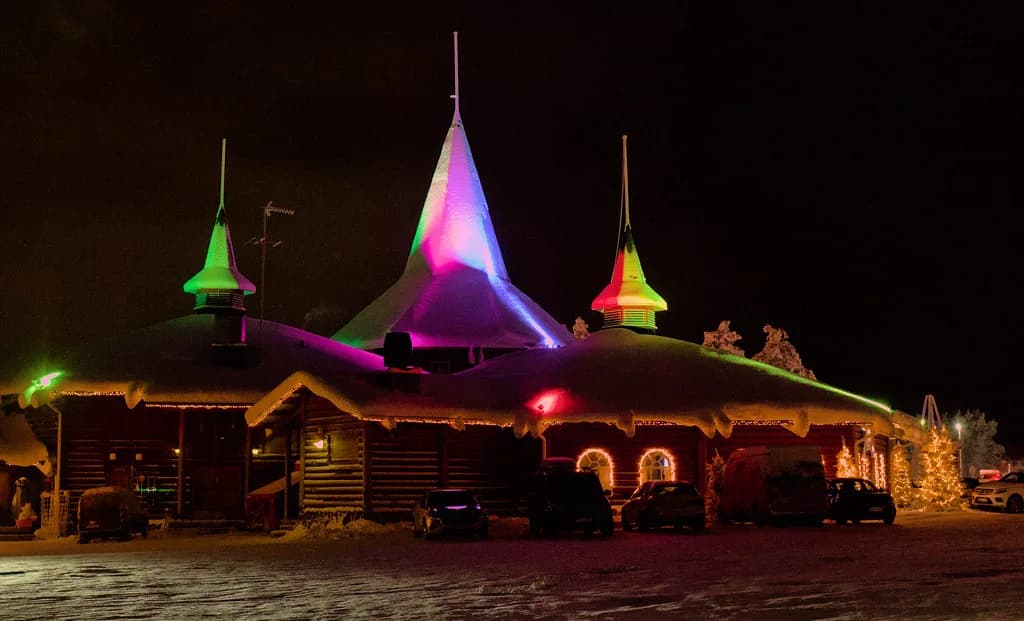
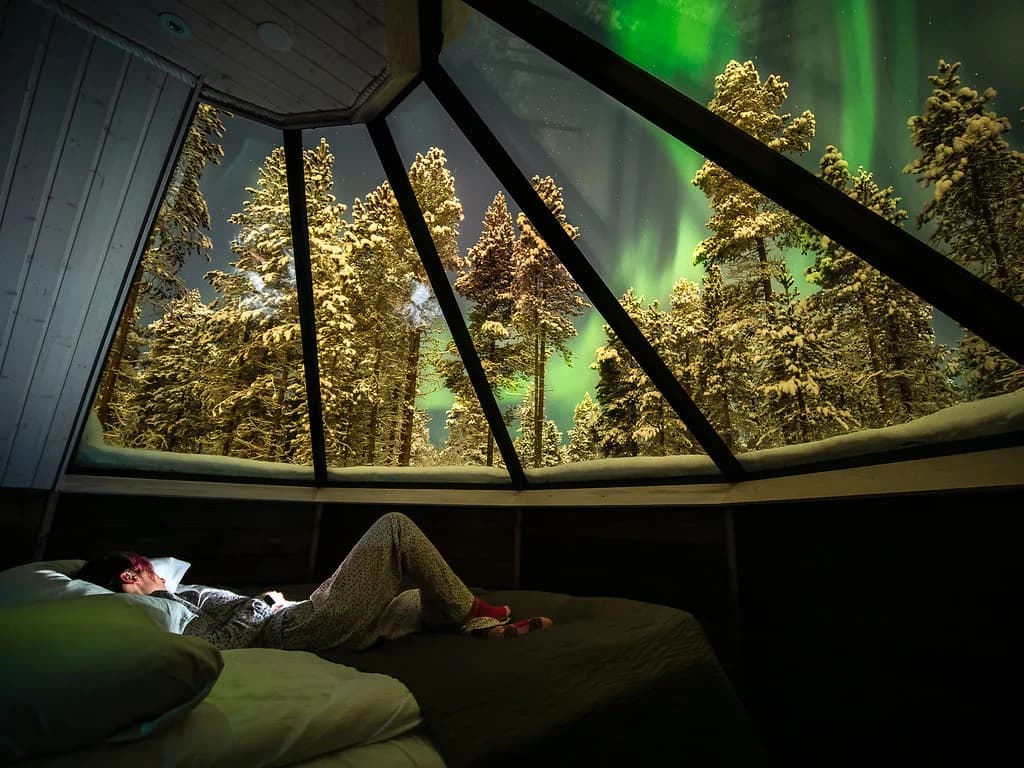
Rovaniemi is the easiest entry point, with an airport, hotels, restaurants and the Santa Claus Village on the Arctic Circle nearby, so it suits first-timers and short trips. Pyhä and Luosto, side by side in Pyhä-Luosto National Park, give you fells, trail access and darker skies within a short drive of your bed. Both are notably quieter than the city.
Ivalo and Inari put you deep in the north, with Inari village at the heart of Sámi culture in the region and Lake Inari as an open, dark expanse. Ylläs and Levi are fell resorts with skiing and gondola access, good if your itinerary mixes slopes with aurora nights. Pairing one service town with one fell base is the most common shape.
A two-week winter itinerary built around Helsinki and Lapland typically moves from the capital by overnight train or flight, then works through bases such as Pyhä, Ivalo and Ylläs before ending at Rovaniemi. That sequence puts you in quiet country first and city services last, which works well when you want a comfortable final night before an early flight.
A three-day first-timer itinerary based in Rovaniemi
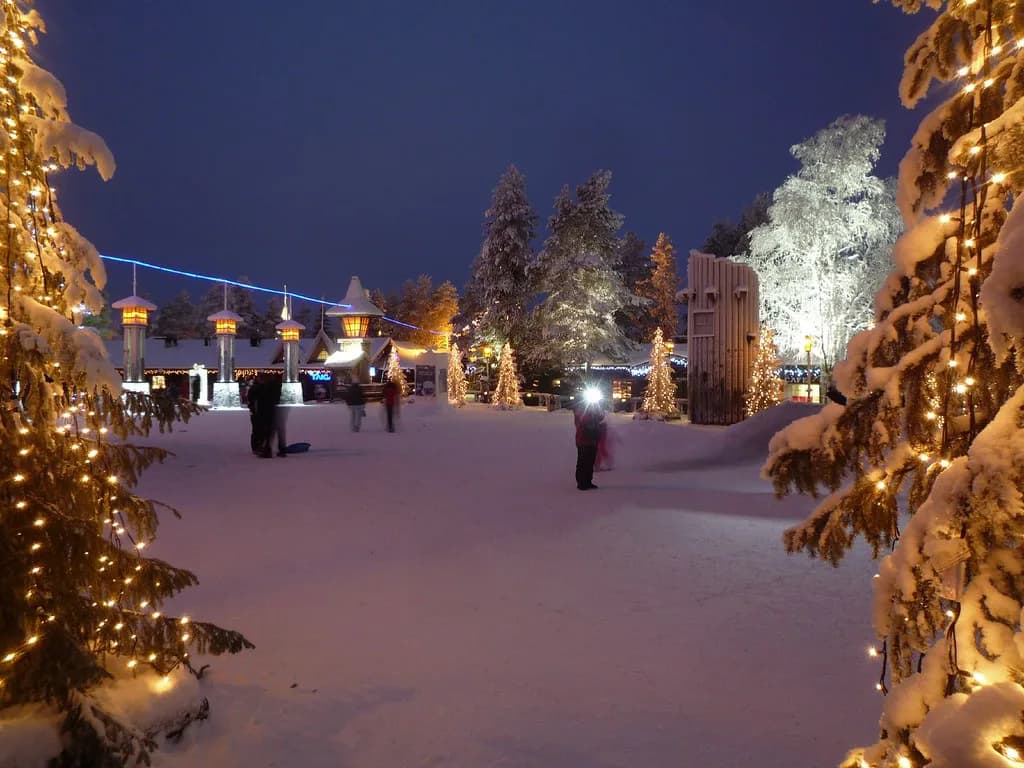
Keep it simple: one base, no relocation, and two or three booked nights. Use your first afternoon for Santa Claus Village on the Arctic Circle, which suits families and anyone who wants the classic crossing-the-line stop without a long transfer. Book a guided aurora night for your first evening so you learn how operators read the sky.
On day two, take one snow activity in daylight, such as a short husky safari or a snowmobile outing, then rest before an evening chase. A first-timer itinerary in Lapland often pairs a Santa Claus Village visit with a husky-sled ride and a northern lights tour, which covers the region's headline experiences without moving hotels. If you want a deeper Christmas angle, see the separate guide to christmas in finnish lapland.
A five-day itinerary adding a second base in the fells
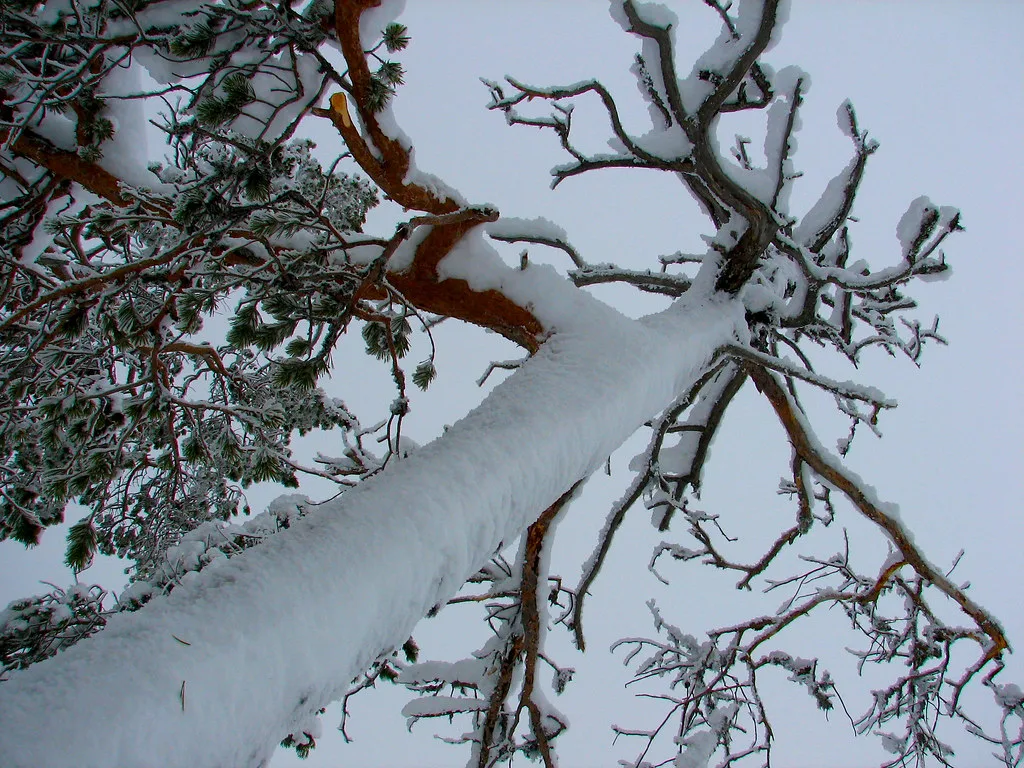
Spend two nights in Rovaniemi, then drive or transfer to Pyhä or Luosto for two more. That gives you the city conveniences and the fell darkness in one trip, and it means cloud over one base can be escaped by moving to the other. Keep the transfer to daylight hours so you do not lose an aurora night to the road.
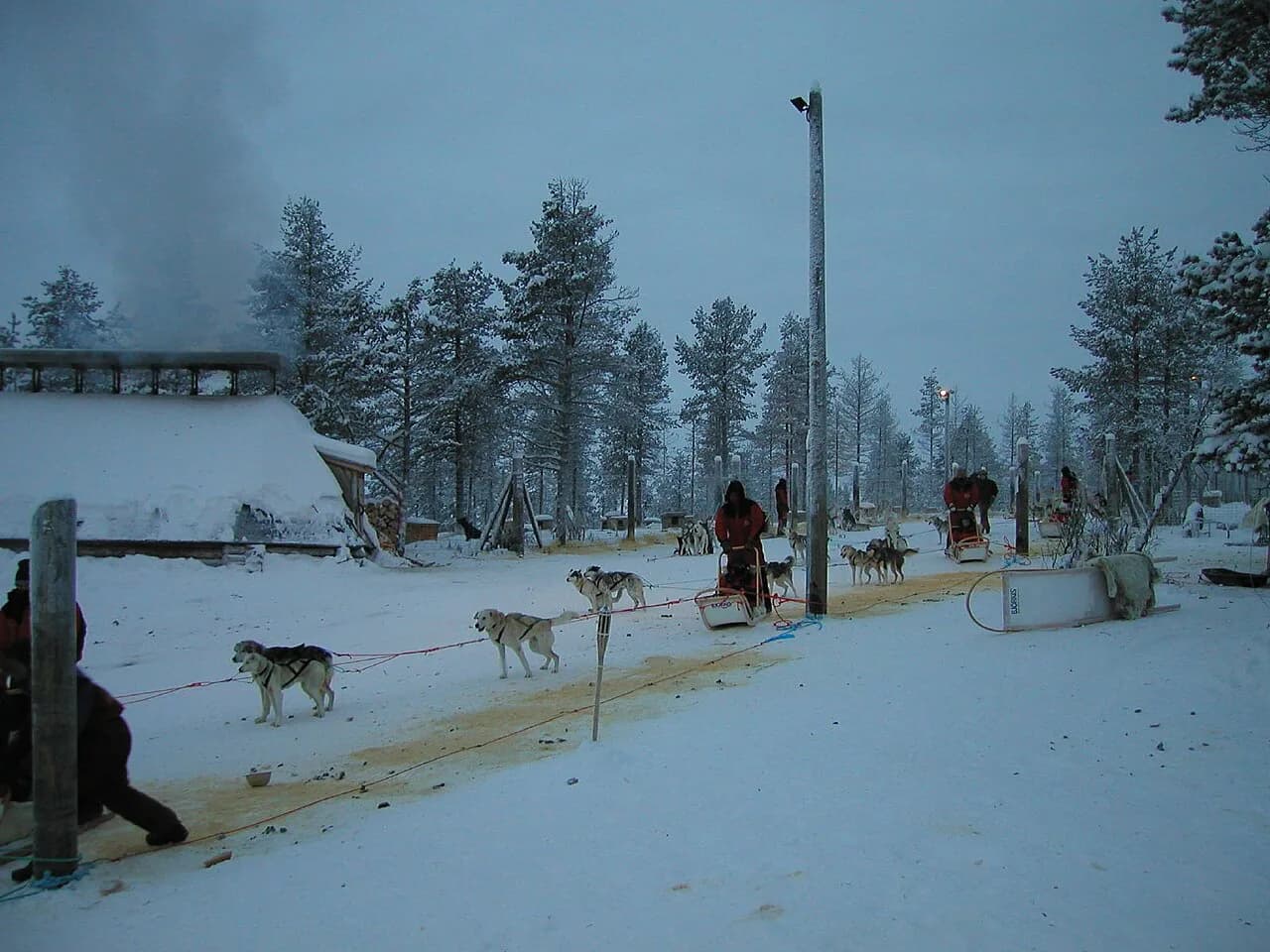
A husky sledding half-day works well from Pyhä with Maglelin Experience, where you drive your own sled and can switch drivers at the halfway break before warming up around a fire with warm juice and snacks. Stay overnight at Pyhä Igloos if you want an aurora window over your bed; these are connected rooms with an igloo-style window rather than standalone cabins. From Luosto, Lake Aarnilampi is roughly 20 minutes north by car and gives a wide, open view for a clearer look at the sky.
A two-week itinerary from Helsinki through Lapland
Start with two days in Helsinki, add a day trip to Porvoo, then take the overnight train north so you wake in Lapland instead of losing daylight to travel. Three nights in Pyhä allow ice climbing, snowshoeing and a reindeer-sleigh aurora night, then a transfer to Ivalo opens up Inari village and Sámi culture. Continue to Ylläs for skiing and snowmobiling before finishing with four nights around Rovaniemi and the Arctic Circle.
That structure gives you a rough rhythm of three nights per base, which is enough to absorb one cloudy stretch without losing the trip. Book the long transfers as fixed points and leave the aurora nights loose, so you can move a chase to the clearest evening. For context on the Sámi side of the route, read the guide to sami culture in lapland.
Rovaniemi: Santa Claus Village, the Arctic SnowHotel and Ounasvaara
Santa Claus Village sits right on the Arctic Circle outside town and works as an easy half-day on foot or by local bus. The Arctic SnowHotel is a separate visit that many itineraries slot in for an ice-and-snow interior tour rather than a night's sleep. Both are daytime stops; keep your evenings free for the sky.
For a self-guided night in Rovaniemi, drive or walk up to Ounasvaaran Lookout above the Ounasvaara ski hill. It sits a short distance from the city centre and gives an open view over the surrounding forest, well above the worst of the town light. On a clear night with a favourable forecast, it is one of the simplest places to watch without booking a tour.
Husky sledding and reindeer sleigh rides: what a night tour involves
A husky safari is usually a half-day affair: a briefing, then one person driving and one riding, with a swap at the halfway stop and a fire, warm juice and snacks at the end. Sled control is easier than it looks because the dogs know the route, and you mostly manage speed and braking. Half-day husky experiences run from fell bases such as Pyhä with Maglelin Experience.
A reindeer-sleigh aurora night is slower and quieter, often run as an evening excursion from a fell or city base, and it puts you out on open snow away from buildings. Operators that lend thermal suits will say so in the tour description, along with pickup, duration and group size. Compare operators and inclusions on finnish lapland northern lights tours before you commit to a date.
Snowmobiling, ice climbing and snowshoeing by day
Daytime activities are where the short winter light matters most. Snowmobiling covers distance quickly and is often run as a guided convoy with a lead guide, while snowshoeing and ice climbing suit travelers who want slower, closer contact with the terrain. A multi-base itinerary can put ice climbing and snowshoeing in Pyhä, skiing and snowmobiling in Ylläs, and a husky safari near Rovaniemi.
Allow one activity per day, not two. Transfers, gear fitting and a hot-drink stop eat into the few daylight hours, and a rushed schedule makes the late aurora nights harder to enjoy. If you want a single region to concentrate on, the northern lights in finland overview helps you weigh which base fits your dates.
Dark-sky spots near each base
Near Rovaniemi, Ounasvaaran Lookout above the ski hill gives an open northern view within easy reach of town. Near Pyhä and Luosto, the trails inside Pyhä-Luosto National Park lead away from the resort lights, and Lake Aarnilampi about 20 minutes north of Pyhä is a wide, frozen expanse that travelers use for a clearer view. Near Inari, the shore of Lake Inari offers huge open sky with very little settlement.
Around Levi, the fell top reached by the scenic gondola is a straightforward dark viewpoint when the lifts are running, and the resort notes that aurora is often visible there. See the northern lights in Levi guide for where to watch and stay. Around Ylläs, the fell trails above the village clear the treeline. In every case, look for open ground facing north away from buildings rather than a viewpoint with a car park full of headlights.
Glass igloos and aurora cabins: what the windows actually give you
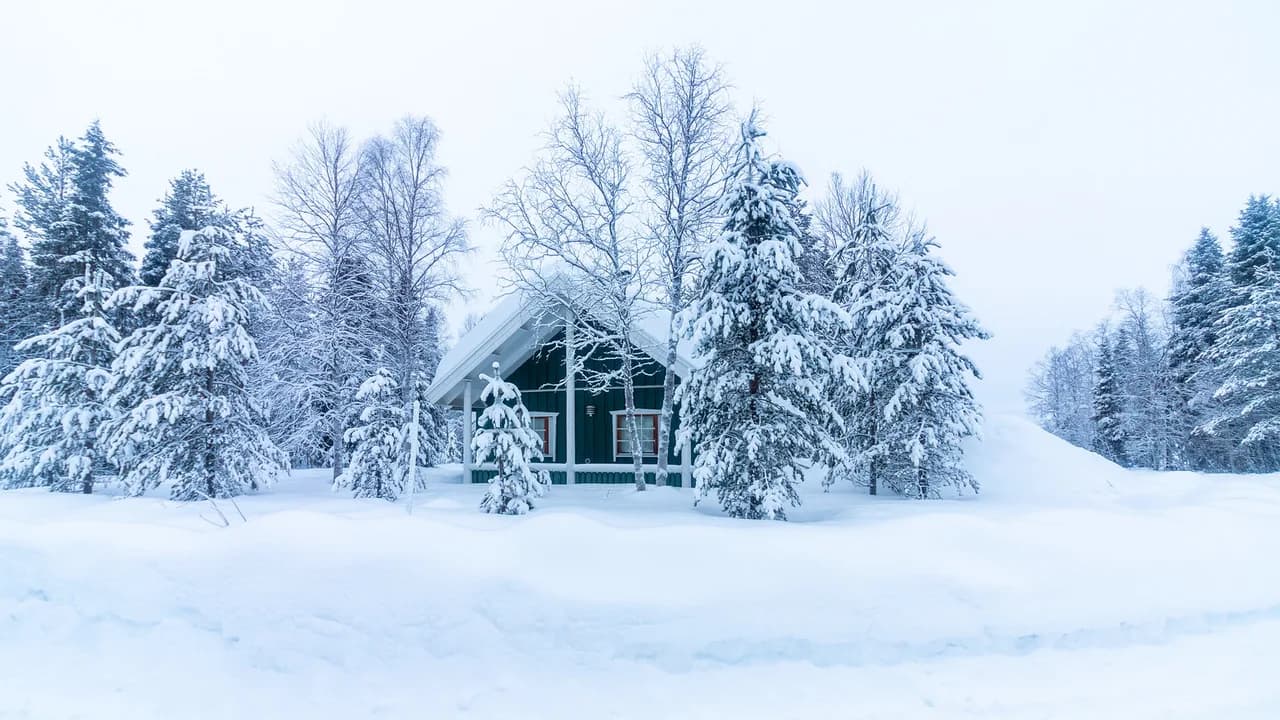
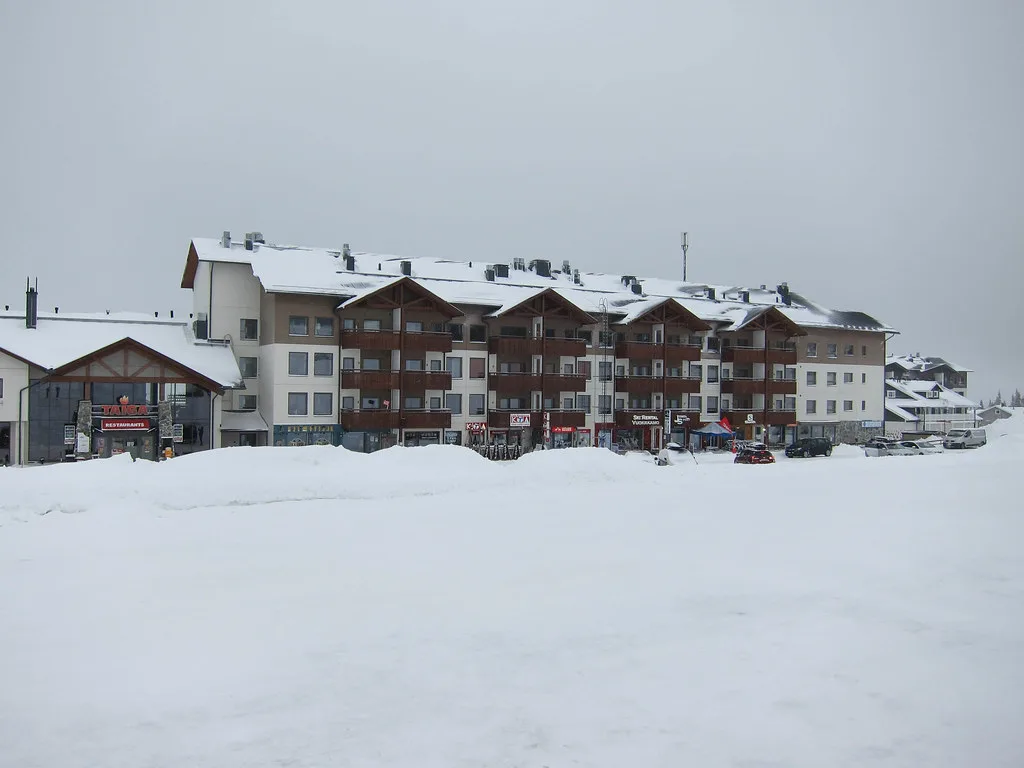
A window-facing cabin or igloo room means you can watch from bed instead of driving, which is a real comfort on a cold night. At Pyhä Igloos the bed reclines for viewing and the room has an igloo-style window, though the units are connected rooms rather than separate cabins, making it a more budget version of the glass-igloo idea. At Northern Lights Ranch near Levi, each cabin has three walls of windows, and the half-board package includes buffet breakfast and a three-course dinner served beside the reindeer enclosure.
Weigh the window against the view. Glass lets in warmth loss and interior light, and a lit room reflects on the pane, so you may still step outside for the best look. The strongest combination is a window cabin for comfort plus a short drive to a genuinely dark, open spot if the night turns promising. Northern Lights Ranch also loans snowshoes, keeps an ice chapel for ceremonies, and offers a reindeer feeder at reception in season; husky and snowmobile rides run in peak winter.
Getting to Lapland from the USA and moving between bases
From the USA, the common routing is a flight to Helsinki, then either a domestic flight to Rovaniemi or Ivalo, or the overnight train north from the capital. Flying saves time but costs daylight on the connection day, while the train uses the night productively and lands you in Lapland in the morning. Both are easy to combine with a Helsinki stop.
Between bases, a rental car gives the most flexibility and all hire cars come fitted with winter tires, though snow-covered lanes mean some snow-driving experience helps; keep the car clear of ice buildup. Contactless payment works almost everywhere, cash is not needed, and only some fuel stations insist on a physical card. Where you would rather not drive, pre-booked transfers connect the main resorts.
Where to watch the aurora in Rovaniemi on your last night
Save Rovaniemi for your final night if you fly out the next morning, and keep the evening unbooked. Ounasvaaran Lookout is the obvious local choice: a short walk up from the road, an open hilltop and a northern horizon over forest. Travelers watching a forecast Kp of 5 during a geomagnetic storm have seen a strong display from there, but the index is guidance only and cloud still decides the night.
If cloud sits over the city, drives of half an hour toward less lit country often help, and a guided chase removes the navigation worry on your last evening. Set an alarm for the late hours rather than staying out from dusk, and check the sky before you commit to a long drive.
How many nights to allow for a fair chance of clear skies
Give yourself at least three aurora nights in Lapland, and four or five if the trip matters enough to justify it. Each night is an independent roll of the dice on solar activity and cloud, so extra nights improve your odds far more than extra activities do. Three nights in one place is better than three one-night stops.
Build in a sleep strategy: sleep early, set an alarm, and keep the late hours free rather than treating them as a bonus after a full day. Check cloud and activity forecasts in the afternoon and decide where to be that evening. If a base is clouded in, use the next night elsewhere rather than forcing a vigil under an overcast sky.
Plan Your Visit
The most reliable Lapland itineraries are short on relocations and long on nights: one city base such as Rovaniemi, one fell base such as Pyhä or Luosto, and a few flexible evenings with a dark viewpoint mapped in advance. Add a third base only if you have a week or more and want Ivalo, Inari or Ylläs in the mix. Book the fixed transfers and the one activity you care most about, then leave the rest to the sky.
Before you travel, check current tour details and cloud forecasts with the tour companies and the Finnish Meteorological Institute, since schedules and conditions shift through the season. Then plan for the trip you will enjoy even if the aurora stays hidden: snow, silence and a warm cabin are the baseline, and any display is a bonus.
Frequently Asked Questions
What month is best for the northern lights in Finland?
Dark nights run from roughly late August or September to early April, and the shoulder months around the equinoxes balance usable daylight with proper darkness. Midwinter offers the longest nights but the shortest days. Cloud matters as much as season, so allow several nights whenever you go.
How many days in Lapland is enough?
Three days gives two or three aurora chances and suits a short add-on to a Nordic trip. Five days lets you pair a city base with a fell base, and around two weeks lets you move through several bases with rest days. More nights, not more activities, is what improves your odds.
Where can I watch the aurora without a tour in Rovaniemi?
Ounasvaaran Lookout above the ski hill is a short trip from the centre, with an open view over forest to the north. Elsewhere, look for lakeshores and fell tops away from buildings. Check cloud and activity forecasts before you drive.
Do glass igloos guarantee you will see the aurora?
No. A window room lets you watch from bed, but warmth loss, interior light and cloud all affect what you see. At Pyhä Igloos the rooms are connected units with an igloo-style window, and Northern Lights Ranch cabins have three walls of windows. Pair the window with a backup dark viewpoint.
How do I get to Finnish Lapland from the USA?
Fly to Helsinki, then take a domestic flight to Rovaniemi or Ivalo or the overnight train north. The train uses the night productively and arrives in the morning. Between bases, a rental car comes with winter tires and gives the most flexibility, and many travelers pre-book transfers instead.
What does a husky safari involve?
Typically a briefing, then one person driving and one riding, with a swap at the halfway stop and a fire, warm juice and snacks afterward. The dogs know the route, so you mainly manage speed and braking. Half-day experiences run from bases such as Pyhä.
Sources
Notes for your Arctic winter trip
Optional updates to our northern lights guides.
You might also like

Continue reading
More guides you'll find useful