Swedish Lapland Aurora Forecast: Reading Kp and Cloud Cover
Learn how to read the Swedish Lapland aurora forecast: Kp thresholds for Abisko and Kiruna, cloud and darkness windows, and why more nights raise your odds.
On this page
Swedish Lapland sits inside the aurora oval, and that geography is why a winter trip here can pay off on ordinary nights rather than only during big solar storms. The trade-off is that the sky itself has the final vote: a modest activity level under clear air beats a strong storm under snow cloud. Reading the forecast as three separate questions, how active, how cloudy and how dark, is what turns a gamble into a plan.
This guide treats the forecast the way you will actually use it, night by night in Abisko, Kiruna, Gällivare and Jokkmokk, with the working numbers for this latitude and the mistakes that make travelers give up too early. If you are still choosing a base, start with the wider guide to northern lights in sweden before drilling into the forecast.
What a Swedish Lapland aurora forecast actually tells you
A forecast page mixes four inputs that behave independently. Geomagnetic activity tells you whether the aurora is energised, cloud cover tells you whether you can see it, darkness tells you whether the sky is black enough, and moonlight tells you whether faint arcs will be washed out. A night can score well on the first and fail on the other three, so check each one rather than trusting a single headline rating.
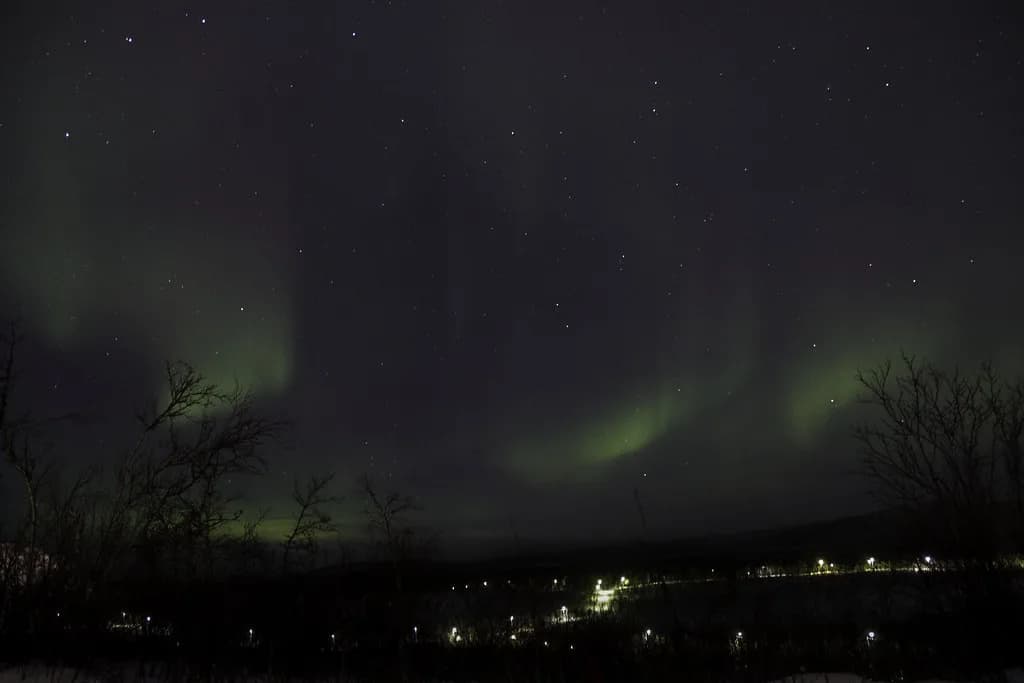
The tourist board describes the aurora as the result of solar wind striking Earth's magnetic field, with particles reaching us roughly two days after leaving the sun. That lag is why activity forecasts are approximate rather than precise: the solar wind arrives with timing nobody can pin to the hour. Practical consequence: a forecast of high activity means the odds improve, not that a display is scheduled.
Use forecasts to rank nights, not to cancel them. If Tuesday shows moderate activity and clear skies while Wednesday promises a storm behind thick cloud, Tuesday is your night out, and Wednesday is a sauna evening.
How far north Swedish Lapland sits
The region stretches across the Arctic Circle, and towns such as Kiruna, Gällivare and Jokkmokk lie well north of it. Latitude is the reason the aurora oval, the ring of frequent auroral activity around the magnetic pole, passes overhead rather than far to the north. Being under that ring means displays are common on ordinary geomagnetic nights, not only during major storms.
Altitude and local climate matter almost as much as latitude. The Swedish Lapland tourism board singles out Abisko National Park as one of the best places in the world to watch, partly because of its position in the aurora oval and partly because the surrounding mountains leave it in a rain shadow, giving the area one of the driest climates in the Nordic region and more clear nights than most of the north.
That combination is the core of any Swedish Lapland forecast strategy: a location under the oval with a statistical edge in cloud cover. It is also why comparisons with coastal or southern alternatives are less flattering than they look on a map.
When the aurora season runs
According to the Swedish Lapland tourism board, the best viewing period runs from September to late March, with displays possible as early as late August. The same source names roughly 9 pm to 2 am as the most favourable hours, though the lights can appear at any time the sky is dark. Plan evening activities early and keep the late hours free for watching.
Darkness is the limiting factor at both ends of the season. In late August and September nights return gradually, while by late March the twilight lingers and usable darkness shrinks. Mid-winter delivers the most hours of black sky, which is why December and January suit travelers who want the longest possible nightly windows rather than comfort.
The Swedish Lapland tourism board also points out that every kind of light pollution, from streetlights to a full moon, works against you. Checking the moon phase alongside activity and cloud is part of reading the forecast properly. A bright moon will not hide a strong overhead display, but it can erase the faint arcs that make up many ordinary nights.
What Kp you need at Abisko and Kiruna latitude
The Kp index runs from 0 to 9 and measures how disturbed the geomagnetic field is. A forecast app that covers Swedish towns uses Kp 2.0 as the minimum threshold for Abisko, Kiruna, Gällivare and Jokkmokk, rising to Kp 3.0 for places such as Arvidsjaur and Kp 5.0 or higher further south. Treat those figures as useful guidance for ranking nights rather than as a promise at any given hour.
The same source puts Abisko at a magnetic latitude of about 65.9 degrees and Kiruna at about 65.4, with Gällivare and Jokkmokk slightly lower. Practically, the far-northern band you are travelling to has a low working threshold, so you do not need a major storm to have a reason to be outside after dark.
Treat these numbers as approximate rather than official. They come from a forecast service, not a meteorological institute, and they describe when aurora becomes possible over a location, not when it will be bright, overhead or visible through cloud. Use them to decide whether a night is worth a drive, then let the sky answer.
Reading the forecast night by night
Start with activity, then immediately check cloud, then darkness, then the moon. If any of the three visibility factors rules a night out, do not spend it waiting in a lay-by; sleep, and aim at the next window. The typical useful rhythm is to look at the following evening around dinner time, pick a target, and commit.
Operators in Kiruna and Abisko build their nightly plans around exactly this sequence, pairing aurora forecasts with local weather and cloud radar pages before deciding where to drive. Northern Lights Sweden runs its Kiruna and Abisko tours with that same combination of activity forecast, cloud coverage and dark surroundings as the deciding factors, which is a reasonable template even if you are driving yourself.
Forecast services worth opening each evening include a Swedish aurora and Kp tracker that covers individual towns, a cloud-radar view for the Kiruna area, and a general space-weather page for solar wind data. Regional tourism pages and operator pages are useful for context, but the numeric decisions come from the activity and cloud tools. Cross-checking two sources takes a minute and avoids acting on a stale reading.
Where local forecasts concentrate
Forecast coverage in Swedish Lapland centres on four inland towns, each with its own position relative to the aurora oval. Abisko has the highest magnetic latitude of the group at around 65.9 degrees, Kiruna follows at about 65.4, and Gällivare and Jokkmokk sit near 64.6 and 64.1 respectively. All four clear the Kp 2.0 working threshold, so the difference between them is mostly about sky and surroundings rather than activity.
Gällivare is a mining town north of the Arctic Circle with iron-ore heritage, and Jokkmokk is a Sámi market town known for its winter gathering. Both have dark country roads within easy reach and are credible bases in their own right. Jokkmokk is especially busy during its winter market, when accommodation fills and the town briefly becomes one of the region's liveliest places.
Southern Swedish locations appear on the same forecast pages with much higher Kp requirements, which is useful context rather than a plan. Travelers sometimes ask whether they can see the aurora from Stockholm or the southern coast; the honest answer is that it takes a strong storm and a lucky gap in the cloud, while the far north needs only a modest disturbance and clear air.
Abisko: open sky and a rain-shadow microclimate
Abisko is the classic Swedish Lapland aurora base, and the tourism board's description of it explains why: position inside the aurora oval plus a rain shadow that produces some of the driest conditions in the Nordic area, and in good spells more than two weeks of consecutive aurora-friendly nights. No forecast can promise that run, but the climate genuinely improves the odds of clear sky on any given night. If you want to work the numbers yourself, this Abisko aurora forecast guide shows how to read the data night by night.
The practical advantage is that cloud forecasts for Abisko often look better than for the surrounding mountains, so a night that seems lost in Kiruna may still work an hour west. The lake and the national park give you open northern horizons close to the village, and the terrain is gentle enough to walk out of the lights without a guide.
Abisko is also where Aurora Sky Station operates, and where the photographer Chad Blakley founded Lights over Lapland after a memorable display there in January 2012. Those names are useful reference points when comparing tours, since both are rooted in the national park rather than in town.
Kiruna and Gällivare: dark-sky spots outside town light
Kiruna is the region's largest northern town and its most convenient base, with the Icehotel at Jukkasjärvi a short drive away and a dense cluster of operators running nightly hunts. The town itself is bright enough to blunt faint aurora, so the forecast decision includes choosing a direction out of the streetlights, usually toward the Torne River valley or the surrounding forest roads.
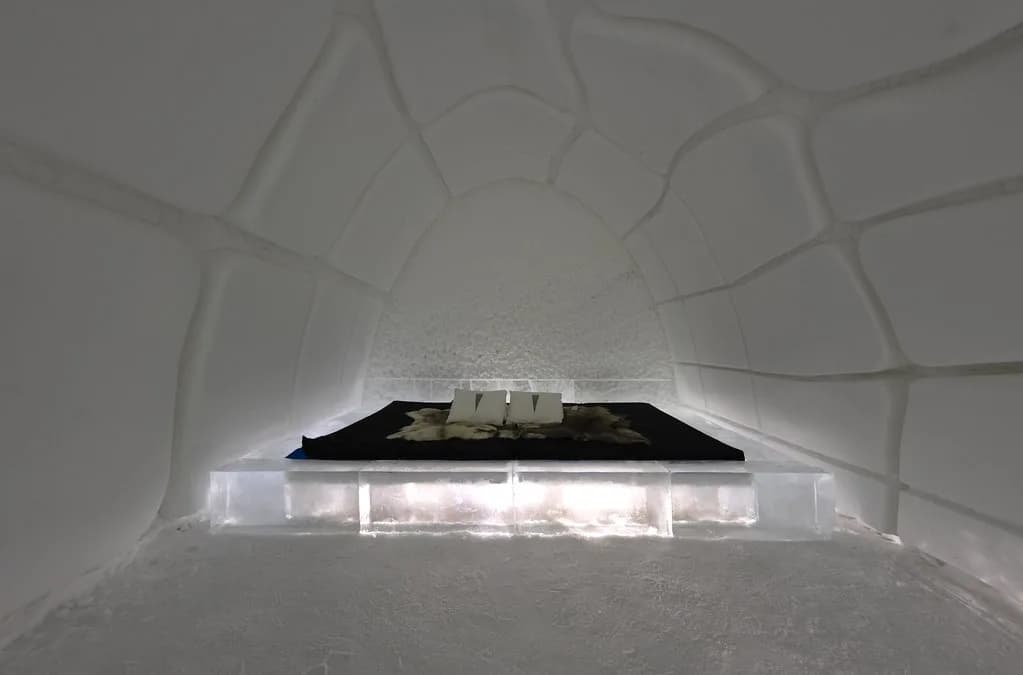
If you are staying at Icehotel Jukkasjärvi, the village setting already gives you a darker sky than central Kiruna, and the river valley opens the northern horizon. The trade-off is that a cold night in an ice room and a long aurora watch are hard to combine comfortably, so many travelers book a warm cabin for the watching nights.
Gällivare and its neighbour Malmberget combine mining infrastructure with quick access to genuinely dark country. The forecast approach is the same: check activity, check cloud, then drive ten to thirty minutes away from the built-up area. Even a short move away from town lights noticeably improves contrast on faint arcs.
Self-guided chasing versus a guided tour
The tourism board's own advice is to stay mobile: be prepared to move by car or snowmobile, or simply to walk around the area, because changing position is often what turns a faint glow into a display. That advice is as relevant to independent travelers as to guided groups. The main cost of self-guiding is the driving and the route decisions on icy roads after dark.
Guided options in the Kiruna and Abisko area cover the main styles: minivan hunts that can relocate quickly when cloud shifts, private hunts for travelers who want flexibility, dogsled and snowmobile versions for the experience as much as the aurora, and mixed itineraries that combine several elements. A minivan or private hunt gives you the best odds of finding a clear patch, while a dogsled or snowmobile night trades some mobility for a memorable way to travel.
Choose according to what you want from the night rather than what looks most adventurous. A group minivan hunt is the sensible default for a first trip, a private tour suits photographers who need setup time, and a dogsled or snowmobile trip works best when you accept that the ride itself is the point. Whichever you pick, ask the guide how far they are willing to drive for clear sky.
How many nights to plan
The Swedish Lapland tourism board is direct about the odds: there is no guarantee you will see the lights, and your chances improve the longer you stay. It notes that some weeks bring repeated displays for many days and others bring cloud and snowfall that keep the aurora hidden. A forecast is useful per night, but a trip is a portfolio of nights.
A practical range for a first aurora trip is four to six nights in the far north, with at least three of them free of fixed evening plans. A forecast app that tracks Swedish towns recommends a similar four to six nights for the same reason: with a Kp 2.0 working threshold, most nights qualify on activity, so cloud is the variable you are really betting against.
If your trip is short, weight the itinerary toward Abisko or another rain-shadow location and build in a backup night at the same base rather than moving every day. Changing hotels costs you the one thing that improves your odds: repeated attempts from a place you know how to leave quickly after dark.
Month by month: autumn, mid-winter and March
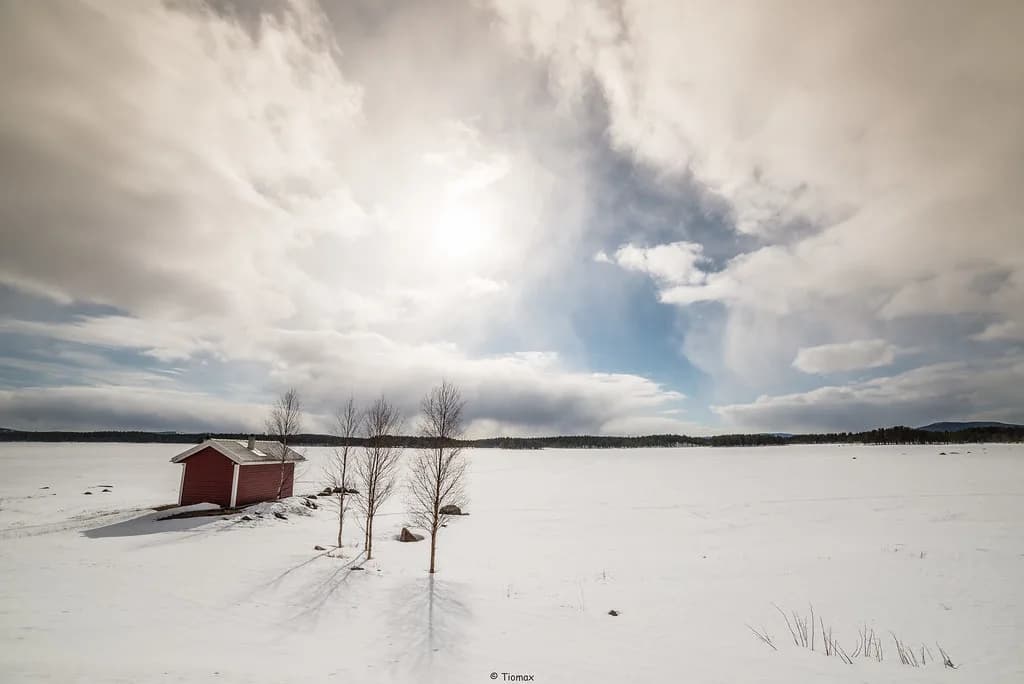
The tourism board frames the season as a set of trade-offs. September, October and November bring steadily longer nights, often snowless ground and mild temperatures, which makes movement easy but removes the white reflective landscape that brightens a display. For travelers who value comfort and mobility over atmosphere, early season is underrated.
December and January offer the most dramatic setting: deep snow, very long nights and a landscape that reflects even a faint green arc. The cost is cold and short days for everything else, so winter activities and aurora watching compete for the same limited daylight. Travelers who want the classic image tend to accept that trade.
February and March lengthen the days and warm the air while keeping snow on the ground, letting you combine daytime skiing or excursions with evening watching. The compromise is a shrinking darkness window as March advances. Plan the aurora watch earlier in the evening as the month progresses.
For a fuller picture of how the season changes on the ground, including what open businesses and activities look like across the winter, the guide to swedish lapland in winter fills in the practical side.
The limits of any aurora forecast
Solar wind timing, cloud movement and local terrain mean a forecast is a probability, not a schedule. The tourism board's explanation of the mechanism, charged particles arriving roughly two days after leaving the sun, is the reason even the best services give ranges rather than exact hours. A high Kp reading can pass with nothing visible overhead if the aurora is faint or distant.
The forecast service's own framing is a working threshold, not a guarantee, and its live status for a town can shift within hours as conditions change. Treat the app as a way of deciding whether to go outside, then look up and judge for yourself.
The same humility applies to any operator's track record. No company can promise a sighting, and the sensible question to ask is what happens if the sky stays cloudy: a rebooking policy or a second attempt matters more than a marketing claim. The tourism board's own wording is that there is no guarantee, which is the right expectation to carry into any booking.
Plan Your Visit
A good Swedish Lapland aurora forecast routine is short: check activity, check cloud, check darkness and moon, pick a night, and drive to open sky away from town lights. With a low working threshold at this latitude and Abisko's rain-shadow climate in your favour, the realistic strategy is more nights rather than better forecasts.
Build a base for several nights, keep at least three evenings flexible, and expect at least one cloudy night as normal rather than unlucky. If you are still choosing where to sleep, the Icehotel Sweden Guide covers the Jukkasjärvi option, while the wider northern lights guide puts the whole region in perspective.
Frequently Asked Questions
When is the best time to see the northern lights in Swedish Lapland?
The Swedish Lapland tourism board gives September to late March as the main season, with displays possible from late August. Mid-winter offers the longest dark nights, while February and March combine snow with longer, warmer days, so the best month depends on whether you value maximum darkness or daytime activities.
What Kp index do you need to see the aurora in Abisko or Kiruna?
A forecast service that tracks Swedish towns lists Kp 2.0 as the working threshold for Abisko, Kiruna, Gällivare and Jokkmokk, based on magnetic latitudes around 64 to 66 degrees. Treat that as guidance for ranking nights rather than a rule: a higher Kp improves the odds, but cloud and darkness decide what you actually see.
Where in Swedish Lapland has the best chance of clear skies?
Abisko National Park is the strongest bet. The tourism board describes its rain-shadow position as giving it one of the driest climates in the Nordic area and more clear nights than most of the north, and in good spells more than two weeks of consecutive aurora-friendly nights.
How many nights should you plan for an aurora trip to Swedish Lapland?
Plan four to six nights with at least three evenings free of fixed plans. The tourism board notes that longer stays improve your chances because some weeks bring repeated displays and others bring cloud, and a forecast app covering Sweden recommends the same range for the same reason.
Can you see the northern lights in Swedish Lapland in September?
Yes. The tourism board says displays can appear as early as late August, and September nights are dark enough while the ground is still often snowless and temperatures are mild. The trade-off is that you miss the white, snow-covered landscape of mid-winter.
Is a guided northern lights tour better than chasing on your own?
A guided minivan or private hunt gives you a driver who can relocate when cloud shifts, which suits a short trip or a first visit. Self-driving gives you more freedom and lower cost, but you take on icy night roads and route decisions. Dogsled and snowmobile tours trade some mobility for the experience of the ride.
Sources
Notes for your Arctic winter trip
Optional updates to our northern lights guides.
You might also like

Continue reading
More guides you'll find useful