Polar Night in Abisko: What It's Like and When to Go
Polar night in Abisko brings weeks without sunrise above the Arctic Circle, blue twilight by day and long dark nights suited to aurora watching.
On this page
Abisko in midwinter offers something few places on earth can: a stretch of weeks when the sun never clears the horizon, yet the sky rarely goes fully black. Days shrink into a long blue twilight over Lake Torneträsk, and the same darkness that shortens your sightseeing hours gives you far more night hours to watch for the aurora. It suits travelers who would rather have moody light and quiet trails than bright, busy days.
The appeal is not only the missing sun. Abisko sits deep inside the Arctic Circle and often within the auroral oval, so a polar-night trip and an aurora trip are the same booking here. What changes with your dates is how much twilight you get for skiing, snowshoeing and photographs, and how much of each day is genuinely dark.
What polar night means above the Arctic Circle
Polar night is an astronomical effect of the Earth's tilt: in winter the northern hemisphere leans away from the sun, so latitudes close to the pole stay in shadow around the clock. The result is not permanent blackness but a period when the sun does not rise, with civil twilight in its place for part of each day.
It is worth separating the strict definition from the lived experience. Astronomers count the polar night as the days when the sun's disc stays below the horizon, while travelers usually mean the wider stretch of very short, blue-toned days on either side. Both descriptions fit Abisko; only the first is a fixed calendar fact, and it shifts slightly with the exact latitude you stand on.
How far north Abisko sits and why that matters
Abisko lies roughly 100 km west of Kiruna and about 200 km inside the Arctic Circle, a position that keeps it in the auroral oval much of the time. That northern latitude is why the sun disappears for a stretch in December and January, and why the aurora can appear directly overhead rather than low on the horizon.
The geography also shapes the weather. The valley sits in the rain shadow of the mountains, which is one of the reasons the area is known among aurora watchers, and the open terrain around Lake Torneträsk gives you long, unobstructed views to the north. Travelers comparing bases should weigh that openness against the comforts of a larger town.
When the sun stays below the horizon in Abisko
Astronomical polar night at Abisko's latitude falls in the depths of December and the first days of January, when the sun does not rise at all. Outside that core window, the days are still extremely short: expect a low arc of light near midday and darkness returning by mid-afternoon. Because the exact dates of the sunless period depend on latitude and the year, use the almanac data for Abisko for precise sunrise and sunset times. If you are weighing bases, the polar night in swedish lapland works on the same principle but shifts with the latitude you choose.
Blue light by day: what daylight actually looks like
The signature of an Abisko polar night is not blackness but blue. For a few hours around midday the sky and snow take on a deep blue-violet tone that photographers call the blue hour stretched across the whole day. It is soft, flat light, excellent for landscapes and portraits, and poor for anything that needs strong shadows or fast shutter speeds.
Plan your outdoor activity for that midday window and treat the rest of the day as night. Skiers and snowshoers usually head out around late morning, return before the light fades, then rest and eat before heading out again to watch the sky. This rhythm is the single biggest adjustment for first-time visitors.
Weather, snow and temperatures through the polar night
The polar night coincides with Abisko's coldest, snowiest conditions, and the valley builds a substantial snowpack as westerly winds push snow across the mountains. That means reliable cover for skiing, dog sledding and snowmobiling, but also short days when a storm can close visibility entirely. Build a rest day into any itinerary of a week or more so a weather loss does not cost you a booked activity.
Why the dark months suit aurora watching
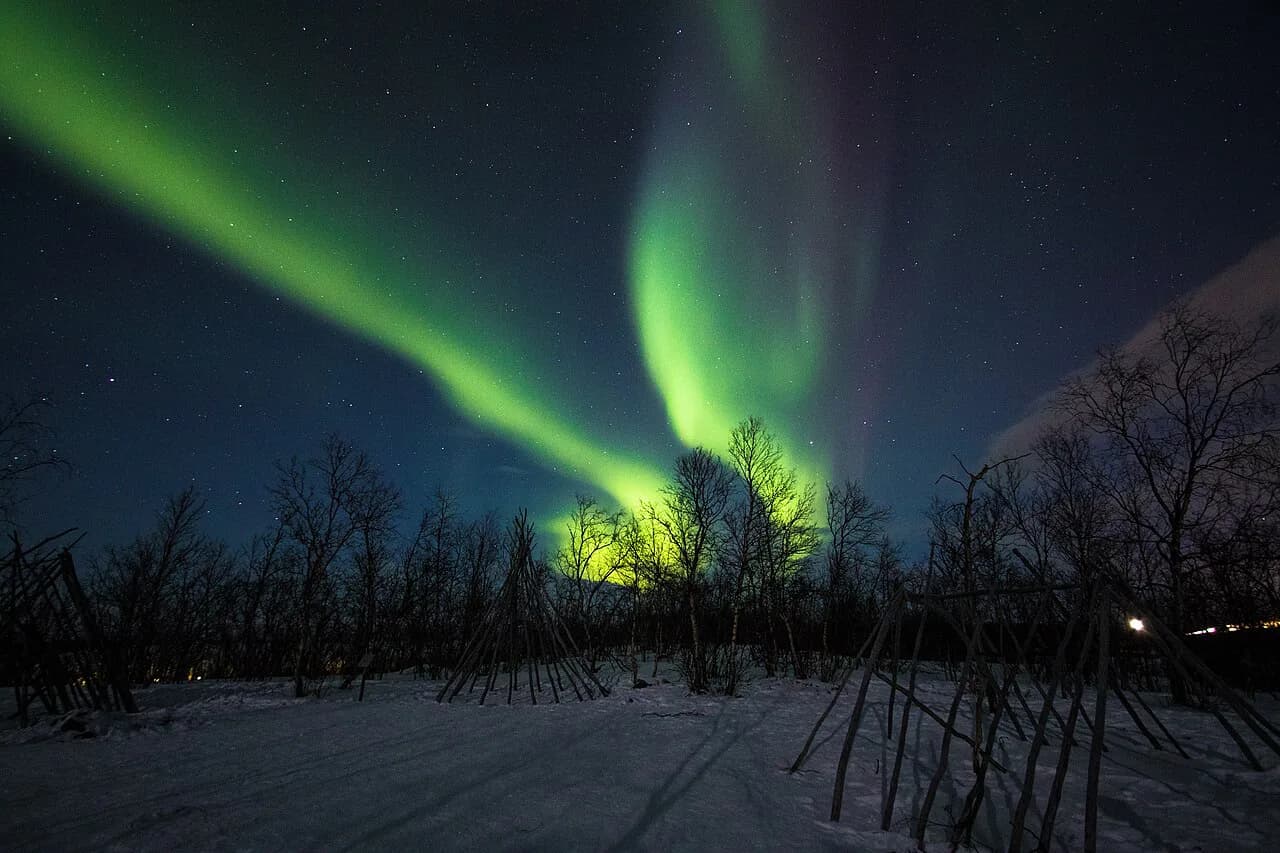
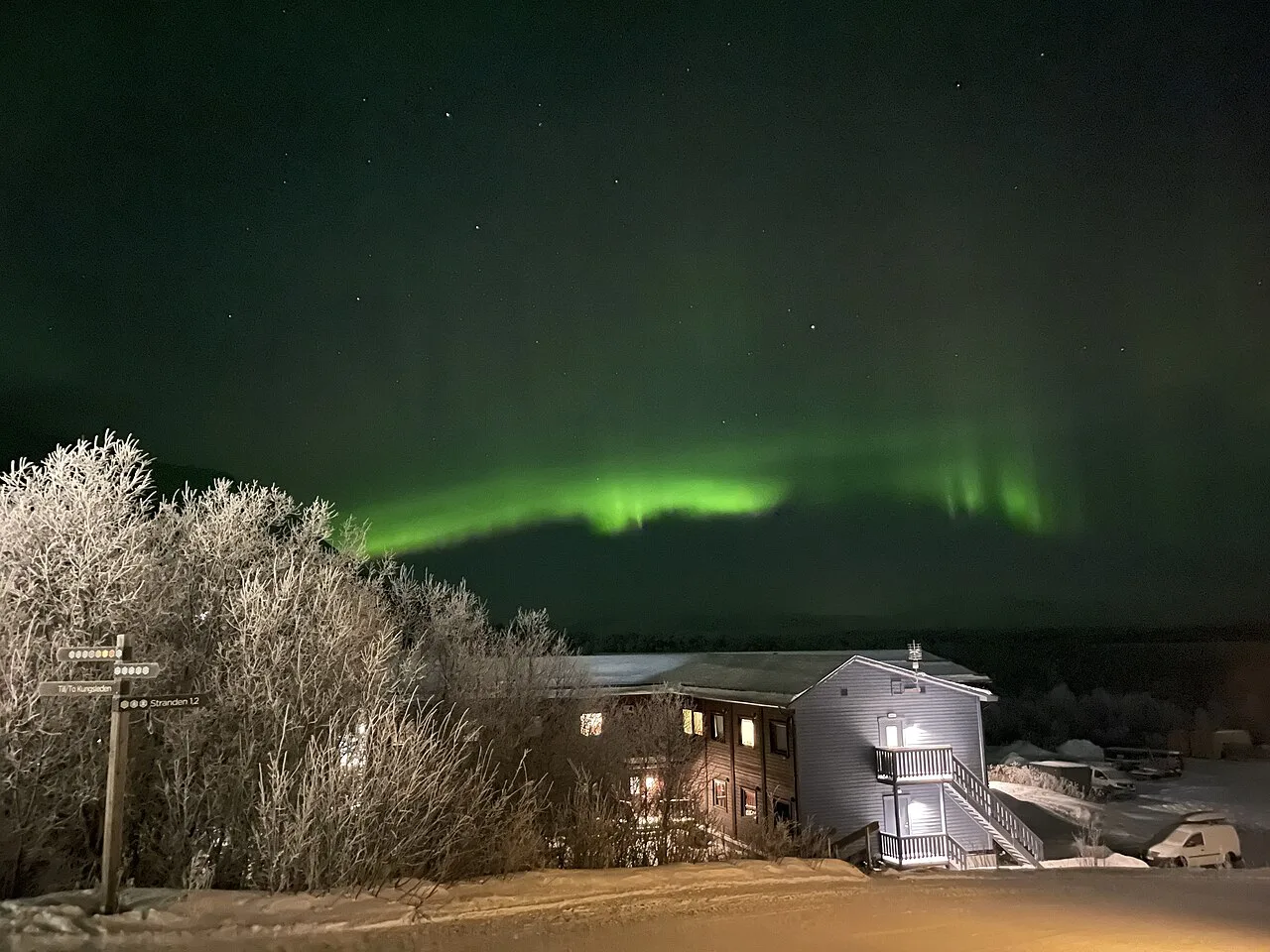
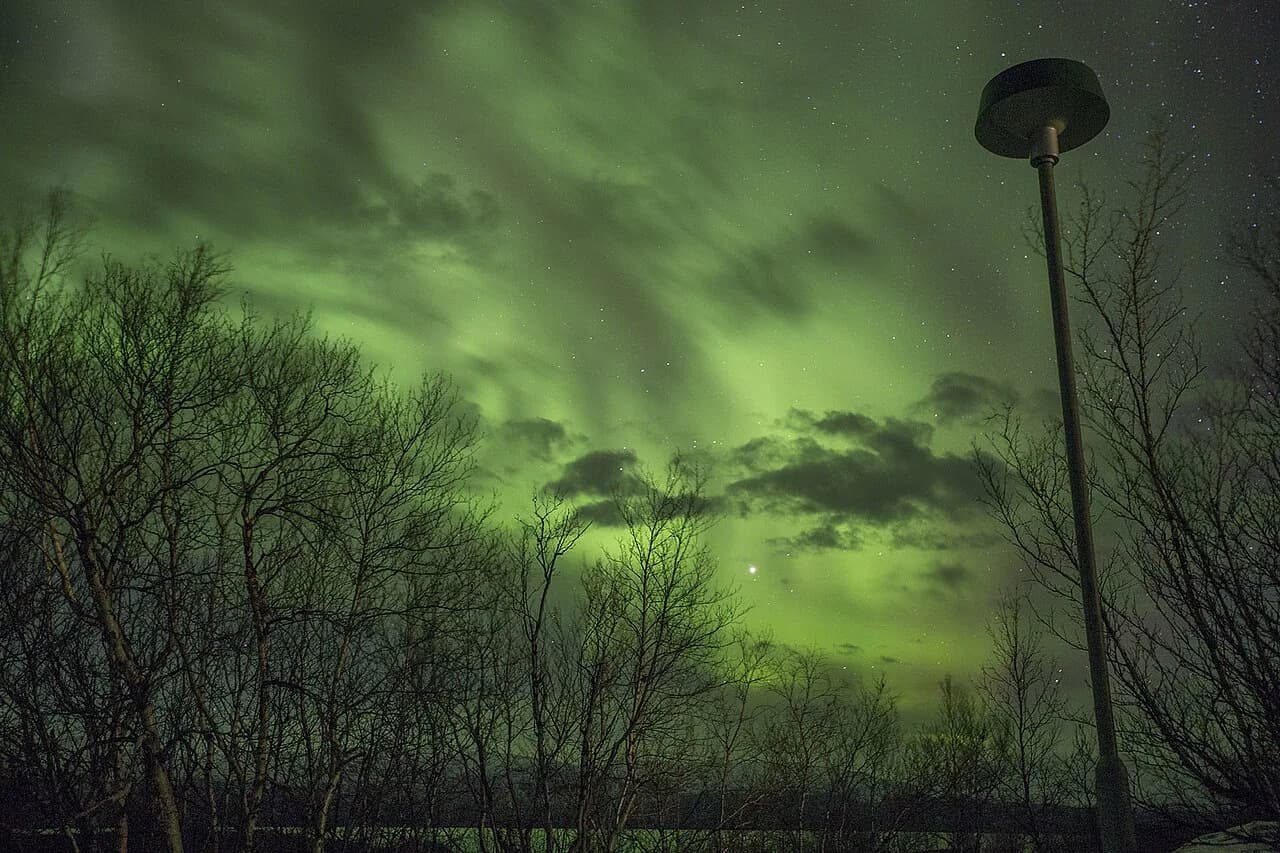
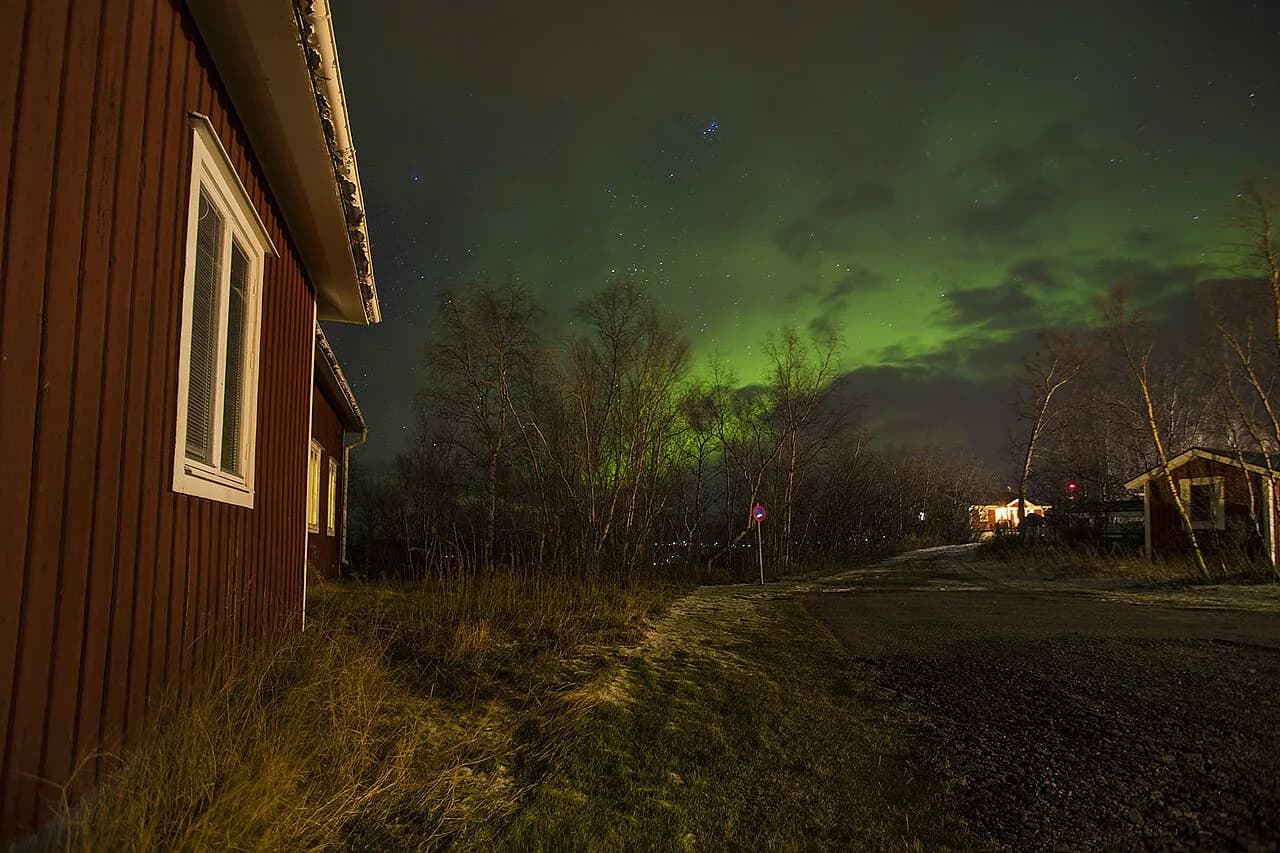
Darkness is the aurora watcher's main asset, and the polar night delivers it in abundance. Visit Abisko notes that auroras are visible on most nights from October through March, and that is a statement about conditions, not a promise for your particular dates: solar activity and cloud cover decide what you actually see.
In practice, the long nights give you more chances. A cloudy evening in December still leaves many dark hours, and a clear patch at 2 a.m. counts as much as one at 9 p.m. A dedicated Abisko northern lights trip here is less about a single tour slot and more about staying several nights and being ready when the sky opens.
Self-guided viewing versus the STF Aurora Sky Station
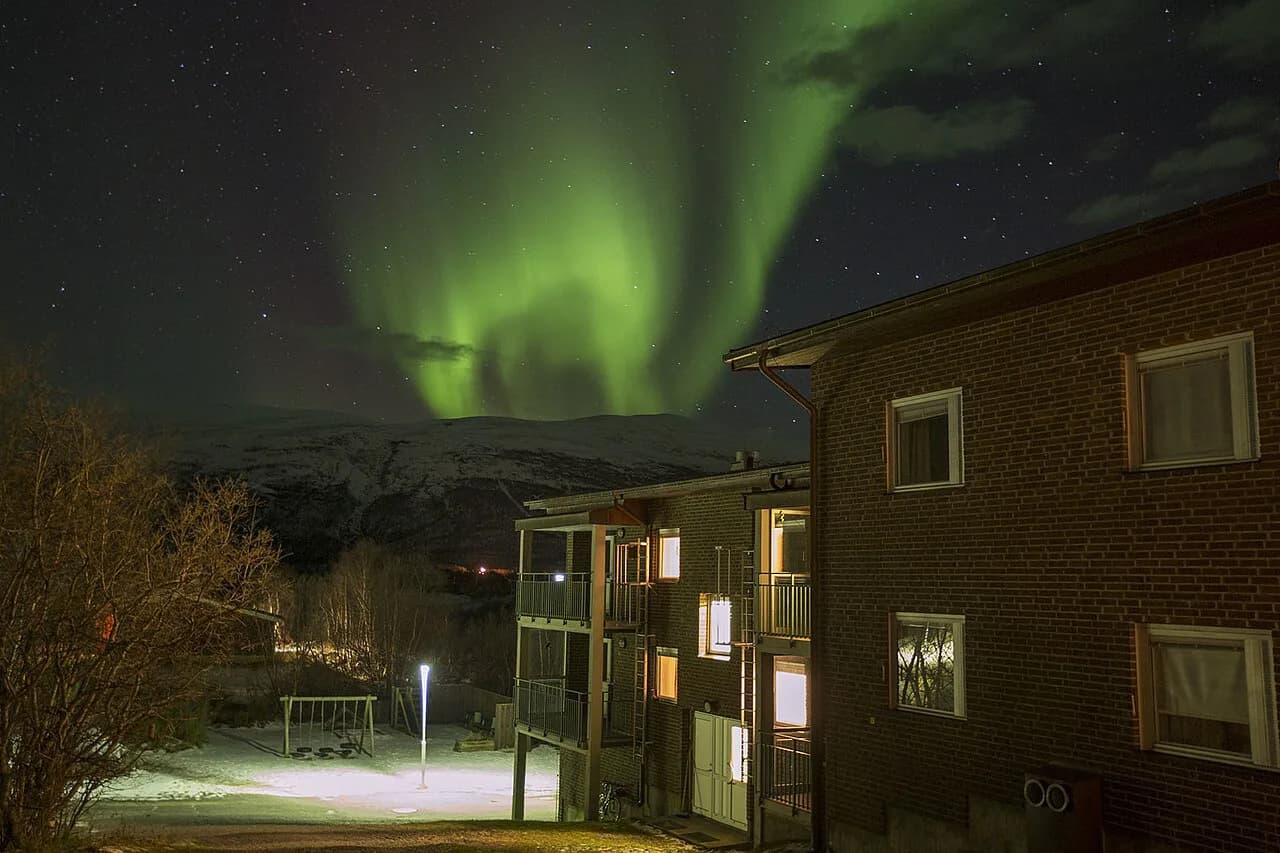
You do not need a guide to see the aurora in Abisko. The national park and the shore of Lake Torneträsk are dark, open and close to the main accommodation, so a short walk after dinner puts you under a wide sky. Self-guided watching is free, flexible and easy to combine with an early night, though it depends on your own willingness to stand outside in the cold.
The paid alternative is the STF Aurora Sky Station, reached by a tour up Mount Nuolja to about 900 metres, where you get a panoramic view over the Abisko valley and the national park. Kiruna Lappland describes the experience as a northern lights dinner at the station, with the ascent itself one of the highlights of a winter visit.
The trade-off is cost and schedule versus elevation and comfort. A guided ascent puts you above some of the valley cloud and gives you a warm base with dinner, but you are tied to a departure time and a group. Independent viewers can move with the sky, but they stay at valley level and supply their own warmth.
Aurora packages at STF Abisko Turiststation
If you would rather have the logistics handled, STF Abisko Turiststation sells a three-night aurora package with hostel accommodation, full board including a three-course dinner at Restaurant Kungsleden on the first and third evenings, and the Aurora Sky Station northern lights dinner on the second evening. Kiruna Lappland lists it as available from November to March, priced from 5980 SEK.
A package like this suits travelers who want a fixed structure and a guaranteed roof over their head each night. The alternative is to book a room independently and add a single sky-station visit, which usually gives more freedom to chase clear skies on other nights. Either way, the station experience is the same dinner-and-ascent format, and the hostel option keeps the cost down relative to private cabins.
Where to stay for dark skies near Abisko National Park
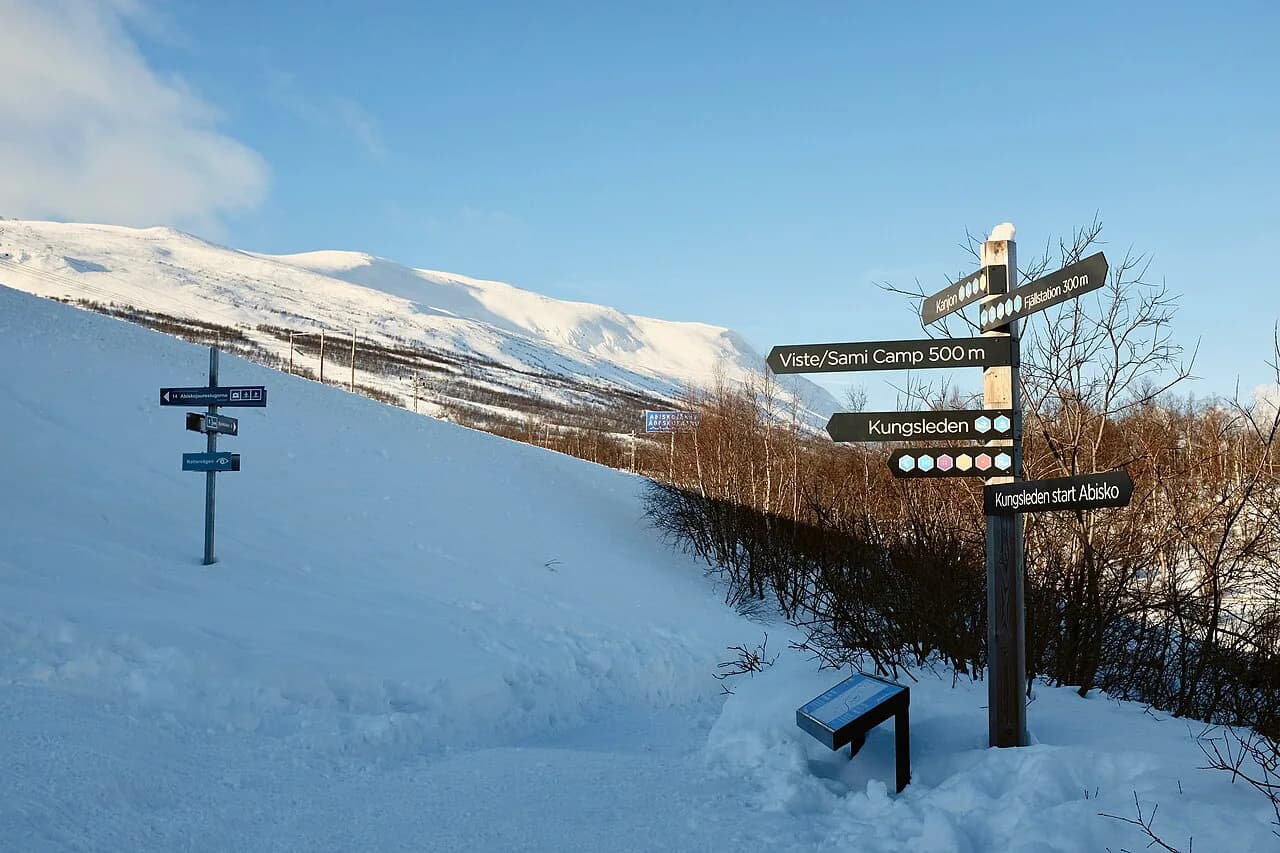
Abisko's accommodation clusters around the tourist station and the village, with the national park boundary and the lake shore within easy walking distance of most beds. That layout is the main reason the area works so well for aurora travel: you can sleep, eat and step into darkness without a car.
Lodges closer to the park entrance trade some village convenience for quicker access to quiet trails and darker horizons. A place like Abisko Mountain Lodge puts you within reach of both the station facilities and the trailheads, which matters on a polar-night trip when you do not want to spend your short daylight hours driving.
How many nights to plan for a fair chance of clear skies
Three nights is a sensible minimum and five gives you real breathing room. Cloud is the limiting factor, not darkness, so the more nights you have the more likely one of them is clear; a single booked night is a gamble whatever the season. If you are traveling specifically for the aurora, put the extra nights in Abisko rather than splitting them between several bases.
Cross-country skiing, snowshoeing and husky days
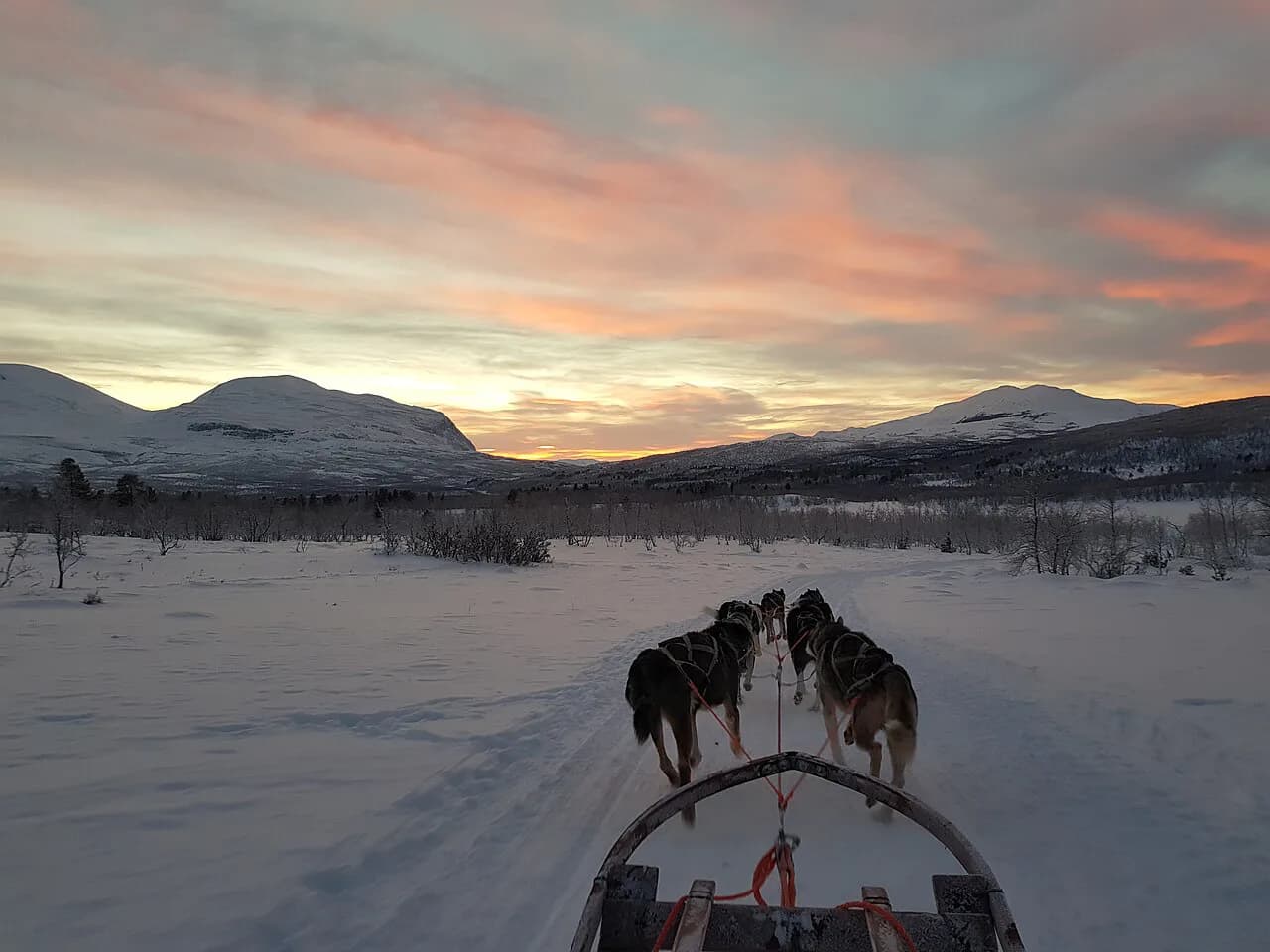
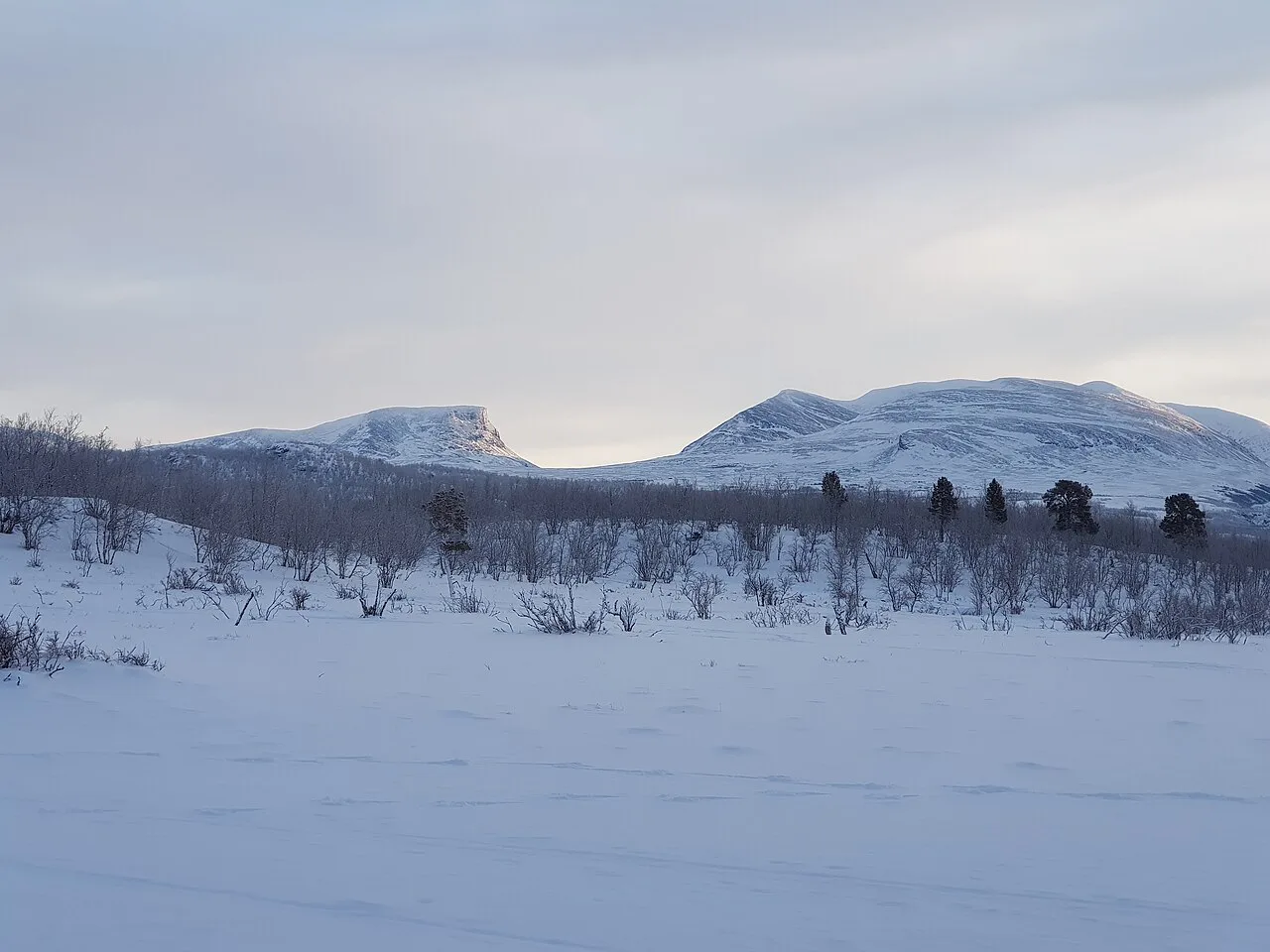
The polar night is not a reason to skip daytime activity; it is a reason to compress it into a few hours. Cross-country ski trails and snowshoe routes run from the station area into the national park, and the reliable snowpack makes both viable through the dark months. Dog sledding and snowmobiling operators work out of the Abisko and Björkliden area and typically run half-day trips that fit the short light window.
Book these activities for the middle of the day and keep your evenings free for the sky. Operators lend thermal suits on winter tours, so you do not need to over-invest in gear for a single sled ride, but you will still want your own layers for the hours you spend standing outside at night.
Comparing a polar-night trip with a late-winter trip
A December or early-January visit gives you the full blue-light experience and the longest nights, at the cost of very little daylight and the coldest conditions. A March visit brings normal daylight hours back, longer, brighter days and often good spring snow, but noticeably shorter nights and a later sunset. Neither is better; they are different trips.
Choose the polar night if the moody light and the sense of a sunless world are the point of the journey. Choose late winter if you want to ski or snowshoe for full days and treat aurora watching as an evening bonus. Travelers who want both often book one week in late January or February, when the light is returning but the nights are still long.
Practical limits: cold, short daylight and tour timing
The real constraints are temperature, light and scheduling. Cold limits how long you can stand still outside, so plan warm-up breaks indoors and treat aurora watching as a series of short sessions rather than one long vigil. Short daylight means activities start late and finish early, and tours that leave in the afternoon may return after dark.
Check departure times and meeting points with the tour company when you book, since winter schedules shift with conditions. A flexible plan, with one anchor activity and plenty of unscheduled evenings, is the most reliable way to enjoy Abisko in polar night without fighting the calendar.
Plan Your Visit
Abisko's polar night is a rare combination: a sunless midwinter with blue twilight for a couple of hours a day and long, dark nights over an open valley. Come for the light as much as the aurora, allow at least three nights, and keep your evenings flexible so a clear sky is never wasted.
Base yourself near the national park, use the short daylight for skiing or snowshoeing, and decide in advance whether the sky-station dinner is worth the fixed schedule for you or whether you prefer to watch from the valley floor. Whichever you choose, the aurora remains a matter of solar activity and cloud, so plan for several chances rather than one.
Frequently Asked Questions
How long does polar night last in Abisko?
Astronomical polar night, when the sun does not rise at all, falls in the depths of December and the first days of January at Abisko's latitude. Outside that core window the days are still very short, with a low arc of light near midday and darkness returning by mid-afternoon. Exact dates shift slightly with latitude each year, so use the almanac data for Abisko for precise sunrise and sunset times.
Do you still get daylight during polar night in Abisko?
Yes, in the form of twilight rather than direct sun. For a few hours around midday the sky and snow take on a deep blue-violet tone, which is soft, flat light good for landscapes but poor for anything needing strong shadows. Plan outdoor activity for that midday window and treat the rest of the day as night.
Is polar night a good time to see the northern lights in Abisko?
The long nights give you more hours of darkness, and the area is often within the auroral oval, so conditions favor aurora watching. Sightings still depend on solar activity and clear skies, so no date or tour guarantees a display. Staying several nights and being ready when the sky opens is the most reliable approach.
Where do you watch the aurora in Abisko during polar night?
The national park and the shore of Lake Torneträsk are dark, open and close to the main accommodation, so a short walk after dinner puts you under a wide sky. The paid alternative is the STF Aurora Sky Station, reached by a tour up Mount Nuolja to about 900 metres, with a panoramic view over the Abisko valley and the national park.
How many nights should I stay in Abisko in winter?
Three nights is a sensible minimum and five gives you real breathing room. Cloud is the limiting factor rather than darkness, so more nights mean more chances of a clear one. If the aurora is the reason for the trip, put the extra nights in Abisko rather than splitting them between several bases.
Is Abisko inside the Arctic Circle?
Yes. Abisko lies roughly 100 km west of Kiruna and about 200 km inside the Arctic Circle, which is why the sun disappears for a stretch in December and January and why the aurora can appear directly overhead rather than low on the horizon.
Sources
Notes for your Arctic winter trip
Optional updates to our northern lights guides.
You might also like
Continue reading
More guides you'll find useful