Where to Stay in Abisko for the Northern Lights
Compare Abisko lodges, mountain stations and cabins by dark-sky access, distance to the Aurora Sky Station chairlift and how many nights to plan.
On this page
Abisko sits in the middle of the aurora zone, a small village on the edge of Abisko National Park about 95 km west of Kiruna, and it has built its winter reputation on dark skies and a stubborn local microclimate. Your choice of bed matters less than how few minutes it takes to step outside into darkness when the sky clears.
The village is compact: lodges, a mountain station, the national park boundary and the shore of Lake Torneträsk all sit within a short stretch of the same rail and road corridor. That makes Abisko easy to plan without a car, provided you pick a base that matches how you want to spend your evenings.
Why Abisko suits aurora stays
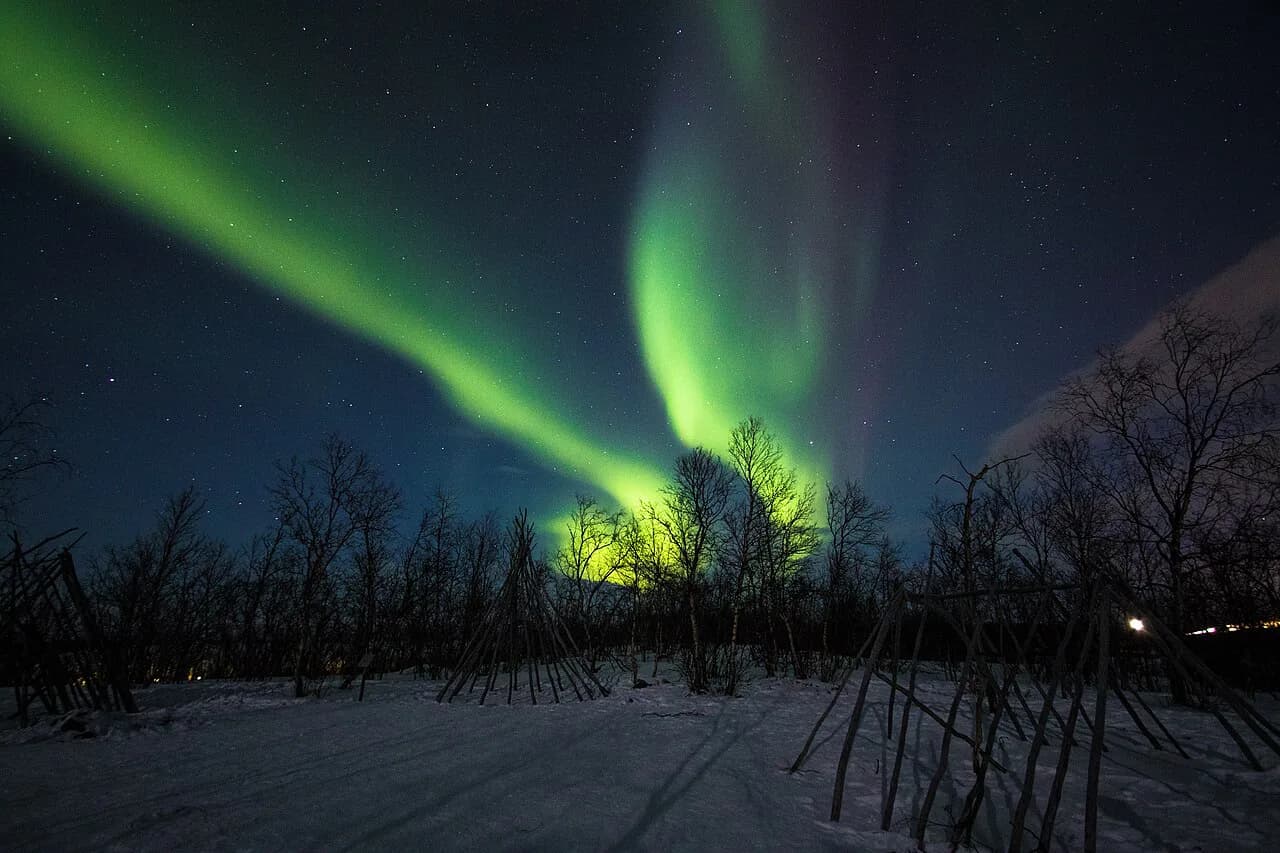
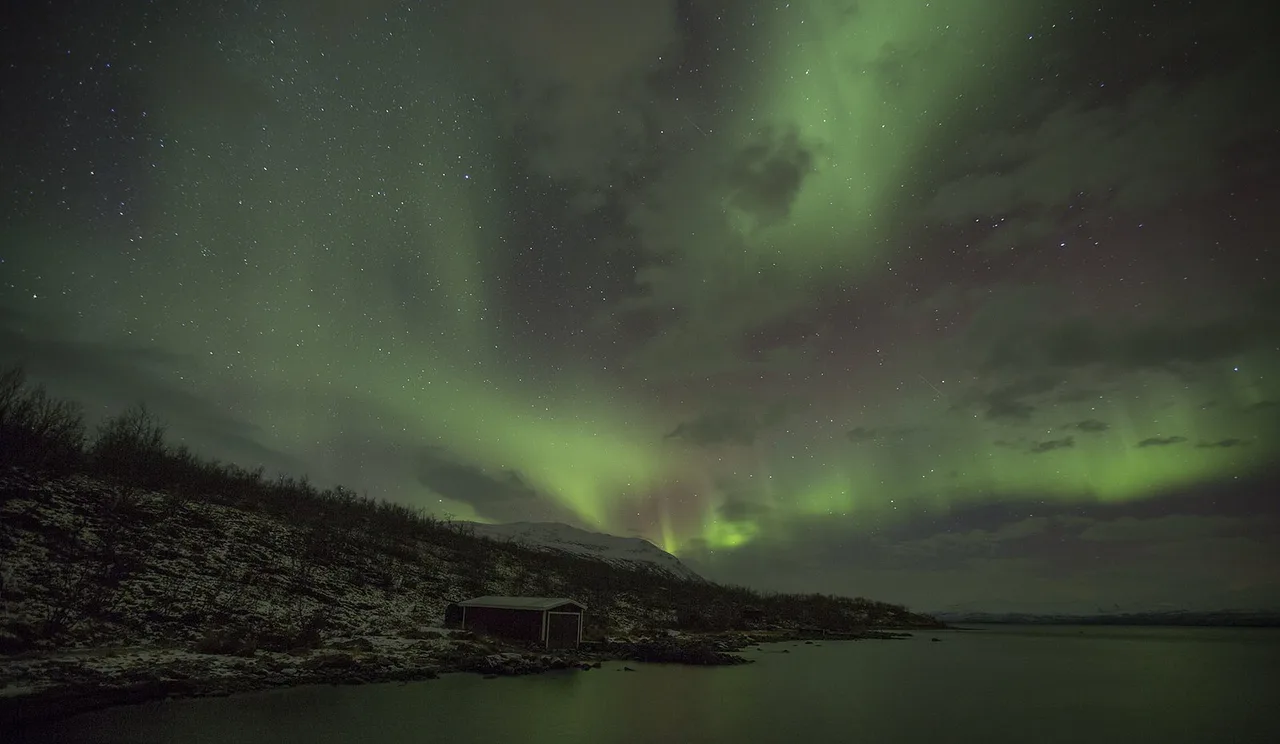
Abisko's position near Lake Torneträsk and the surrounding mountain range means the area often sees clearer skies than much of northern Lapland, a microclimate sometimes called the blue hole of Abisko. Cloud can break up over the lake even when nearby districts stay overcast, which is the real reason so many aurora trips route through this village.
Treat that reputation as an advantage, not a promise. Clear skies and solar activity both have to line up, and no base in Abisko can arrange either; what a good base gives you is fast, repeated access to darkness across several nights. Read the wider guide to the northern lights in Abisko before you commit to dates.
When the aurora season runs and what winter looks like
Aurora viewing needs dark nights, which in this latitude means roughly late August and September through to early April, with the deepest darkness in midwinter. Winter days are short and the sun stays low, so plan activities for the middle of the day and keep evenings free for the sky.
Snow cover and lake ice build through the winter, and the frozen surface of Lake Torneträsk becomes one of the flattest, darkest viewing platforms in the region once it is safe to walk on. Conditions change week to week, so ask your accommodation about local ice and snow state when you arrive.
How the village is laid out
Think of Abisko in three parts. The core village area holds the lodges and the road junction, the station area sits close to the national park boundary and the trailheads, and the corridor continues west toward Björkliden with the railway and the lake alongside it.
Where you sleep decides your evening routine. From the village core you can be in dark countryside within a short walk, while a base near the park boundary puts trailheads and lake shore on your doorstep. Neither is better in absolute terms; pick the one that matches whether you want to walk out alone or join a guided group.
Abisko Mountain Lodge and the village base
Abisko Mountain Lodge is a village lodge that pairs rooms with aurora viewing and Arctic activities, and it also runs a restaurant with local influences, which matters in a small settlement where dinner options are limited. Rooms, tours and tables can all be booked directly through Abisko Mountain Lodge's booking service, so reserve all three together to secure space on the night.
A village lodge like this suits travelers who want a warm base, a booked activity each day and an easy walk to darkness rather than a remote cabin. Guests often combine daytime snowshoeing or photography with an evening either out on foot or on an organized chase, and the lodge's activity desk is the place to sort that out.
Mountain stations near the park
The mountain-station style of accommodation puts you at the edge of the national park, with trailheads, the lake and open sky a short walk from your room. That layout is why photographers favor it: you can set up on the lake shore or a park trail within minutes and retreat indoors if cloud rolls in.
Fjället and the surrounding Björkliden accommodation appear among the handpicked stays travel specialists book for this corridor, alongside Abisko Mountain Station. These are full-service bases with food and activities on site rather than self-catering cabins, so compare them on meal arrangements and how far you walk to the lake.
Björkliden cabins and log cabins
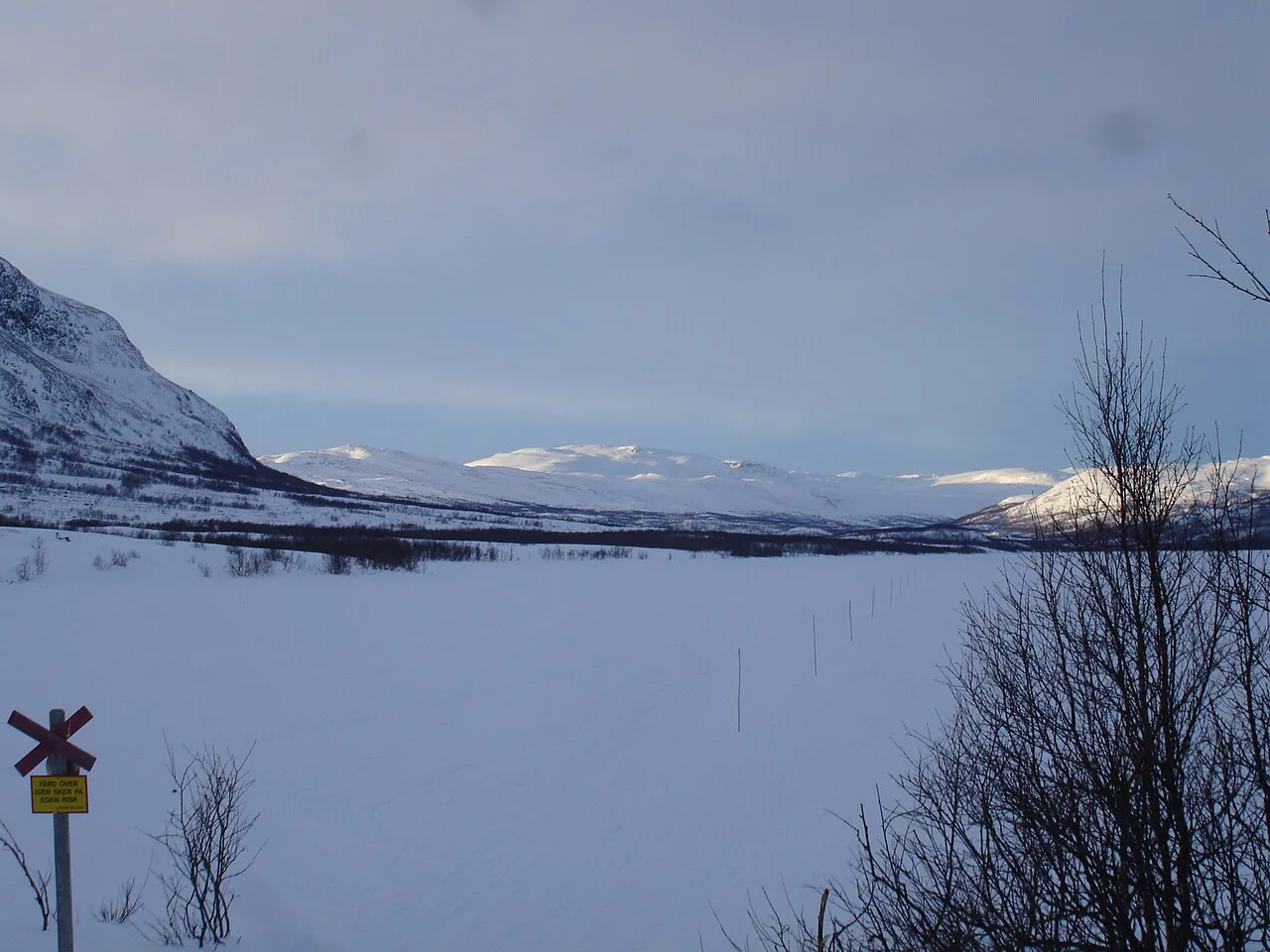
Björkliden sits on the same rail and road corridor west of Abisko, and it offers cabins and log-cabin accommodation alongside the mountain scenery that draws aurora photographers. Cabins give you your own space and a door to the outdoors, though you trade the village's walkable cluster of lodge restaurant and station for a quieter setting.
Choose Björkliden if you want a self-contained stay and are happy to drive or take the train for village services; choose the Abisko core if you would rather walk everywhere. The corridor is short enough that you can visit the other base during your stay without moving luggage.
Glass igloos and aurora cabins in Swedish Lapland
Glass igloos and aurora cabins are a Swedish Lapland signature, and they appear in multi-day itineraries rather than as standalone Abisko hotels. An independent ice and aurora trip of about five days from Kiruna, running December to March, combines Abisko-area stays with ice experiences; a longer independent circle adds glass igloos, the ICEHOTEL and other stops.
Weigh the trade-off honestly: a glass roof gives you sky views from bed, but heat, interior lighting and condensation can cut visibility, and the appeal depends on clear weather. If aurora watching is the priority, a conventional cabin with a short walk to dark sky often gives you more control over where you stand.
Aurora Sky Station on Mount Nuolja
The Aurora Sky Station sits on Mount Nuolja above the village, reached by chairlift, and offers guided aurora experiences with presentations on solar activity, the Earth's magnetic field and the atmospheric conditions behind the aurora. Book the evening as a distinct outing, separate from simply sleeping in Abisko.
The chairlift climb puts you above village light and much of the surrounding terrain, which is the point: you gain elevation and a wide view over the mountains and Lake Torneträsk. It is not a guarantee of clear sky, so treat the station as one strong option across several nights rather than the single plan for your stay.
Dark-sky viewing from the village versus the national park
From the village core, the quickest dark sky is a short walk toward the park boundary or down to the lake shore, away from lodge windows and path lights. The lake ice offers an unobstructed horizon once it is frozen and safe, while park trails give you forest cover and open viewpoints further in.
Light pollution here is modest by town standards, but a headlamp pointed at the wrong moment still ruins a photograph, so keep beams low and red where possible. If you want a guided setup, ask at your accommodation which operators run evening chases and whether thermal suits are lent out.
Self-guided chasing versus a guided aurora tour
Self-guided chasing from Abisko works because the village, lake and park are close together: you watch forecasts, step outside, and move a few hundred metres rather than driving hours. A car widens the radius toward Björkliden and beyond, but winter road conditions can undo a chase that looked simple on a map.
Guided tours add local weather judgment, transport and often warm suits, which is worth it on a short stay or for families who would rather not drive at night. Booking through your lodge or the mountain station keeps the logistics simple, and a guide can redirect the group when cloud sits over one part of the corridor.
Getting there and how your base affects transfers
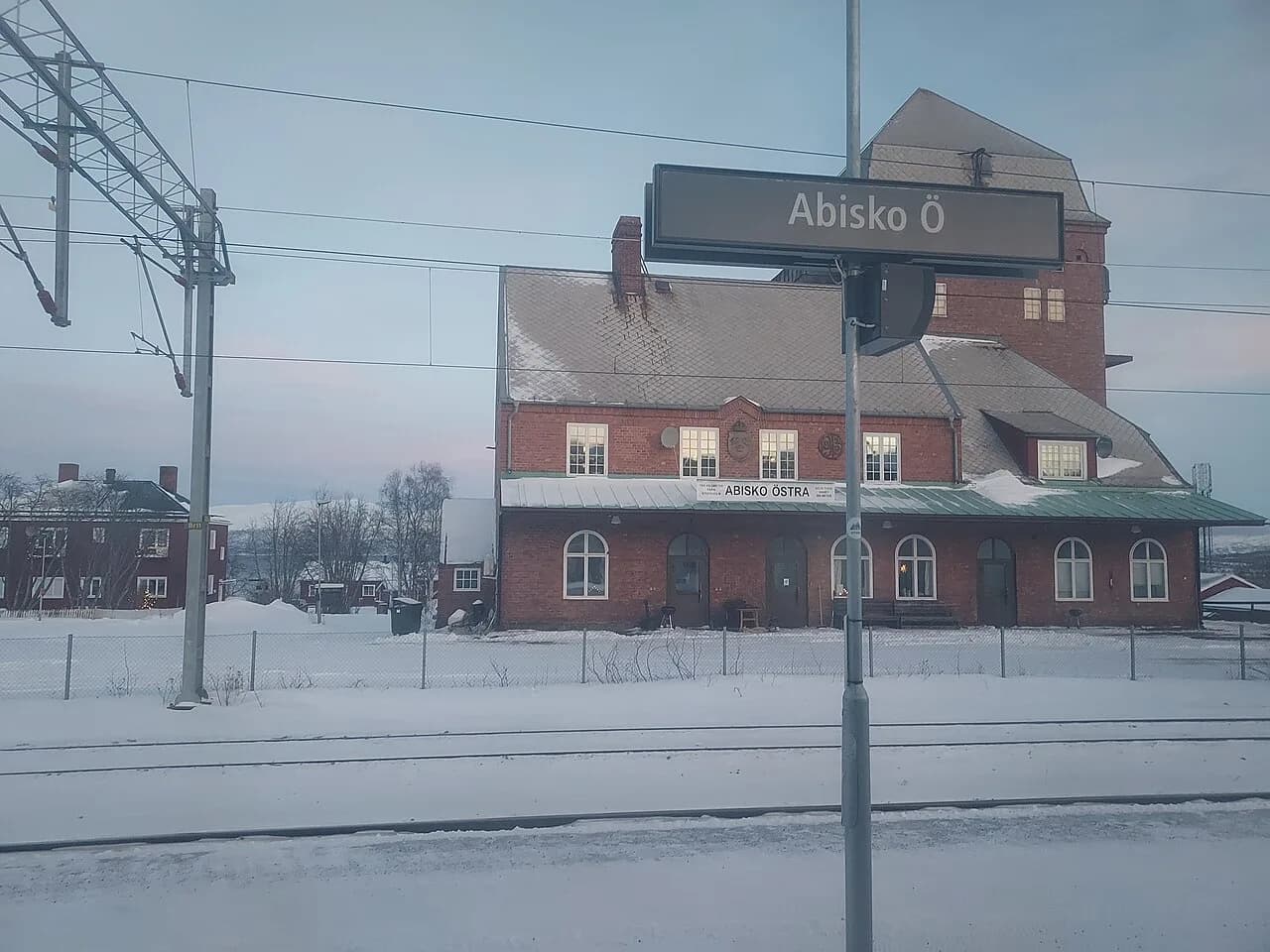
Kiruna is the arrival hub, and Abisko is about 95 km west of it by train or road, which keeps transfers short and makes the village a practical extension of a Kiruna stay. The railway runs along the corridor through Abisko and on toward Björkliden, so a base near the station simplifies arrival without a car.
If you stay in Björkliden, plan transfers around the train or a car rather than expecting to walk to Abisko's village services. Book accommodation and any airport or station transfer together, and confirm the meeting point for tours before you arrive.
Husky safaris, snowshoeing and cross-country skiing
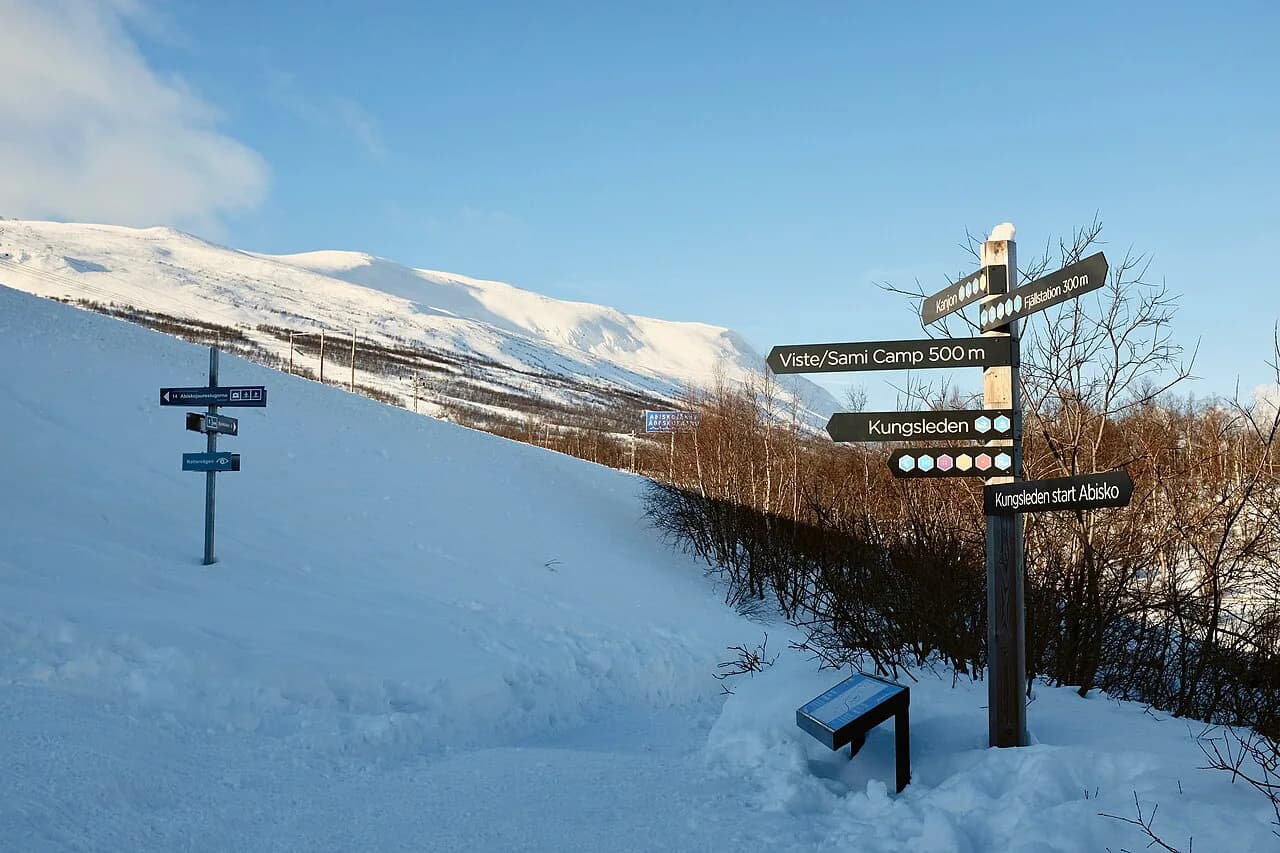
Abisko National Park offers snowshoeing, cross-country skiing and photography in winter, and in summer the same trails lead to long-distance routes including the Kungsleden. Winter is the season for short days on marked trails, dogsledding outings and camera sessions rather than long hikes.
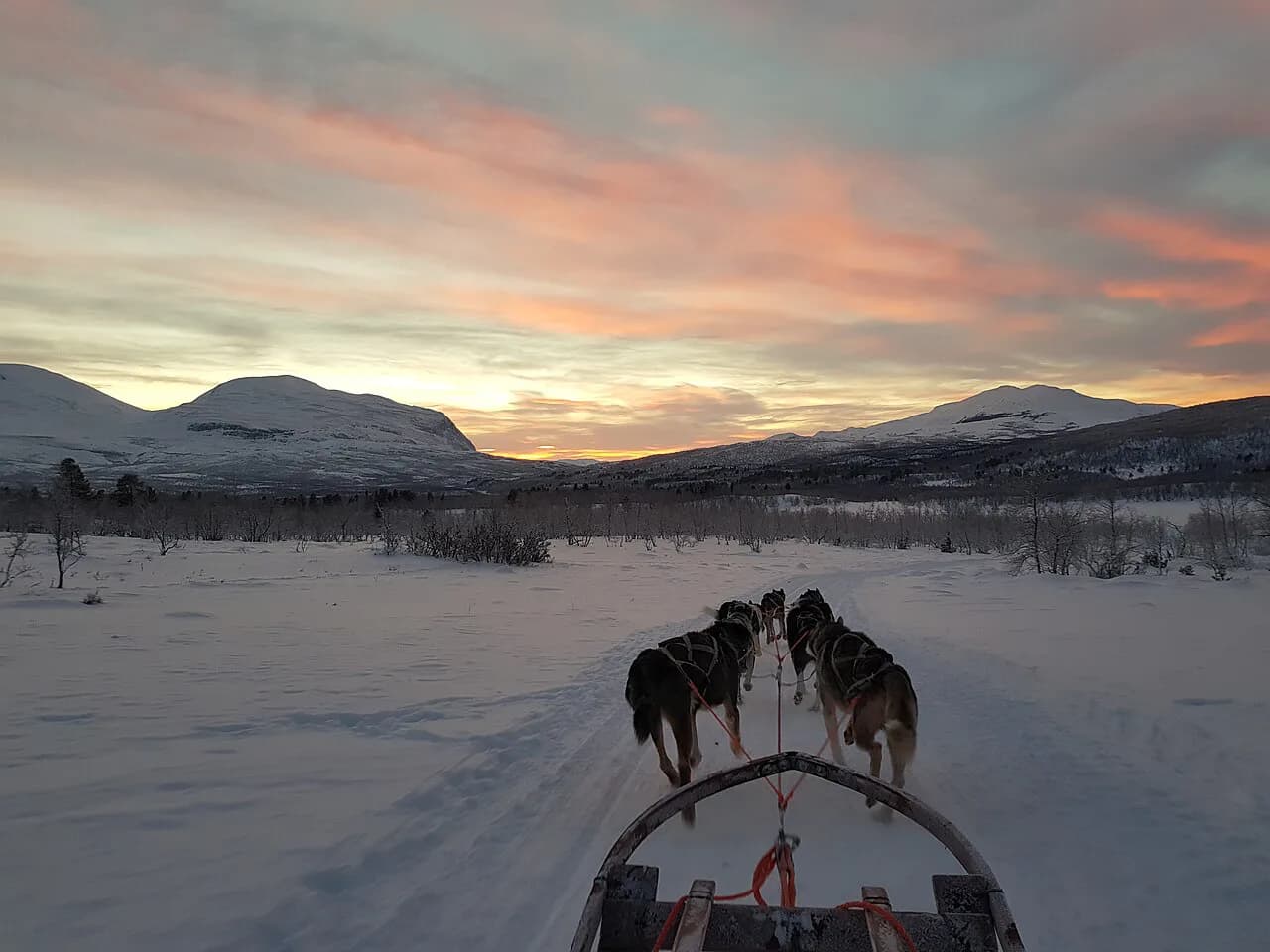
Pair a daytime activity with an evening sky plan so a cloudy night does not waste the day. Dogsledding and snowshoe tours appear among the activity options operators run around Abisko and Björkliden, and your lodge can match you with an outing that fits your fitness and timing. If you are weighing other bases further from the park, see this guide to where to stay in Swedish Lapland for the northern lights before you commit.
How many nights to plan
Give Abisko at least three nights and four if you can, because cloud is the main variable and one clear night is not a plan. Spreading evenings across the Aurora Sky Station, the lake shore and a guided chase raises your chances without relying on any single spot.
If you are adding Abisko to a longer Swedish Lapland trip, position it early in the itinerary so a cloudy stretch does not consume your last nights. Multi-day independent itineraries in the region typically run from five days upward, which leaves room to shift an evening if conditions look poor.
Who Each Base Suits
Couples and first-time aurora travelers do well in the Abisko village core, where a lodge like Abisko Mountain Lodge bundles rooms, meals and activities with a short walk to dark sky. Photographers should lean toward the park-edge mountain stations or Björkliden, where the lake shore and trailheads are minutes from the door.
Families benefit from full-service bases with food on site, while travelers continuing to Kiruna or onward along the corridor can treat Björkliden as an alternative base rather than a side trip. Whichever you pick, book early for midwinter and keep the Aurora Sky Station evening as one part of a multi-night plan.
Frequently Asked Questions
Is Abisko a good place to stay for the northern lights?
Abisko sits in the aurora zone on the edge of Abisko National Park, and the microclimate around Lake Torneträsk means cloud often breaks up here when nearby districts stay overcast. That gives you more usable nights than many other bases in northern Lapland. Sightings still depend on solar activity and clear sky, so treat the location as improved odds rather than a guarantee.
Where should I stay in Abisko for dark skies?
The village core puts lodges, a restaurant and a short walk to dark countryside in one compact area, which suits travelers without a car. The mountain-station area near the national park boundary gives photographers trailheads and the lake shore within minutes of the door. Björkliden, further west along the same rail and road corridor, suits travelers who want cabin space and are happy to drive or take the train for village services.
Do I need a guide to see the aurora from Abisko?
No. You can watch forecasts, step outside and move a few hundred metres between the village, the lake and park trails on your own. A guided tour adds local weather judgment, night transport and often warm suits, which is worth considering on a short stay or for families who would rather not drive on winter roads. Booking through your lodge keeps the logistics simple.
How many nights should I stay in Abisko for the aurora?
Plan at least three nights and four if your schedule allows, since cloud is the main variable and a single clear night is not a plan. Splitting evenings between the Aurora Sky Station, the lake shore and a guided chase avoids staking everything on one spot. If Abisko is part of a longer Swedish Lapland trip, place it early so a cloudy stretch does not use up your final nights.
How do I get to Abisko and where does the Aurora Sky Station fit in?
Kiruna is the arrival hub, and Abisko is about 95 km west by train or road, so transfers are short and the village works well as an extension of a Kiruna stay. The Aurora Sky Station on Mount Nuolja is reached by chairlift from the village and runs guided aurora evenings with presentations on solar activity and the atmosphere. Treat it as one strong option across several nights; the chairlift evening is booked through the station.
Sources
Notes for your Arctic winter trip
Optional updates to our northern lights guides.
You might also like
Continue reading
More guides you'll find useful