Abisko in Winter: Pick Your Arctic Base & Aurora Nights
Abisko in winter offers dark aurora skies, dogsledding, snowmobile tours and the Aurora Sky Station on Nuolja. Plan your nights, bases and cold-weather days.
On this page
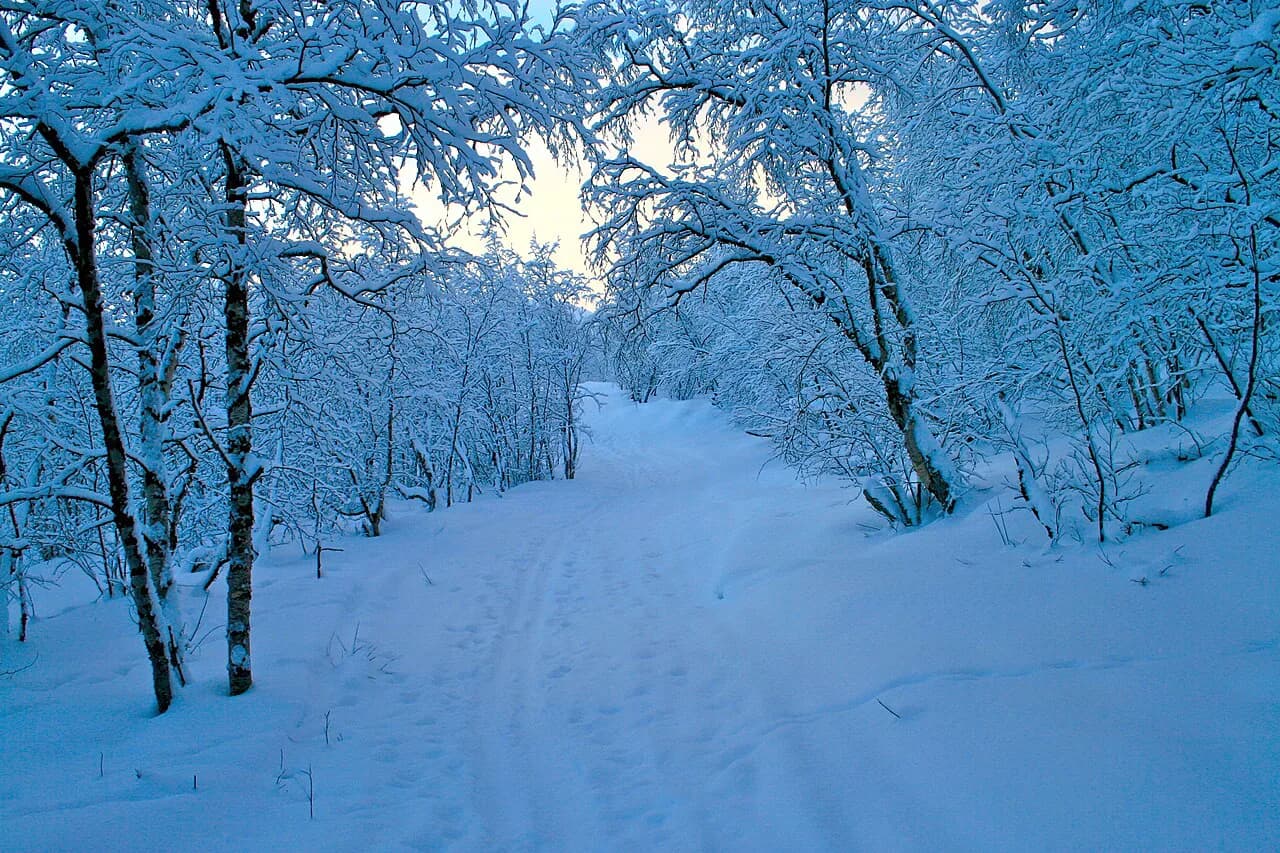
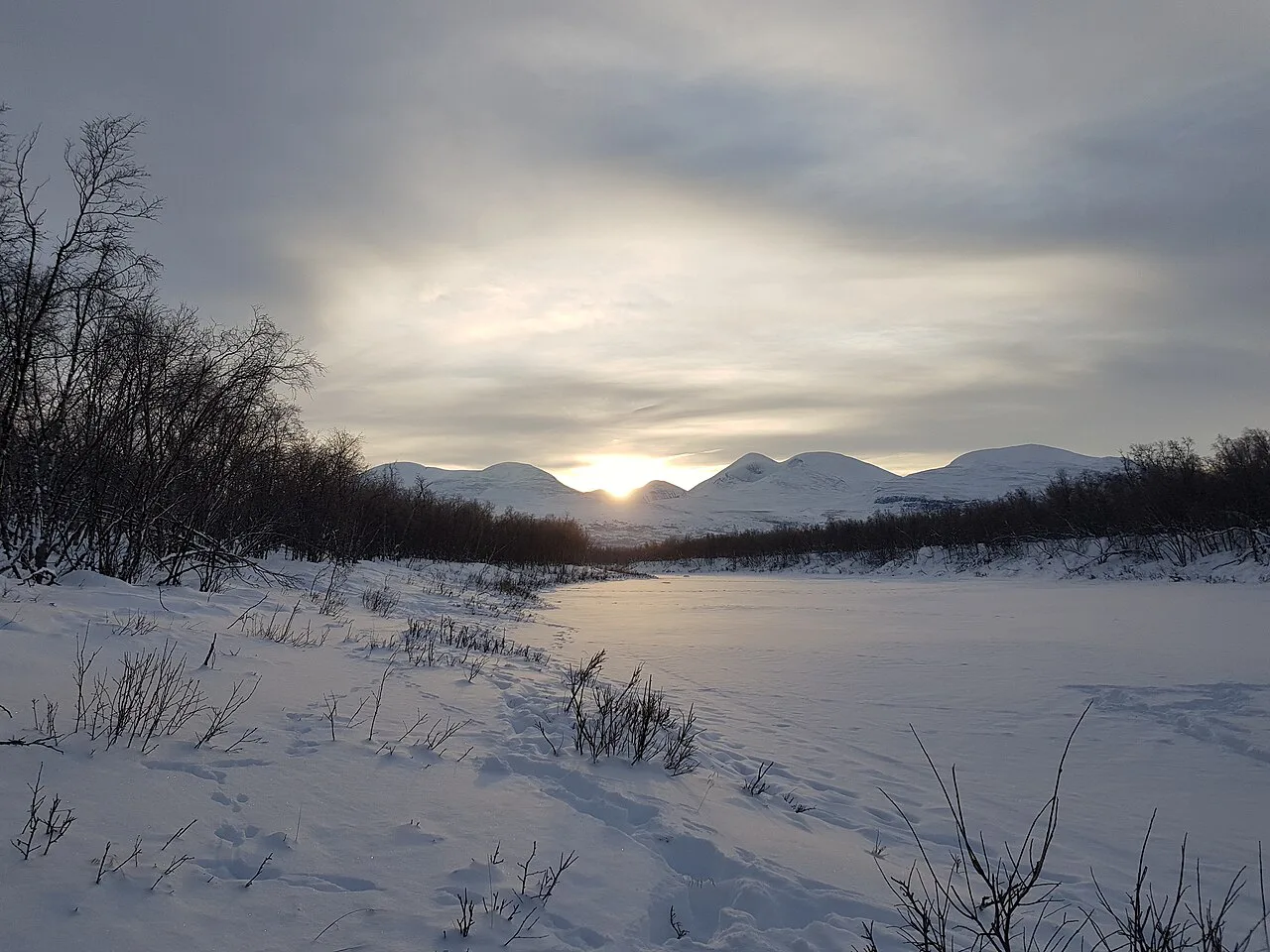
Abisko is a small mountain village in Norrbotten, north of the Arctic Circle, surrounded by peaks and set beside a long lake. Winter here is a working Arctic season rather than a theme-park one: snow-covered birch forest, the Lapporten mountain gateway on the skyline and a temperature range that can drop to minus thirty degrees Celsius.
It suits travelers who want dark skies within walking distance of a bed, a guided mountain night as an option rather than a necessity, and easy add-ons such as dogsledding, snowmobiles and skiing further west. It is less suited to anyone expecting guaranteed displays or a big-town nightlife scene.
Why Abisko works as an Arctic winter base
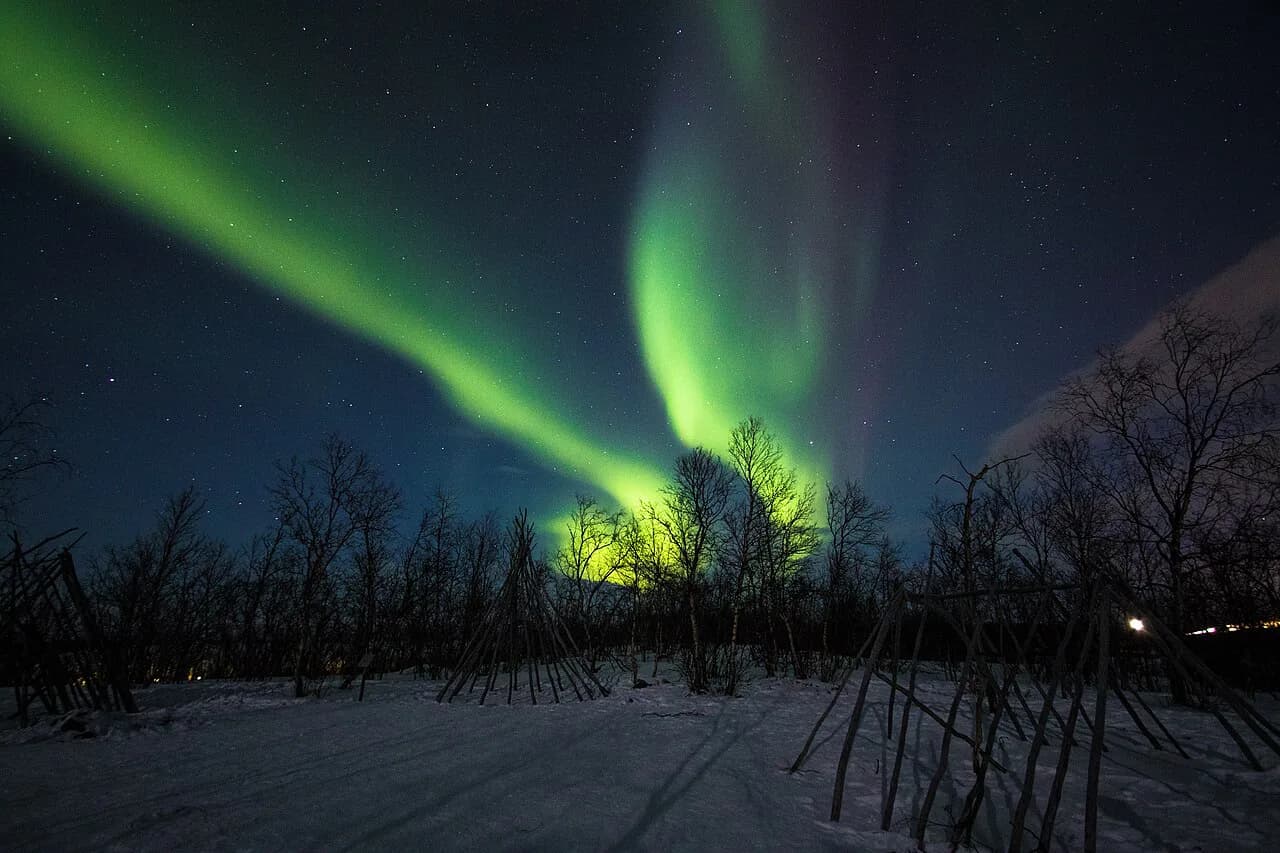
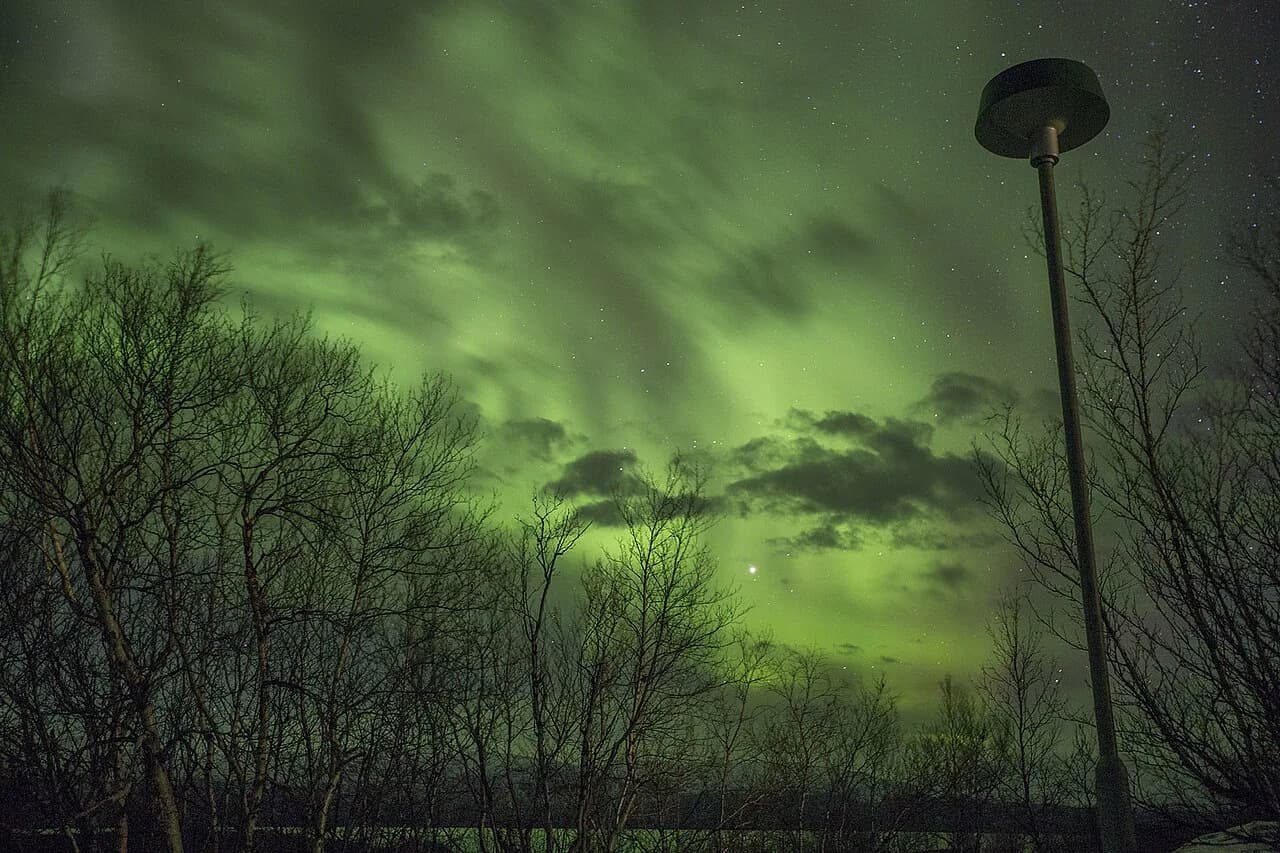
The reason to base yourself here is geography: a northern village tucked among mountains, far enough from city glow that darkness and light pollution are working in your favour. An aurora display needs four things together — a clear sky, real darkness, solar activity and low light pollution — and Abisko's setting helps with the last two while cloud remains the wild card.
That mountain ring also shapes your days. Lapporten, the U-shaped notch visible from much of the valley, is the landmark you orient by, and the surrounding slopes give you sheltered forest walks and open lake ice within the same short winter daylight window.
Practically, Abisko is compact: accommodation, trails and viewpoints sit close enough that you can spend the day outdoors and still be back for an evening on the mountain. That is what makes it a base rather than a single-night stop.
When the aurora season runs and how dark the nights get
Aurora viewing depends on darkness, and in the far north the midnight sun removes that entirely in summer. The display window therefore falls in winter, when nights are long and the sun stays low or below the horizon.
Within that window, treat cloud cover as the deciding factor and solar activity as the second. Kp values are broad guidance about geomagnetic disturbance, not a local forecast for Abisko, so use them to understand the general pattern rather than to plan a single night.
For a fair chance, spread your nights across the trip rather than betting on one. A run of three or four clear, dark nights in midwinter gives you repeated chances to catch a gap in the cloud.
Daylight, temperatures and snow through the winter
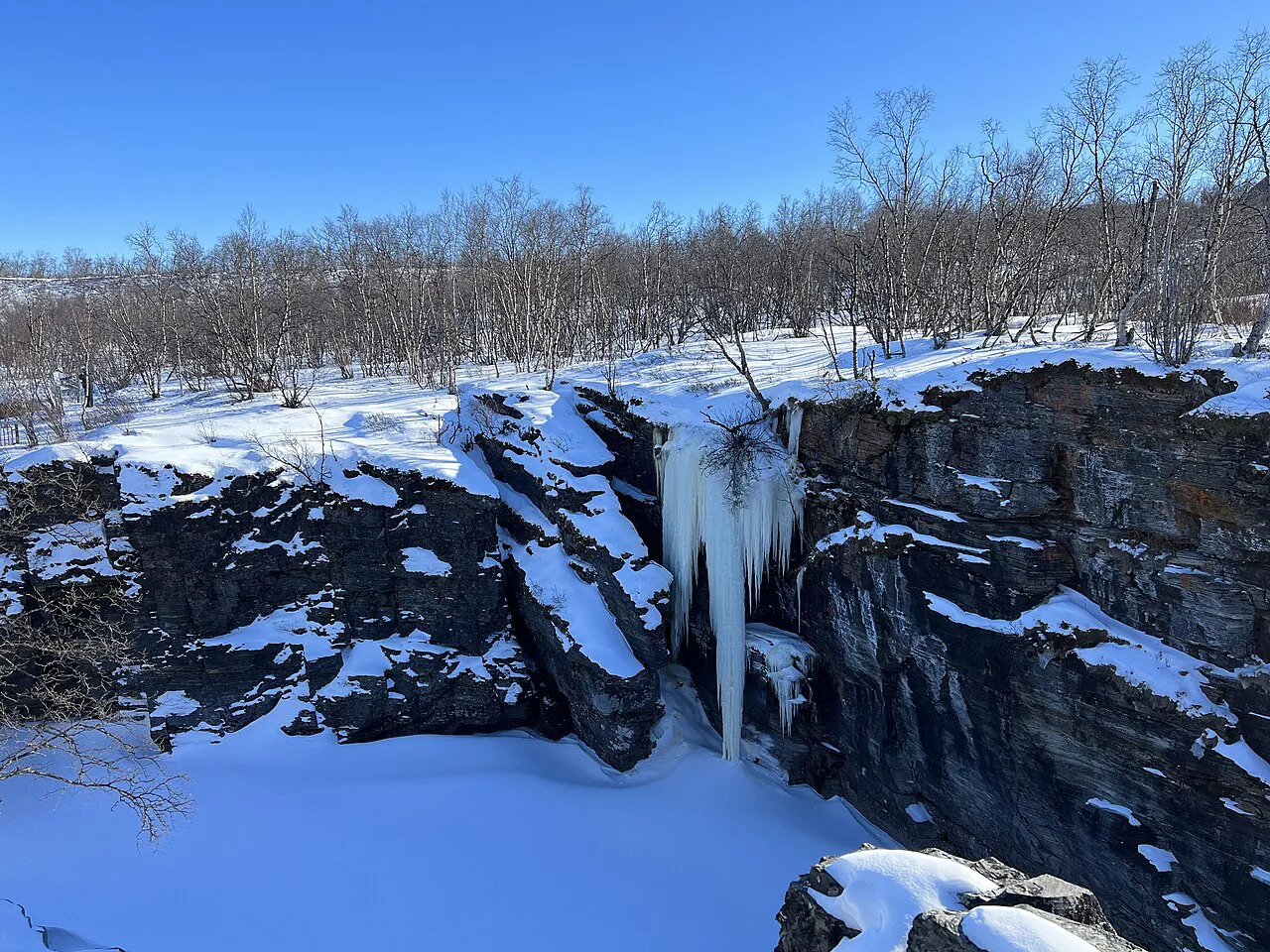
Winter in northern Sweden can be extreme, with temperatures reaching as low as minus thirty degrees Celsius, so plan outdoor time in shorter blocks and keep a warm indoor base between them. Snow cover builds through the season and stays on the ground into spring at this latitude.
Daylight is the resource that shrinks fastest. Around midwinter you get a few pale hours of usable light framed by long blue twilight, which is beautiful for photography but short for long tours; by late winter the days stretch noticeably and full-day excursions become comfortable.
This is why itinerary order matters. Put the most daylight-dependent activity — a long dogsled run or a mountain day — in the later part of the season if you can, and keep midwinter for shorter outings and evening aurora plans.
Where to watch the aurora near Abisko
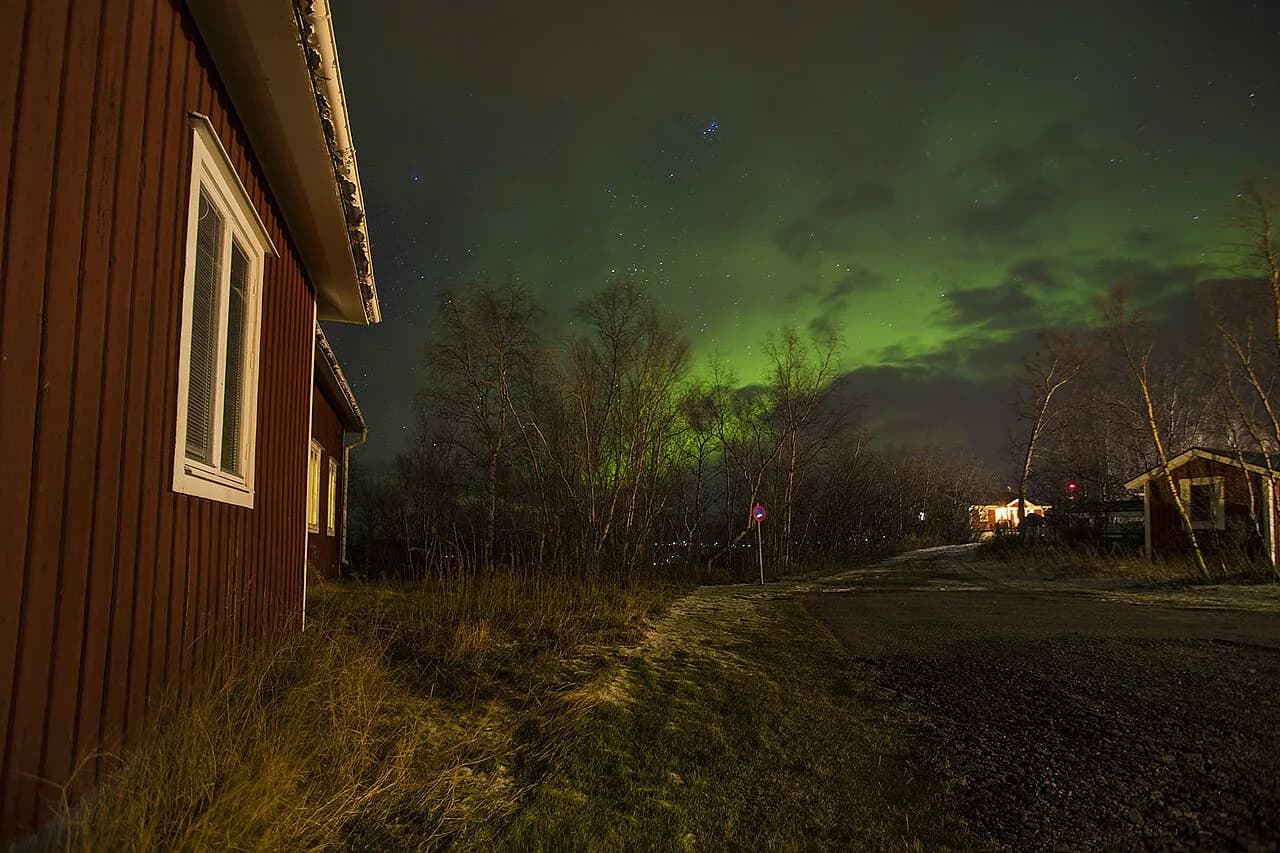
You do not need a tour to look up. Dark, open ground near the village and along the lakeshore gives you a view north with minimal town glow, and the surrounding forest clears in places where you can stand away from buildings and lights.
Self-guided chasing here means walking to a dark spot and waiting, which is cheap but leaves cloud decisions to you. A guided night on the mountain gives you local knowledge of where the sky is clear and help setting up a camera.
Between the two, decide based on how much you value flexibility. If you have several nights, mix them: one guided mountain night and the rest on foot from the village.
Aurora Sky Station on Mount Nuolja
The Aurora Sky Station sits on Mount Nuolja above the village, reached by a chairlift that runs for evening aurora visits, and it is the anchor of an Abisko winter night. Guides are on hand to explain the phenomenon and help visitors make the most of the sky.
An elevated station above the valley removes a layer of local glow and puts you above some low cloud, which is the real appeal. It does not control the weather overhead, so treat a visit as stacking the odds rather than a certainty.
Pair it with a village night so you are not putting every evening into one booking. If the mountain is in cloud, you still have the lakeshore and forest as a fallback.
Dogsledding and snowmobile excursions
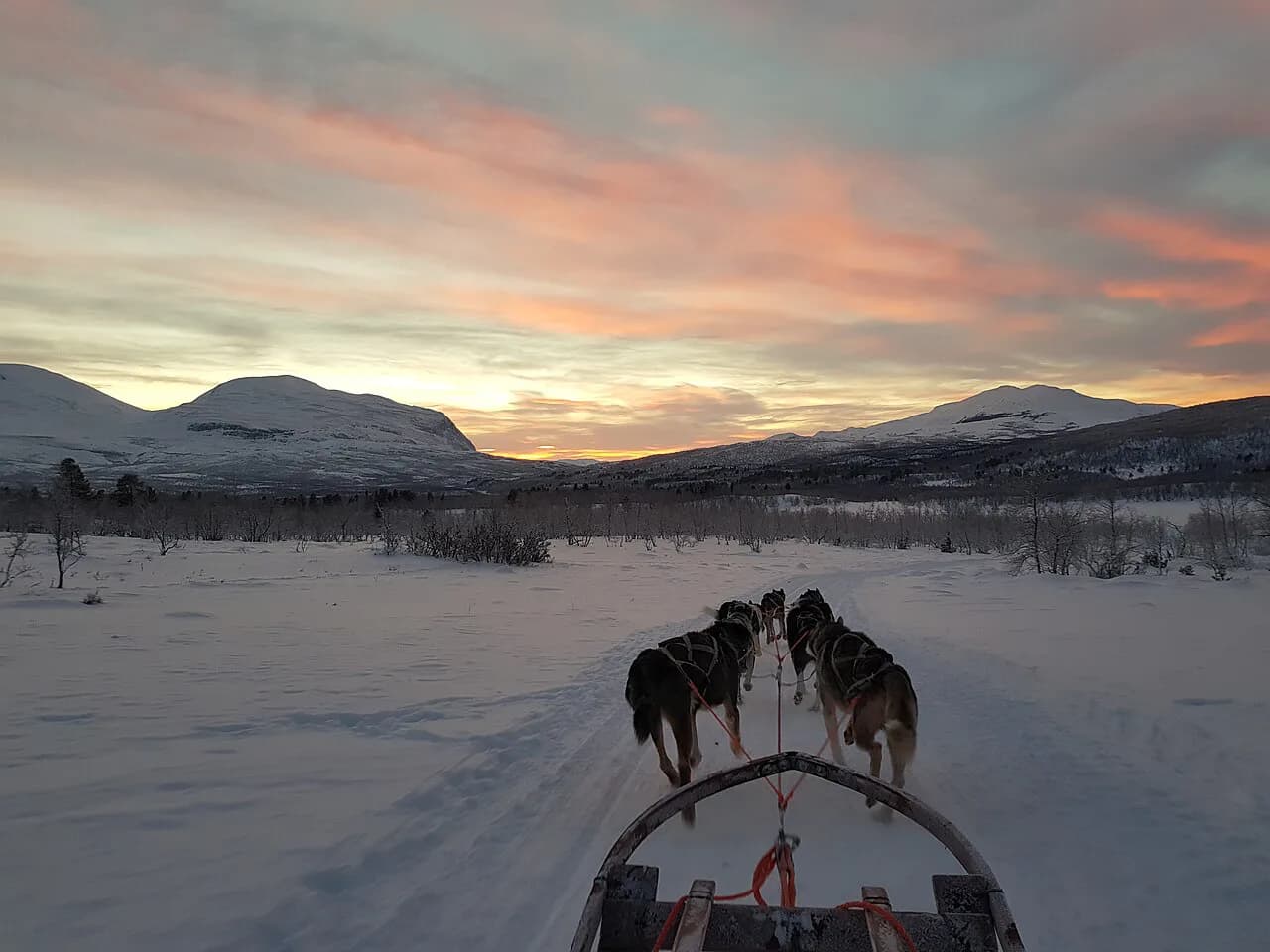
Dogsledding and snowmobiling are among the popular ways to travel through the mountain scenery here, and both appear among the winter activities on offer around Abisko. Booking through an operator lets you cover distance across snow you would not reach on foot in the short daylight hours.
When you book, ask what is included: thermal suits, boots, transport and hot drinks vary by operator, and some include photography help on nighttime runs. Group size and the length of the run are the other two details worth confirming before you commit an evening.
A daytime sled or snowmobile trip and an evening aurora trip are different experiences, so decide which you want first and slot the other around the weather. Operators lend thermal suits on many trips, which means you are not carrying heavy outer layers for a single outing.
Riksgränsen and skiing further west
Riksgränsen, on the western edge of Swedish Lapland, is the ski add-on rather than the aurora base. It is known for off-piste terrain, and the resort is open from December to June, which makes it a late-season option when Abisko's days are already long. If you are weighing bases across the border region, compare it with the wider picture in this guide to Swedish Lapland in winter.
Skiers can base in Abisko for aurora nights and travel west for a day on the slopes, though the distances make this a deliberate choice rather than an incidental one. If skiing is your main goal, weight your accommodation toward the resort and treat Abisko as the aurora interlude.
The same applies in reverse: a winter aurora trip does not require skis. Snowshoe and sled country around the village covers the non-skiing days easily.
Sámi culture and the Icehotel in Jukkasjärvi
A Sámi village visit is one way to understand the nomadic heritage of the north, and it fits naturally into a winter itinerary alongside the outdoor activities. It adds context to the landscape you spend the evenings watching.
The Icehotel at Jukkasjärvi, near Kiruna, is both a hotel and an art exhibition built from ice and snow. It melts largely during summer and is rebuilt each winter, which is why the art and the rooms change from one season to the next.
Treat Jukkasjärvi as a side trip from Abisko, not a competing base, and give it a day and an overnight if you want the full effect. Kiruna is the transport hub that links the two.
Where to stay: Abisko bases and nearby options
Abisko's accommodation clusters around the village and the national park, with lodges and the mountain station serving different styles of trip. A lodge base gives you a warm indoor room and a short walk to dark ground; a national-park setting puts trails and the lake on your doorstep.
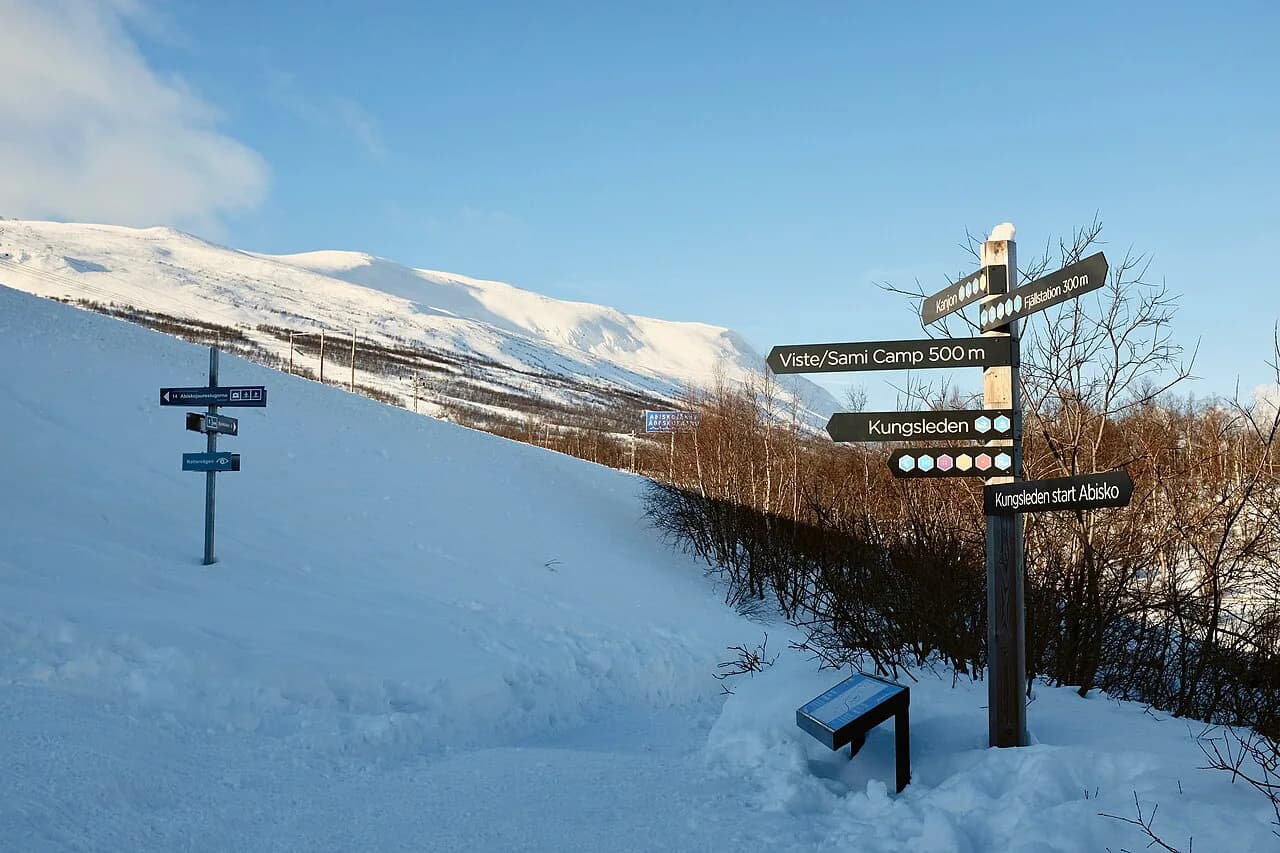
The STF Abisko Turiststation is the classic base for park access and evening aurora outings, and its position near the trailheads makes self-guided days simple. If you want a shorter walk to the lakeshore, choose accommodation on the village side.
Book early for midwinter dates, when demand is highest and daylight is shortest, and consider a night or two in Kiruna or Jukkasjärvi for the Icehotel side trip. Distances are small by road, so splitting the stay is practical.
How many nights to plan
Three to four nights is the sensible minimum for an aurora-focused trip, because cloud can close out a whole night or two in a row. A week gives you room to absorb a bad-weather stretch and still use the daylight for sledding and snowmobiling.
If you have only two nights, put both on the mountain or lakeshore and keep your daytime plans flexible. If you have five or more, add a Jukkasjärvi overnight and a westbound ski day without eating into your dark hours.
Aurora sightings depend on solar activity and clear skies, so plan the number of nights around patience rather than around a forecast. Nobody can promise a display; the aim is to give yourself as many dark, clear chances as the trip allows.
Getting there and getting around in winter
Kiruna is the regional transport hub, with road and rail links westward to Abisko and onward toward Riksgränsen. Winter road conditions vary, so check the road authority's current status before driving a mountain stretch.
Within the village, most things are walkable, and tours typically include transport to trailheads and mountain stations. For the Icehotel and Kiruna, plan a transfer or a rental car rather than relying on walking.
Published train and bus timetables change by season, so confirm the exact departure on the operator's page before you lock in a connection. Build a buffer around any same-day link to a tour.
Who Abisko suits and who it does not
Abisko suits travelers who want a compact Arctic base with dark skies, guided mountain nights, dogsledding and the Icehotel within reach, and who are content to let the weather set the schedule. It rewards a few nights of patience rather than a single big evening.
It suits less well anyone who needs guaranteed displays, a busy town scene or reliable long daylight for full-day hikes in midwinter. Skiers who want steep terrain should base further west and treat Abisko as the aurora stop.
If that balance fits, the village gives you a straightforward winter: short daylight, deep cold, a mountain station above the valley and a lake shore below it. Plan the nights, book the mountain once, and leave the rest to the sky.
Plan Your Abisko Winter
Build the trip around dark hours: three or four nights minimum, a mountain night at the Aurora Sky Station and the rest self-guided from the lakeshore and forest. Use the short daylight for dogsledding, snowmobiles or a Sámi village visit, and slot in Jukkasjärvi and Riksgränsen as add-ons.
Cold is part of the deal, so plan outdoor blocks around a warm indoor base rather than long exposed days in midwinter. Operators lend thermal suits where they offer them, which takes the edge off evening outings.
Frequently Asked Questions
Is Abisko in the Arctic Circle?
Yes. Abisko lies north of the Arctic Circle in Norrbotten, Swedish Lapland, which is why it has midnight sun in summer and long dark nights in winter.
Which month is best for Northern Lights in Sweden?
The display window falls in winter, when nights are dark. Within that, the deciding factor is cloud, so aim for several nights rather than a single date and treat Kp values as general guidance only.
Can you see the northern lights in Abisko without a tour?
Yes. Dark, open ground near the village and along the lakeshore gives you a view with minimal light pollution. A guided mountain night at the Aurora Sky Station adds local knowledge of where the sky is clear and camera help.
How cold does Abisko get in winter?
Winter in northern Sweden can be extreme, with temperatures reaching as low as minus thirty degrees Celsius. Plan shorter outdoor blocks and keep a warm indoor base between them.
Do I need a car in Abisko in winter?
The village is compact and most things are walkable, and tours typically include transport to trailheads and mountain stations. A car helps for the Icehotel at Jukkasjärvi and Riksgränsen, and road conditions should be checked before a mountain drive.
How many nights should I plan for an aurora trip to Abisko?
Three to four nights is a sensible minimum, because cloud can close out a night or two in a row. A week gives you room to absorb bad weather and still use daylight for sledding and snowmobiling.
Sources
Notes for your Arctic winter trip
Optional updates to our northern lights guides.
You might also like
Continue reading
More guides you'll find useful