Abisko vs Kiruna: Pick Your Swedish Lapland Base
Abisko has darker skies and a rain-shadow climate. Kiruna has the airport, restaurants and more day tours. Compare the two Lapland aurora bases.
On this page
Swedish Lapland gives you two very different ways to spend an Arctic winter night: a string of guesthouses beside a mountain lake, or a mining city with an airport and a full winter activity menu. Abisko and Kiruna sit roughly an hour apart, yet they feel like separate trips. The choice comes down to how much you value dark skies against convenience and daytime variety.
A national-park village versus an airport city
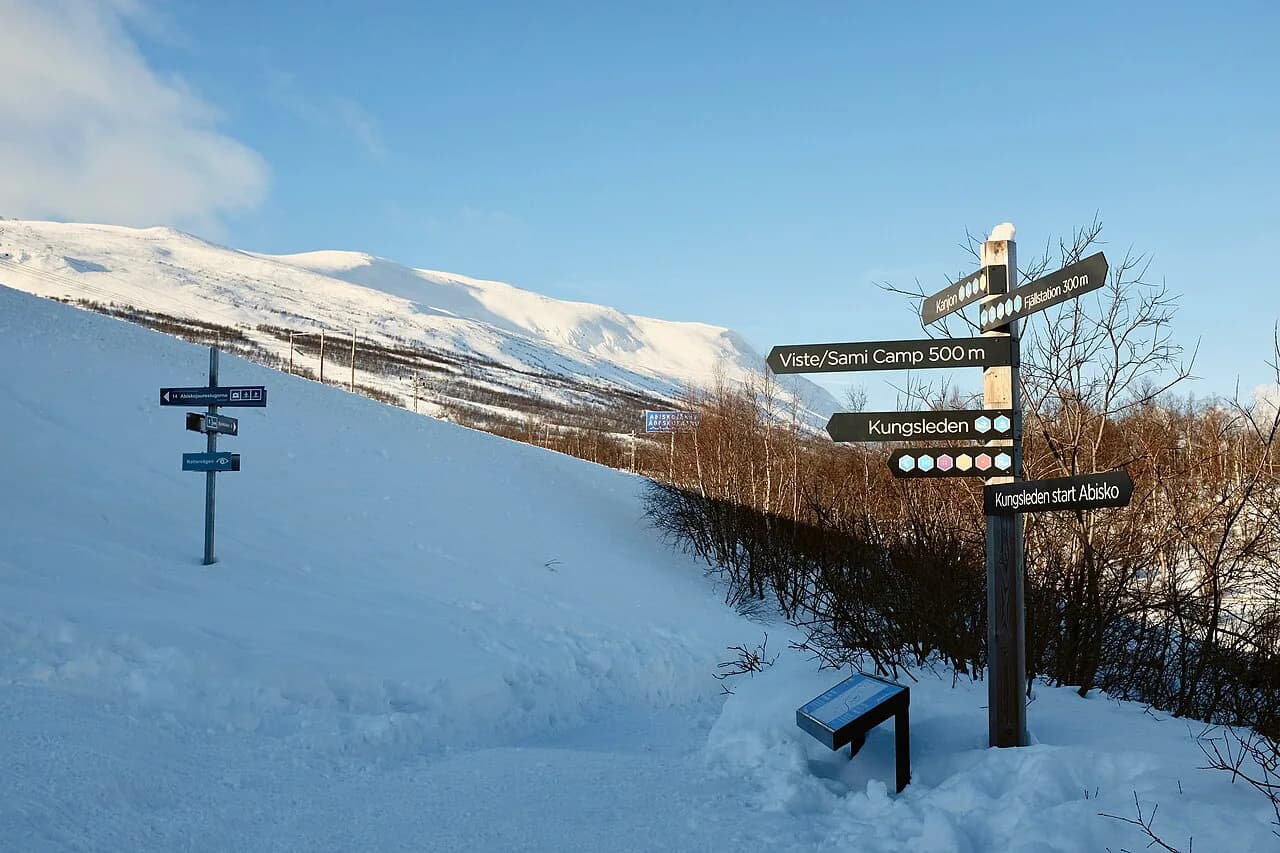
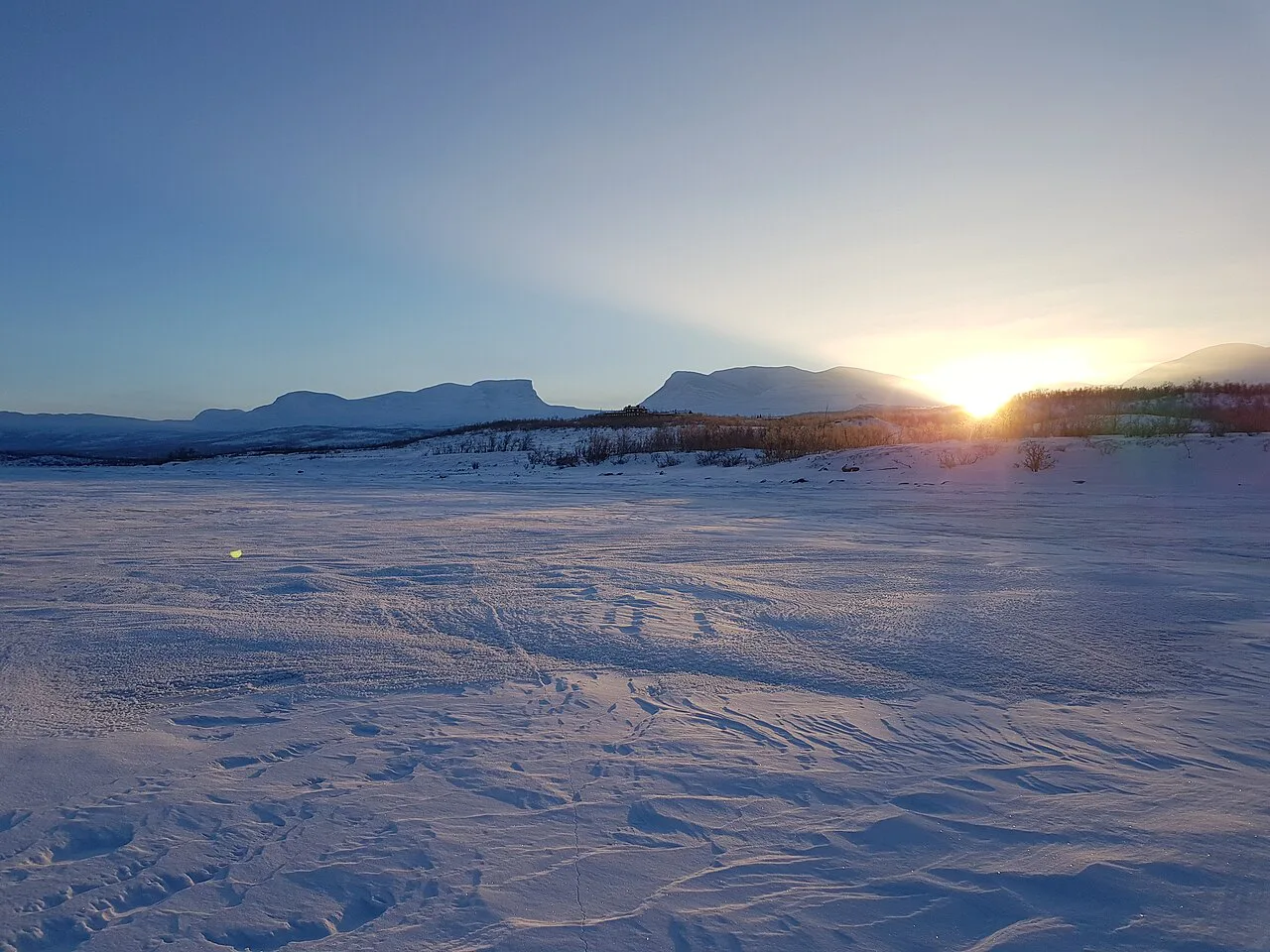
Abisko is a village of about 85 residents at the foot of the Abisko Alps, with Torneträsk, Scandinavia's largest mountain lake, on its doorstep. Abisko National Park was founded in 1909 as one of Sweden's first, and the King's Trail starts here. Kiruna is the opposite scale: Sweden's northernmost city, built around a large iron ore mine, with hotels, camps, restaurants and the country's northernmost airport.
Practically, Kiruna feels like a town you pass through and use as a hub, while Abisko feels like a place you go to be outside after dark. Most Abisko businesses are guesthouses or tour operators, so conventional city amenities are thin. Kiruna's tourist infrastructure is broader, and its day-tour offering is wider.
Why Abisko's skies are often clearer
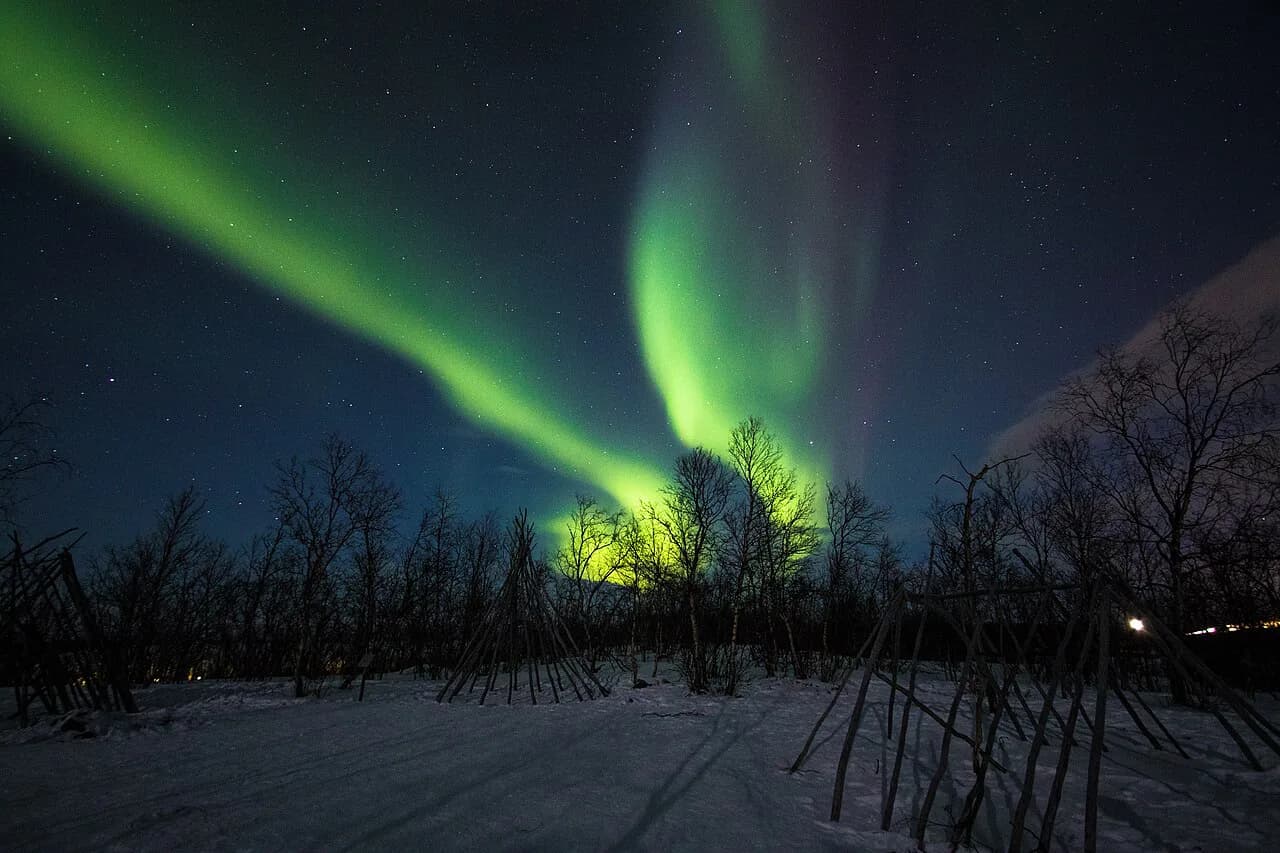
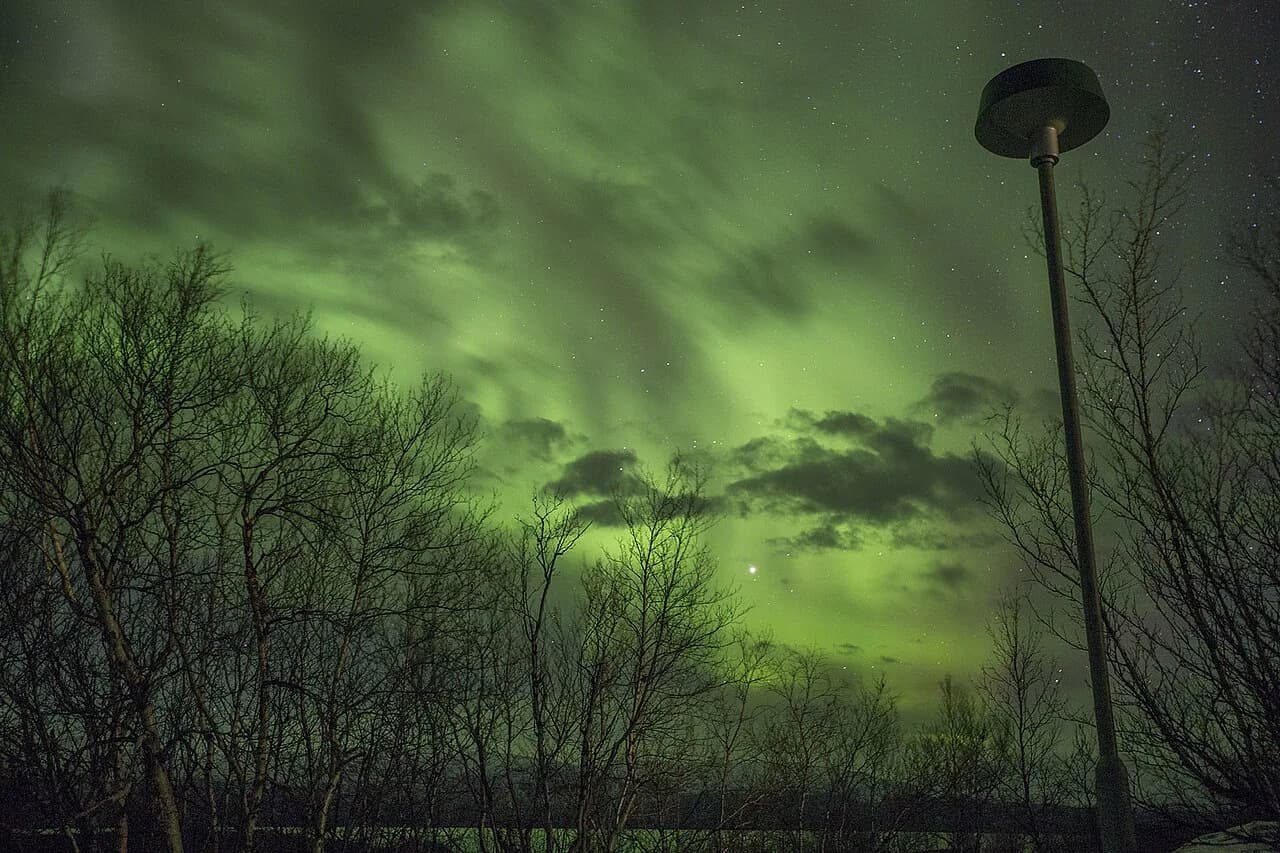
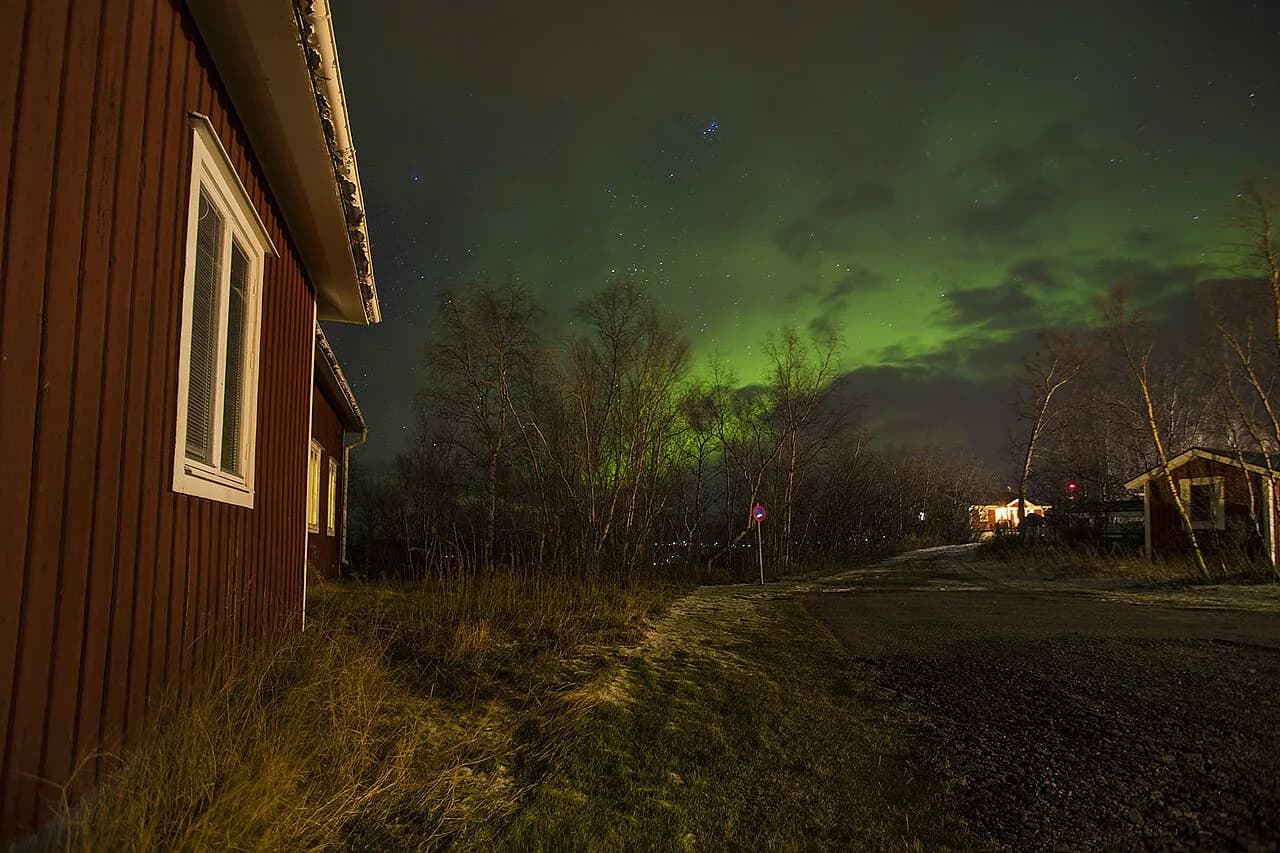
Abisko sits in the rain shadow of the mountains, so humid air arriving from the Atlantic side is blocked before it reaches the village. That produces an unusually high share of clear weather for the latitude: Kiruna Lappland notes the area is in rain shadow and often has clear weather. The same source presents Abisko as one of the best places on earth to see the northern lights.
Kiruna is big enough that light pollution matters. A display that reads clearly a few minutes outside Abisko can be washed out in town, and only stronger activity cuts through. Kp values are guidance only and say nothing about cloud, so treat a forecast as two separate questions: solar activity and sky cover.
Neither place can promise a sighting. What Abisko improves is the cloud side of the equation, which is the part you can actually plan around. For the full picture of the village, the lake and the surrounding trails, work through the abisko northern lights guide.
When the aurora season runs
Aurora viewing needs dark nights, and in this part of Swedish Lapland that means roughly late August through early April. Midwinter delivers long nights but only a few hours of usable daylight, which squeezes the daytime activities. Late autumn and early spring give you a better balance of dark skies and daylight, and they also tend to be less booked.
Watch the cloud cover for the specific night you plan to be outside, since conditions change fast in the mountains. In deep winter, cold and snow are the norm, so build slack into your itinerary rather than scheduling a single aurora night.
Getting there: airport, road and rail
Kiruna Airport is the gateway to the region, with flights from Stockholm. Abisko is 93 km northwest of Kiruna on the E-10, a drive of just over an hour, and daily train and bus services run all year round. That makes a split stay genuinely practical: fly into Kiruna, then move north to Abisko.
If you base yourself in Abisko without a car, plan around the train and bus timetable and the fact that Abisko East and Abisko West are separate clusters. A taxi back from Kiruna is expensive, so most travelers treat the train as the sensible link.
Where to stay in Abisko
Abisko splits into East and West. Abisko East holds most homes, grocery stores and petrol, plus Abisko Mountain Lodge, a comfortable base with slow-food dining at Restaurant Brasseriet. STF Abisko Turiststation sits 3 km west in Abisko West, with Restaurant Kungsleden looking out over Torneträsk on one side and the Abisko Alps on the other.
Guesthouse capacity is limited, so peak aurora season fills early; book well ahead if you want a specific property. A useful rule is to choose West if you want to walk straight into the park at night, and East if you want shops and petrol within reach. Full details on the main lodging are in the stf abisko turiststation guide.
Where to stay in Kiruna
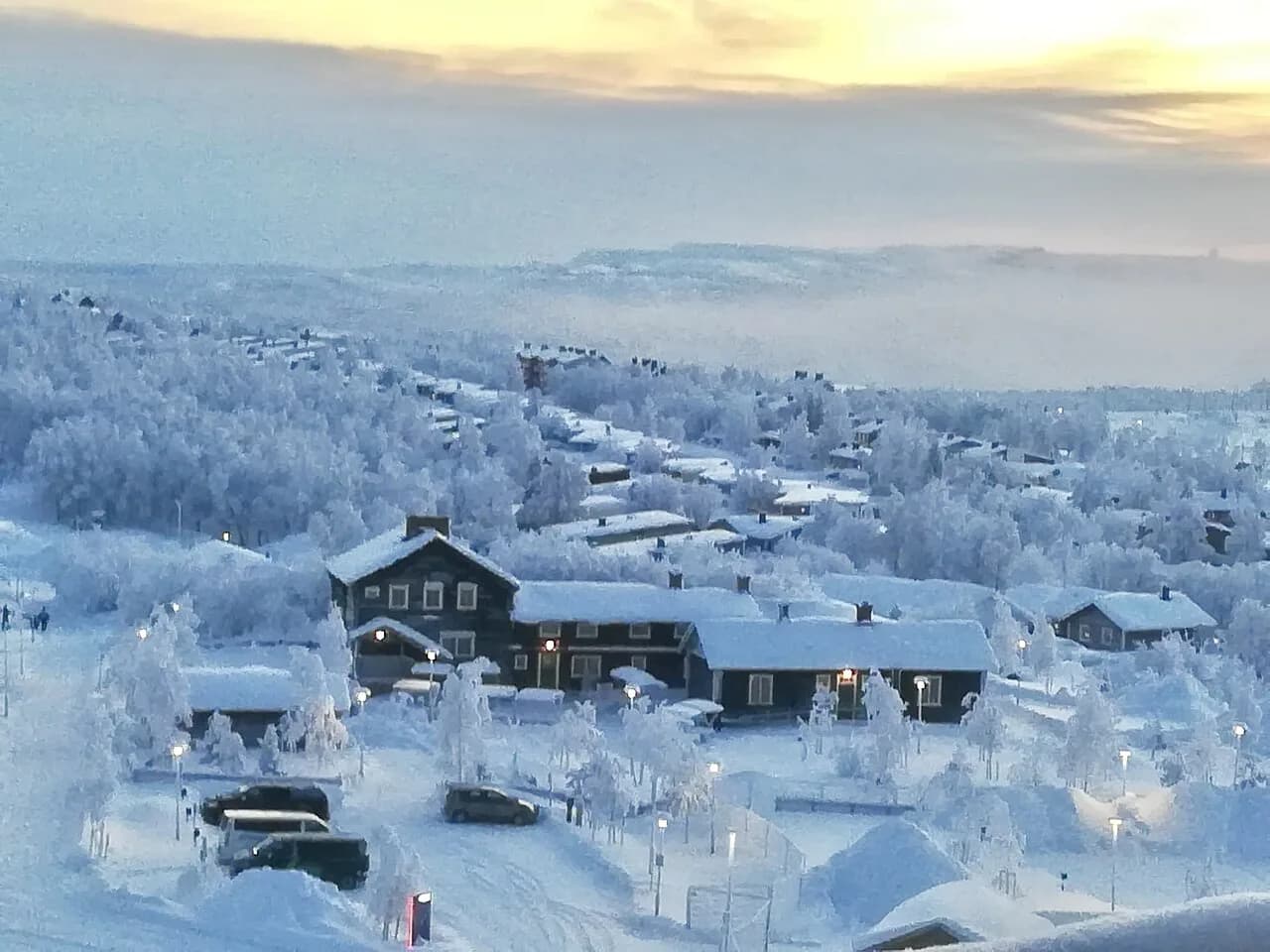
Kiruna has hotels, camps and apartments, so it suits travelers who want restaurants, a choice of rooms and easy tours from the lobby. Camp Ripan is one example of a camp on the town edge, close to ski and snowmobile paths, which makes a short walk into darker ground possible.
The town is being relocated in stages because of the mine, with buildings and businesses moving to a new area over the coming years and no firm completion date. A hotel that was central can end up with few amenities within walking distance, so check whether the property sits in the old town or the new center. Kiruna is an active mining city, so expect some industrial noise and light.
For a sense of what the park itself offers once you are north of town, the Abisko National Park in Winter guide covers trails, wildlife and the lake.
Viewing spots: Aurora Sky Station and the park
The headline viewpoint is Aurora Sky Station on Njullá, reached by cable car and offering a wide view over the national park, Abisko, Torneträsk and the Lapporten peaks. It operates in summer, autumn and winter; check the Aurora Sky Station page for the night you want, since the winter schedule and access change with conditions. For the practical details, see the aurora sky station.
At ground level, Abisko Canyon is easily accessible from the village and is worth visiting by anyone staying in Abisko. Abisko town, with most homes, grocery stores and petrol, sits in Abisko East, while STF Abisko Turiststation is 3 km away in Abisko West, which puts you at the edge of the national park. Read up on the sights before you go via Lake Torneträsk and the surrounding trails.
In Kiruna, the practical approach is to leave town. Walk to the outskirts near the ski and snowmobile paths, or join a tour that drives you to a dark spot and back. Self-driving gives you the most flexibility, since you can follow gaps in the cloud rather than a fixed pickup time.
Tours and operators
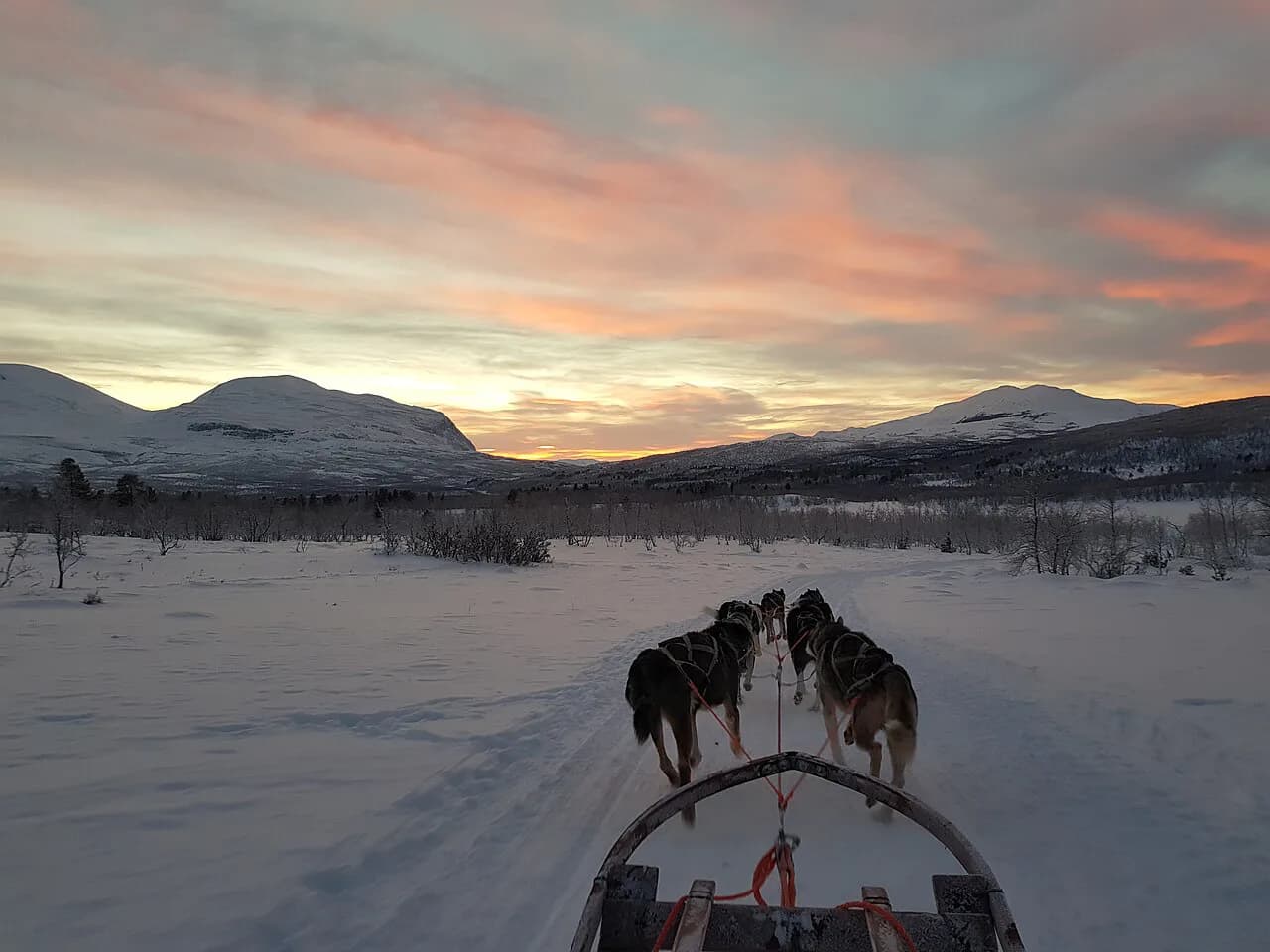
Abisko has guided northern lights activities including photo tours with professional aurora photographers, which suit travelers who want images as well as a view. Snowmobile safaris, ice fishing, dogsled trips with wilderness-camp overnights and off-piste guiding are all bookable through the local operators listed by Kiruna Lappland.
Kiruna's advantage is variety: dogsledding, cross-country skiing, snowmobile tours and day trips to the Icehotel at Jukkasjärvi all sit in one place. Some of these run as day tours from Abisko too, taking you south to Kiruna. A driver who simply ferries you to a remote spot and back is a common tour format, so read what is included before booking.
Where an operator lends thermal suits and boots, that is worth knowing on a long night out. Group sizes, minimum ages and durations vary by provider, so compare the specific listing rather than the headline activity.
Daytime activities
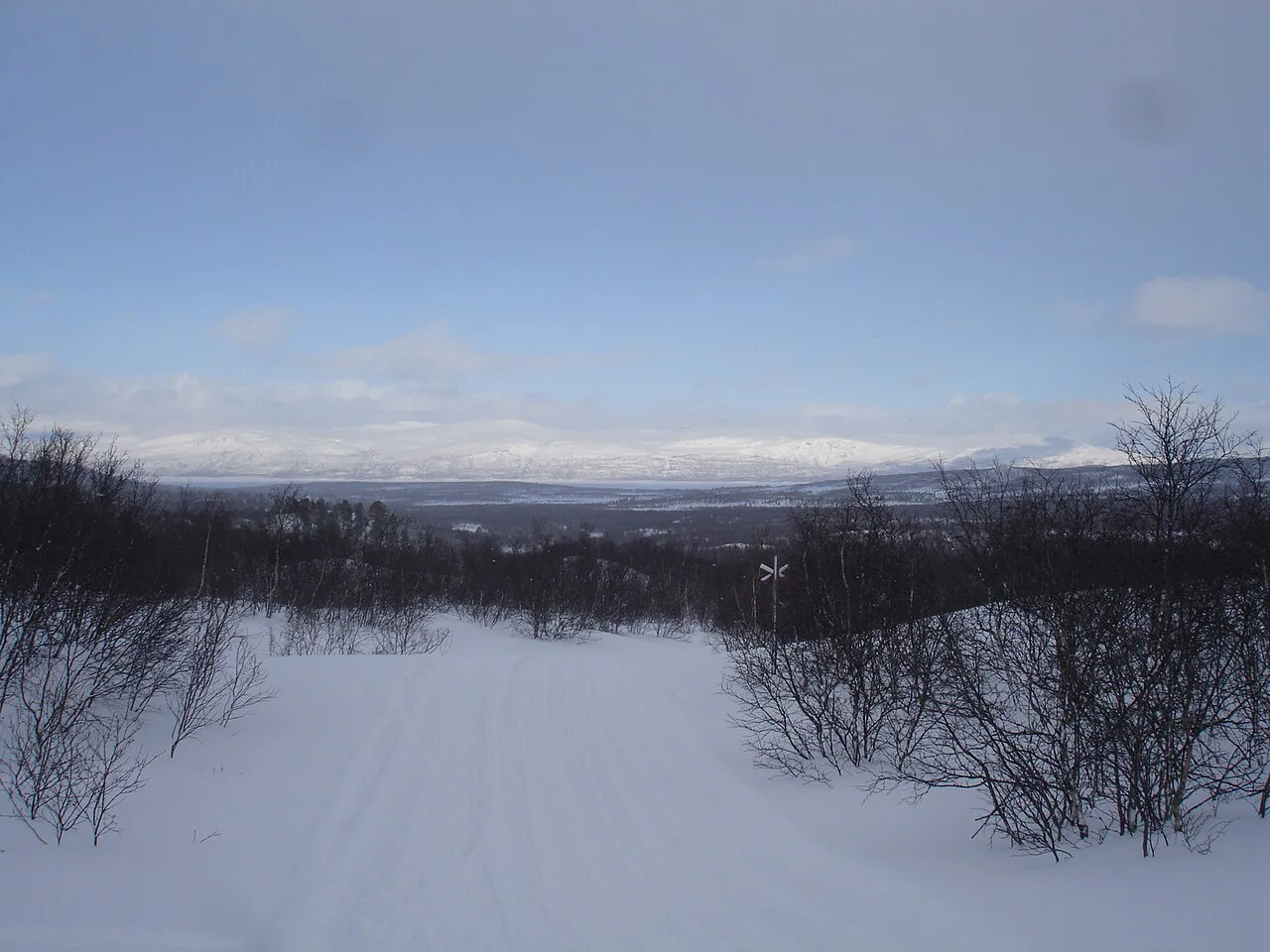
Abisko's daytime menu is centered on the park: snowshoe and ski excursions to the marble quarry, Nissunjåkkas canyon, or longer trips into the Kårsavagge valley. Nuolja Offpist opens for downhill skiing in February with views over the area, and Naturum Abisko has a permanent exhibition on the park's geology, flora and fauna.
Kiruna has more to fill daylight hours: the mine tour, cross-country trails, the Icehotel and a wider restaurant scene. If the aurora is quiet for several nights, that extra menu matters. This is the main reason many travelers pick Kiruna despite the light pollution.
Trade-offs: dark skies versus convenience
Abisko wins on darkness and quiet and loses on amenities, dining options, transport costs and day-tour variety. Kiruna wins on convenience and things to do and loses on sky quality, plus its ongoing town relocation complicates hotel location. Neither is cheap, and the Arctic Circle is not a budget destination by any reasonable measure.
A split stay uses the E-10 link well: two or three nights in Kiruna for the airport, the Icehotel and dogsledding, then the train north to Abisko for the dark-sky nights. Travelers continuing onward sometimes take the train or bus toward Narvik and on to Tromsø, but for this comparison the Swedish bases are the point.
How many nights to plan
Give Abisko at least three nights and preferably four, because cloud can close in for days even in a rain-shadow valley. Kiruna is more forgiving if you have daytime plans, but three nights is still a sensible floor. A week split across both bases gives you the best of the dark-sky and amenities arguments.
Book tours that offer a rebook or refund if the aurora does not appear, which is common practice among northern lights operators. Then track the forecast day by day and move your viewing night when the sky clears.
Which Base Should You Choose
Choose Abisko if the northern lights are the reason for the trip and you can live with a small village, limited dining and a short walk to the park. Choose Kiruna if you want the airport, restaurants, a wider winter activity menu and can accept more light pollution and a little planning around the town relocation.
If your schedule allows, do both: fly into Kiruna, spend a few nights, then take the train north to Abisko and finish under the darker sky. That combination is the most reliable way to make the most of a Swedish Lapland winter. If you would rather compare bases across the wider region, weigh it against the northern lights in Swedish Lapland before you commit.
Frequently Asked Questions
Is it better to stay in Kiruna or Abisko for the northern lights?
Abisko gives you the darker sky and the more frequent clear weather, so it is the stronger base if aurora viewing is the whole point of the trip. Kiruna is the better base if you want an airport on the doorstep, restaurants and a broad menu of winter tours, and you accept that town light washes out weaker displays. Many travelers split the two.
Is Abisko the best place to see the northern lights in Sweden?
Abisko is one of the strongest candidates in Sweden because the surrounding mountains put the village in a rain shadow, which produces clear weather more often than elsewhere at the same latitude. That improves the odds on the cloud side, but no location can guarantee a display. Solar activity still decides whether anything appears on a given night.
Is Kiruna worth visiting if the aurora is quiet?
Yes. Kiruna has the mine tour, cross-country trails, the Icehotel at Jukkasjärvi nearby and a wider restaurant scene, so a cloudy stretch still leaves plenty to do. That daytime variety is exactly why some travelers choose Kiruna over Abisko, even though the town's light pollution makes faint displays harder to see.
How do you get from Kiruna to Abisko?
Abisko is 93 km northwest of Kiruna along the E-10, a drive of just over an hour, and daily train and bus services connect the two all year round. Travelers without a car usually take the train, since a taxi over that distance is expensive. The rail link also makes a split stay straightforward.
How many nights should you stay in Abisko?
Plan at least three nights and ideally four, because even a rain-shadow valley can stay clouded in for days. A single night leaves too much to chance. If you split your trip, give Kiruna two or three nights and Abisko the rest.
Can you do a night trip from Kiruna to Abisko?
You can drive up in the evening and be back in Kiruna within a couple of hours, but it makes for a long night and leaves you dependent on conditions at the far end. Staying in Abisko removes that travel and lets you walk into the park whenever the sky clears.
Sources
Notes for your Arctic winter trip
Optional updates to our northern lights guides.
You might also like
Continue reading
More guides you'll find useful