Northern Lights in September: Why the Equinox Weeks Deliver
September aurora trips explained: the equinox window, dark nights above the Arctic Circle, mild weather and where to base yourself in Lapland and Iceland.
On this page
September gives you a version of Arctic Europe that midwinter cannot: lakes and rivers still open, hillsides turning rust and gold, and skies that are already dark enough above the Arctic Circle for the aurora to appear. For travelers who want Northern Lights potential without deep-cold nights in bulky layers, it is the most comfortable entry point to the season. It also suits people who value quiet trails and small groups over guaranteed snow.
The catch is what you accept in exchange. Snow cover is patchy or absent in early autumn, so dog sledding on snow and some winter-only activities are not part of the picture yet, while cloud and rain are a genuine factor in many coastal and inland areas. Treat September as a long, dark, mild aurora window rather than a winter wonderland, and plan your days around open-water and hiking options instead.
Why the equinox weeks matter for aurora
Aurora activity is at its most frequent between the autumn and spring equinoxes, roughly late September to late March, when the nights are long and dark enough for the lights to show. Geomagnetic activity also tends to run a little higher around both equinoxes, so the weeks either side of late September are a particularly rewarding stretch. That does not mean the sky performs on cue; it means the odds are tilted in your favor.
An aurora chaser working out of Rovaniemi describes the best window as about six weeks, three before and three after each equinox, and treats the days around the autumn equinox as the strongest part of the autumn season. He also notes that activity settles back toward a more ordinary rhythm after mid-October, when clear nights can pass without any lights at all. If your trip has any flexibility, aiming at the last week of September and the first days of October puts you inside that band.
The sun's roughly eleven-year activity cycle has been in a strong stretch following a peak in late 2024 to early 2025, with elevated activity expected through 2026 and into 2027 before easing toward a minimum around 2030 to 2031. Read that as an odds multiplier, not a deadline. This far north the aurora is a frequent visitor across the whole season, so a quieter year does not make the trip pointless.
How far north you need to be
The northern lights most commonly occur within a band between 60 and 75 degrees of latitude, which takes in Iceland, northern Sweden, northern Finland and northern Norway, as well as parts of Russia, Canada, Alaska and southern Greenland. The auroral oval shifts constantly, so strong activity over one longitude does not guarantee it over another on the same night. What matters for your booking is being inside that band and away from town lighting.
Within that band, the practical choices for a September trip are Finnish Lapland around Rovaniemi and the Inari lake country, Swedish Lapland around Abisko, and Iceland, where the whole country sits under the oval. All three give you dark skies within a short drive of a bed, which is the real selection criterion. If you are still weighing regions against each other, our guide to the best places to see northern lights sets out how the bases compare.
Dark enough nights and the long autumn dusk
Aurora displays are potentially visible under dark skies from late August to mid-April, and the strongest shows tend to arrive between 9pm and 2am, with the best sightings often closer to 11pm and midnight. That timetable is a useful planning tool: it tells you to eat early, sleep late, and keep your evenings free rather than scheduling dawn starts the next morning. In September the darkness arrives gradually, so patience at the start of the night pays off.
Early autumn nights carry a long, drawn-out dusk at high latitudes, and in the darkest weeks of the year daylight shrinks to a few hours. September sits at the generous end of that scale: you still get usable daylight for hiking, lake paddling or a day drive, then a proper dark window after dinner. Plan daytime activities that finish by late afternoon so you are not driving back to your cabin at the moment the sky might open.
September weather, temperature and cloud
Cold is not what causes the aurora, but clear Arctic skies usually arrive with cold, dry air, so the two tend to come together. October and November can be stormy, particularly along the coast, while from December the weather tends to dry out and snow settles. September and early October generally give you milder conditions with more open water than midwinter, but they also bring rain and cloud spells you should build slack into your itinerary for.
Temperature swings widely in early autumn. An aurora guide in Finnish Lapland recorded a night of about 15°C at the start of one September season and around minus 2°C later the same month, which is a fair picture of how variable the period is rather than a forecast. Pack for a range and expect frost on some nights, especially in the second half of the month. Clear, cold nights are exactly the ones worth staying out for.
What September gives you that midwinter does not
Autumn in Lapland means lakes you can still paddle, forest trails without deep snow, and foliage that turns the hillsides copper. The aurora guide in Rovaniemi rates September and early October as the season to explore Lapland without heavy winter gear, and notes that tourist numbers are lower in autumn than in the snow season. That translates into easier availability at cabins and smaller groups on tours.
The trade-off is the snow-dependent side of Arctic travel. Sledding and snowmobile itineraries belong to the winter months once snow settles, while September leans toward lake country, hiking, sauna evenings and wildlife. If a husky safari on snow is the centerpiece of your trip, book later in the season; if you want the aurora with mild nights and open water, September delivers it.
Finnish Lapland in September
Finnish Lapland gives you two very different bases. Rovaniemi is the transport hub, with the Arktikum museum and easy access to forest and riverbank viewpoints just outside the town lights. Inari is the quieter option, a lakeside village far north with long stretches of dark shoreline and very little artificial light, which is why glass igloo and wilderness hotels cluster there. If Rovaniemi is on your shortlist, our northern lights in Rovaniemi guide covers where to go and where to stay.
Lake country is the point in September: the water is open, the shores are dark, and a short walk or drive from your cabin puts you under a large sky. Ice hotels, snow hotels and similar winter builds belong to the frozen months rather than autumn, and our guide to an ice hotel in Europe explains which properties operate in which season. For a September trip, base yourself in a cabin or lakeside hotel and use the igloos as a later-winter idea.
Choose your dates around your dark-sky priority. If you want the mildest nights and open water, aim for the first half of September; if you want deeper darkness and a chance of early frost and first snow, aim for the equinox and the days after. Both sit inside the recommended window, so the deciding factor is how much you care about snow on the ground.
Swedish Lapland in September
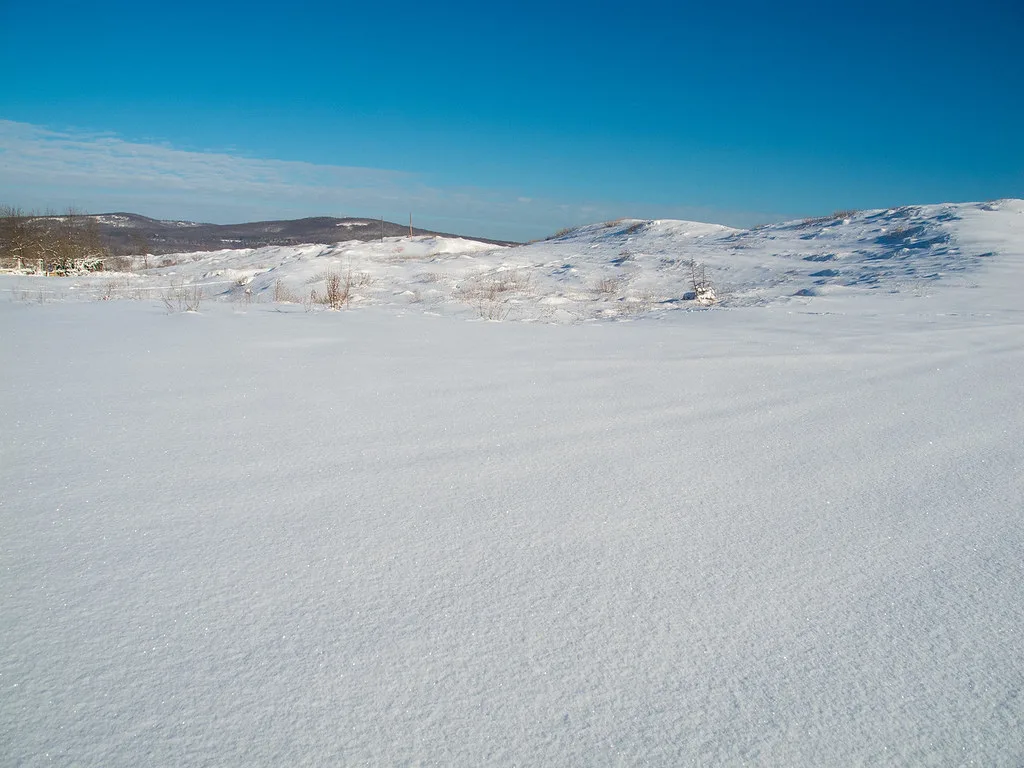
Swedish Lapland's aurora reputation rests on Abisko, a mountain village with a dry microclimate that often keeps skies clearer than the surrounding region. The Aurora Sky Station on Nuolja is the established viewing point, reached by chairlift in the dark season, and the surrounding national park gives you marked trails and open mountain views away from village lighting. Book the Aurora Sky Station's own evening product rather than turning up expecting a simple chairlift ride up; it is worth checking current prices and dates before you travel.
September here is hiking weather with aurora potential after dark: trails above the tree line, autumn colors on the slopes, and a reasonable chance of frost at night. The Torne River runs through the area, and while the famous ice construction belongs to winter, the river valley gives you dark, open sky in autumn. If you want one base that pairs mountain walking with night sky watching, Abisko is the cleanest choice in Sweden.
Iceland in September
All of Iceland sits within the auroral band, so the choice is about microclimate and light pollution rather than latitude. The coast and the interior differ in cloud: weather systems come in off the Atlantic, and the north and east often see different conditions from the southwest around Reykjavik on the same night. A flexible base or a short relocation can make more difference than any forecast reading.
Reykjavik is convenient but bright, so plan to drive out of the city for viewing; the same is true of Akureyri and other towns. Inland and highland areas are darker, but September access depends on road and weather conditions, and the Icelandic Met Office and road authority publish the current state of both. Check those pages the day you travel rather than relying on a summer guidebook.
Iceland in September still allows a full ring-road loop in many years, and the combination of waterfalls, hot springs and dark nights makes it the most varied of the three regions. What you give up is convenience: you are driving between sites, watching the cloud map, and deciding where to sleep on short notice. Travelers who prefer a fixed base with guided evening departures usually do better in Lapland.
Self-guided chasing versus a guided aurora night
A guided night buys you local weather judgment and a driver who knows which lakes and forest clearings are reachable when the cloud map shifts. Operators typically collect you after dinner, lend thermal suits and boots, and drive to a chosen spot, sometimes with hot drinks and camera help. The value is in the decisions made in the hour before departure, not in a guarantee.
Self-guided chasing works well in September if you have a car and a base on a dark shoreline. You can leave when the sky clears, return when it clouds over, and avoid paying per night. The trade-off is that you do the forecast reading and the driving, and you need to know which side roads are safe after dark. A hybrid works for many travelers: two guided nights early in the trip to learn the terrain, then your own car for the rest.
Reading forecasts, Kp values and cloud maps
The Kp index measures magnetic disturbance from 0 to 9, and while it describes activity rather than the display itself, it is a reasonable guide once you are in position. Even Kp 2 or 3 can produce beautiful aurora, while 4 and above is when things get interesting. Treat it as one input alongside cloud, moon and your local horizon.
Forecasts are issued for about three days and update constantly, and the auroral oval moves, so a strong reading for one region says little about another. NOAA's Space Weather Prediction Centre publishes an animated oval map refreshed frequently, and SpaceWeatherLive offers both short and longer outlooks. On the ground, cloud is usually the deciding factor, so pair any activity forecast with a local cloud map and your own eyes on the sky.
If you want the mechanics in more depth, our Kp Index Explained guide covers how the scale maps onto what you actually see overhead. The practical rule for a September night is simple: pick a dark spot with a clear northern horizon, give it an hour after full darkness, and do not leave because the first fifteen minutes look empty.
What a September display looks like
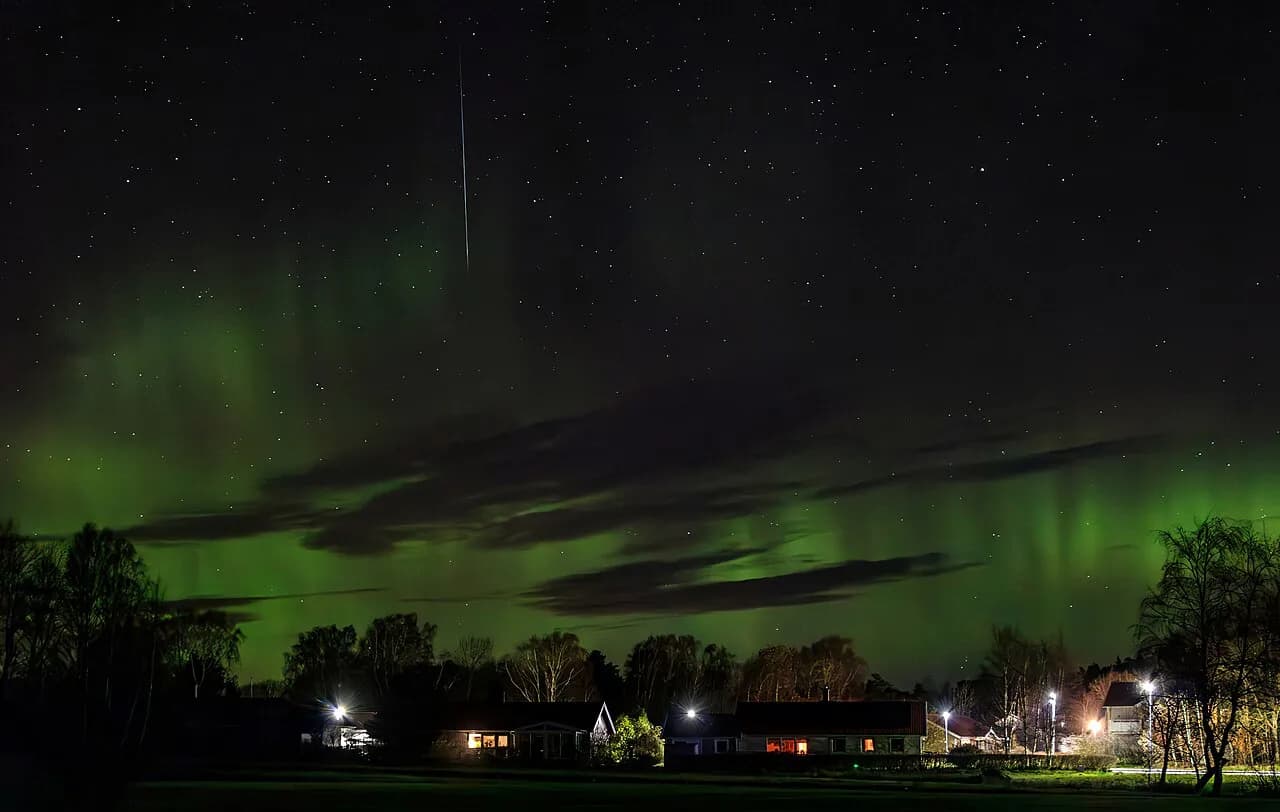
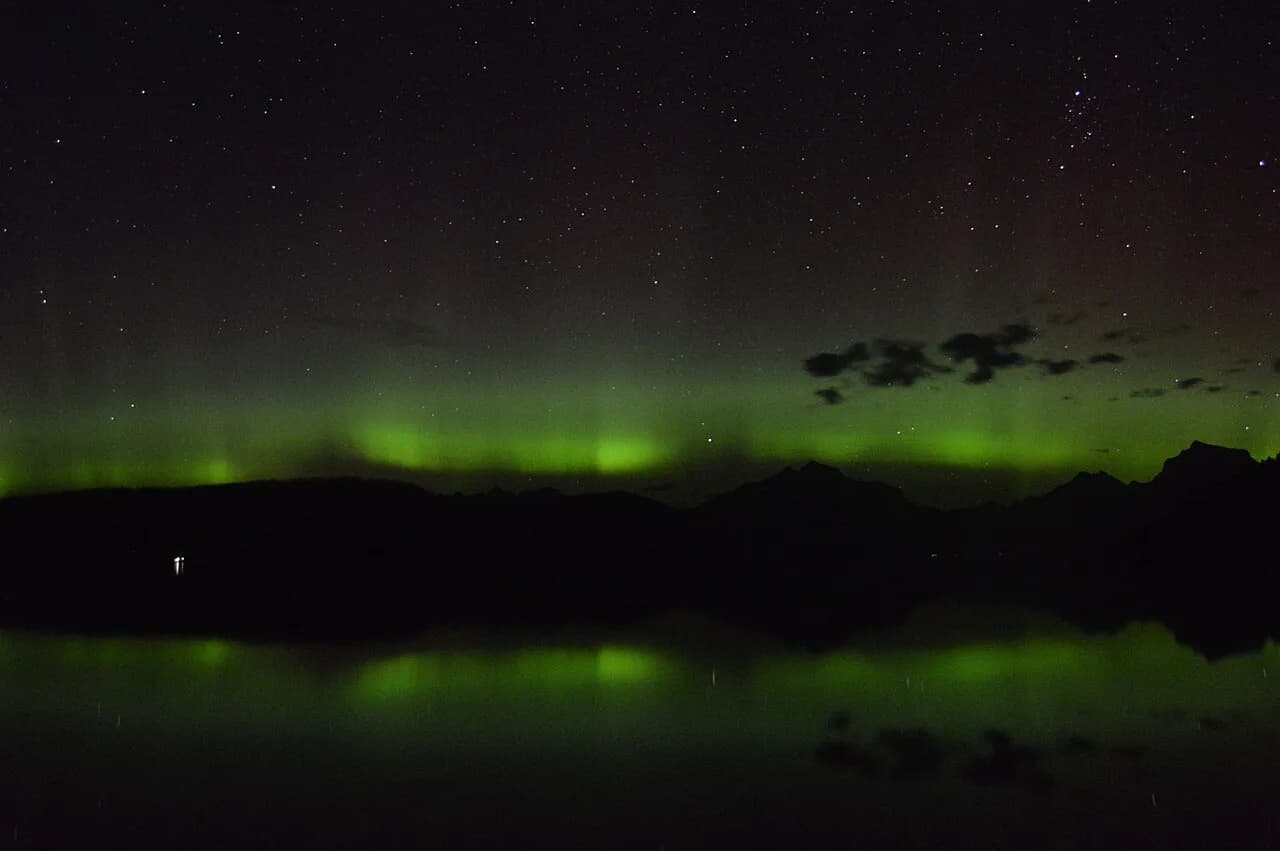
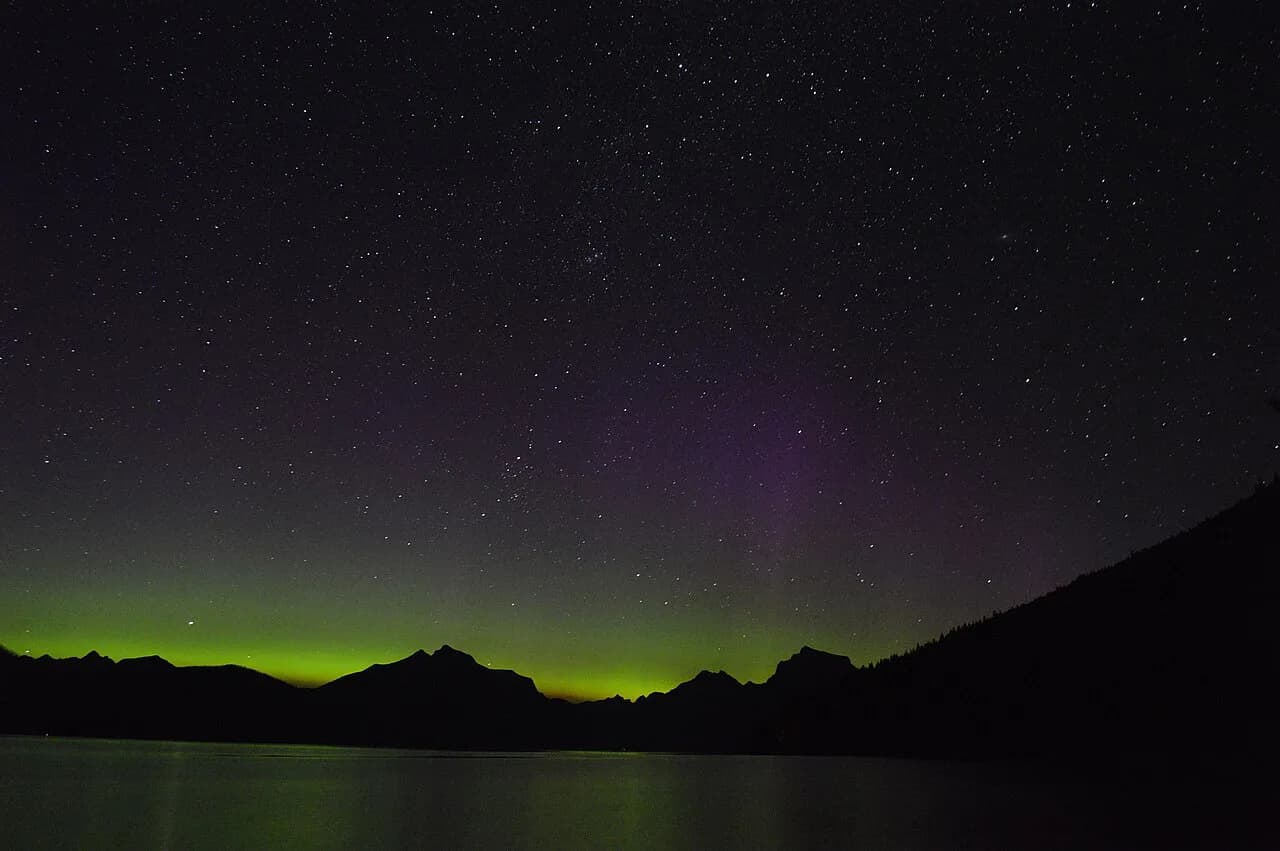
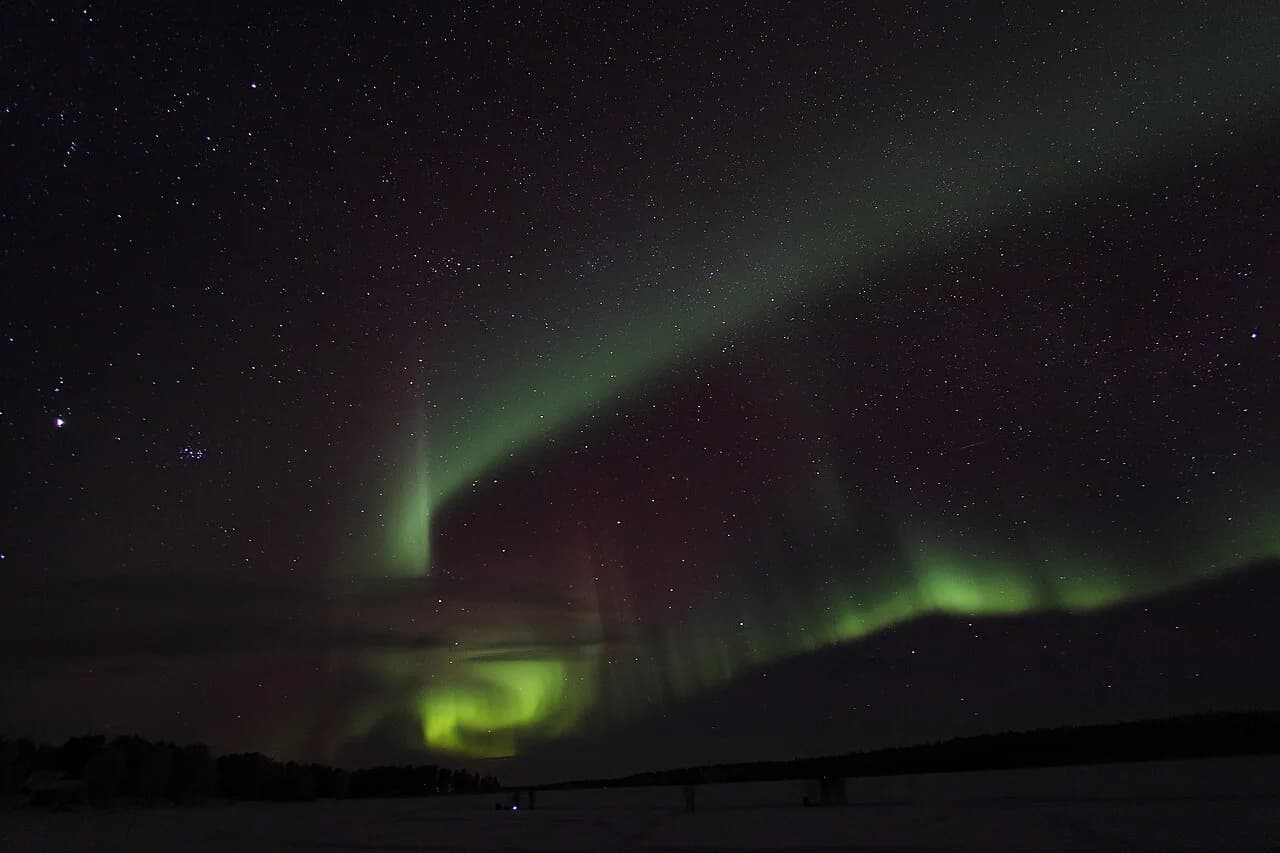
Autumn displays often begin as a faint arc or a pale glow that could pass for cloud, and the aurora guide in Rovaniemi describes exactly this pattern: small lights intensifying over the evening, sometimes into a dancing arch that lasts only minutes before fading. September is not a month of guaranteed overhead curtains; it is a month when the sky is dark enough and active enough to reward waiting.
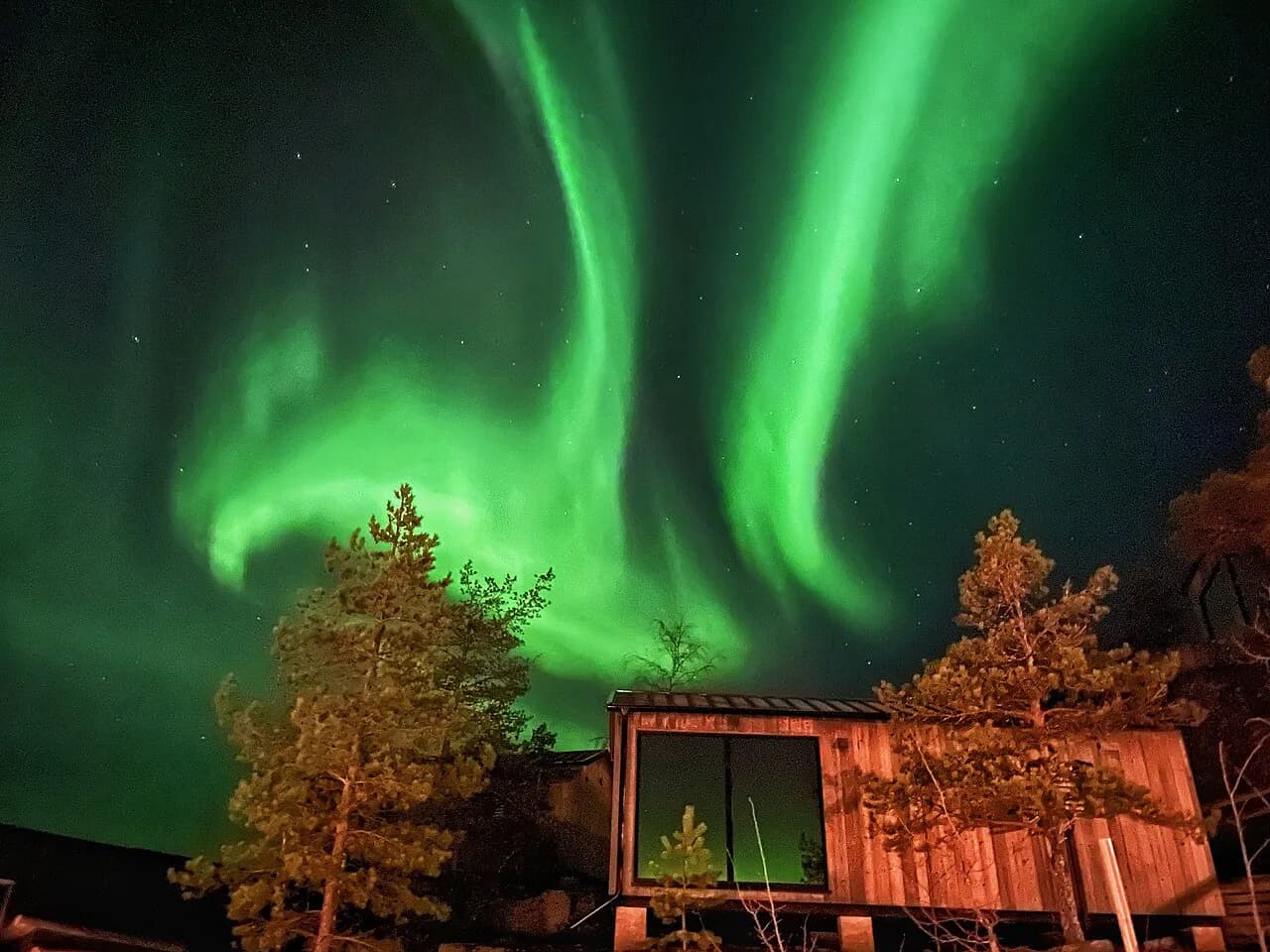
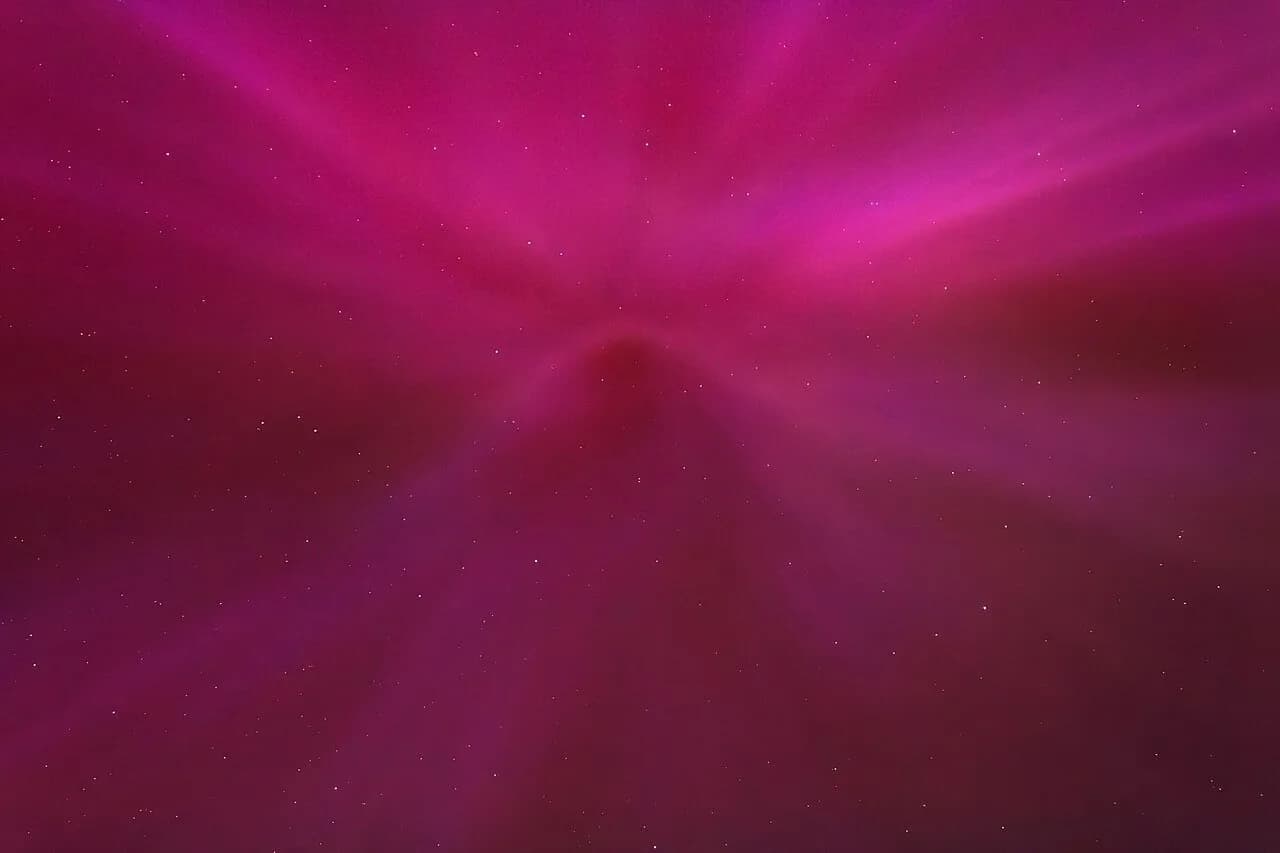
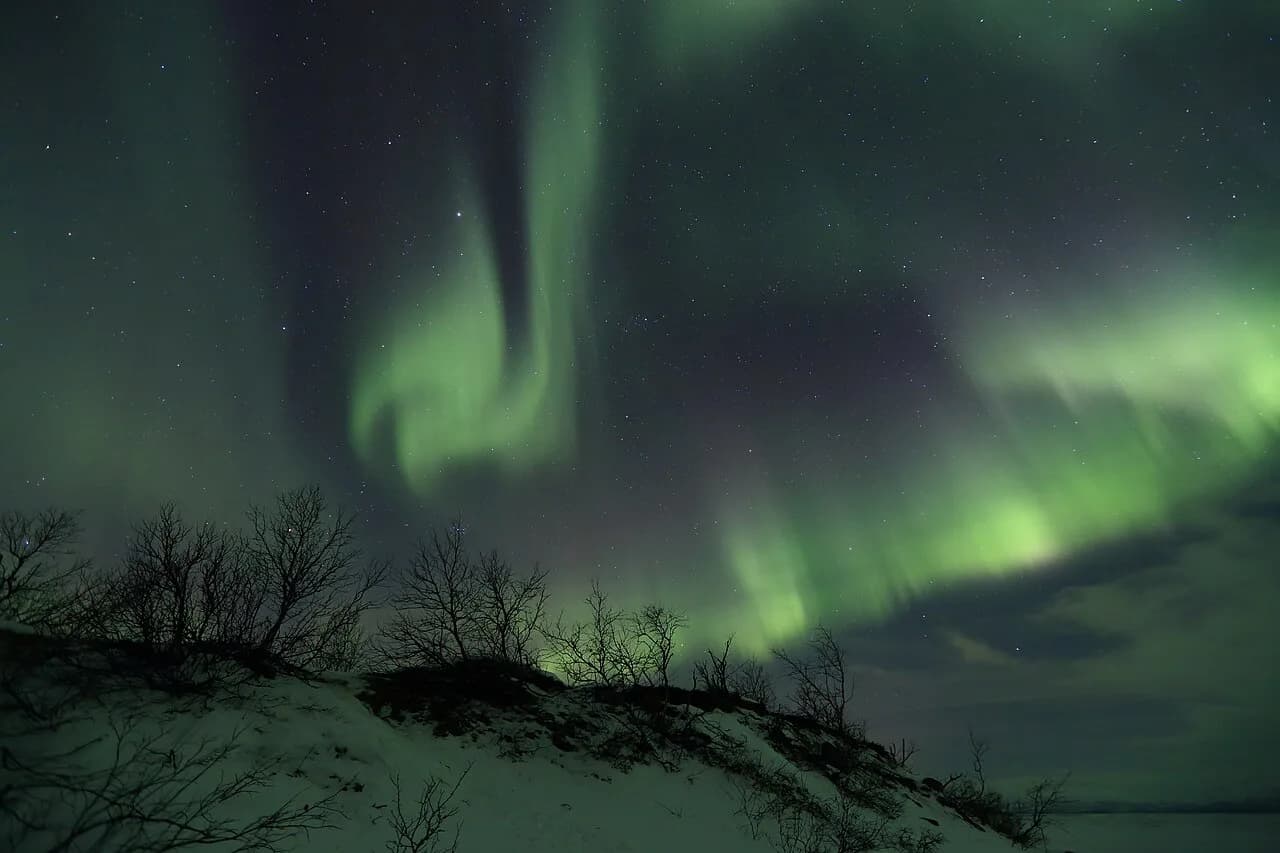
Most aurora seen with the naked eye is green or whitish, with pinks and reds appearing in stronger events. A camera test settles the question when you are unsure: a long exposure on a tripod pulls color out of a display your eyes read as grey wisps. Focus on infinity, open the aperture wide and take a few frames before deciding the night is over.
Full moon and moonlight in September
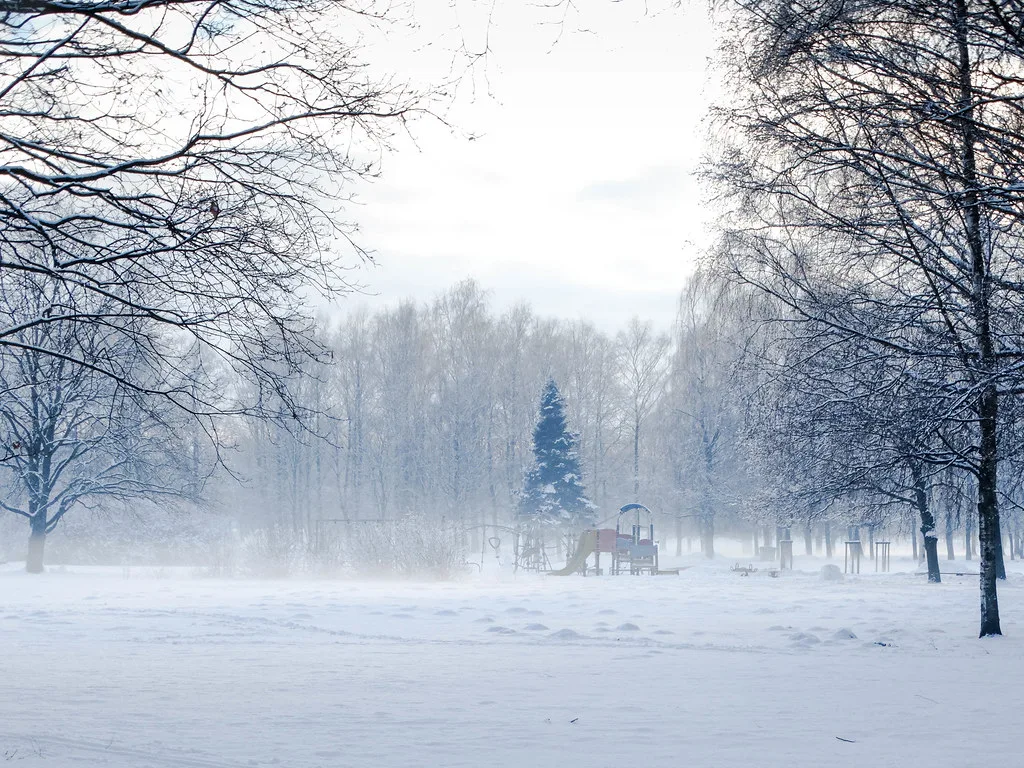
The moon does not affect aurora activity, but moonlight can wash out a weak display, especially to the naked eye. A strong show remains clearly visible under a full moon, and lunar light can even help illuminate foregrounds in photographs. Do not plan a September trip around lunar phases; plan it around darkness, cloud and how many nights you have.
How many nights to plan
Cloud, not activity, is what usually ends an aurora night, so the number of nights you book is the single biggest lever you control. A three-night stay gives you three chances at a clear evening; a five-night stay in one base gives you room to absorb a stormy spell without losing the whole trip. In September, with rain and cloud still in the mix, five to seven nights is a sensible target if the aurora is the main purpose.
Structure those nights around a fixed base rather than a nightly move. Two or three nights in one place lets you learn the local dark spots and react when the cloud breaks, while a single night in transit is a lottery. If you are combining regions, give the aurora-focused stop the longest stay and treat the rest as sightseeing.
Other options above the Arctic Circle
Svalbard, Greenland and other high-Arctic destinations sit well inside the auroral zone and offer near-total darkness by midwinter. In September, however, the midnight sun has only recently ended in the far north, so the dark window is shorter than in Lapland or Iceland. If you want September aurora, the practical choice remains northern Scandinavia and Iceland.
Norway's northern coast and fjords are a fair comparison: similar latitude, different weather, with a coastal climate that brings more cloud than inland Lapland. That is useful context if you are choosing between regions, but it should not pull you away from the September logic above. Pick the region whose autumn conditions match the trip you actually want.
Booking shapes for a September trip
Three shapes work for September. A short break of three or four nights in one Lapland base suits travelers flying in for a long weekend, with one guided aurora night and the rest self-guided. A week-long lake-country stay with a rental car suits photographers and anyone who wants to chase clear skies across a wider area. A two-region loop, such as Rovaniemi to Abisko or an Iceland ring road, gives variety at the cost of more driving and more nights in transit.
Book accommodation early for the equinox weeks, since that is the corridor everyone else is also targeting, and keep the first and last nights flexible if your dates allow. Ask any operator how they decide where to drive and what they lend, rather than how often guests see the lights. The honest answer to the second question is that nobody can promise it.
If the ice hotels and glass igloos are part of the appeal, treat them as a later-winter plan and use September to test the region. Our Aurora Hotels in Europe guide covers the properties built around night-sky viewing for when you return.
Plan a September Aurora Trip
September earns its place at the front of the aurora season for three reasons: the nights are dark again above the Arctic Circle, the equinox weeks tilt geomagnetic odds in your favor, and the ground is still warm enough for lakes, trails and long evenings outside. It is a poor fit only if snow-based activities are non-negotiable.
Choose a base inside the auroral band, give yourself five to seven nights if the aurora matters most, and keep the itinerary loose enough to move when the cloud map changes. Try the camera test on any faint glow and stay out longer than feels necessary. Those habits do more for your chances than any single forecast reading.
If you want to compare bases across the region before committing, start with our guide to what are the northern lights and where you see them in Europe. Then pick the region, book the cabin, and leave the evenings free.
Frequently Asked Questions
Is September a good month for the northern lights?
Yes. The aurora season runs from roughly late August to mid-April, and September sits in the strong equinox corridor when nights are dark again and geomagnetic activity tends to run higher. You still need clear skies, so treat it as favorable conditions rather than a guaranteed display.
Where can you see the aurora borealis in September?
Northern Finland around Rovaniemi and Inari, Swedish Lapland around Abisko, and Iceland all sit inside the auroral band between 60 and 75 degrees of latitude. Pick a base a short drive from dark shoreline or mountain terrain, away from town lighting.
Why is aurora activity stronger around the equinoxes?
The tilt of Earth's magnetic field relative to the solar wind creates a better configuration around the equinoxes, which opens more pathways for solar particles and raises the chance of auroral storms. That is why the weeks either side of late September are often rewarding.
Do I need snow to see the northern lights?
No. Cold and snow do not cause the aurora; clear, dark skies do. September trips often run with little or no snow, which keeps lakes and trails open, though it means snow-dependent activities wait for later in the season.
Can you see the northern lights during a full moon?
Yes. Moonlight can dim a weak display for the naked eye, but a decent aurora remains clearly visible under a full moon, and moonlight can help illuminate the foreground in photographs. Do not plan your dates around lunar phases.
How many nights should I book in September for a fair chance?
Five to seven nights in one base gives you room to absorb cloudy spells and still catch a clear evening. Three nights is workable but leaves little margin if a front sits over your area for the whole stay.
Sources
Notes for your Arctic winter trip
Optional updates to our northern lights guides.
You might also like
Continue reading
More guides you'll find useful