Jökulsárlón in December: Daylight, Ice and Aurora Nights
Plan a December visit to Jökulsárlón with realistic daylight hours, winter driving timing, ice cave tours and honest odds for aurora nights.
On this page
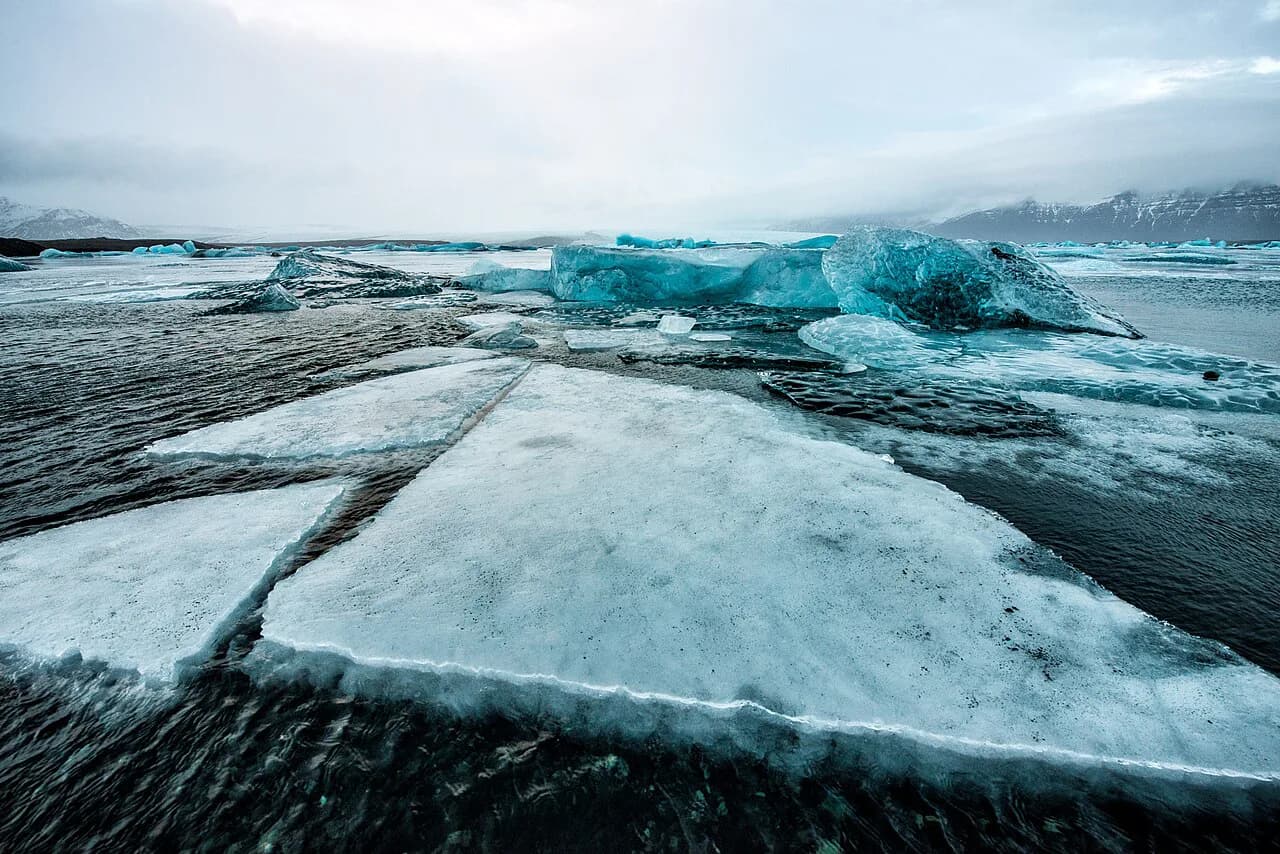
December turns Jökulsárlón into a compact, moody stop on Iceland's south coast: icebergs calved from Breidamerkurjökull drifting across a still lagoon, black sand strewn with ice at Diamond Beach, and only a few hours of usable light to see it all. It suits travelers who accept short days in exchange for ice caves, low winter sun and long nights that keep the aurora within reach.
The trade-off is planning. You cannot drive from Reykjavík, tour a glacier and photograph the lagoon in one December day, so the sensible shape of the trip is an overnight stay within a short drive of the water. What follows is how to time the daylight, what actually runs in December and how many nights give you a fair shot at a clear sky.
Why December suits Jökulsárlón
The lagoon sits about 380 kilometers east of Reykjavík along Route 1, roughly a five-hour direct drive and seven to eight hours with South Coast stops, which makes it a destination rather than a roadside pause. December adds a second draw: the long nights around the winter solstice mean many more dark hours than September or March, and the lagoon's remote setting keeps light pollution low.
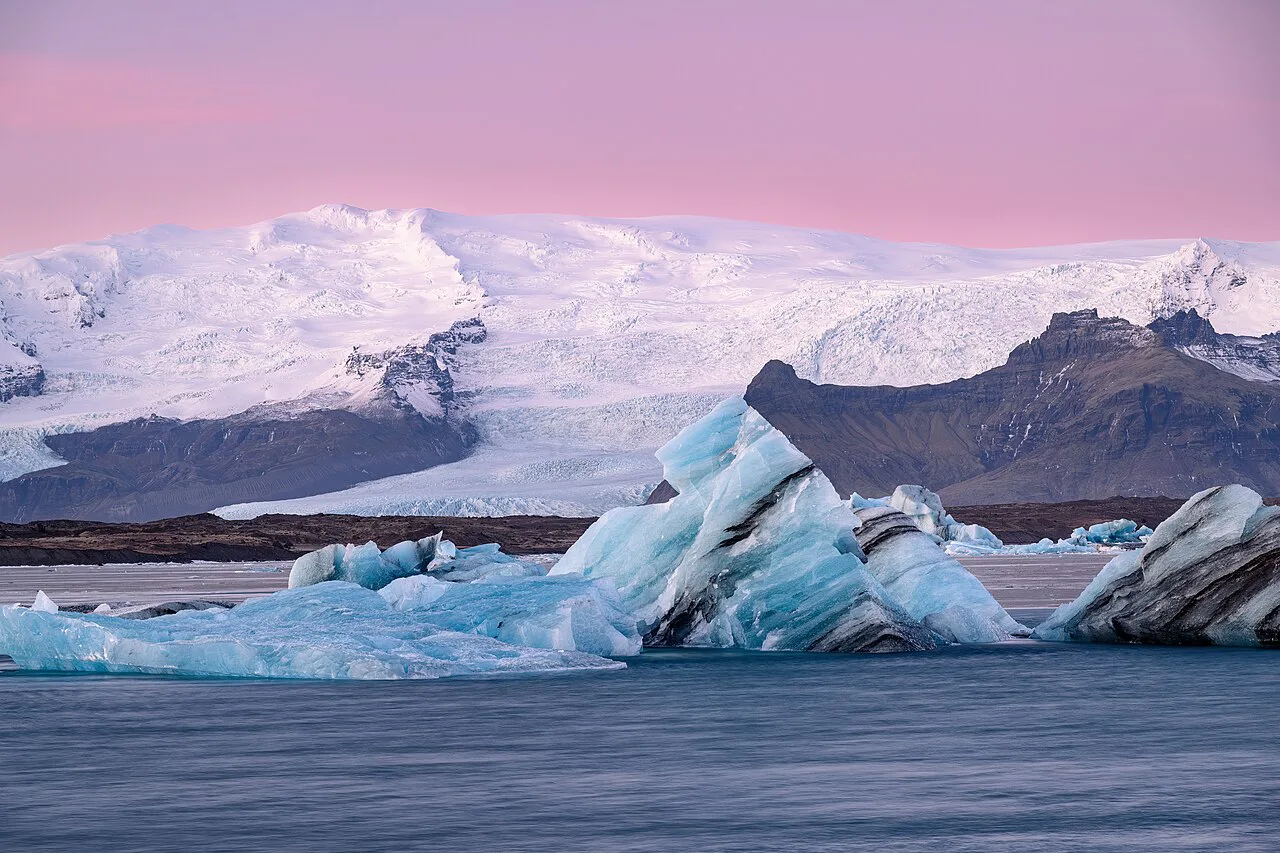
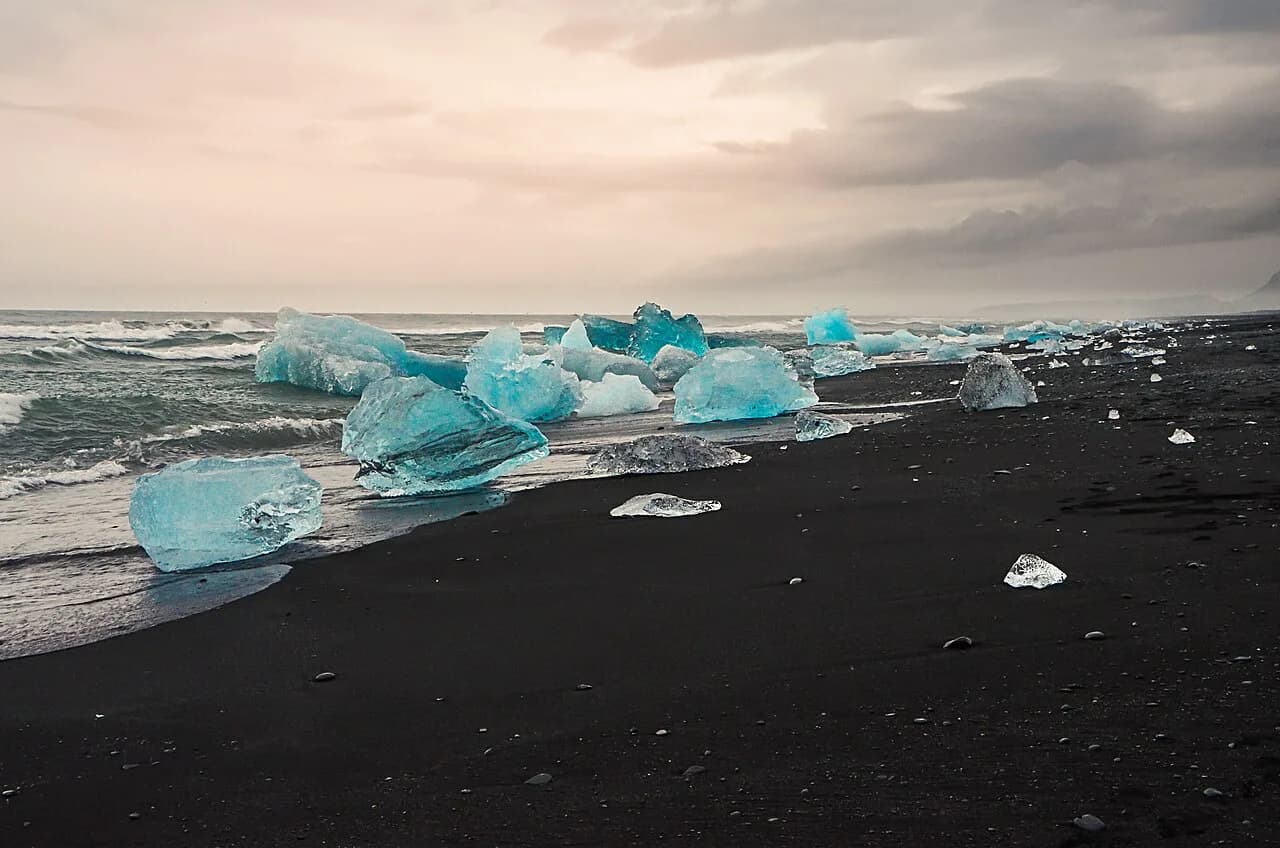
Floating ice is the reason most people come. Calved bergs carry electric blue and black volcanic streaks, and the highest measured ice coverage at the lagoon falls in February and March, so December often shows a thinner scatter than late winter. Book a December trip for the light, the ice caves and the darkness rather than for a lagoon packed with bergs.
Southeast Iceland also has a reputation for clearer winter skies than much of the country, which is why the lagoon earns its place on aurora itineraries. For how the viewing spots, operators and dark-sky logistics fit together, the guide to the Northern Lights at Jökulsárlón covers the season without promising a display. Treat the clear-sky reputation as an improvement in odds, not a guarantee: cloud, solar activity and timing all have to line up, and Kp forecasts are guidance only.
How much daylight you get in December
December is the darkest month of the Icelandic year. Daylight shrinks to somewhere between four and five hours, with sunset usually arriving around 3pm, so the practical sightseeing window is a late-morning to early-afternoon block rather than a full day outdoors.
Plan backwards from that. Aim to be at the lagoon by mid-morning, give Diamond Beach across Route 1 a separate slot, and leave any glacier hike or ice cave for the guided block your operator schedules. Photography benefits from the low sun, but the light fades fast through the early afternoon, so set up at your main viewpoint first rather than saving it for last.
For the wider picture of daylight, road conditions and what the month feels like across the country, the month-level Iceland in December planning guide covers it in more depth.
Getting there in December
Route 1 to the lagoon is fully paved and straightforward to navigate, but South Iceland's weather can change quickly in December, so build slack into any same-day plan. Most travelers either rent a car for the drive from Reykjavík or Keflavik International Airport, or join a multi-day tour that handles the driving.
Fuel needs planning. There are no gas stations at Jökulsárlón; the nearest are in Höfn to the east and around Skaftafell to the west, so filling up in Vík before the final stretch is the sensible move.
Without a car, Strætó bus route 52 runs from Reykjavík toward Höfn with a stop at Jökulsárlón, but it does not operate on Mondays and Wednesdays, and onward transport around the lagoon is very limited. Check the live timetable on straeto.is before you commit to a bus-based December trip.
Where to stay near the lagoon
Because the drive from Reykjavík takes about five hours each way, a day trip leaves little time for the lagoon itself and none for a dark-sky session afterwards. Staying overnight within a short drive means you can use the brief daylight for the lagoon and keep the long evening free for aurora watching, and the broader winter guide to Jökulsárlón Glacier Lagoon in Winter sets out the same logic.
The closest option is the Glacier Lagoon Hotel, a modern four-star property roughly 7 miles (11 kilometers) from the lagoon and Diamond Beach, with an on-site restaurant. Between Skaftafell and the lagoon, Fosshotel Glacier Lagoon is a popular four-star base for glacier hikes and ice cave tours, while the family-run Hotel Smyrlabjorg offers a quieter countryside stay within easy driving distance.
Nearby rooms are limited, and December bookings for the aurora season fill early, so reserve accommodation before you lock in tours. If you plan to continue east toward Höfn and Vestrahorn, Arnanes Country Hotel just outside Höfn makes a practical second night.
Ice cave tours under Vatnajökull
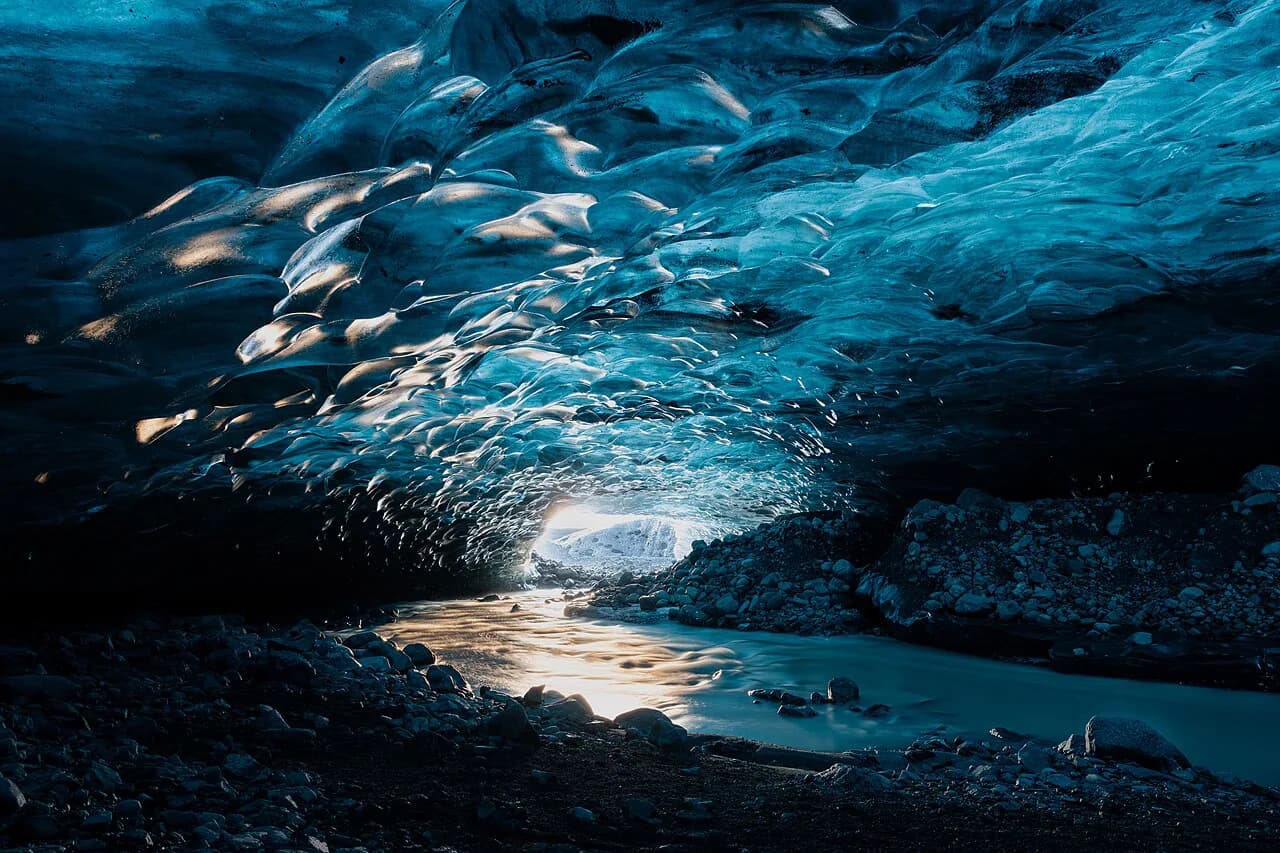
Winter is when the ice caves come into their own. Guided tours typically run from mid-October to April, and the Crystal Ice Cave inside Vatnajökull is the classic outing from the lagoon area, usually paired with a super-jeep transfer and safety gear.
Book the cave for the middle of the day, when it competes least with daylight at the lagoon, and keep the morning for icebergs and Diamond Beach. Cave conditions change through the winter, so the tour company decides on the day which cave is safe to enter; follow that call rather than asking for a specific cave.
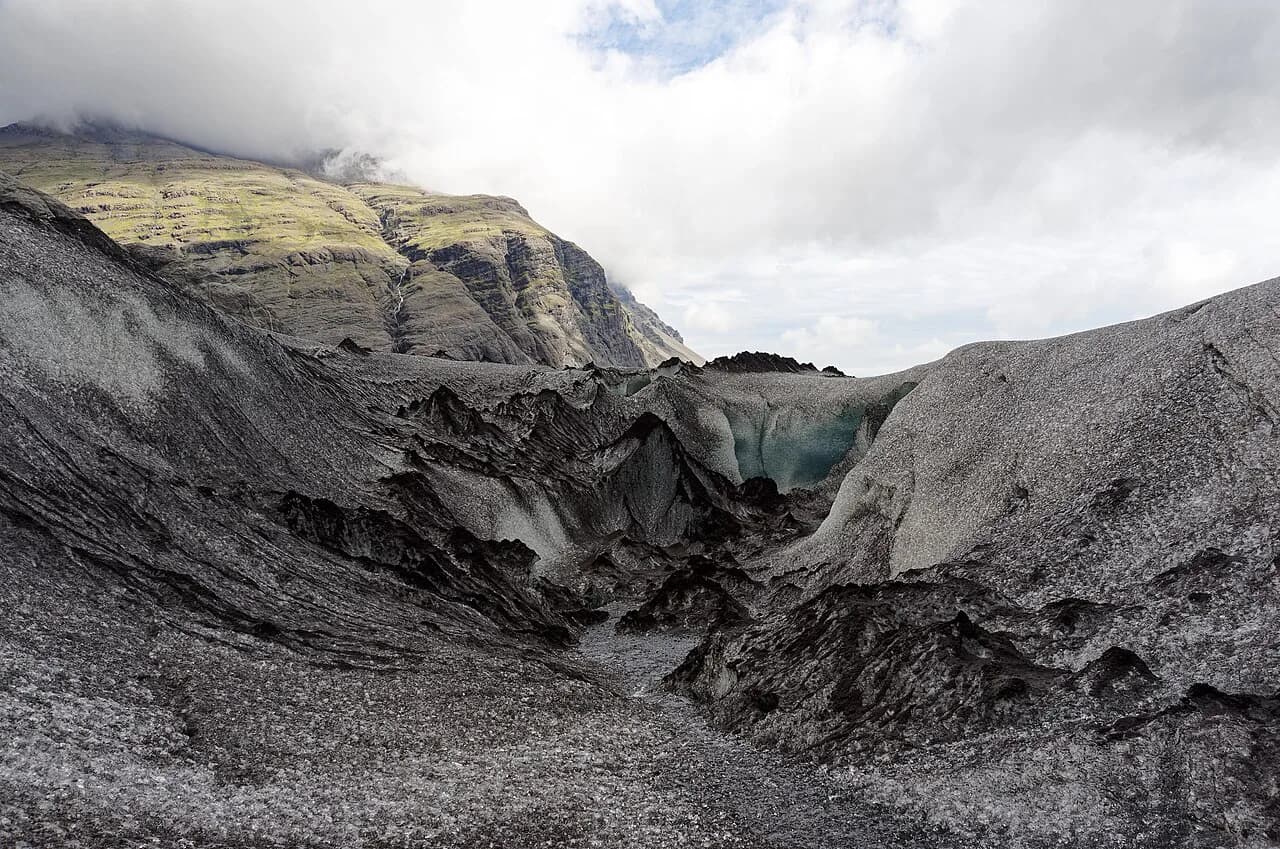
Glacier hikes on Vatnajökull also run year-round from near the lagoon with all safety gear provided, which makes a short December hike a reasonable alternative if you would rather be on the ice than inside it.
What runs on the water and what does not
The amphibian and Zodiac boat tours that take visitors among the bergs operate from May 1 to October 31, so they are finished by December. Kayak tours on the lagoon typically run May to September, depending on conditions, and are likewise out of season.
That leaves the shoreline. December visits are about the main lagoon viewpoint by the parking area, the short walk to Diamond Beach, and the cafe and restrooms on site, which stay useful when the light is short and the weather turns.
Aurora viewing at the lagoon and Diamond Beach
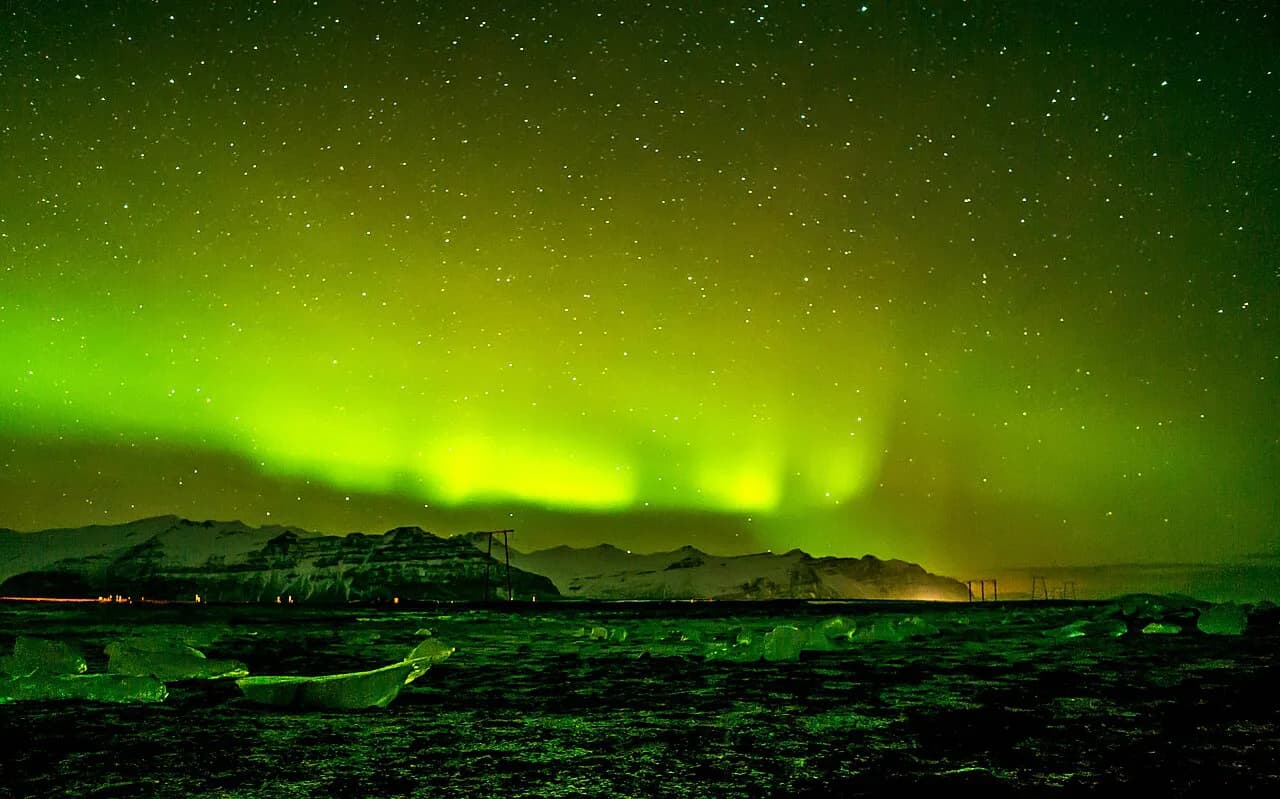
Jökulsárlón sits in a remote corner of the southeast with minimal light pollution, and aurora tours in Iceland run from late September to early April. On a clear December night you have more dark hours than at any other point in the season, and calm lagoon water can catch a reflection of the aurora.
Self-guided watching from the lagoon parking area and the Diamond Beach shoreline needs no booking, only a clear sky and patience, and both viewpoints are a few minutes' walk apart. Guided aurora excursions add a driver who reads cloud and road conditions, which matters in December when a short drive can cross into better weather. Either way, keep your expectations honest: a single cloudy night is common, and no operator can schedule the lights.
Snow, temperature and road conditions
Expect snow, rain and cold in December, with conditions shifting within hours along the south coast. The lagoon's water stays at roughly 0 to 3 C year-round, and the ice itself is unstable, so stay back from the water's edge and never step onto a berg; they flip without warning.
The paved Ring Road is manageable in normal winter conditions, but snow and ice can close stretches with little notice. Check the Icelandic road authority's route information on the morning of your drive and keep a flexible buffer day if the lagoon is the centerpiece of your trip.
Diamond Beach and the shoreline in low light
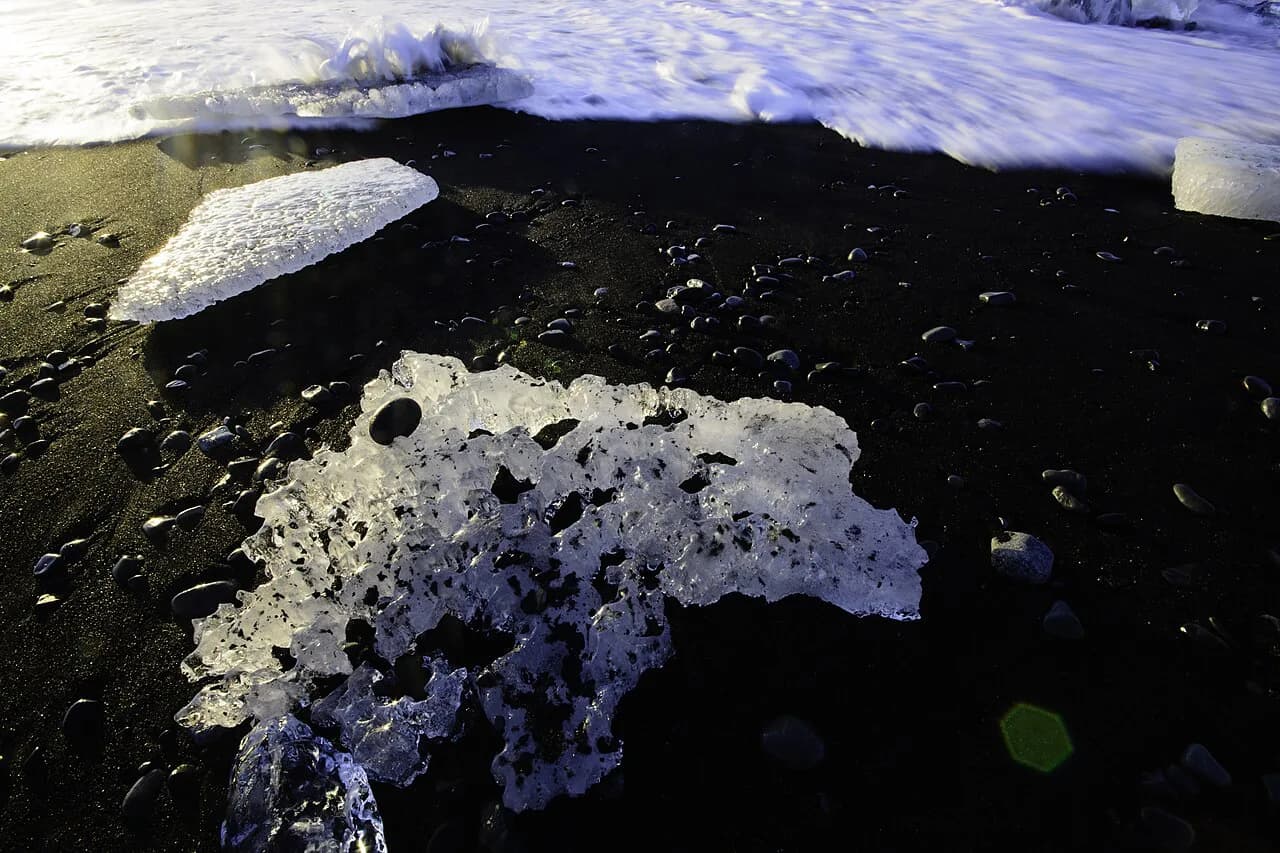
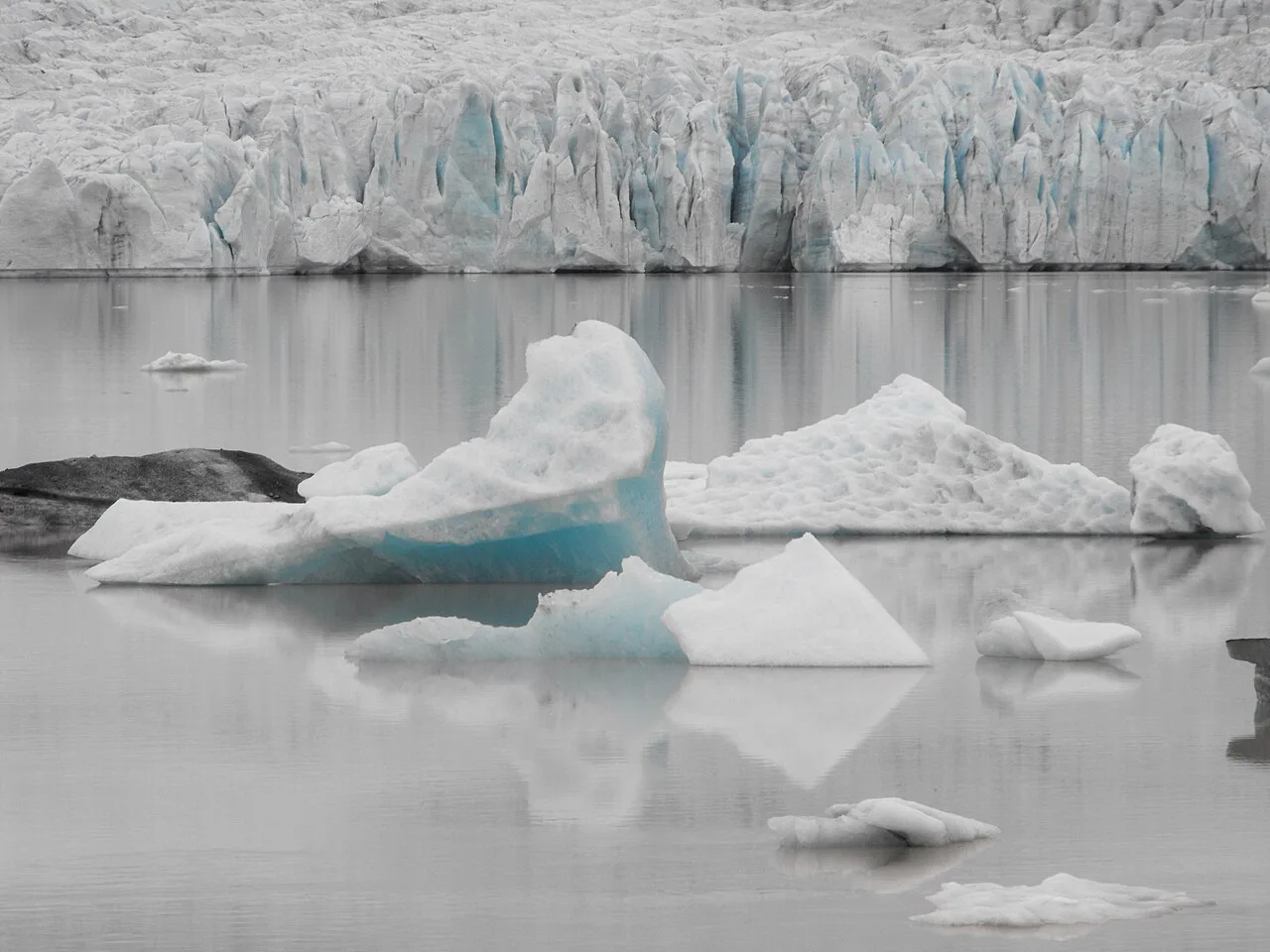
Diamond Beach sits directly across Route 1 from the lagoon, a 5 to 10-minute walk away, and the same parking ticket covers both sides. Ice chunks wash up on black sand, and in December the low sun and blue twilight give the scene its contrast without the summer crowds.
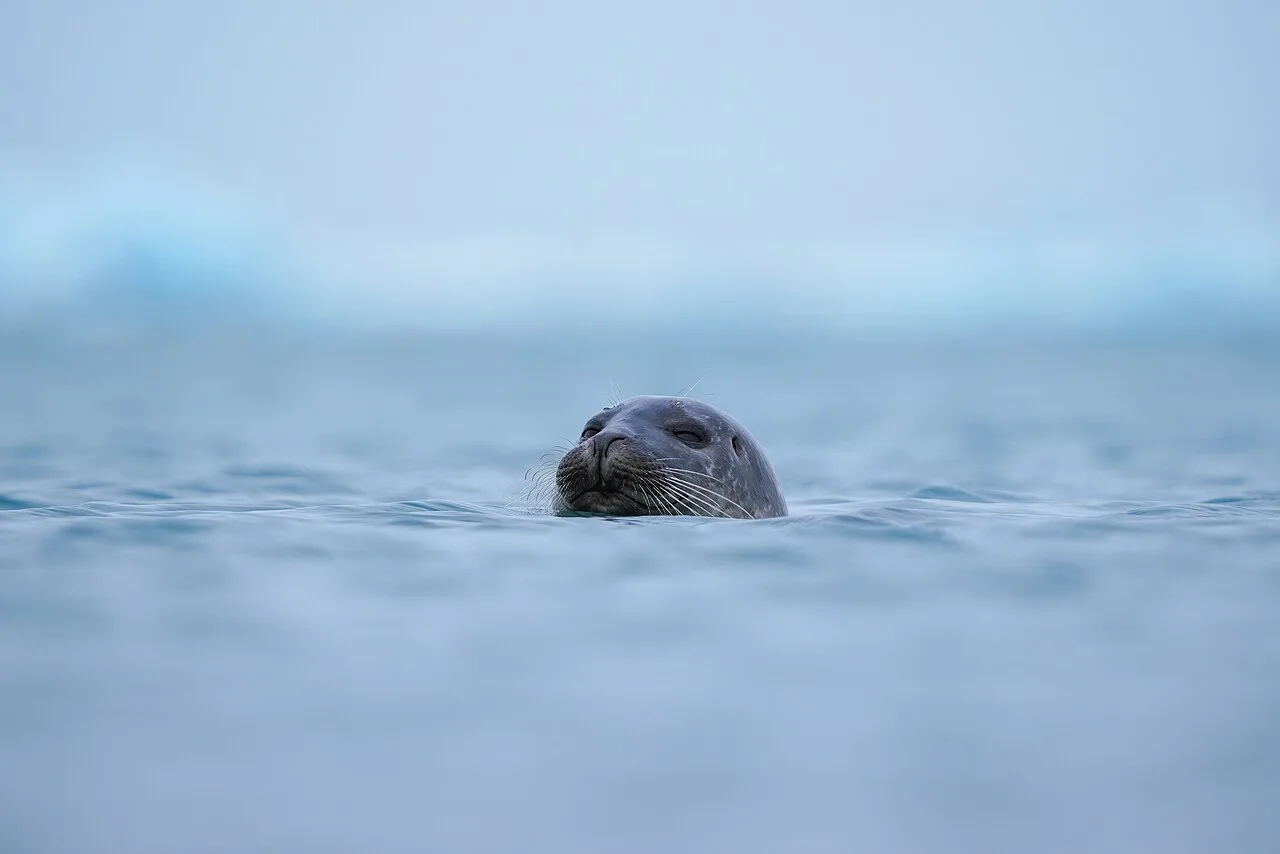
The main lagoon shoreline by the parking area is the easiest viewpoint for families and photographers, with views of Breidamerkurjökull behind the ice and seals often swimming between the bergs. Harbor seals stay in the lagoon year-round and more arrive in winter to feed, so scan the water while you wait for the light.
Crowds, parking and cost notes
Entering the lagoon is free and it is open year-round, but parking is managed by Parka at 1,000 ISK per standard car per day, payable through the app or at on-site kiosks. If you already paid for parking at Skaftafell the same day, you qualify for a 50 percent discount at Jökulsárlón.
December is quieter than the June to August peak, but the short daylight concentrates everyone into the same few hours around midday. Arrive early in that window, and save the dark hours for aurora spots away from the parking-area lights.
How many nights to allow
One night gives you a single shot at clear skies, which is a gamble in a country where cloud can sit for days. Two nights near the lagoon meaningfully raise your odds of catching at least one clear evening for the aurora and one usable daylight block for the ice cave and the lagoon together.
If the aurora is the main reason for the trip, three nights is the more comfortable allowance, especially in December when a road closure or a storm can wipe out an entire day. Use any spare night for a second look at Fjallsárlón just west of Jökulsárlón, a quieter lagoon with fewer crowds.
Nearby stops that work on a short day
With only four to five hours of light, pick one companion stop rather than three. Skaftafell, about 45 minutes west, has hiking trails, glacier views and Svartifoss framed by basalt columns, while Fjallsárlón just west of the lagoon is a quick pull-off with fewer visitors.
Múlagljúfur Canyon, roughly 25 minutes west, rewards a moderately challenging hike with cliff views and waterfalls, best left for a longer-day trip than December allows. Vestrahorn, about an hour east of Höfn, is the natural add-on if you are continuing in that direction.
Plan Your December Visit
December at Jökulsárlón asks you to trade long sightseeing days for focused ones: four to five hours of light for the lagoon, Diamond Beach and an ice cave, then a long dark evening that keeps the aurora possible. Sleep within a short drive rather than attempting the five-hour return to Reykjavík, fill the tank in Vík, and give yourself at least two nights.
None of that guarantees a green sky, but the combination of low light pollution, long December nights and a clear-sky reputation for the southeast gives you a fair chance. Plan the daylight around the ice, keep the nights flexible, and confirm the day's road status with the Icelandic road authority before setting out.
Frequently Asked Questions
Is December a good time to visit Jökulsárlón?
Yes, if you want ice caves and dark nights more than long sightseeing days. December brings roughly four to five hours of daylight and sunset near 3pm, so the lagoon and Diamond Beach fit into a compact morning and early afternoon, while the long evenings leave room for aurora watching. Boat and kayak tours have ended for the season, and ice cave and glacier tours are the winter activities that remain.
Can you see the northern lights at Jökulsárlón in December?
You can, but only when the sky clears and solar activity cooperates. The lagoon is far from town lights and December offers more dark hours than any other month, which improves your odds; it does not guarantee a display. Aurora tours run from late September to early April, and self-guided watching from the parking area or Diamond Beach costs nothing beyond the parking fee.
Are boat tours running on Jökulsárlón in December?
No. The amphibian and Zodiac boat tours operate from May 1 to October 31, and kayak tours typically run May to September, so both are finished for the year. In December the lagoon is a shoreline experience: the main viewpoint by the parking area, the short walk to Diamond Beach, and the on-site cafe and restrooms, with a guided ice cave or glacier walk filling the active part of the day.
How many nights should you stay near Jökulsárlón for a chance of auroras?
Two nights is the practical minimum, and three is better if the lights are the main reason for the trip. One night gives you a single window that cloud, snow or a road closure can erase, while a second or third evening lets you drive a short distance for clearer sky. Book early, since rooms near the lagoon are limited and the aurora season fills fast.
Sources
Notes for your Arctic winter trip
Optional updates to our northern lights guides.
You might also like
Continue reading
More guides you'll find useful