Iceland in December: Daylight, Weather and Northern Lights
Plan an Iceland trip in December with realistic daylight, temperatures, aurora timing, ice cave and hot spring options, and how many nights to allow.
On this page
December hands Iceland the trade that defines its winter: the shortest sightseeing days of the year and the longest stretch of dark sky to watch. If your trip is built around the aurora and you accept that daylight is a scarce resource, the month suits you. If long driving days and full waterfalls-and-glaciers itineraries matter more, book the edges of the season instead.
Why December suits aurora chasers
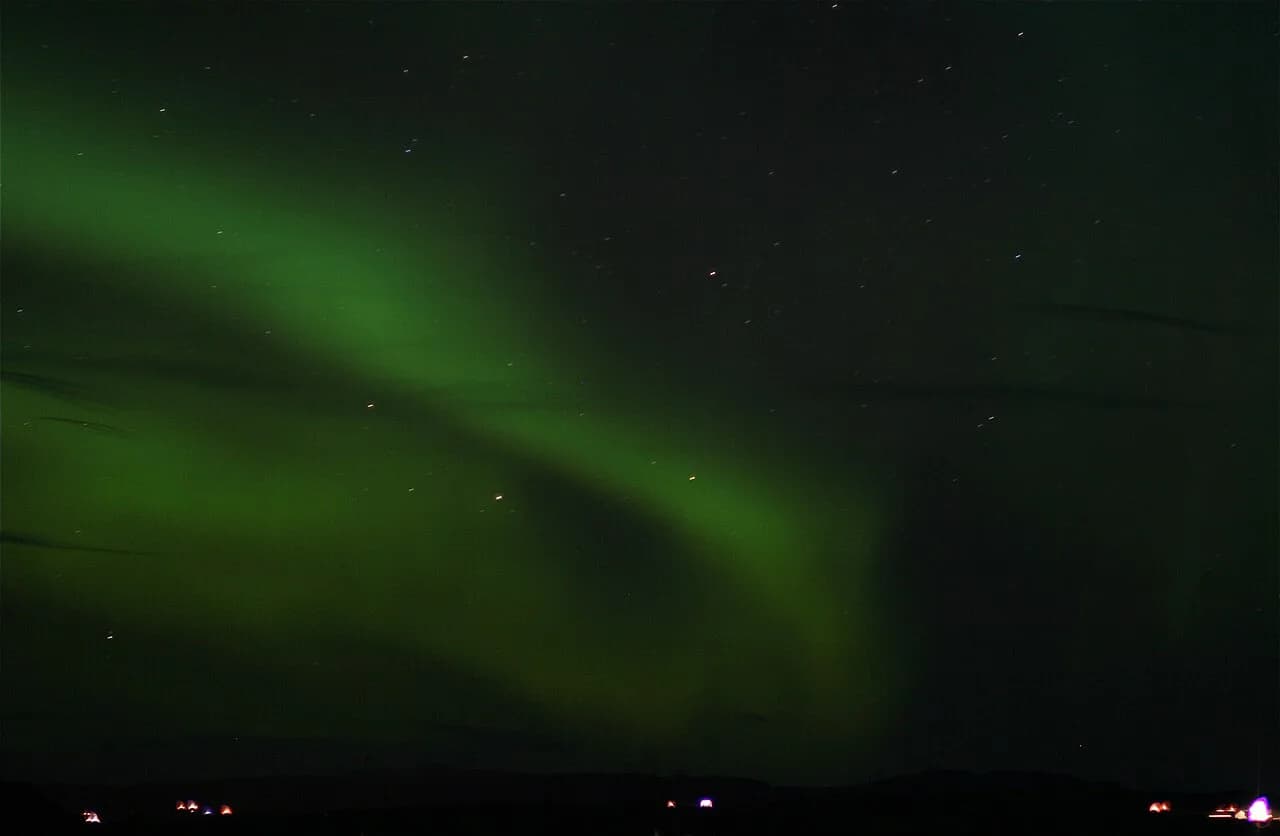
The aurora only appears against dark skies, and in Iceland those skies belong to the winter months rather than the near-endless daylight of summer. December stacks the odds in your favour simply by giving the most hours of darkness per day. That is an advantage of darkness, not a promise of a sighting: solar activity and cloud cover decide whether anything shows.
Iceland sits just under the Arctic Circle, close enough that the auroral oval regularly passes overhead when the sky is clear. In December the darkness starts early, so you do not need to stay up until the small hours to get a viewing window; a clear evening around dinner time can produce a display. Checking the cloud forecast is more useful than watching the Kp number alone, because a low Kp under a clear sky beats a high Kp under cloud.
Snow and frost also reshape the landscape in ways summer visitors never see, and the crowds at the best-known stops thin out compared with the peak season. That combination of dark evenings and quiet roads is the strongest case for December.
How far north Iceland sits
Iceland is a North Atlantic island just south of the Arctic Circle, and that latitude controls everything about a December visit: the sun scrapes low across the horizon, nights are long, and the aurora can appear overhead rather than low on the northern horizon as it does from mainland Europe.
The surrounding ocean moderates the cold compared with what the latitude suggests, keeping coastal December temperatures well above what you might expect this far north. The same ocean feeds the wind, which is the part of December weather that most affects driving.
Daylight hours in December
Mid-winter Iceland gets only about four to five hours of daylight, and the December sun rises around 10:46 and sets around 3:47. Treat that as your working day. Attractions that take an hour in summer take longer in the dark, and a late start can eat most of the light before you reach your first stop.
Guide to Iceland's month-by-month table shows the shift from either side: November averages a 9:24 sunrise and 4:57 sunset, while January averages 11:10 and 3:44. December sits at the bottom of the curve, which is why early December and late December feel so different in terms of usable light. The practical result is that you should drive in the morning dark and save viewpoints for the brightest window.
If you are weighing whether to shift your trip away from the darkest week, the same trade applies to the whole season: the best time to see the northern lights is a question of balancing long nights against usable daylight, not picking a date that guarantees a display.
Temperatures, wind and snow in December
December averages about 1°C by day and -2°C at night, but the regional spread is wider than the national figure suggests. The south hovers between roughly -1°C and 4°C, while the north can drop to anywhere from -8°C to -3°C, with colder snaps possible.
Wind is the variable that catches people out. November through March all average above 13 mph (21 km/h), and February is the windiest at 14.3 mph (23 km/h), so December sits inside that windy stretch. Build slack into each day's drive so a gusty stretch or a snow squall does not wipe out the daylight you have.
Snow blankets the interior and the north more reliably than the south coast, and icy patches are a real feature of northern roads. The south coast and Reykjavik often see more rain and sleet than deep snow, which matters when you choose where to base yourself.
When the aurora season runs and how to improve your odds
The aurora season in Iceland runs through the dark winter months, and December is squarely inside it, with the most darkness of any month. That does not guarantee a sighting. The two conditions that matter are solar activity and clear skies, and you cannot control either; you can only choose where you are when the sky clears.
Clear skies are the deciding factor in practice. Getting out of Reykjavik's light glow, checking the cloud forecast on the day, and keeping a car available for a late drive all raise your chances more than waiting for a high Kp. Kp values are guidance only: a modest Kp under a black sky often beats a strong one under cloud.
A guided northern lights tour is the low-effort option, with operators choosing the route and often lending thermal suits for the night. Self-driving gives you freedom to move when the forecast shifts, but you carry the risk of icy roads and unfamiliar conditions.
Where to watch near Reykjavik
Reykjavik works as a base, not a viewing spot. When the forecast looks good, drive a short way out of the city to escape the light dome, then stop somewhere dark and safe. The Reykjanesbraut highway is the fast route from the airport, but on a calm night the longer Route 420 along the coast through the Reykjanes Peninsula's lava fields gives you darker, quieter ground.
Use the darker hours before and after the sightseeing day rather than trying to fit aurora chasing into daylight. A clear evening around the city's edge or a short drive to the coast lets you watch, then return to a warm pool or a bar. That is the rhythm December rewards.
A good alternative for a city-based evening is the sky lagoon, a geothermal spa on the coast south of Reykjavik where you can warm up after a cold chase. It is not a dark-sky site, but it pairs well with an evening when the clouds are moving through.
The Golden Circle in December
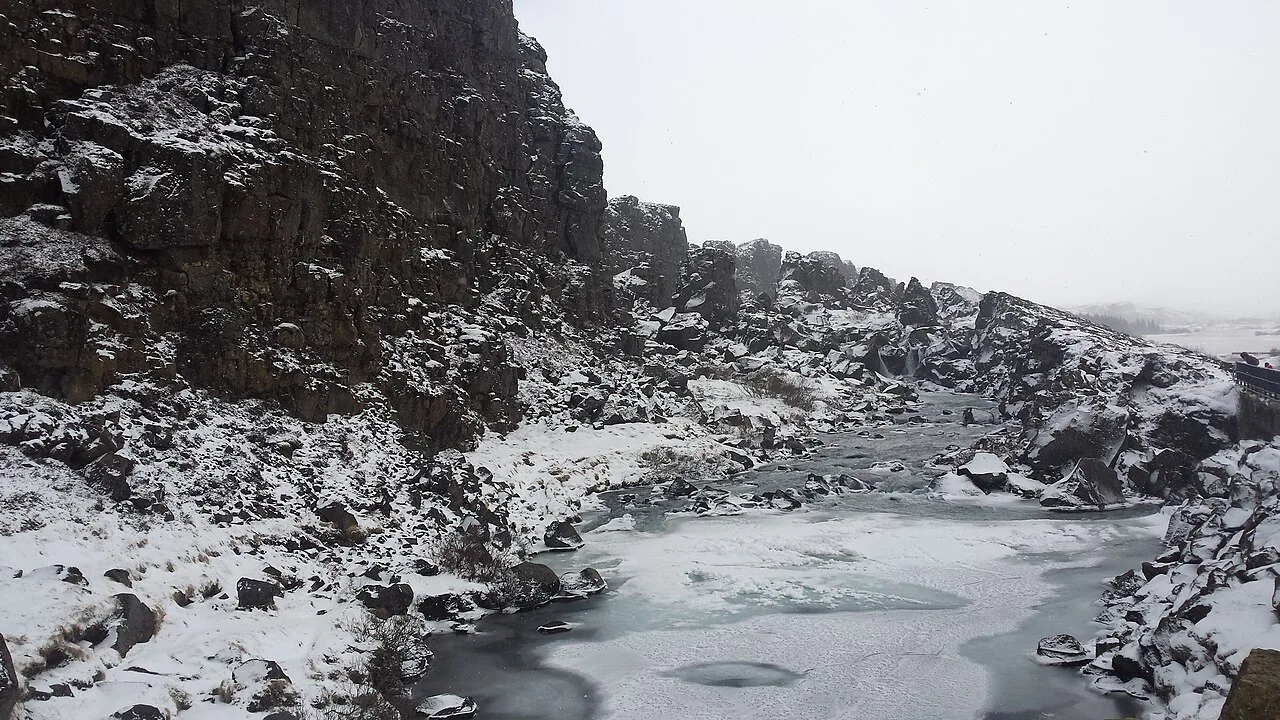
The Golden Circle is a roughly 300-km loop with three main stops, and in December it is best done as a single daylight day. Start early, because the light window is short and the drive between stops eats into it. Thingvellir National Park sits in the rift between the North American and Eurasian plates; Geysir and Strokkur make up the geothermal stop; Gullfoss is the waterfall finale.
Geysir's eruptions are largely dormant, and Strokkur is the reliable performer, bursting every ten minutes or so and spouting hot water about 20 metres into the cold air. At Gullfoss the spray freezes onto the surrounding cliffs, so the viewing platform gives you a view of the falls framed in ice. Both stops are quick, but the road between them is not, so plan the driving carefully.
If you have time on the drive back, the greenhouse town of Hveragerdi or a seafood dinner at Stokkseyri on the south coast are good ways to spend the last of the light. Both give the day a soft landing rather than a rush back in the dark.
The south coast in winter
The south coast packs several stops into a manageable drive from Reykjavik. Seljalandsfoss, about 120 km southeast of the capital, drops over 60 metres and lets you walk behind the cascade. Skogafoss is wider and more powerful, with a 25-metre curtain falling 60 metres and throwing enough spray to produce rainbows on bright winter days.
Between the two, Seljavallalaug is one of Iceland's oldest outdoor pools, built in 1923 and fed by warm water running down the hillside. A short walk from the car park gets you there, and a soak is a welcome break on a cold day. The Skogar Museum offers a warmer indoor option if the weather turns.
Vik i Myrdal is the natural overnight stop if you plan to continue east, and the village has food and lodging for a late arrival. A guided walk onto Solheimajokull glacier adds a few hours and requires no prior experience. Build the day around the light and you can see the falls and still reach Vik before dark.
Ice caves and the glacier lagoon at Jokulsarlon
The Jokulsarlon glacier lagoon and the ice caves beneath Vatnajokull are the headline winter experiences on the east side of the south coast. The lagoon is about 190 km east of Vik, so from Reykjavik it is a long day or an overnight. Ice cave tours usually run from November to March, with a few operators starting in mid-October, and they go inside Europe's largest glacier.
The caves are formed by summer meltwater draining through the ice, leaving blue tunnels that become accessible once the water is gone. A guided tour is the only sensible way in; the glacier is not a place to wander without a guide. Tours typically meet at the lagoon and include the walk and safety gear.
Across the road, Diamond Beach at Breidamerkursandur is where icebergs wash ashore on black sand and glow pink at dusk. It is a free stop and pairs naturally with a lagoon visit. Plan the timing so you are there in the last hour of light rather than after dark.
Hot springs and pools
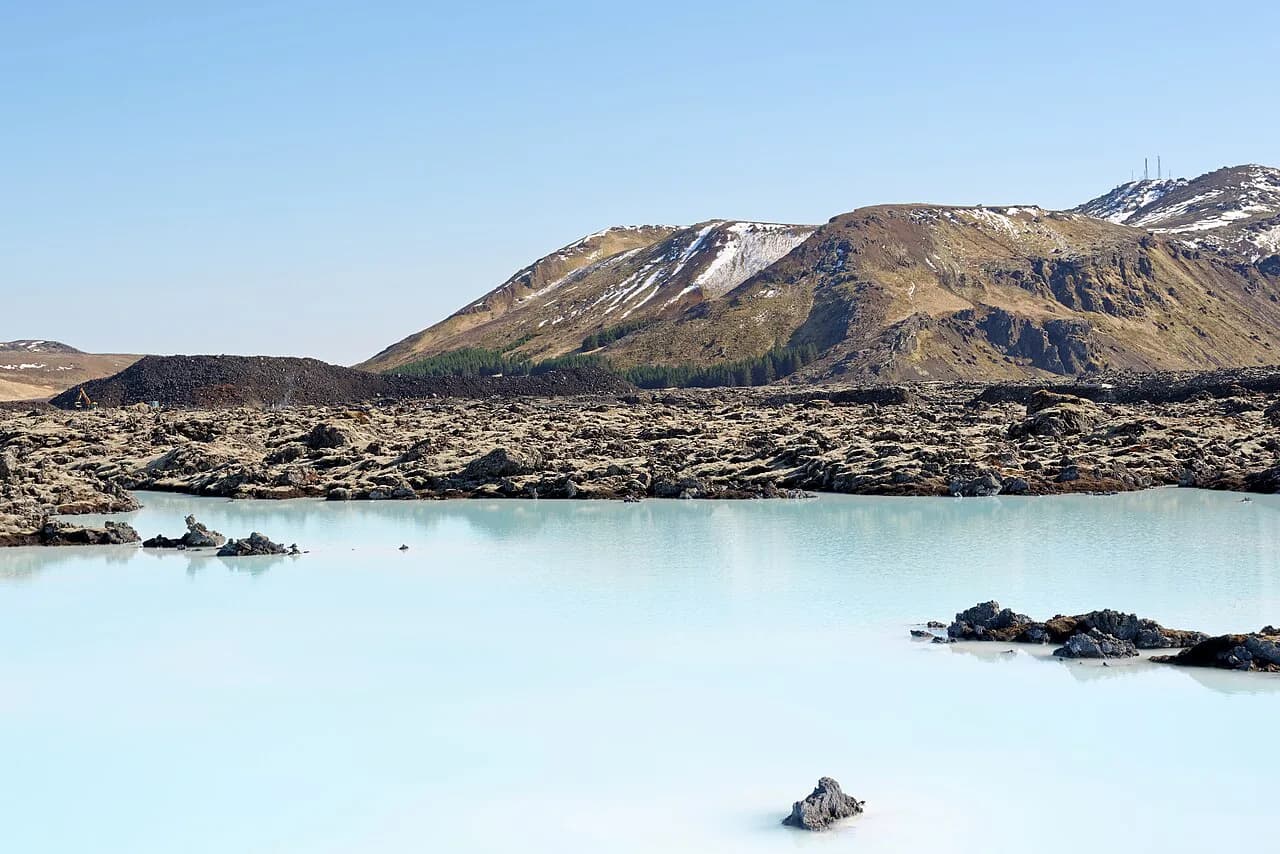
The Blue Lagoon sits in a lava field at Grindavik, about a 25-minute drive from Keflavik Airport, and is the easiest geothermal stop to pair with a flight. It earned a place on National Geographic's list of wonders of the world, and it works as a last-day soak before departure. Book ahead in December, because the holiday period fills up.
For something smaller and quieter, the Secret Lagoon in Fludir is a good stop on a Golden Circle day, with warm water and a more local feel. Seljavallalaug, on the south coast, is the most atmospheric of the three, a 1923 pool set in a valley beneath cliffs. Each gives you a warm break in the middle of a cold day, which is what December sightseeing needs; if you are heading north instead, the Forest Lagoon plays the same role on an Akureyri in December trip.
Reykjavik in December
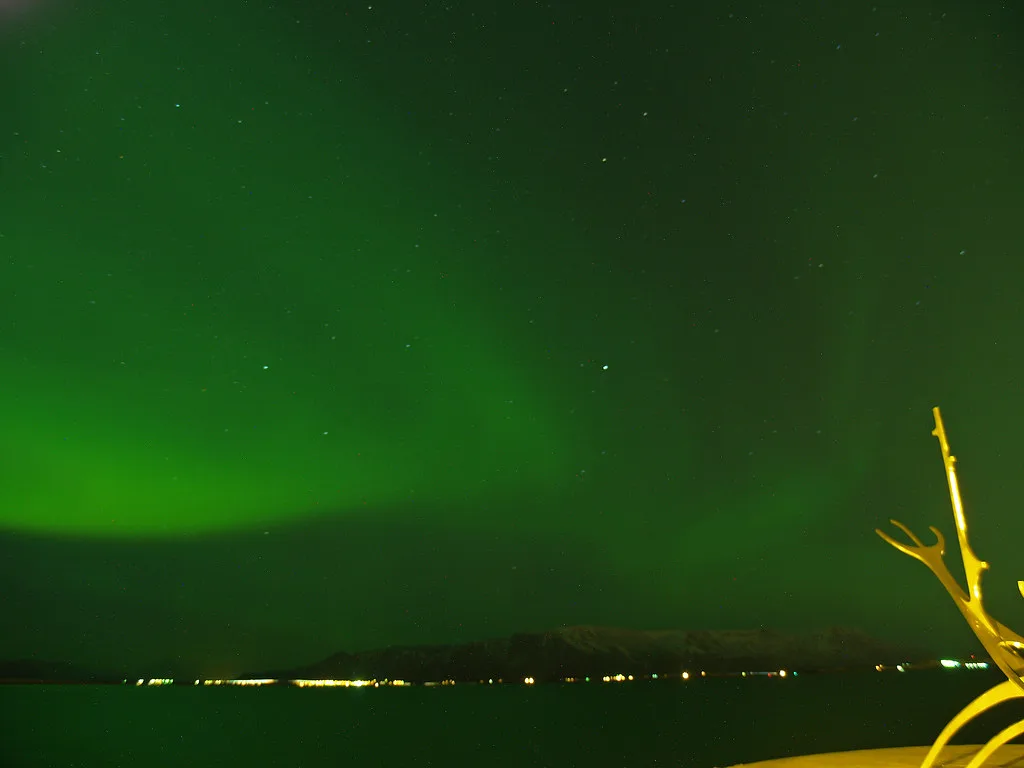
Reykjavik dresses up for December, with Christmas markets selling candles, woolens and local gifts, and the city's bars and restaurants busier than in the shoulder months. The Christmas Village is the main market, and the seasonal beer and leaf bread are part of the local calendar. It is also a good base for aurora nights, with dark countryside close enough for an evening drive.
City evenings are best spent indoors or in a warm pool, with a late check of the aurora forecast before bed. If the sky clears, a short drive out is easy; if not, the city's restaurants and bars carry the night. That flexibility is the reason to base in Reykjavik rather than a remote lodge.
Self-drive versus guided tours
A self-drive in December gives you the freedom to chase clear sky and to keep your own pace, but it demands respect for ice, wind and short daylight. Snow tires are essential, and the roads you can use change with the weather. The alternative is a guided tour, which removes the driving risk but fixes your itinerary and your group.
Guided tours often include thermal suits, and some include photography, which matters on a cold night when your hands do not want to be out of gloves. Self-driving means carrying your own gear and making your own decisions about where to stop. A middle path is to self-drive by day and join a guided aurora tour in the evening, though that can double your transport costs.
How many nights to plan
Allow at least three or four nights based in Reykjavik if the aurora is a priority, and more if you want to combine it with the south coast and ice caves. Weather is changeable, and a single clear night is not something you can count on. A longer stay gives you more chances to be in the right place when the sky opens.
If you are also doing the south coast and the glacier lagoon, add two or three nights to cover the driving in daylight. A five-day self-drive itinerary with a Golden Circle day, a south coast day and a lagoon and ice cave day is a realistic shape for December, with the aurora as an evening bonus rather than the main plan.
December trade-offs
December trades daylight for darkness. You get the longest aurora window of the year, the fewest tourists at the big sights, and a landscape under snow. You lose driving hours, some interior roads, and the easy spontaneity of long summer days. The month suits travellers who plan around light and weather rather than against them.
Book the ice cave, the Blue Lagoon and any guided tour before you arrive, because the best slots go first.
Plan your December trip
December is the month to choose if you want the darkest skies and can accept short sightseeing days. Base in Reykjavik, keep a car or a guided tour flexible, and treat the aurora as an evening possibility rather than a certainty. Three to five nights gives you a fair chance of at least one clear night, and the Golden Circle, south coast and ice caves fill the daylight hours.
Check the aurora and cloud forecast each morning, plan your driving for the middle of the day, and use the long evenings for a pool, a market or a drive out of the city lights. That rhythm is what makes December work in Iceland.
Frequently Asked Questions
Is Iceland good in December?
Yes, if you want dark nights for the aurora and a quiet winter landscape. Daylight is short, around four to five hours, so you need to plan your driving carefully. The month suits travellers who value the aurora window over long sightseeing days.
How many hours of daylight does Iceland get in December?
Mid-winter Iceland gets roughly four to five hours of daylight, with sunrise around 10:46 and sunset around 3:47 in December. That window is best used for driving and main sights, with the darker hours for pools, markets and aurora watching.
Can you see the northern lights in Iceland in December?
December gives you the most darkness of any month, which improves your chances if the sky is clear and solar activity is present. No month guarantees a sighting. Getting out of Reykjavik's light and checking the cloud forecast on the day matters more than any single date.
What is the weather like in Iceland in December?
December averages about 1°C by day and -2°C at night, with the south milder than the north. Wind is the main variable, averaging above 13 mph across the winter months. Snow is more reliable inland and in the north than on the south coast.
Are ice caves open in Iceland in December?
Ice cave tours usually run from November to March, with some operators starting in mid-October, so December is within the window. Tours are guided and typically meet at the Jokulsarlon glacier lagoon. Conditions on the glacier can change, so the day's decision is made by the operator.
Should you self-drive or take tours in Iceland in December?
Self-driving gives you freedom to chase clear sky and keep your own pace, but it demands respect for ice, wind and short daylight. Guided tours remove the driving risk and often include thermal suits. Many travellers self-drive by day and join a guided aurora tour in the evening.
How many nights do you need in Iceland in December to see the aurora?
Allow at least three or four nights based in Reykjavik if the aurora is your priority, and more if you also want the south coast and ice caves. One clear night cannot be counted on, so a longer stay gives you more chances to be in the right place at the right time.
Sources
Notes for your Arctic winter trip
Optional updates to our northern lights guides.
You might also like
Continue reading
More guides you'll find useful