Jökulsárlón in January: Ice Caves & Aurora Nights
Plan Jökulsárlón in January with ice cave tours, dark aurora skies, a boat-free lagoon, winter driving notes and where to stay near the ice.
On this page
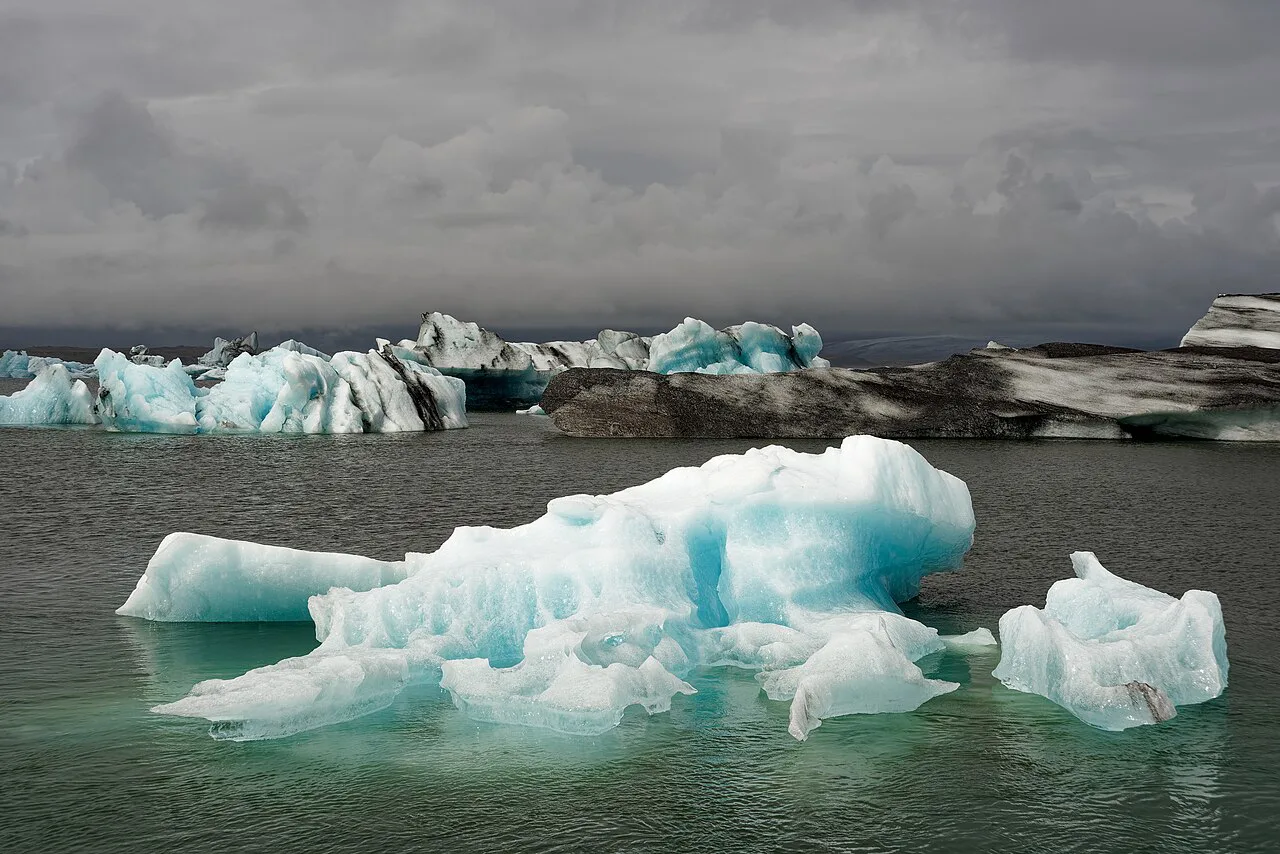
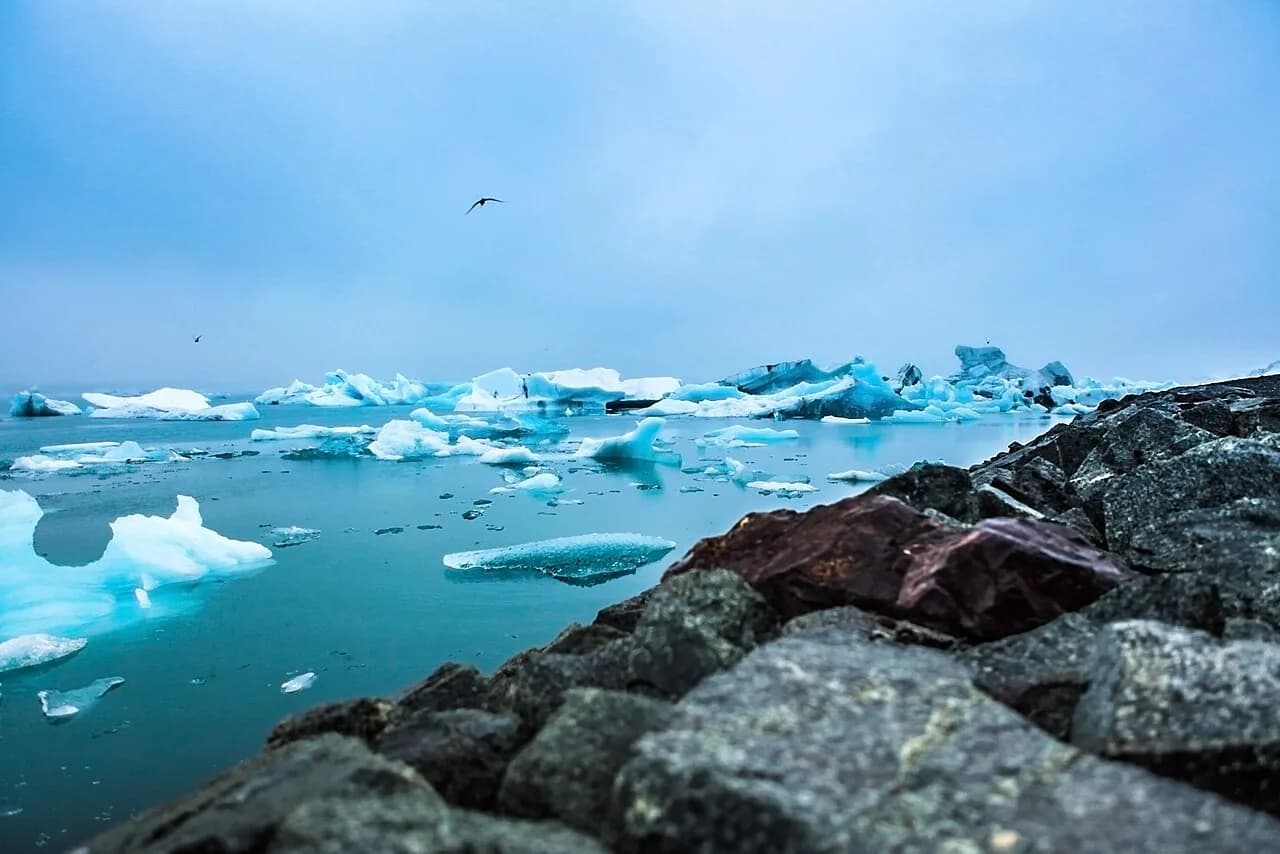
Jökulsárlón in January is the lagoon stripped back to its essentials: icebergs drifting toward the Atlantic, a black sand shore scattered with ice, and long dark nights that suit travelers chasing the aurora more than a boat ride. It rewards people who accept short daylight and a five-hour drive from Reykjavík in exchange for the quietest version of Iceland's most famous glacier lagoon.
The month suits self-drive travelers with winter confidence, couples basing themselves in one or two hotels along the southeast coast, and photographers who want blue-hour light on the ice. If you need frequent boat departures, long hikes or guaranteed easy driving, book for summer or plan around February instead.
Why January suits Jökulsárlón
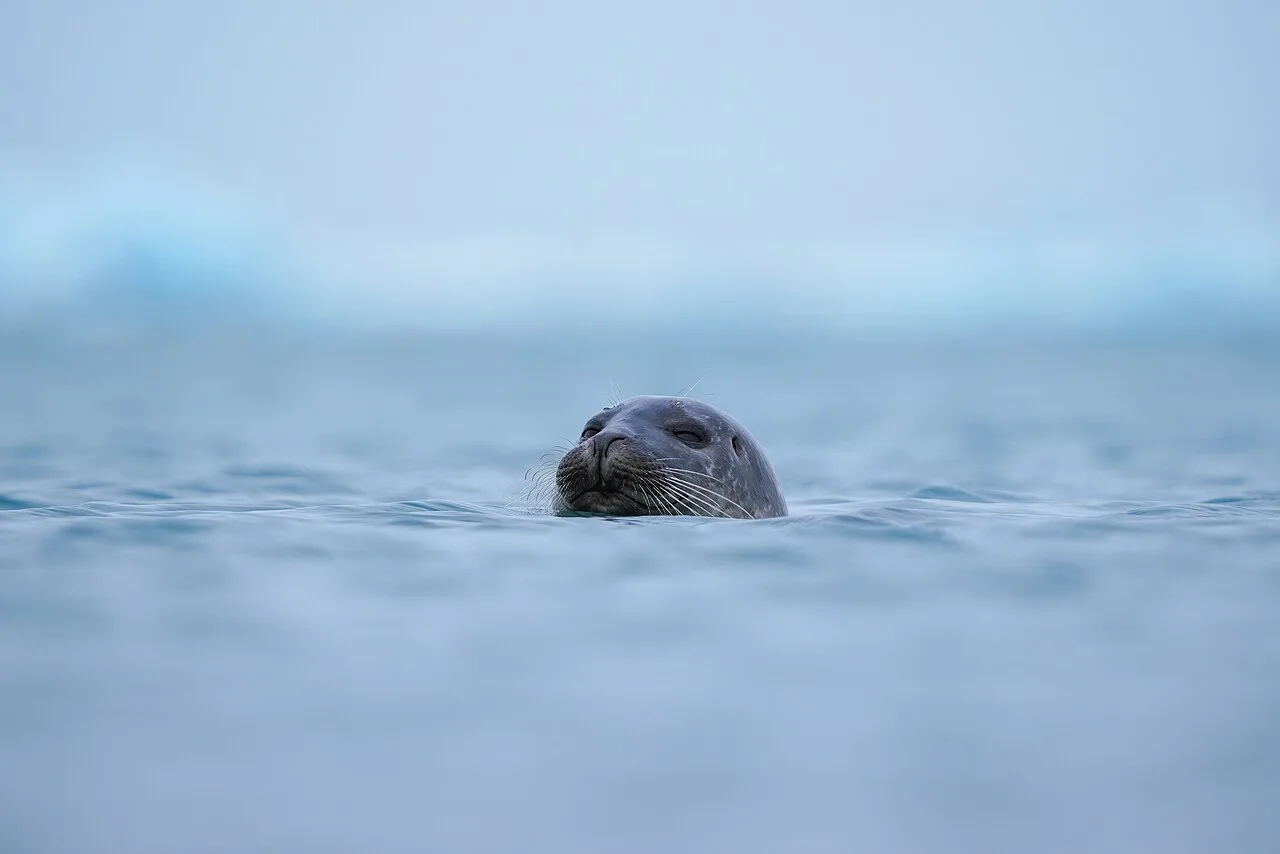
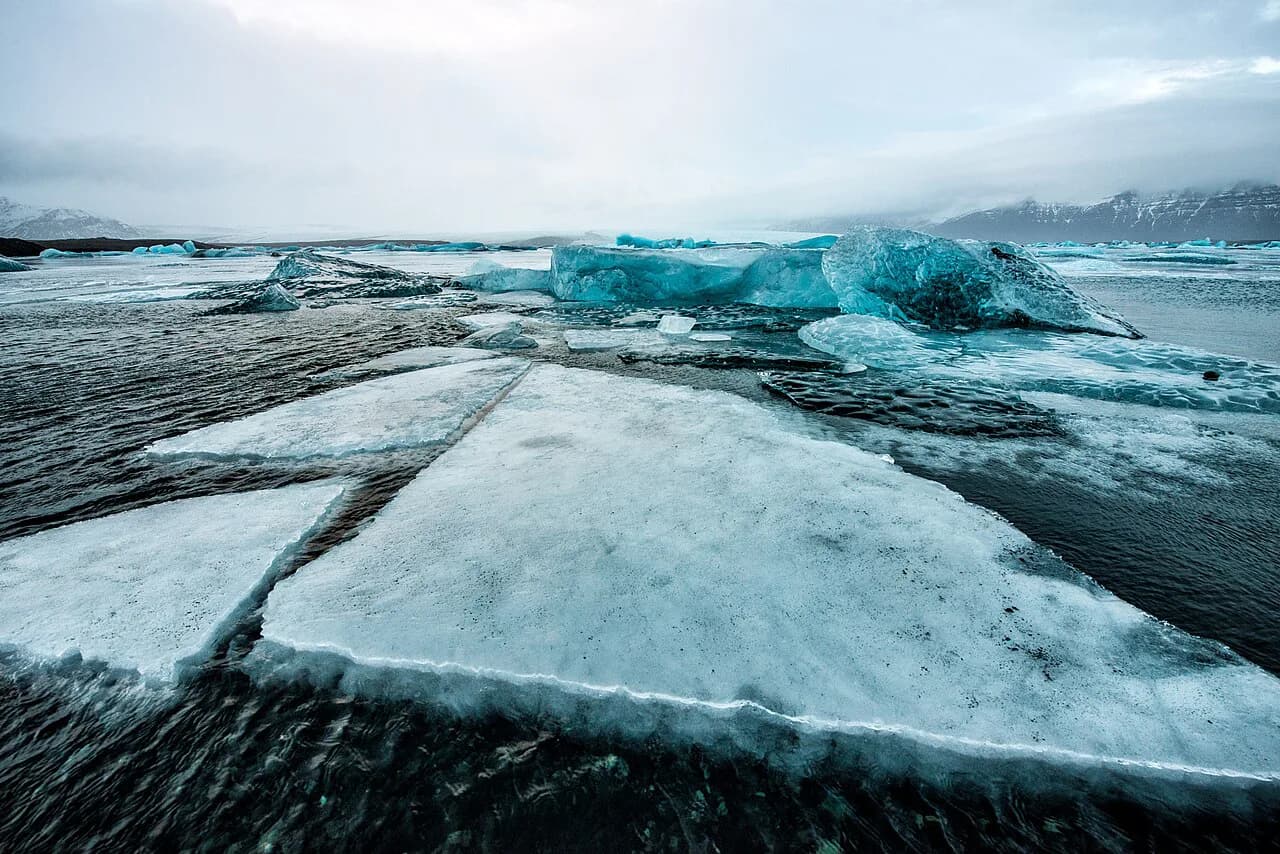
Floating ice is a winter sight here, and measurements of ice coverage on the lagoon peak in February and March, according to Guide to Iceland's analysis of the lagoon's seasons. January already delivers the essential ingredients: calved icebergs from Breidamerkurjökull, seals resting on the ice, and a low sun that lights the bergs from the side for much of the short day.
The trade-off is daylight. January gives you a narrow window of usable light, so plan the lagoon shoreline and Diamond Beach for midday and keep the darker hours for ice caves and aurora watching. That rhythm is what makes a January visit feel different from a summer stop, when you could linger until late evening.
How far north it is and why the aurora shows over the lagoon
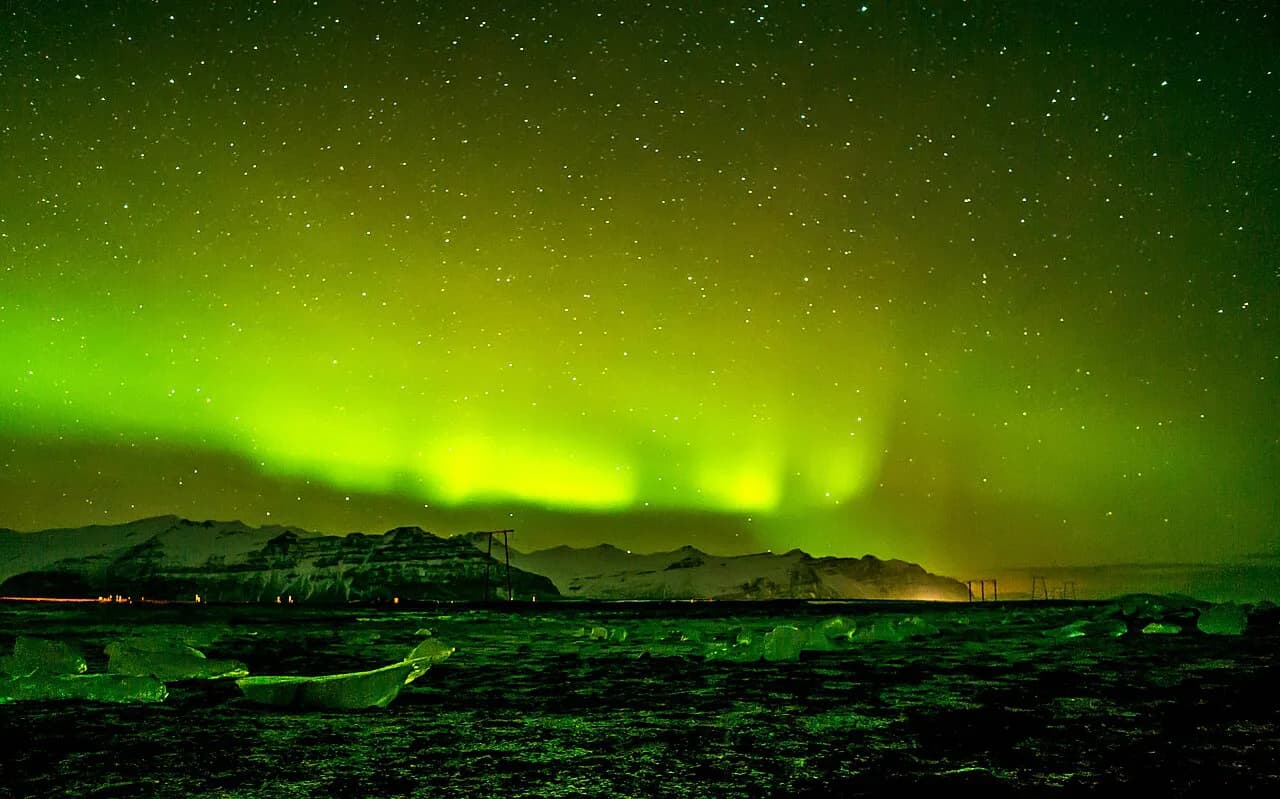
Jökulsárlón sits in southeast Iceland directly off Route 1, roughly 370 km east of Reykjavík by the lagoon operator's own measure. It lies under the auroral oval, so geomagnetic activity that would be invisible farther south can light the sky here; Kp forecasts are guidance only, and a clear sky matters as much as solar activity.
Guide to Iceland's review of 89 years of cloud records finds this corner of the southeast has the clearest winter skies in the country, which is the real reason the lagoon has a reputation for reflections. The still water and pale ice give the aurora something to mirror, but cloud can shut the show down on any given night.
January daylight, cloud and temperatures in southeast Iceland
Expect very short days and long nights, with daylight compressed into a few mid-morning to mid-afternoon hours; the precise sunrise and sunset shift through the month, so check the Icelandic Met Office sunrise table for your dates. Cloud is the variable you cannot book around, and the source's cloud-record analysis is the best general guide to your odds rather than any daily forecast.
Glacier lagoon water holds at roughly 0 to 3°C year-round, which tells you how cold the environment is even before air temperature is factored in. Snow and ice on the access paths and car park are normal in January, and the low sun means shaded stretches of road can stay slick all day.
Is January worth it compared with February, March or April
For ice caves specifically, February tends to edge January: Guide to Iceland's analysis of 31 years of weather data identifies February as the safest month for ice cave tours, with the most days below freezing and the fewest freeze-thaw cycles. If the cave is your main reason for coming, a February date is the stronger bet.
For sheer quantity of floating ice, February and March measure highest, and April keeps considerably more ice than summer while giving you longer days and milder weather. January wins on darkness and atmosphere; late winter wins on ice volume, cave stability and daylight. Choose January if you want the deepest nights, and February if you want the month that stacks the odds.
Ice cave tours on Vatnajökull from the lagoon
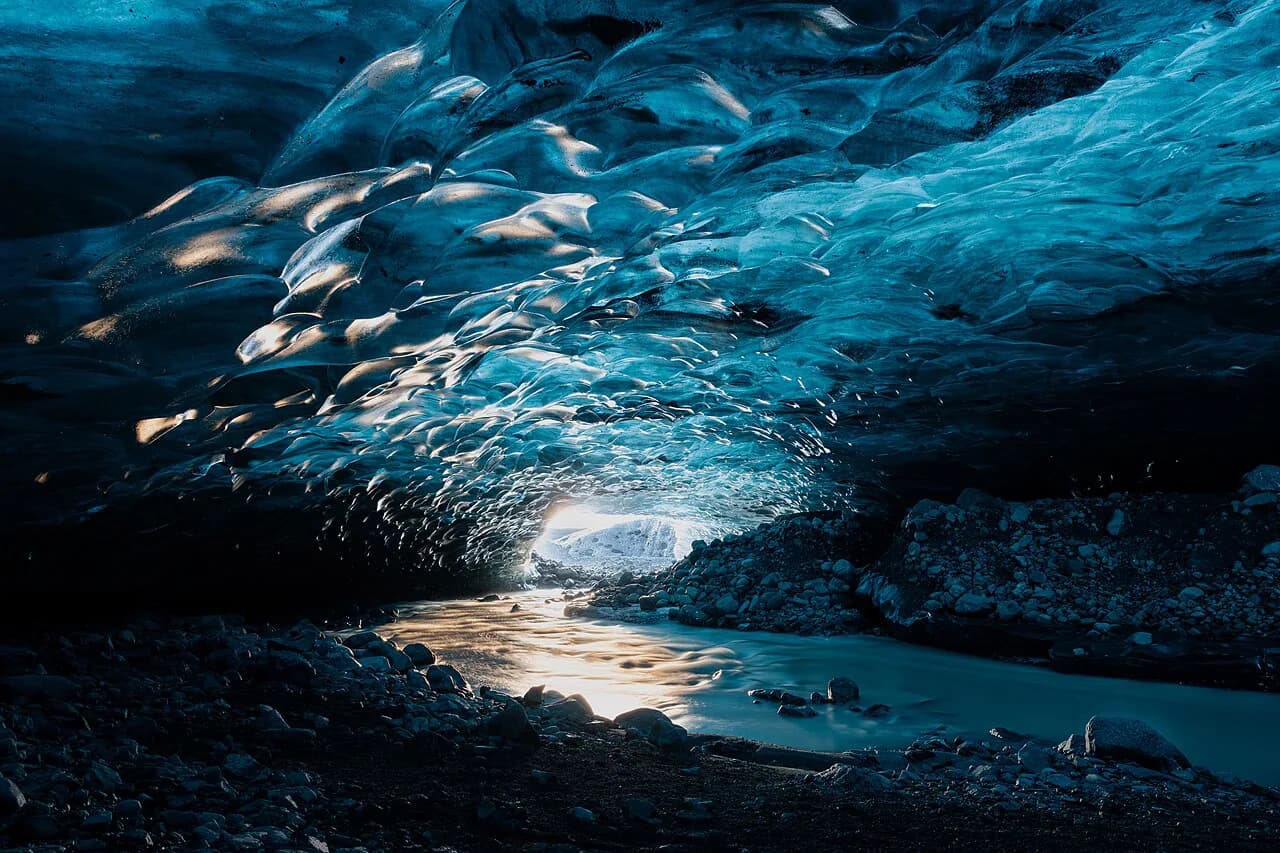
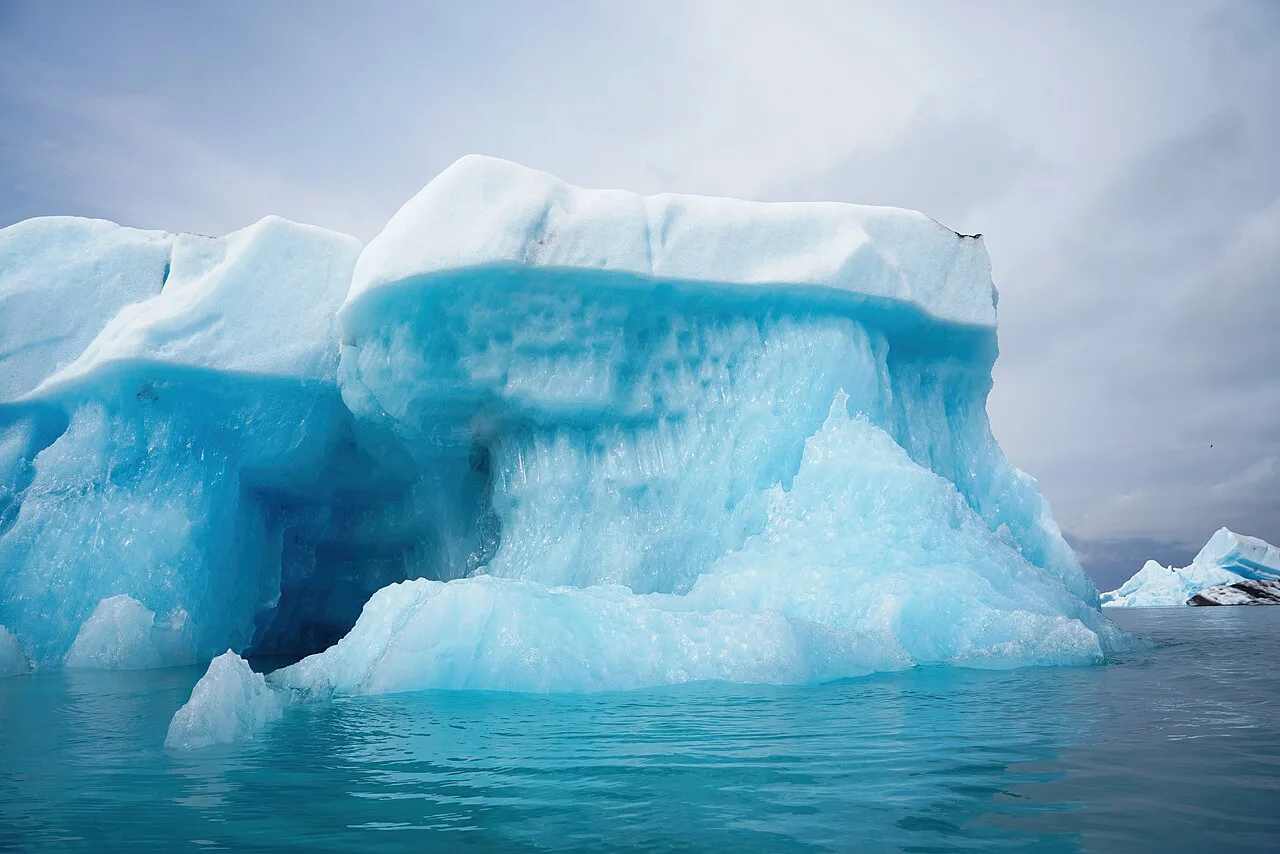
Guided ice cave tours from the lagoon typically run from mid-October to April, putting January squarely in season. The Crystal Ice Cave is the headline trip, entered with a guide and all safety gear, and the experience is entirely about being inside the glacier rather than viewing it from outside.
The operator's own two-and-a-half to three-hour Vatnajökull glacier tour runs October to April, which fits an afternoon slot when daylight is scarce. Book ahead for January, since cave capacity is limited and demand spikes around the holiday weeks.
What runs and what does not: boat tours, kayaking and glacier hikes in January
Boat tours usually operate from early May through October, with the amphibian boats listed May to November and the Zodiac May to October, so January is a shoreline month at the lagoon. That removes the option of getting close to the ice from the water, but it also means fewer people between you and the view.
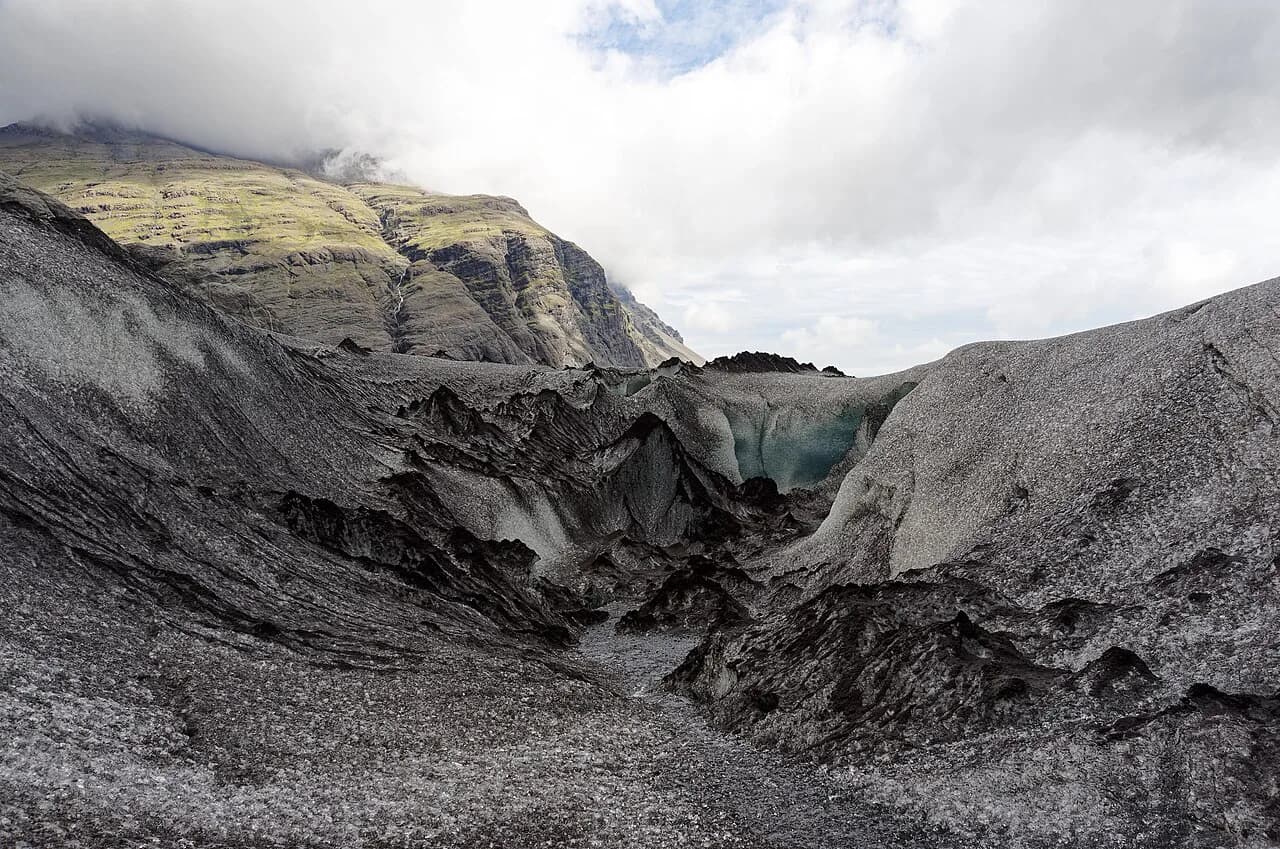
Kayak tours typically run May to September depending on conditions, so they are out in January too. Guided glacier hikes on Vatnajökull run year-round with safety gear provided, which makes a winter walk on the ice a realistic alternative to the closed water-based trips.
For a fuller picture of what each season does and does not offer at the lagoon, the seasonal guide to the Jökulsárlón Glacier Lagoon in Winter sets out how the area changes from autumn into spring.
Where to watch the aurora near the lagoon
The lagoon shoreline and the car park area are the simplest dark-sky spots, with minimal light pollution and an easy walk back to the car. Across Route 1, Diamond Beach gives you open black sand and a clear horizon, but the roar of surf and shifting ice mean you should watch from a safe distance above the waterline rather than at the edge.
The lagoon's reflection is the reason photographers choose it over a random roadside pullout: still water doubles the aurora when the air is calm. If cloud builds over the coast, driving inland or west along Route 1 toward Skaftafell can put you under a different sky, which is the argument for a self-drive trip over a fixed tour. For a deeper guide, see Northern Lights at Jökulsárlón Glacier Lagoon.
Diamond Beach in January: access, safety and icebergs on black sand
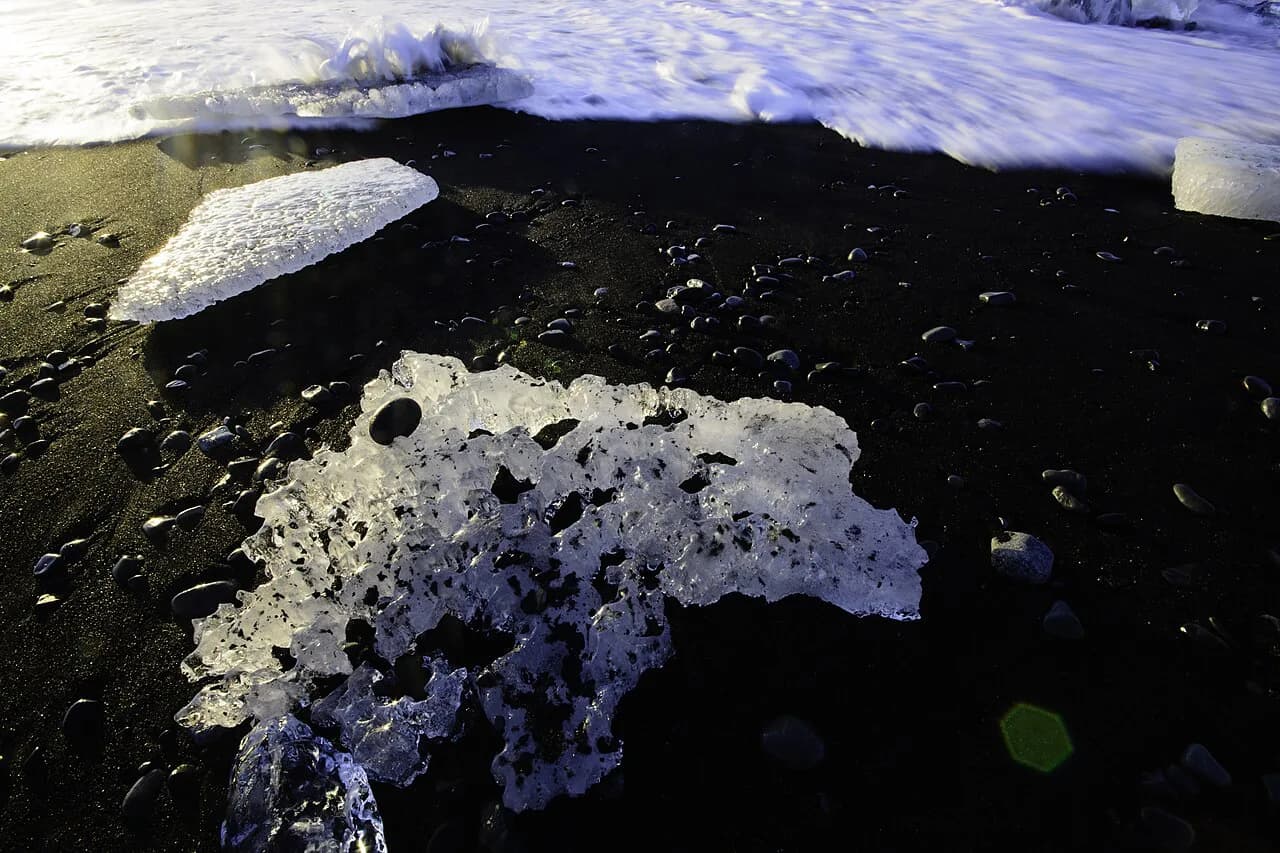
Diamond Beach sits directly across Route 1 from the lagoon, a five to ten-minute walk from the main parking area, and your lagoon parking ticket covers the Diamond Beach lots. Icebergs wash up on black volcanic sand, creating the contrast that makes the beach famous, but the same ice can flip or shift without warning.
Keep back from the water's edge and never climb on the ice; the source notes the water stays at 0 to 3°C year-round, which is cold enough to be dangerous within minutes. In January the beach is at its most dramatic with ice scattered thickly across the sand, but the short daylight means you should visit before dusk.
Driving to Jökulsárlón in January: Route 1, fuel stops and the Strætó bus alternative
The lagoon is about 380 km east of Reykjavík along Route 1; the direct drive takes roughly five hours, and seven to eight hours if you stop along the South Coast. A round trip without an overnight stay runs over ten hours, which leaves almost no margin for weather delays, so plan to sleep near the lagoon in January.
There are no fuel stations at Jökulsárlón; the nearest are in Höfn to the east and the Skaftafell area to the west, so fill up in Vík before you reach the lagoon. Route 1 is fully paved to the lagoon, but winter weather can close or slow sections with little notice, so allow slack in your itinerary rather than a tight schedule.
Strætó bus route 52 runs from Reykjavík to Höfn with a stop at Jökulsárlón, and the service does not run on Mondays and Wednesdays, so check the live timetable on straeto.is before relying on it. Once you arrive, onward transport in the area is very limited, which makes a car the more practical choice if you want to chase clear skies.
If your January trip is part of a wider winter route, the Iceland in January guide covers the national picture of roads, daylight and conditions beyond the southeast.
Parking, café hours and on-site services in midwinter
Parking costs 1,000 ISK per standard car per day, paid through the Parka app or at on-site kiosks, and the ticket also covers Diamond Beach across the road. If you already paid for parking at Skaftafell National Park earlier the same day, you are eligible for a 50 percent discount at Jökulsárlón through Parka.
The café opens year-round apart from 24 to 26 December and 31 December to 2 January, and in December to February its hours are 09:00 to 17:00, giving you a warm refuge in the middle of the short day. On site you also find restrooms, a food truck and information boards about the lagoon's formation and wildlife.
Where to stay: Glacier Lagoon Hotel, Fosshotel and Höfn bases
Glacier Lagoon Hotel is the closest luxury option, about 11 km from the lagoon and Diamond Beach, with a restaurant on site. Fosshotel Glacier Lagoon sits between Skaftafell and the lagoon, making it a practical base for glacier hikes and ice cave tours, while Hotel Smyrlabjörg is a quieter family-run countryside choice within driving distance.
Arnanes Country Hotel just outside Höfn suits travelers continuing east or visiting Vestrahorn, and Höfn itself gives you more dining and fuel options than the lagoon area. Accommodation close to the lagoon is limited, so book early for the northern lights season, and check the Fosshotel Glacier Lagoon guide if you want a mid-point base.
Nearby winter stops: Fjallsárlón, Skaftafell and Vestrahorn
Fjallsárlón, just west of Jökulsárlón, offers a quieter glacier lagoon with fewer crowds and icebergs beneath the Fjallsjökull glacier tongue. Skaftafell is about 45 minutes west, known for the Svartifoss waterfall framed by basalt columns and for hiking trails, and it is a popular base for guided glacier hikes.
Vestrahorn rises about an hour east of Höfn, with jagged peaks above black sand dunes that photograph well in low winter light. Múlagljúfur Canyon, roughly 25 minutes west of Jökulsárlón, rewards hikers with cliff views and waterfalls on a moderately challenging trail.
The wider region sits inside Vatnajökull National Park, which has framed the lagoon since 2017, so expect national-park rules on where you can walk and park.
How many nights to plan for a fair chance of clear skies
Two nights near the lagoon is the minimum if the aurora is part of your plan, since cloud and geomagnetic activity rarely align on demand. Three nights gives you room for a lost day to weather, a second attempt at the aurora and a relaxed ice cave tour without squeezing everything into one short daylight window.
Base yourself in one place rather than splitting nights between Höfn and Skaftafell; you will spend less time driving in the dark and have more options when a clear patch opens up. Keep the itinerary loose so a promising forecast can pull you away from dinner or an early night.
Who January at Jökulsárlón suits
January fits travelers who value dark skies, floating ice and an ice cave over boat rides and long hikes, and who are comfortable driving Route 1 in winter conditions. It is a poor match for anyone who wants a full menu of activities or a quick day trip from Reykjavík.
If ice volume and cave stability matter more than deep nights, shift to February; if you want more daylight and milder weather with ice still in the lagoon, consider April. Book the cave tour and the hotel early, watch the cloud and aurora forecasts in the final week, and treat any sighting as a gift rather than a guarantee.
Frequently Asked Questions
Is Jökulsárlón worth visiting in January?
Yes, if you want the lagoon in its winter mood: icebergs drifting toward the Atlantic, Diamond Beach across the road, and ice cave tours on Vatnajökull. Boat tours are not running, and daylight is short, so plan around ice caves, the shoreline and aurora watching rather than water-based trips.
Can you see the northern lights at Jökulsárlón in January?
You can, because January has long dark nights and the lagoon sits under the auroral oval with little light pollution. A sighting still depends on solar activity and clear skies, so allow a couple of nights and stay flexible about driving to a clearer patch of sky. Kp forecasts are a rough guide only.
Are boat tours running at Jökulsárlón in January?
No. The lagoon operator schedules boat tours from early May through October, so January visits are shoreline-only. Ice cave and guided glacier tours are the winter activities to book instead.
How long does it take to drive to Jökulsárlón from Reykjavík in winter?
The lagoon is about 380 km east of Reykjavík along Route 1, roughly five hours of direct driving or seven to eight hours with South Coast stops. A round trip in one day takes over ten hours, so plan to stay overnight and allow for weather delays.
Can you visit ice caves near Jökulsárlón in January?
Yes. Guided Vatnajökull ice cave tours typically run from mid-October to April, and the Crystal Ice Cave is the headline trip. Book ahead, since cave capacity is limited and the holiday weeks fill quickly.
Where should you stay near Jökulsárlón in winter?
Glacier Lagoon Hotel is the closest option at about 11 km, Fosshotel Glacier Lagoon sits between Skaftafell and the lagoon, and Hotel Smyrlabjörg offers a quieter countryside stay. Höfn, farther east, gives you more dining and fuel options and suits travelers heading toward Vestrahorn.
How much time should you spend at Jökulsárlón?
Aim for at least two nights in the area and three if the aurora matters to you. The lagoon itself takes an hour or two, but short daylight and uncertain weather mean extra nights give you room for an ice cave tour, Diamond Beach and a second chance at clear skies.
Sources
Notes for your Arctic winter trip
Optional updates to our northern lights guides.
You might also like
Continue reading
More guides you'll find useful