Jökulsárlón in March: Ice Caves, Daylight and Aurora Nights
Plan Jökulsárlón in March with dark aurora nights, stable ice-cave conditions, lengthening daylight and boat trips that hinge on the day's weather.
On this page
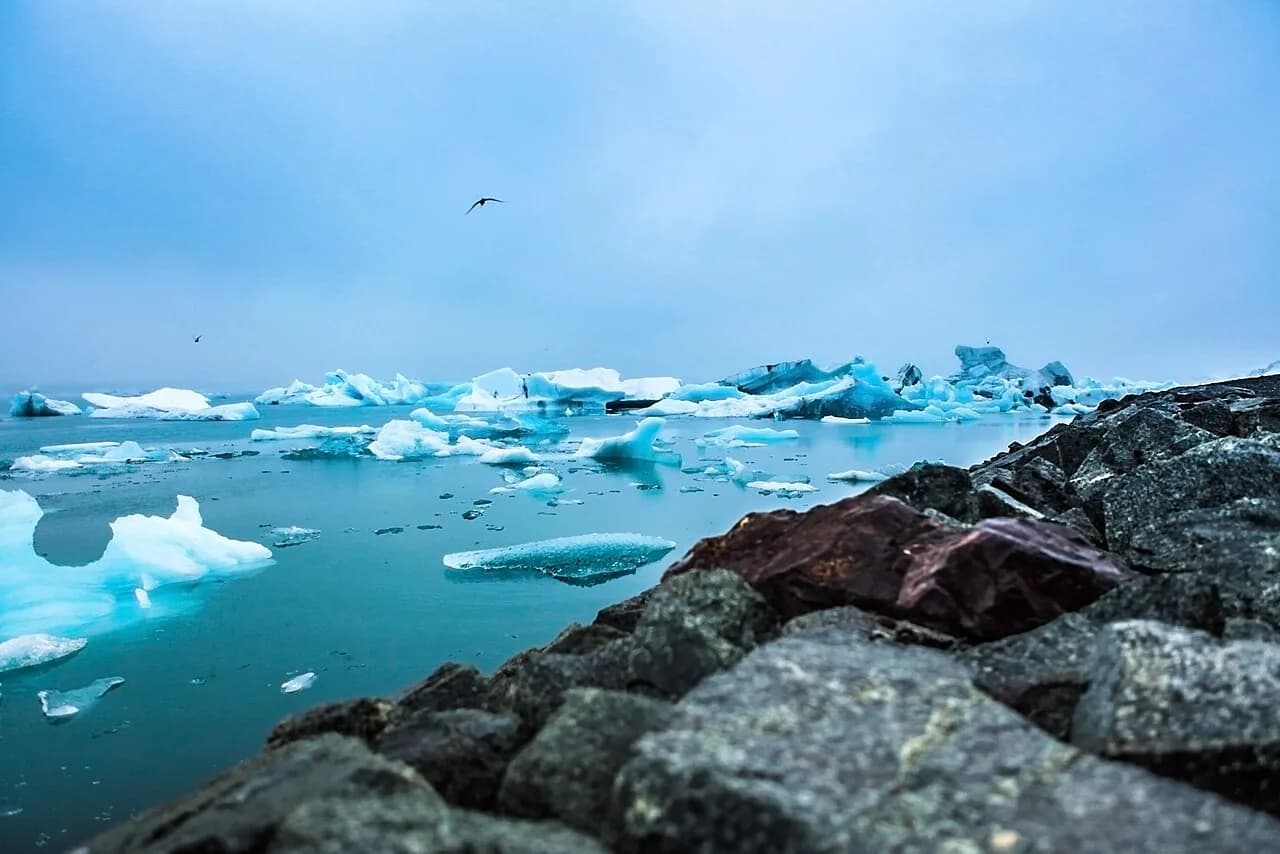
Jökulsárlón delivers a winter scene that few places in Iceland match: icebergs calved from Breiðamerkurjökull drifting across a teal lagoon and washing up as ice chunks on the black sand of Diamond Beach. March suits travelers who want the ice-cave season still open, enough daylight to drive the south coast without rushing, and long dark nights for a genuine aurora attempt. It rewards a two-night stay rather than a quick stop.
The month sits in the overlap between deep winter and the lengthening days of spring, so you can pair a daytime glacier or lagoon excursion with an evening spent watching the sky. Light pollution here is minimal, which makes the lagoon one of the more convincing dark-sky bases on the Ring Road.
Why March suits Jökulsárlón
March gives you two usable halves of the day. Dark nights remain long enough for aurora watching, while daylight is stretching out across the south coast, so the five-hour drive from Reykjavík no longer has to be squeezed into a short window. The lagoon itself stays a low-light-pollution site: with no town on its doorstep, the main obstacle to a sighting is cloud rather than glow from streetlights.
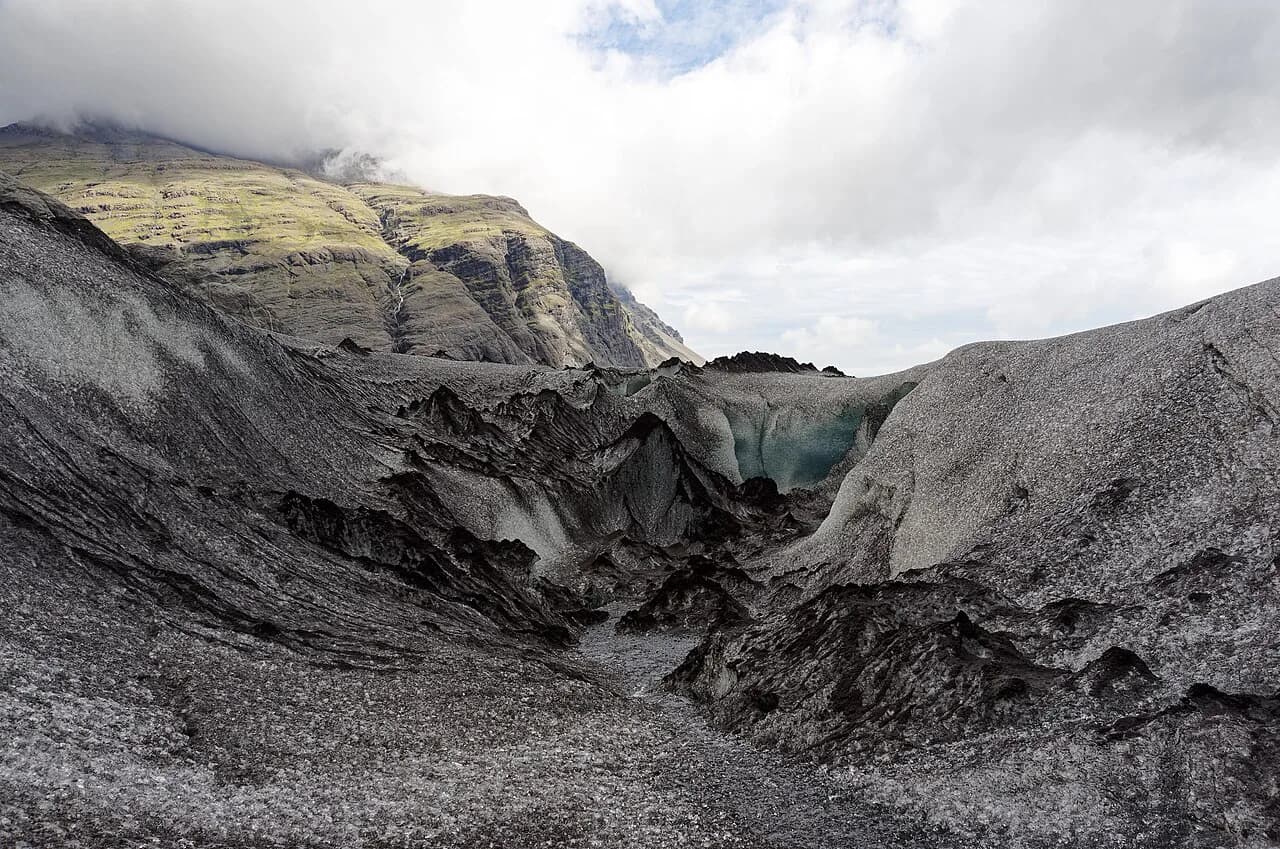
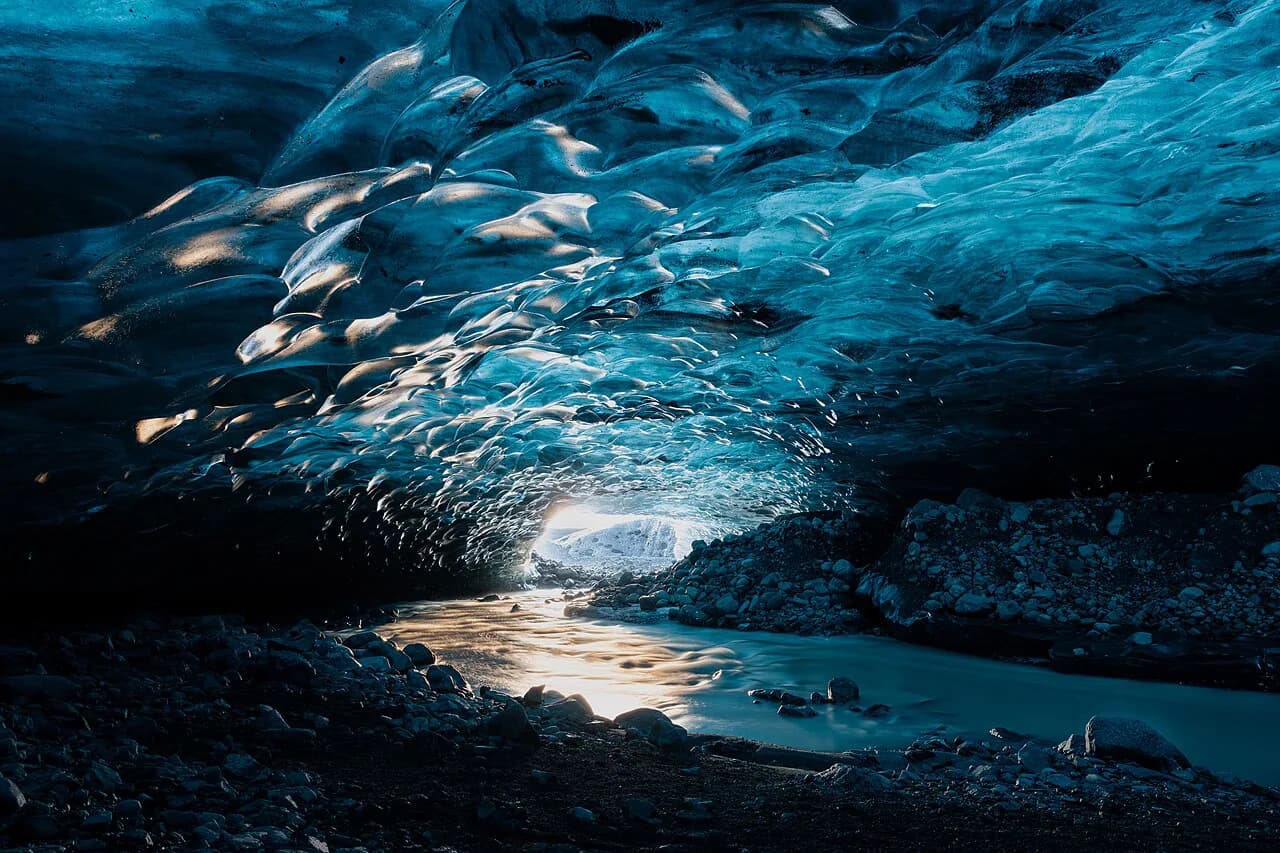
The ice caves under Breiðamerkurjökull are still in their stable season in March, which is the strongest practical argument for visiting now rather than in April. Colder weather keeps the cave ice stable to enter, and the well-known blue cave tends to form in the same place each year, carved with natural patterns by meltwater. Book a guided ice-cave tour rather than approaching the glacier alone.
Where the lagoon sits on the Ring Road
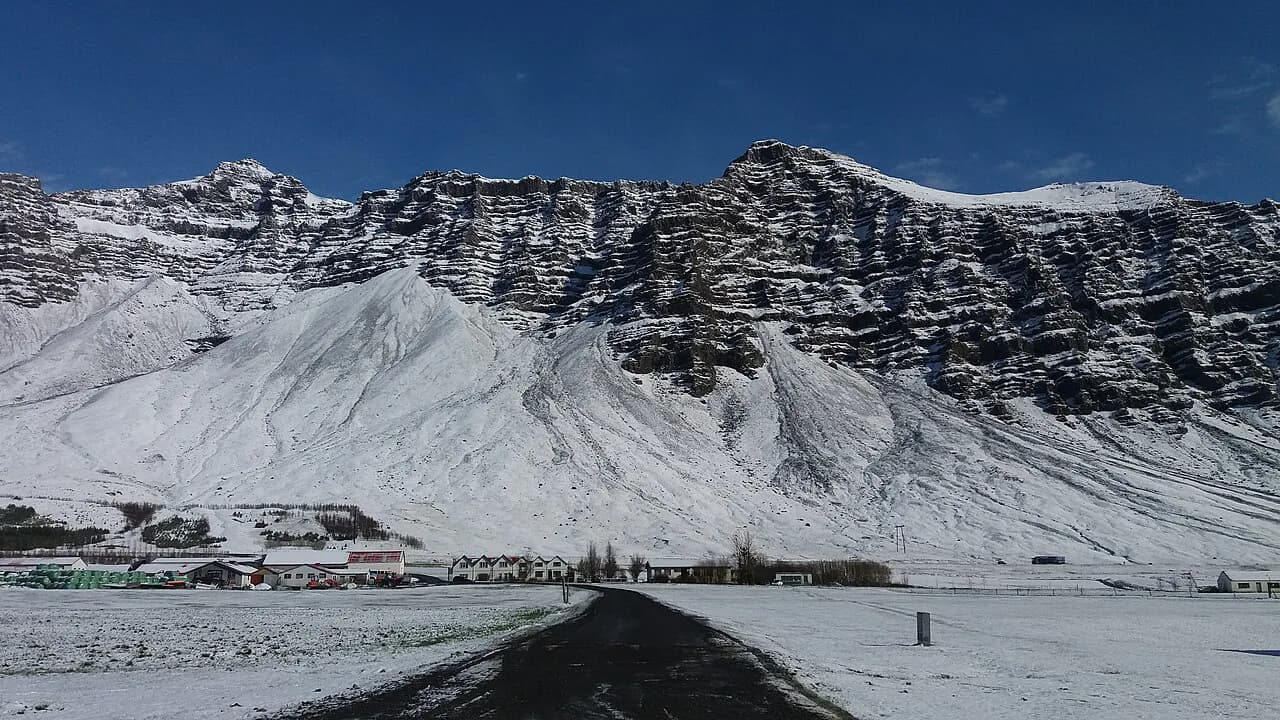
Jökulsárlón lies in southeast Iceland on Route 1, the Ring Road, at the edge of Vatnajökull National Park and beneath Hvannadalshnúkur, the country's highest mountain. The lagoon sits roughly 380 km, or about five hours of driving, east of Reykjavík, so most travelers break the journey at Vík or follow the Golden Circle before joining the Ring Road.
Diamond Beach, known locally as Fellsfjara, sits directly across the road, so you can walk from the lagoon shore to the surf line in minutes. That proximity is what makes an overnight stay worthwhile: you get one session at the lagoon and one on the beach without repeating the drive.
Daylight and conditions in March
March days lengthen quickly, which changes how you structure a visit: driving the south coast becomes more forgiving, and you can fit a boat tour or a glacier walk into daylight before the aurora window opens after dark. Snow and ice remain part of the picture on the road and at the lagoon, so a vehicle suited to wintry conditions matters more than raw speed on Route 1.
Treat exact March temperatures and daylight minutes as something to confirm close to departure against the Icelandic Met Office forecast, and pair it with the road authority's route status before you set out from Vík. The pattern that matters most is the split: bright, usable days and genuinely dark evenings rather than the near-continuous gloom of midwinter. For a broader month-by-month view of conditions across the island, the Iceland in March guide covers the trade-offs.
Aurora chances in March
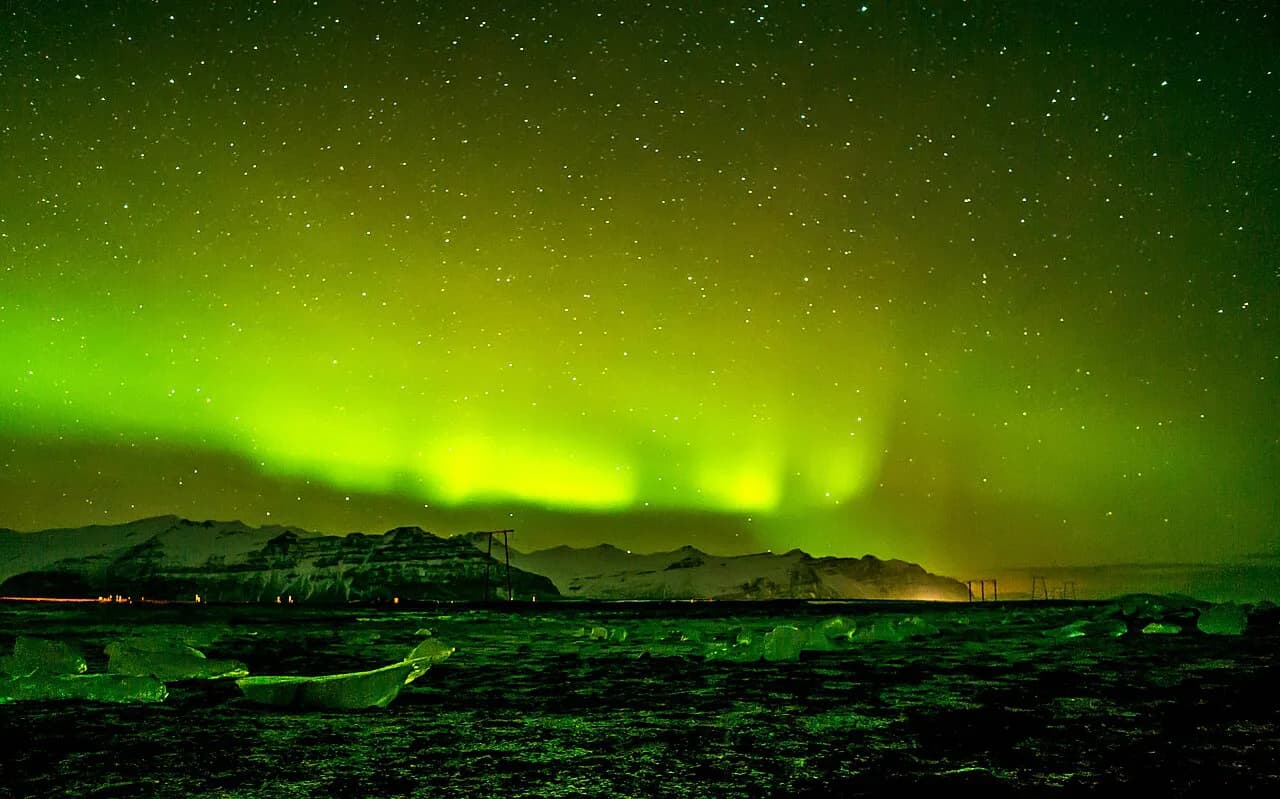
A sighting depends on two things you cannot book: solar activity that sends charged particles into the upper atmosphere, and clear skies over the lagoon. March still offers long dark hours, and the surrounding countryside has very low light pollution, so when a gap opens in the cloud you have a real chance of seeing the aurora reflected over the ice. Kp forecasts are guidance only; treat them as a hint about activity, not a promise.
Cloud is the variable that decides most nights on Iceland's south coast, and the coast and the inland glacier edge often behave differently, so flexibility beats a fixed plan. Watching from the lagoon shore or from Diamond Beach lets you stay close to shelter and the car while keeping the northern horizon open. Operators run guided aurora hunts from this area, and joining one adds local weather reading and transport on icy roads.
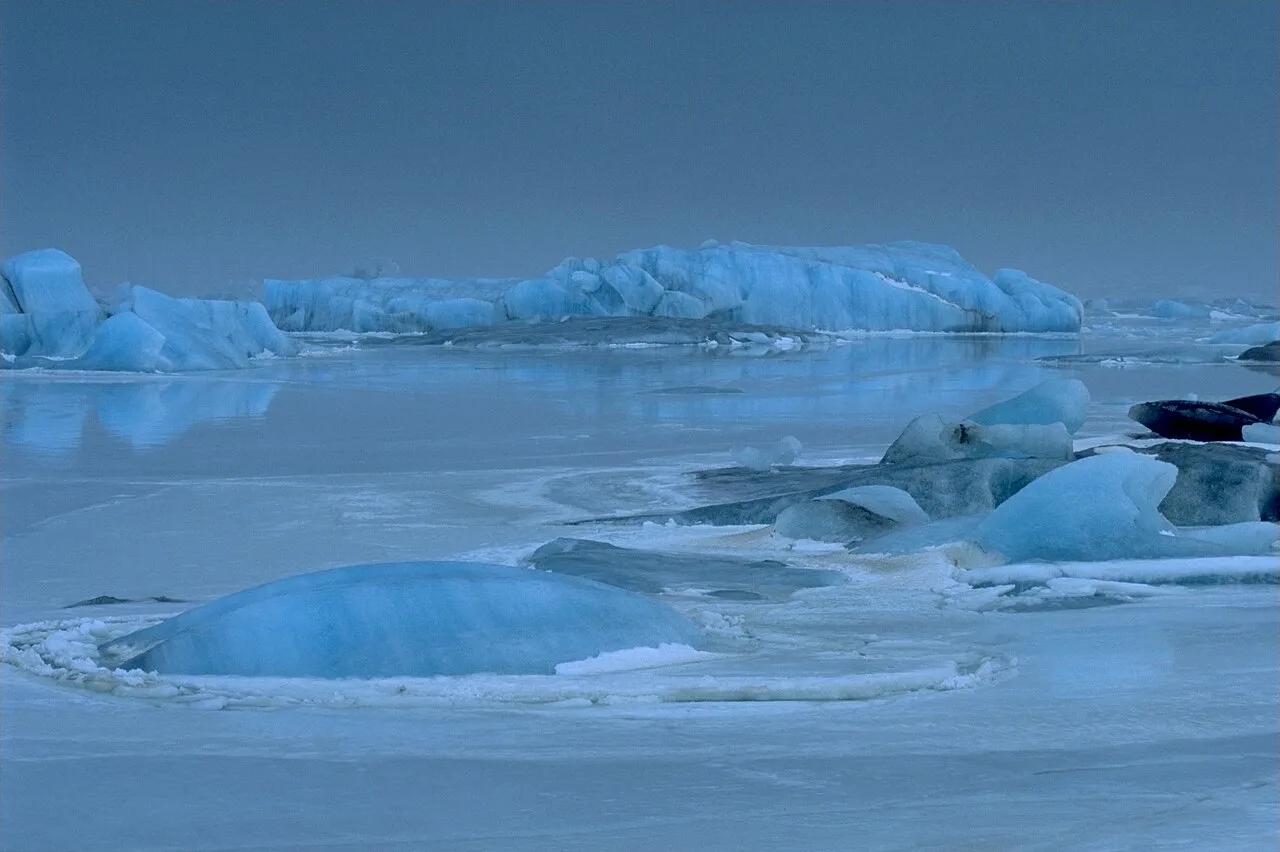
Ice caves under Breiðamerkurjökull
The blue ice cave forms in Breiðamerkurjökull, one of the tongues of Vatnajökull, and the stable window for walking inside it runs from October to March. Local operators handle the approach and provide the all-terrain transport needed to reach the cave, and a guide reads the ice conditions on the day. Outside that window the caves become unstable and visits stop.
For a closer look at how the cave tours run, route options and what a guided visit to the blue ice involves, the crystal ice cave guide pairs well with a lagoon stay. Expect a half-day commitment once transport and the walk are included, which is another reason to sleep nearby instead of driving back to Reykjavík the same evening.
Boat tours and kayaking on the lagoon in March
The amphibious boat tours do not run in March, so plan on seeing the lagoon from the shore rather than from the water. Any lagoon boating in March depends on the weather that day, and operators make the call once they see the conditions, so build slack into your itinerary instead of scheduling a boat trip on your only morning.
Kayaking on the lagoon is a summer activity, when guided trips let you paddle close to the ice and operators supply dry suits because the water stays cold. In March, treat the shoreline as your viewing platform, keep off the floating ice and stay out of the water: the floes are less stable than they look and can tip or break, and the water is cold enough to cause trouble fast.
Diamond Beach across the road
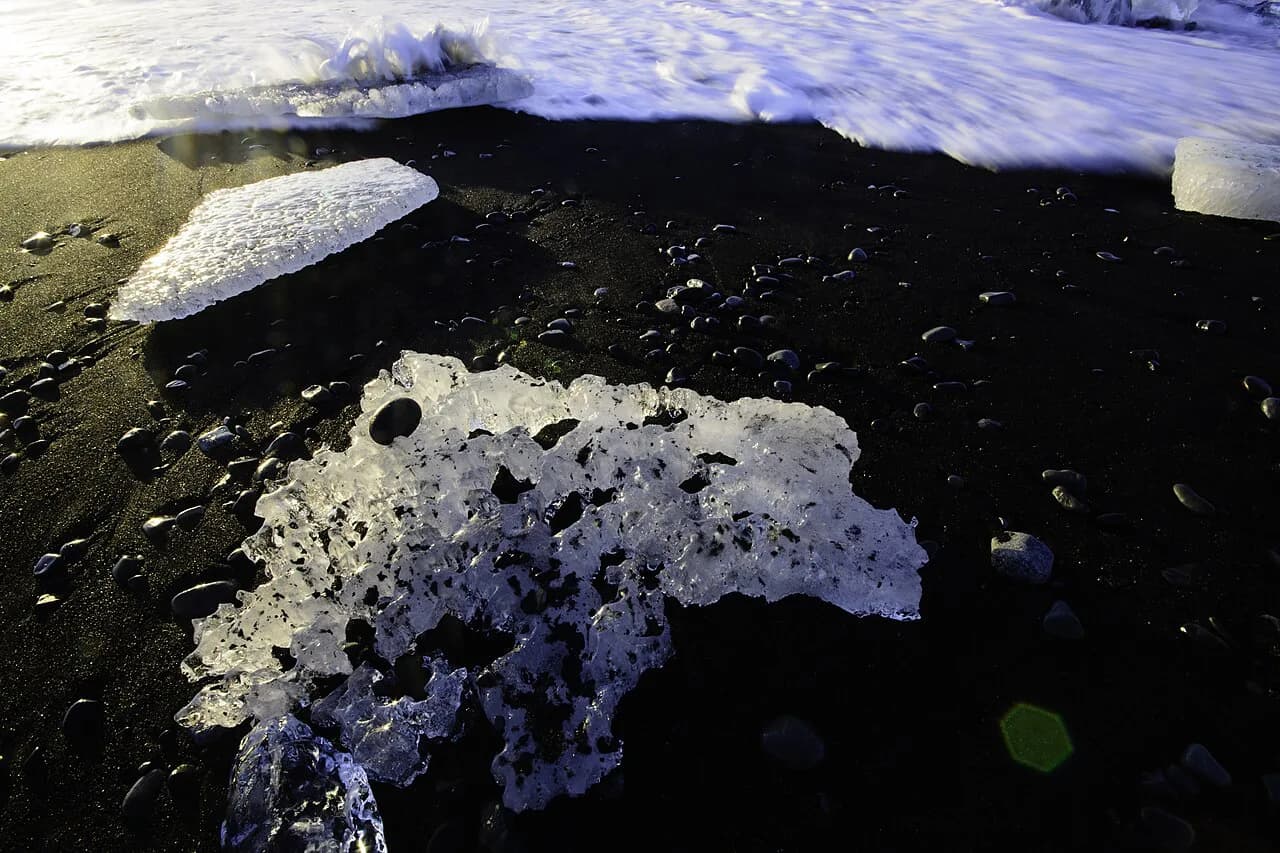
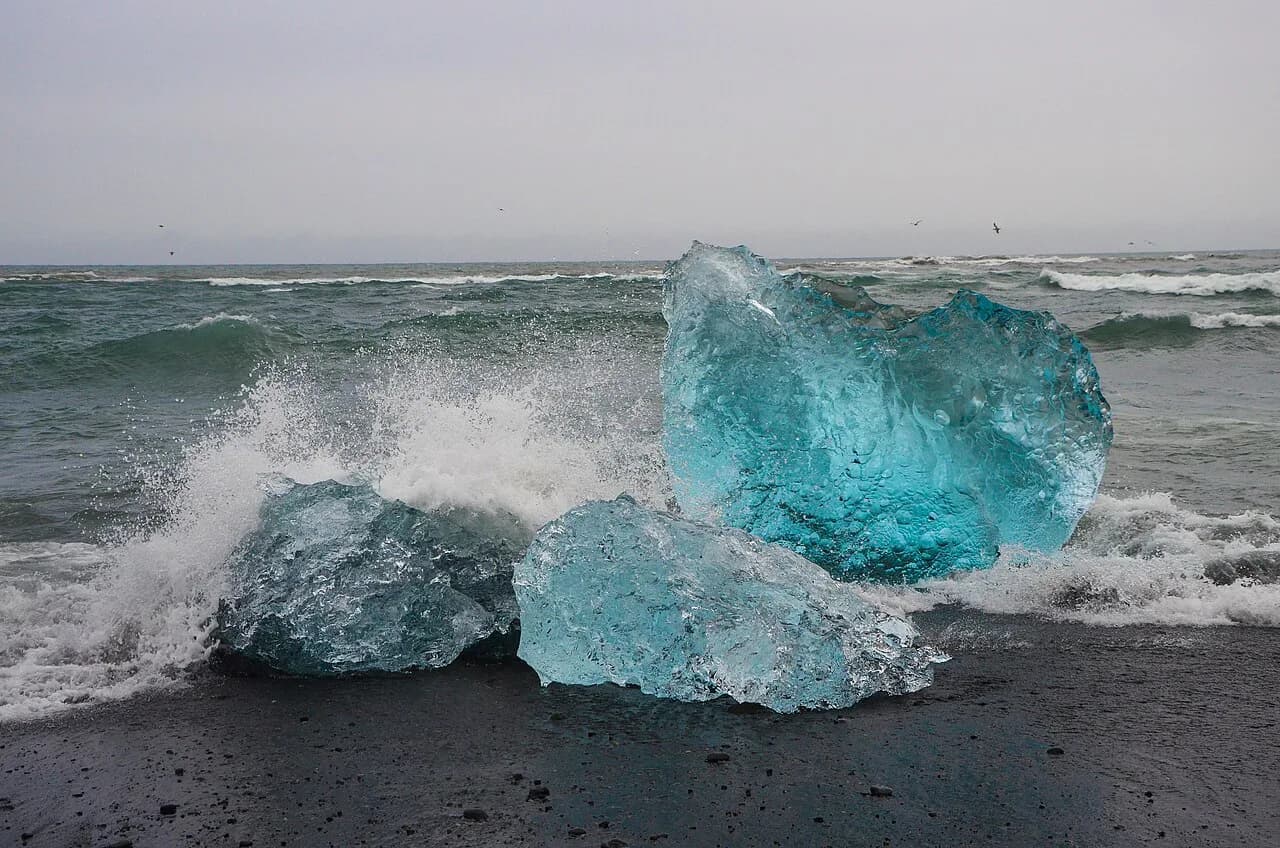
Icebergs that leave the lagoon get pushed through a narrow channel and wash up on the black sand at Diamond Beach, where they glitter against the dark shoreline. The beach is open year round, but the surf line deserves respect: rogue waves can reach further up the sand than expected, so keep a margin between yourself and the water, especially when you are focused on a camera.
Time your beach visit around the tide rather than treating it as a fixed stop, and use the same outing for an evening aurora watch if the sky clears. Because the beach sits right on the Ring Road, it fits neatly into a two-night stay based near the lagoon.
Staying near the lagoon
You cannot stay at the lagoon itself, so plan a base within a short drive. Höfn and Hoffell lie about an hour away, with Höfn offering a fishing-town base and views toward Vatnajökull, while Hoffell has its own outlet glacier and geothermally heated outdoor hot tubs. Kirkjubæjarklaustur, about an hour and a half away, sits near three waterfalls and works well as a westward base.
Staying between Höfn and the lagoon shortens the final stretch on an aurora night and gives you a warm base to return to. A hotel such as Fosshotel Glacier Lagoon puts you close to both the lagoon and Skaftafell, which reduces night driving on icy roads.
For a fuller picture of what a winter stay here involves, including how the lagoon changes with the season, the Jökulsárlón Glacier Lagoon in Winter guide covers the practical side of the visit. Booking a room with a short drive to the shore matters more than luxury when your evenings are spent watching the sky.
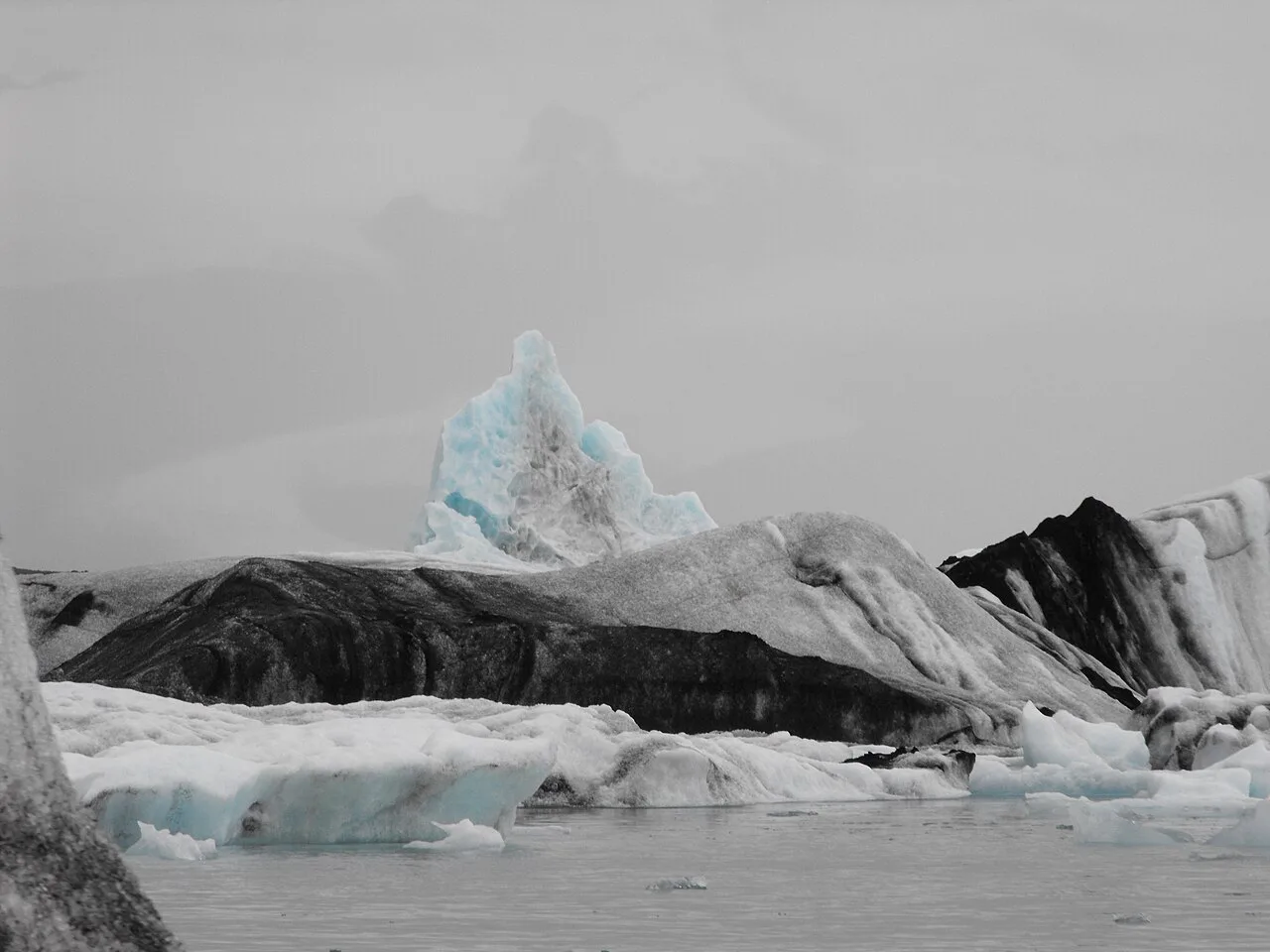
How many nights to allow
Two nights near the lagoon is a sensible minimum for a fair shot at clear skies, and three gives you room for a bad-weather day without losing the ice cave or the beach. The drive from Reykjavík takes most of a day, so arriving, sleeping and trying the sky on two separate evenings beats a single rushed overnight.
Plan the days so the flexible items, boat trips and aurora watches, sit on different dates, and keep the ice cave fixed because it needs a booked guide. If the forecast turns, chasing west toward clearer skies is possible, but it costs driving time on winter roads.
Who March at Jökulsárlón suits
March fits travelers who want the ice caves while they are still stable and who accept that lagoon boating may not happen. It suits photographers chasing icebergs and dark skies, and couples or small groups who would rather spend two nights in one place than race the Ring Road.
It is less suited to anyone counting on a boat ride or a guaranteed aurora display, and to travelers unwilling to drive in wintry conditions. If your priority is paddling among the ice, look at summer instead; if it is maximum dark hours, midwinter delivers more night, at the cost of shorter driving days.
Plan Your March Visit
Base yourself near the lagoon for at least two nights, book the ice cave in advance and hold the boat trip loosely, since March boating depends on the day's weather. Give the aurora two or three separate evenings on the shore or at Diamond Beach, and keep the drive from Reykjavík realistic at around five hours.
Check the Icelandic Met Office forecast and road conditions in the days before you travel, and treat any Kp reading as a hint rather than an outcome. Clear skies over a dark lagoon are what turn a March night here into the trip you came for.
Frequently Asked Questions
Is March a good time to visit Jökulsárlón?
March works well because two things overlap: the ice caves under Breiðamerkurjökull are still in their stable October-to-March window, and nights are long and dark enough for aurora watching while daylight is stretching out for the drive along the south coast. The trade-off is on the water, since the amphibious boat tours pause for the season and any lagoon boating depends on the weather that day.
Can you see the northern lights at Jökulsárlón in March?
It is possible, but never guaranteed. A sighting needs solar activity plus clear skies, and the lagoon's advantage is its very low light pollution, so cloud is usually the deciding factor. Kp forecasts are guidance only. Give yourself two or three separate evenings on the shore or at Diamond Beach rather than a single attempt.
Can you visit ice caves near Jökulsárlón in March?
Yes, the stable season for walking inside the blue ice cave in Breiðamerkurjökull runs from October to March. Go with a local operator, who handles the all-terrain transport and judges conditions on the day, and treat the cave as a half-day commitment once travel and the walk are counted.
Are boat tours running at Jökulsárlón in March?
The amphibious boat tours do not operate in March, so plan to view the lagoon from the shore. Kayaking is a summer activity, with guides supplying dry suits because the water stays cold. Never swim in the lagoon or climb on the floating ice, which is less stable than it looks.
How far is Jökulsárlón from Reykjavík?
The lagoon sits roughly 380 km east of Reykjavík on the Ring Road, about five hours of driving, with Vík as a natural halfway stop. Höfn and Hoffell are around an hour away and Kirkjubæjarklaustur about an hour and a half, which makes an overnight near the lagoon more practical than a same-day return.
Where should you stay overnight near Jökulsárlón?
There is no accommodation at the lagoon itself. Höfn and Hoffell, both about an hour away, are the closest established bases, while Kirkjubæjarklaustur works well if you are heading west. A hotel such as Fosshotel Glacier Lagoon shortens the night drive to the shore and sits near Skaftafell.
How many nights do you need for a chance of clear aurora skies?
Two nights is a sensible minimum and three is better, giving you room for a cloudy spell without losing the ice cave or Diamond Beach. Put flexible plans such as aurora watches on different evenings, and keep the booked ice cave fixed, since it depends on a guide rather than the sky.
Sources
Notes for your Arctic winter trip
Optional updates to our northern lights guides.
You might also like
Continue reading
More guides you'll find useful