Northern Lights Colors: What Aurora Shades Mean in Europe
Green dominates most aurora displays, but strong geomagnetic storms add red, pink and purple. Learn what drives each color and where to watch in Lapland and Iceland.
On this page
A northern lights display is rarely one flat color. On an ordinary night under a dark Arctic sky you will usually see a green arc or curtain, sometimes edged with pink or violet, and on stronger nights a deep red glow can sit above the green. The physics behind that palette is the same everywhere in Arctic Europe, from a frozen lake outside Rovaniemi to a black-sand beach in Iceland.
Understanding which gas glows at which altitude changes how you read a forecast and how you watch the sky. It also explains why a faint, grey-looking band overhead can turn into a vividly colored image on your camera screen, and why chasing the rarest colors is mostly a matter of being out on the right night rather than choosing the right destination.
Why the aurora has colors at all
Charged particles funnelled down Earth's magnetic field collide with atoms and molecules in the upper atmosphere, and each collision excites those gases to release light at its own wavelength. The dominant gas at aurora heights is atomic oxygen, with molecular nitrogen taking over lower down, so the mix of colors you see depends on how deep the particles penetrate.
The aurora appears in a ring centred on the magnetic pole, which is why far-northern Europe sits under it so often. During quiet conditions that oval stays close to the pole and shows simple east-west arcs; as geomagnetic activity rises, the aurora brightens, becomes more complex and pushes further south, which is when lower-latitude viewers and richer colors come into play.
Green: the everyday aurora color
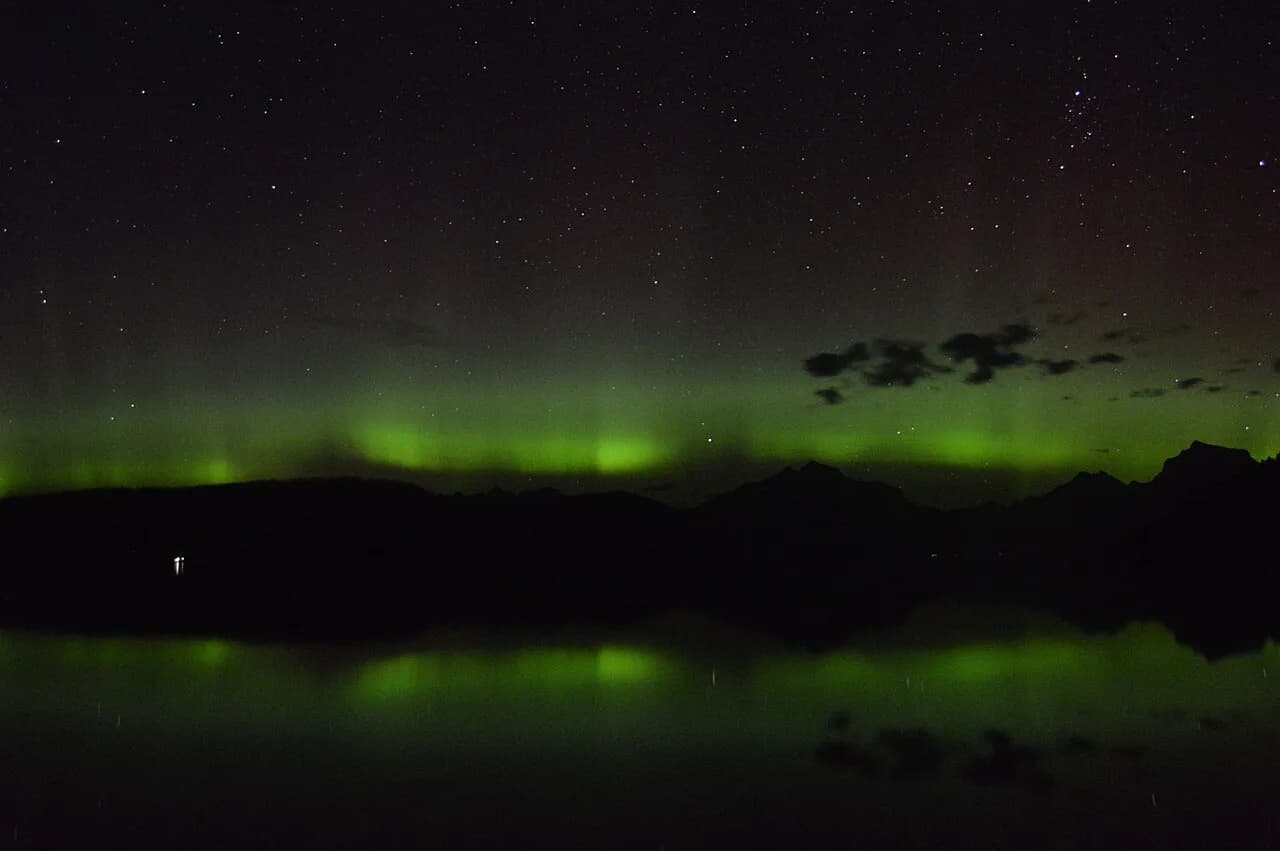
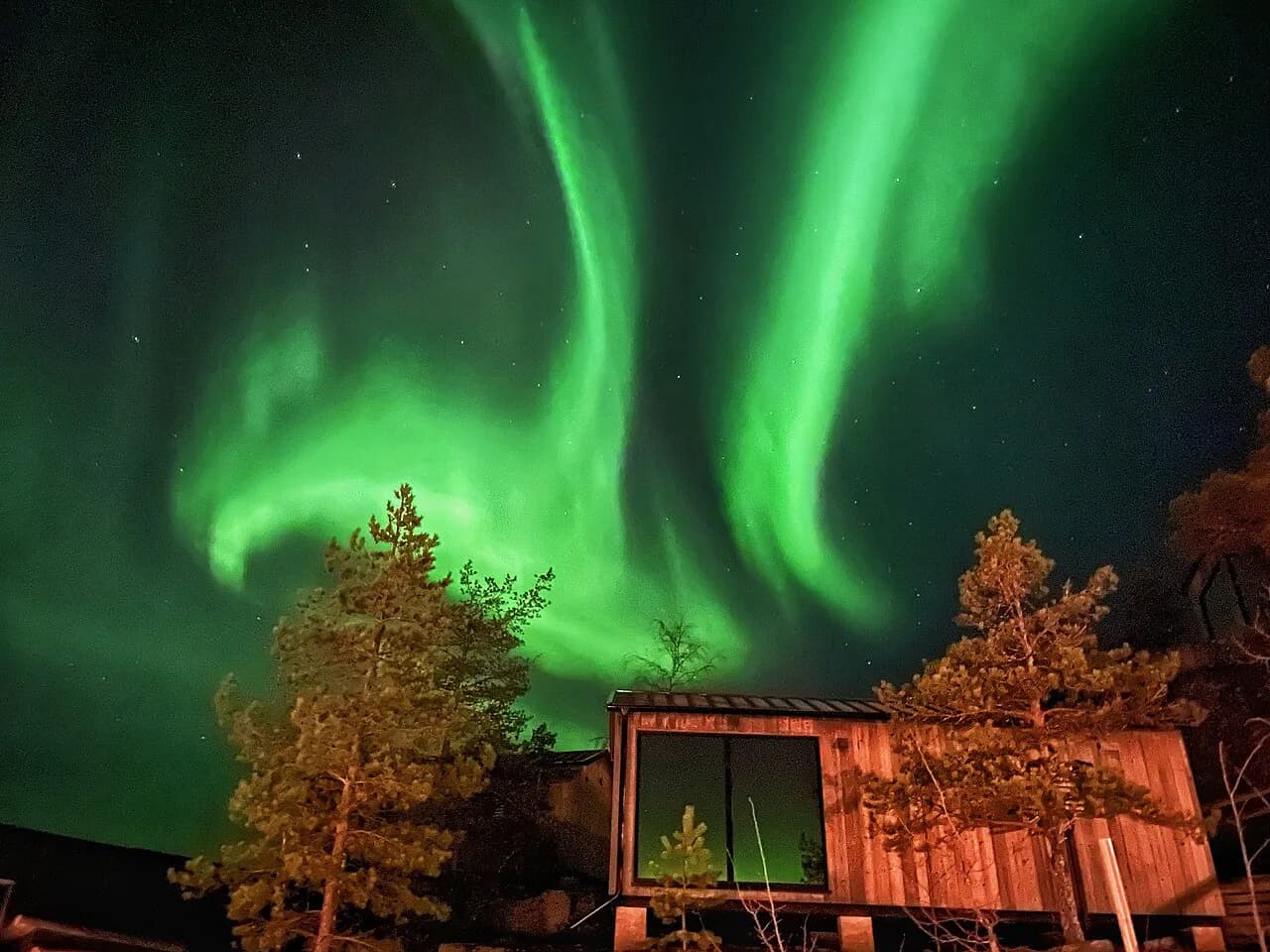
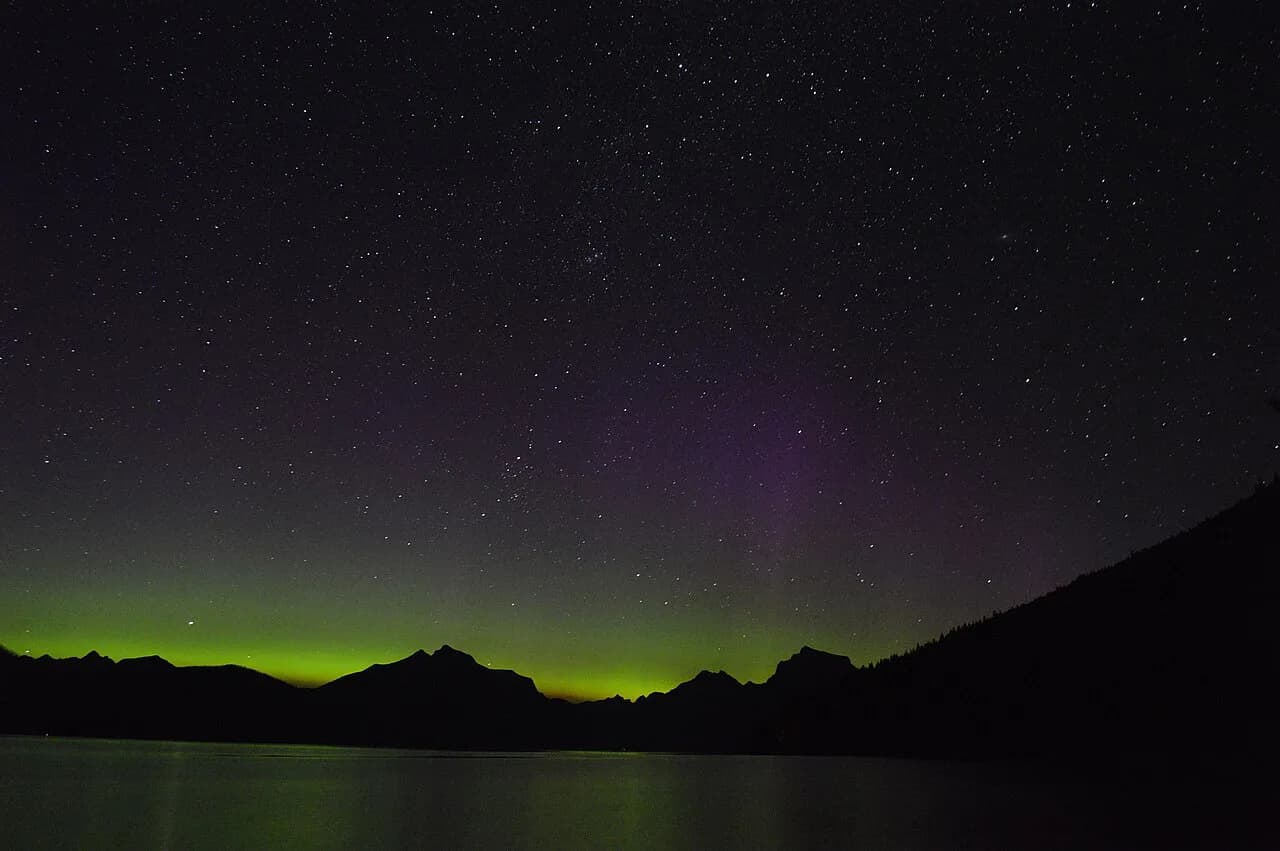
Green is what most travelers actually see, and it comes from atomic oxygen roughly 100 to 300 kilometres up, a band where that gas is abundant and the energy transition is efficient. The human eye is also most sensitive to green in dim light, so a green curtain reads more strongly than any other hue.
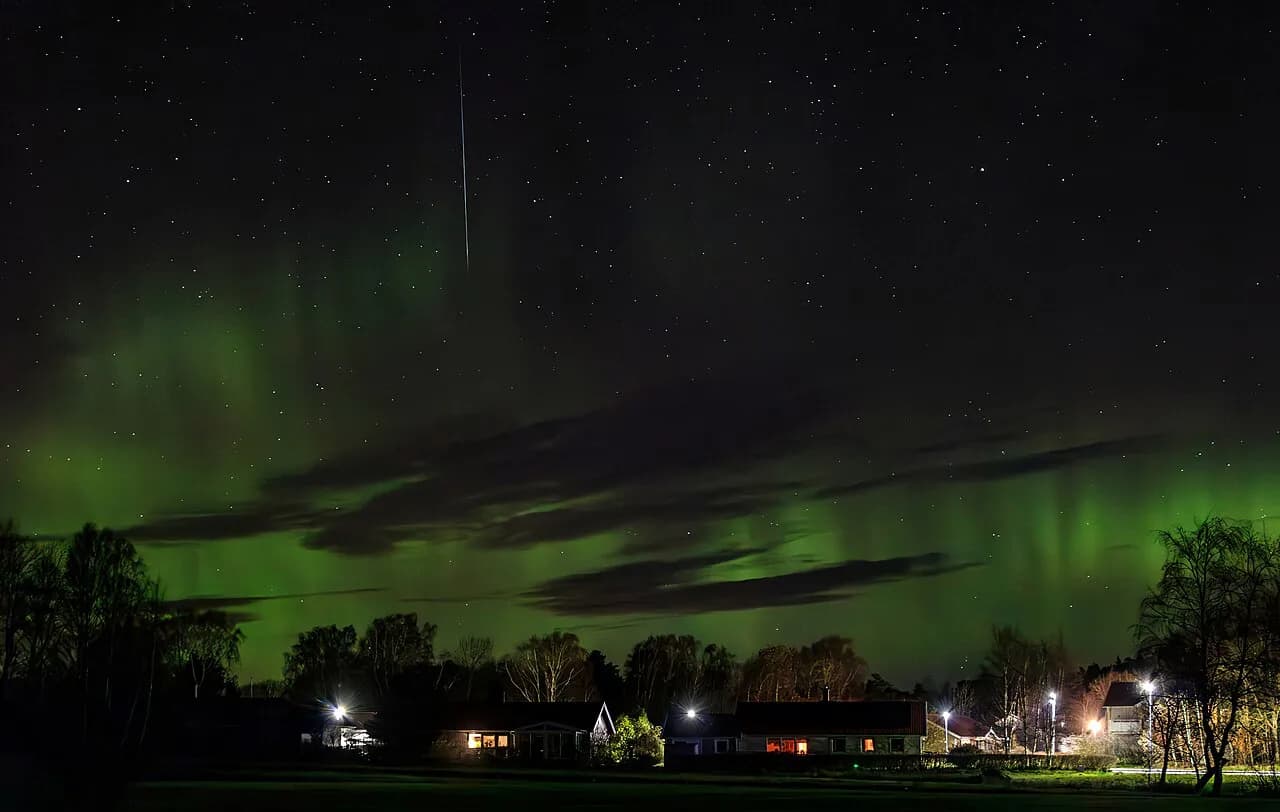
On a moderately active night in Lapland or Iceland, a green arc can be the whole show and still be memorable, particularly when it brightens into tall rays near midnight. Even low geomagnetic activity produces reasonable green aurora; the arc simply sits closer to the magnetic pole rather than overhead.
Red: high-altitude oxygen and stronger storms
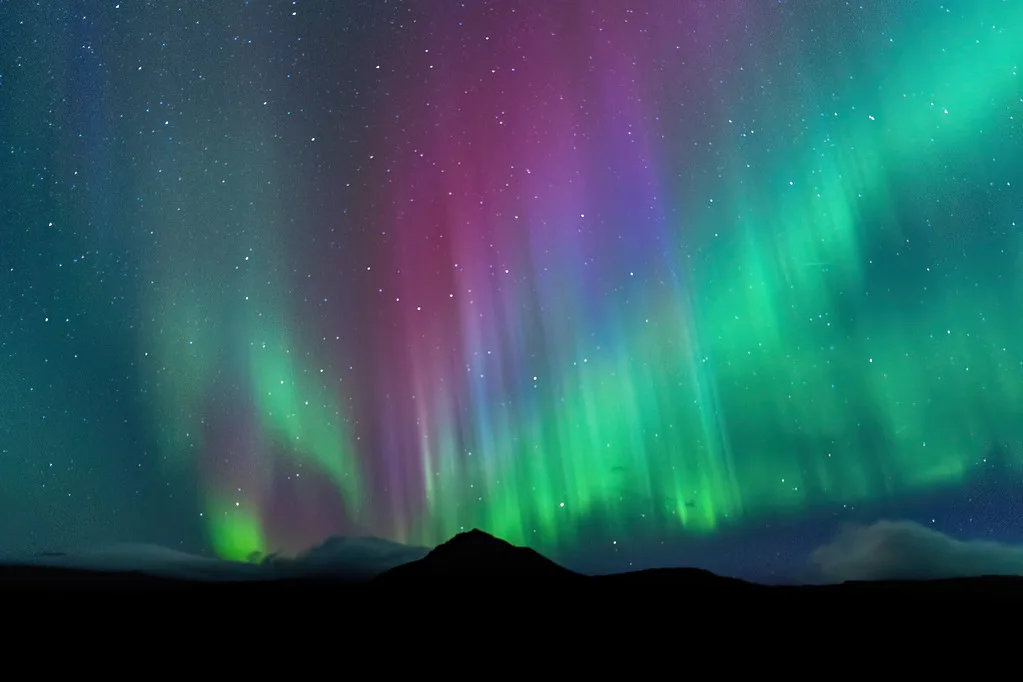
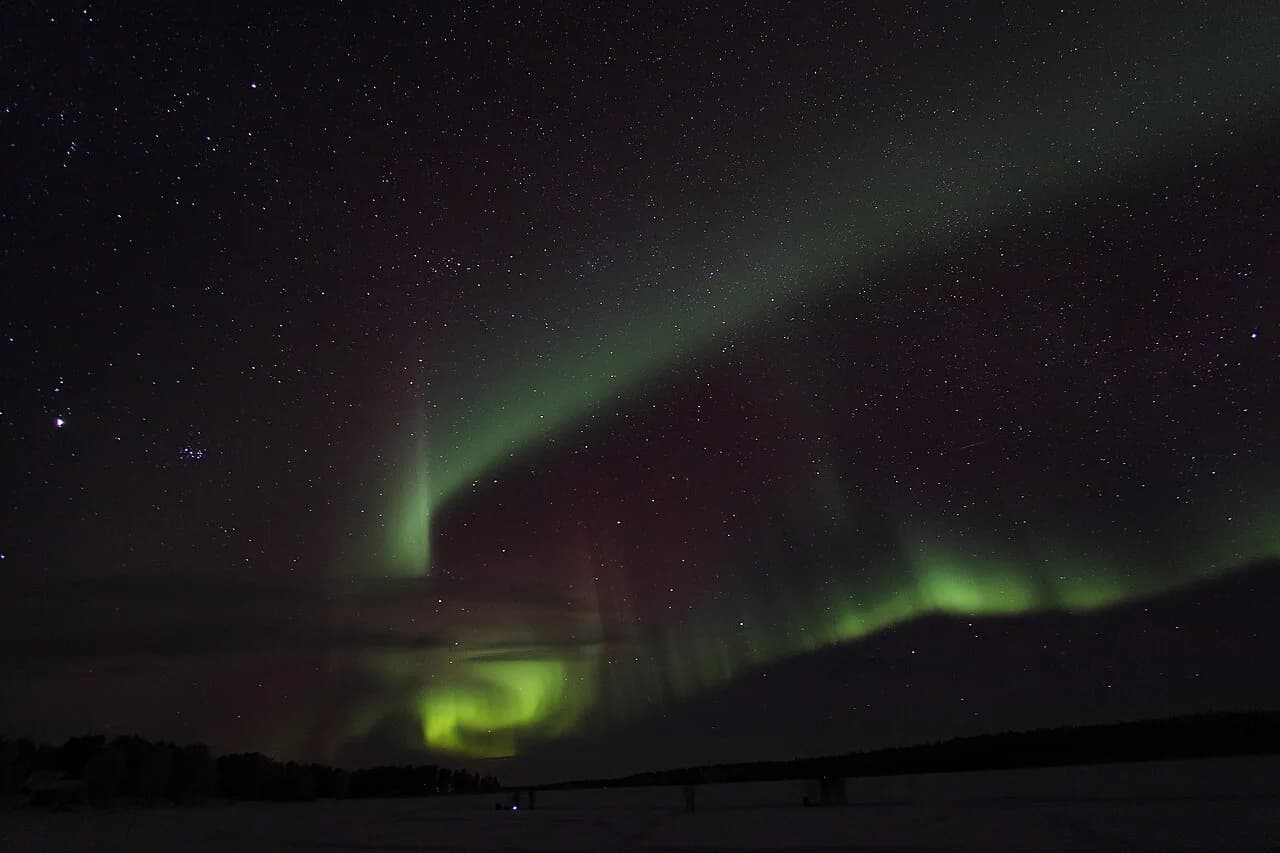
Red comes from atomic oxygen far higher, typically above 300 kilometres, where the air is thin enough for the excited atoms to release their light before a collision quenches it. Because that transition is slow, red is faint, uncommon and easily washed out, and it tends to appear as a crown above the green rather than as a full curtain.
Red is also the color most likely to be there in photographs but barely there to your eye, since human night vision is poor at picking out long-wavelength reds. A deep crimson display usually coincides with a genuinely strong geomagnetic storm, so treat it as a bonus rather than something to plan a trip around.
Pink, purple and blue along the lower edge
The pink and magenta fringes that outline many green curtains come from molecular nitrogen at the bottom of the aurora, where red oxygen emission and blue-violet nitrogen emission overlap. These lower-edge colors show up when energetic particles reach deeper into the atmosphere, which is why they are common on lively nights and absent on quiet ones.
Pure blue and violet are harder to see with the naked eye than their presence in photographs suggests, because human vision is weak at short wavelengths in the dark. If you are photographing, expect the camera to pull out blues and purples that you registered only as a faint pale edge.
White, grey and yellow displays
A faint aurora often looks white or grey because the color-sensitive cone cells in your eye barely engage in low light, so brightness registers before hue. Point a camera at the same patch and the image frequently reveals greens and pinks that were invisible to you standing underneath it.
Yellow and orange are the oddities: they appear where red and green emission overlap in the same part of the sky rather than from a gas of their own. They are uncommon enough that even regular aurora watchers treat a clearly yellow display as a rare night.
What the Kp index tells you about color
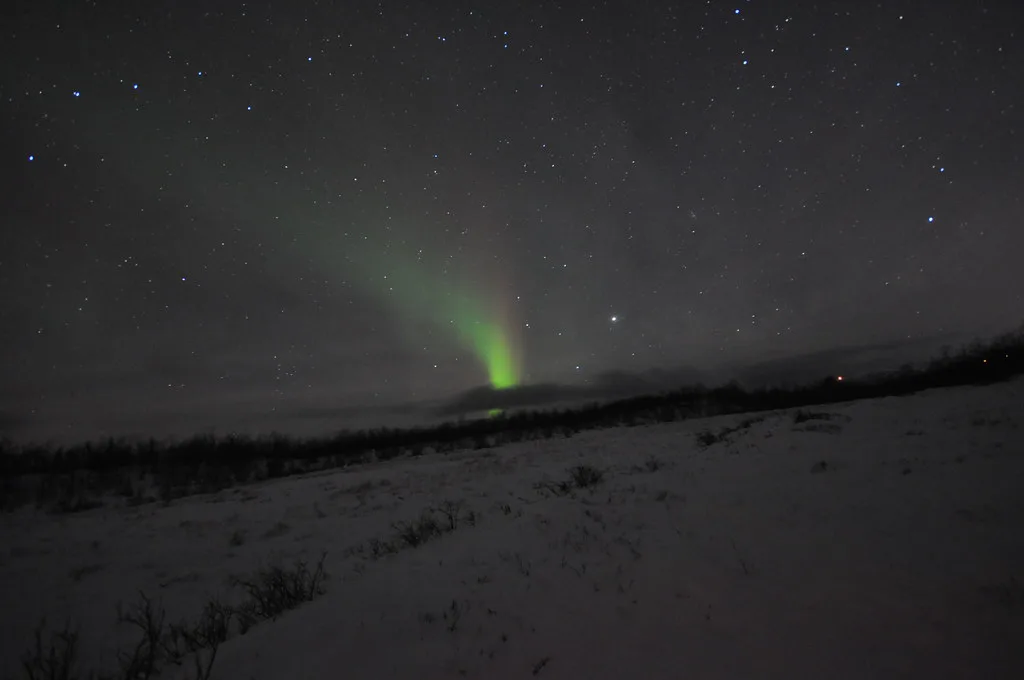
The planetary K index measures geomagnetic disturbance, and brightness and equatorward reach track it closely: Kp 7 to 9 brings bright aurora far from the poles, while Kp 5 or 6 keeps the oval nearer the pole. Crucially, Kp 3 or 4 still delivers pleasing, reasonably bright aurora for anyone already standing in the north.
What Kp does not give you is a color forecast. There is no reliable way to predict in advance whether a night will throw red or violet; you can only note that rarer colors are more likely during stronger storms, then judge the sky and the cloud once you are outside.
How the aurora changes through a night
An evening often opens with a single quiet arc stretching horizon to horizon, sometimes several parallel arcs, and this is when many travelers give up too early. Activity typically builds a few hours before midnight, when substorms can fill the sky with bright swirls and fast-moving rays.
After midnight the display usually softens into diffuse, patchy glow that pulses slowly until dawn. These patches are much less dramatic than the midnight rays, so if you have one night to give the aurora, spending the hours around midnight outside is the better use of it.
When nights are dark enough in Lapland and Iceland
Aurora needs dark sky as much as solar activity, and around the Arctic Circle that means roughly early August through late April, with the deepest darkness from November to March. Midsummer is out of the question for aurora, but the shoulder months still give long, workable nights.
Iceland sits directly beneath the auroral oval, so green displays appear there even on moderately active nights during the aurora months. Lapland has the advantage of deeper winter darkness and more continental cold; Iceland trades that for coastal weather that changes fast, which can clear a cloudy evening just as quickly as it closes one in.
Where to watch: dark-sky bases across Arctic Europe
In Finland, Rovaniemi works as a base because a short drive takes you away from town light, and Inari gives you genuine wilderness dark with very little settlement. In Sweden, the Abisko and Torneträsk area is known for its dry inland climate and dark skies, while in Iceland you want to leave Reykjavík behind for the Reykjanes coast or the farm country to the east. Either side of the border can work, so compare a Finnish Lapland northern lights guide with its Swedish counterpart before you settle on a base.
Where you sleep matters as much as where you drive. An aurora hotel with a glass roof keeps you warm between alerts, but interior light and reflections can dull the view; a plain cabin outside the village with a dark yard often gives a cleaner look at faint color. The comparison of aurora hotel styles in Europe is worth reading before you commit to a splurge.
Guided night tours take the guesswork out of cloud dodging, since operators track conditions and drive to clearer sky, and many lend thermal suits for the wait outside. If you would rather stay put, pick accommodation with open northern horizon and ask staff which direction the locals watch; a frozen lake edge or a felltop car park a short drive from town usually beats standing under streetlights.
Cameras versus the naked eye
Modern digital sensors are more sensitive than human vision and can capture aurora and its colors when the display is too dim to register as more than a grey haze. This is why a photo can look spectacular while the person who took it insists the sky was barely visible.
Set your expectations from what you see, not from what a screen shows afterwards. On a strong night the green will be unmistakable and the pink edging visible without help; on a weak night, enjoy the fact that the camera saw more than you did.
How many nights to plan for a colorful display
No one can promise a sighting, so plan for odds rather than for a single night. A week in one place gives you a reasonable run at a clear sky, and a longer stay is better if you are set on the rarer reds and purples, which only appear when a strong storm coincides with clear weather.
Solar activity rises and falls on a roughly eleven-year cycle, and the years around solar maximum bring bigger and faster eruptions that produce stronger storms and push more colors into view. During quieter years the reliable high-speed solar wind can still deliver moderate activity, so a trip is never wasted simply because the cycle is low.
Plan Your Aurora Trip
Pick your base for dark skies first and comfort second: a cabin or wilderness hotel a short drive from town, in Finnish Lapland or Iceland, will give you a better look at faint color than a bright village centre. Give yourself a week in one region and treat the midnight hours as the main event, with the evening arcs as a warm-up.
If you want the aurora to be part of a bigger winter trip, combine the chase with an ice hotel stay or a sauna evening and keep the aurora nights flexible. Check the Icelandic Met Office or the Finnish meteorological service on the day, and let the cloud forecast decide where you drive rather than the Kp number alone.
Frequently Asked Questions
Are the northern lights green to the eye?
Usually yes. Atomic oxygen at around 100 to 300 kilometres produces the green that dominates most displays, and your eyes are most sensitive to green in dim light. Pink or violet edges appear when nitrogen at the base of the curtain is also excited, and strong storms can add red above the green.
What is the rarest northern lights color?
Deep red from high-altitude oxygen is the rarest, followed by clear blue and the yellow-orange blends where red and green overlap. These appear mainly during strong geomagnetic storms, and cameras often record them more vividly than the unaided eye perceives them.
Does the Kp index predict aurora color?
No. The Kp index describes geomagnetic disturbance, which tracks brightness and how far south the aurora reaches, but there is no published forecast for the colors a given night will produce. Higher Kp makes rarer colors more likely without guaranteeing them.
When is it dark enough to see the northern lights in Lapland and Iceland?
Nights are dark enough from roughly late August through early April, with the longest darkness from November to March. Midsummer offers no aurora because the sky never gets dark, so plan your trip outside the midnight-sun weeks.
How many nights should I plan to see a colorful display?
Three to four nights in one place gives a fair chance of a clear sky, and a week improves it if you want the rarer reds and purples. Aurora depends on solar activity and cloud, so build in flexibility and be prepared to drive to clearer weather rather than staying fixed.
Where should I stay to see the colors best?
A cabin or aurora hotel outside the town light gives the cleanest view of faint color, while a glass-roofed room keeps you warm between alerts but can introduce glare. In Finnish Lapland and Iceland, a short drive from your base to open northern horizon usually beats watching from the village centre.
Sources
Notes for your Arctic winter trip
Optional updates to our northern lights guides.
You might also like
Continue reading
More guides you'll find useful