What Are the Northern Lights? Europe Viewing Guide
The northern lights are solar particles striking Earth's atmosphere. Learn how auroras form, when Arctic Europe's dark nights run, and where to base yourself.
On this page
Aurora borealis is a natural light show played out 60 to more than 250 miles above your head, where charged particles from the sun meet gases in the upper atmosphere and glow. Understand that mechanism and Arctic Europe becomes easier to plan: you are choosing a dark, clear sky and a base that lets you reach one, not booking a spectacle that runs to schedule.
What produces the northern lights
The sun constantly streams charged particles into space as the solar wind, and during solar storms it throws out far more of them. Earth's magnetic field pulls these particles down into the upper atmosphere near the poles, where they collide with oxygen and nitrogen and release energy as light. In the northern hemisphere the result is the aurora borealis, and the same process in the south produces the aurora australis.
Because the glow comes from gas collisions rather than from a light source on the ground, it happens at any time of day; you simply cannot see it against a bright sky. Dark, cloud-free nights are what turn an active aurora into a visible one. A display can also carry billions of watts of electricity, enough to disturb power lines, radio and satellite communications.
Galileo Galilei coined the name Aurora Borealis in the early 17th century, borrowing Aurora, the Roman goddess of dawn, and Boreas, the Greek north wind, though he wrongly thought sunlight reflecting off the atmosphere caused it. In Finland the lights are revontulet, or fox fire, from a folk tale in which an arctic fox running across the fells throws sparks into the sky. That folklore is part of why a night out in Lapland feels different from simply staring at a forecast.
Why the far north sees them and southern Europe rarely does
The magnetic field lines curve downwards and open up near the poles, which is why the particles concentrate there and why the auroral oval sits over Arctic latitudes. National Geographic advises looking anywhere with a magnetic latitude above 55 degrees and low light pollution across the night sky, which puts Iceland, Norwegian Lapland, Swedish Lapland and Finnish Lapland squarely in range. Northern Greenland, by contrast, can sit too far north for good displays.
Southern Europe sits far from that oval, so a display there takes a strong geomagnetic storm pushing the aurora much further south than usual. Those events do happen: in 2024 a G5-level storm made the lights visible as far south as Cornwall. Treat such sightings as rare bonuses rather than something to plan a trip around.
The colours: oxygen greens and reds, nitrogen blues and purples
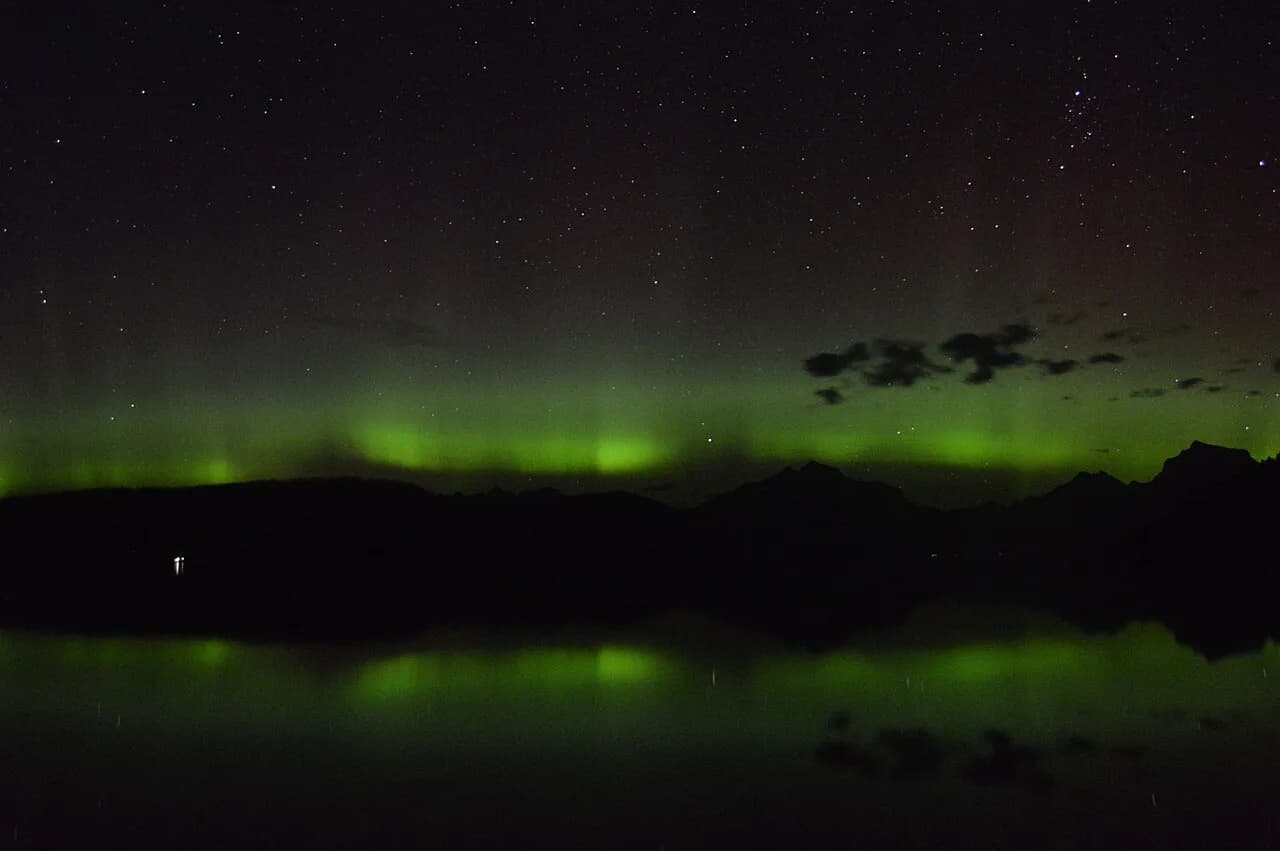
The colours tell you which gas was struck and how high the collision occurred. Oxygen usually produces green and red hues, while nitrogen gives blue and purple tones. Most nights you will see green most clearly, with red fringes or violet edges appearing when the display is strong.
Cameras often record more colour than your eyes do, so a faint grey arc overhead can turn green on a long exposure. Judge the night by what your eyes show you after they have adjusted, and use a photograph as a record rather than as proof you missed something.
Forms in the sky: arcs, bands and curtains
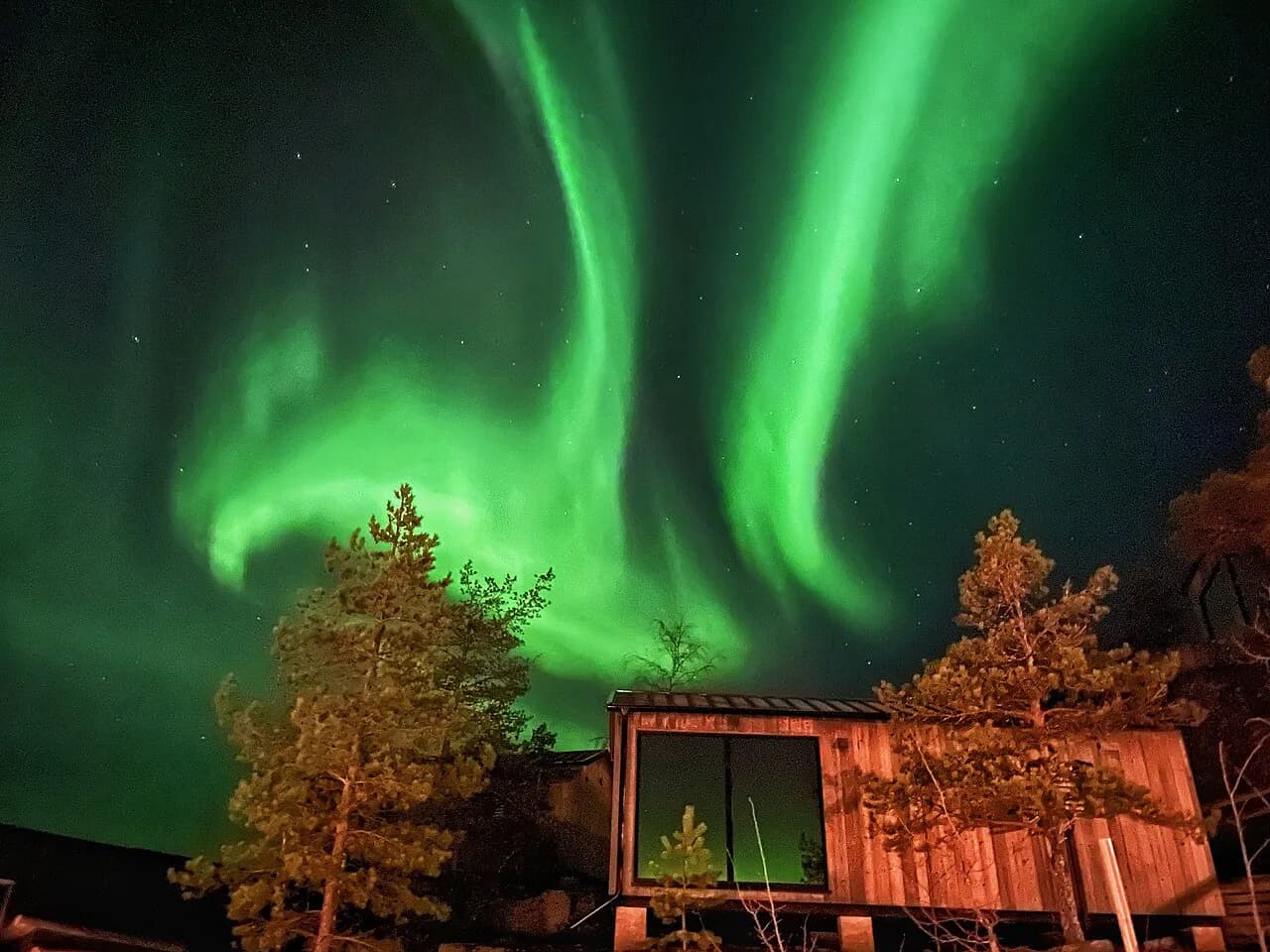
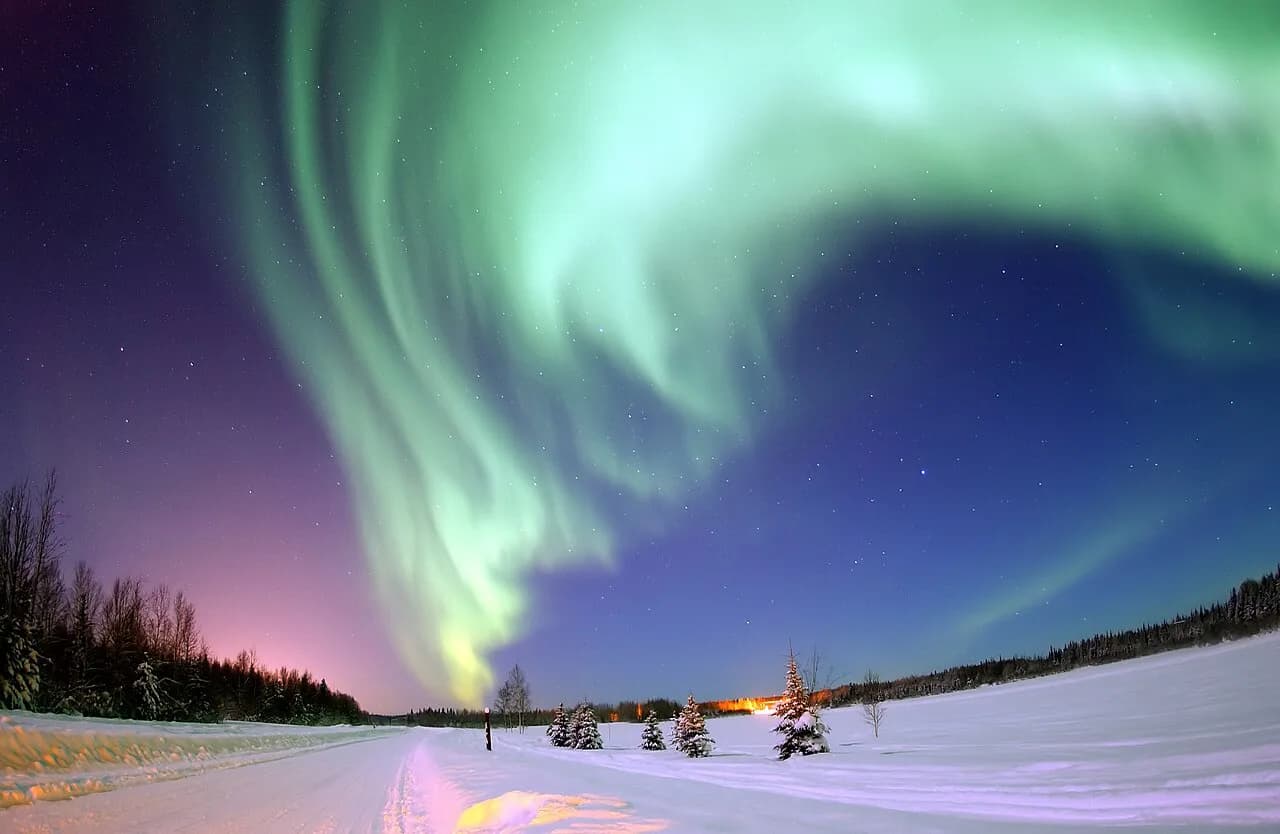
Auroras are shaped by Earth's magnetic field lines, and the common forms are arcs, bands and curtains. An arc is often the first sign, a quiet green bow low on the northern horizon that may brighten and begin to fold. Curtains are the dramatic version, vertical rays that ripple and shift within minutes.
Displays are never still. Historical accounts describe bands of light chasing one another across the sky, brightening at the lower edge and fading above. That restlessness is the reason a viewing spot with open horizon in several directions beats a narrow gap between trees.
When aurora season runs in Finnish Lapland, Swedish Lapland and Iceland
Darkness is the first requirement, and Arctic Europe delivers it from late August to early April in Iceland and from mid-September to late March in Swedish and Finnish Lapland. Those windows frame the whole planning calendar for an aurora trip. Those weeks combine long dark nights with weather you can spend hours standing in.
In Finnish Lapland the lights are in the sky on roughly 200 nights of the year, which is a measure of how often the aurora is present overhead rather than how often clouds allow you to see it. Cloud is the variable that decides your night, so build flexibility into the trip instead of relying on any single date. If you are weighing dates, this guide to the best time to see northern lights in Europe goes deeper on month-by-month darkness.
Snow and temperature differ sharply between the three destinations. Inland Swedish and Finnish Lapland runs colder with more settled weather, while the Icelandic coast stays milder but sees more cloud. Which you prefer is a real trade-off, covered below.
Equinox months and moonless nights: which weeks favour dark skies
Around the March and September equinoxes, Earth's magnetic field lets more solar particles interact with the atmosphere. National Geographic describes this as the aurora season and singles out September for its tolerable temperatures in polar latitudes. Those weeks combine long dark nights with weather you can spend hours standing in.
Moonlight is the other variable. A full moon over a snowfield is beautiful but washes out faint arcs, so aim for nights at the start of a new moon phase when you can, and check a moon phase calendar against your dates. In practice this means shifting a trip by a few days can buy noticeably darker skies.
Where to go in Finnish Lapland: Rovaniemi as a gateway and the national parks around it
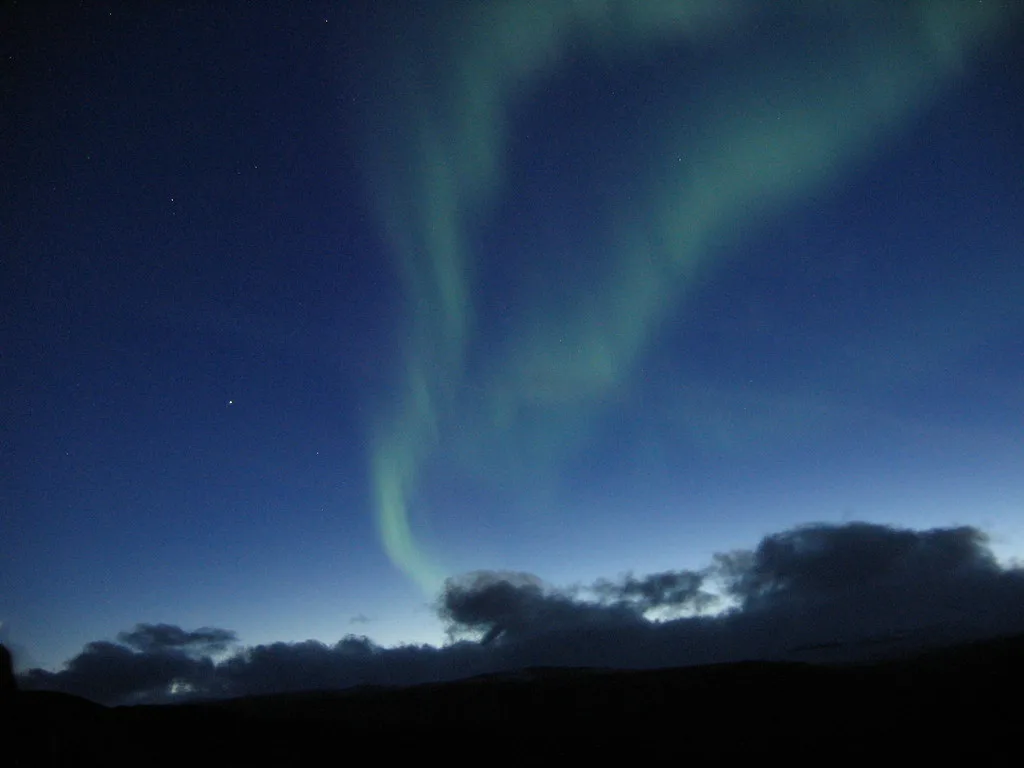
Rovaniemi works as a gateway town, with national parks within reach where winter turns the trees into snow-heavy shapes called Tykky sculptures and the aurora can appear above them. Staying in the town gives you services and transport; leaving its lights behind gives you the sky. For a wider comparison, see the best places to see northern lights across the continent, and our northern lights in Rovaniemi guide covers where to go and where to stay around the town.
The Sodankylä Geophysical Observatory in Finnish Lapland is a working research centre for the solar wind and its effect on the atmosphere, so the region has a long scientific association with the lights as well as a tourist one.
Where to go in Swedish Lapland: Kiruna, Abisko National Park and ICEHOTEL
Kiruna is the northern Swedish hub, with ICEHOTEL, mountainous Abisko National Park, Sámi culture and reindeer country on its doorstep, and a short drive out of town puts you at a good viewing spot. Abisko's mountain setting and inland position are why Swedish Lapland appeals to travellers who value stable weather over coastal mildness. If a night in a frozen building interests you, compare the options in Ice Hotels in Europe before you commit.
The ICEHOTEL near Kiruna is built each winter on the Torne River, and the cold inland climate that makes it possible is the same one that keeps the skies clearer than on the Norwegian coast. Plan a warm room as well as an ice room if you want to sleep well before a night of watching.
Where to go in Iceland: a coastal road for chasing clear skies, Kirkjufell and Grotta Lighthouse
Iceland's latitude and longitude favour aurora viewing, but its weather does not always cooperate. The compensation is the road: a good coastal route around the country lets you drive towards gaps in the cloud, which is why Iceland rewards travellers who rent a car and stay flexible.
Kirkjufell mountain on the west coast is one of the country's signature aurora viewpoints, and in high activity the lights can appear even over Reykjavík's suburbs, where Grotta Lighthouse is a popular spot. You can also watch from outdoor hot tubs, hot spring lagoons and bubble lodges.
Coast versus inland: stable weather and cold versus milder air and cloud
The central trade-off in Arctic Europe is weather stability against temperature. Inland Swedish and Finnish Lapland is colder but far more settled than the Norwegian coast, which is milder thanks to the Gulf Stream. Iceland behaves like a coastal destination, mild for its latitude but frequently cloudy, so a car and a plan B matter more than a fixed viewpoint.
Choose inland Lapland if you want to stand outside for hours and accept deep cold, and Iceland if you would rather chase clear sky by road and keep the option of a hot tub. Neither choice guarantees a display; both change what a cloudy night costs you in travel time and comfort.
Self-guided chasing versus a booked aurora tour
A booked night tour removes the driving and the route-finding: guides know the local road network, watch the cloud, and take visitors far from city lights. That suits short trips, non-drivers and anyone travelling in deep winter when road conditions are unfamiliar.
Self-guided chasing works when you have a rental car, a dark-sky map and the willingness to drive an hour for a hole in the cloud. It gives you freedom and costs less per night, but you own the risk of icy roads and the disappointment of arriving somewhere still overcast. A common compromise is one guided night early in the trip to learn the local geography, then self-drive afterwards.
Watching from hot tubs, hot spring lagoons and glass-roofed lodgings
Iceland in particular lets you watch from outdoor hot tubs, hot spring lagoons and bubble lodges, which turns a cold wait into something comfortable. Glass-roofed rooms and aurora cabins offer the same idea from bed, at the cost of heat and interior light reflecting on the glass. If that style appeals, browse aurora hotel options across the region.
Bear in mind that a roof does not create a clear sky, and a warm cabin with bright windows can actually reduce what you see. Many travellers treat the glass roof as a backup and still step outside for the main show.
Light pollution: why you leave the town lights behind
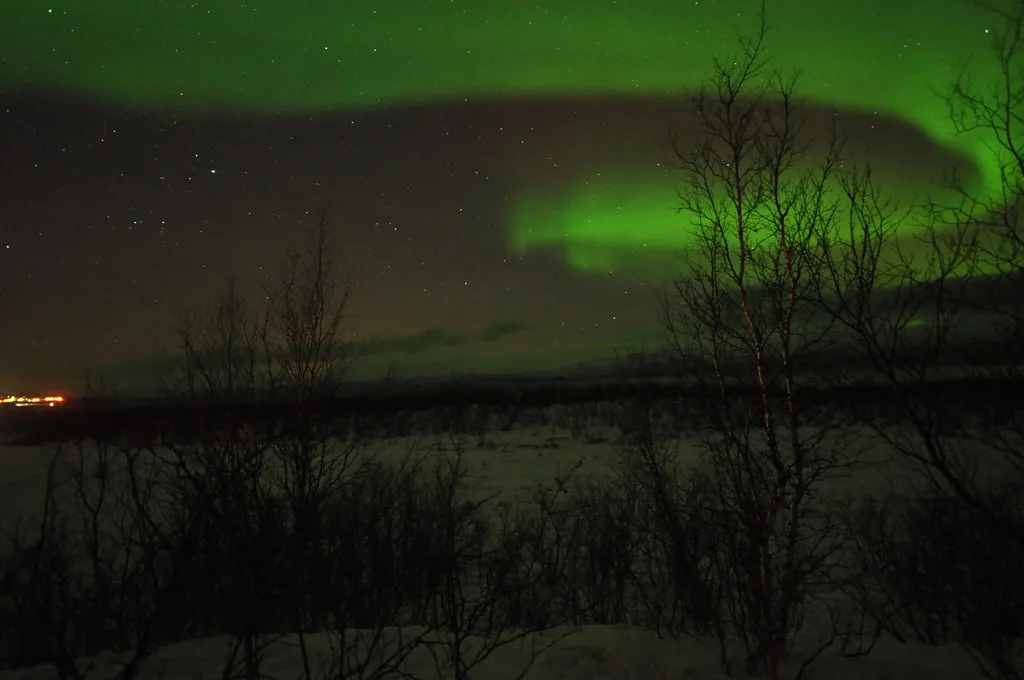
Low light pollution across the night sky is one of the two conditions National Geographic sets alongside latitude, and it is the one you can control on the night. A town centre, a floodlit car park or a brightly lit hotel courtyard can swallow a modest arc entirely. Drive ten to twenty minutes out of a base like Rovaniemi, Kiruna or Reykjavík and the same display becomes obvious.
Pick accommodation with dark surroundings and a north-facing outlook rather than the brightest address in town, and ask whether outside lighting is switched off at night. On a short trip, that single decision can matter more than the difference between two tour operators.
Kp values and space-weather forecasts as guidance, not promises
The Kp index summarises geomagnetic disturbance on a scale used by forecasters, and it is useful for spotting a promising night rather than for deciding whether to bother going outside. Check real-time aurora forecasts alongside a cloud forecast, because a high reading under thick cloud gets you nothing. If you want to read the numbers properly, see Kp Index Explained.
In high activity the aurora can appear far further south than usual, and in quiet conditions a modest arc may still be visible from Arctic latitudes. Treat the index as one input among several and let cloud, moonlight and your own patience do the rest.
How many nights to allow for a fair chance of clear skies
Allow at least four or five nights in one place rather than three cities in a week. Cloud is the limiting factor, and consecutive nights give the weather time to change without extra flights. Inland Lapland's more stable conditions reward a longer stay in a single base; Iceland rewards a loop with several stopping points so you can follow clearer sky.
If your dates are fixed, put the darkest, moonless nights at the centre of the trip and keep daytime plans light enough that you can stay up. A trip built around one big night is a gamble; one built around five ordinary nights is a plan.
Reading the sky: letting your eyes adjust and spotting faint glows
Give your eyes 20 to 30 minutes to adjust to the dark, and avoid white torches and phone screens in that time. Faint glows that look grey at first often resolve into colour and structure once your night vision settles, especially low on the northern horizon.
Face north, keep buildings and trees out of the lower sky, and watch for a pale arc that slowly brightens. If nothing appears, the sky is still telling you something: a starry, transparent night is the condition you came for, and the aurora may simply be quiet.
Plan Your Visit
Arctic Europe gives you three distinct ways to chase the same physics: colder, clearer inland Lapland, a coastal Icelandic road built for cloud-dodging, and a Sámi and ice-hotel culture around Kiruna. Pick the base that matches how you want to spend the cloudy nights, then give yourself enough of them.
Never treat a sighting as promised. Choose dark, moonless, cloud-free nights, leave town lights behind and give yourself four or five nights in one region. If you already know which of Finnish Lapland, Swedish Lapland or Iceland suits you, compare the wider shortlist for Best Places to See the Northern Lights in Europe and check operator pages when you plan your nights out.
Frequently Asked Questions
What causes the northern lights?
Charged particles from the sun, carried on the solar wind, are funnelled by Earth's magnetic field into the upper atmosphere near the poles. There they collide with oxygen and nitrogen, and the energy released appears as light. Solar storms send more particles, which is when displays become stronger and reach further south.
Who named the northern lights?
Galileo Galilei named the phenomenon Aurora Borealis in the early 17th century, combining Aurora, the Roman goddess of dawn, with Boreas, the Greek name for the north wind. He also wrongly believed sunlight reflecting off the atmosphere caused it.
When is the best time to see the northern lights in Finnish Lapland, Swedish Lapland and Iceland?
Nights are dark enough in Iceland from late August to early April and in Swedish and Finnish Lapland from mid-September to late March. Displays are most common in September, October, March and April, and moonless nights near the equinoxes give the darkest skies.
Can you see the northern lights from Reykjavík?
In high activity the aurora can appear over Reykjavík's suburbs, where Grotta Lighthouse is a popular viewpoint. For a better chance, drive away from city lighting to a darker spot with an open northern horizon.
Are the northern lights visible near the equinoxes?
The March and September equinoxes are a recognised part of the aurora season, when Earth's magnetic field lets more solar particles interact with the atmosphere. The equinox weeks also bring long dark nights and, in September, more tolerable temperatures for standing outside.
How many nights should I plan for a northern lights trip?
Plan four or five nights in a single region so cloud has time to break. A trip built around one night is a gamble, while several consecutive nights in one base give you repeated chances without extra travel.
Sources
Notes for your Arctic winter trip
Optional updates to our northern lights guides.
You might also like
Continue reading
More guides you'll find useful