Northern Lights From a Plane: How to Pick a Flight and a Seat
Aurora can appear from an aircraft window on night flights over the Arctic. Learn which routes and seats help most, and how to photograph the view.
On this page
An aurora seen from a plane is one of the strangest rewards in Arctic travel. You are above the weather, above the streetlights and above the snow, watching green light ripple along the horizon while the cabin sits in darkness. It helps most as a bonus on a flight you were taking anyway, and rarely as the entire plan.
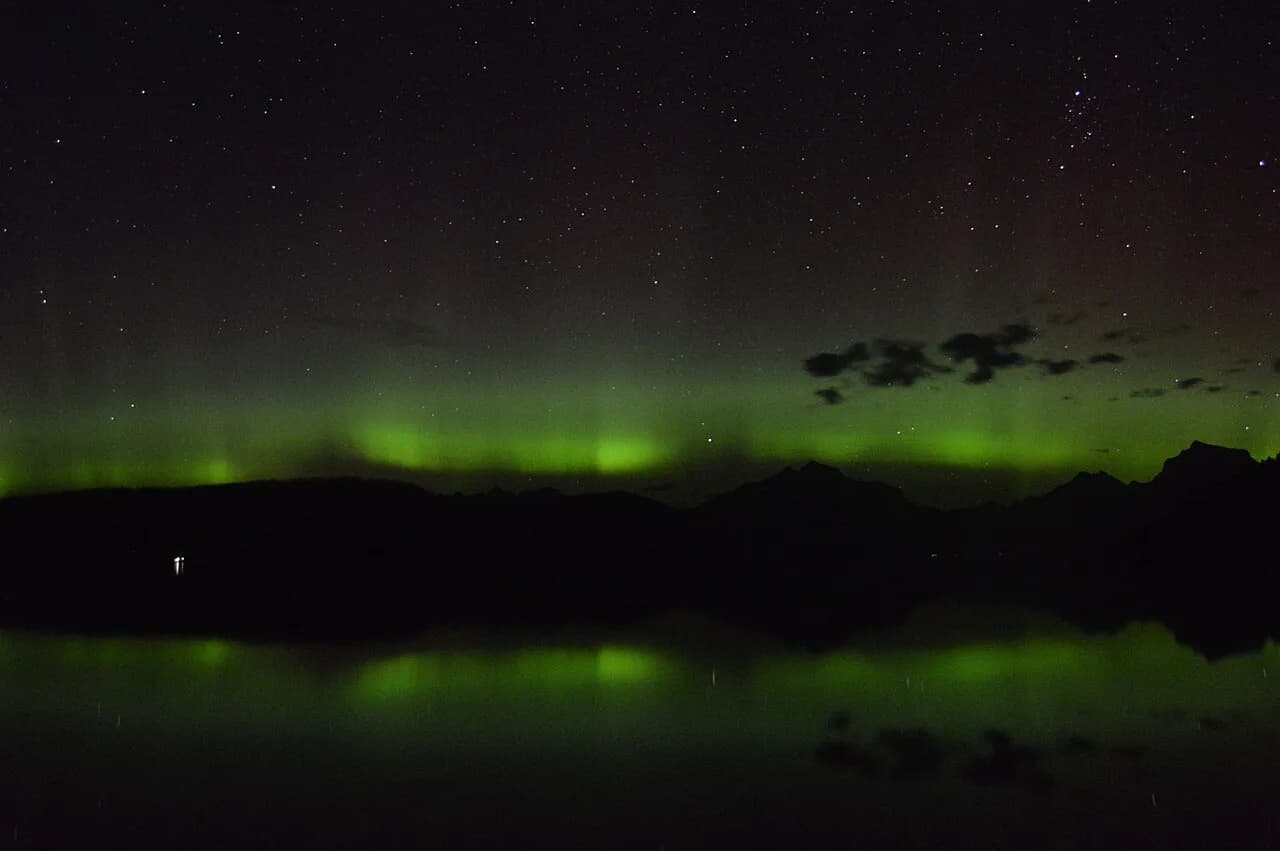
The physics is straightforward. Charged particles from the sun collide with molecules in Earth's atmosphere and release light, and at altitude you are closer to that layer and clear of much of the cloud that blocks the view from the ground. A solar physicist who photographed an aurora from a flight over the United States noted that the sun was in an active phase with a strong geomagnetic storm underway.
Why an aircraft window can show aurora
Two things matter when you look out of a plane at night: how far north the route flies and how dark the sky outside is. Altitude lifts you above low cloud and haze, and cruising height leaves you with an unobstructed horizon in most directions. That combination is why passengers occasionally see aurora on routes that never touch the Arctic.
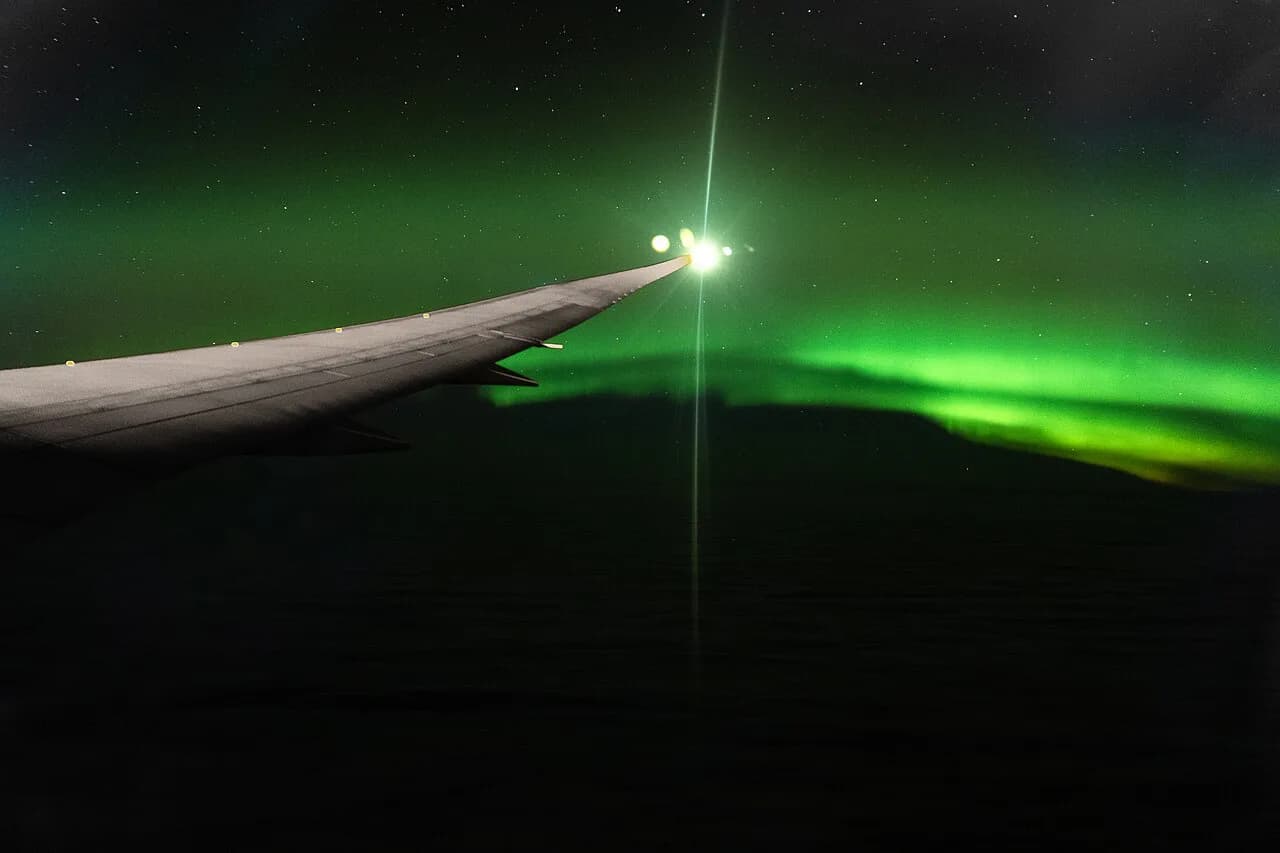
The catch is the cabin. Reading lights, seatback screens and the glow from the galley all reflect in the glass, and the window itself may be scratched or dirty. The solar physicist on that flight put it plainly: aurora photography through the window of a moving, lit-up plane is challenging, and an aisle seat would have missed the whole display.
When Europe's northern skies are dark enough
Aurora needs darkness as well as solar activity, and in Arctic Europe that means roughly late August and September through early April. Midsummer is useless for aurora because the sky never gets properly dark, while midwinter offers long nights but also short days for everything else you want to do. Late September and late February to March are the practical sweet spots for combining dark nights with usable daylight.
For a flight, aim for a route that crosses high latitudes during those dark hours. A departure that leaves southern Europe in the evening and reaches northern latitudes after midnight puts you in the auroral zone at the right time, whereas a midday flight gives you nothing but cloud tops. If your trip also includes time on the ground, the best places to see northern lights in Europe are worth comparing before booking the flight.
Routes and destinations under the auroral oval
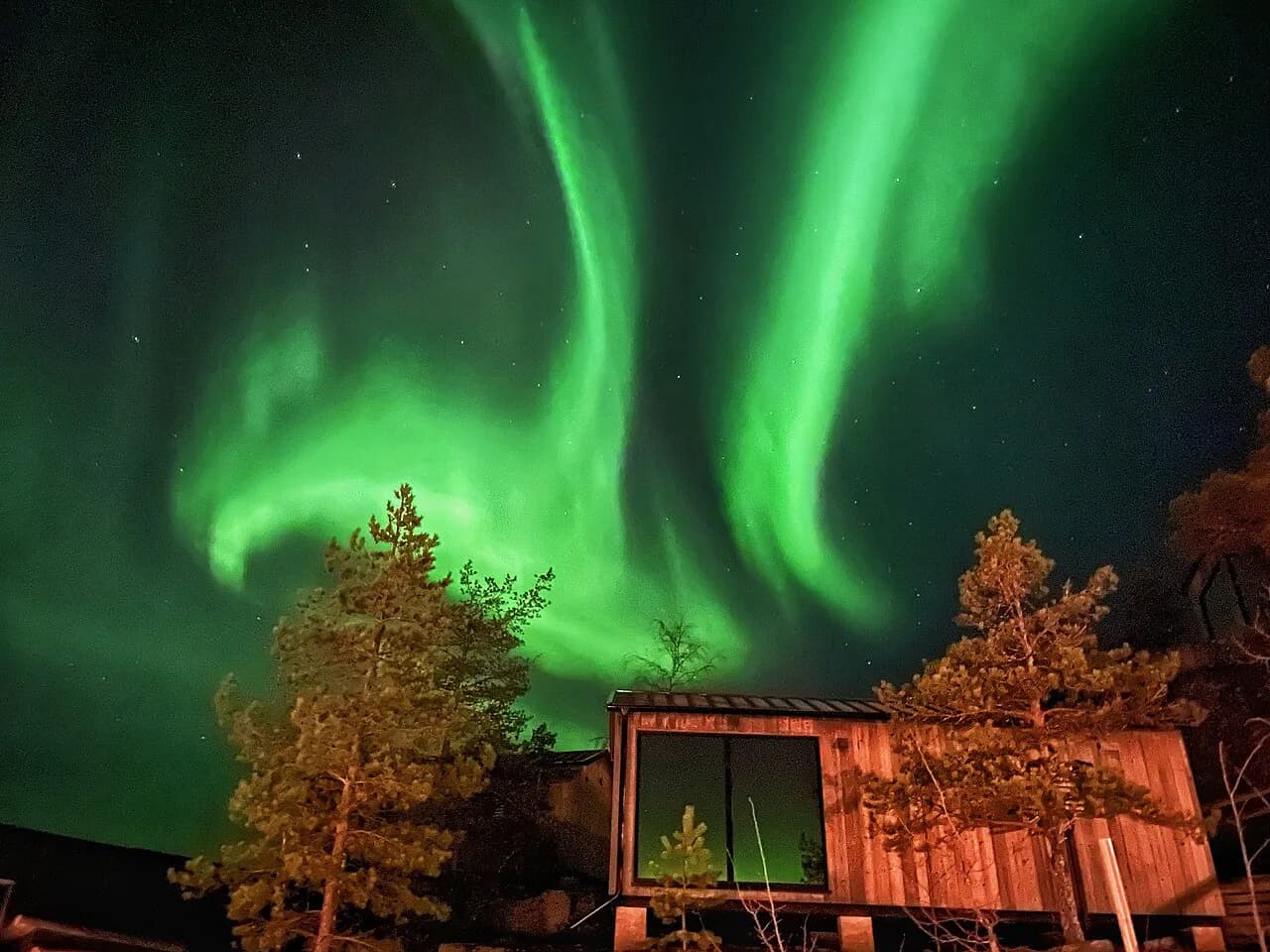
The auroral oval sits over the far north, so routes that land in or over Arctic Europe give you the best chance of flying beneath it. Finnish Lapland is served by direct winter flights from several European cities, with Rovaniemi and Ivalo as the main gateways; Ivalo sits further north and closer to the oval. Swedish Lapland is reached via Luleå and Kiruna, and Iceland through Keflavík, which sits just below the oval but sees aurora on active nights. If you are weighing up a ground stay after landing, this Swedish Lapland northern lights guide covers where and when to go.
Iceland deserves a note of its own because so much of its air traffic is transatlantic. A night flight crossing the North Atlantic can pass north of the oval, but the great-circle routes between Europe and North America vary with the season and the jet stream, so you cannot assume a fixed path. Check the route your airline actually files before treating a transatlantic flight as an aurora flight.
Choosing a seat: which side, and how far back
There is no universal correct side of the plane. The aurora appears toward the north, so on an eastbound flight the left side faces north and on a westbound flight the right side does. On northbound flights into Lapland the display can wrap around the horizon, which makes either side workable. Ask which direction the aircraft will track and pick the window accordingly.
Where you sit along the fuselage matters more than most travelers expect. Sitting ahead of the wing keeps the wing light and engine glow out of your view, while seats over the wing get reflections from the aircraft's own lights. An exit-row window can be blocked, and some window seats have no window at all, so confirm the layout on the seat map when you check in.
The other trade-off is comfort versus view. A night flight in a window seat means staying awake through the dark hours, skipping the meal service sleep and keeping the shade up while your neighbor wants it down. If aurora is the main reason for the trip, book a daytime arrival and do your chasing on the ground instead.
Reading conditions before you fly
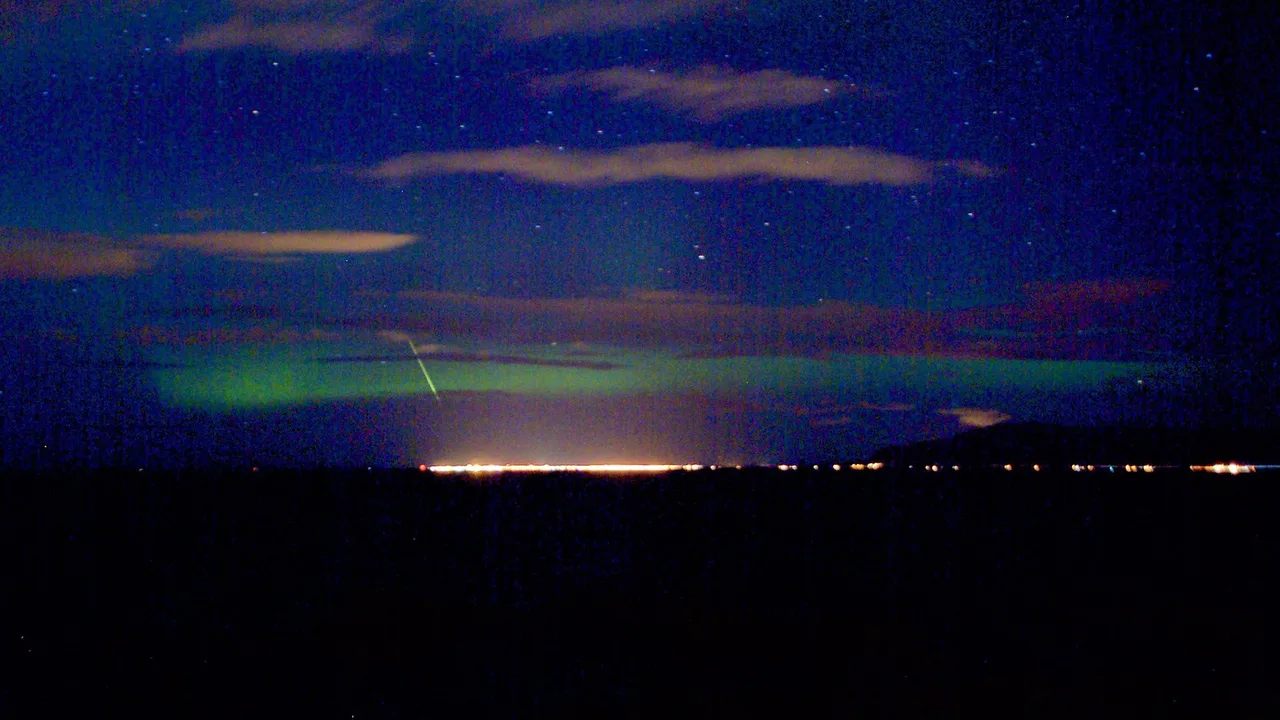
Kp is a planetary index of geomagnetic disturbance, and it is guidance only: a high Kp improves the odds at lower latitudes but guarantees nothing, and a modest Kp can still produce a bright display overhead in Lapland. Cloud is the harder constraint. Aviation forecasts and satellite imagery give you a reasonable picture of what the aircraft will fly above, and a flight is one of the few ways to be reliably above low cloud.
Before a night flight, look at the geomagnetic forecast and the cloud forecast together, then decide whether a window seat is worth guarding. If the index is quiet and the sky is clear, you may see nothing more than stars; if activity picks up during the flight, the view can change within minutes. Treat any sighting from the air as a bonus rather than a scheduled event.
What aurora looks like from a plane
From cruising altitude the aurora often reads as a pale band low on the horizon that slowly brightens into arcs and curtains. Green is the color most people register, with red or violet fringes on stronger displays. Without the landscape for scale it can look smaller and more distant than photographs suggest, and a faint glow may be mistaken for city light or the Milky Way.
Your phone camera can help. Phone sensors pick up aurora color before your eyes do, so a quick test shot through the window will tell you whether that faint green smudge is real. A passenger on that flight started photographing with a phone as soon as the aircraft cleared the clouds, and the images showed bands of green sweeping across the horizon.
Photographing the aurora from a window seat
Window glass is the enemy: it reflects cabin light and traps smudges. Cup your hands or a dark cloth around the lens to block reflections, turn off your screen brightness, and press the lens close to the glass. Shoot in manual mode with a wide aperture, a high ISO around 3200 to 6400, and the longest shutter you can hand-hold against the aircraft's vibration.
Keep exposures short enough to avoid streaking the stars and the landscape below, and take plenty of frames because the aircraft moves. A small tripod or a beanbag against the window helps, but cabin crew may ask you to stow anything that blocks the aisle. Expect a hit rate well below what you would get on solid ground.
Ground stays versus window sightings
A window seat gives you one pass at a time and place you cannot change. A ground stay gives you a base, a forecast you can act on, and the option to drive to clearer sky or join a guided chase. You also get the full experience: the aurora above a frozen lake, a snow-covered forest or an ice hotel, which no aircraft window can match.
The strongest plan uses both. Fly north on an evening flight with a window seat, then spend several nights based somewhere dark in Finnish Lapland, Swedish Lapland or Iceland, where you can chase on clear nights and sleep on cloudy ones. Even the celebrated ice hotels along the Torne River work best as part of a multi-night stay rather than a single night.
How many nights to plan on the ground
Cloud is the main reason people miss the aurora, and no forecast is reliable more than a few days ahead. Allow at least three or four nights at high latitude, and five or more if your trip is short-haul and you cannot easily return. Statistically the odds improve the longer you stay, but each night still depends on solar activity and clear sky, so no operator can promise a display.
Choose a base with several dark options nearby: a lake shore, a fell road, a national-park trailhead away from village lights. A short drive from a lit village center often makes the difference between seeing a faint glow and a full curtain. If you want to understand the mechanism behind what you are watching, what are the northern lights explains the solar wind and the oval in plain terms.
Booking a night flight around aurora season
Book the flight first and build the trip around it. Late-evening departures that land after dark, and red-eye flights that cross the Arctic at night, are the ones worth paying for a window seat. Avoid connections that leave you over the region at midday, and remember that winter schedules change between seasons, so check the actual departure times on the airline's timetable before you book rather than relying on a summer schedule carrying over.
Check the seat map when check-in opens, since aircraft types vary and window availability changes with the layout. If the airline sells seat selection, the small fee for a forward window seat is the cheapest aurora upgrade you can buy. For the wider planning picture across the region, the best places to see the northern lights in Europe sets out how the destinations compare.
A Window Seat as a Bonus, Not a Plan
Treat a night flight as a free extra chance at the aurora rather than the reason for the trip. Pick a route that crosses high latitudes after dark, book a forward window seat away from the wing, and keep a phone camera ready for a quick test shot through the glass.
Then give yourself several nights on the ground in Lapland or Iceland, where you can move with the forecast and watch the whole sky rather than a rectangle of glass. If your itinerary includes a night in an ice hotel, check the season and booking details directly with the property before you commit.
Frequently Asked Questions
What does the aurora look like from a plane?
From cruising altitude it usually appears as a pale green band or arc low on the horizon that brightens and shifts over minutes. Without a landscape for scale it can look smaller than in photographs, and stronger displays add red or violet fringes. A phone test shot often reveals color your eyes cannot yet see.
Can you see the northern lights on a transatlantic flight?
Sometimes, but it depends on the route the aircraft actually flies and on solar activity that night. Great-circle paths between Europe and North America shift with the season and the jet stream, so a transatlantic flight is a gamble rather than a reliable aurora flight. A flight that lands in Arctic Europe puts you under the auroral oval far more directly.
Which side of the plane should I sit on for the northern lights?
Pick the side that faces north for most of the flight. On an eastbound flight that is normally the left side, and on a westbound flight the right. Northbound flights into Lapland can see aurora on either side because the display may wrap around the horizon.
Can a phone camera pick up aurora through a plane window?
Yes, and phone sensors often register aurora color before your eyes do. Keep the lens close to the glass, block cabin reflections with your hands or a dark cloth, and shoot at high ISO with a wide aperture. Expect a low success rate because of window smudges, aircraft vibration and cabin light.
Is a night flight a reliable way to see the northern lights?
No. A sighting depends on solar activity and clear skies during your specific flight, and the aircraft's route and window glare work against you. A night flight is best treated as a bonus on top of several nights on the ground, where you can move to clearer sky and watch the whole sky rather than a single window.
How far in advance should I book a Lapland flight for aurora season?
Book as early as your plans allow for travel between late September and late March, since winter flights into Rovaniemi, Ivalo, Luleå and Kiruna are popular and seats near the front sell first. Compare actual departure times rather than summer schedules. Seat selection fees and availability are set by each airline and shown at booking.
Sources
Notes for your Arctic winter trip
Optional updates to our northern lights guides.
You might also like
Continue reading
More guides you'll find useful