Northern Lights in December: Where to Go and How Many Nights
December brings long dark nights across Lapland and Iceland, but cloud cover decides your odds. See where to base yourself and how many nights to plan.
On this page
December suits travelers who want the aurora hunt wrapped inside deep winter: short twilight, snow on the ground, husky and reindeer safaris by day and long dark hours for the sky. Across Arctic Europe the sun barely clears the horizon, so you are not waiting for nightfall to begin watching. The trade-off is simple: the longest nights of the season, but also some of the most variable weather and very little daylight for anything else.
This is a month to plan around darkness rather than fight it. Pick a base well north, above the Arctic Circle where possible, build in enough nights to sit out a cloudy spell, and decide in advance whether you want to drive yourself to dark spots or let a guide handle the chasing. Where you sleep matters as much as where you look, because a glass-roofed igloo or an aurora cabin lets you keep half an eye on the sky from indoors.
Why December works for the aurora
The aurora is most frequent between the autumn and spring equinoxes, roughly late September to late March, when nights are long and dark enough for displays to show. Geomagnetic activity also tends to run a little higher around both equinoxes, so the weeks either side of late September and late March reward a flexible plan; see our guide to the best places to see northern lights across Europe for how the different regions compare. December sits inside that window, and its darkness means you are not competing with twilight for viewing time.
Solar activity follows an eleven-year rhythm that rises and falls, and Solar Cycle 25 peaked in late 2024 to early 2025, running above the original forecast. Activity stays elevated through 2026 and into 2027 before easing toward a minimum around 2030 to 2031. That gives the coming Decembers a strong backdrop, but the cycle improves your odds rather than making or breaking a trip, so no single year is a now-or-never moment.
Daylight and temperatures in December
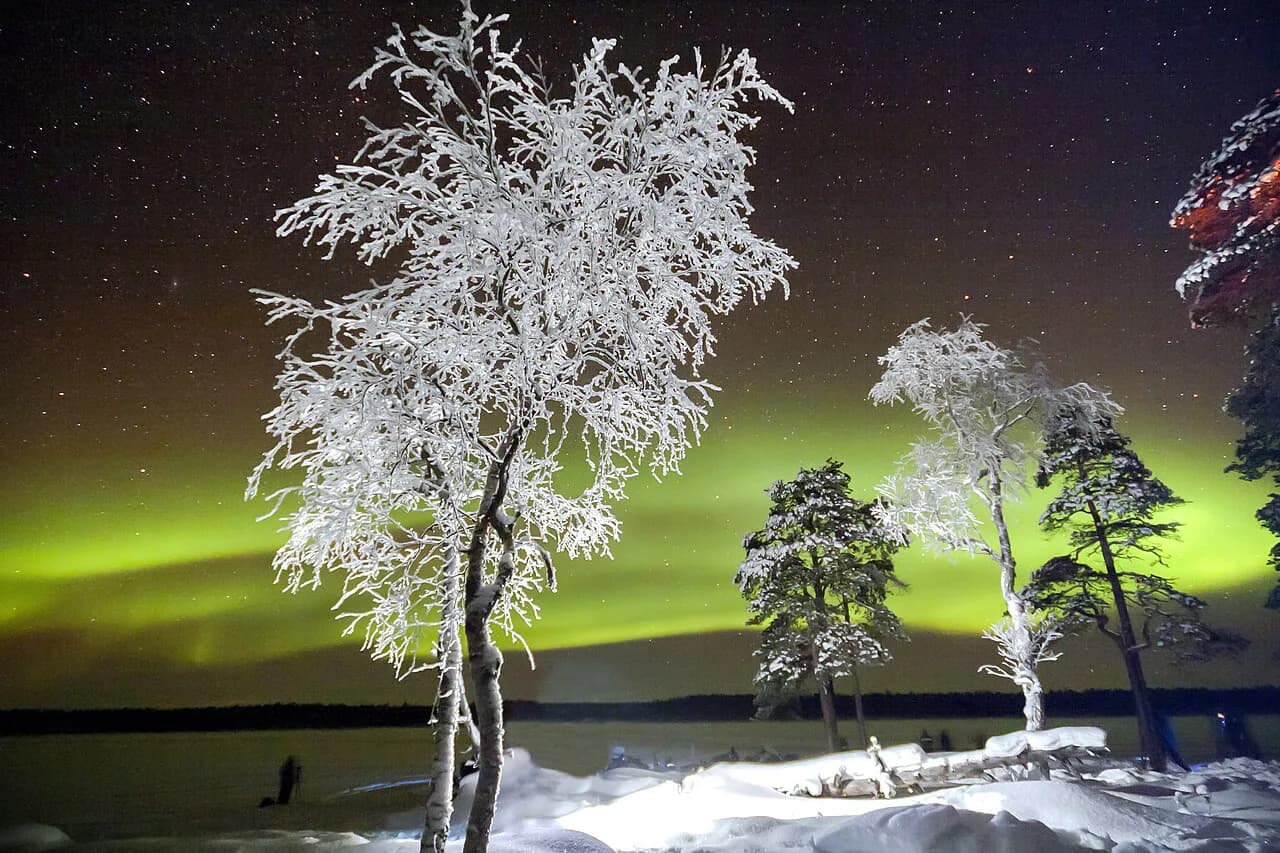
In northern Finland the sun barely rises in December, leaving a brief blue twilight before darkness returns, with daylight often limited to two to four hours. Plan daytime activities inside that narrow window and treat the rest of the day as aurora time. Snow cover is usually established by now, and it helps: a white landscape reflects ambient light and makes even faint displays read more clearly against the ground.
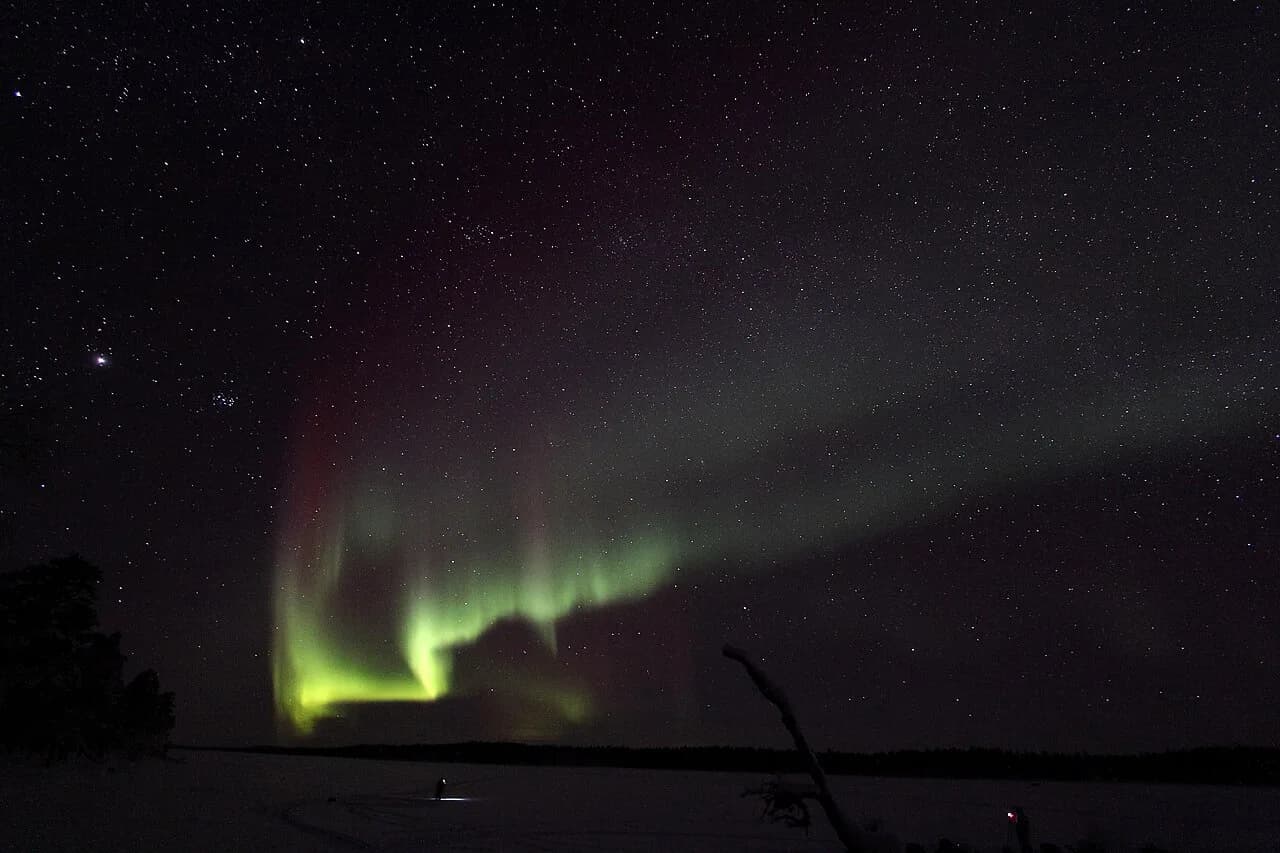
Temperatures in northern Finland in December typically sit between about -5°C and -15°C, sometimes colder, and inland areas generally see more clear nights than the coast. Cold, dry air holds less moisture, which is why clear skies cluster inland and why the interior of Finnish and Swedish Lapland is a stronger bet than exposed coastal ground. Check the Kp index as guidance on activity, but cloud cover is what decides whether you actually see anything.
Where to base yourself in Finnish Lapland
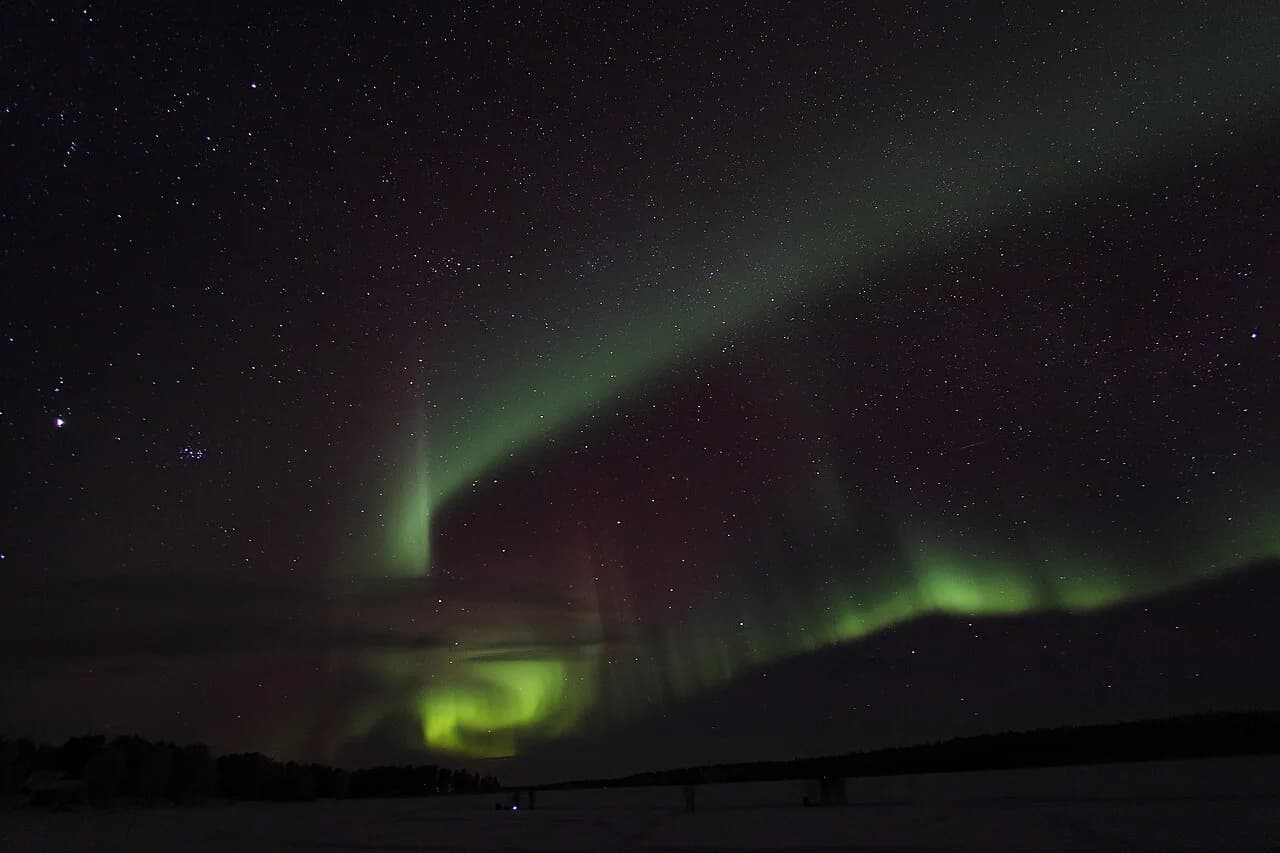
Finnish Lapland offers the most choice for a December aurora trip. Inari, Utsjoki and Enontekiö sit far north with dark skies and low light pollution, and the area around Lake Inari gives you a frozen expanse with unobstructed horizons in every direction. Rovaniemi is convenient for flights and Santa-season tourism but sits right on the Arctic Circle, so push further north for the darkest nights. Our overview of Finnish Lapland covers the main bases in more detail.
Saariselkä, in the municipality of Inari, puts you in that dark northern zone with accommodation, restaurants and activity operators on hand; Aurora Queen Resort there runs glass-ceiling igloos and guided aurora hunting by minivan alongside husky and reindeer safaris. Levi and Ylläsjärvi are popular ski bases in northern Finnish Lapland, while Kilpisjärvi in the far northwest is known for a cold, dry climate that often delivers clear skies when other parts of the region are clouded in.
The practical rule for any Finnish base is to get outside the town lights. Step at least twenty to thirty kilometres from urban centres to leave light pollution behind, and look for open ground, frozen lakes and gentle fell tops that give you a clear line north. That is also why a cabin or igloo outside the village beats a hotel room in town if the sky is your main reason for coming.
Where to base yourself in Swedish Lapland and Iceland
Swedish Lapland offers its own strong December bases. Kiruna and Abisko sit north of the Arctic Circle, and Abisko has a reputation for clear skies thanks to its sheltered mountain setting, which is why it is one of the classic aurora stations in Sweden. The landscape of lakes and forest is flatter than Norway's coast, which means wide, unobstructed views without a long climb. For the detail on timing and lodging in that sheltered valley, see this Abisko northern lights guide, and pair a few aurora nights with a stay at an ice hotel and you get both the landscape and the sky in one trip.
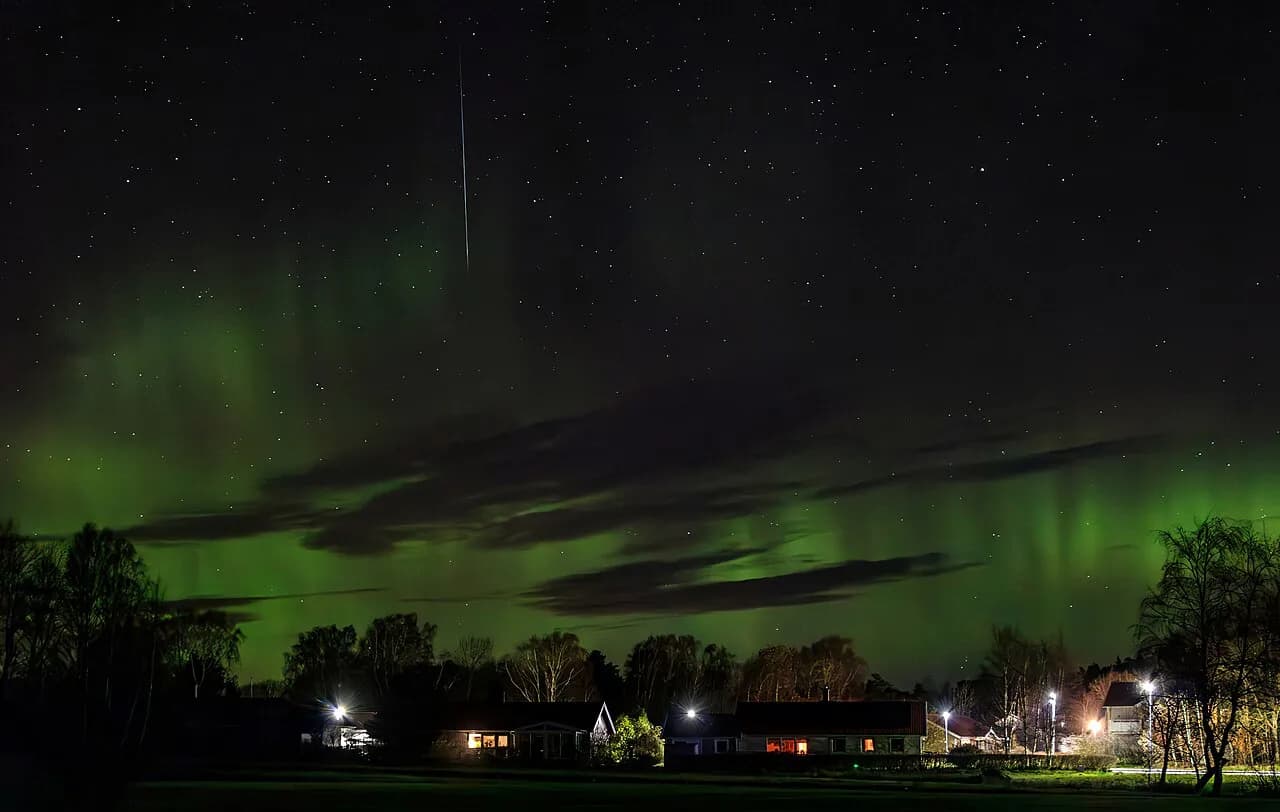
Iceland is a different proposition. It is one of the darkest countries in Europe outside Reykjavik, with vast open scenery and very little settlement, which makes for superb viewing backdrops. The catch is weather: Icelandic cloud and wind change fast and often more than in northern Norway or Lapland, and you can drive a long way without finding a clear sky. Treat Iceland as a bonus-aurora destination where the landscape is the main attraction and the lights are a possible reward.
Where to watch near town
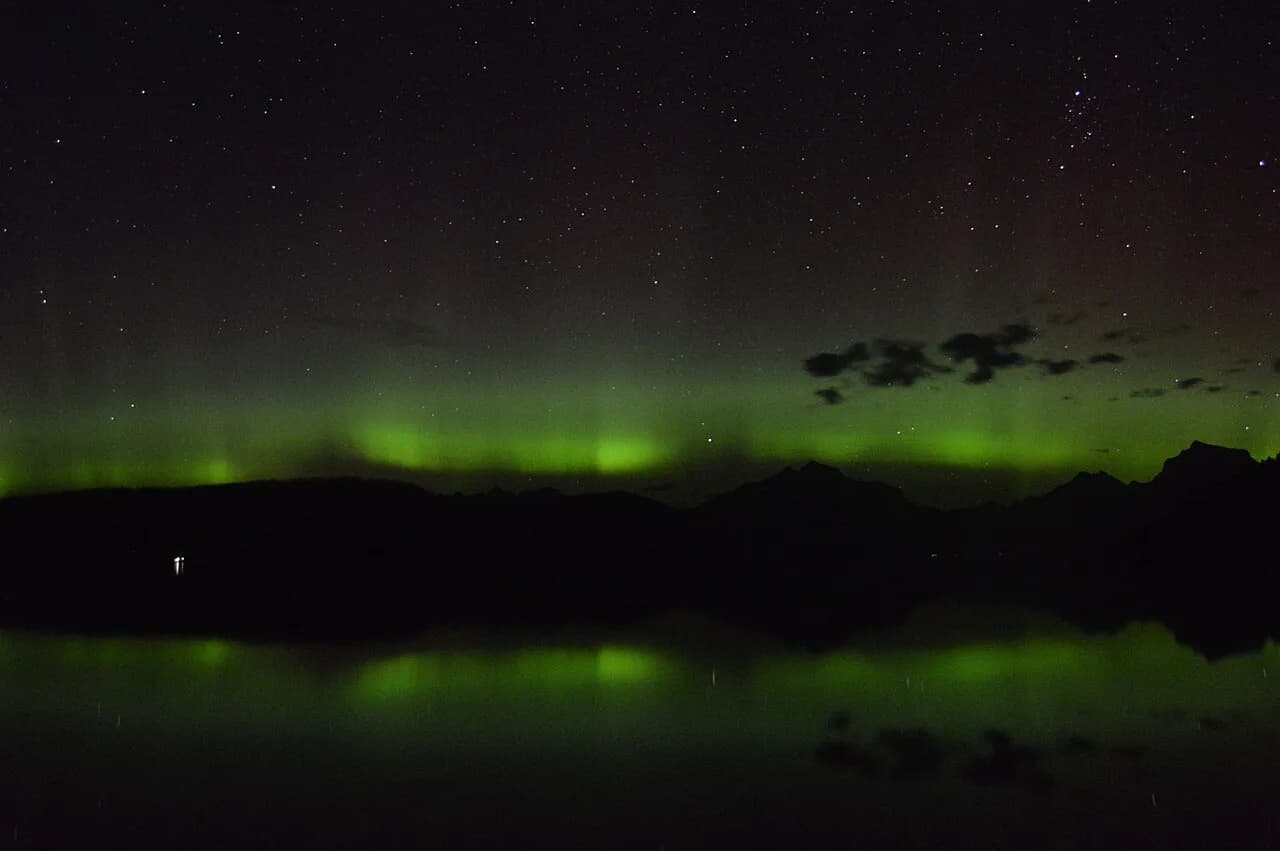
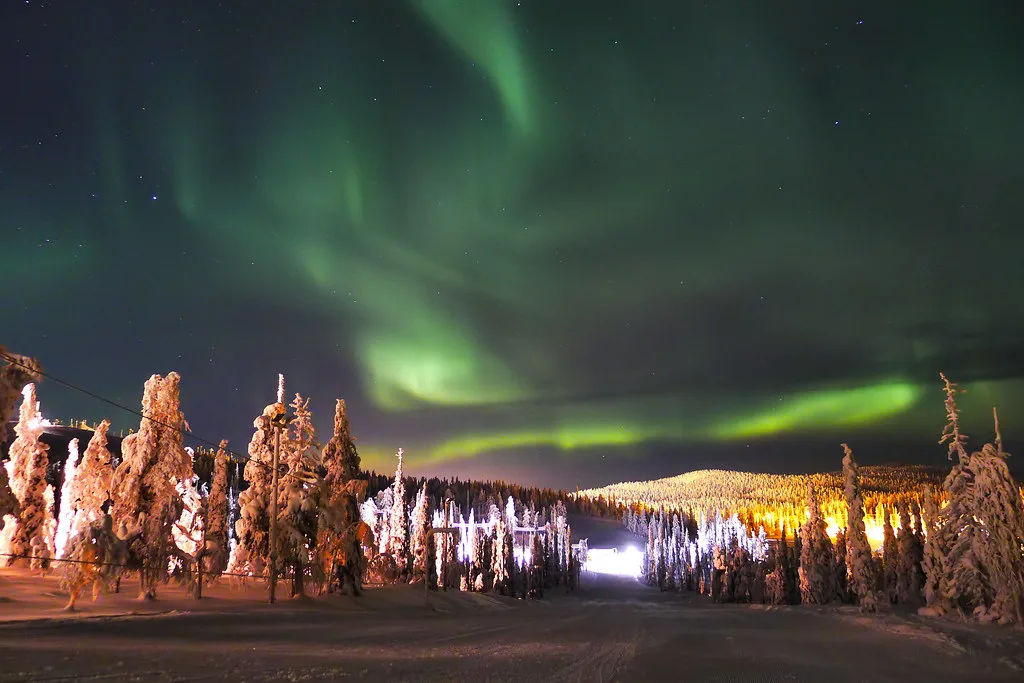
In Finnish and Swedish Lapland, the dark-sky spots sit close to the villages: frozen lakes, forest clearings, fell tops and pull-offs on quiet roads. Ask your accommodation where the best open-sky ground is within a short drive, and pick somewhere you can reach without a long navigation on ice. In Iceland, use the empty roads away from towns and check road and weather conditions before setting off.
Hard truth about the moon: a very faint aurora sitting directly in front of a full moon can wash out, but any half-decent display stays clearly visible even under a full moon, so there is no need to plan a trip around lunar phases. The real ceiling on your odds is cloud, not moonlight.
Self-guided chasing versus a booked aurora tour
If you rent a car, you can drive out of cloud and into clear sky yourself, which is why dedicated aurora chasers in Finnish Lapland and Sweden often cover serious distance on a rough night. The cost is a car, winter tyres, careful driving on ice and the flexibility to change plans at short notice. Operators typically run their night tours from early evening, matching pick-up to darkness, so a guide can be the more relaxing route if you would rather not drive.
A guided night usually includes transport, thermal suits plus boots, hot drinks and a guide reading the cloud and aurora forecast; some include photography help. Nights run long and unpredictable: activity can start anywhere from early evening to after midnight and often arrives in waves of roughly half an hour, with displays lasting from fifteen minutes to several hours. Expect a waiting game and build in patience, since aurora activity keeps to no fixed schedule.
Glass igloos, aurora cabins and lodges for December
Glass-ceiling igloos and panorama suites let you watch the sky from bed, which is genuinely useful in December, when the long dark means a display can appear while you sleep. The compromise is cost and comfort: rooms are compact, privacy is limited, and the ceiling glass can make the room colder or brighter than a standard hotel room. Aurora camping experiences like ours are covered in our aurora hotel guide, which compares the different styles of glass and cabin accommodation.
An alternative is a warm cabin or lodge on dark ground outside the village, with the option to step out for the sky and retreat inside again. Many northern properties run aurora alert systems that notify guests when displays begin, which is a practical way to catch the lights without staying up all night. If you want the widest range of December accommodation styles, our roundup of Ice Hotels in Europe covers the ice rooms, snow suites and cabin-style stays.
Pairing aurora nights with December activities
December's brief daylight is best used for daytime activities that do not need the aurora: husky safaris, reindeer sledding, snowmobiling, snowshoeing and ice fishing all feature in northern Lapland, and a trained team can often take you along well-worn routes. Pick a base with several operators so a cloudy night does not leave you with nothing to do. If the snow is the main draw, Swedish Lapland's river country offers another angle.
Farther north, a stay in a glass igloo pairs naturally with daytime activities, and a December trip lets you combine both without sacrificing either. At Lake Inari the frozen lake doubles as a viewing platform and a path for snowmobiling, so you can use the same landscape for both the aura and the daytime adventure.
How many nights to plan for a fair chance
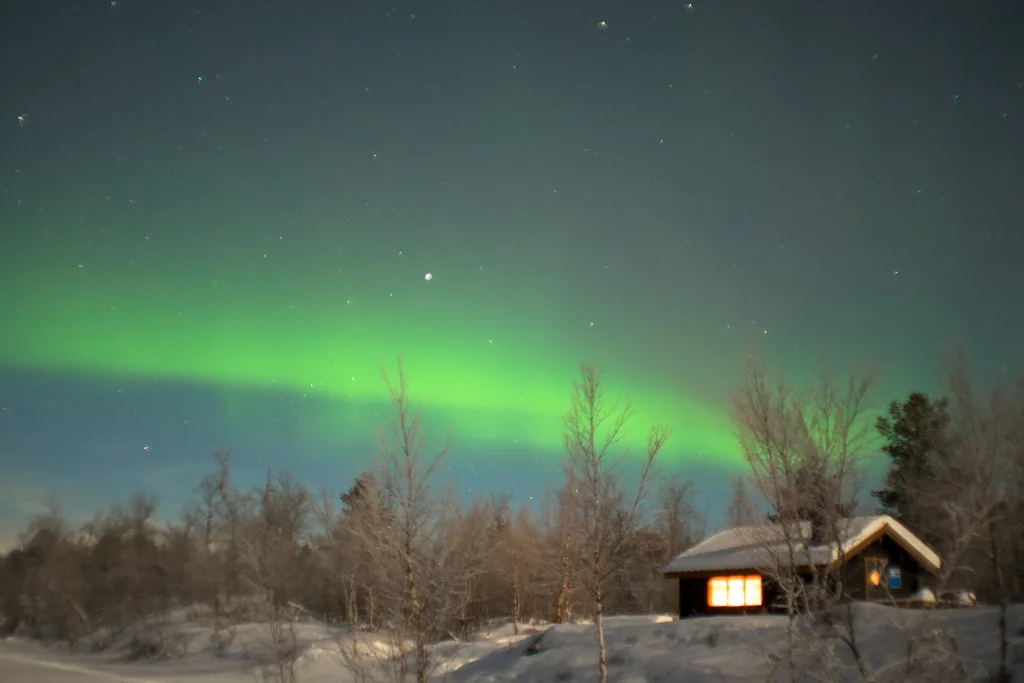
Aurora Queen Resort states that a three-night stay in a good northern location offers roughly a 70-80% chance of seeing the lights in December, rising above 90% across a week-long stay, but that is the resort's own marketing claim for its area, not a forecast for your trip. Treat it as a reason to book several nights rather than one, not as a promise you can rely on. Clear skies come and go, and a cloudy evening is often followed by a superb one.
Whatever the figure, a week gives you room to absorb a bad spell, whereas three nights or fewer leaves little margin. Experienced aurora travelers rarely regret booking five to seven nights in December, because the extra nights double as sleigh rides, saunas and slower mornings. The odds are not raised by a single clear night but by a run of them.
December crowds, holidays and what to expect
December is high season in Finnish Lapland, and the festive weeks around Christmas draw families and Santa packages, which means busy restaurants, fuller flights and higher rates. The first half of the month is generally quieter than the holidays, and the very end brings New Year traffic. Prices for tours and rooms vary by lodge, so request quotes from individual hotels and tour companies.
The rewards are real. Deep snow, long nights and the festive atmosphere make December a photogenic time to travel, and the long dark hours mean aurora can appear from late afternoon into the night. Balance that against the limited daylight and the cold, and you have an accurate picture of a December aurora trip: spectacular when the sky clears, quiet and dark when it does not.
Plan Your Visit
For a December aurora trip, commit to a base well above the Arctic Circle, ideally in the inland Finnish or Swedish Lapland interior where cold, dry air gives you the clearest nights. Allow five to seven nights, choose accommodation outside town lights or with a glass-roofed view, and decide early whether you will drive to clear sky or book a guided night. Treat any quoted odds for a particular lodge as its own claim, and let the aurora be the reward for a well-planned week rather than the only thing you are waiting for.
Frequently Asked Questions
Can you see the northern lights in December?
Yes, December falls inside the aurora season that runs roughly late September to late March, and the long darkness gives plenty of viewing hours. Whether you see anything depends on solar activity and, above all, clear skies, so no operator can guarantee a display on any given night.
How much daylight is there in Finnish Lapland in December?
Very little: the sun barely rises, with daylight often limited to two to four hours of blue twilight before darkness returns. Plan shorter daytime activities such as safaris or snowshoeing inside that window and use the long dark hours for aurora watching.
Where are the best places to see the northern lights in December?
Inland northern Finland, including Inari, Utsjoki, Enontekiö and Saariselkä, plus Swedish bases such as Kiruna and Abisko, offer cold, dry air and dark skies away from town lights. Iceland can be superb on a clear night, but cloud cover there is more changeable, so treat it as a bonus-aurora destination.
What time of night should you look for the aurora in December?
With so few daylight hours, displays can appear from late afternoon onward, but activity often builds through the evening and can arrive in short waves rather than all night. Many guides suggest being ready around early evening and staying patient until after midnight.
How many nights do you need in December to have a fair chance?
Five to seven nights gives you room to sit out cloudy spells and catch a clear run. Aurora Queen Resort markets a three-night stay at roughly a seventy to eighty percent chance and a block of seven nights above ninety percent, but those are its own claims for its location, not a forecast for your trip.
Does cold weather improve your chances of seeing the aurora?
Cold, dry inland air often brings clearer skies, which is why clear nights cluster away from the coast in Finnish and Swedish Lapland. The cold itself does not create aurora, but the stable conditions that come with it help.
Is 2026 a good December for the aurora?
Solar activity remains elevated through 2026 and into 2027 after the 2024 to 2025 peak, which helps your odds, but no single year is now-or-never. This far north the lights are a frequent sight through the season, and cloud cover matters more than the cycle on any given night.
Sources
Notes for your Arctic winter trip
Optional updates to our northern lights guides.
You might also like
Continue reading
More guides you'll find useful