Abisko in January: Polar Night, Auroras & Winter Tours
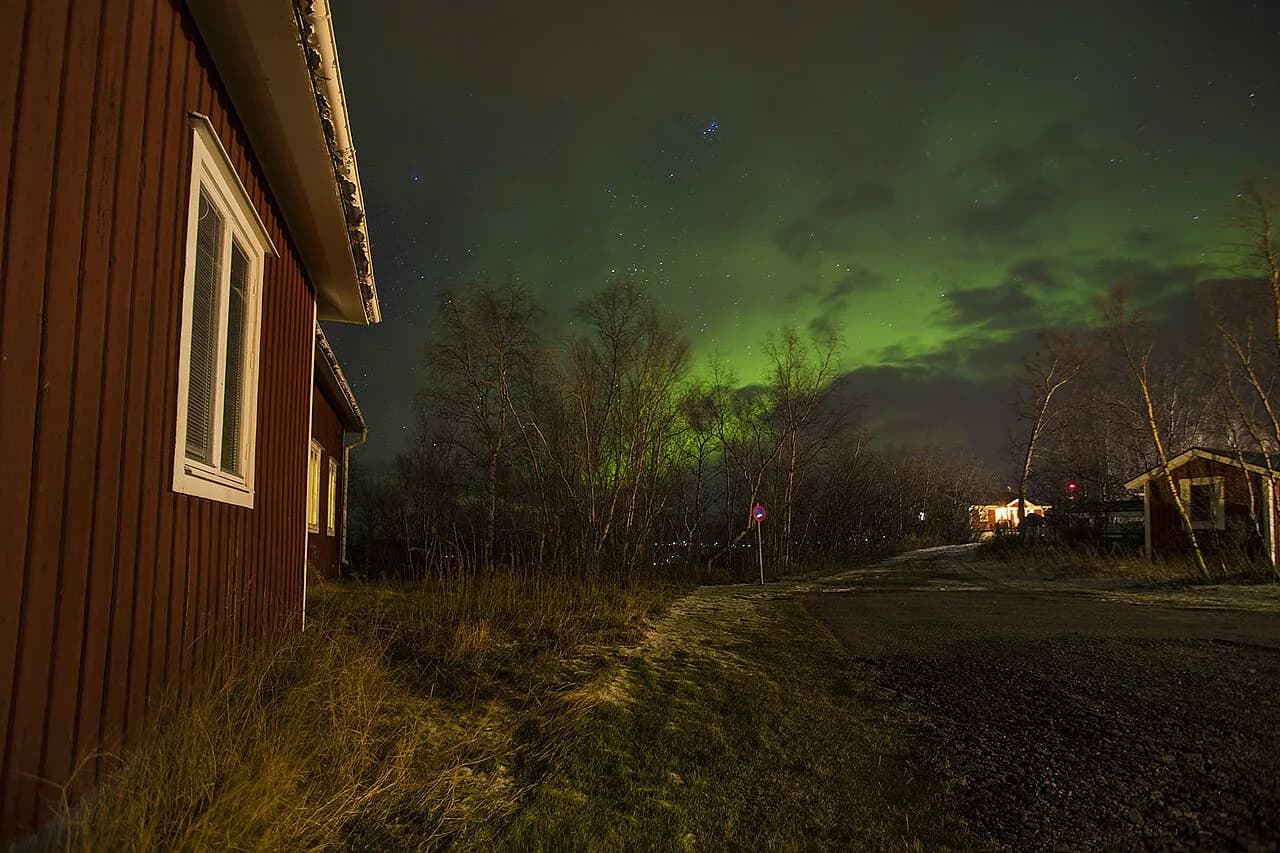
Abisko in January brings polar night daylight, temperatures of -10 to -20°C and long dark nights for aurora watching from the park and Aurora Sky Station.
On this page
Abisko in January is a subarctic valley at full winter, sitting far north in Swedish Lapland near the Norwegian border along the E10 and the Kiruna–Narvik rail line. The village is small enough to cross on foot, the national park trailheads start a few minutes from the station, and the long nights leave plenty of room for aurora watching. It suits travelers who want a quiet, cold, dark base with easy access to the park rather than a resort with a packed programme. If you want to compare this valley with the wider region before committing, our guide to the northern lights in Swedish Lapland is a useful next read.
January is the month when the daylight is shortest and the nights are longest, which is exactly the trade-off the place offers: little daytime light for hiking, but hours of dark sky over Lake Torneträsk and the surrounding ridges. The cold is real, so plan the trip around one main night activity and keep the short day for the canyon, the trails and the village. Clear skies decide whether the lights appear; solar activity only sets the baseline, and Kp readings are guidance rather than a forecast for one spot.
Why January suits aurora watching in Abisko
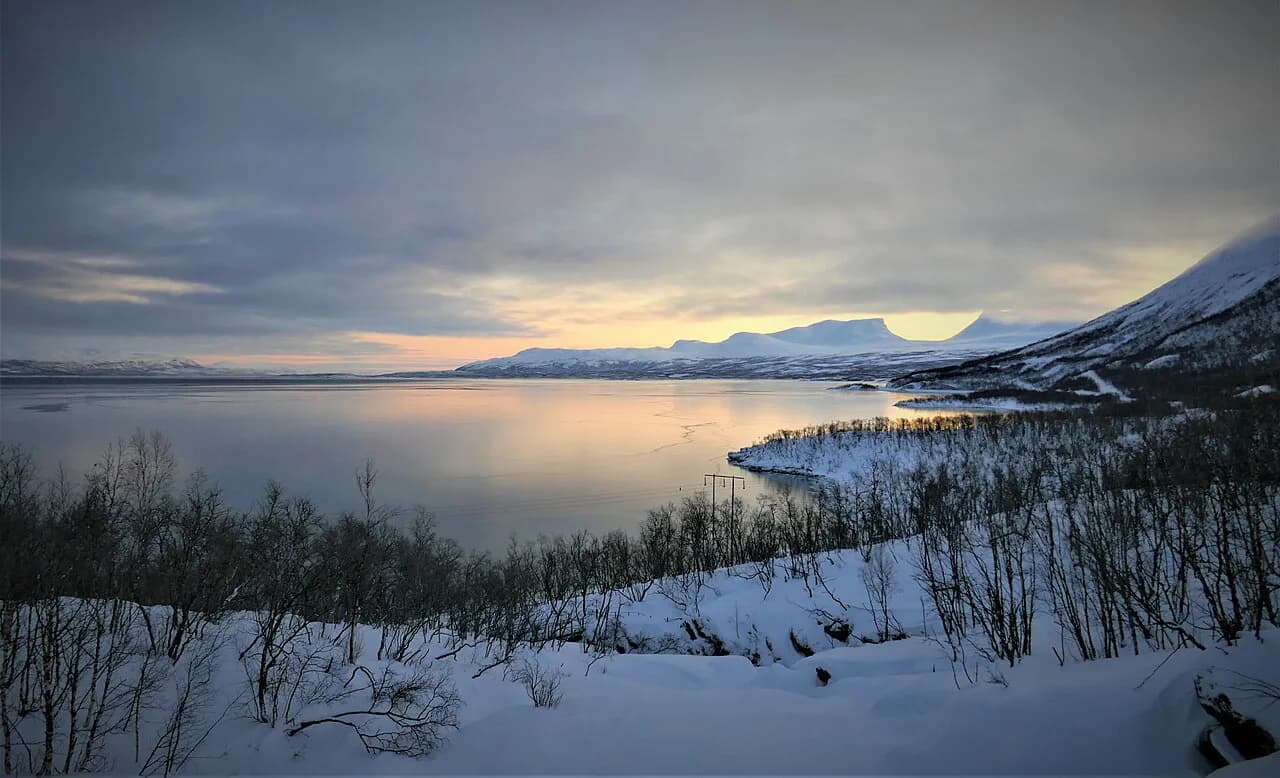
Abisko sits in a real subarctic valley at the far north of Sweden, close to the Norwegian border, with birch forest, bare ridges and the canyon of the Abiskojåkka within walking distance of the rail station. That layout matters in January: you can step off the train, walk a few minutes and be on the Kungsleden, with no transfer needed to reach dark ground. The valley's stable microclimate and low light pollution are the reasons it is treated as one of Europe's best aurora spots, and the chairlift up Mount Nuolja gives a higher, panoramic view over the lake and Lapporten.
A clear January night here is long, and the open landscape over the lake leaves a wide band of sky visible from almost anywhere in the village. The park is free to enter, which makes self-guided nights realistic, though food and huts are expensive and STF accommodation books out in peak season. In January the trails and services are quieter than in summer, when July brings the most visitors and the highest accommodation prices.
Daylight during the polar night
Abisko flips to polar night in midwinter, with almost no daylight from early December to early January, and January begins at the tail end of that stretch. Expect a short, low twilight rather than a proper day, so plan outdoor walking around the brightest hours and keep the rest of the day for indoor time, saunas or the train journey. By late January the light is already returning, which makes the second half of the month noticeably more usable for daytime activities.
The upside of the short day is a very long window for aurora watching, since the sky is dark through the afternoon and evening. In summer the same place has nearly 24 hours of daylight from late May to mid-July, so January is the opposite extreme and the reason winter visitors come for the night sky rather than the trails.
January temperatures and snow
Winter in Abisko plunges below freezing and often sits between -10 and -20°C, which shapes how a night out works: short sessions, a warm base to return to, and a guide or vehicle never far away. Operators run their chases and photography tours in these conditions, and some lend thermal suits and boots, so check what a given tour includes before you book. Deep cold also means the lake and trails are snow-covered, so the winter focus shifts to cross-country skiing, snowshoeing and aurora watching.
The contrast with the shoulder season is worth weighing. Autumn in Abisko, especially October and November, is warmer than deep winter, the crowds are fewer, and Torneträsk has not yet frozen, so auroras can reflect off open water for a double display. January trades that comfort and the reflections for full snow cover and the deepest, longest darkness of the year.
Aurora odds in January
Geomagnetic activity tends to spike around the equinox, which is one reason October and November often deliver strong displays, but January still offers long dark nights and a low-sun winter sky. The deciding factor on any given night is cloud, not Kp alone: a modest Kp under clear skies beats a high Kp under overcast. Give yourself several nights and accept that some will be cloudy, since no operator can promise a sighting.
Abisko's reputation rests on its stable microclimate and low light pollution, which is why the Aurora Sky Station sits above the valley on Mount Nuolja. Treat that as a reason to choose the location, not a guarantee for your dates. Check the sky yourself, watch how the cloud moves over the lake, and keep a flexible plan for the clearest night of your stay.
Aurora Sky Station and the Mount Nuolja chairlift
Aurora Sky Station sits high on Mount Nuolja above the village, reached by a short chairlift ride that delivers sweeping views over Torneträsk and Lapporten. That altitude and distance from village lights are the point: you get an open horizon and a darker sky than at valley level. In January the lift runs into the dark season, so treat the trip as a night out and check the station's winter schedule before you rely on a daytime ride.
Book the station as one night of your stay rather than the whole plan, because cloud can close the mountain even when the village is clearer or the reverse. The same applies to any high viewpoint: it improves the odds but cannot control the weather. Pair it with low-level nights from the park so a single cloudy evening does not end your chances.
Dark-sky spots near the village
The national park itself is the simplest dark-sky option: no entrance fee, well-marked paths, and trailheads within minutes of the Turiststation and the rail line. The Abiskojåkka canyon has easy boardwalks and viewpoints, and the shore of Torneträsk gives an open view over the lake and toward the surrounding peaks. Walk away from the station lights, let your eyes adjust, and keep to marked ground in the dark.
Lapporten, the U-shaped valley on the horizon, is the landmark to orient by, and several nearby lookouts frame it for photographs. In January the snow cover and short daylight mean you should scout your spot in the afternoon twilight so the night walk is familiar. It is quieter in winter than in July, but the park is not empty, so expect other aurora watchers at the popular viewpoints.
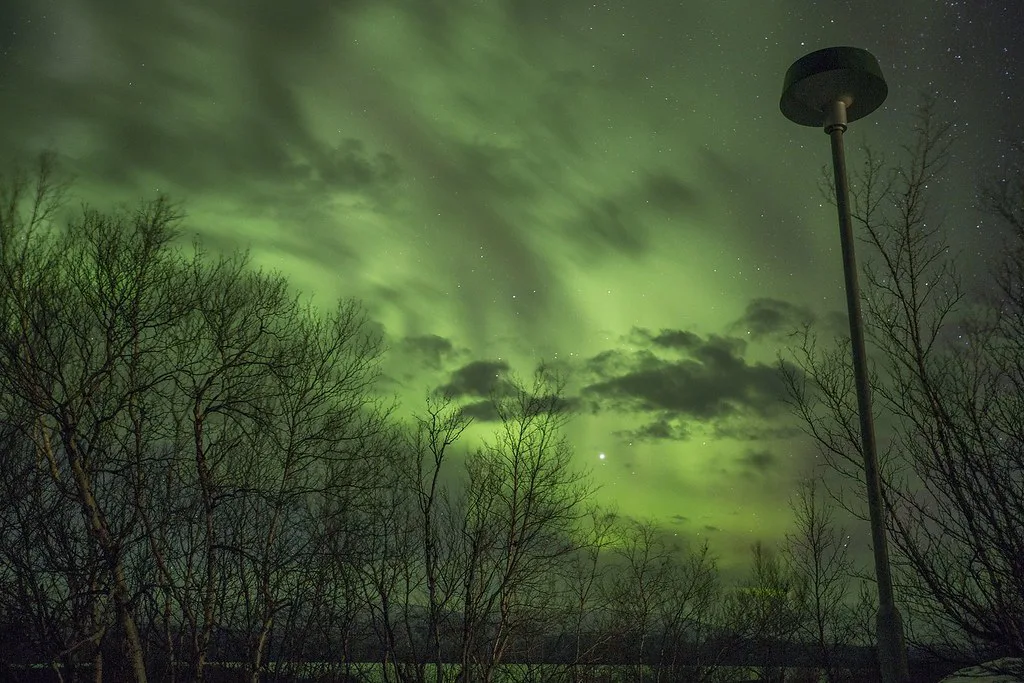
Self-guided chasing versus a guided chase
Self-guided aurora watching in Abisko is unusually practical because the dark ground starts at the village edge and the park needs no ticket. If you have a car, the E10 gives you room to move along the valley when cloud sits over one spot, though winter road conditions decide how far you go. On foot, you are limited to the village, the station area and the park trails, which is often enough on a clear night.
A guided chase adds local knowledge of where the cloud is breaking, plus transport and a driver who knows the winter roads. One listed option, the Abisko Aurora Chase, runs about four hours and starts from €92 per person, and the same booking page lists a longer aurora tour with dinner and a photography-focused night at higher starting prices. Read what each includes, since transport, hot drinks and camera help vary by tour.
Guided aurora photography tours
Photography tours in Abisko typically run several hours into the night and include a guide who can help with camera settings, which matters in cold conditions when fingers and batteries struggle. A four-hour photo-focused adventure is listed from €147 per person, and a two-night photography tour is listed from €389 per person, so the longer format costs more but gives a second chance at clear skies. Longer tours that combine two nights are the better fit if aurora photography is the main reason for your trip.
Treat all of those as starting prices from the listed Viator booking pages, which vary by date and group size. Daytime outings such as a morning hike in the park or a snowshoe tour are cheaper and shorter, and they are a good use of the limited January light while you rest for the night.
Snowshoeing, cross-country skiing and winter trails
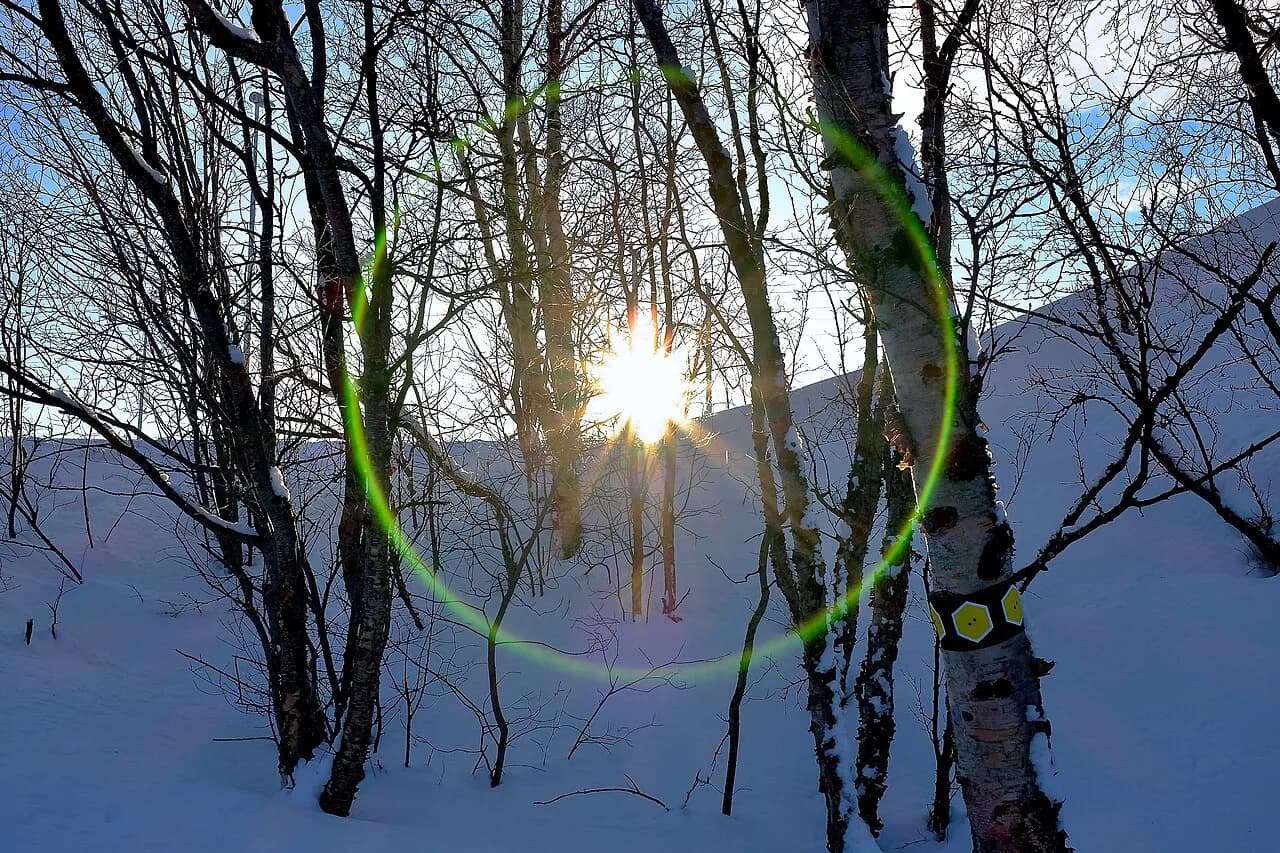
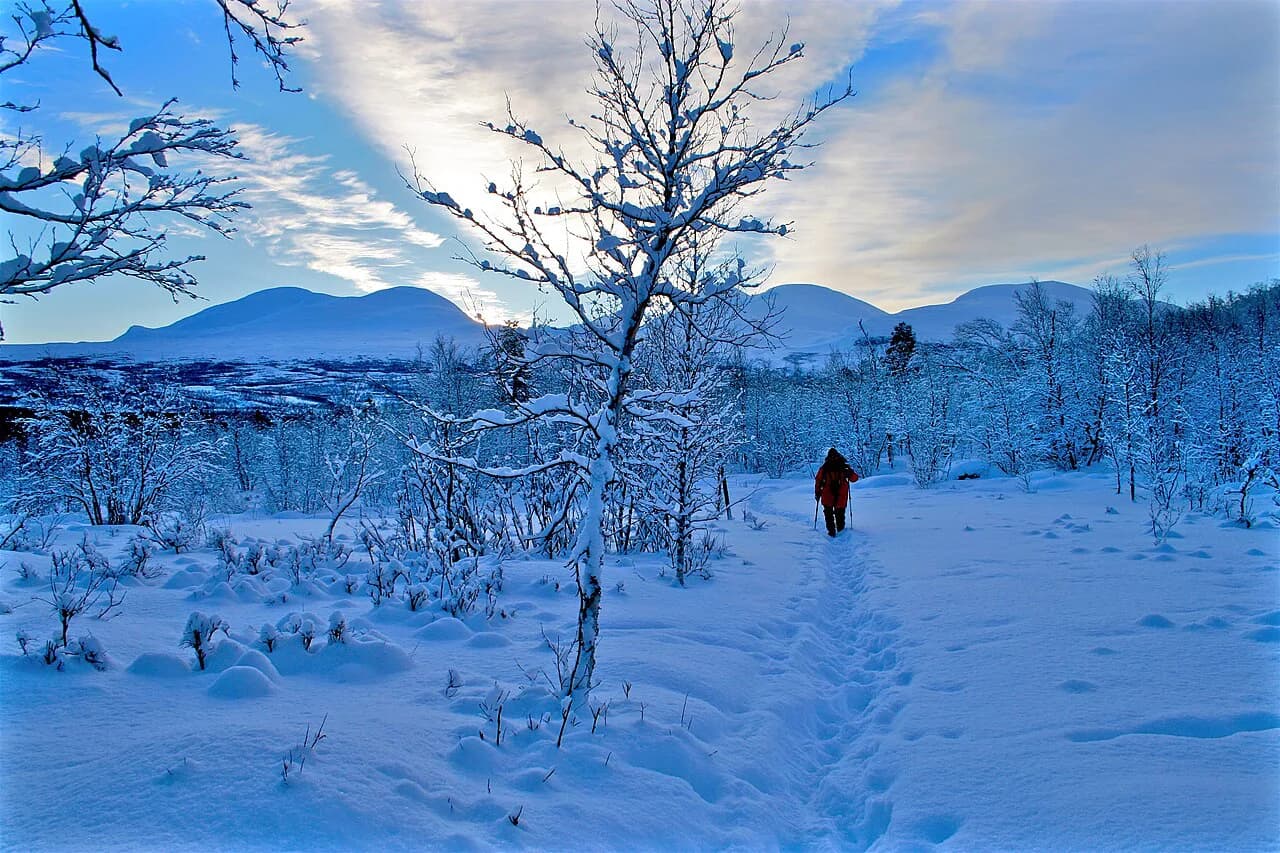
With the trails under snow, January shifts the focus to cross-country skiing, snowshoeing and aurora watching rather than long hikes. The national park's marked paths and the Kungsleden section from the station give a classic Arctic landscape of birch forest, river valleys and alpine plateaus without complicated logistics. A snowshoe tour in the park is one of the winter activities visitors book most, and it fits neatly into the short daylight window before the night chase begins.
Do not plan a long high route for January unless you are experienced with winter conditions: weather turns fast and the trails can feel bleak if you are underprepared. Keep to the marked paths near the station and the canyon, and save the bigger ground for clearer, brighter months.
Day trips: Icehotel and Jukkasjärvi
Jukkasjärvi, with the Icehotel and Sámi and reindeer visits, is one of the standard day trips from the Abisko area and makes a good use of a short winter day. Lights over Lapland lists an Explore the Icehotel outing and a visit to Sámi and reindeer in Jukkasjärvi among its individual activities alongside its aurora chases. These work as a daytime contrast to night watching, and they cover more ground than you would on foot from the station.
Kiruna is the other practical base for these excursions, and several tours run from there into Abisko by day or for the night. If you are staying in Abisko, check whether the day trip includes transport from the village before you commit, since transfer time eats into the limited light.
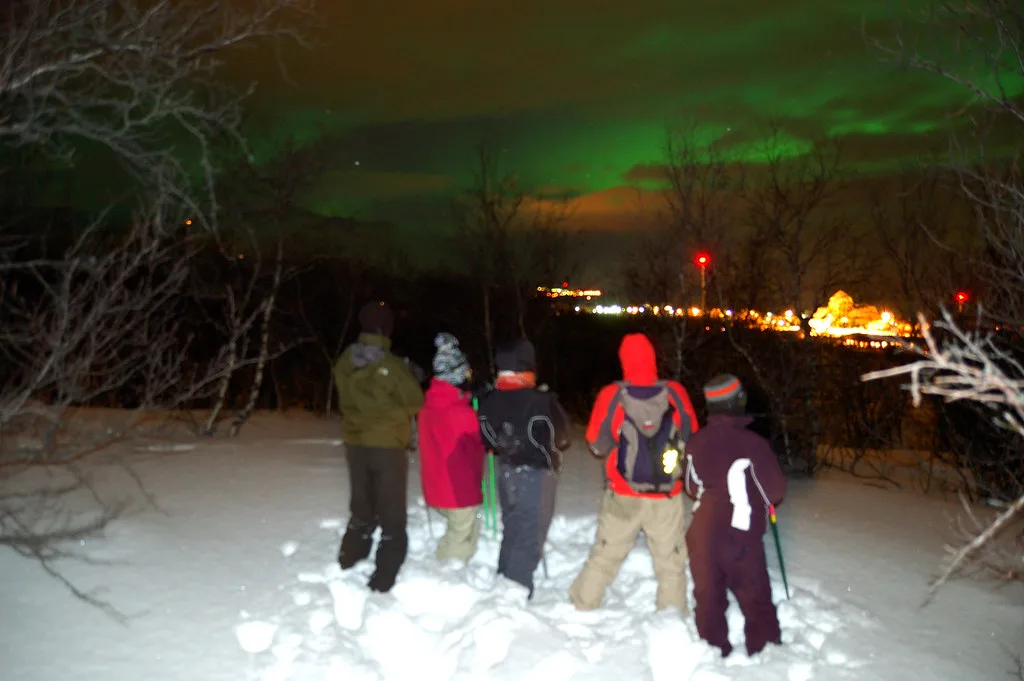
Getting there and how the village is laid out
Abisko is reached along the E10 and the Kiruna–Narvik rail line, and the station puts you within a few minutes' walk of the Kungsleden and the park trailheads. That makes the village easy to use without a car: you arrive, drop bags and walk to dark ground the same evening. Narvik, over the border, is the rail endpoint and a passing comparison rather than a base for this trip.
The village is small and spread between the station area and the park entrance, so most of your January movement happens on foot or on a short drive. If you book a chase, ask for pickup where you are staying, since a night out in -10 to -20°C depends on a warm vehicle and a prompt return.
Where to stay in January
The STF Turiststation is the classic base, with the rail line, the park trails and the chairlift to the Sky Station all close by, and backpacker-style hostel and camping options nearby for lower budgets. STF accommodation books out in peak season and food and huts are expensive, so book early if you want a bed rather than a tent. A tent in January snow is the real budget move, and it demands proper winter equipment and experience.
The choice comes down to comfort versus cost and access: the station area keeps you close to lifts and trails, while cabins and lodges further from the station may need a car for night chasing. Either way, a warm base with somewhere to dry gear matters more in January than in the milder shoulder months, when you can linger outside comfortably.
Crowds, cost and services in January
January attracts fewer people than the summer peak, when July brings the busiest trails and the highest accommodation prices. Winter prices can be lower, but factor in specialised gear rental and guided tours if you are not self-sufficient. The services that remain are aimed at aurora visitors, so night tours run while some daytime options thin out.
The trade-off is straightforward: you get solitude and long dark nights but a very short day and a thin choice of activities. In autumn, by contrast, the crowds are few, the air is crisp and operators can offer more personal, flexible trips before full winter operations begin. If comfort and flexibility matter more to you than deep snow, October and November are the easier months.
How many nights to plan
A fair plan is several nights on the ground, treating each as an attempt and accepting that cloud will wipe out some. Three to four nights gives you room for a clear evening even if the first two are overcast, and a private four-night aurora package, the 100% Private Aurora Escape, is one listed way to build that in. If you only have one night, book a guided chase so you at least have someone reading the cloud and driving you to a break.
Keep your nights flexible around the clearest forecast and avoid booking a different paid tour for every evening. A course or photo tour spread over two nights costs more but doubles your chances of a usable sky, and a final reserve night in the village lets you chase on foot if the weather clears late.
Planning a January Trip to Abisko
January in Abisko gives you the deepest darkness of the year, full snow cover and a village you can walk in minutes, at the cost of -10 to -20°C nights and very little daylight. Build the trip around a handful of nights, mix low-level park watching with one trip up the Aurora Sky Station chairlift, and use the short day for snowshoeing, the canyon or a Jukkasjärvi day trip. Clear sky, not Kp alone, decides what you see, so keep the plan flexible and allow several attempts.
Frequently Asked Questions
Is Abisko in the Arctic Circle?
Abisko lies in the far north of Swedish Lapland, near the Norwegian border along the E10 and the Kiruna–Narvik rail line, in the subarctic valley that holds the national park. That position gives it polar night in midwinter and a long dark season for aurora watching.
Is January a good time to see the northern lights in Abisko?
January offers long dark nights and full winter conditions, and Abisko's stable microclimate and low light pollution are why it is treated as one of Europe's best aurora spots. Cloud is the deciding factor on any given night, so no sighting is guaranteed; several nights on the ground improve your odds.
How much daylight does Abisko get in January?
Abisko has almost no daylight from early December to early January during polar night, and January begins at the end of that stretch. Expect short, low twilight early in the month and noticeably more usable light by late January.
How cold is Abisko in January?
Winter temperatures often sit between -10 and -20°C, which shapes a night of aurora watching into short sessions with a warm base and transport close by. Operators run their chases and photo tours in these conditions, and some lend thermal suits and boots.
Can you see the northern lights from Abisko without a tour?
Yes. The national park has no entrance fee, the trailheads are minutes from the station, and the canyon and the shore of Lake Torneträsk give open, dark views. Walk away from village lights and keep to marked ground, or drive the E10 to find a break in the cloud.
How many nights should you stay in Abisko in January?
Three to four nights is a fair plan, since cloud can wipe out any single evening and a reserve night lets you chase late if the sky clears. If you only have one night, book a guided chase so someone else is reading the forecast and driving the winter roads.
Which tours run from Abisko in January?
Guided aurora chases run several hours at night, including a roughly four-hour Abisko Aurora Chase, with photo-focused and dinner tours at higher starting prices. Daytime options include snowshoeing in the park and trips to the Icehotel and Jukkasjärvi, so check what each tour includes before booking.
Sources
Notes for your Arctic winter trip
Optional updates to our northern lights guides.
You might also like
Continue reading
More guides you'll find useful