Iceland in September: Aurora Season Starts
Plan an Iceland trip in September: daylight hours, temperatures and the return of dark nights for aurora hunting, plus the tours that still run.
On this page
September gives you two seasons in one trip: long, drivable days for the Ring Road and the South Coast, and nights dark enough for the aurora to return after the bright summer. It suits travelers who want autumn colors, whale watching and glacier hikes by day, then a genuine shot at the northern lights after dinner. The catch is cloud, so plan around where the clearest skies tend to sit rather than around a single booked night.
Why September splits the season
September is the hinge month: many summer tours and activities are still running, most roads remain open, and the darker nights create the first real aurora opportunities of the autumn. That combination is rare, because by the time the nights are long everywhere the highland roads have usually closed and the boat and kayak trips have wound down. Decide early which half of that trade you care about most.
Treat September as a road-trip month with an aurora habit attached. A standard rental car handles the Ring Road, the Golden Circle, the South Coast and Snæfellsnes, while a four-wheel drive is the sensible choice for gravel roads and the highlands. Because daylight shrinks noticeably by the end of the month, build each day's driving around getting to your overnight base before dusk.
Daylight in September: from roughly 14 hours to about 11
The month opens bright and closes noticeably darker. On 1 September sunrise comes at 6:11 AM and sunset at 8:41 PM, roughly 14.5 hours of daylight; by late September sunrise is after 7:30 AM and sunset is around 7 PM, leaving about 11.4 hours. That steady loss of light is exactly what makes late September a better aurora bet than the first week.
Visit Iceland puts the same slide in rounder terms: around 14 hours of daylight in early September, 12 to 13 hours mid-month, and 11 to 12 hours late in the month. For planning, the practical consequence is that you can still sightsee into the evening early in the month but should finish long drives well before dark in the final week.
September weather and temperatures
Expect mild, changeable conditions rather than winter. Visit Iceland gives average daytime temperatures of 48–54°F (9–12°C) and nights of 41–46°F (5–8°C), with passing showers and coastal wind, and notes that the weather can differ sharply from one region to the next. Guide to Iceland's Reykjavik figures are similar but cooler, hovering near 8.6°C on average, with afternoons around 11.6°C and nights around 6.3°C.
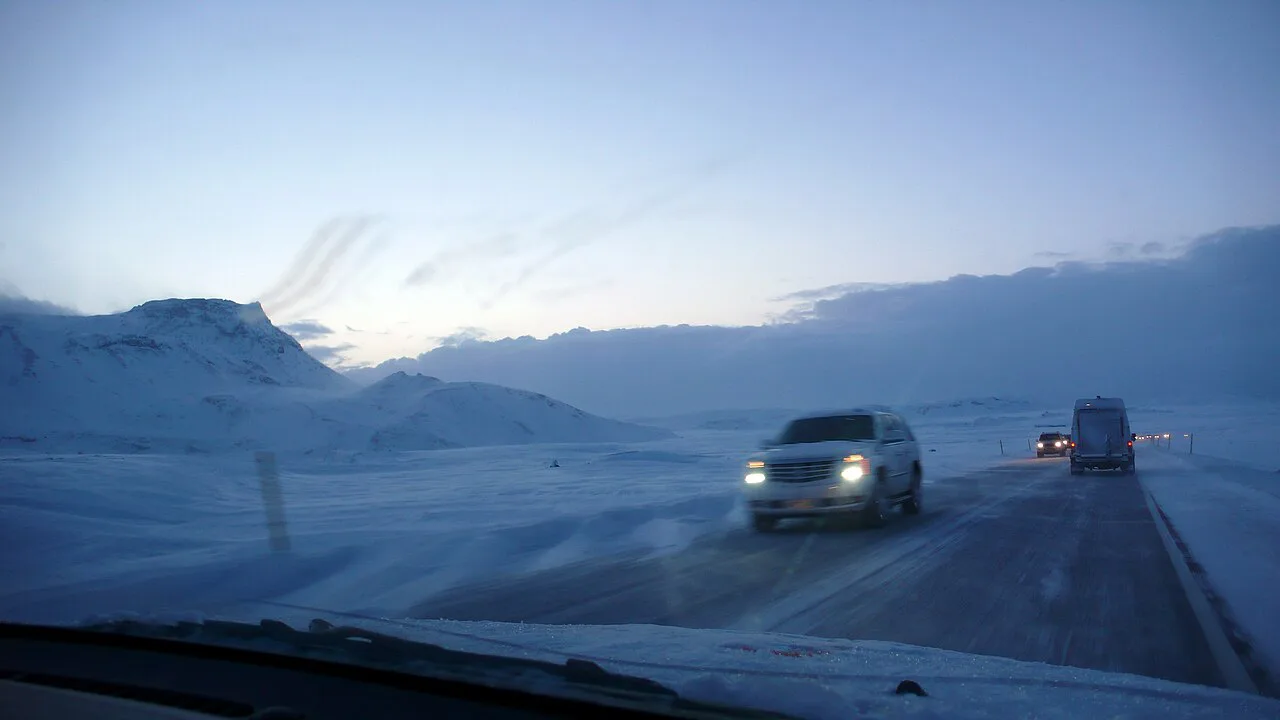
Snow is generally limited to mountain peaks outside the highlands in September, though it can fall at higher elevations and in the highlands. Arctic Adventures puts the month's range at about 5°C to 10°C, with wind and rain common and snow unlikely at lower levels. Frost does return to northern and inland areas, so nights spent outside the south feel colder than the coastal averages suggest.
Rain is the defining feature, and it is uneven. Reykjavik's rainfall peaks in September, while North Iceland's does not peak until October, which makes the north the drier choice for a whale-watching day around Húsavík. That same logic matters for aurora planning: a wet forecast in one region does not mean a washed-out trip everywhere.
How far north Iceland sits and why the aurora shows here
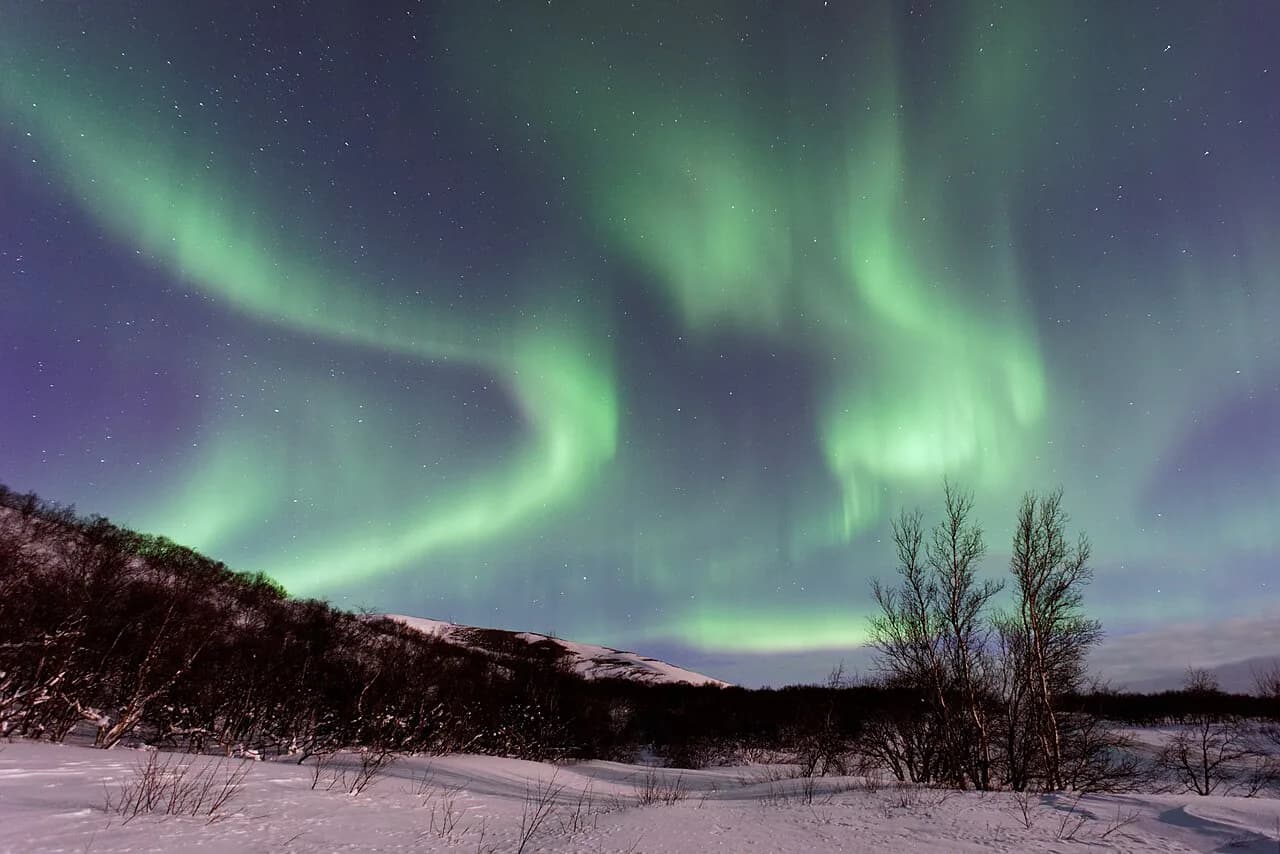
Iceland sits just below the Arctic Circle, and the auroral oval that rings the magnetic pole passes over the country, so displays are possible overhead rather than only on the northern horizon. September brings the dark skies that were missing from May to August, when the nights never get dark enough for the aurora to register.
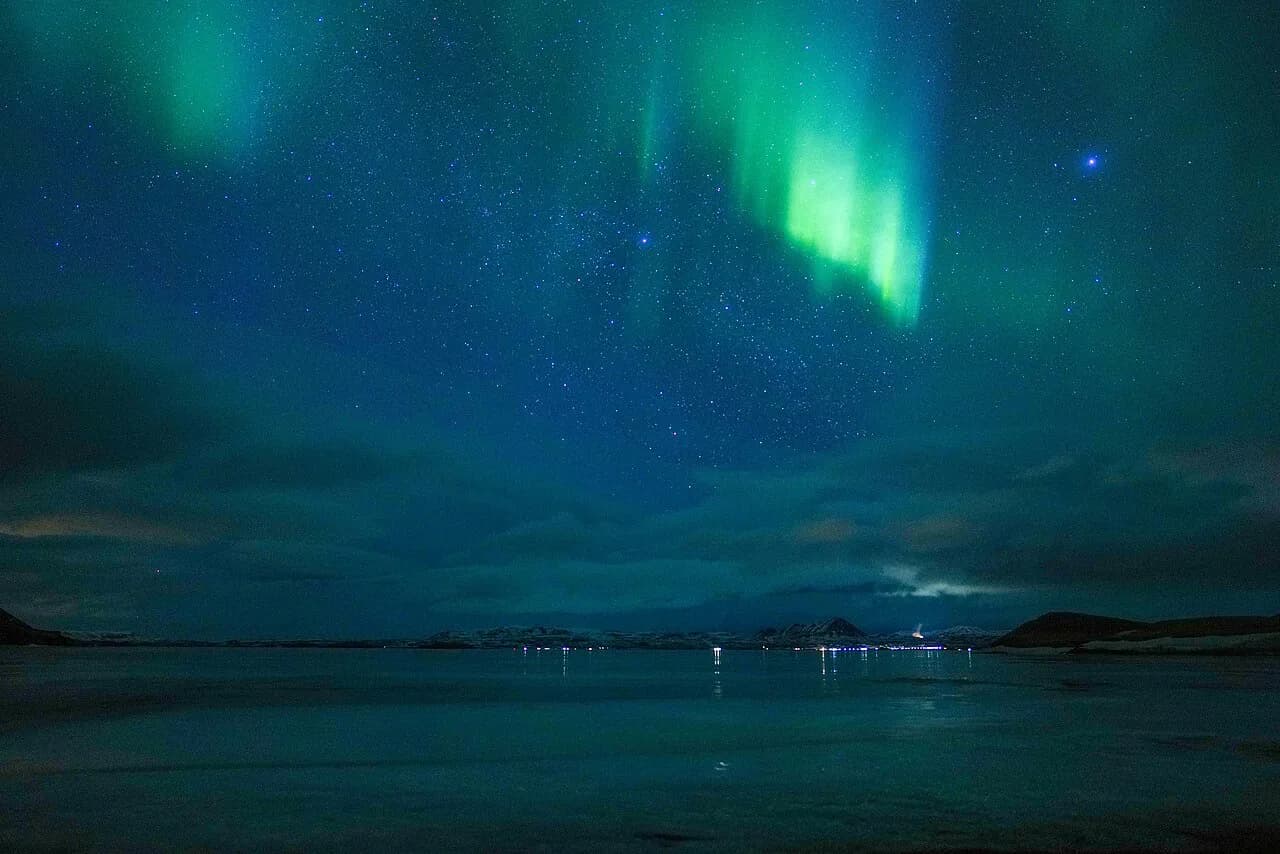
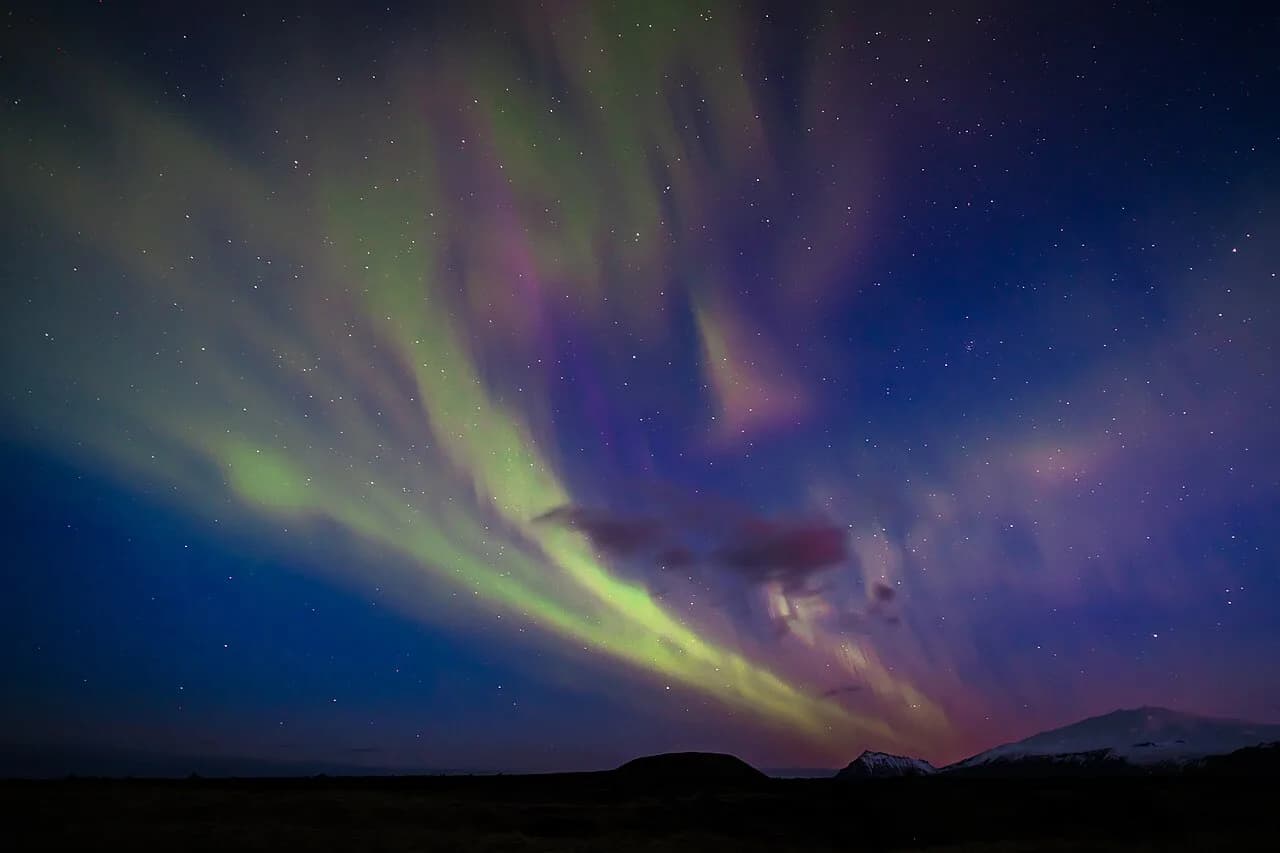
Aurora activity itself depends on solar wind hitting the magnetic field, and Kp values are a rough guide to how far south displays may reach, not a promise for any given spot. What you can control is darkness and cloud: get away from town lights, face north, and give your eyes time to adjust. For the wider picture of how the season behaves, see this guide to the northern lights in Iceland.
When the aurora season runs and why September sits near the equinox
Iceland's aurora season runs from September through April, bounded at both ends by nights that are too bright for displays. September sits near the autumn equinox, a period of elevated geomagnetic activity: together with March it accounts for more than a quarter of all severe storm intervals in 95 years of records. That is a reason for optimism, not a guarantee for your particular dates.
Read the equinox boost together with the cloud statistics and you get the honest picture of September: strong activity, weak skies. The displays that do break through tend to arrive in clear windows between low-pressure systems, which is why a flexible itinerary and a nightly forecast check matter more this month than in midwinter.
Where to watch near Reykjavik and away from its lights
Auroras can appear over Reykjavik, but the viewing is better once you leave the city glow behind. The capital makes a convenient base for the first and last nights of a trip, and short drives toward the darker edges of the Reykjanes Peninsula give you a genuine dark-sky option without relocating.
The bigger rewards come from sleeping outside the city for two or three nights, ideally on the South Coast or further east where the cloud odds improve. Even from a rural hotel, pick a spot with an open northern horizon and no yard lights, and accept that a short drive at 11 PM may be the difference between green haze and nothing.
Self-drive aurora chasing versus guided night tours
Chasing yourself gives you the freedom to follow a clearing sky and to combine aurora nights with daytime sightseeing along the Ring Road. The trade-off is that you are reading cloud maps after a full day of driving, and late-September daylight ends earlier than you may expect. A rental car with unlimited mileage and a flexible booking is the practical version of this plan.
Guided departures are the more reliable option when cloud is the main obstacle, because guides track weather and solar activity and drive to wherever the gaps open. They also handle the night driving on roads that can turn slick after a cold snap. Book one early in your trip so you still have spare nights if it is clouded out.
The cloudiest month of the aurora season: why southeast Iceland matters
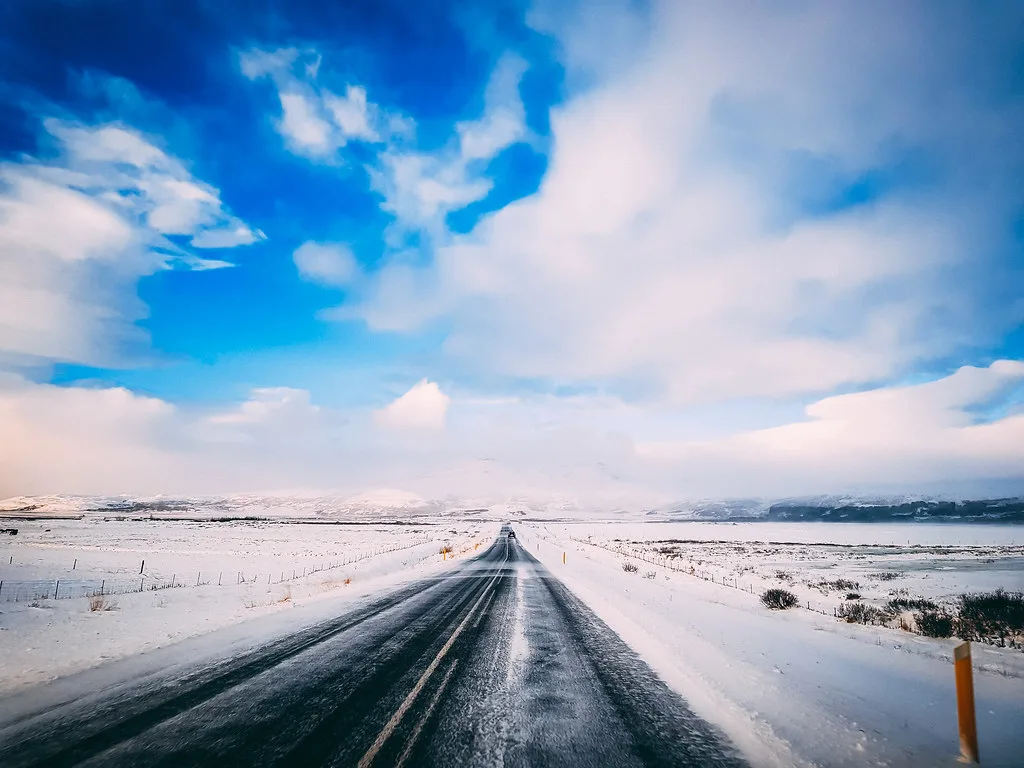
September is one of the cloudiest months of the aurora season, so location carries more weight than usual. Southeast Iceland has the least cloudy skies in the country through the season, along the corridor running from Kirkjubæjarklaustur through Jökulsárlón and Höfn to Djúpivogur. Building two nights into that stretch is the single most useful decision an aurora-focused September itinerary can make. That corridor is also the place to plan a day at the lagoon, and our guide to Jökulsárlón in September covers the iceberg boat rides and nearby ice caves.
A clear break can open anywhere, so do not treat the southeast as a rule and the rest of the country as hopeless. Check the cloud and aurora forecasts each evening wherever you are, and be willing to shift a night's accommodation if the satellite picture clearly favors another region.
Northern lights hotels and wake-up services
Iceland's answer to the glass igloo is the remote northern-lights hotel: a rural stay far from light pollution, often with a wake-up service if the aurora appears while you sleep. That convenience is worth real money on a short trip, since nobody wants to check the sky every hour on the chance of a display.
Weigh the isolation honestly. A hotel with no village around it means you eat where you sleep and you drive everywhere by day, but you gain a dark yard and a staff member watching the sky. A town base gives you restaurants and easier day trips at the cost of light pollution and a short drive to darkness each night.
How many nights to allow for a fair chance of clear skies
Because September is so cloudy, one night is not a plan; three or four nights with aurora potential is. That does not mean four tours, but four chances, whether from a hotel window, a dark roadside or a guided departure. Spread them across different regions rather than stacking them in one place.
A workable shape is two nights around Reykjavik and the South Coast, two nights in the southeast corridor, and a guided tour booked for one of the earlier nights so a cancellation leaves room to rebook. Keep the last night flexible and near Keflavík if you fly out early.
Highland F-roads and the late-September closure window
The highlands are the part of Iceland that genuinely shuts down. Main F-roads typically stay open until mid- to late September depending on weather, and the mountain roads then close for the season. Early September is often one of the last chances to reach Landmannalaugar, Þórsmörk and Kerlingarfjöll before that happens.
F-roads require a suitable four-wheel-drive vehicle, and a 2WD is otherwise all you need on the main roads in September. Check road conditions before committing to a highland day, and be ready to swap it for a South Coast drive if rain has made the tracks marginal.
Glacier hiking and the one ice cave that runs this early
Glacier hikes keep running through September, and the cooler air makes the ice pleasant to walk on. Guided tours operate on Sólheimajökull, Falljökull and in Skaftafell within Vatnajökull National Park, and a three-hour hike on Vatnajökull from Skaftafell is a good half-day fit around aurora nights.
Ice caves are mostly off the menu this early, because temperatures are still too high for the winter caves to be stable. The Katla ice cave is the exception that runs in September, so if a cave is a priority, that is the one to book rather than waiting for Vatnajökull's ice caves later in the season.
Kayaking, whale watching and lagoon boat rides
Several summer activities are in their final weeks. September is the last month for kayaking, including paddling among icebergs on Jökulsárlón, and it is one of the last months for a boat ride on the lagoon itself. Whale watching remains strong, with humpbacks, minkes, white-beaked dolphins and porpoises possible from Reykjavík, Húsavík, Akureyri and Dalvík.
Puffins are largely gone. Most leave in late August, and by late September you are unlikely to see them, so do not build a coastal day around a colony visit. Put the saved hours into a glacier walk or a longer South Coast drive instead.
Geothermal soaks, lagoons and natural pools
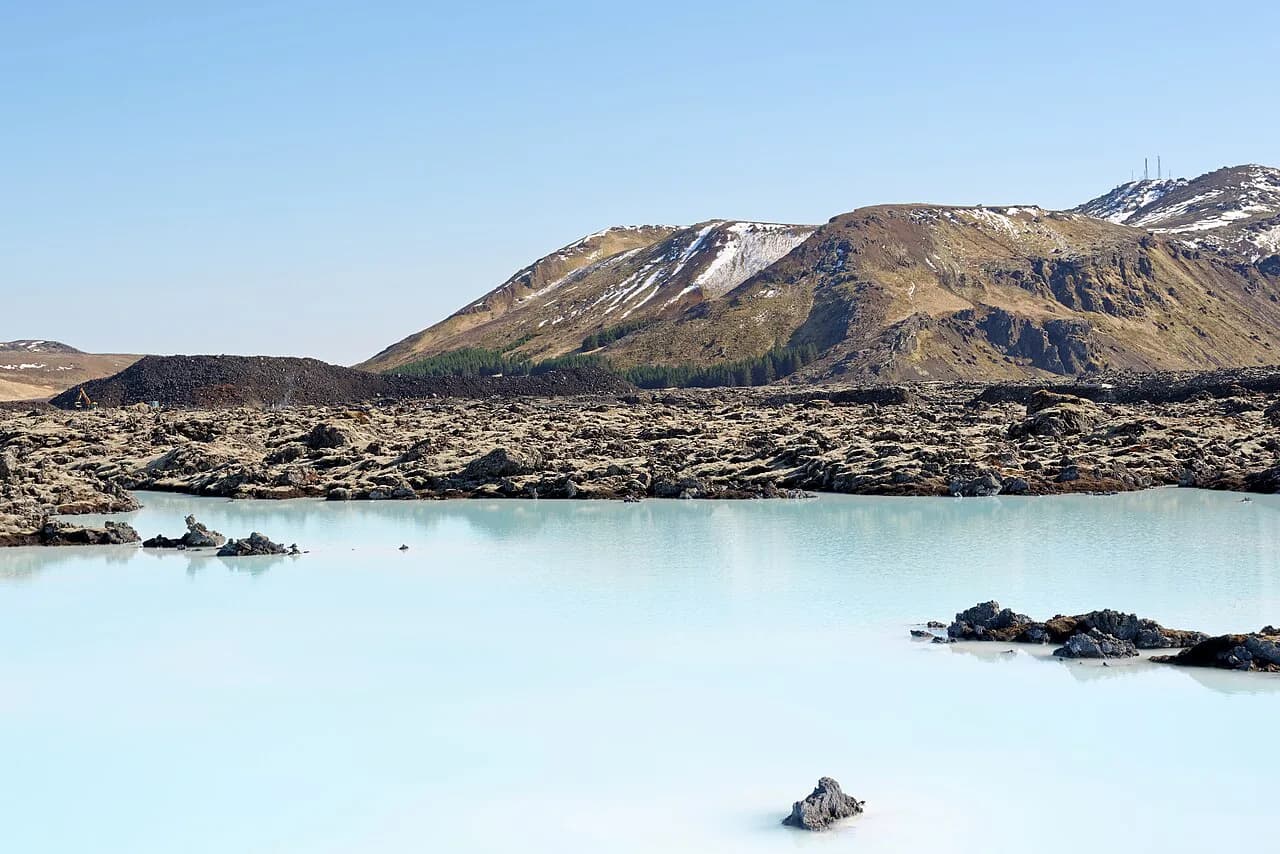
Cooler air makes a hot soak more appealing, and September is prime time for it. The Blue Lagoon sits on the way to Keflavík, the Sky Lagoon is just outside downtown Reykjavik, Hvammsvík Hot Springs looks over Hvalfjörður, and Laugaras Lagoon serves the Golden Circle.
Natural pools work best from May to September, before they get too cold for comfortable soaking, and Hrunalaug, Krossneslaug and Birkimelur are good examples. For a spa-style evening with ocean views, this guide to the Sky Lagoon in winter explains how the facility runs outside high summer.
If you want a quieter geothermal stop on a Golden Circle day, the Secret Lagoon in Flúðir pairs well with Þingvellir and the Geysir area. Book a slot rather than turning up, since September evenings are when many travelers try to fit a soak in after sightseeing.
Festivals, réttir round-ups and berry picking
September is a busy cultural month. Ljósanótt, the Night of Lights festival in Reykjanesbær, fills the first weekend with concerts, art, fireworks and the illumination of the cliffs above the harbor, while the Reykjavík International Film Festival runs at the end of the month. The capital also hosts a folk art festival, and Októberfest begins in late September at the University of Iceland.
Réttir, the annual sheep round-ups, bring animals down from the highlands and welcome visitors at many gatherings, with North Iceland hosting some of the best-known ones. Berry picking is in full swing too: crowberries and blueberries grow across hillsides and lava fields, though you should avoid protected areas.
Crowds, prices and shoulder-season booking pressure
September is off-peak, so flights and attractions are less crowded than in high summer and tour availability stays high. Accommodation outside Reykjavik is still in demand, so book rural nights early, especially in the southeast corridor where the aurora case is strongest.
September versus October for an aurora-focused trip
October wins on darkness: nights are longer and the aurora window is wider. September wins on access: the Ring Road, the highlands and the boat and kayak trips are still open, and the equinox boost to geomagnetic activity is in your favor.
If your priority is standing under the aurora with the best odds, later is better, but you trade away highland hikes and lagoon boat rides. If you want a full Iceland trip with aurora nights folded in, September bundles more into each day at the cost of more cloud.
Plan a September Aurora Trip
Build September around two ideas: a drivable Ring Road trip by day and repeated aurora chances by night, weighted toward the southeast corridor where the skies clear most often. Book at least one guided night early so a cloudy departure can be rebooked, and hold a final flexible night near the airport.
Frost on northern nights and the earlier dusk late in the month are the two details that catch travelers out, so keep daily driving modest and let the aurora set your evenings rather than your mornings.
Frequently Asked Questions
Is September a good month to go to Iceland?
Yes, for a mixed trip. You get fall colors, whale watching, glacier hikes, most roads open and far fewer visitors than in summer, plus the first dark nights of the aurora season. The compromise is unsettled weather and heavy cloud, so plan extra nights and a flexible route rather than a fixed schedule.
Will I see the northern lights in Iceland in September?
You might, but no one can promise it. September reopens the aurora season and sits near the autumn equinox, when geomagnetic activity tends to be higher, yet it is also one of the cloudiest months of the season. To improve your odds, sleep away from city lights, favor the clearer southeast corridor, and allow several nights rather than one.
How many hours of daylight does Iceland get in September?
Roughly 14 hours at the start of the month, dropping to about 11 to 12 hours by the end. Sunrise moves from 6:11 AM on 1 September to after 7:30 AM in late September, while sunset comes around 8:41 PM early in the month and near 7 PM by the end. Plan long drives for the middle of the day.
Is there snow in Iceland in September?
Rarely at low elevations. Snow is generally limited to mountain peaks outside the highlands, though it can fall at higher elevations and in the highlands, and frost returns to northern and inland areas. Coastal areas usually get rain instead, so expect wet ground rather than icy roads on the main routes.
Are the highland F-roads open in September?
Often until mid- to late September, depending on the weather, but they close for the season and mountain tracks can become marginal after heavy rain. F-roads require a suitable four-wheel-drive vehicle, and main roads are fine with a 2WD. Check road conditions before committing to a highland day.
Can you go ice caving in Iceland in September?
Mostly not, because temperatures are still too high for the winter ice caves to be stable. The Katla ice cave is the exception and runs in September, along with guided glacier hikes on Sólheimajökull, Falljökull and in Skaftafell. Save the Vatnajökull ice caves for later in the season.
Is September cheaper than summer in Iceland?
September is shoulder season, so flights and attractions are usually less crowded and tour availability is high, while rural accommodation still fills early. Exact costs depend on your dates and how far ahead you book, so compare rates for your own week rather than relying on a general figure.
Is September or October better for the northern lights in Iceland?
October gives you longer nights and a wider aurora window, which helps if the aurora is your only goal. September keeps the highlands, kayaking and lagoon boat trips running and carries the equinox boost to activity, but it is cloudier. Choose September for a full trip, October for darker skies.
Sources
Notes for your Arctic winter trip
Optional updates to our northern lights guides.
You might also like
Continue reading
More guides you'll find useful