Hotel Rangá, South Iceland: Aurora Stays Reviewed
Hotel Rangá pairs dark riverside skies with an observatory, aurora wake-up calls and geothermal hot tubs. See what a winter stay here really offers.
On this page
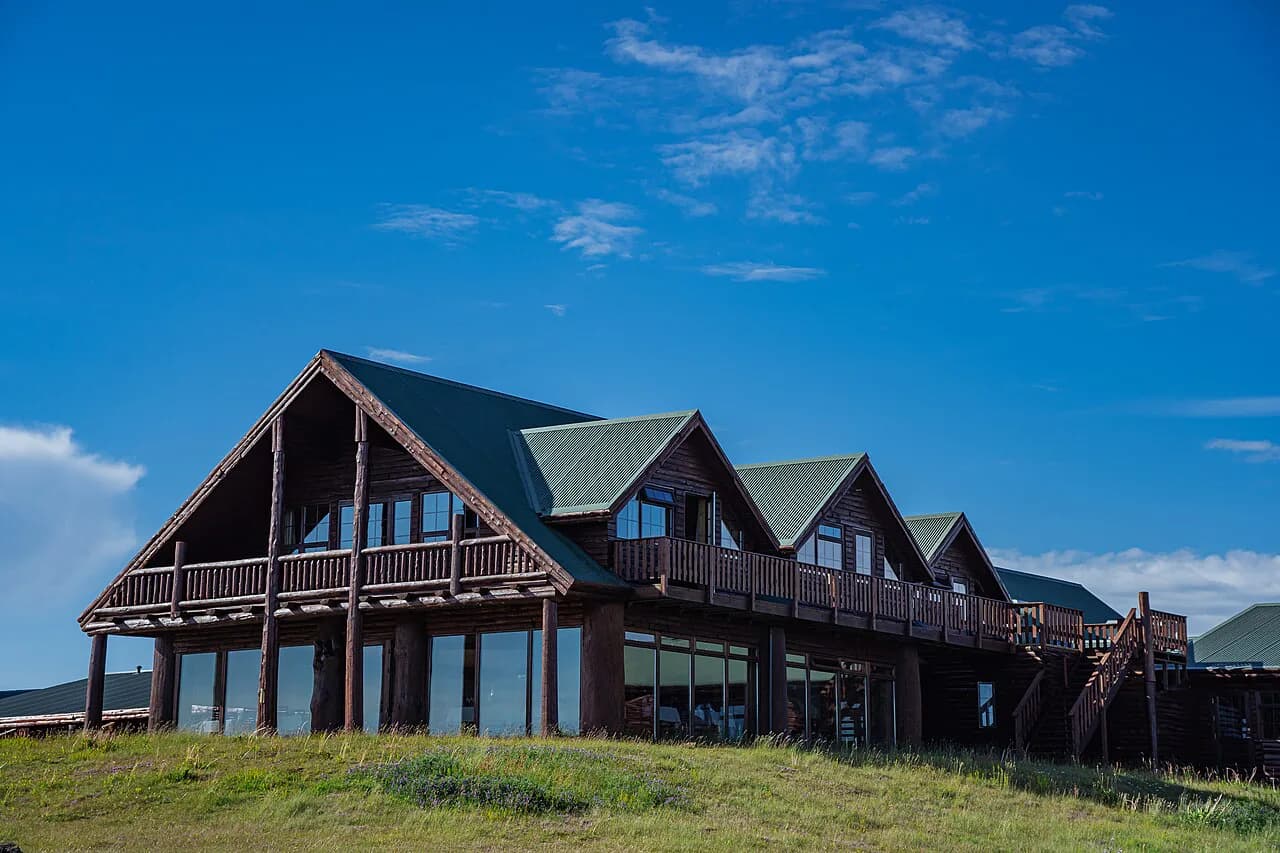
Hotel Rangá is a four-star resort on the Ranga river in South Iceland, built as a log-cabin-style lodge with an observatory, geothermal hot tubs and a restaurant looking over the water. It suits travelers who want dark skies and a warm room in the same place, with waterfalls, black-sand beaches and the Golden Circle within day-trip range.
Winter here is about long nights, and the hotel is set up around them: staff watch for aurora activity, the grounds sit away from town light, and an astronomer runs the observatory. It is not a remote wilderness lodge, but it is a practical base for combining aurora watching with South Coast sightseeing.
What Hotel Rangá is and where it sits in South Iceland
The hotel stands at Hella in South Iceland, on the banks of the Ranga river, roughly a 90-minute drive from Reykjavik and 144 km from Keflavik Airport. That puts it south of the capital rather than in the interior, so you reach it on ordinary roads and use it as a base for the Golden Circle and the South Coast.
The building is a cross between a hunting lodge and a large log cabin, with 51 rooms, a bar, a games room and a restaurant with wraparound glass. Almost every room carries hand-painted murals inspired by Icelandic saga landscapes, and the hotel displays over 200 original pieces of local art.
A map at reception points guests toward nearby waterfalls, black-sand beaches, glaciers and thermal springs, and the front desk helps plan routes and book activities. The setting is rural farmland and river plain, which is exactly what makes the night sky work here.
How far north it is and why the aurora shows here
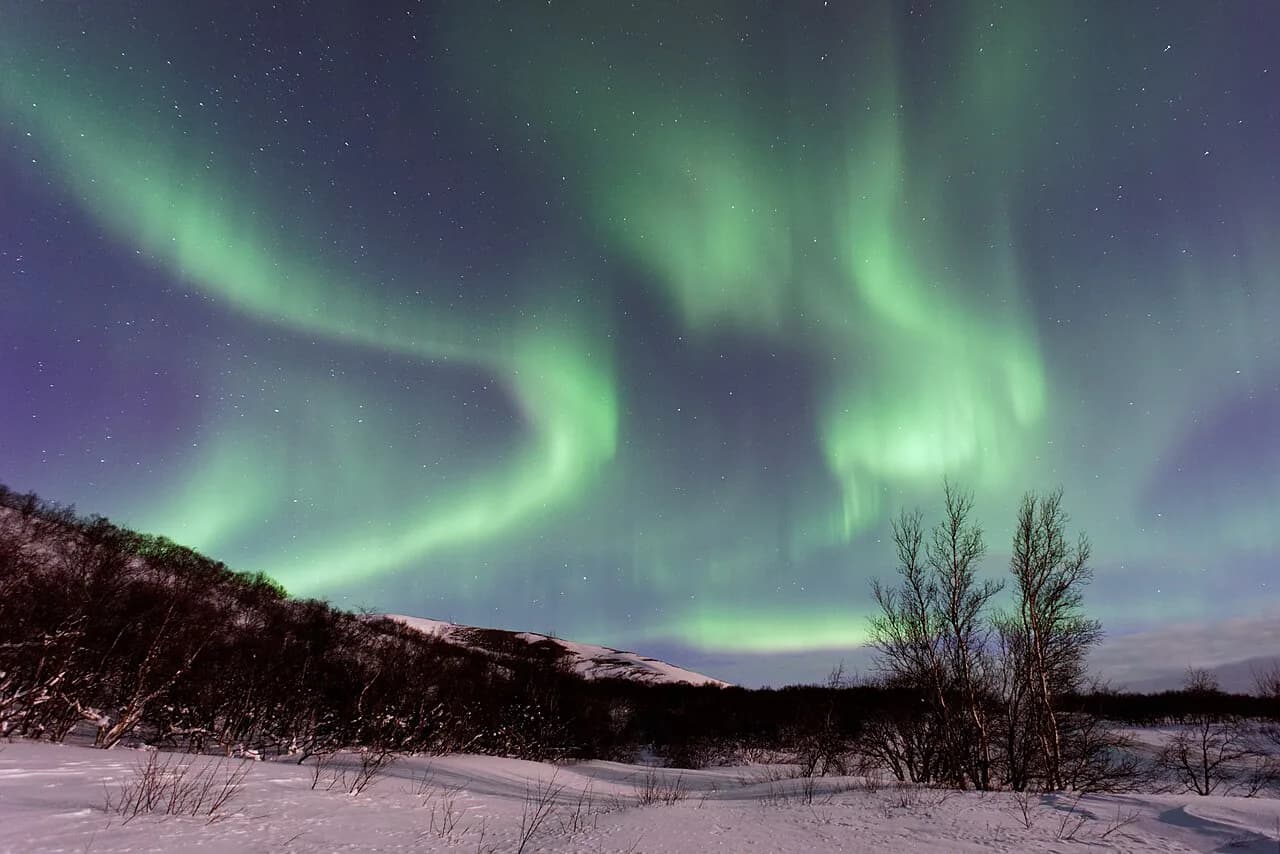
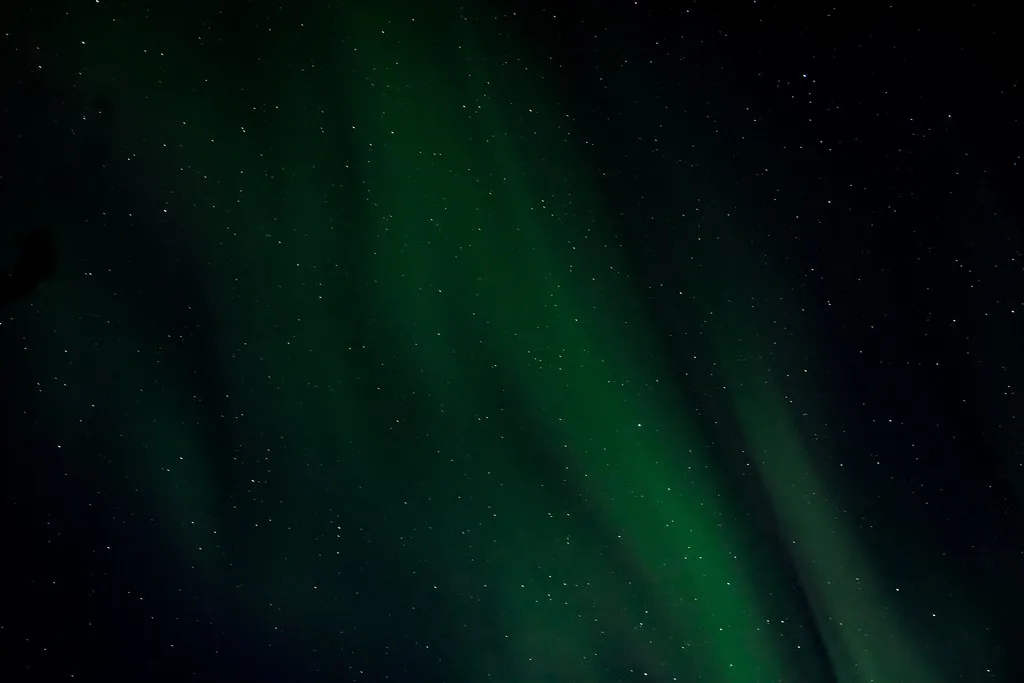
Hella sits at about 64 degrees north, comfortably inside the auroral oval, the ring around the Arctic Circle where aurora is most often overhead. On a dark, clear night the sky here can light up without any special solar storm, which is why South Iceland is a reliable place to spend a few winter nights.
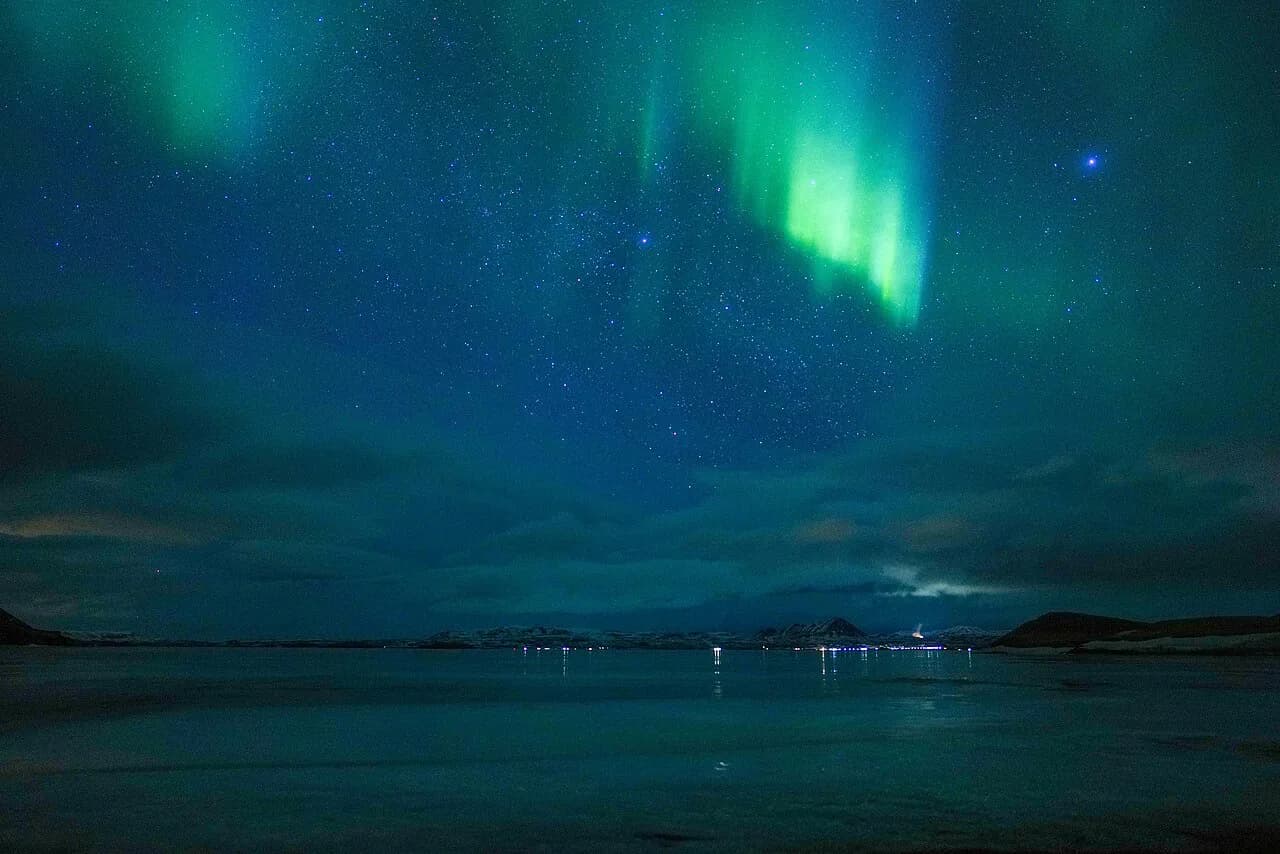
The second ingredient is darkness. The hotel's rural riverside location leaves it largely free of light pollution, so the aurora can appear low over the hills and reflect in the river. Cloud is the real wildcard in Iceland, and a clear inland night often comes when the coast is socked in, so treat any single night as a coin toss.
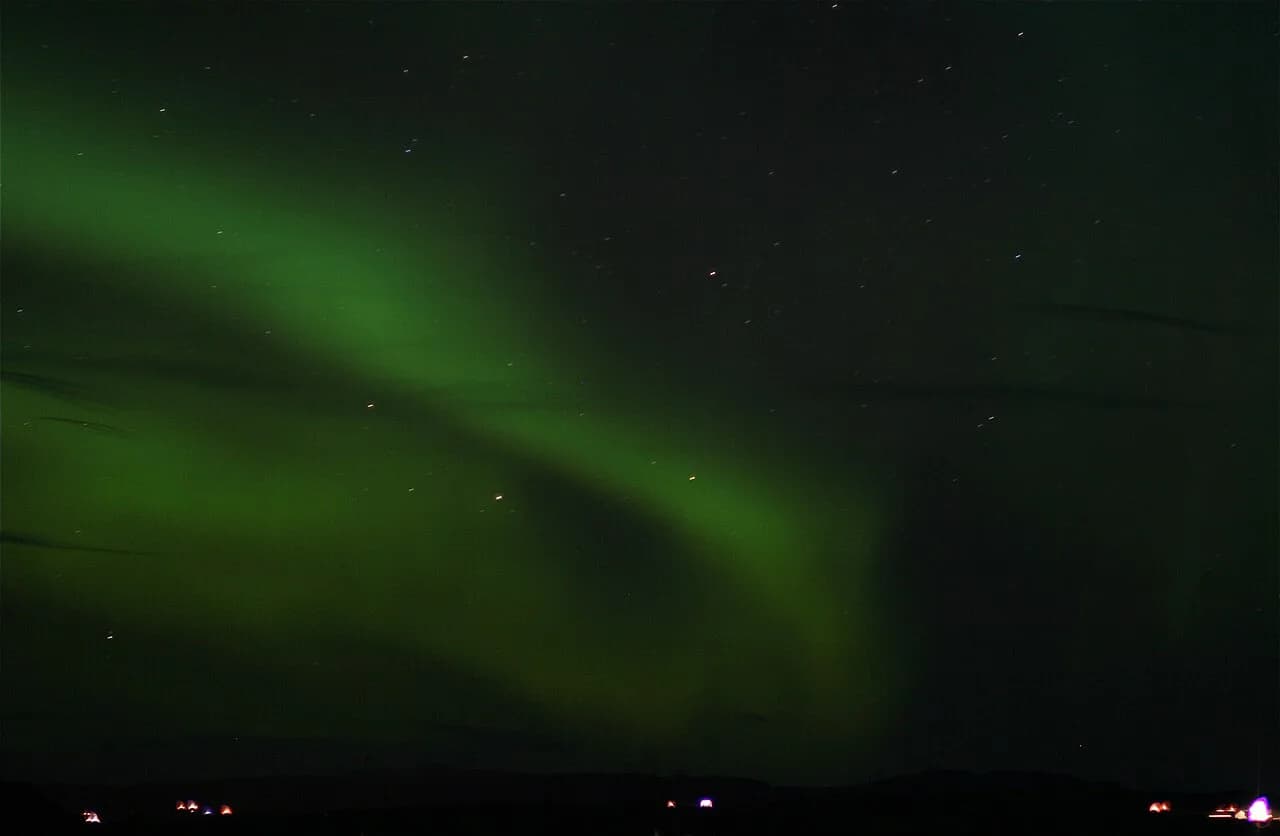
Solar activity adds the strength. A high Kp reading improves the odds of a bright, structured display, but a modest forecast can still produce a green arc overhead at this latitude. Plan for several nights rather than pinning your hopes on one.
When the aurora season runs and what winter nights are like
Dark enough skies return from late August and last into early April, and the deepest nights fall between November and February. In midwinter the sun stays low, daylight shrinks to a few hours, and the long evenings leave plenty of time for aurora watching, hot-tub soaks and dinners that run late.
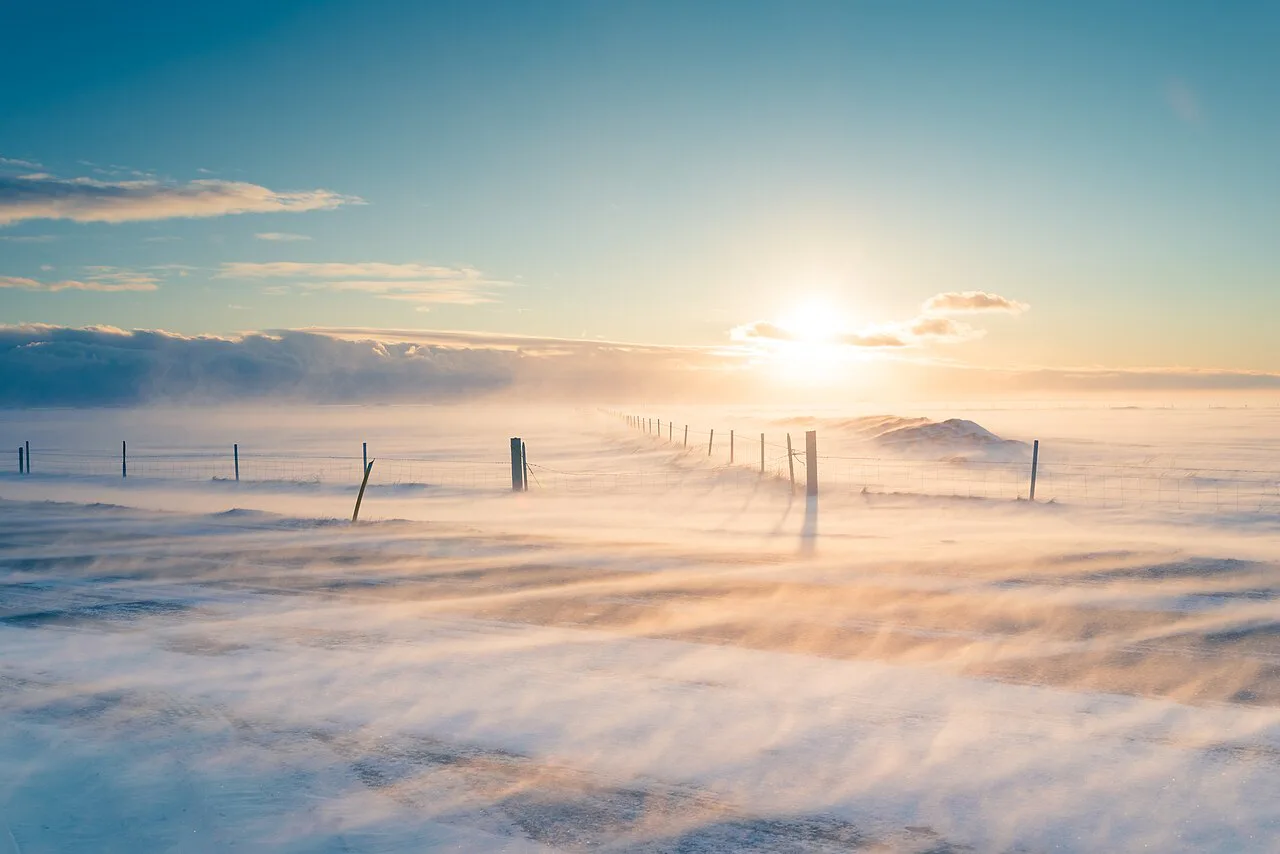
Snow and ice are normal in January and February, and road conditions can change quickly on the South Coast. Winter tires and a check of road and weather conditions before any drive are part of the trip, and the hotel's own advice on getting there is worth reading before you set out.
If you want comfort over deep cold, aim for late September and October or March, when nights are dark but temperatures are milder and driving is easier. The trade-off is that autumn and spring bring more mixed weather, so build in extra nights to absorb a cloudy one.
Where to watch from the hotel: observatory, hot tubs and dark riverbanks
The on-site observatory is the headline feature, with telescopes and expert guidance for nights when stars and aurora cooperate. It gives you a warm place to wait and a guided look at the sky, and it is a very different experience from standing in a car park on a tour.
Outside, the geothermal hot tubs face the river and the volcano views, and they stay warm through the winter. Soaking in hot water while watching the northern sky is the hotel's signature experience, and guests can borrow snow suits for the walk out and back.
Beyond the hot tubs, the hotel's riverside grounds are the simplest option: step away from the windows and lights, let your eyes adjust for 15 to 20 minutes, and look north. A camera on a tripod and a wide lens help, but your eyes are the best instrument on a clear night.
The aurora wake-up call and how it changes your night
Each room has a button that puts you on a notification list, and staff call when the lights appear. That lets you sleep through an early, quiet evening instead of pacing the car park, and it is the reason many guests see the aurora without spending the whole night outside.
The call is a head-up, not a promise: it depends on the lights actually showing and someone spotting them. Use it alongside your own checks of the sky and a cloud forecast, and keep a jacket and boots by the door so you can be outside in a minute.
Rooms and suites: Standard, Deluxe, Junior and Master
Standard rooms come with the small comforts the hotel emphasizes, including hand-painted murals, coffee and tea, bathrobes and slippers. Deluxe rooms add more space and family-friendly layouts, while Deluxe Superior rooms are the larger family choice.
The seven suites are each themed around a continent, decorated with crafts and objects from that part of the world. They range from Junior Suites with a king bed to Master Suites that sleep four, some with balconies facing the river and Mount Hekla.
The trade-off is straightforward: suites buy space, views and character, while Standard and Deluxe rooms put you in the same building, under the same sky, for less. Whichever you pick, ask for a room facing away from the car park if the aurora is the priority.
Rates and seasonal packages
Published starting rates run from about 431 euros for a Standard room, 605 for a Deluxe, 758 for a Deluxe Superior, 989 for a Junior Suite and 1,367 for a Master Suite. Treat these as floor prices rather than what you will pay in peak aurora season, and confirm the final rate with the hotel when you book.
The hotel also sells seasonal packages, including a four-night aurora stay promoted from 1,328 euros and gourmet and romantic packages at higher starting prices. These bundle accommodation, dining and extras, so compare the inclusion list against booking a room and meals separately.
Check-in is at 15:00 and check-out at 12:00, and the hotel offers free parking and free Wi-Fi. Pets are not allowed, which matters if you travel with a dog.
Rangá Restaurant and the bar
The Rangá Restaurant serves Nordic dishes built on local ingredients, from wild mushrooms and reindeer to river-fresh salmon, with glass walls overlooking the river. Breakfast is a buffet with an a la carte menu, and dinner is the main event of the evening before the aurora watch begins.
The bar carries an extensive whiskey collection alongside Icelandic gins, and it is where guests gather before dinner and after a night outside. It is a comfortable place to warm up, but it is also the brightest room in the building, so do your sky checks from the tubs or the riverbank.
Adventure tours and excursions booked through the hotel
The hotel books local activities including snowmobiling, super jeep safaris, dog sledding, horse riding, glacier walks, ice cave tours and caving. Many leave from or near the hotel, which saves you a drive to Reykjavik for a departure.
If you would rather join a dedicated aurora hunt, northern lights tours run from the region and beyond, and the front desk can help match one to your dates. A guided chase gives you a driver who knows the roads and the cloud patterns, at the cost of a fixed departure time and a shared vehicle.
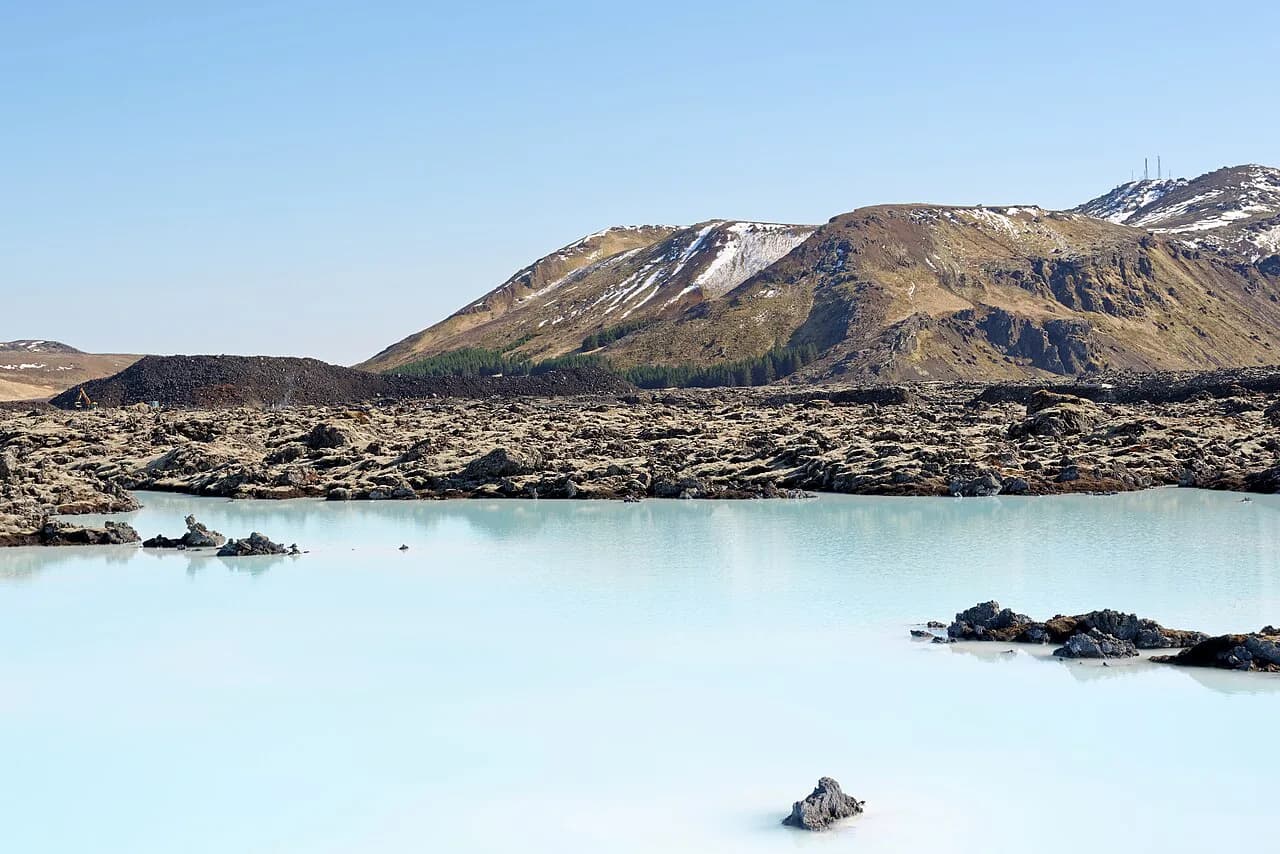
Closer to Reykjavik, the Sky Lagoon makes an easy add-on at either end of the trip, with a geothermal infinity edge facing the North Atlantic. It pairs well with a city night before or after your stay rather than as a substitute for dark-sky time at Rangá.
Who it suits: couples, photographers, families with older children
Couples are the core audience: the hot tubs, the bar and the themed suites make it a romantic winter stay, and the wake-up call removes the stress of missing a display. Photographers get dark skies, an observatory and a warm base between cloud breaks, though they will still want a car for wider compositions.
Families with older children do well here, thanks to the games room and family-friendly rooms, but the late-night aurora watching and the bar scene suit adults more than small children. Guests seeking a party hostel or a budget stopover should look elsewhere in the Hella area.
Alternatives nearby and how to choose
Hotel Rangá's nearest rival for atmosphere is a smaller guesthouse in Hella or Hvolsvöllur, which costs less but offers no observatory or wake-up service. For geothermal swimming on a South Coast day, the Secret Lagoon in Flúðir is an old-style pool that works well as a daytime stop between waterfall visits. If you would rather pair a dark-sky stay with a different landscape, our Snæfellsnes northern lights guide compares bases on that peninsula the same way.
If a city base matters more than dark skies, stay in Reykjavik and join guided tours out of town, accepting the drive and the light. Rangá's advantage is that the aurora watch happens where you sleep, so you can be outside within a minute of a call.
How many nights to plan
Three nights gives you a fair shot at one clear night in South Iceland, and four nights, as in the hotel's aurora package, is more comfortable. Cloud can persist for days, so the longer you stay the less a single bad night matters, and the four-night package is built around that logic.
Fill the days with the Golden Circle, Seljalandsfoss, Skógafoss and the Vík beaches, then keep the evenings free for the tubs and the observatory. Book tours for the daytime and leave nights flexible so you can chase a clear patch when it comes.
Plan Your Aurora Stay at Hotel Rangá
Hotel Rangá works best as a four-night winter base that mixes dark-sky nights with South Coast day trips. Book a room with a river view, use the wake-up call, and treat each night as one chance rather than the only one.
Rates, package contents and availability change with the season, so confirm the final price and inclusions with the hotel when you book. Then give yourself enough nights that a cloudy evening is an inconvenience, not the end of the trip.
Frequently Asked Questions
Does Hotel Rangá have an observatory?
Yes. The hotel has an on-site observatory with telescopes and expert guidance for stargazing and aurora watching, and it is one of the features it promotes most.
Can you see the northern lights from Hotel Rangá?
The hotel sits in rural South Iceland with little light pollution, so aurora can appear over the river and hills. A sighting depends on solar activity and clear skies, and the hotel's wake-up call notifies guests when the lights show.
How far is Hotel Rangá from Reykjavik?
The hotel is roughly a 90-minute drive from Reykjavik and 144 km from Keflavik Airport, which makes it a practical base for both the Golden Circle and the South Coast.
What rooms does Hotel Rangá offer?
Rooms range from Standard and Deluxe to Deluxe Superior, plus seven continent-themed suites from Junior to Master. Suites sleep up to four and some have balconies facing the river and Mount Hekla.
Who owns Hotel Rangá?
The hotel is owned and run by Friðrik Pálsson, who is often found in the bar or dining room talking with guests. It is a member of Small Luxury Hotels of the World's Considerate Collection.
Is Hotel Rangá worth it?
It is worth it if you want dark skies, an observatory, geothermal hot tubs and a strong restaurant in one place, with South Coast sights within driving distance. Travelers on a tight budget or wanting a city base will find better value elsewhere.
Sources
Notes for your Arctic winter trip
Optional updates to our northern lights guides.
You might also like

Continue reading
More guides you'll find useful