Iceland Winter Itinerary: How to Plan 3, 5 or 7 Days
Build an Iceland winter itinerary of three, five or seven days, with dark-sky aurora nights, ice caves, geothermal pools and realistic winter driving.
On this page
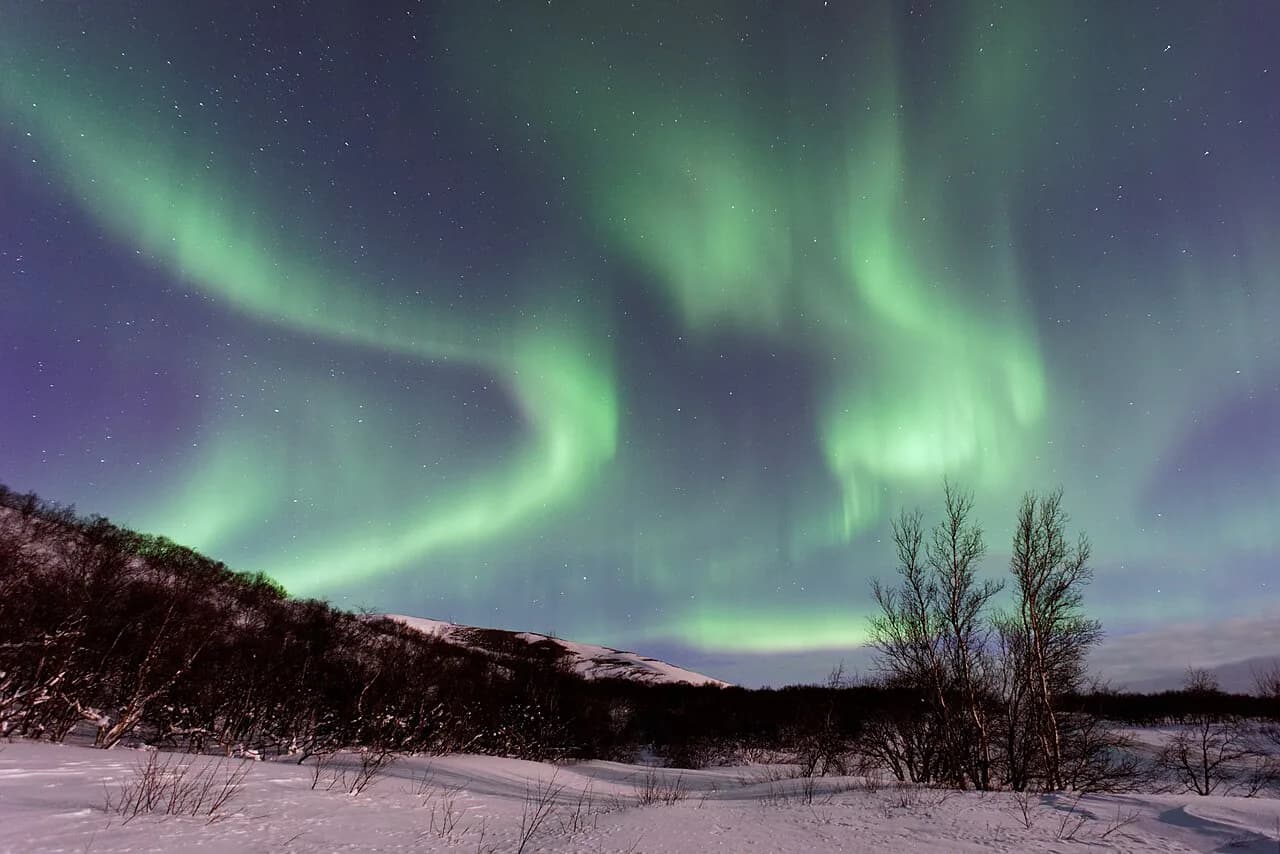
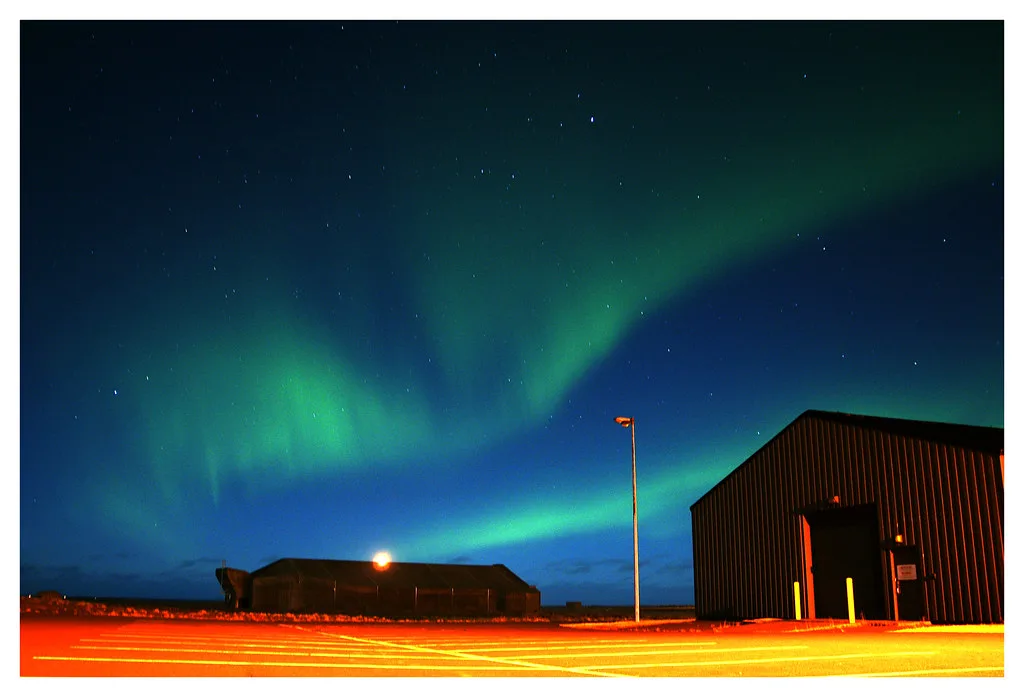
A winter itinerary in Iceland works because the country packs its signature sights into a compact south-and-west loop that stays drivable even when the days are short. You spend daylight on waterfalls, rift valleys and glacier tongues, then hand the long evenings to the aurora, which needs only darkness, clear sky and a step away from town lights.
The plan below treats daylight as the backbone. In November, Reykjavík gets around eight hours of daylight at the start of the month but only about five by the end, while September still offers roughly fourteen hours early on and eleven to twelve in its final week. That difference decides whether a short trip can reach the south coast glaciers or should stay closer to the capital.
Why a short winter loop works
Almost everything on a first winter trip sits within a day's drive of Reykjavík: the Golden Circle, the south coast waterfalls, and the glacier country around Vík and Skaftafell. That geometry lets you base yourself in two or three places rather than repacking every morning, which matters when sunset arrives mid-afternoon.
The trade-off is that you are choosing one region rather than the whole ring road. A three-day trip stays on the Golden Circle and Reykjavík's dark edges; five days reaches Skaftafell and Jökulsárlón; seven days adds either the Snæfellsnes Peninsula or a northern detour. Trying to circle the entire island in a week in winter means spending most of the daylight behind the wheel.
When to go: September light or the deep-dark window
September is the gentlest entry into aurora season. Daytime temperatures average roughly 9–12°C and nights 5–8°C, so roads and trails are still comfortable, and the first dark nights arrive while hiking, whale watching and glacier walks are still running. It is also a shoulder month, when accommodation costs tend to sit below the summer peak.
November and December trade daylight for darkness. Reykjavík sits between about 0°C and 5°C, with rain, sleet, snow and strong wind possible in the same week, and the short days concentrate sightseeing into a narrow band. What you gain is a very long aurora window each evening, which is why so many winter itineraries are built around November.
Deep winter also brings the ice cave season, which begins in November when guides start running clients into blue chambers beneath glaciers such as Langjökull. If ice caves are a priority, plan from late autumn onward rather than in September, when the caves are not part of the offering.
How many days you need
Three days gives you one aurora-focused evening in Reykjavík, a full Golden Circle day and a south coast run as far as Vík if the weather holds. It suits a city break with one big landscape day rather than a dedicated chase across the country.
Five days is the sweet spot for a first winter trip. You can cover the Golden Circle, the south coast waterfalls, a glacier hike or ice cave and Jökulsárlón with Diamond Beach, sleeping two nights east of Vík so the aurora has a genuinely dark backdrop.
Seven days lets you add the Snæfellsnes Peninsula with Kirkjufell and Arnarstapi, or push north toward Húsavík and Akureyri for whale watching and the GeoSea sea baths. Either choice adds a second landscape type at the cost of a long transfer day, so plan that drive for the shortest daylight you will accept.
Day 1: Reykjavík arrival and an aurora primer
Land, collect the car and keep the first afternoon light. Perlan on Öskjuhlíð hill combines a full-dome planetarium show on the aurora with a man-made ice cave built from 350 tonnes of ice and a 360° observation deck, which gives you a weather-proof first activity and a primer on what you are looking for after dark.
For the evening, drive or take the bus out to Grótta Lighthouse at the tip of Seltjarnarnes, or stay closer and use Öskjuhlíð, Heiðmörk Nature Reserve or the Esja mountain foothills. All four sit outside the brightest city core, and Perlan's guide lists the 9 PM to 1 AM window as a typical viewing stretch.
If cloud is thick over the capital, Reykjavík's geothermal culture is the natural fallback: Laugardalslaug is the city's largest public pool, while Sky Lagoon offers an oceanside infinity edge, a sauna and a cold plunge against the North Atlantic.
Day 2: The Golden Circle in winter
Start early because this is your longest driving day on a short trip. Þingvellir National Park, a UNESCO-listed rift valley, is the first stop, followed by the Geysir geothermal area where Strokkur erupts on a short cycle, and then Gullfoss, the double cascade on the Hvítá.
Winter changes the details rather than the route. Paths at Gullfoss can close when ice builds up, so build slack into the afternoon instead of scheduling a fixed return time. A two-wheel-drive car is generally enough on the main Golden Circle roads and the Ring Road, and you only need a four-wheel-drive vehicle for the Highland F-roads.
On the way back, Flúðir is the natural stop: the Secret Lagoon in Flúðir is a geothermal pool in a village setting, and a soak there warms you up before another late drive to a dark viewpoint.
Day 3: South Coast waterfalls, Reynisfjara and a dark overnight
Head east on the Ring Road for Seljalandsfoss and Skógafoss, then continue to Reynisfjara, the black sand beach near Vík with its basalt columns and offshore sea stacks. All three sit directly off the main road, which keeps the day efficient when light is short.
Sleep east of Vík rather than in the village itself. A guesthouse or hotel out toward Kirkjubæjarklaustur or Skaftafell puts you in genuinely dark countryside, so you can step outside after dinner instead of driving an hour to escape the lights.
Keep the evening flexible and check the cloud forecast and aurora activity before committing. Perlan's guide notes that guided tours improve your odds because operators track both weather and solar activity, so a tour is a sensible backup if self-driving at night on icy roads does not appeal.
Day 4: Glacier hiking and ice caves
This is the day that only works from late autumn onward. Guided glacier hikes run on Sólheimajökull and Falljökull, and in Skaftafell within Vatnajökull National Park, with the cooler weather of the ice cave season making conditions favourable on the ice.
Ice caves are a separate booking from a glacier walk. Operators in the Skaftafell area and on Langjökull run guided entries into blue chambers that reform each winter, and every tour requires a certified guide because the ice is not safe to enter alone.
Book the cave slot before you leave home, since capacity is limited and a cancelled morning due to wind or rain can push you to the next day. If you are staying near Vík, the glacier tongues are close enough to reach before mid-morning light.
Day 5: Jökulsárlón, Diamond Beach and the drive west
Spend the morning at Jökulsárlón glacier lagoon and the adjacent Diamond Beach, where icebergs wash ashore on black sand. Both sit right beside the Ring Road in the Skaftafell area, so you can visit them before turning the car back toward Reykjavík.
The return drive is long and the daylight is short, so split it rather than attempting it in one push. A night around Vík or Hvolsvöllur breaks the journey and gives you one last dark-sky evening away from the capital's glow.
Kayaking is an alternative view of the ice if the water is calm, with guided tours running on Jökulsárlón and Fjallsárlón. It trades the roadside stop for a couple of hours on the water and needs a booking in advance.
Adding Snæfellsnes or the north for seven days
Snæfellsnes is often called Iceland in miniature because it packs a glacier, Kirkjufell, the Arnarstapi cliffs and fishing villages into a single peninsula west of Reykjavík. Two nights there give you the mountain, the coast and dark skies without a punishing drive, and our northern lights in Snæfellsnes guide covers the season, the best viewpoints and where to stay.
The northern alternative means whale watching out of Húsavík or Akureyri, where humpbacks, minke whales, white-beaked dolphins and harbour porpoises are all possible in September. It also puts you near the GeoSea sea baths in Húsavík, a striking clifftop setting on the North Iceland coast for a post-tour soak.
Pick one, not both. A seven-day trip that tries to cover Snæfellsnes and the north on top of the south coast spends too many daylight hours in the car, and you lose the relaxed evenings that give the aurora its best chance.
Geothermal pools for the hours after dark
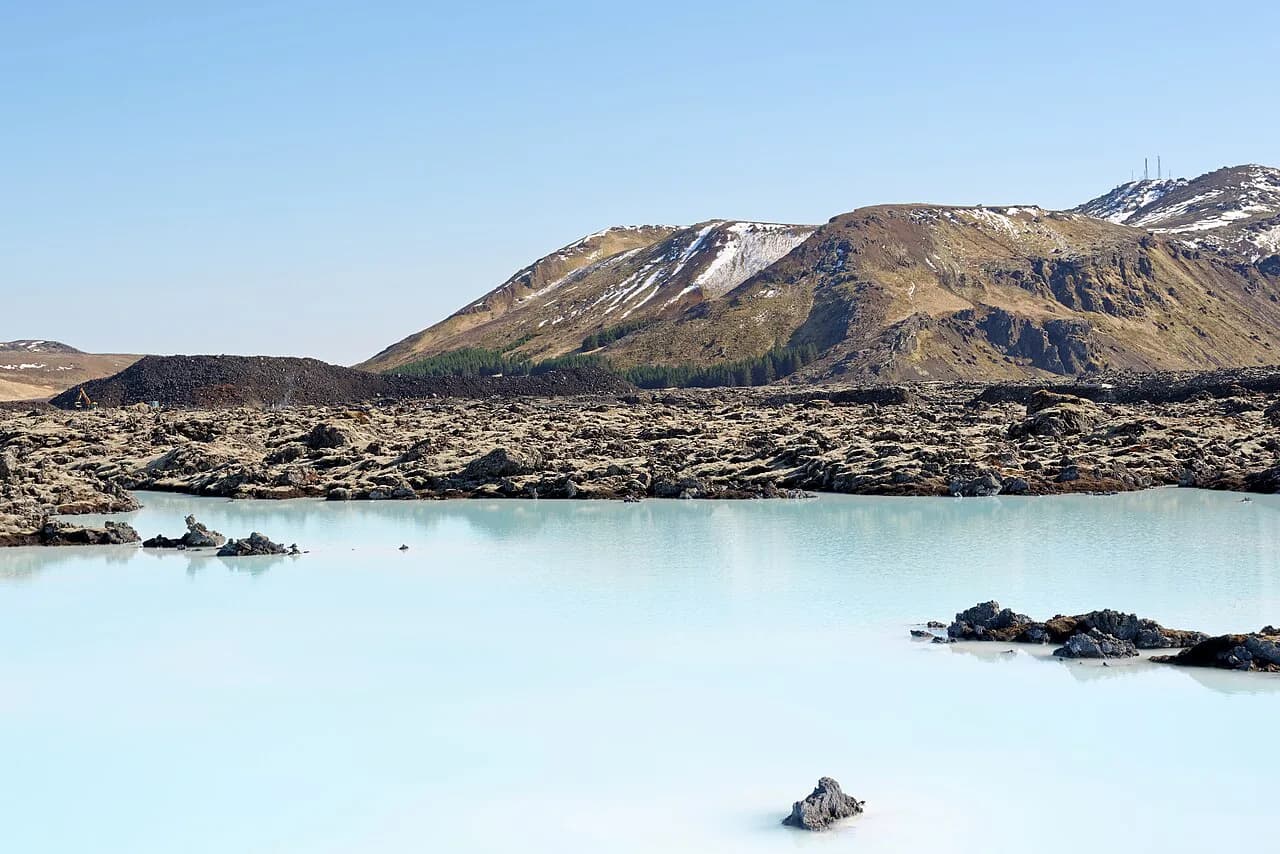
Iceland's pools are the natural pairing with a chasing night: you sit in warm water, watch the sky and stay outside far longer than you would in the cold. Blue Lagoon near the airport is open year-round, and cold air makes its warm water more inviting, while Sky Lagoon south of Reykjavík and Vök Baths in the east add modern lagoon settings.
For a more local feel, Laugardalslaug in Reykjavík and Nauthólsvík geothermal beach mix hot water with the chill of the North Atlantic. Both are simple, inexpensive ways to pass an evening when cloud is too thick for stars.
Guided tours versus self-driving to dark spots
Self-driving gives you freedom to move with the cloud. From Reykjavík the standard dark-sky options are Grótta Lighthouse, Öskjuhlíð, Heiðmörk Nature Reserve and the Esja mountain foothills, all reachable in under an hour and listed by Perlan as top local viewing spots.
Guided tours handle the driving, the cloud-tracking and the icy roads, which is especially useful on a short trip or if you have never driven in sleet. The trade-off is that you share the night with a group and follow someone else's plan.
A hybrid approach works well: book a tour for your first or last night in Reykjavík and self-drive the country nights, when you are already outside the city lights. Wherever you end up, remember that a sighting depends on solar activity and clear sky together, and Kp numbers are only a rough guide.
How many nights to allow for clear skies
Aurora is a weather gamble, not a schedule. Give yourself at least three dark nights outside the capital on a five-day trip, and more if the aurora is the main reason for travelling. A single evening in Reykjavík is a bonus, not a plan.
Spend those nights in different places. One night east of Vík, one at Jökulsárlón or Skaftafell and one back near Reykjavík spreads your exposure across different weather zones, so a cloudy coast does not wipe out the whole trip.
Bad-weather alternatives
When wind or rain closes in, Reykjavík holds its own. The National Museum of Iceland, the Reykjavík Art Museum's three sites and the Settlement Exhibition are all indoor options, and the Reykjavík City Card covers museums, galleries, pools and public transport for 48 hours.
In December, Hafnarfjörður, about twenty minutes by bus from downtown Reykjavík, adds a Christmas village with crafts, hot drinks and visits from the Yule Lads, plus the illuminated Hellisgerði park with its lava formations. The village opens during Advent on Fridays from 17:00 to 20:00 and Saturdays and Sundays from 13:00 to 18:00, with a final day on 23 December.
Christmas and New Year compress the calendar in a way that matters for a winter itinerary. Restaurants in Reykjavík generally stay open through winter but hours vary around 24, 25, 26 and 31 December, and grocery stores typically close at noon on the 24th and stay shut on the 25th, so book holiday meals ahead.
Winter driving and road conditions
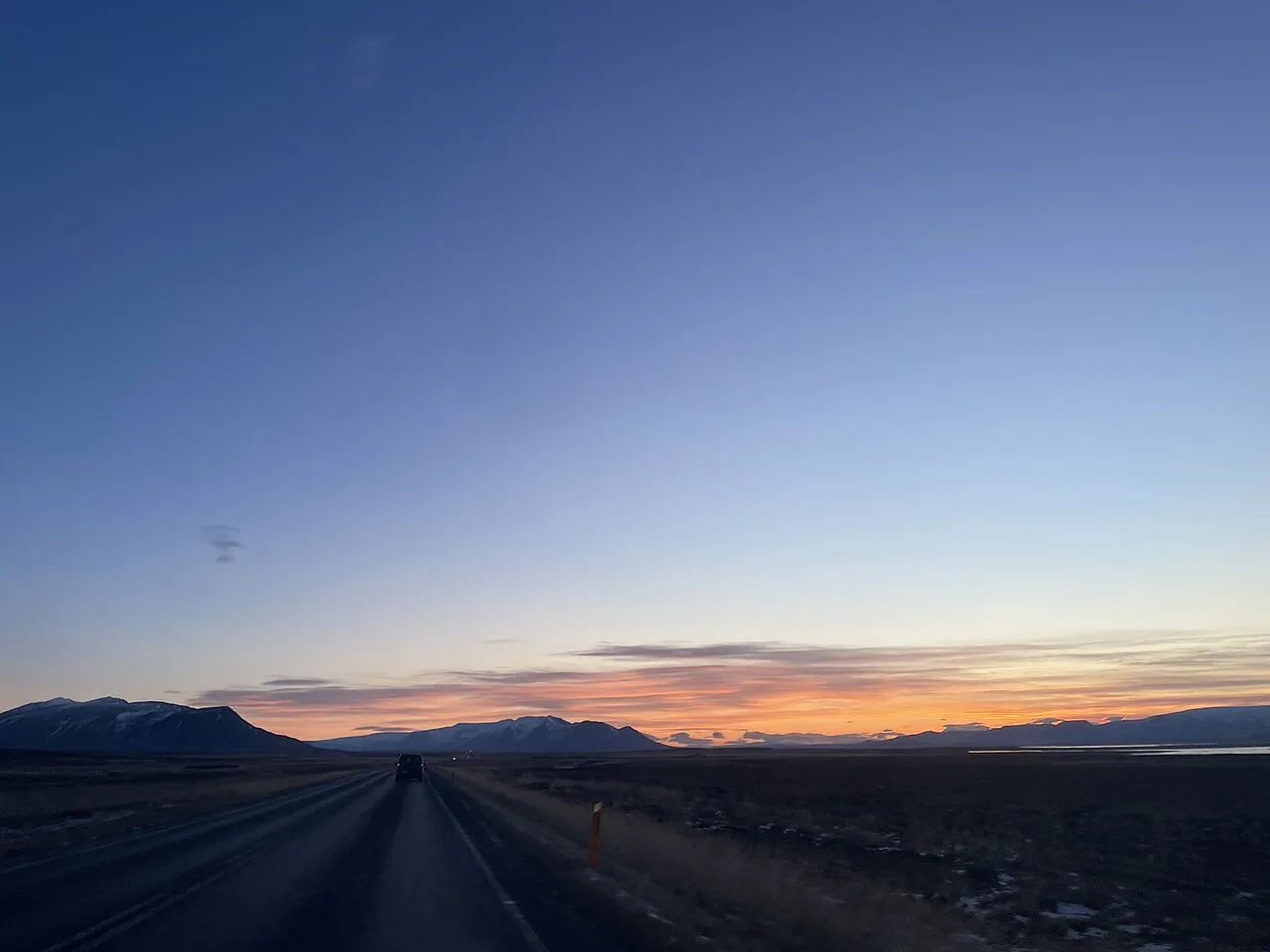
Main roads such as the Ring Road are usually in good condition in September, and a two-wheel-drive car is generally enough unless you plan to enter the Highlands, where F-roads require a four-wheel-drive vehicle. By November, expect rain, sleet, snow and strong wind in the same week, so build slack into the day.
Two official pages decide your day: vedur.is for the weather forecast and road.is for road conditions, both referenced by Visit Iceland and Perlan. Check them each morning before committing to a long transfer, especially on the south coast and across the high ground toward Vík.
Highland F-roads close for the season, and early September is often the last window to reach Landmannalaugar, Þórsmörk and Kerlingarfjöll before that happens. Standard winter itineraries should stay on the low roads and treat the Highlands as a summer option.
Where to base yourself each night
A workable five-day pattern is two nights in Reykjavík at the start, one night east of Vík, one near Skaftafell or Jökulsárlón, and a final night back in the capital. That keeps the long transfers paired with short sightseeing days and leaves the darkest hours for the sky.
Choose accommodation for darkness as well as comfort. A rural guesthouse with few exterior lights beats a brightly lit hotel in town when you want to step outside at midnight, and staying outside the capital on your last night can rescue a trip that has been cloudy all week.
Plan Your Trip
A winter itinerary in Iceland is really a daylight budget with aurora nights attached. Decide how many days you have, choose the Golden Circle, the south coast or one longer loop to match, and sleep outside the city lights whenever you can.
Build in at least one spare evening, book ice caves and lagoon soaks ahead, and let cloud decide where you drive after dark. Northern lights rewards patience and flexibility more than any fixed schedule.
Frequently Asked Questions
How many days do you need in Iceland in winter?
Three days covers Reykjavík and the Golden Circle with one aurora evening. Five days reaches the south coast waterfalls, a glacier hike or ice cave and Jökulsárlón with Diamond Beach, while seven days adds either the Snæfellsnes Peninsula or a northern detour to Húsavík and Akureyri. Anything shorter than three days leaves little room for weather delays.
Can you see the northern lights in Iceland in November?
November has long dark nights, which gives you a wide viewing window each evening. A sighting still depends on solar activity and clear sky together, so spend a few nights outside the city lights and stay flexible about where you drive. Perlan's guide suggests 9 PM to 1 AM as a typical viewing stretch, and Kp values are only guidance.
Can you visit the Golden Circle in November?
Yes, all three stops remain accessible. Paths at Gullfoss can close when ice builds up, so allow slack in the afternoon rather than fixing a return time. Main roads are usually in good condition, and a two-wheel-drive car is generally enough for the Golden Circle.
When does Iceland's ice cave season begin?
Guided ice cave tours typically start in November, when operators begin running clients into blue chambers beneath glaciers such as Langjökull. The caves reform each winter and require a certified guide, so book a slot before you travel and keep a spare day in case wind or rain cancels the tour.
What is the weather like in Reykjavík in November?
Temperatures typically sit between about 0°C and 5°C, and wind chill makes it feel colder. Rain, sleet, snow and strong wind are all possible in the same week, and daylight falls from around eight hours at the start of the month to about five by the end.
Is it worth visiting Iceland in winter?
Yes, if you want dark nights, ice caves and geothermal pools in cold air. Winter trades long days for a wide aurora window and quieter roads, so plan fewer sights per day and keep a flexible itinerary. September offers a middle path, with hiking and whale watching still running alongside the first dark nights.
Do you need a 4x4 for a winter itinerary in Iceland?
A two-wheel-drive car is generally enough on the Ring Road and the Golden Circle, including in September. You need a four-wheel-drive vehicle only for the Highland F-roads, which close for the season and lead to Landmannalaugar, Þórsmörk and Kerlingarfjöll. Check vedur.is and road.is each morning before a long transfer.
How many nights should you allow to see the northern lights?
Give yourself at least three dark nights outside the capital on a five-day trip, and more if the aurora is the main reason for travelling. Spreading those nights across different places, such as east of Vík, Skaftafell and back near Reykjavík, increases your exposure to clear sky.
Sources
Notes for your Arctic winter trip
Optional updates to our northern lights guides.
You might also like

Continue reading
More guides you'll find useful