Krauma Geothermal Baths, West Iceland: What to Expect
Krauma geothermal baths sit an hour from Reykjavik beside Deildartunguhver hot spring. Compare pools, saunas, prices and how to pair it with an aurora night.
On this page
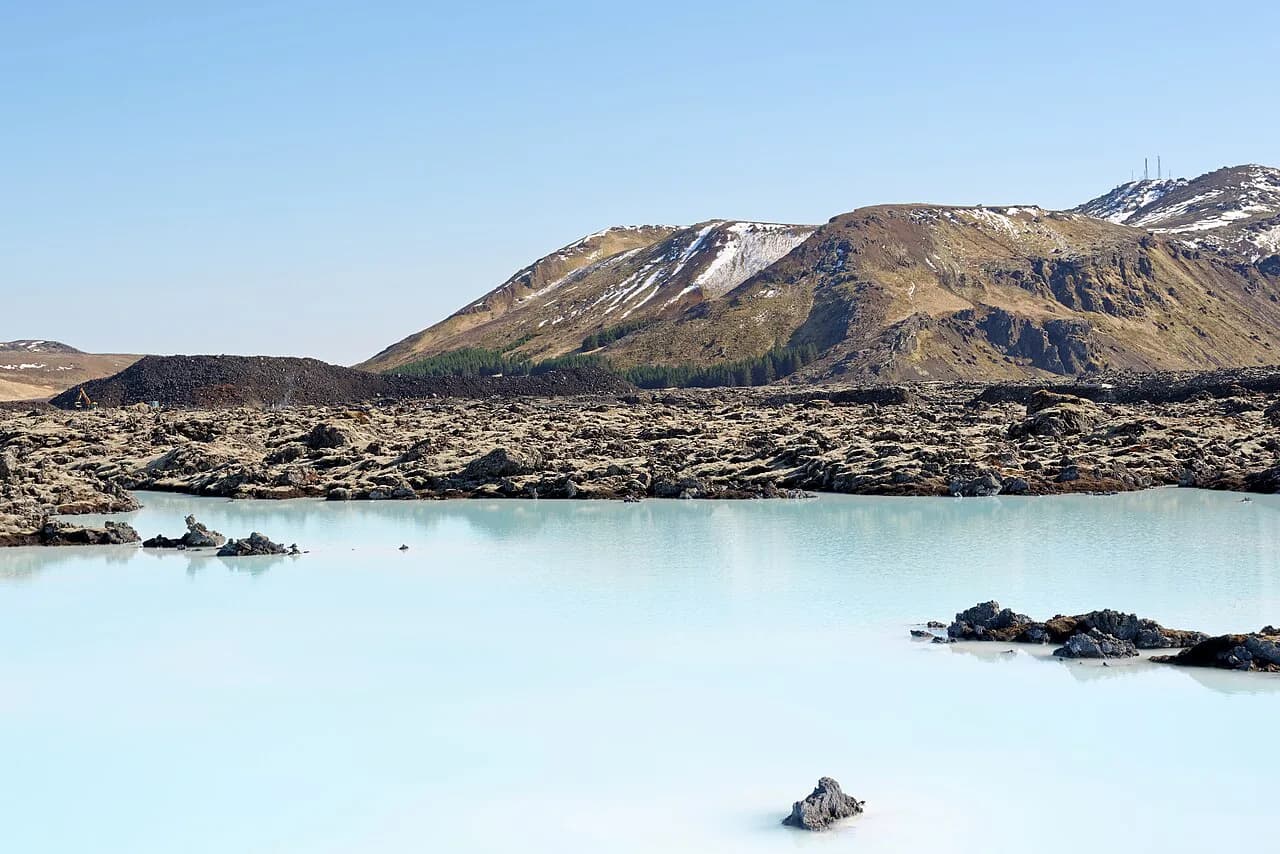
Krauma is a geothermal bath and spa in West Iceland, built at the edge of Deildartunguhver, the hot spring with the highest flow rate in Europe. Its appeal in winter is simple: mineral-rich water between 37 and 41 degrees Celsius, steam rising into cold air, and a location far enough from Reykjavik that the surrounding countryside stays genuinely dark. It suits travelers driving the Borgarfjörður and Snæfellsnes routes who want a long, slow soak rather than a quick dip.
Unlike the big lagoon complexes on the Reykjanes peninsula, Krauma is a compact facility: five warm pools, a cold tub, two saunas, an infrared cell and a steam bath, plus a restaurant looking out over the spring itself. That scale makes it easy to plan around a winter day, whether you are using it as a midday warm-up between waterfalls or as an early-evening stop on the way back to a country guesthouse.
Where Krauma sits in West Iceland
Krauma is at Deildartunga 3, 320 Reykholt, on road 50 in the Borgarfjörður district of West Iceland. The site is 97 kilometers, or about 60 miles, from Reykjavík, which places it roughly an hour and a half of driving from the capital in normal winter conditions. It is not a Reykjavik day-spa; it is a West Iceland destination that works best as part of a loop through Borgarfjörður, Reykholt and the road toward Snæfellsnes.
The surrounding region is farmland and low hills, with Reykholt a short drive away and the Snæfellsnes peninsula further west. Because the spa sits inland from the coast, weather can differ from Reykjavik: colder, clearer on some nights, snowier on others. Travelers planning to drive should treat road 50 as a winter road and build in daylight driving time rather than counting on a quick evening return.
Why the water comes from Deildartunguhver
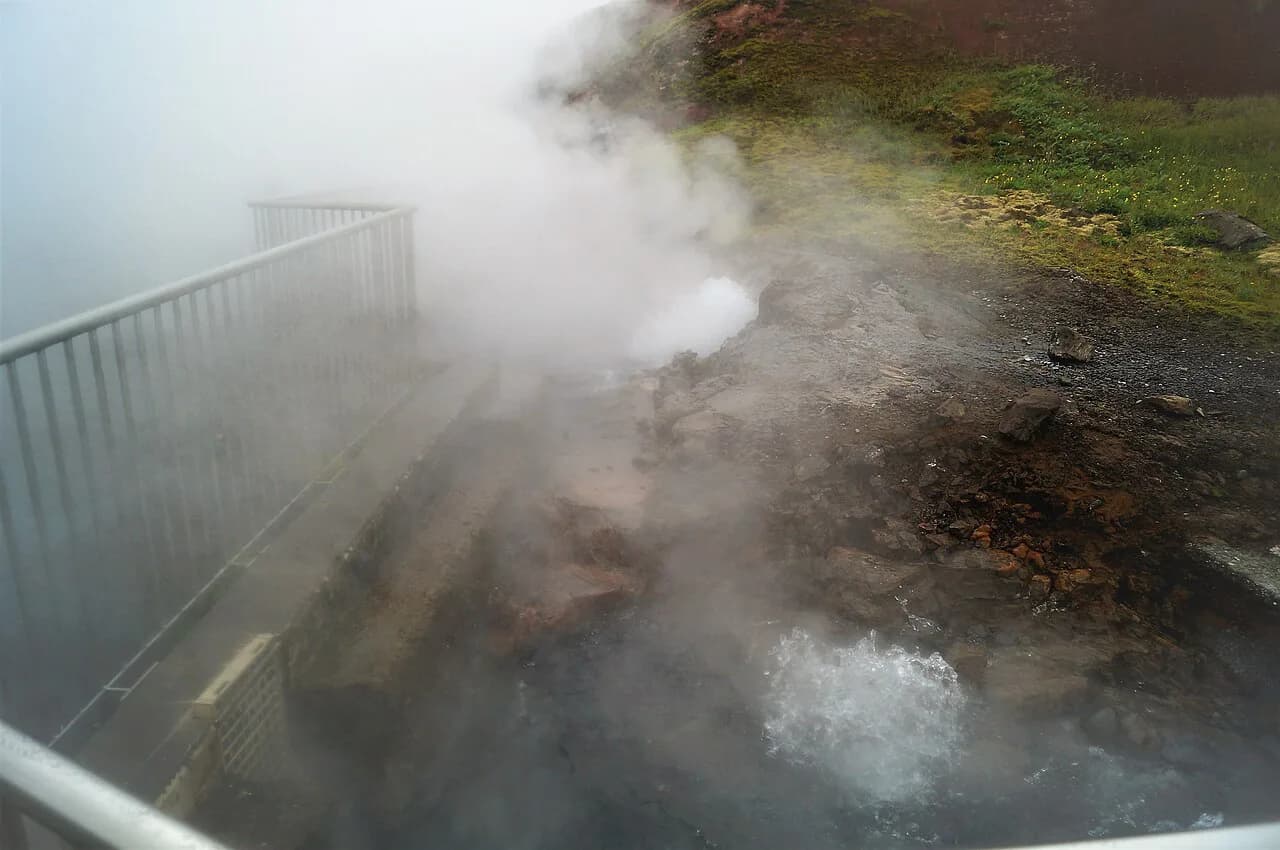
Deildartunguhver pushes around 180 liters of water per second out of the ground at 100 degrees Celsius, and that geothermal heat is partly used to warm homes in West Iceland. At Krauma the same water is cooled through a heat exchanger to a comfortable bathing temperature. That is why the pools need no added chemicals to stay clean: the water is constantly replaced by the rapid natural flow of the spring.
The water carries iron, aluminium, calcium, magnesium and sulfur, along with algae, which is part of the character of the soak rather than a side note. Expect a mineral smell and a slightly silky feel rather than the faintly chlorinated water of a municipal pool. The baths are designed for full accessibility, so guests with limited mobility can use the facility.
You can see the source itself: Deildartunguhver is right beside the spa, and watching the spring boil and steam in cold air is worth ten minutes before or after your soak. The spring is one of the region's standard stops, so combining the two is the natural way to visit.
The pools: five warm baths and a cold plunge
Krauma's bathing area has six pools in total: five warm baths ranging from 37 to 41 degrees Celsius and one cold plunge between 5 and 10 degrees Celsius. The warm pools vary in depth and temperature, so you can move between them rather than commit to a single soak. The cold tub is optional, but it is the reason many visitors stay longer than they planned.
Lockers are individual, and the changing room has a spacious dressing area with mirrors and good lighting. That layout matters in winter, when wet outdoor clothing and boots need somewhere to go while you soak. Towels, swimwear and bathrobes can be rented on site if you arrive without them.
Saunas, steam bath and the fireplace lounge
Beyond the pools, Krauma has two saunas, an infrared cell and a steam bath. There is also a relaxation room where guests can sit or lie down by a fireplace with quiet music, which is the natural place to warm up between baths rather than going straight back into the cold.
The rhythm that works best is a warm pool, a few minutes in a sauna or steam room, a short cold plunge, then the lounge before repeating. Because everything is indoors or in heated water, Krauma remains comfortable in wind, sleet or snow, which is not true of every geothermal stop in Iceland.
Opening hours and fitting a soak into a short winter day
Krauma is open every day from 11:00 to 21:00, so the last entry is well into the dark part of a winter day. In December and January the sun is up for only a few hours around Reykjavik and less as you head north, which makes an early-afternoon arrival the most practical way to combine the spa with daylight sightseeing. An evening slot leaves you soaking while it is dark, which can only help if you plan to look for aurora afterward.
Allow at least two hours on site to use the pools, a sauna and the lounge without rushing, and longer if you add a meal in the restaurant. Because Krauma is inland from the coast, the drive back to Reykjavik in winter should be timed before conditions worsen, not after a late soak.
Prices for adults, teens, seniors and children
Admission is priced by age: adults 17 and older pay 7,900 króna, teens aged 13 to 16 pay 4,160 króna, and children up to 12 pay 500 króna. Seniors aged 67 and over and disabled guests pay 5,790 króna. Rentals are separate: a bath towel or swimwear costs 1,400 króna, and a bathrobe 1,800 króna.
Those prices make Krauma a moderate splurge rather than a cheap municipal pool, and the gap between adult and child admission is large, so families with young children get a notably better value. If you are traveling without a towel or swimsuit, it is usually cheaper to bring your own than to rent on site.
The Winter Pass and annual pass
Krauma sells a Winter Pass valid from 1 October to 31 March for 42,000 króna, an annual pass valid for one year for 74,900 króna, and a clip card of ten admissions for 67,000 króna. The Winter Pass only pays off if you will soak repeatedly during the darker half of the year, which suits people based in West Iceland rather than a traveler passing through once.
For a single visit, standard admission is the simpler choice. The clip card makes sense for couples or groups who plan several visits across one trip and can share the admissions between them.
Booking, the restaurant and how long to allow
You can book spa admission online in advance, and the restaurant takes table bookings separately. The restaurant seats 70 guests inside and another 70 on the terrace and serves Icelandic dishes built around local farm ingredients, with views toward the steaming spring. In winter the terrace is a cold prospect, but the indoor room is a comfortable place to eat after soaking.
For a comfortable visit, plan two to three hours including changing time and a meal. If you are combining Krauma with Deildartunguhver, Reykholt and the drive from Reykjavik, the spa becomes a half-day rather than a quick stop, so build it into your route instead of squeezing it in at the end of a long driving day.
Getting there from Reykjavik
The drive from Reykjavik is 97 kilometers along road 50 through Borgarfjörður, and in summer it is an easy run of about an hour and a half. Winter conditions can slow it considerably, and road 50 crosses open country where wind and snow affect driving, so check the road authority's conditions before setting out and plan to arrive in daylight if this is your first time on the route.
Krauma works well as a spa stop on a West Iceland loop based in Reykjavik or Borgarnes, and it can also work as an aurora-night stop: the countryside around Deildartunguhver is far from the capital's light, and a late soak leaves you already outside town. It is less suited to a quick dash from Reykjavik on a short winter day, when the drive consumes much of the usable light.
Krauma in winter: dark skies and realistic aurora expectations
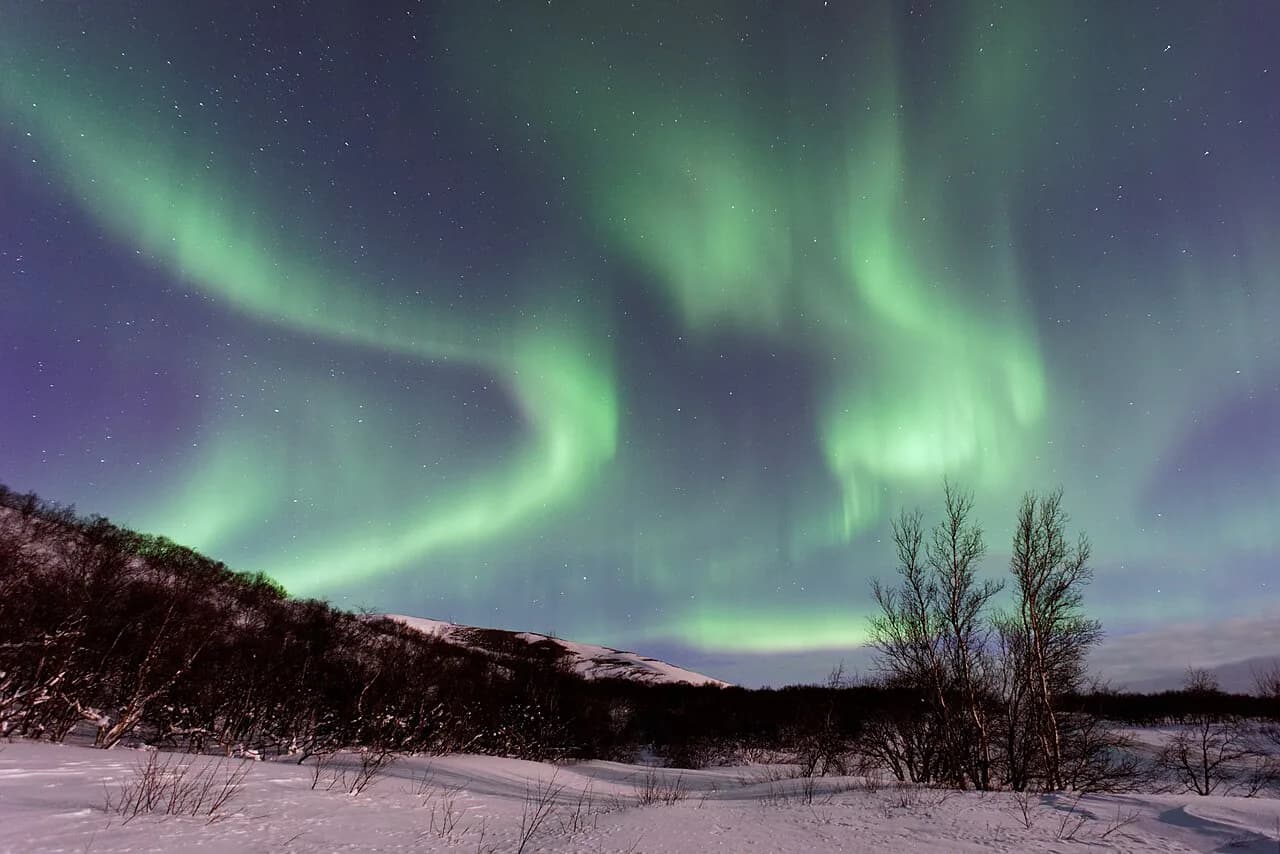
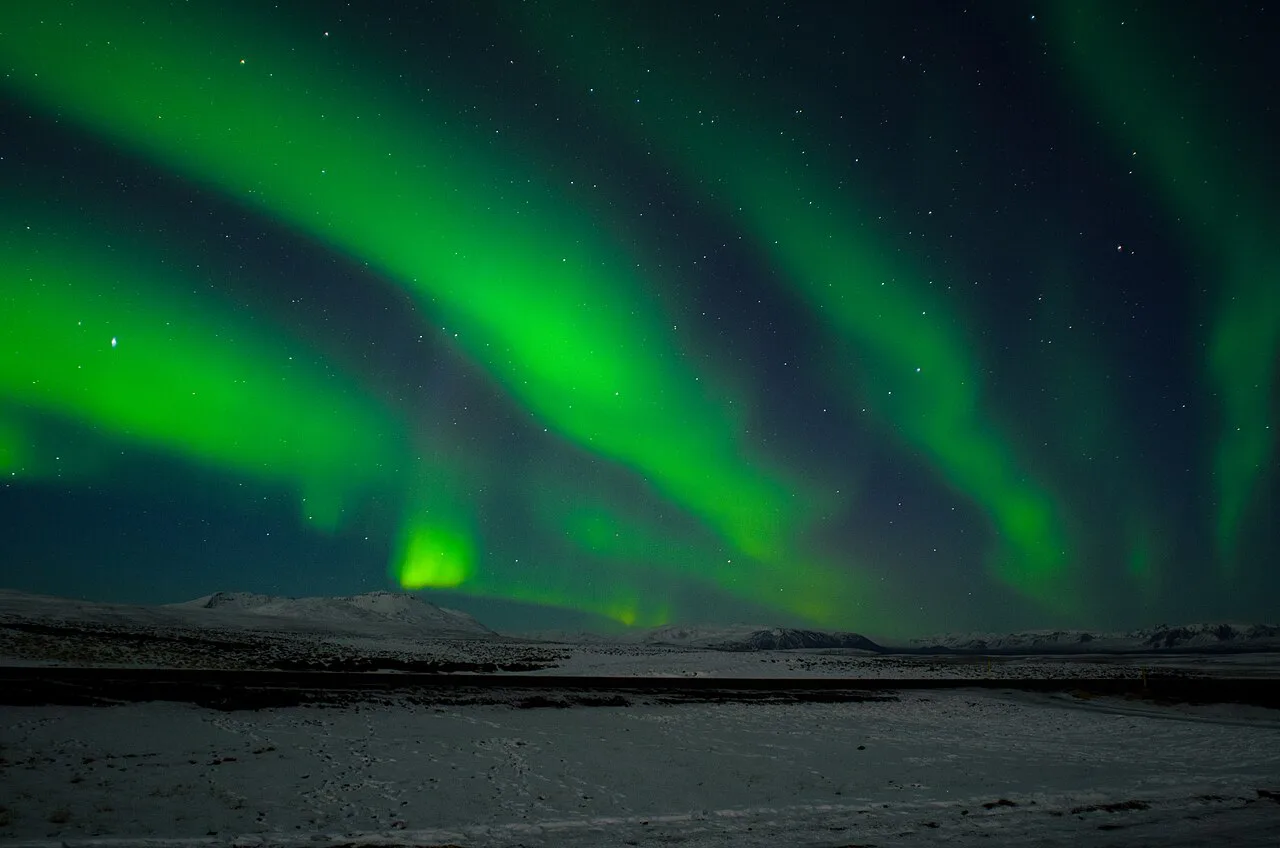
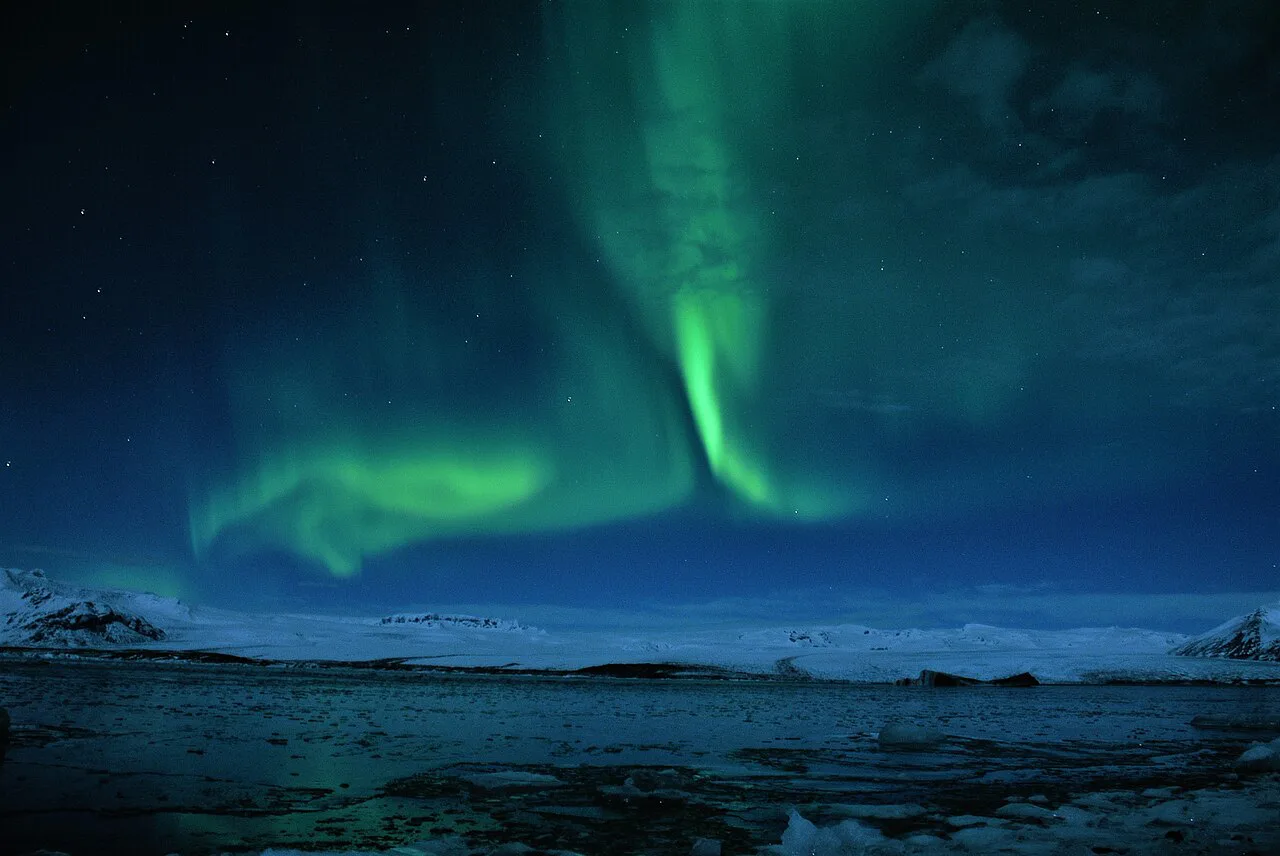
Krauma sits inland in West Iceland, well away from Reykjavik's glow, and the surrounding farmland offers open horizons. That is a useful starting point for aurora watching, but it guarantees nothing: activity depends on solar wind and, above all, on clear skies, which West Iceland does not always deliver in winter. Use the Icelandic Met Office aurora forecast alongside a cloud forecast, and treat a high Kp reading as guidance only.
The most practical approach is to book a soak in the late afternoon, eat at the restaurant, then drive a short distance from the buildings to somewhere with fewer lights and a clear view north. If the sky stays cloudy, you have still had a good evening; if it clears, you are already in the right place. Self-driving gives you that flexibility, while a guided northern lights tours from Reykjavik is the alternative if you do not want to drive at night. If you would rather base a whole aurora trip further north, our northern lights in Akureyri guide covers the same decision on the other side of the country.
Give yourself several nights in Iceland if aurora is a priority, because a single night in West Iceland is a coin toss on cloud alone. Krauma fits neatly into a trip that also includes the capital area and the south coast, and it is a calmer, less crowded alternative to the big lagoon complexes near Reykjavik.
Travelers weighing other soaks can compare Krauma with the Sky Lagoon near Reykjavik, which offers a coastal setting and a ritual-style experience, or with the Secret Lagoon in Flúðir, a simpler, older pool on the Golden Circle route. Krauma's draw is the Deildartunguhver setting, the mineral water and its position on a West Iceland driving route.
Nearby places to pair with Krauma
Deildartunguhver is the immediate neighbour, and the short walk to see the spring is part of the visit. Reykholt, a few kilometers away, is one of Iceland's best-known historical sites, associated with the medieval writer Snorri Sturluson, and Snorrastofa there covers that history. Kleppjárnsreykir, nearby, is a small village of greenhouse farmers using geothermal heat, and Hverinn is a local option for homemade soups and fish and chips.
Kleppjárnsreykir also has a small swimming pool with an outdoor pool and hot tub, a simpler and cheaper stop if you want a second soak. Further afield, the Snæfellsnes peninsula makes a natural next day, with its coastline, fishing villages and dark rural roads that suit aurora hunting when the sky is clear.
Who Krauma suits
Krauma suits travelers driving West Iceland who want a geothermal soak with a genuine natural source, a proper restaurant and enough facilities for a two-hour visit. It also suits aurora-focused visitors who would rather stay outside Reykjavik and use the dark countryside as their viewing base. It is less suited to anyone wanting a quick dip close to the capital or a large resort-style lagoon with swim-up bars.
Families with young children benefit from the low child admission, and the warm pools are shallow enough for supervised children. Travelers who want the full Icelandic spa circuit can pair Krauma with the Sky Lagoon near Reykjavik and the Secret Lagoon on the Golden Circle, using Krauma as the western anchor of the trip.
Plan Your Visit
Krauma is a straightforward, well-run geothermal stop on a West Iceland itinerary: five warm pools fed by Deildartunguhver, a cold plunge, saunas and a restaurant, open daily from 11:00 to 21:00. It rewards travelers who arrive in daylight, allow two to three hours and treat the drive from Reykjavik as part of the day rather than an afterthought.
If aurora is the reason for your trip, pair a late soak with a night in the Borgarfjörður countryside and keep your expectations tied to the cloud forecast. Book admission online, bring a towel if you want to avoid rental costs, and check the road conditions before committing to the drive in winter.
Frequently Asked Questions
Where is Krauma located in Iceland?
Krauma is at Deildartunga 3, 320 Reykholt, on road 50 in West Iceland, beside the Deildartunguhver hot spring. It is about 97 kilometers, or 60 miles, from Reykjavik.
How many pools does Krauma have?
Krauma has six baths: five warm geothermal pools ranging from 37 to 41 degrees Celsius and one cold plunge between 5 and 10 degrees Celsius. It also has two saunas, an infrared cell, a steam bath and a relaxation room with a fireplace.
What are the opening hours at Krauma?
Krauma is open every day from 11:00 to 21:00, according to Visit West Iceland. In winter that means you can soak after dark, which is useful if you plan to look for aurora afterward.
Do I need to book Krauma in advance?
Spa admission can be booked online in advance, and the restaurant takes table bookings separately. Booking ahead is sensible in winter when you are fitting the visit around daylight and driving conditions.
Can you see the northern lights from Krauma?
Krauma sits inland in West Iceland away from Reykjavik's light, and the surrounding farmland has open horizons. Sightings depend on solar activity and clear skies and cannot be guaranteed, so check the aurora and cloud forecasts and allow several nights in Iceland.
What is the water temperature at Krauma?
The water comes from Deildartunguhver at 100 degrees Celsius and is cooled through a heat exchanger. The warm pools range from 37 to 41 degrees Celsius, and the cold tub ranges from 5 to 10 degrees Celsius.
Sources
Notes for your Arctic winter trip
Optional updates to our northern lights guides.
You might also like

Continue reading
More guides you'll find useful