Best Places to See Northern Lights in Europe: Where and When
Compare Europe's best aurora destinations, from Finnish and Swedish Lapland to Iceland, with seasons, dark-sky spots and how many nights to allow.
On this page
Europe's aurora zone rewards travelers who pick a base for its weather as much as its latitude. Finnish Lapland offers cold, dry inland nights around Rovaniemi and the Arctic Circle, Swedish Lapland concentrates dark-sky infrastructure at Abisko, and Iceland throws volcanic landscapes and coastal fronts into the mix. The right choice depends on whether you want maximum clear-sky odds, comfort under glass, or a road trip between waterfalls and hot springs.
Whichever you choose, treat the trip as a probability game rather than a booking with a promised outcome. Solar activity decides whether particles arrive, and cloud cover decides whether you see them, so the number of nights you spend under dark skies matters more than any single tour. This guide compares the three destinations on season windows, viewing spots, accommodation and realistic night counts.
Why some European places see the aurora and others rarely do
The aurora appears when charged particles from the sun are funnelled by Earth's magnetic field into a halo around the magnetic pole, known as the auroral oval. Places sitting under that band see activity far more often than places outside it, which is why northern Scandinavia and Iceland belong on any shortlist while southern European cities do not.
Latitude alone does not settle the question. You also need darkness, which northern Europe has in abundance from late summer into early spring, and clear sky, which is where the three destinations diverge sharply. Iceland's island setting exposes it to offshore weather fronts that often bring cloud, while inland Lapland sits far enough from the coast to string together cold, clear nights more reliably.
Light pollution is the third variable and the easiest to manage. A town centre washes out faint arcs that would be obvious a short drive away, so even travelers based in Rovaniemi or Reykjavik should plan to step away from streetlights. The practical rule is simple: the darker your surroundings, the more of the aurora's colour and structure your eyes can register.
When the aurora season runs across Europe
Across Europe the usable aurora window runs from roughly late August or September into late March or early April, bounded by darkness rather than by the lights themselves, which occur year-round. In Iceland, the season is generally given as September through March, and displays are sometimes intense enough to be seen from the edge of Reykjavik if the sky clears.
Abisko in Swedish Lapland is usually described as running from mid-November to mid-March, when polar night and long dark evenings settle over the valley. Temperatures there can fall to about -20°C, so the clear nights that make viewing possible also demand serious cold-weather preparation. Early and late season trips trade colder, darker nights for milder weather and longer daylight for daytime activities.
Finnish Lapland: Rovaniemi, the Arctic Circle and inland dark skies
Rovaniemi sits directly on the Arctic Circle and works as a fly-in base with an easy connection from Helsinki, which makes it the simplest entry point for a first aurora trip in Finland. From the airport you can be at a wilderness hotel within a short transfer, so nights are spent watching rather than driving long distances.
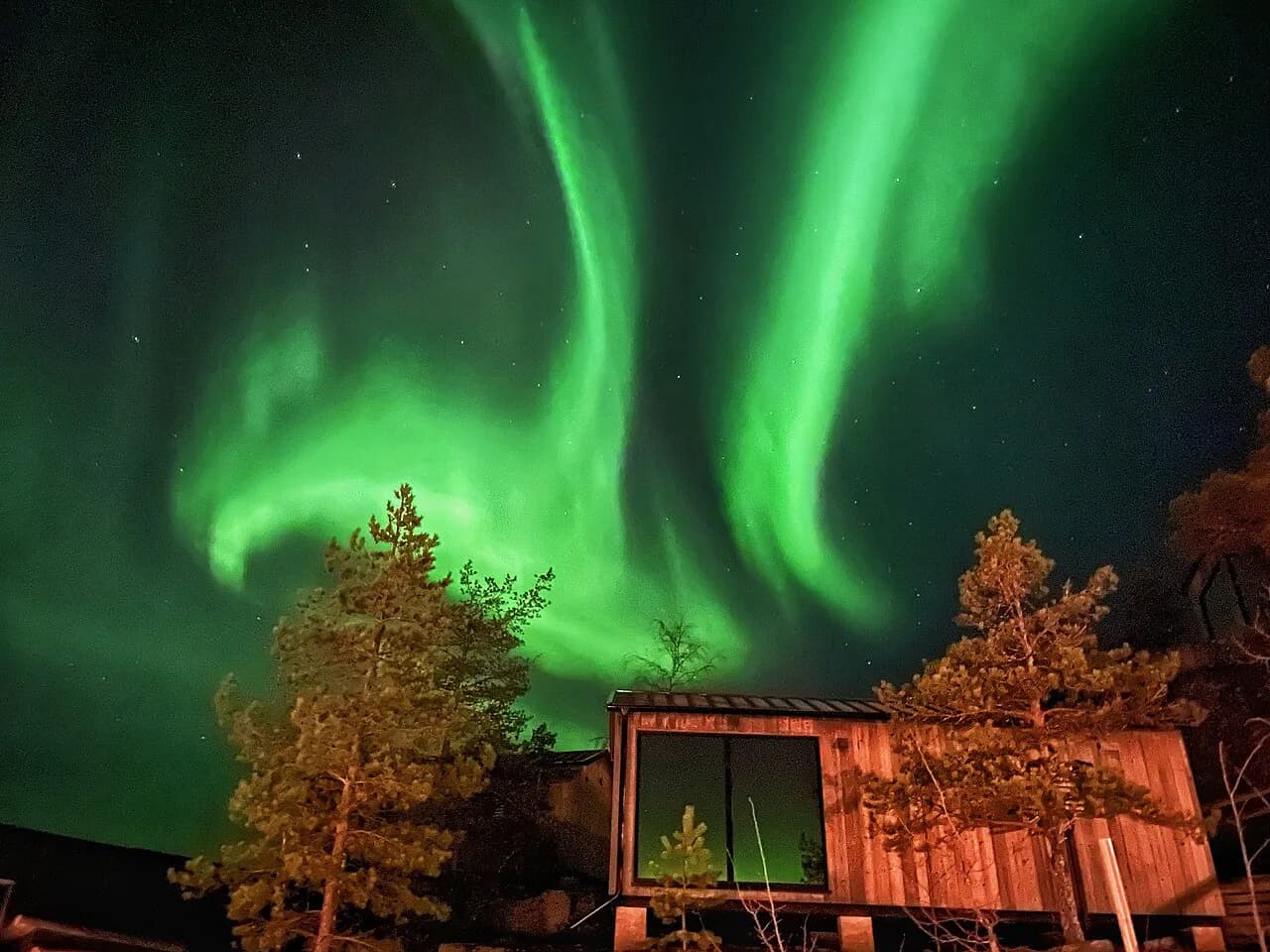
The Arctic TreeHouse Hotel near Rovaniemi offers glass-fronted suites with wood-burning stoves and private saunas, a format built around watching from your own room. The trade-off is heat and interior lighting: a warm cabin with a lit interior reflects on the glass, so serious viewing often means stepping outside anyway.
Inland Finnish Lapland gives you large stretches of forest and frozen lake with very little light pollution, and snowmobile or husky safaris run on the same trails after dark. Operators typically lend thermal suits and boots for night excursions, which matters when you are standing still in deep cold for an hour or more. Daytime is easily filled with reindeer visits, snowshoeing and sauna evenings, so a cloudy night costs you atmosphere rather than the whole day.
Swedish Lapland: Abisko, the Blue Hole and the Aurora Sky Station
Abisko is the most single-minded aurora destination in Europe. The valley is known for the Blue Hole, a patch of sky that tends to stay clear even when surrounding weather is unsettled, and the Aurora Sky Station sits above the village at the top of a scenic chairlift. Travelers ride up for panoramic views over the lake and mountains rather than watching from the road.
The station's season aligns with the darkest part of the winter, generally mid-November to mid-March, and the cold up there is the price of the view. Temperatures frequently drop to around -20°C, so the chairlift ride and the viewing platforms demand proper insulation, which operators supply on organized visits. Book the lift and any guided station programme ahead during peak weeks around the equinoxes and midwinter.
Abisko village itself has a small, contained layout, and the national park trails lead quickly into unlit terrain, so you do not need a vehicle to find darkness. That is a real advantage over fly-drive itineraries: you can walk to a viewpoint, return to a hostel or lodge for hot drinks, and repeat the following night without burning hours on the road.
Iceland: South Coast, Þingvellir and how coastal weather shapes your odds
Iceland's South Coast, including the area around Vík and Jökulsárlón, is prime aurora territory with wide-open skies and dramatic foregrounds of black sand, glaciers and waterfalls. The catch is weather: as an island exposed to offshore fronts, Iceland frequently produces cloud that hides displays even on active nights.
If you are based in Reykjavik, a short drive out to Þingvellir National Park dramatically improves your chances of a clear, dark view, and it also puts you on the Golden Circle route for daytime sightseeing. Displays can occasionally be spotted over the capital itself, but city light and low cloud make the national park the smarter bet. Winter storms can close roads with little warning, so build flexibility into any self-drive plan.
Iceland rewards travelers who pair aurora hunting with other winter experiences. Hvammsvik Hot Springs, the Torfhús Retreat with its geothermal tubs, and The Retreat at Blue Lagoon give you warm water and steam while you wait for the sky to clear, and the Highlands and lava fields offer silent, unlit landscapes on clear nights.
Comparing the three: cloud cover, light pollution and cold
Set the three side by side and the trade-offs resolve clearly. Inland Finnish and Swedish Lapland offer the best odds of cold, clear, dark nights but demand more layering and tolerate less time outdoors; Iceland offers the most varied scenery and the easiest add-ons but the least predictable sky. None of them guarantees a display on any given night.
Light pollution is a non-issue away from towns in all three, but the towns themselves differ. Rovaniemi and Reykjavik both spill light into their surroundings, while Abisko's small footprint leaves dark terrain within walking distance. Wherever you stay, ask your accommodation where the nearest unlit viewpoint is and how long it takes to reach on foot or by shuttle.
Cold shapes comfort more than it shapes viewing. Abisko's -20°C nights and Finnish Lapland's deep winter chill are manageable with borrowed suits and boots, but they limit how long you can stand still. Iceland's coastal climate is milder but windier and wetter, which makes a sheltered porch or a hot tub a genuine viewing asset rather than a luxury.
Where to stay: glass igloos, aurora cabins and wilderness lodges
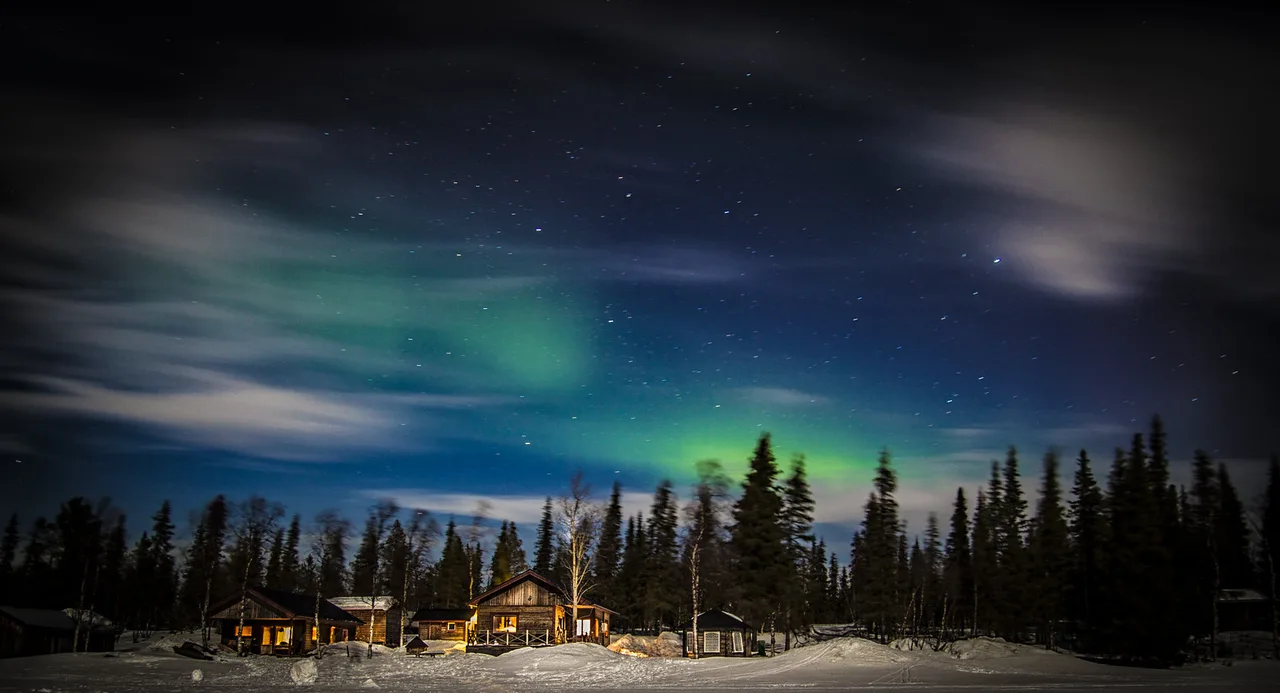
Glass-roofed rooms and aurora domes let you watch from bed, and in Finland they range from geodesic domes with wood-pellet stoves to full glass suites. The trade-off is real: a burning stove or an interior light creates reflection on the glass, so the best views often come from stepping outside the dome. Treat the glass as a comfortable waiting room rather than a private observatory.
Wilderness lodges and cabins suit travelers who want guides on site. Properties in Finnish Lapland and around Abisko run evening snowshoe walks, aurora drives and hot-tub sessions, and staff will often wake guests when the sky breaks. An ice hotel stay, whether for one night or as a daytime visit with a drink at the ice bar, is a memorable add-on rather than a practical viewing base.
Iceland's hotel stock leans toward geothermal comfort. Torfhús Retreat pairs rooms with private hot tubs looking over horse fields, Hvammsvik Hot Springs combines a geothermal pool with sea access, and The Retreat at Blue Lagoon offers a spa setting for the final night of a trip. Book these as part of a loop rather than a single base, since South Coast weather often clears somewhere along the drive.
Self-guided chasing versus a guided aurora tour
A guided tour buys you local weather knowledge and someone else's driving, which is worth a great deal on a short trip. Guides read cloud-cover maps, know which valleys clear first, and can move the group when a front shifts; they also lend thermal suits and boots for the night. Book your aurora tour early in the trip so a cancellation or cloudy night can be rebooked on the next clear one.
Self-guided chasing works well in Finnish and Swedish Lapland, where roads are quiet and dark viewpoints sit a short drive from most lodges, provided you are comfortable driving on snow and ice at night. In Iceland the same freedom comes with fast-changing conditions and the risk of road closures, so check the road authority's status page before setting out. A hybrid approach, tours on the first two nights and self-driving afterward, gives you both a safety net and flexibility.
How many nights to plan for a fair chance of clear skies
Three nights is the minimum most aurora travelers should book, because a single cloudy night can wipe out an otherwise well-planned trip. Five nights gives you enough buffer for a storm to pass and a second or third attempt, and it also lets you move between two bases if one side of a mountain range is clouded in. Travel planners who send clients to Arctic destinations regularly use the same logic when building itineraries.
Schedule the aurora nights early in the trip rather than saving them for the finale. If your first two nights are cloudy, you still have time to rebook a tour or drive to a clearer area, whereas a washed-out last night leaves no second chance. Some operators rebook guests for the next clear night or refund a cancelled tour, which is another reason to book before you arrive.
Reading forecasts: Kp, cloud-cover maps and dark-sky timing
The Kp index measures global geomagnetic disturbance and is a rough indicator of how far south the aurora may reach, not a forecast of what you will see overhead. A high Kp with a cloudy sky gives you nothing, and a modest Kp with clear, dark sky can deliver a fine display. Use apps for alerts, then check a cloud-cover map before deciding where to drive.
Timing within the night matters as much as timing within the season. Activity often builds around local midnight and the hours either side, and the darkest window comes when the moon is new or low. A camera in night mode can reveal colour your eyes miss, which is a useful check when the sky looks merely grey.
Equinox months and the 2026-2027 solar maximum
September and March have a long-standing reputation for spikes in geomagnetic activity around the equinoxes, and they also fall inside the European aurora season. The 2026-2027 winter coincides with a period of high solar activity, which means more frequent disturbances overall, though it still says nothing about cloud over your chosen base.
Balance activity against conditions on the ground. March brings longer daylight, milder temperatures and better road access in Lapland, while November and December bring deep darkness but more precipitation and cloud. If you can travel in either shoulder, choose the one whose daytime activities appeal more, since nights will be spent waiting either way.
What the days hold: husky safaris, snowmobiling and saunas
Aurora trips are winter holidays with a nighttime bonus, and the daytime programme decides whether a cloudy week still feels worthwhile. Finnish Lapland offers husky safaris, reindeer herding visits, snowmobile tours and ice fishing, while Abisko pairs national park snowshoeing with a sauna at the end of the day. Iceland adds glacier walks, black-sand beaches and hot springs to the mix.
Book one or two marquee activities in advance and leave the rest flexible. A husky safari booked for a fixed morning runs in almost any weather, whereas an aurora drive depends on the sky. Saunas, ice bars and hot springs fill the evenings when viewing is hopeless, and they keep the trip enjoyable even when the forecast refuses to cooperate.
Iceland versus Lapland for a first aurora trip
Choose Lapland if the aurora is the main goal. Rovaniemi and Abisko are built around winter darkness, with short transfers, dark terrain close to lodges and guides who work the night shift. The cold is part of the deal, but the odds of at least one clear night over a four- or five-night stay are the reason so many first-timers start here.
Choose Iceland if you want a broader winter road trip and can accept more weather risk. The South Coast and Þingvellir deliver spectacular scenery and easy add-ons, but cloud is a genuine feature of the climate rather than an occasional inconvenience. Travelers who book five nights and treat aurora viewing as one element of the trip tend to be happier than those who treat it as the sole purpose. For a clearer picture of season windows and viewing spots on the island, this Iceland northern lights guide pairs naturally with the comparison above.
Where to combine two destinations in one trip
A two-base trip can hedge against regional cloud. Flying into Rovaniemi and continuing overland to Abisko is awkward, but combining Finnish Lapland with a few days in Stockholm or Helsinki gives you a city break around the aurora nights. An ice hotel stay along the Torne River fits naturally into a Swedish Lapland itinerary and breaks up the driving.
Iceland works best as a single-country loop rather than a bolt-on, because the distances and weather already fill a week. If you want two aurora regions, book Lapland for the dark-sky nights and add Iceland as a separate summer trip later. Cramming both into one winter week usually means spending the clearest night in an airport.
Questions travelers ask about the best aurora places
Most questions come down to place, timing and patience. Compare the season windows above against your available dates, and remember that the aurora is weather-dependent in every destination on this list. If you can only spare three nights, pick the base with the shortest transfer from the airport and book a guided tour for your first evening.
Plan Your Visit
Start with the season, then the base, then the number of nights. For most travelers, Finnish Lapland or Abisko offers the strongest combination of dark sky, inland clear weather and short transfers, while Iceland suits those who want variety and can accept coastal cloud. Whichever you pick, three nights is a floor and five is comfortable.
Book your aurora tour for the first or second night so a cloudy evening can be rebooked, and keep one flexible evening for a self-drive to a darker spot. Check the forecast each afternoon, layer up with what operators lend, and treat a clear sky as the win rather than the aurora itself. Confirm tour departure details and road conditions with the tour company or the relevant road authority before you set out.
Explore more Europe northern lights guides
- Best Northern Lights App for a Lapland or Iceland Trip
- Glass Igloos for the Northern Lights
- How to Photograph the Northern Lights in Lapland and Iceland
- How to Plan a Northern Lights Trip in Europe
- Husky Sledding in Lapland and Iceland
- Ice Hotels in Europe
- Kp Index Explained
- Northern Lights Camera Settings
- Northern Lights Colors
- Northern Lights From a Plane
- Northern Lights Hotels in Europe
- Polar Night in Europe
- The Best Time to See the Northern Lights in Europe
- What Are the Northern Lights, and Where Do You See Them in Arctic Europe?
- Aurora Borealis vs Aurora Australis
- Aurora Hunting in Europe
- Northern Lights in December
- Northern Lights in February
- Northern Lights in January
- Northern Lights in March
- Northern Lights in November
- Northern Lights in October
- Northern Lights in September
- Northern Lights Myths and Legends Across Lapland and Iceland
Frequently Asked Questions
Where is the most popular place to see the northern lights in Europe?
Abisko in Swedish Lapland is the most specialized European aurora destination, known for the Blue Hole and the Aurora Sky Station chairlift. Finnish Lapland around Rovaniemi is the most accessible for first-timers, thanks to direct flights and short transfers to dark inland lodges. Iceland is the most popular for combined winter road trips.
Are the northern lights better in Norway or Iceland?
Both sit under the auroral oval, but Iceland's island weather brings more frequent cloud than inland Scandinavia. Coastal Norway can be remarkably clear in cold, dry spells. For a European trip focused on clear-sky odds, inland Lapland generally beats coastal Iceland, though solar activity still decides whether anything appears overhead.
Can you see the northern lights in March?
Yes. March falls inside the aurora season for Finnish Lapland, Swedish Lapland and Iceland, and it brings longer daylight and milder temperatures for daytime activities. The equinox period in March has a reputation for geomagnetic spikes, but cloud cover remains the deciding factor on any given night.
What is the best month to see the northern lights in the 2026-2027 season?
Late September through late March is the practical window, with September and March often favored for equinox activity and midwinter for maximum darkness. The 2026-2027 winter coincides with a high-activity period, which increases the frequency of disturbances but does not control local cloud. Weigh the month by temperature, daylight and your chosen destination.
How many nights should you plan for a northern lights trip?
Three nights is the minimum for a fair chance of at least one clear sky, and five nights gives you room to absorb a storm or rebook a cancelled tour. Scheduling the aurora nights early in the trip leaves a buffer for a second or third attempt. A single night out is a gamble rather than a plan.
Can you see the northern lights from Reykjavik or do you need to drive out?
Displays are occasionally visible over Reykjavik, but city light and low cloud make it unreliable. A short drive to Þingvellir National Park dramatically improves your chances of a dark, clear view and puts you on the Golden Circle route for daytime sightseeing. Check road conditions before any night drive.
Sources
Notes for your Arctic winter trip
Optional updates to our northern lights guides.
You might also like
Continue reading
More guides you'll find useful